Rare 1915 Dime Errors (List & Pictures)
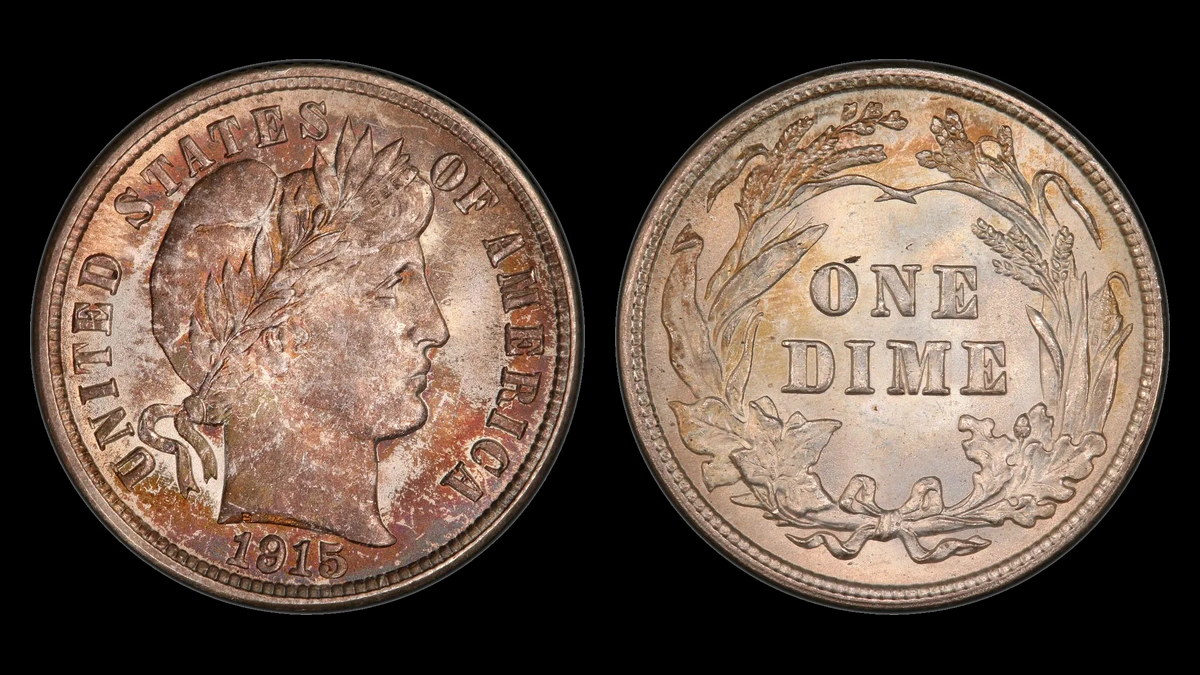
The mintmark is a useful first stop when checking 1915 Barber Dime errors: the reported S/S has an earlier S remnant above the main letter. Other groups change the surface or outline, with estimated values of $25–$1,500.
A 1911 Barber dime 10% off center reportedly sold for $360 in February 2025. That different-year comparison helps frame the striking errors below without supplying a sale price for the general 1915 reports.
| What to inspect | Possible finding | Estimated range |
|---|---|---|
| Above S below the wreath | Repunched mintmark | $40–$700 |
| Thin lifting metal | Lamination | $25–$350 |
| Ends of a missing edge section | Clipped blank | $30–$400 |
| Complete design on a wide coin | Broadstrike | $100–$800 |
| Lost design beside bare metal | Off-center strike | $200–$1,500 |
A normal 90% silver Barber dime weighs 2.50 grams and measures about 17.9 mm. Check the full date, actual mintmark, and grooved edge alongside each close-up.
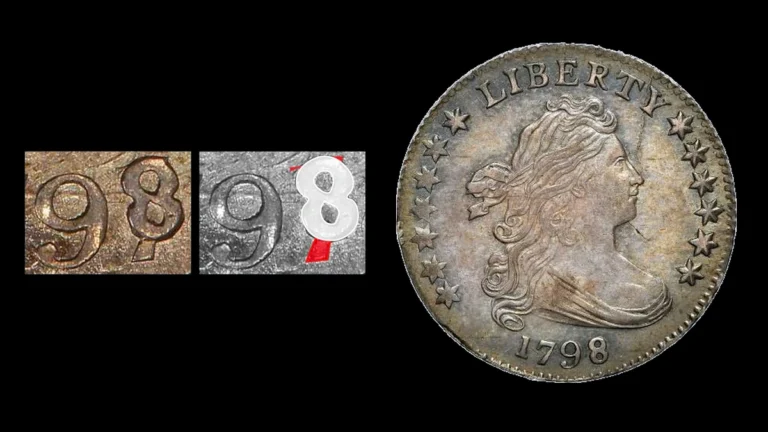
1. 1915 Dime An Earlier S Peeks above the Mintmark: Repunched S Error
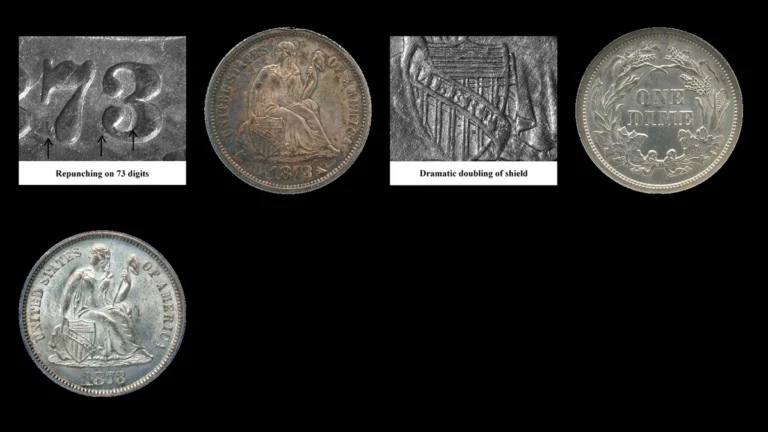
NGC recognizes repunching for 1915-S, and the supplied comparison places the earlier remnant above the main S. The punch entered the die more than once without completely hiding its first position.
Coins made by that tool copied both surviving parts during a normal strike. S/S describes those two letter impressions, not two separate blows to the dime.
How to Identify
Find S below the wreath bow and magnify the space just above it. The raised curve should fit an earlier S in the same position as a confirmed reference.
Change the light to separate the curve from a nick, corrosion, or flat shelf. A thick or damaged letter alone does not identify the variety.
What It’s Worth
$40–$700 is an estimated whole-coin range for worn through attractive lightly worn examples. Clear extra letter detail and original surfaces help support higher comparisons.
An 1899-O repunched O in AU Details sold for $115 in May 2023. Its different date, mintmark, and condition problem make it a broad comparison rather than a recorded 1915-S/S price.
2. 1915 Dime A Thin Flap Lifts from the Silver: Lamination Error
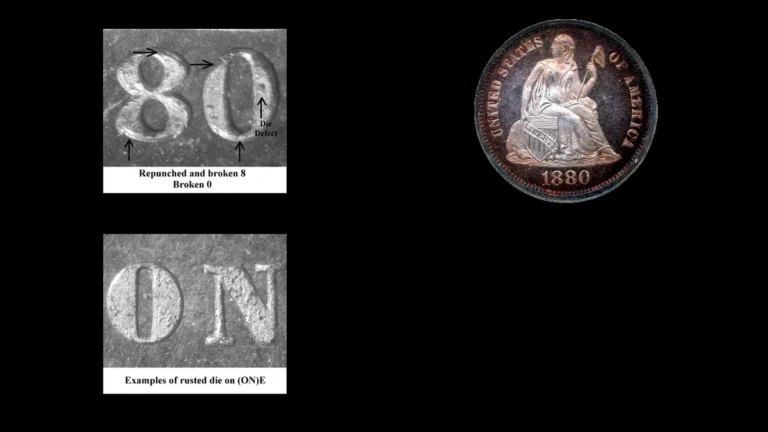
A weakness inside the silver-copper alloy can let a thin piece lift or break away. The 1915 report supplies no fixed mint or location for this lamination group.
The separating flake belongs to the coin’s metal mixture. It is not a missing bonded copper-nickel layer like those on modern clad dimes.
How to Identify
Follow the opening where the thin layer meets the intact struck surface. A gouge may instead have tool marks or sharp metal pushed along its sides.
Leave attached metal in place and move the light or camera to show its boundary. A missing flake can reduce weight, while an attached flap may leave the coin near its original weight.
What It’s Worth
$25–$350 is an estimated range for worn through lightly worn coins with an original lamination. A clear flap or missing patch is easier to appreciate than a barely visible flaw.
A 1914 Barber reverse lamination in NGC MS65 reportedly brought $317 at Heritage in June 2026. That different-year unworn coin is a stronger-condition comparison, not a sale of a specific 1915 example.
3. 1915 Dime The Design Was Struck around a Gap: Clipped Blank Error
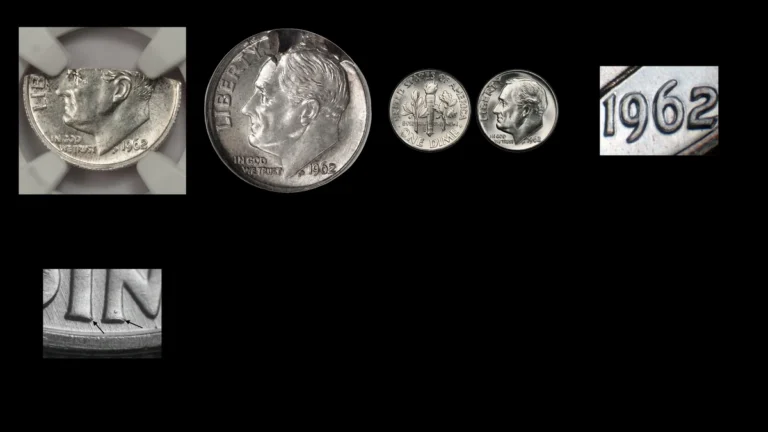
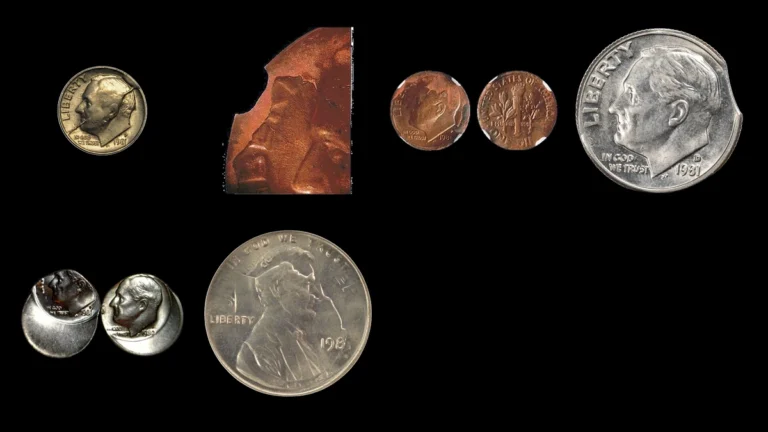
An incomplete blank can enter the press and receive a normal dime design around missing metal. Overlapping an earlier hole in the strip can make a curved clip, while reaching the strip’s edge can leave a straighter gap.
The general 1915 report does not identify a particular mint or gap size. Those details must remain specific to the actual coin.
How to Identify
Inspect both endpoints to see whether the rim formed beside an existing gap. Saw marks, filing, or a cut through finished details suggest later removal instead.
A weak rim opposite the missing section can support the identification but is not required on every example. Weight loss alone cannot tell you when the metal disappeared.
What It’s Worth
$30–$400 is an estimated range from small worn clips through attractive lightly worn examples. A readable date and identifiable mint help make a useful comparison.
An undated clipped silver dime blank in PCGS MS60 sold for $59 at Heritage in March 2025. It had a prepared rim but no struck design, so it is not a dated Barber dime transaction.
4. 1915 Dime Both Complete Designs Fit inside Extra Width: Broadstrike Error
The 1915 guide lists broadstrikes using Barber-series comparisons. It does not establish a known example from every mint.
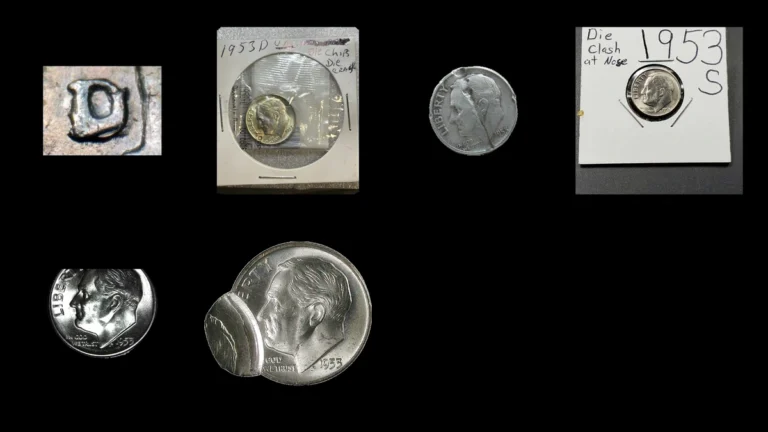
A broadstrike forms when the collar fails to restrain the blank and silver spreads outward. The same metal makes a wider coin without requiring a larger starting blank.
How to Identify
Trace the complete date, portrait, lettering, and wreath inside the outline. Design lost beyond one edge calls for a different striking explanation.
Measure several widths and inspect the border and grooves for original expansion. Hammering can also widen a coin but often crushes existing details or leaves repeated impacts.
What It’s Worth
$100–$800 is an estimated range for worn through lower-grade unworn broadstrikes. Clear spread and sound original surfaces help the stronger comparisons.
An 1899 Philadelphia broadstrike sold for $161 at Heritage in June 2005 as ANACS AU Details, net XF40, with cleaning and corrosion. That older damaged-coin result is not a ceiling for a better example or a documented 1915 sale.
5. 1915 Dime Untouched Metal Borders Incomplete Pictures: Off-Center Strike Error
A misplaced blank can receive only part of each design, leaving bare metal beside the struck area. The reported 1915 category has no single assigned percentage or direction.
A complete readable date is especially useful when collecting one year. A dramatic crescent without enough surviving identity cannot simply be assumed to be 1915.
How to Identify
Compare both faces against the same physical outline. They should show the effects of one displaced blank, while a single shifted die may leave the opposite face centered.
Look for original texture in the bare area instead of grinding or reshaping. A clip removes metal, whereas an off-center strike can leave the untouched metal in place.
What It’s Worth
$200–$1,500 is an estimated range for readable-date examples from modest worn shifts through attractive lightly worn or lower-grade unworn pieces. Surface quality and recognizable identity matter alongside displacement.
A Philadelphia 1911 dime 10% off center in PCGS AU50 reportedly sold for $360 in February 2025. Its percentage and mint do not transfer to the general 1915 report.
Conclusion
At the mintmark, look for the shape of an earlier S rather than any extra bump. On the rest of the coin, separate a lifting layer from a gap and complete expanded designs from displaced incomplete ones.
Keep both faces and the edge in your comparison. Other-year sales can frame a working estimate, but the actual mint, wear, and original surfaces determine which comparison is useful.