Rare 1854 Dime Errors (List & Pictures)
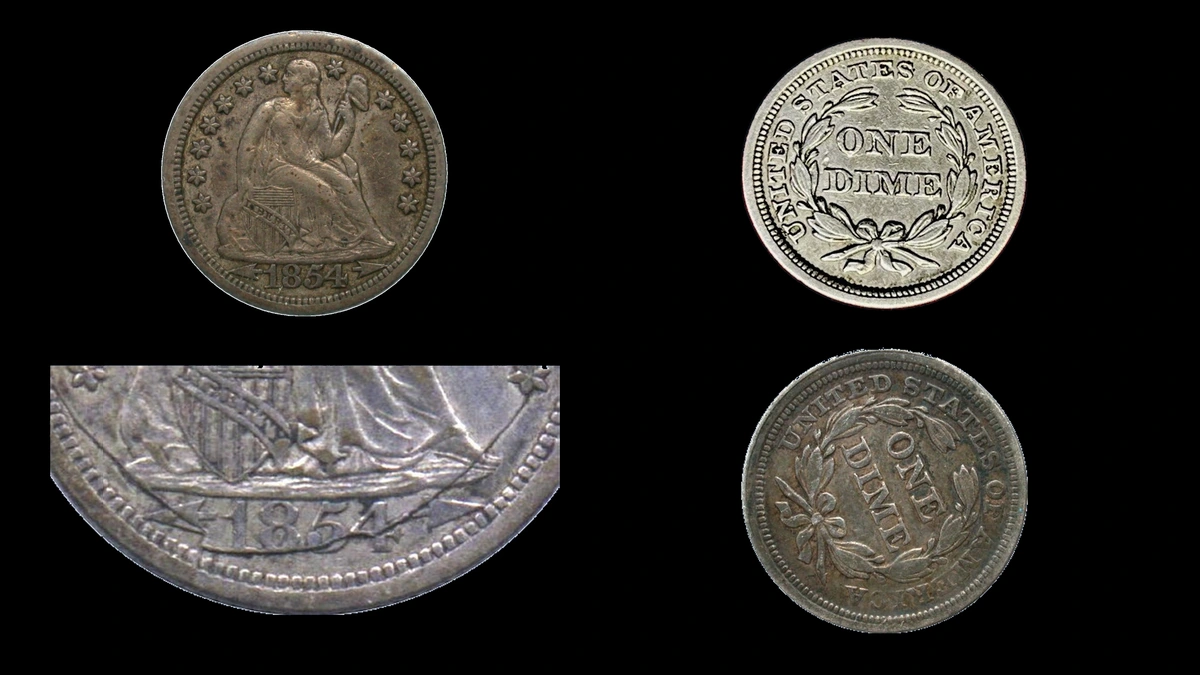
The same rough-looking area can mean very different things on an old silver dime. A peeling shield on one 1854-O example was a genuine metal flaw, and that worn coin sold for $92 in May 2005.
The supplied whole-coin estimates for 1854 dime errors range from $25–$3,000. Use the location and shape of a feature to choose a comparison, then check whether the coin came from Philadelphia or New Orleans.
1. 1854 Dime Part of the Shield Peels Away: Lamination Error
A thin layer of metal separated across Liberty’s shield on the 1854-O dime from the Tim Cook collection. The auction described the irregular patch as an original lamination.
A lamination begins with a weakness inside the coin’s metal. It affects the individual blank, so another coin struck by the same F-101 dies does not automatically have the same patch.
How to Identify
Look along the patch for a layered edge rather than a smooth, worn surface. Low-angle light can reveal where the upper layer has separated.
Leave any attached flap in place. Lifting it would damage the coin and remove useful evidence.
Confirm the O below the reverse wreath and the arrows beside the date. A normal example weighs about 2.49 grams and measures 17.9 millimeters, but missing metal and wear can both reduce its weight.
What It’s Worth
$50–$600 is the estimate for original 1854-O laminations in worn through lightly worn condition. A visible, natural separation is more useful for comparison than a vague rough patch.
The PCGS Fine 12 example sold for $92 at Heritage on May 7, 2005. Fine 12 describes a worn coin with some clear design remaining.
An ordinary XF40 example brought $168 in April 2025. That better-preserved coin provides condition context, not a price for the shield flaw itself.
2. 1854 Dime Extra Strokes Sit beside 54: Reported Recut Date Error
Carson Torpey’s 1994 account describes a small extra outline to the left of the ball at the end of 5. It also reports stronger repeated detail on the left side of 4.
The account calls this a recut date, but the 1854 date and arrows were already part of the master design copied onto the dies. The historical name does not prove that someone separately punched those digits into a working tool.
How to Identify
Enlarge the whole date before examining the two left edges. Find the little trace beside the ball of 5, then compare the stronger feature beside 4.
Open 54 and Closed 54 describe spacing between the digits. Either spacing needs its own evidence of extra strokes before it can be called doubled or recut.
The report concerns Philadelphia, whose coin has no O below the wreath. Check the raised shapes under changing light so a scratch or flat shelf does not become a false extra digit.
What It’s Worth
$40–$1,000 is the estimated range for a matching date variety, from worn through lower unworn grades. The historical report describes an XF coin but supplies no sale price.
Fortin suggests a 20–40% premium for a Philadelphia doubled-date variety. That comparison does not establish that every old “recut 54” description identifies the same die.
The useful step is matching the actual extra outlines. Ordinary spacing between the numerals adds no evidence for that premium.
3. 1854 Dime Front Details Have Repeated Edges: Doubled Die Error
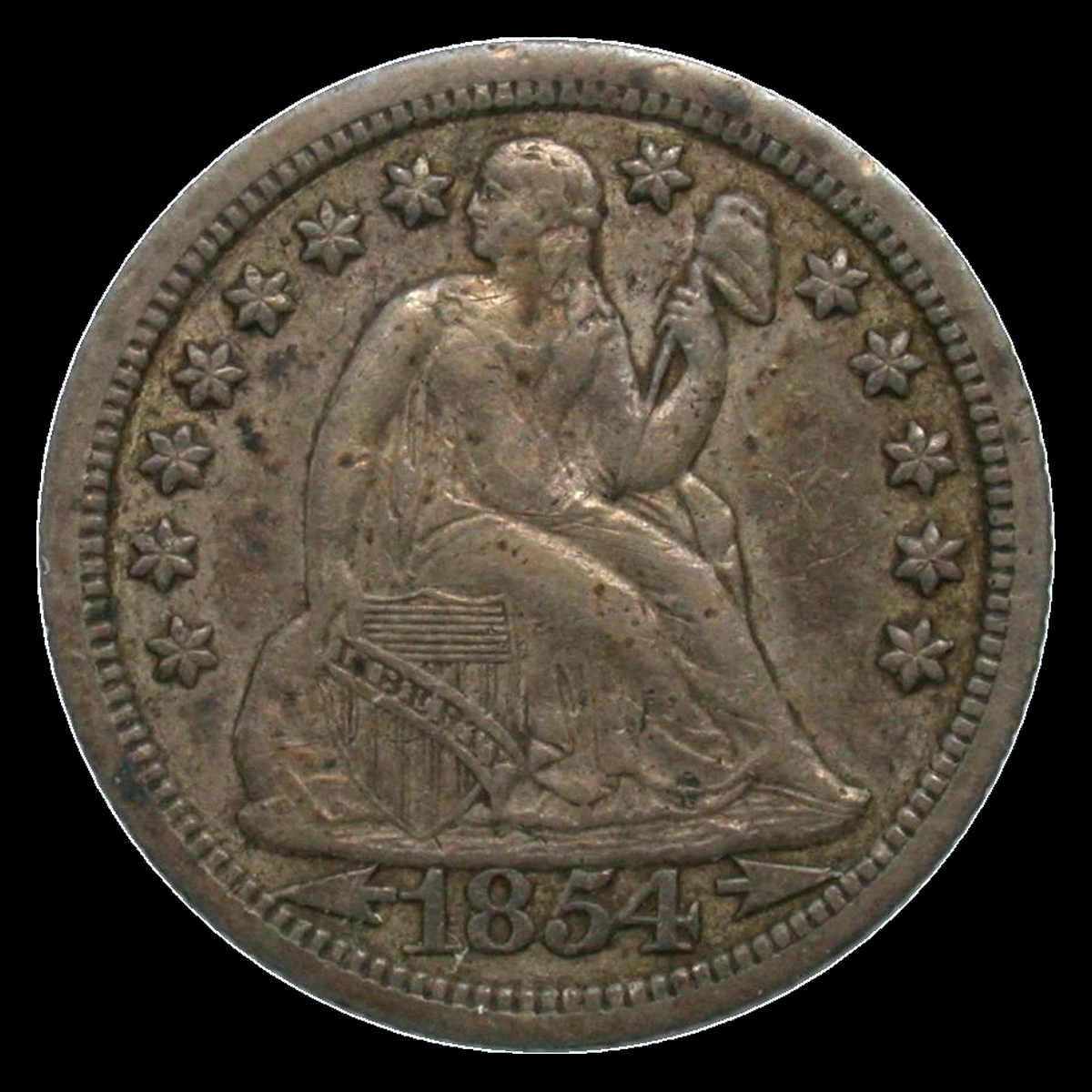
The New Orleans F-108 variety has a doubled front, a very high date, and close spacing between 5 and 4. Its reverse has a Large O and a crack toward the lower-left wreath.
Doubling was already present on the die before it struck the coin. The high date and mint-letter size help identify the right example, but they are not themselves the doubled feature.
How to Identify
Compare the entire front with a correctly identified F-108 photograph. The supplied summary does not name one specific star or shield line, so there is no single promised spot to enlarge here.
Find the matching repeated contours, then confirm the high date, close 54, and reverse details. Rounded extra outlines differ from the flat shelves that can result from movement during striking.
A Large O alone is not enough to identify the doubled die. The supporting markers and the actual doubling must belong to the same coin.
What It’s Worth
$75–$1,500 is the estimated whole-coin range for identifiable F-108 examples in worn through lower unworn grades. No exact-variety auction result is supplied.
The ordinary XF40 1854-O sold for $168 in April 2025. Fortin’s table lists no separate F-108 premium, so grade and surfaces remain central to the comparison.
4. 1854 Dime Faint Reverse Shapes Appear on the Front: Die Clash Error
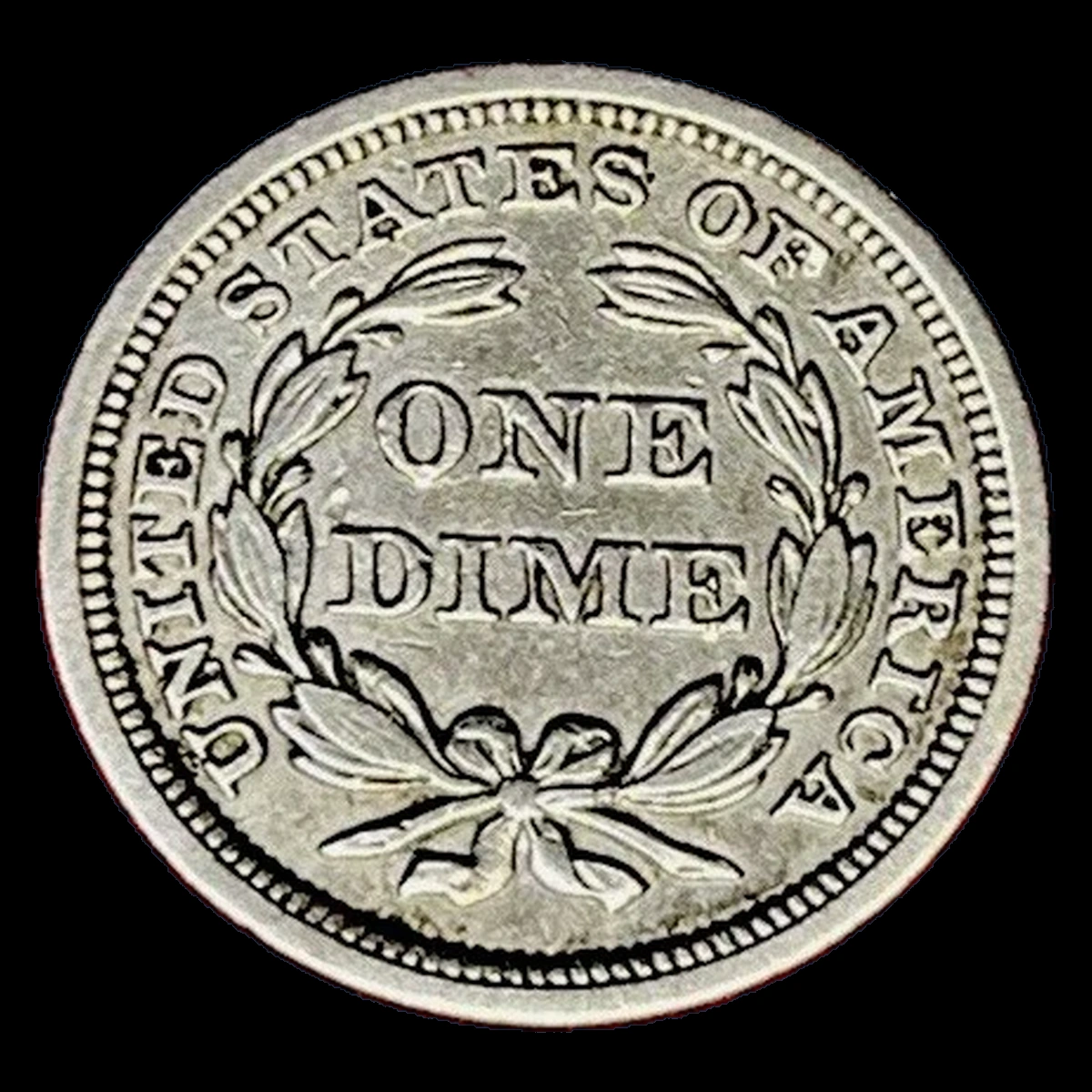
Two New Orleans listings report clashed fronts, including a later stage of the doubled-front variety. A die can acquire clash marks after its original design has been made.
The marks form when the dies touch without a blank between them. Pieces of the opposite design are transferred to the tools and then appear on later coins.
How to Identify
Try to match the extra front shape to part of the normal reverse wreath or lettering. Keep the whole design nearby when examining a close-up.
The two listings do not provide one common location for all their clash marks. Use a confirmed photograph for the selected die rather than treating every faint line as the same feature.
A gown fold, scratch, or raised crack can occupy the same general area without being a clash. The useful clue is a recognizable piece of the opposite design.
What It’s Worth
$40–$1,200 is the estimate for worn through lower-grade unworn New Orleans clash examples. The reference table gives these listings no separate clash premium.
The ordinary $168 XF40 sale provides context for a worn 1854-O. If one coin also has doubling and cracks, those features contribute to one whole-coin price rather than three added prices.
5. 1854 Dime Raised Branches Cross the Lower Design: Die Cracks and Shattered Dies Error
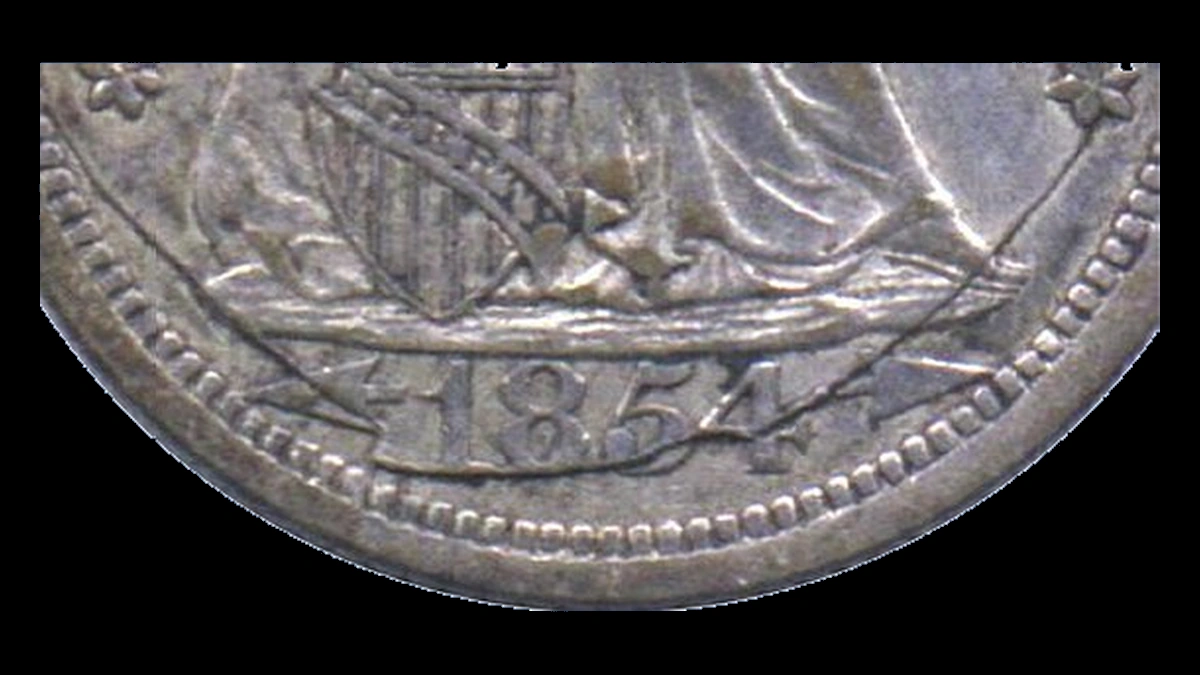
On the New Orleans shattered-front variety, a network connects the lower stars, arrows, and date. The route runs from star 1 toward star 13 and becomes stronger near the date as the die wears out.
Philadelphia has a different heavily cracked front, with a faint reverse crack along the tops of UNITED. “Shattered die” describes a heavily cracked stamping tool, not a coin broken into pieces.
How to Identify
For New Orleans, follow the raised branches from the first star through the lower design. A full-front photograph is useful because one small bump cannot identify the network.
For Philadelphia, compare its own front pattern and check UNITED on the back. Do not combine routes from the two mints into a single supposed variety.
The lines should rise above the silver. A cut with rough edges points toward a scratch made after striking.
What It’s Worth
$25–$500 is the estimate for ordinary cracked examples in worn through lightly worn condition. The identified New Orleans shattered-front group has a stronger estimated range of $300–$3,000.
The higher range concerns the distinctive connected network. An isolated line near the date does not establish that variety or earn the same premium.
Preservation still affects the whole coin’s value. The ordinary XF40 result is background for the date and mint, not a sale of this exact crack pattern.
6. 1854 Dime The Two Faces Do Not Line Up: Rotated Reverse Error
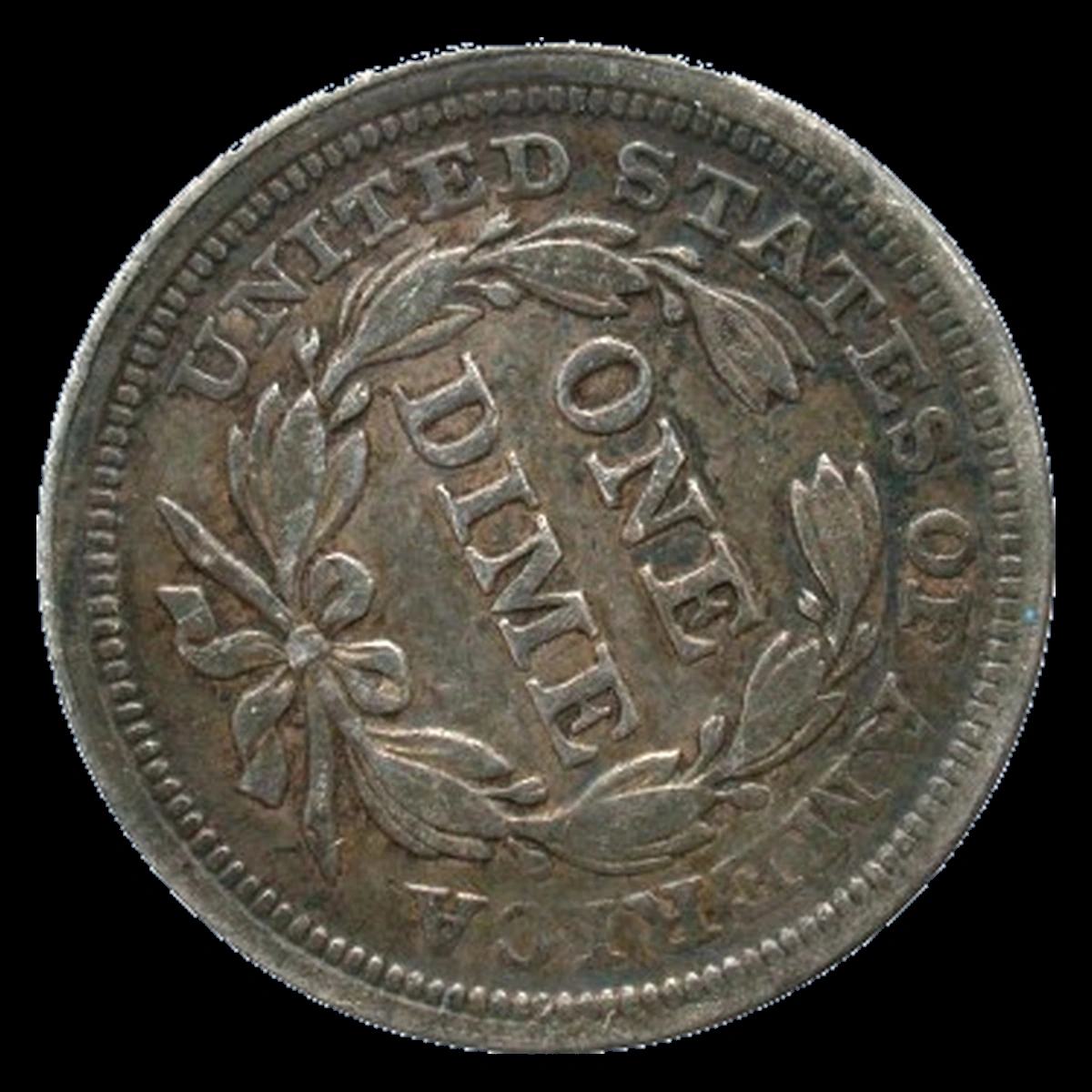
Philadelphia F-105 is listed at 65 degrees left, while New Orleans F-103 a is listed at 50 degrees right. The New Orleans example also has a tilted O.
One die was turned relative to the other, so the designs can remain centered yet disagree in orientation. An older Philadelphia description gives the opposite direction, making a controlled check of the actual coin especially useful.
How to Identify
Secure the coin in a clear holder with Liberty upright against a vertical guide. Turn it from top to bottom without twisting or allowing it to slip.
A normal reverse should finish upright. Repeat the turn and measure the angle that consistently appears.
Compare that measurement with Fortin’s rotation table and the correct mint. Separate photographs turned upright by an editor cannot demonstrate the original angle.
What It’s Worth
$100–$2,000 is the estimate for these rotated varieties in worn through lightly worn condition. The actual mint, angle, and surfaces all belong in the comparison.
Fortin suggests 300–500% premiums for the listed varieties. Those are specialist guidelines rather than completed sales or a guaranteed multiplier for any tilted-looking reverse.
7. 1854 Dime The Design Misses Part of the Blank: Off-Center Strike Error
A society-journal index places an 1854-O dime in Larry Rausch’s 1994 discussion of off-center coins. It gives no percentage or clock direction for that particular specimen.
The error occurs when the blank sits too far to one side under the dies. Part of the design misses the metal, leaving an original bare area beside the struck image.
How to Identify
Look at both faces together for interrupted design beside unstruck metal. The 1854 date and reverse O need to remain identifiable.
A shifted design on only one face may come from one misaligned die. A broadstrike can be wider than normal while still retaining the complete design.
Check the blank area for filing or deliberate flattening. Neither an uneven border nor a cut edge supplies the same evidence as an original off-center strike.
What It’s Worth
$500–$3,000 is the estimate for genuine worn examples with a readable date and clear displacement. A larger visible shift can change the comparison, but the reported coin has no supplied measurement.
An 1856 dime graded Fine 15 and struck 10% off-center sold for $467.50 in August 1996. Its year, grade, percentage, and historical sale belong to that separate coin.
Conclusion
Begin with the physical feature on your 1854 dime: peeling metal, repeated outlines, raised branches, or a design that sits in the wrong place. Then match the mint and the complete pattern.
Small cracks and clashes may add little beyond ordinary condition value, while a documented shattered die or rotation can have stronger specialist appeal. Keep several features on one coin within one whole-coin valuation.