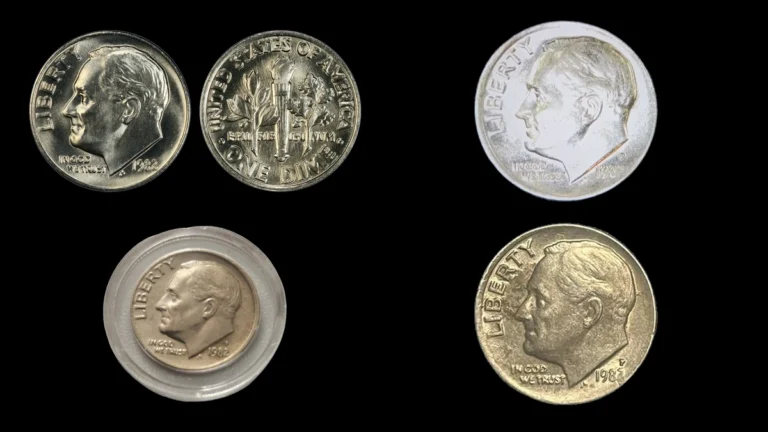
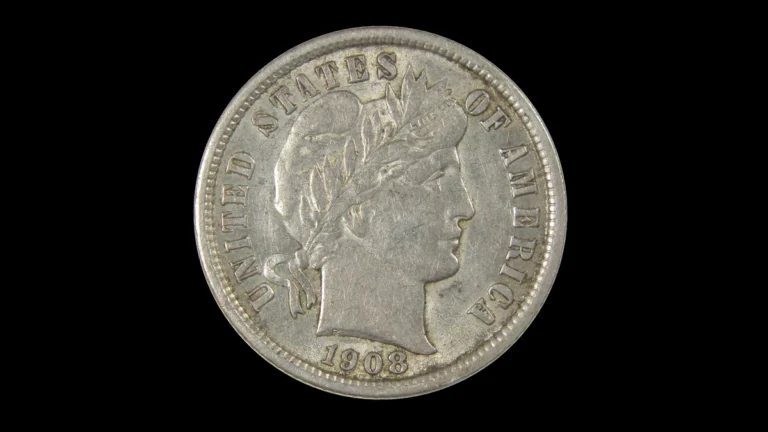
Rare 1975 Dime Errors (List & Pictures)
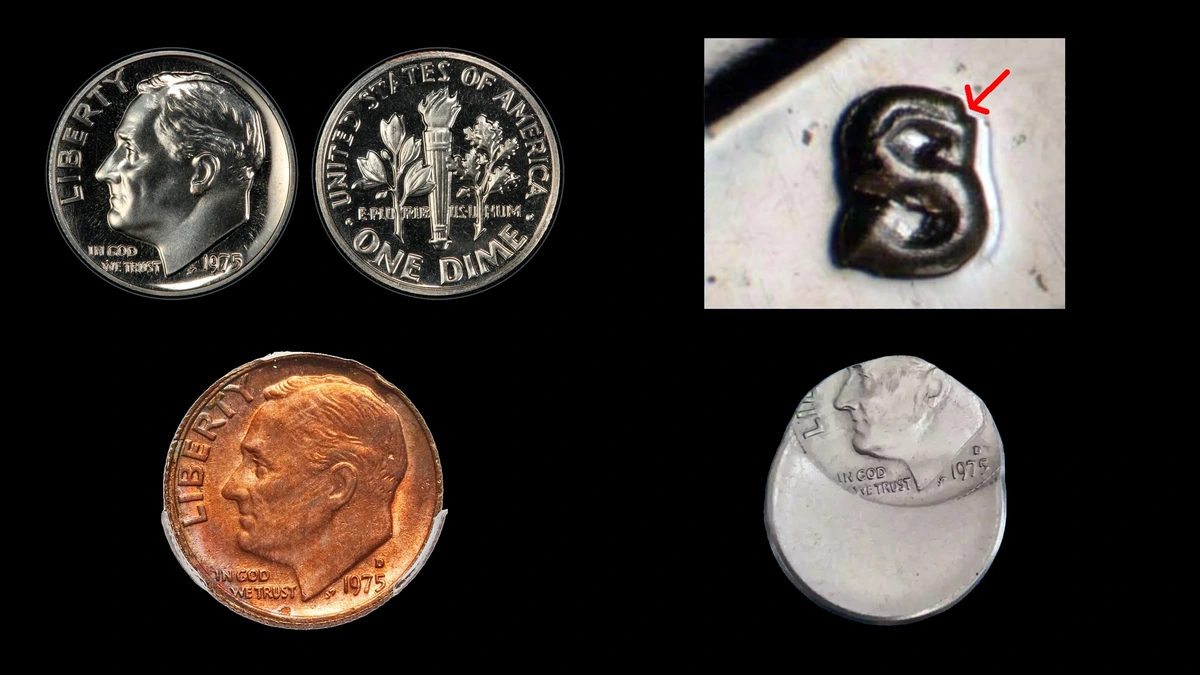
A confirmed 1975 No S Proof dime sold for $506,250 in October 2024. Most unmarked 1975 dimes are ordinary Philadelphia circulation coins, so the collector Proof finish is crucial.
The 1975 dime errors below span estimated whole-coin values of $15–$550,000. Check finish and mintmark first, then examine the metal and outline; a standard clad dime weighs 2.268 grams and measures 17.91 millimeters.
| What matters first | Feature | Estimated whole-coin range |
|---|---|---|
| Confirmed Proof without S | No S Proof | $400,000–$550,000 |
| Overlapping S on Proof | Repunched mintmark | $50–$1,000 |
| Abnormal metal and weight | Wrong planchet | $1,500–$6,000 |
| Two curved missing sections | Double clip | $30–$200 |
| Plain crescent beside design | Off-center strike | $30–$500 |
| Repeated design strokes | Doubled die | $25–$300 |
| Peeling metal boundary | Lamination | $15–$150 |
1. 1975 Dime No S on a confirmed collector coin: No S Proof Error
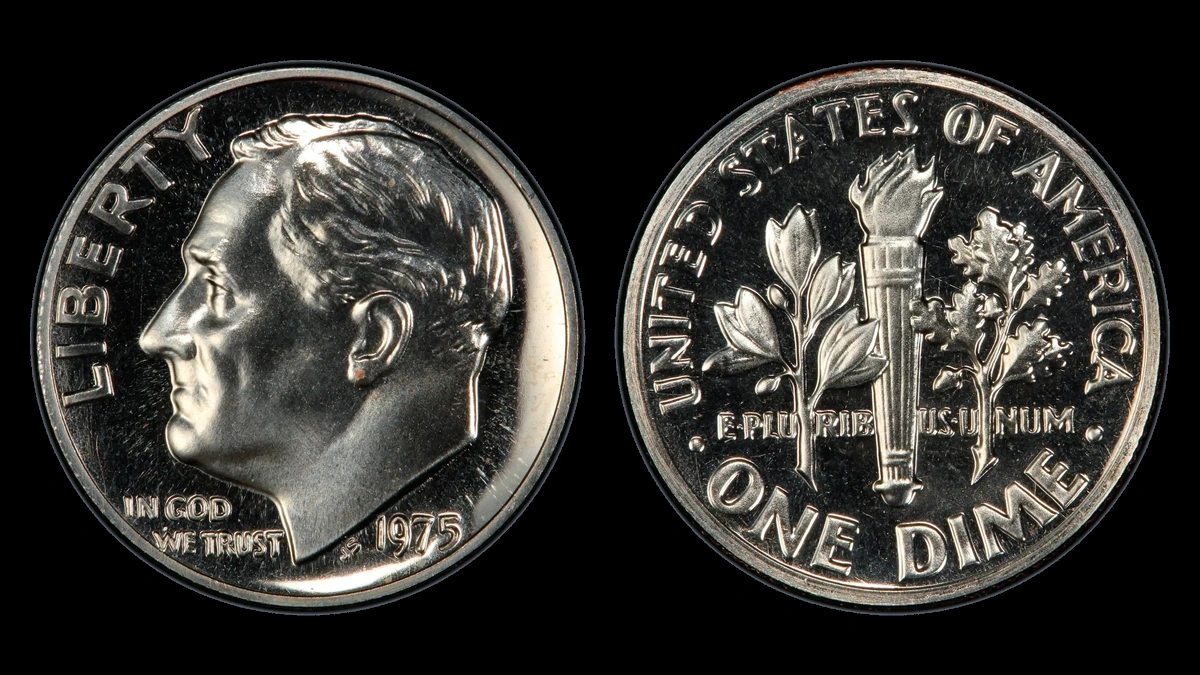
The rare error combines a genuine Proof finish with an absent San Francisco mintmark. Ordinary Philadelphia dimes also lack a mintmark, which makes the missing letter alone a poor diagnostic.
This Proof was struck from a die without the required S. GreatCollections reported only two known examples when one sold in 2024.
How to Identify
Compare the complete coin with a normal 1975-S Proof, looking at its sharp design and original mirrorlike background. Polishing an ordinary dime can make it shiny without giving it a Proof strike.
Inspect the mintmark area near the date for smoothing or scraping. A removed S is not the same as a Proof originally struck without one.
For a certified candidate, compare the holder number and images with the grading service’s records. The decisive attribution must specifically identify a 1975 No S Proof, not simply a 1975 dime without a visible mintmark.
What It’s Worth
Confirmed examples at the documented level have an estimated whole-coin range of $400,000–$550,000. Infrequent sales and bidder competition can strongly influence the result.
The PCGS Proof-67 with CAC approval brought $506,250 on October 27, 2024. The other known example sold for $456,000 in 2019.
Neither figure applies to ordinary unmarked Philadelphia coins. Brightness and missing lettering cannot substitute for the rare Proof attribution.
2. 1975 Dime The S appears twice in part: repunched mintmark Error
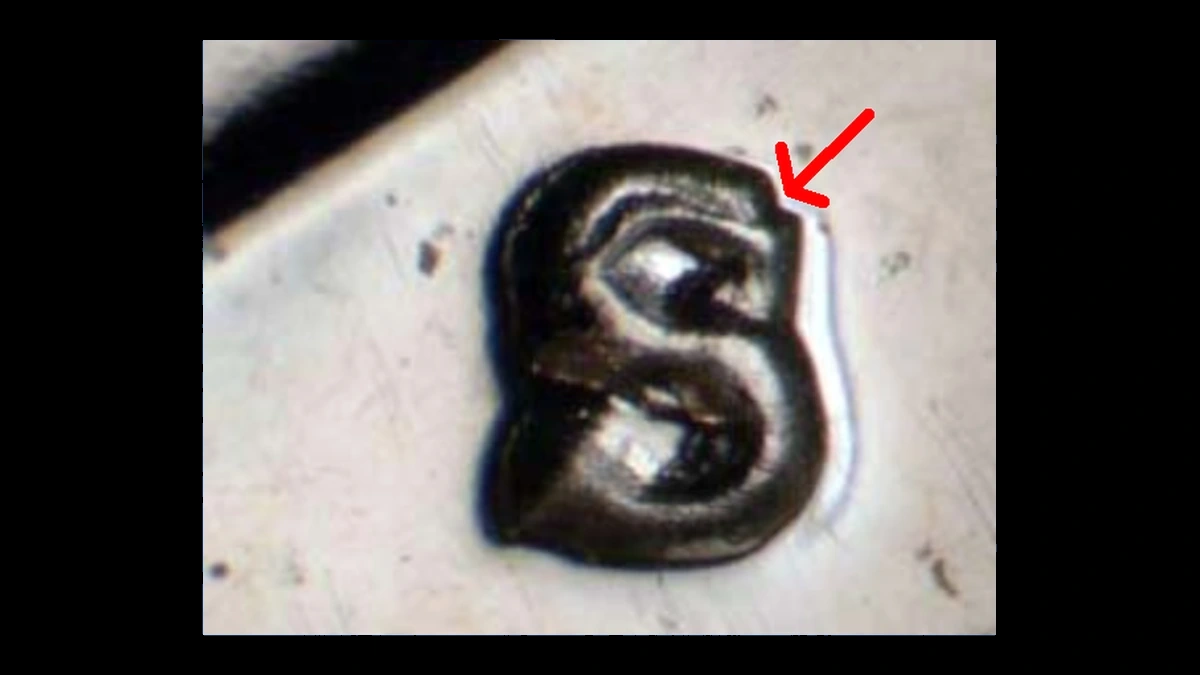
A different Proof variety retains its S and has portions of an earlier S around it. Workers added the mintmark with a separate punch, and a changed placement could leave overlapping impressions.
FS-501 identifies a particular 1975-S/S pattern. It is distinct from the No S error and from an ordinary mintmark that merely looks thick.
How to Identify
Trace the curves and openings of the mintmark against a confirmed FS-501 image. The secondary strokes should form recognizable portions of the earlier letter.
A lump, reflection, or flat shelf is insufficient. Check the complete Proof finish as well, including whether shine comes from original fields or later polishing.
The coin uses a normal dime blank. Measurements can support the basic assessment, while the exact overlapping S contours establish the variety.
What It’s Worth
Impaired through attractive FS-501 Proofs have an estimated whole-coin range of $50–$1,000. Haze, scratches, preservation, and contrast affect the comparison.
A PCGS PR69 Deep Cameo sold for $881.25 at Heritage in September 2016. Its nearly flawless condition and strong design-to-field contrast help explain that result.
3. 1975 Dime The dime design appears on another metal disc: wrong planchet Error
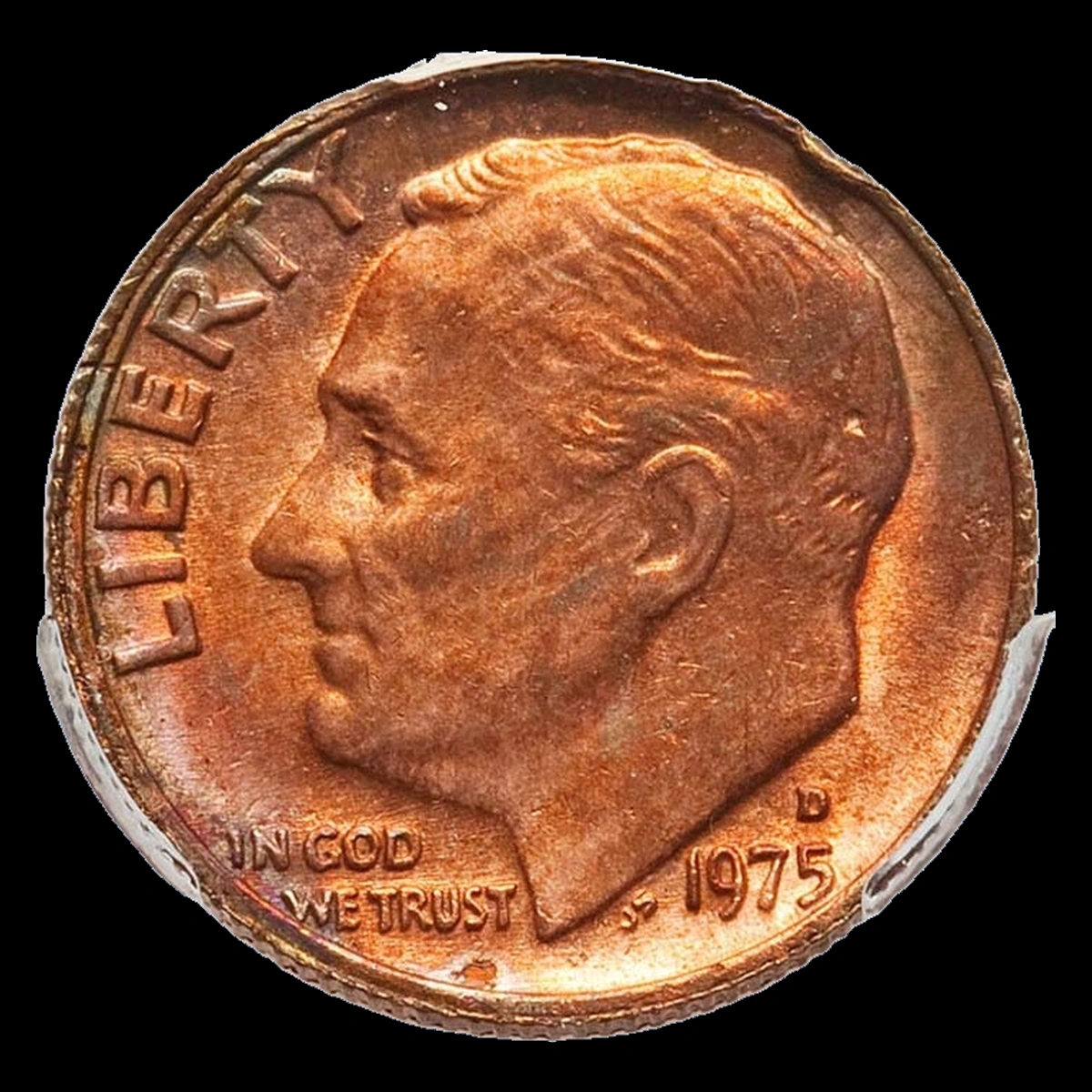
The recorded Denver copper example, graded PCGS MS62, weighs 2.6 grams. Its original blank’s purpose is unestablished, and the weight does not identify it as a standard cent blank.
A different 1975-S PCGS PR67 Proof was struck on a Philippine 10 Sentimos blank weighing 3.86 grams. Both are wrong-planchet errors, but their metals, weights, and finishes require separate comparisons.
How to Identify
Start with recorded weight rather than color. The 2.6-gram copper dime and 3.86-gram Philippine-blank Proof both differ from the normal 2.268-gram clad standard.
Keep a sealed coin in its holder and use its measurement records. On a loose candidate, inspect the diameter, surfaces, and edge for added coating, scratches, or unusual metal structure.
Match the proposed blank to the actual evidence and a reliable metal attribution. Copper color alone can result from other causes and cannot establish which disc entered the press.
What It’s Worth
The combined estimated whole-coin range is $1,500–$6,000, with $1,500–$2,500 for the copper Denver type and $2,500–$6,000 for the Philippine-blank Proof. These ranges describe different wrong blanks.
The 1975-D copper MS62 sold for $1,920 in October 2022. The Philippine-blank Proof did not meet the seller’s minimum at its offering, so no realized price belongs to that event.
A 1973-S Proof on a Liberian blank sold for $1,380 in 2009, and a 2018 circulation dime on an iron blank brought $2,160 in 2023. Those different-year and different-metal transactions offer limited context, not exact prices for either 1975 coin.
4. 1975 Dime Two curved sections are missing: double curved clip Error
A double clip can form when the blank-cutting machine overlaps two previously punched holes. Both gaps exist before the coin receives its design.
An NGC MS65 Full Bands 1975 dime provides a recorded example. Full Bands describes clearly separated horizontal bands on the reverse torch, independently of the two missing sections.
How to Identify
Examine both gaps and the way nearby lettering and metal formed during striking. A genuine transition differs from fresh saw cuts or file marks through finished detail.
Measure only intact spans and compare weight with the normal standard. Missing metal should affect weight, although the reading alone does not establish when the pieces disappeared.
Weakness opposite a gap can help, but it may not be obvious. Both curved openings need evidence of an original clip rather than accepting the second because the first looks convincing.
What It’s Worth
Double clips have an estimated whole-coin range of $30–$200 from modest through more visually striking examples. The NGC MS65 Full Bands coin sold for $35 at Heritage in May 2009.
A 2002-D straight clip sold for $61 in September 2024. That newer comparison has a different date and clip shape, so it does not reset the value of every 1975 double clip.
5. 1975 Dime A plain crescent remains beside the design: off-center strike Error
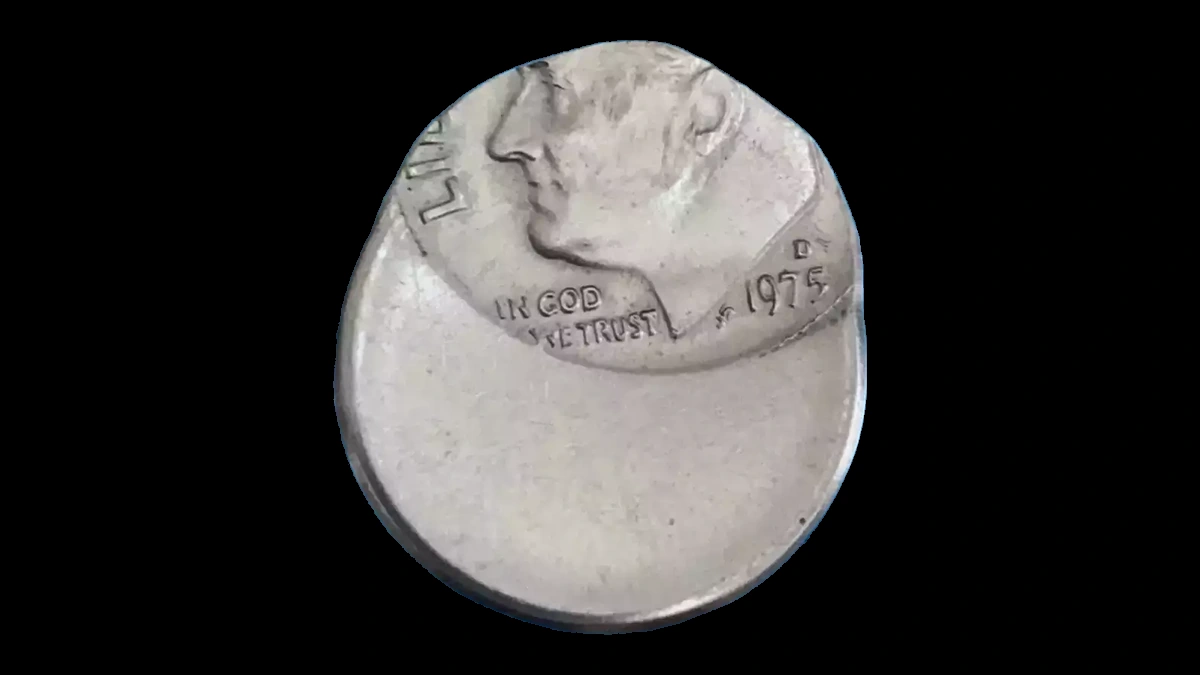
The blank was partly outside the dies, leaving an unstruck area while some intended detail missed the metal. The plain crescent contains metal, unlike a clipped gap.
A larger displacement can remove the date from the struck area. Without a readable date, the coin cannot simply be assigned to 1975 from a seller’s description.
How to Identify
Compare the relationship between the design and plain metal on both faces. A single shifted face may come from a misaligned die instead of a misplaced blank.
Find the date and any surviving mintmark before classifying the issue. An unstamped mintmark area cannot establish Philadelphia by absence.
Check the transition to plain metal for grinding or later cutting. Natural strike distortion can change the outline without removing a large amount of metal.
What It’s Worth
Readable-date examples are estimated at $30–$500 for the whole coin. Bold displacement and attractive surfaces can support stronger comparisons than a small offset on a worn dime.
A 1977 dime struck ten percent off-center, graded NGC MS64 Full Bands, sold for $109 in June 2026. It is a different-year transaction, not a fixed value for a ten-percent 1975 strike.
6. 1975 Dime Additional design strokes on either face: doubled die Error
A doubled die contains repeated portions of the design before striking. Coins from it can reproduce the same additional strokes in consistent positions.
Front inspection areas include LIBERTY, the motto, and date; reverse areas include the flame, bands, and ONE DIME. These are separate places to examine, not a claim that one confirmed variety doubles them all.
How to Identify
Compare several adjacent details with a correctly attributed example. A rounded extra contour differs from a low flat shelf created during striking.
Move the light to separate a real metal edge from a reflection. Judge each face independently, since front doubling does not establish reverse doubling.
The shape and position of the repetition matter more than a general impression that the letters look thick. Normal measurements support the basic coin check without proving the die attribution.
What It’s Worth
Genuine examples with clear detail and reasonable surfaces have an estimated whole-coin range of $25–$300. No transaction for a specific 1975 doubled-die variety is supplied here.
Minor patterns generally need lower comparisons than strong, easily identified separation. Flat shelf-like doubling normally adds little to an ordinary coin.
7. 1975 Dime A layer visibly peels away: lamination Error
A lamination requires evidence that a weak metal layer is separating. It may leave an attached flap or a rough opening after a piece detaches.
A collector’s small, smooth-edged 1975 dime does not establish that diagnosis by size and edge texture alone. A worn or altered coin can have those traits without a peeling layer.
How to Identify
Find the boundary where a layer lifts from the surrounding metal, and leave any loose flap untouched. Fresh cuts or scrape marks may indicate later damage.
This issue has bonded outer layers around a copper center. Examine the actual separation instead of inferring it from a diameter near 17 millimeters or absent edge grooves.
Check for filing around the edge and compare the normal dimensions with any documented loss. A thin-looking coin needs its own explanation.
What It’s Worth
Genuine small separations through larger visible flaps have an estimated whole-coin range of $15–$150. Clear original boundaries and overall condition matter.
No verified sale accompanies the reported small, smooth-edged piece. Ground-down edges or scraped surfaces should not receive a lamination premium without evidence of the actual separation.
Conclusion
Finish determines whether an unmarked 1975 dime can even enter the No S Proof discussion. For the other categories, exact mintmark shapes, measured metal differences, original gap boundaries, and repeated design details provide the useful evidence.
Keep both wrong-blank examples separate and distinguish offers from completed sales. The large Proof record belongs to a confirmed rarity, while most smaller errors occupy a very different price range.