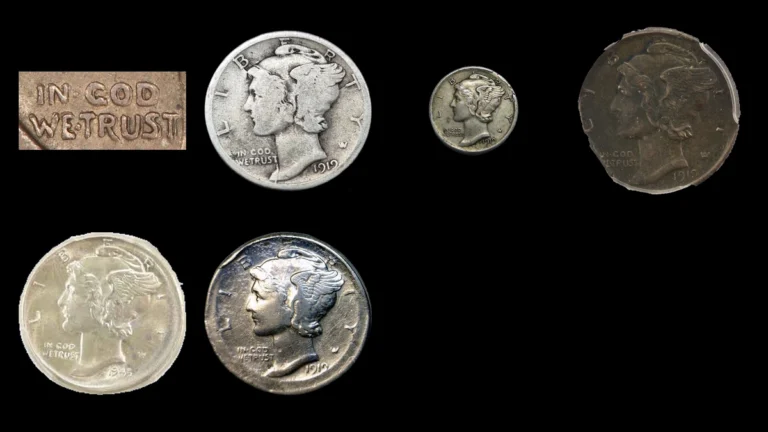
Rare 2006 Dime Errors (List & Pictures)
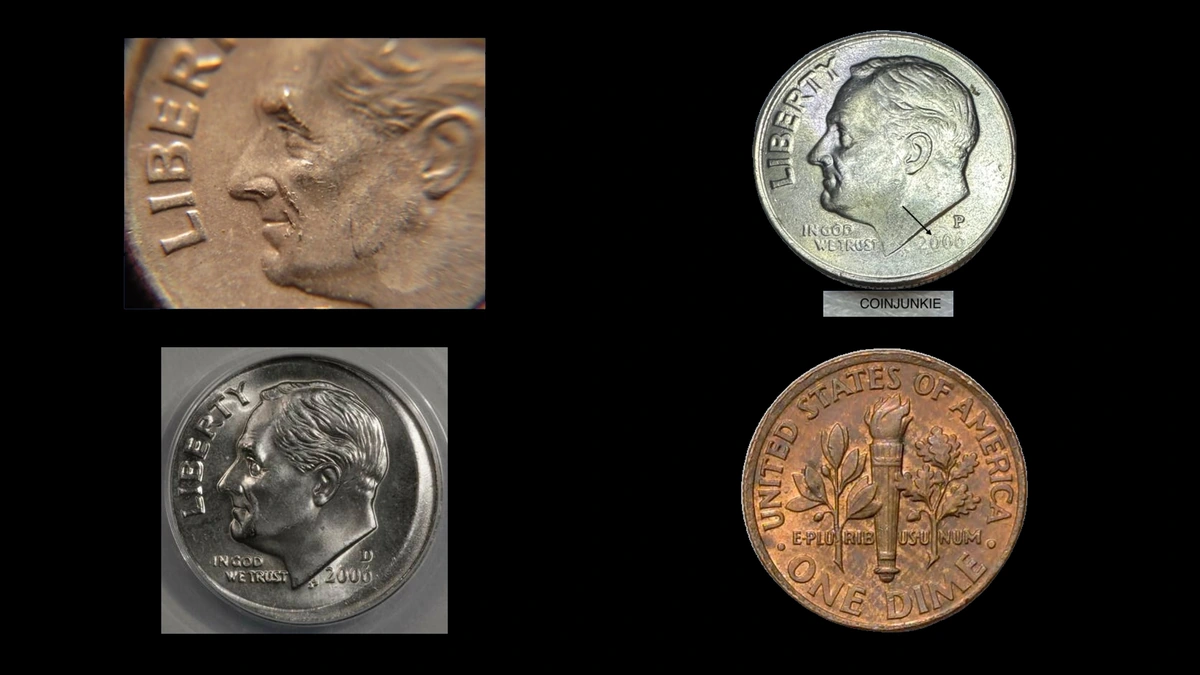
A 2018-P dime missing its front layer sold for $384 in July 2021, giving a different-year benchmark for stronger layer errors. The 2006 dime errors below have estimated whole-coin values of $2–$600.
Determine the finish and metal before inspecting the portrait, outline, and layers. Ordinary clad dimes weigh 2.268 grams; a 2006-S silver Proof weighs 2.50 grams, and both measure 17.9 millimeters.
| Inspection area | Feature | Estimated whole-coin range |
|---|---|---|
| Silver Proof design contours | Reported doubled die | $50–$400 |
| Behind Roosevelt’s head | Die chip and crack category | $2–$50 |
| Interrupted surface detail | Struck-through error | $5–$150 |
| Missing edge segments | Clipped planchet | $25–$300 |
| Expanded complete design | Broadstrike | $50–$350 |
| Displaced incomplete design | Off-center strike | $30–$500 |
| Local layer flaw or absent face layer | Defective or missing cladding | $30–$600 |
1. 2006 Dime Additional outlines on the silver collector coin: reported doubled die Error
The reported doubled-die category concerns the 2006-S silver Proof, a specially made collector coin containing 90% silver. It should not be compared indiscriminately with a circulation dime or a clad Proof.
A doubled die already carries repeated design shapes before striking. The source names no fixed front-only or reverse-only diagnostic pattern for this report.
How to Identify
Establish the silver Proof’s finish and recorded composition first. The 2.50-gram silver standard differs from the 2.268-gram clad Proof, even though both have the same normal diameter and reeded edge.
Examine both faces for fixed extra contours and compare with an attributed silver Proof example. Reflections change with the light and should not be mistaken for additional metal.
The repeated blows used in normal Proof production are intended to leave one clean design. They do not by themselves establish a doubled die.
What It’s Worth
Genuine minor-to-clear doubling on the silver Proof has an estimated whole-coin range of $50–$400. The range draws on comparable silver Roosevelt Proof varieties.
No auction result for a specific 2006-S specimen is supplied. Its underlying silver Proof value, surface quality, and actual attribution all belong in the assessment.
2. 2006 Dime A small cap-shaped patch behind the head: die chips and cracks Error
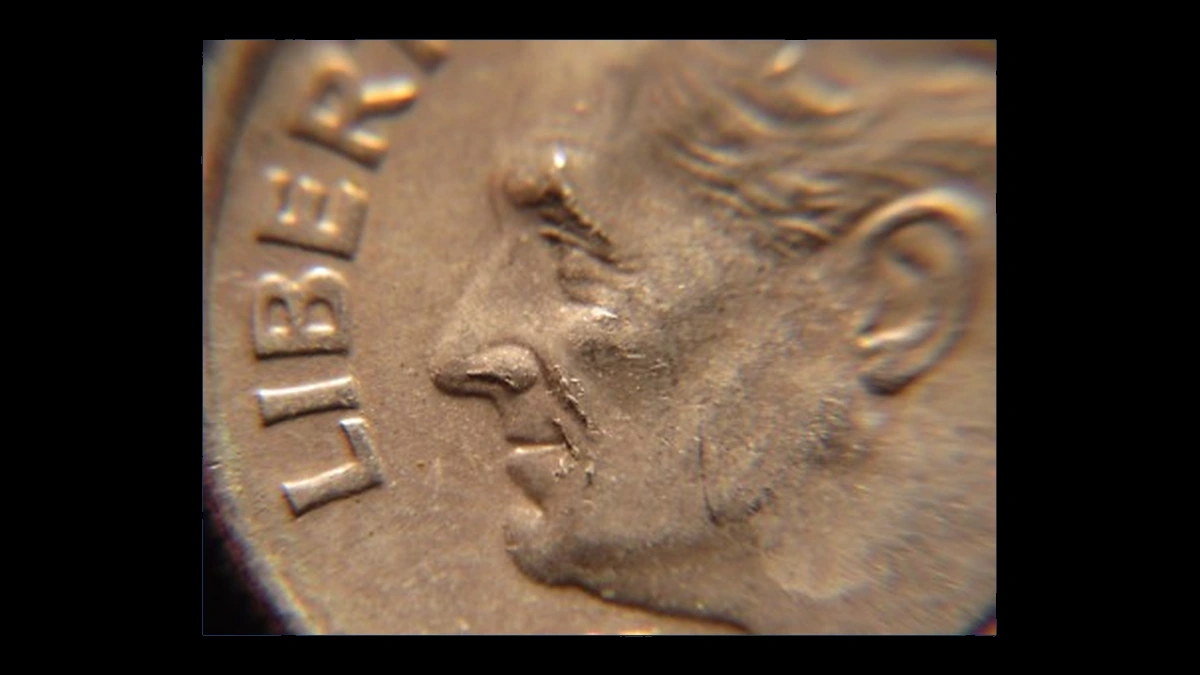
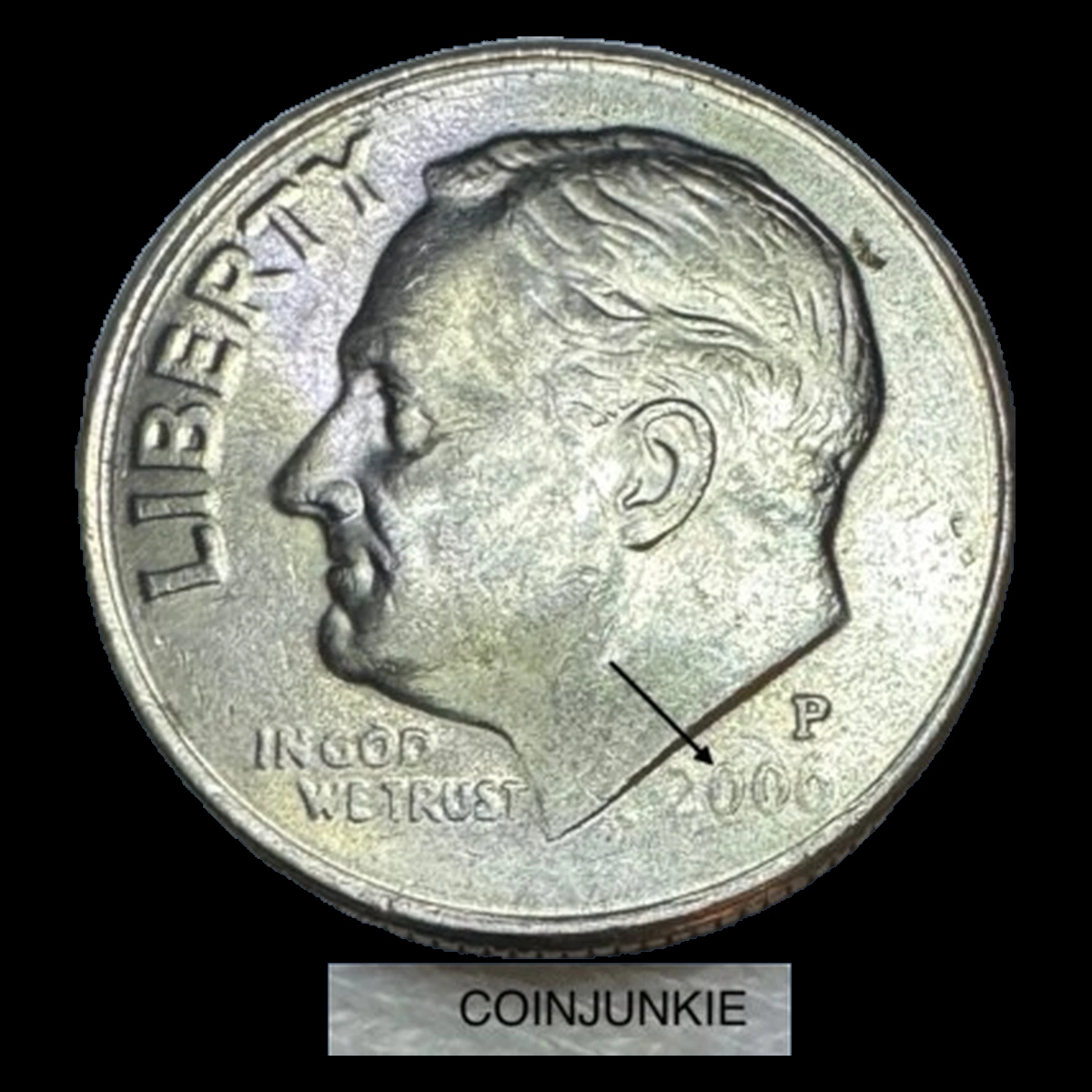
A seller described a raised patch behind Roosevelt’s head on a 2006-P dime as a cap-shaped die chip. A small piece missing from the die allows metal to fill the opening and form the bump.
A narrow split in the tool instead leaves a raised crack line. Other 2006 cracks are reported without one route shared by all examples.
How to Identify
Study the junction between the raised patch and the back of the portrait. The seller’s cap description should correspond to original raised metal rather than dirt or displaced metal beside a scratch.
A crack ridge is also different from an opening through the coin itself. Follow the actual relief under changing light.
A matte appearance can belong to a satin collector-set finish and is not itself evidence of die damage. Select comparison photographs with the relevant finish in mind.
What It’s Worth
Minor chips and short cracks through clearer examples are estimated at $2–$50 for the complete coin. Tiny features may add very little.
The seller’s combined chip-and-strike-through listing asks $2.25. That is one asking price for one dime, not two separate transactions.
3. 2006 Dime Something interrupts the strike: struck-through Error
The same Philadelphia listing also describes a strike-through without identifying its exact location or the material involved. An obstruction can block detail or leave an impression while the coin is struck.
This differs from the raised chip caused by missing material in the die. Two features can coexist on a coin without sharing a cause.
How to Identify
Follow the intended design into the affected area to determine whether it was interrupted or cut afterward. A scrape can disturb finished detail and push metal into a lip.
Do not identify wire, cloth, or another object from a vague hollow. The supplied description cannot provide a location or material that it does not establish.
Normal weight remains possible because an obstruction need not remove any blank metal. Check the complete coin and edge for later impacts that could explain the mark.
What It’s Worth
Small clear areas are estimated at $5–$40, with larger recognizable impressions around $40–$150. These are whole-coin comparison estimates.
The seller’s $2.25 offer includes this reported feature and the chip together. It is not a completed sale, and stronger examples underlying the upper range may differ substantially from that inexpensive listing.
4. 2006 Dime Gaps interrupt the original outline: clipped planchet Error
The Philadelphia double-clip example weighs 2.13 grams and was graded ANACS AU58. A separate specialist catalog shows a large straight clip graded ANACS MS63, with its mint unassigned in the supplied account.
Both describe metal absent from the blank before the design was struck. Two gaps on the Philadelphia coin do not turn it into two separately priced objects.
How to Identify
Inspect each missing section’s endpoints and the transition from rim to gap. Natural flow around the opening differs from fresh saw marks or a cut through completed letters.
Use the 2.13-gram record for the double clip only. Compare intact spans with the normal diameter, and retain the large straight-clip specimen’s separate identity.
Weight loss supports missing metal without proving when it disappeared. The struck boundary and surviving reeding supply the essential physical context.
What It’s Worth
Modest genuine clips are estimated at $25–$100, with larger attractive examples around $100–$300. Shape, preservation, and visual impact influence the full price.
The 2.13-gram double clip sold at GreatCollections in January 2026, but its final amount is not supplied publicly here. A sale date alone cannot be converted into a realized price.
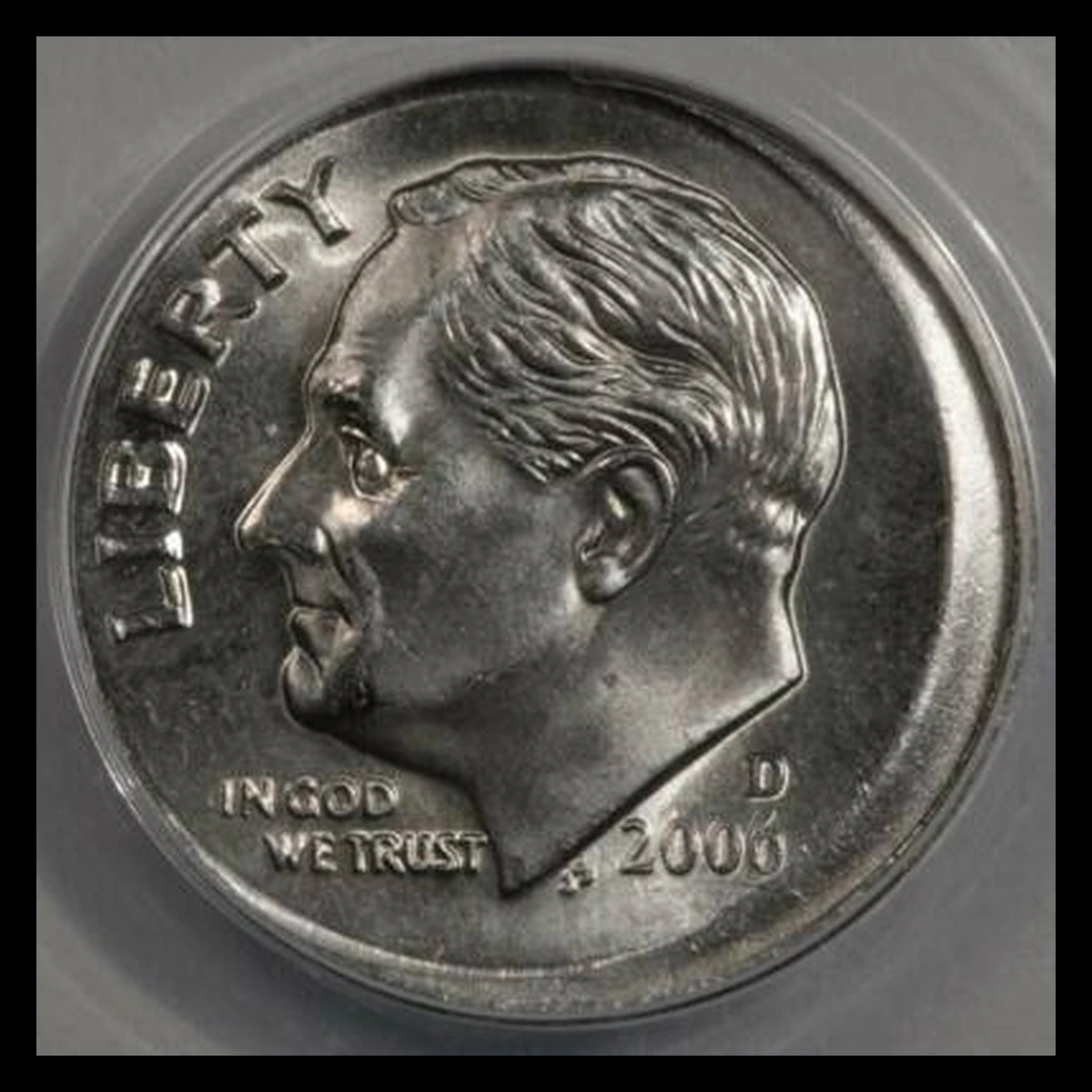
5. 2006 Dime The entire design survives inside a wider border: broadstrike Error
When the collar fails to contain the blank, metal can spread beyond the usual outline. A broadstrike retains the intended design inside that expansion.
The reported regular-coin category includes Philadelphia examples without one established direction of spreading. An uneven border is therefore an observation to investigate rather than a complete diagnosis.
How to Identify
Trace all outer letters on both faces, then measure several spans. Record the widest and narrowest parts rather than relying on a single photograph.
Inspect incomplete edge reeding and the relationship between design and extra metal. Hammering may also widen a coin but commonly crushes existing high points.
Spreading need not reduce weight. Complete naturally struck designs within the changed outline are more persuasive than width or smoothness alone.
What It’s Worth
Genuine examples are estimated at $50–$350 from modest widening through obvious expansion on attractive unworn coins. This is a whole-coin range.
A 2000-P NGC MS65 sold for $159 in September 2025, but that dime was also struck multiple times. Its different date and added error limit its usefulness as a direct 2006 comparison.
6. 2006 Dime Some design misses the metal: off-center strike Error
An off-center blank leaves a crescent unstruck while another part of the design falls beyond its edge. This is different from complete design merely sitting inside an expanded border.
The 2006 circulation reports include Philadelphia examples without a fixed percentage or direction. A candidate needs its own date and surviving mint evidence.
How to Identify
Compare the full outlines of both faces. If one design stays centered while the other shifts, a misaligned die may explain the result.
Examine the boundary between design and plain metal for abrasion that could have erased finished detail. Genuine unstruck metal should not require that later removal.
Find the readable 2006 date before assigning the year. If the mintmark position escaped the strike, its absence cannot establish an omitted mintmark or a particular mint.
What It’s Worth
Smaller genuine readable-date offsets are estimated at $30–$150, with more dramatic attractive examples around $150–$500. Preservation and remaining design affect the price.
A 1977 NGC MS64 Full Bands dime struck ten percent off-center sold for $109 in June 2026. It is a different-year comparison, not a price for a specified 2006 percentage.
7. 2006 Dime Copper is exposed or a layer is locally flawed: missing or defective cladding Error
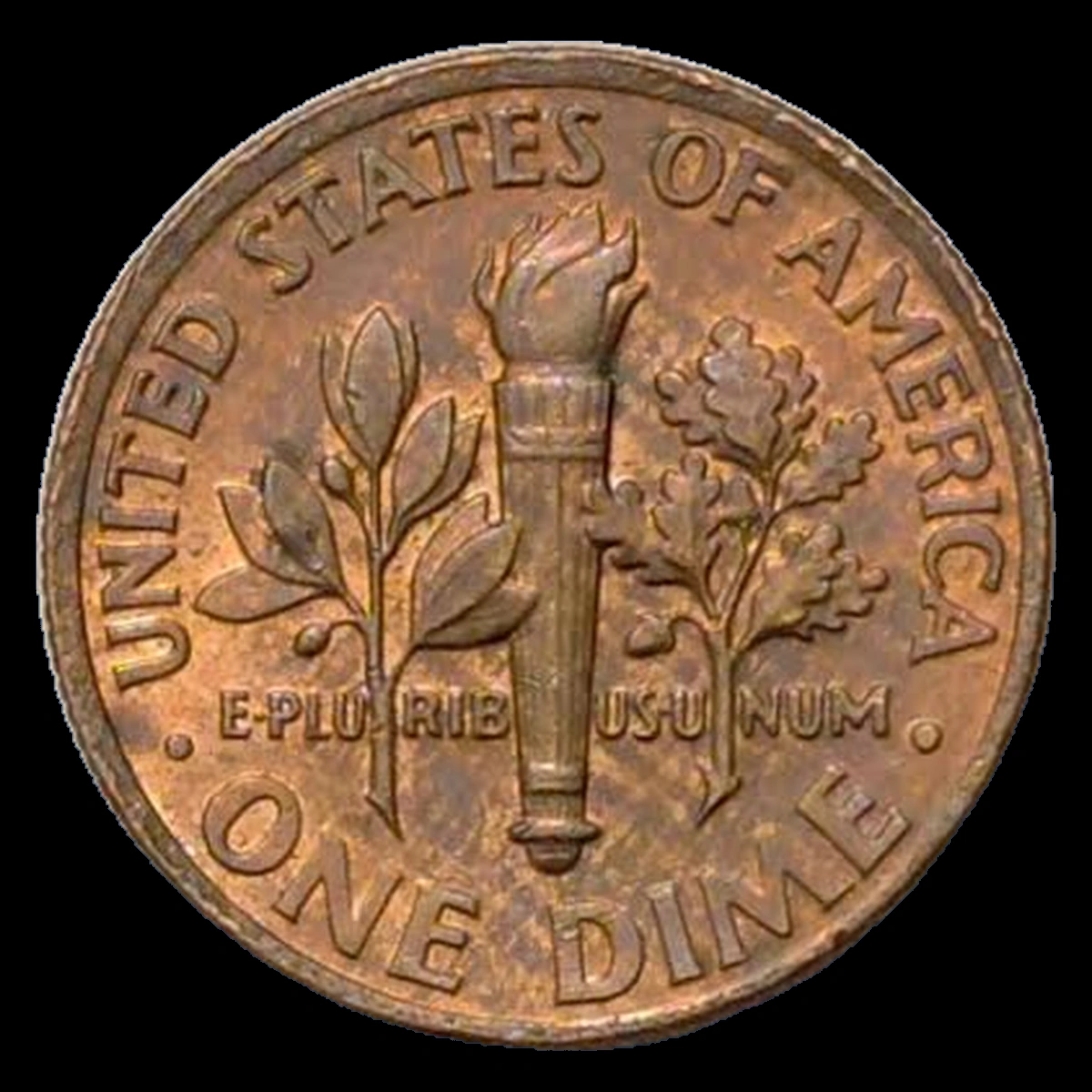
The documented PCGS MS64 Philadelphia coin lacks its reverse outer layer, exposing copper beneath the torch design. Separate Denver reports do not establish that same affected face.
A specialist example graded NGC MS66 is labeled defective cladding. That can describe a local flaw rather than an entire missing face layer.
How to Identify
Compare the unusual face with the other side and the edge’s layered structure. Brown staining alone does not show that outer metal is physically absent.
For local defects, inspect a boundary, lifting area, or separation without disturbing loose metal. An attached flap may not measurably reduce weight.
Use the 2.268-gram clad standard, not the silver Proof’s 2.50 grams. The surface, edge structure, and any weight loss should agree with the proposed layer defect.
What It’s Worth
Clear local defects are estimated at $30–$150, while larger missing-layer coins fit roughly $150–$600. Both ranges concern complete coins.
A PCGS MS64 2018-P missing its front layer brought $384 in July 2021. Its date and affected face differ from the Philadelphia 2006 reverse-layer example.
The 2006-P auction page records a July 2015 sale without a public final amount here. Its $40 opening bid is not the realized price.
Conclusion
The finish and metal set the correct baseline: an ordinary clad dime, satin collector-set coin, and silver Proof need appropriate comparisons. After that, the shape of the feature determines the next check.
Keep distinct clipped and cladding specimens attached to their own records. Hidden final prices and opening bids do not supply auction results, while a chip and strike-through on one listed dime still share one total price.