Rare 1887 Dime Errors (List & Pictures)
The smallest 1887 dime errors may require magnification, while a displaced strike is visible across the room. Estimated whole-coin values for the eleven groups below run from $20–$4,500.
An 1887 Philadelphia dime struck ten percent off center realized $2,990 on August 21, 2004. Follow the date, shield, lettering, reverse, and rim to decide which evidence applies to your coin.
| Inspection area | Feature | Estimated value |
|---|---|---|
| Date | Repunched numerals | $50–$650 |
| Shield | Misplaced digits | $75–$750 |
| UNITED on 1887-S | Doubled obverse | $75–$1,000 |
| DIME or wreath | Doubled reverse | $60–$900 |
| S below bow | Repunched mintmark | $80–$1,200 |
| Unexpected design outline | Clashed dies | $30–$300 |
| Raised rough texture | Rusted reverse die | $25–$250 |
| Weak or impressed patch | Struck-through or filled die | $50–$800 |
| Raised lines | Die cracks or shattered dies | $20–$400 |
| Reverse rim of 1887-S | Partial cud | $150–$1,500 |
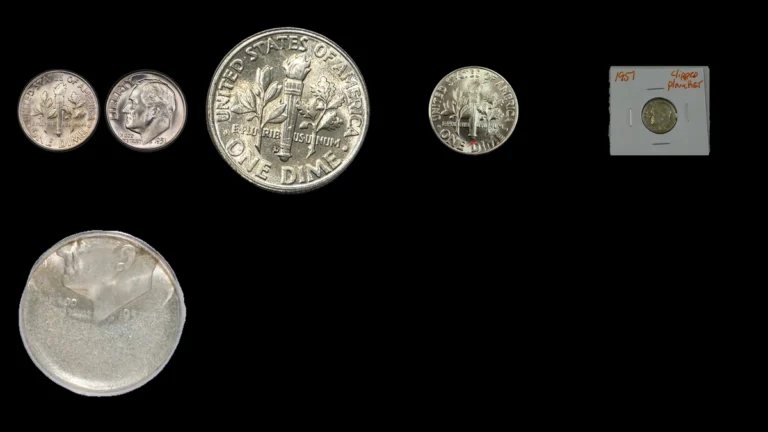
| Blank crescent | Off-center strike | $800–$4,500 |
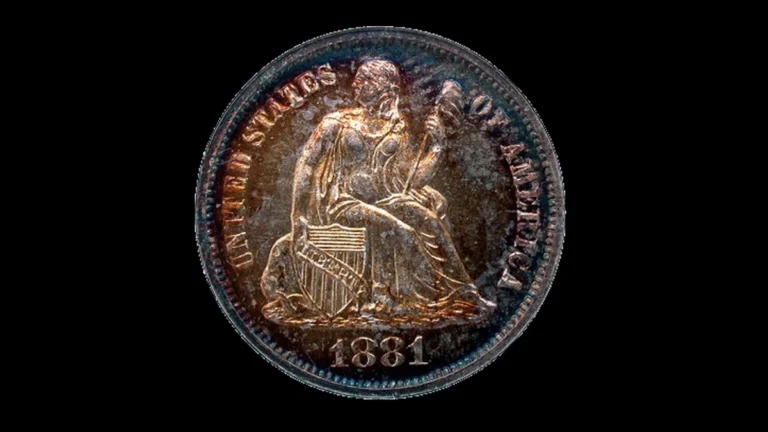
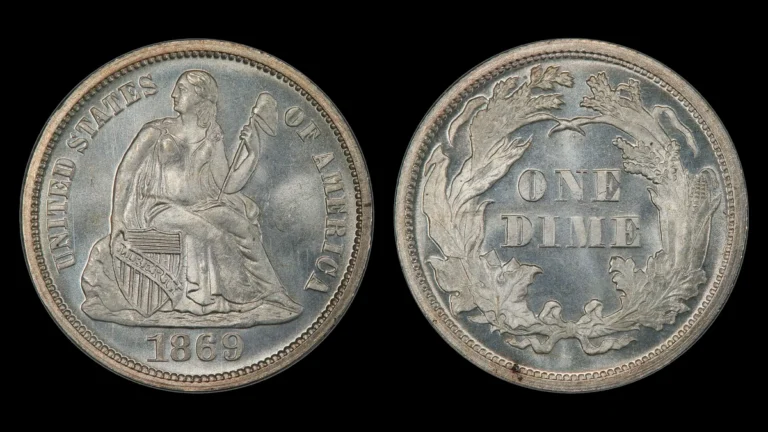
Establish the mint before using a close-up comparison: an S below the reverse wreath bow identifies San Francisco. An ordinary dime of this date contains 90% silver, weighs 2.50 g, and measures about 17.9 mm, with grooves around the edge.
Measurements can support identification when the coin is accessible, although wear can affect the reading. Leave original surfaces untouched so that small raised features remain available for comparison.
1. 1887 Dime Extra outlines beside the date: Repunched Date Error
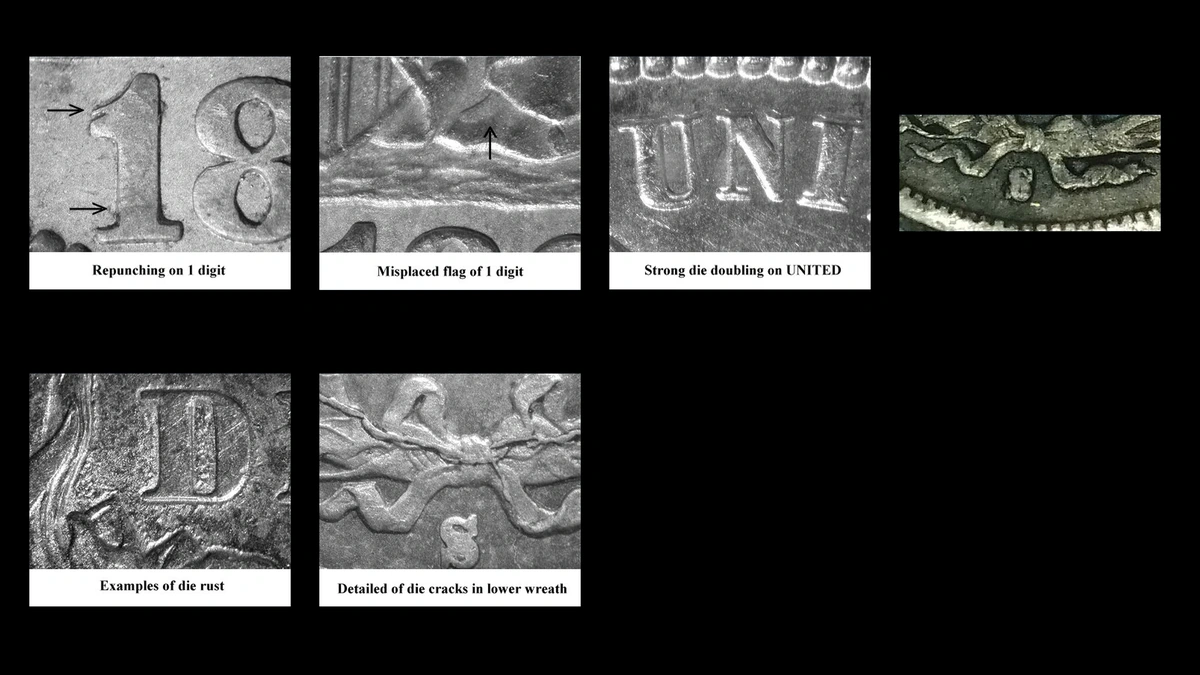
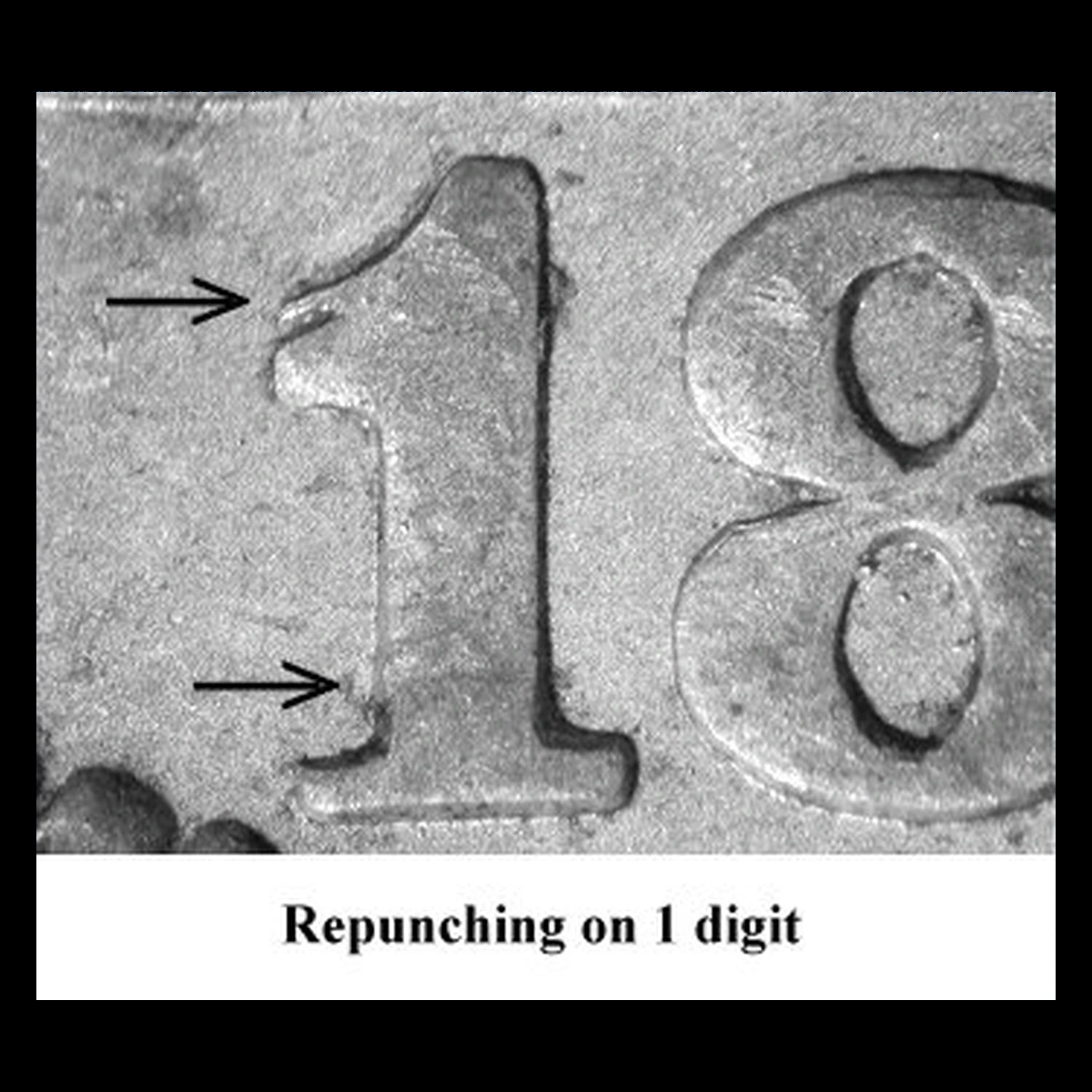
The date offers a useful first close-up because an earlier punch placement can survive beside a finished numeral. Philadelphia records include repunching on 1 or 18, while San Francisco examples include 1 or 7.
These features originated when the date punch entered a die, the steel stamping tool, in more than one position. Each variety preserves its own arrangement of overlapping numeral shapes.
How to Identify
Trace the complete numeral first, then examine the additional stem or curve. It should make sense as part of another placement of that numeral rather than an unrelated line.
Include neighboring digits in a sharply focused photograph and compare the appropriate mint’s variety. Scratches cut across finished metal, while a flat shelf from movement during striking need not reproduce a rounded punch outline.
What It’s Worth
$50–$650 is the estimated whole-coin range for clearly identified examples in worn through lightly worn condition. Strong surviving punch detail improves the usefulness of a coin to a variety collector.
The supplied $360 sale of an unworn 1887-S concerns a repunched mintmark, not a repunched date. It offers same-year context without establishing a transaction for these date varieties.
2. 1887 Dime A numeral among the shield lines: Misplaced Digits Error
Move upward from the date into Liberty’s shield, where a number may interrupt the normal pattern. A misplaced date punch entered the tool outside its intended date area.
Philadelphia records describe shield digits, including a misplaced 1. A San Francisco variety also has a shield 1, but it needs its own mint-specific match.
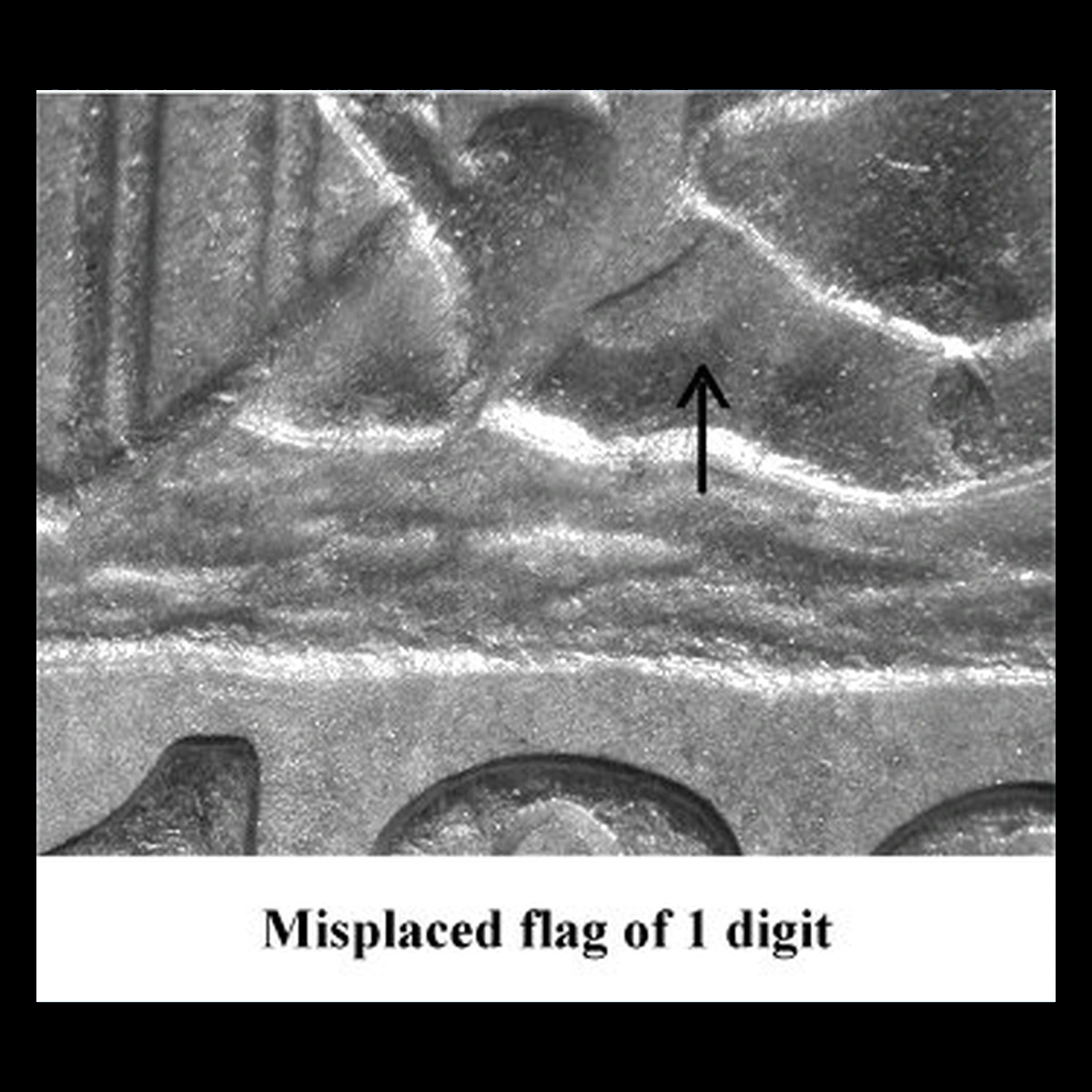
How to Identify
Study an ordinary shield before interpreting an odd stroke as a number. A proposed digit should add to or interrupt the expected lines in the documented position.
Change the light to test whether a normal stripe only appears numeral-shaped from one angle. Chips and scratches can also produce short marks, so match a coherent shape rather than collecting speculative fragments.
What It’s Worth
$75–$750 is the estimate for clear examples in worn through lightly worn condition. The coin’s preservation and the certainty of its attribution matter alongside the unusual location.
A PCGS XF40 1877-CC dime with an 8 in the rim teeth sold for $216 in February 2024. That worn coin illustrates demand for misplaced digits, but its year, mint, and digit location differ from the 1887 shield varieties.
3. 1887 Dime Extra contours in UNITED: San Francisco Doubled Die Obverse Error
On a coin bearing the S mintmark, inspect UNITED on the front. The recorded variety has duplicated lettering formed in the die before that tool struck any coins.
The same front die was paired with more than one reverse die. Different reverse crack patterns can therefore accompany the same doubled front lettering.
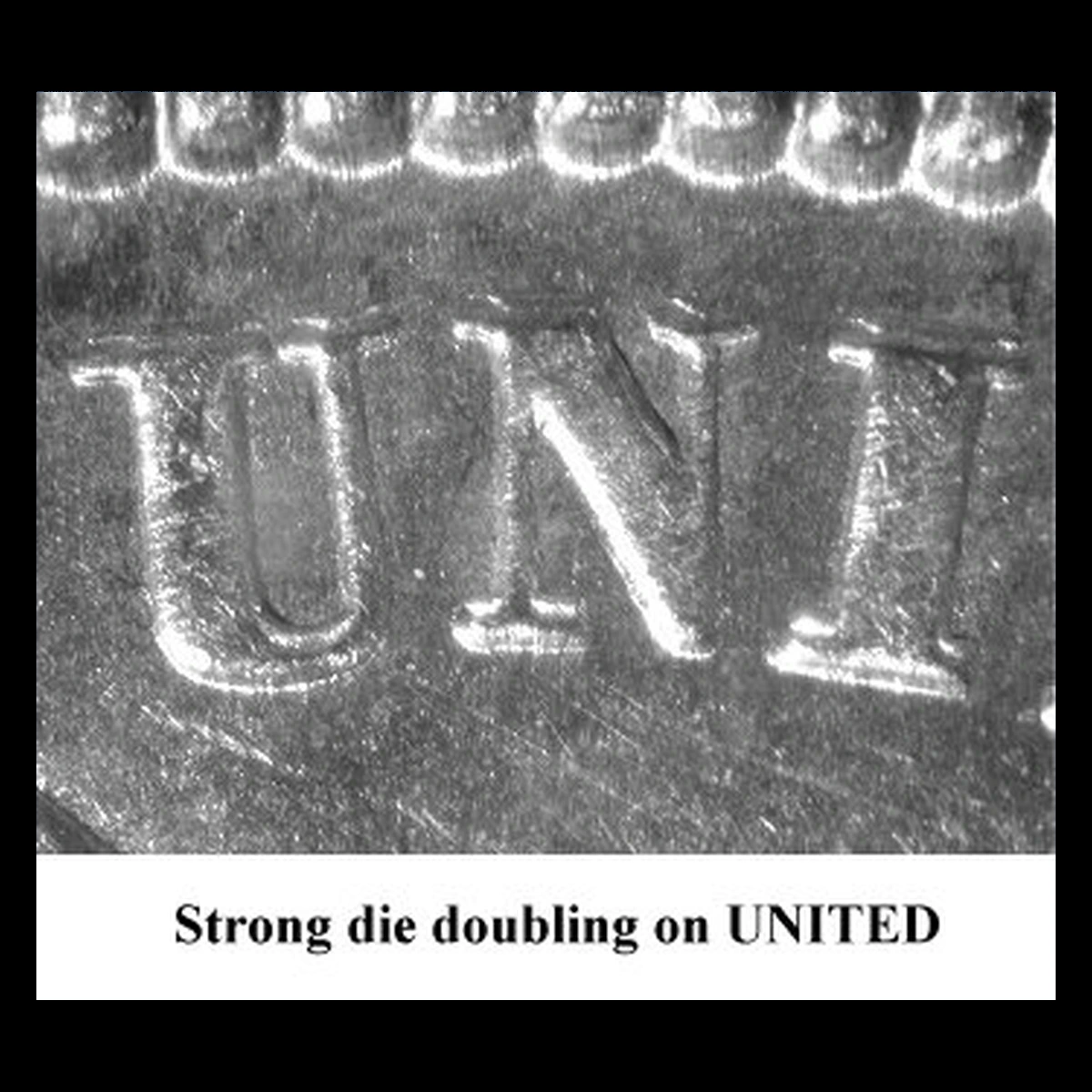
How to Identify
Compare several letters across UNITED under magnification. A matching sequence of extra contours is more informative than one bright line along a letter.
Rounded raised duplication should remain when the light moves. Do not reject an otherwise accurate front match merely because the reverse belongs to a different recorded pairing.
What It’s Worth
$75–$1,000 is the estimated range for a correctly matched worn through lightly worn 1887-S example. This is not an adopted auction result for the exact obverse die.
The $360 MS62 repunched-S sale involves another feature and an unworn coin. Use it only as nearby market context, not a direct price for doubled UNITED.
4. 1887 Dime Duplicated detail in DIME or the wreath: Doubled Die Reverse Error
The mint determines where to look on the back. Philadelphia examples highlight the D of DIME, whereas San Francisco examples involve the lower-right wreath.
Both belong to reverse doubled dies, with duplicate detail already present in the stamping tool. They are separate patterns rather than interchangeable close-up targets.
How to Identify
Examine neighboring contours around the affected letter or leaves. Agreement across the documented area helps separate a repeated die pattern from random surface distortion.
Check whether the extra edge is rounded duplication or a lower, flat shelf that reduces the normal shape. Soft leaves and thick letters alone cannot establish which process occurred.
What It’s Worth
$60–$900 is the estimate for identifiable examples in worn through lightly worn condition. Greater separation and clean surfaces make the feature easier to evaluate.
An 1877 doubled-reverse dime graded ANACS AU58 sold for $149 in March 2024. Its slight wear makes it a useful same-series comparison, although neither its year nor its die is the same.
5. 1887 Dime Another S inside the mintmark: Repunched Mintmark Error
Below the bow, the S can retain an earlier curved outline inside its loops. Repeated entry of the mintmark punch into the die created the overlapping impressions.
One documented pattern affects the upper loop, while another preserves traces in both loops. The normal medium-sized S is not an error simply because of its size.
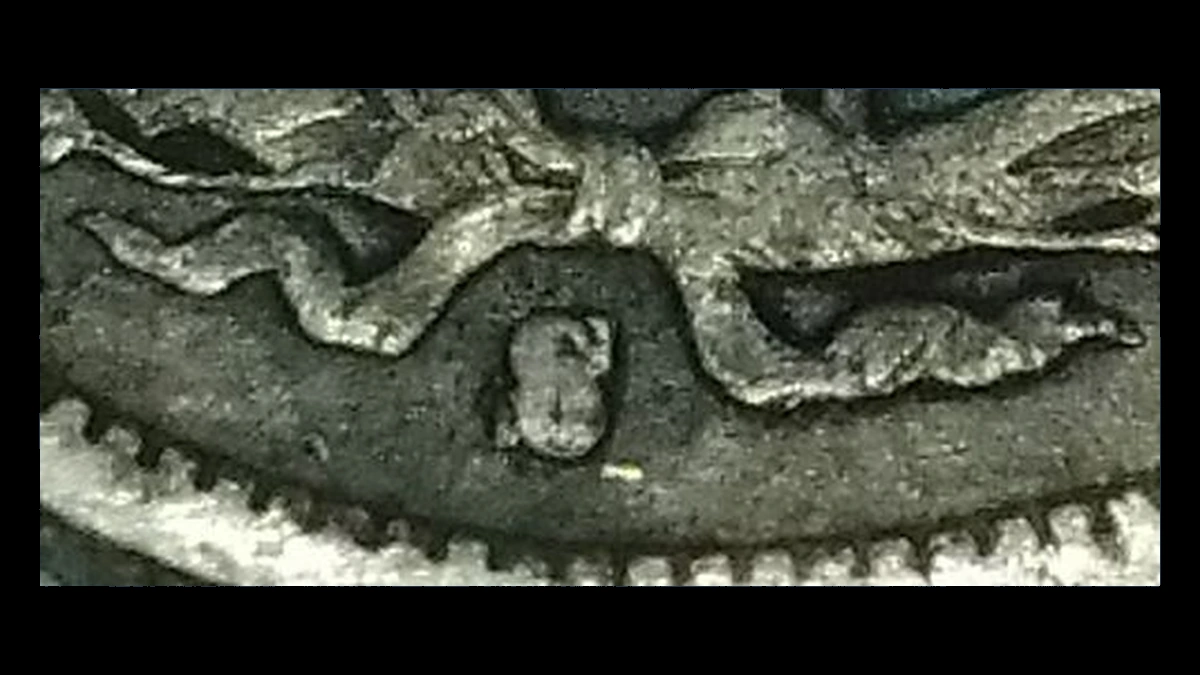
How to Identify
Keep the entire mintmark visible while enlarging the interior curves. Compare the earlier outline with the correct variety instead of expecting equal duplication in both loops.
Inspect the base of the S for seams or tool marks that might indicate an added letter. Roughness and shelf-like doubling around an ordinary mintmark require a different explanation.
What It’s Worth
$80–$1,200 is the estimated range across collectible worn through lower-grade unworn examples. An F-104 coin graded PCGS MS62 brought $360 at Stack’s Bowers in March 2026.
A PCGS XF40 example brought $281.25 at GreatCollections in October 2025. Its F-104 archive entry provides a specific variety comparison rather than a general price for every repunched S.
6. 1887 Dime Part of the opposite design in the background: Clashed Dies Error
An unfamiliar outline between normal features may have come from the other face. Philadelphia records include clashes affecting both faces and lighter reverse marks.
The dies contacted each other without a blank between them, acquiring marks that could appear on later coins. The position depends on the particular tools and their contact.
How to Identify
Compare equal-sized photographs of both designs and identify the possible source of the extra contour. Its orientation and position must fit how the dies would meet.
Follow the complete visible fragment under side lighting. A stray scratch or later pressure mark does not become a clash merely because it lies in a plausible area.
What It’s Worth
$30–$300 is the estimated whole-coin range for recognizable clashes on ordinary worn Philadelphia examples. This range is an appraisal rather than a recorded sale of a particular clash.
Original surfaces can matter more than the number of faint marks. If the coin also carries a repunched date or cracks, assess the combination without adding several complete coin values.
7. 1887 Dime Raised roughness across the reverse: Rusted Die Error
Texture can preserve information about a tool as well as a coin. Small rust cavities in a die can fill with silver during striking, leaving raised rough spots on the finished dime.
The recorded Philadelphia reverse is paired with misplaced shield digits. The supplied description does not establish one precise rough patch that every candidate must show.
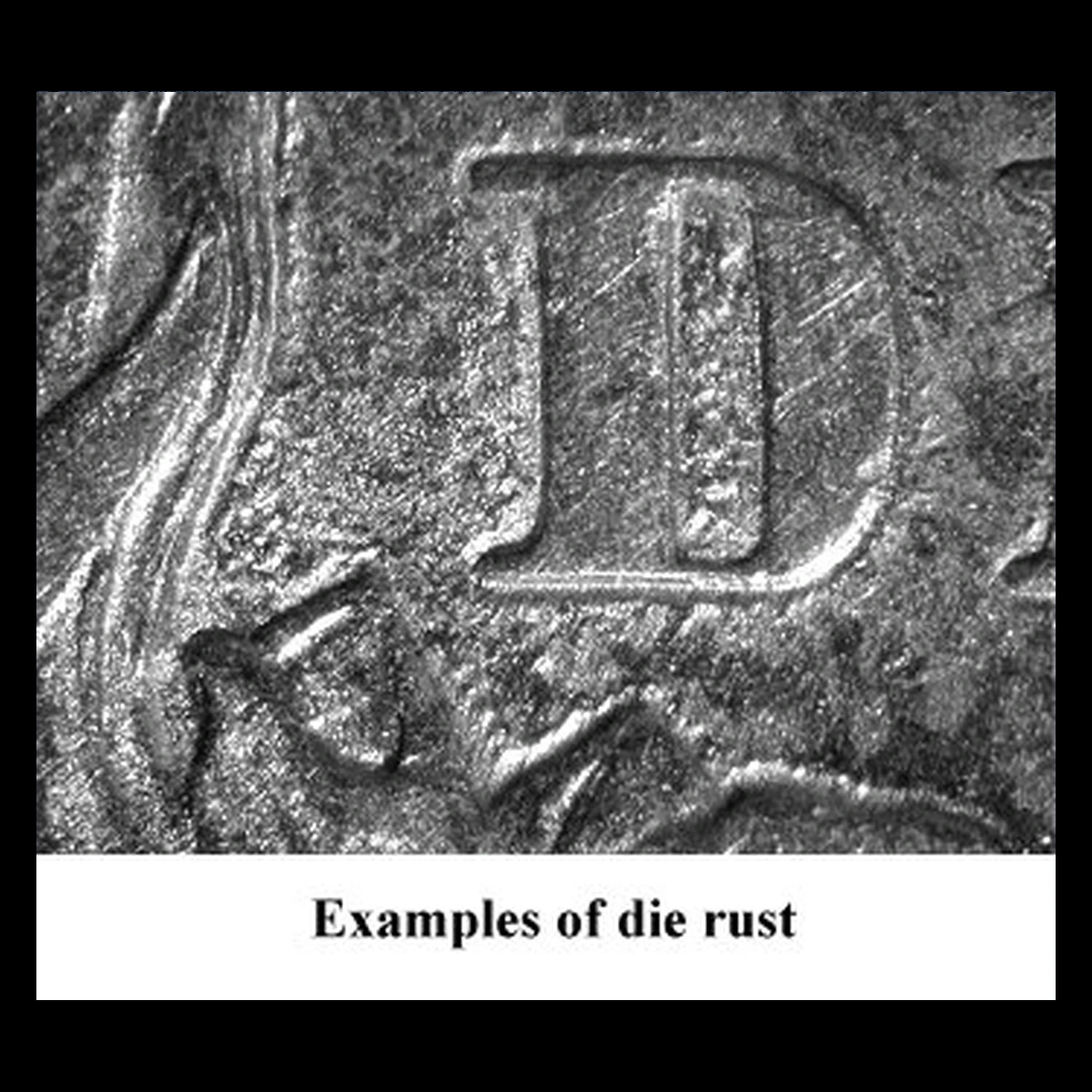
How to Identify
Use light from the side to separate bumps above the surface from pits below it. Later corrosion commonly removes metal, whereas rust cavities in a die can create raised texture.
Compare a broad section of the reverse rather than selecting one grain. Dirt and casting texture can mislead, so the associated shield digits and the overall recorded pattern are useful supporting evidence.
What It’s Worth
$25–$250 is the estimated whole-coin range for a worn Philadelphia example with clearly matched die-rust texture. No separate auction result is assigned to this feature.
The paired shield digits and remaining design detail belong in the same appraisal. Roughness caused by later corrosion does not qualify for the estimate merely because it resembles a photographed texture.
8. 1887 Dime A weak patch or shallow impression: Struck-Through or Filled Die Error
A local interruption in the design may reflect material between the blank and die. Grease can block fine detail, while a firmer obstruction can press an impression into the metal.
The supplied year guide discusses the mechanism without identifying a particular 1887 specimen. There is therefore no documented location here that can be treated as an exact diagnostic.
How to Identify
Compare the weak area with surrounding letters and high points to determine whether ordinary wear accounts for it. Weak striking pressure and later polishing also can reduce detail.
A scrape may cut across the design or push metal along its edge. Look for a boundary consistent with interrupted striking, and do not name cloth, wire, or grease from a featureless hollow alone.
What It’s Worth
$50–$800 is a comparison-based estimate for a professionally identified 1887 example. A distinct impression is generally more persuasive than modest unexplained weakness.
A 1951-S Franklin half dollar with a strike-through was indexed at $134 in April 2026, graded NGC MS64. That unworn half is a different denomination and date, so its larger size limits the price comparison.
9. 1887 Dime Raised lines crossing letters and leaves: Die Cracks and Shattered Dies Error
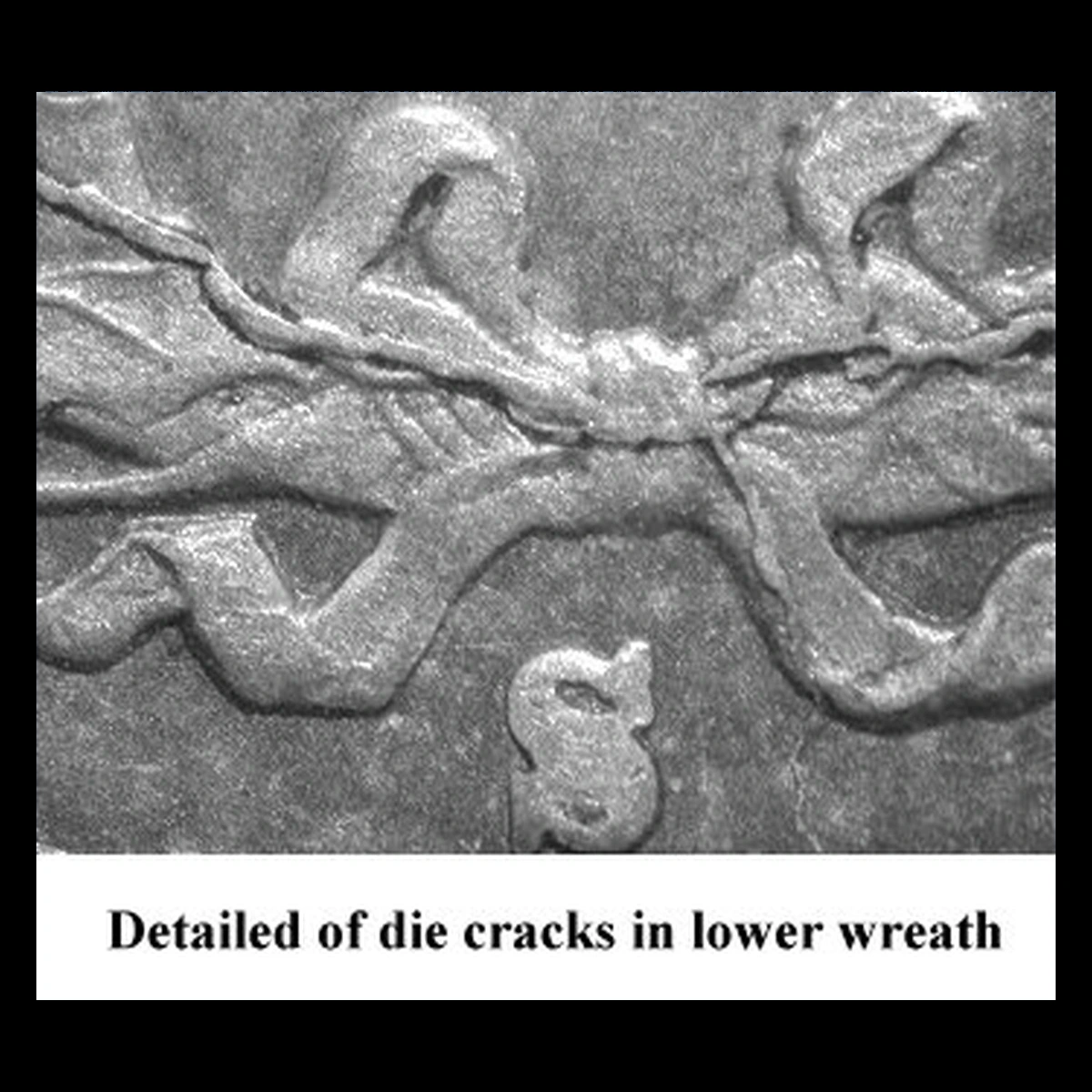
Cracks in a working die allow metal to enter their openings, leaving narrow ridges on the coin. Philadelphia examples include lines through UNITED STATES and curved cracks around the wreath.
San Francisco records show separate branching reverse patterns, sometimes more extensive. A web of cracks does not by itself establish a rim cud.
How to Identify
Trace the ridge across adjoining letters or leaves with angled light. A scratch cuts into the coin, and a physical split through the dime is different from a die crack reproduced on its surface.
Check the other face if the metal seems split. For a die attribution, the path and branches must agree with the correct mint’s photographs.
What It’s Worth
$20–$400 is the estimated range for worn through lightly worn examples. A clear branching network can draw more interest than a short, faint line.
No particular shattered-die auction result is assigned here. Heavy corrosion or scratches can reduce value by obscuring the original pattern.
10. 1887 Dime A reverse rim break near eight to nine o’clock: San Francisco Partial Cud Error
The documented 1887-S example connects an edge feature with a wider network of reverse cracks. With the back upright, the partial cud lies between eight and nine o’clock.
The specialist description records a late stage of die failure at the rim. Earlier date-punch details can become less distinct as the tools change, so they need not all remain equally visible.
How to Identify
Compare the rim connection and the surrounding crack network with the San Francisco variety gallery. An isolated edge bump cannot establish the recorded late die state.
Look for original struck metal changing the rim design rather than a dent or folded edge crushing existing grooves. Keep the complete reverse and the S in view when documenting the match.
What It’s Worth
$150–$1,500 is the estimate for a clearly matched worn through lightly worn example. No completed sale price is supplied for this exact break.
The rim feature and cracks contribute to one whole-coin appraisal. Edge damage can obscure the original boundary and weaken both the attribution and its value.
11. 1887 Dime Unstamped metal beside missing design: Off-Center Strike Error
A broad plain crescent gives the final inspection a much larger target. When the blank sat partly outside the dies, some intended design missed the metal on both faces.
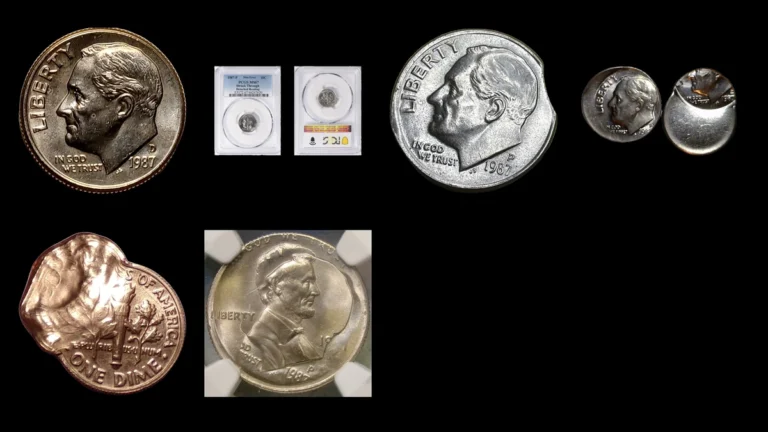
The recorded Philadelphia PCGS MS63 example was struck ten percent off center toward one o’clock. Its small edge mark in the empty margin is later damage, separate from the original striking error.
How to Identify
Show both faces and the entire outline when checking the unstamped area. Incomplete designs must agree with the position of the same misplaced blank.
Inspect the plain metal for grinding or polishing, and confirm that the date survives. A widened border around complete designs points toward a different striking problem.
The guide’s separate AU58 example has slight wear and should not inherit the MS63 coin’s exact characteristics. The ten-percent, one-o’clock description belongs to the documented Philadelphia specimen.
What It’s Worth
$800–$4,500 is the estimated range for collectible worn through attractive unworn examples with readable dates. The Philadelphia PCGS MS63 auction example sold for $2,990 at Heritage on August 21, 2004.
That historical result is useful evidence, not a current quotation. Degree of displacement, original surfaces, and remaining design all influence a present comparison.
Conclusion
The mintmark directs the search, and the feature’s shape determines the next comparison. Numeral fragments, doubled lettering, raised ridges, and unstamped metal each preserve different evidence of how an 1887 dime was made.
Use the $20–$4,500 estimates for the complete coin, keeping wear and later damage in view. A precise match to the correct die or striking event carries more weight than a collection of unexplained marks.