Rare 1918 Dime Errors (List & Pictures)
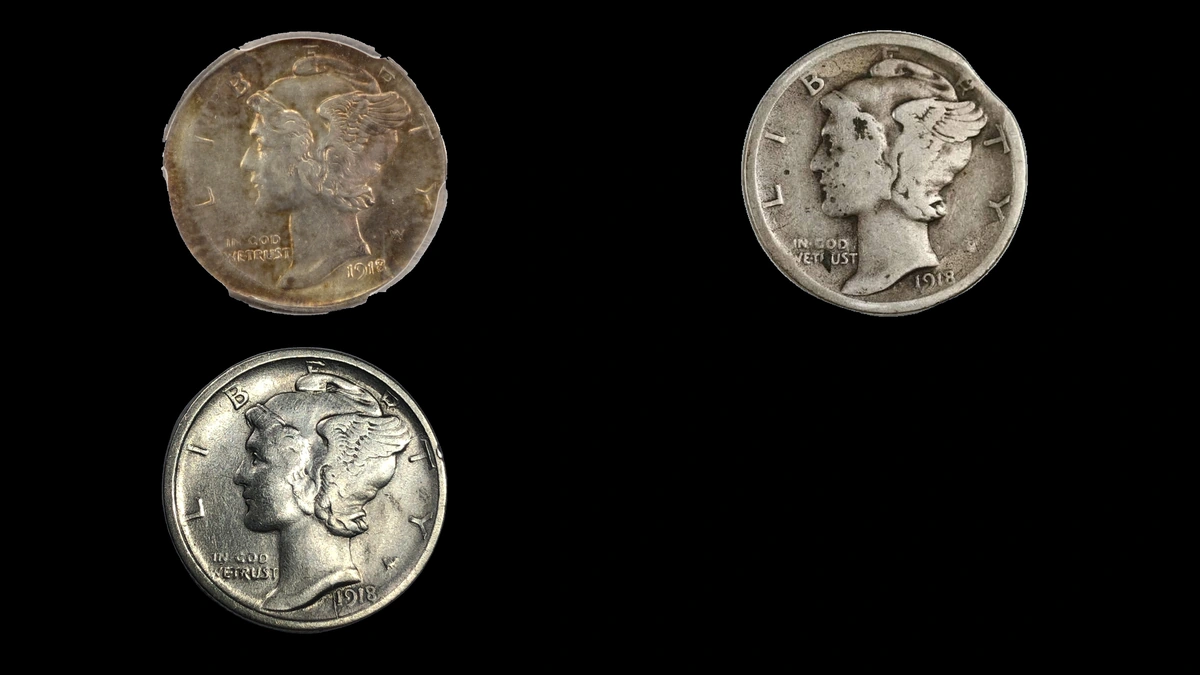
Finding Liberty on both sides of a dime would be surprising enough. On the recorded 1918 brockage, the second portrait is also backward and pressed into the metal; the coin brought $4,887.50 in July 2009.
The nine groups of 1918 dime errors below have estimated whole-coin values of $15–$8,000. Begin with what changed in the picture, then check the outline and the difference between raised lines, cracks, and peeling metal.
| What looks wrong | Useful check |
|---|---|
| Backward portrait on the back | Brockage: sunken copy versus ordinary raised design |
| Extra date strokes or mint-letter curves | Doubled die or repunched mintmark |
| Unusual border | Complete spread design, incomplete offset design, or missing metal |
| A line or opening | Raised die crack, true blank crack, or thin lamination |
1. 1918 Dime Liberty Appears Backward on the Reverse: Brockage Error
The recorded 1918 dime has a normal raised front and a reversed, sunken copy of that front on the back. The usual bundle of rods is replaced by the impression.
A brockage forms when an already-struck coin presses its design into another blank during production. The regular die still strikes the other face.
How to Identify
Compare the two portraits and follow the backward letters and date. The reverse copy must sink into the metal rather than rise like an ordinary design.
Scattered dents or another normally raised portrait do not make the same error. Inspect the edge and rim for signs of later pressure from coins deliberately squeezed together.
The error replaces the usual mintmark area. Its missing letter cannot establish Philadelphia, Denver, or San Francisco, so the specimen should not receive a guessed mint attribution.
What It’s Worth
$3,000–$8,000 is the estimate for comparable dated Mercury brockages with clear impressions and attractive surfaces. Mint Error News reports $4,887.50 for the NGC MS62 example in Heritage’s July 2009 Summer FUN auction.
MS62 describes an unworn coin with noticeable marks. Its complete backward portrait and documented identity make it a stronger comparison than an indistinct impression on an altered coin.
2. 1918 Dime The Date or Motto Has Extra Strokes: Doubled Die Obverse Error
The 1918 front-side report points to the date and IN GOD WE TRUST. A doubled die has repeated design in the stamping tool before any coin receives that design.
The well-known 1919 doubled die is a different variety with its own pattern. Its appearance and market should not be transferred to a coin dated 1918.
How to Identify
Study a complete numeral or motto letter, then compare its neighbors. Rounded extra strokes or separated corners can support real repeated design.
A low flat shelf may come from movement during striking. Reflections and scratches can also create a doubled-looking edge without another design contour.
Keep the 1918 date and actual mint in the comparison and seek a matching identified example. The report does not establish one named catalog variety from a single thick letter.
What It’s Worth
$40–$900 is the estimate for genuine identifiable front doubling in circulated through lower unworn condition. Mint, surfaces, and strength of the extra detail affect the whole-coin comparison.
This is an estimated range without a supplied sale of a named 1918 doubled die. Prices for the famous 1919 variety do not establish its value.
3. 1918 Dime Another D or S Curve Remains: Repunched Mintmark Error
Reports concern both Denver and San Francisco mintmarks. Workers punched the letters into the dies individually, and a shifted repeat punch could leave part of an earlier impression.
A repeated D or repeated S is not the same as D over S. Mentioning both mints in the reports does not establish a mixed-letter variety.
How to Identify
Find the mint letter to the lower left of the reverse bundle of rods. Trace the normal letter before checking the extra curve.
The remnant should make sense as another impression of that same letter. Compare its position with the correct 1918 mint’s identified pattern.
A lump, nick, shadow, or flat shelf can change the outline without proving repunching. Change the light and keep the full mintmark in view.
What It’s Worth
$30–$900 is the estimate for recognizable repunching from worn through attractive lower unworn grades. Much of the spread reflects the mint and ordinary condition.
A different-year 1929-S/S in Extremely Fine condition has a $30 dealer asking price. That affordable worn example is a retail comparison, not a recorded 1918 auction sale.
4. 1918 Dime The Design Fits on a Wider Coin: Broadstrike Error
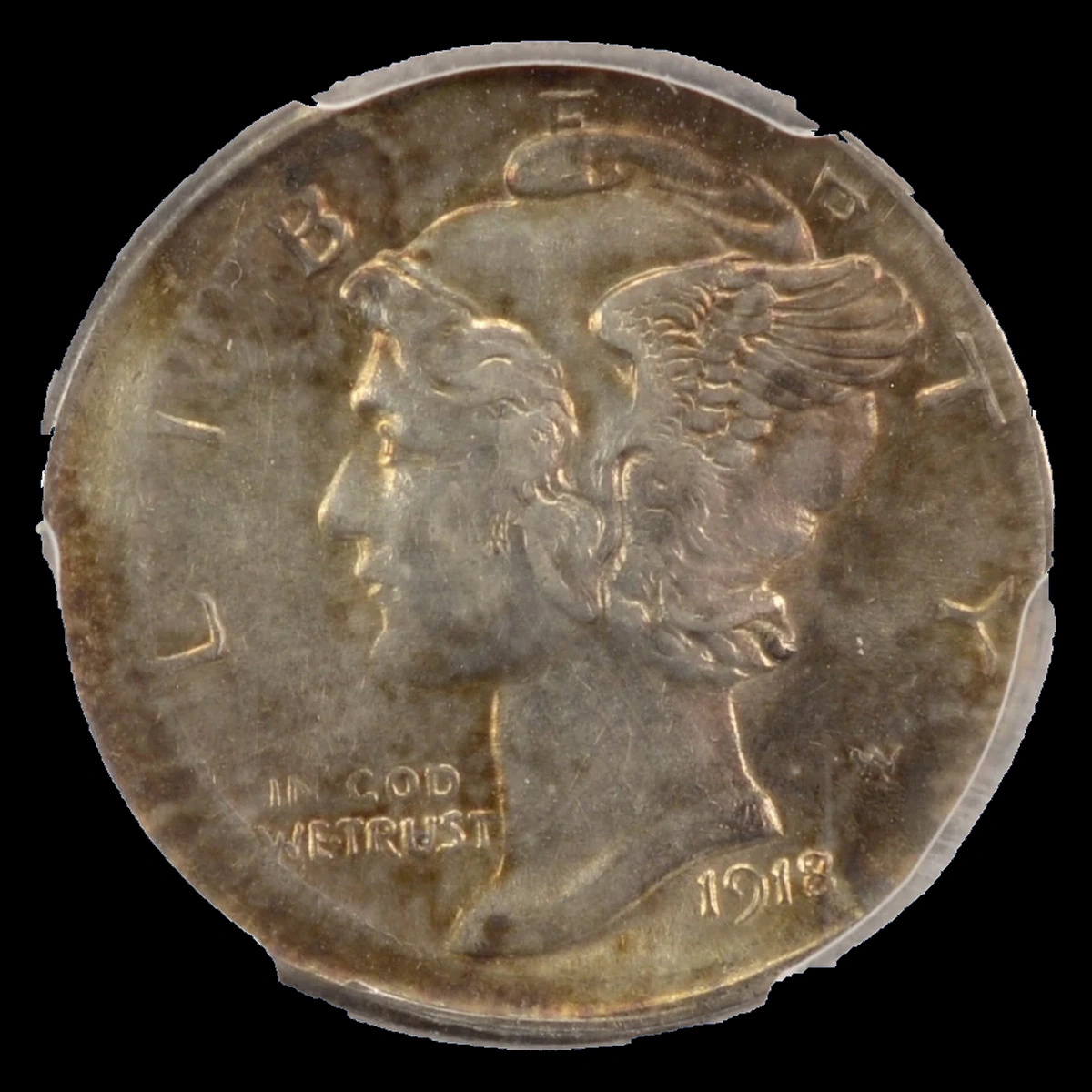
A 1918-S from the Burnham collection was cataloged as a broadstrike and graded PCGS AU58. That grade means only slight circulation wear.
The collar, a ring controlling the blank’s width during striking, did not fully restrain the metal. The coin spread outward while keeping the designs on the disc.
How to Identify
Confirm S and follow the outer letters and major details on both faces. An expanded border alone is less useful than a complete design inside naturally spread metal.
Record several widths against the usual 17.9 millimeters and inspect the edge grooves. Later flattening can also enlarge a coin but often crushes details or leaves impact marks.
A normal 1918 dime contains 90% silver and weighs 2.50 grams before wear. A broadstrike moves metal rather than requiring weight loss, and it does not need a two-level edge from a different collar error.
What It’s Worth
$200–$1,500 is the estimate for circulated through attractive lower unworn 1918-S broadstrikes. The Burnham AU58 is identified without a sale price assigned here.
A 1941-S NGC MS63 broadstrike sold for $228 in September 2025, while a 1920-S NGC AU58 has been offered at $725. One is a sale and the other a dealer ask, both for different years.
5. 1918 Dime Part of the Design Misses the Metal: Off-Center Strike Error
A published error table includes a 1918-D in Fine condition within an 11–35% off-center group. Fine means noticeable wear, and the table’s group does not give the coin one exact percentage.
The blank sat partly outside the dies. A plain crescent remained while some of the intended design fell beyond the opposite edge.
How to Identify
Read the date and Denver letter, then compare both faces for related design loss. The plain crescent should remain original metal rather than a cutout.
A shift confined to one face may concern a single misaligned die. Complete design on a widened coin is better compared with a broadstrike.
Inspect the apparently blank area for scraping and the edge for cutting. The real offset must be judged from the full specimen rather than selected from the table’s range.
What It’s Worth
$200–$2,000 is the estimate for genuine readable-date examples in circulated through attractive lower unworn condition. Strong visual displacement and surviving identifying details help collectors compare them.
A different 1920-D struck 10% off-center sold for $1,020 in September 2025 at PCGS MS62. That unworn coin has a different year and more preservation than the reported 1918-D Fine example.
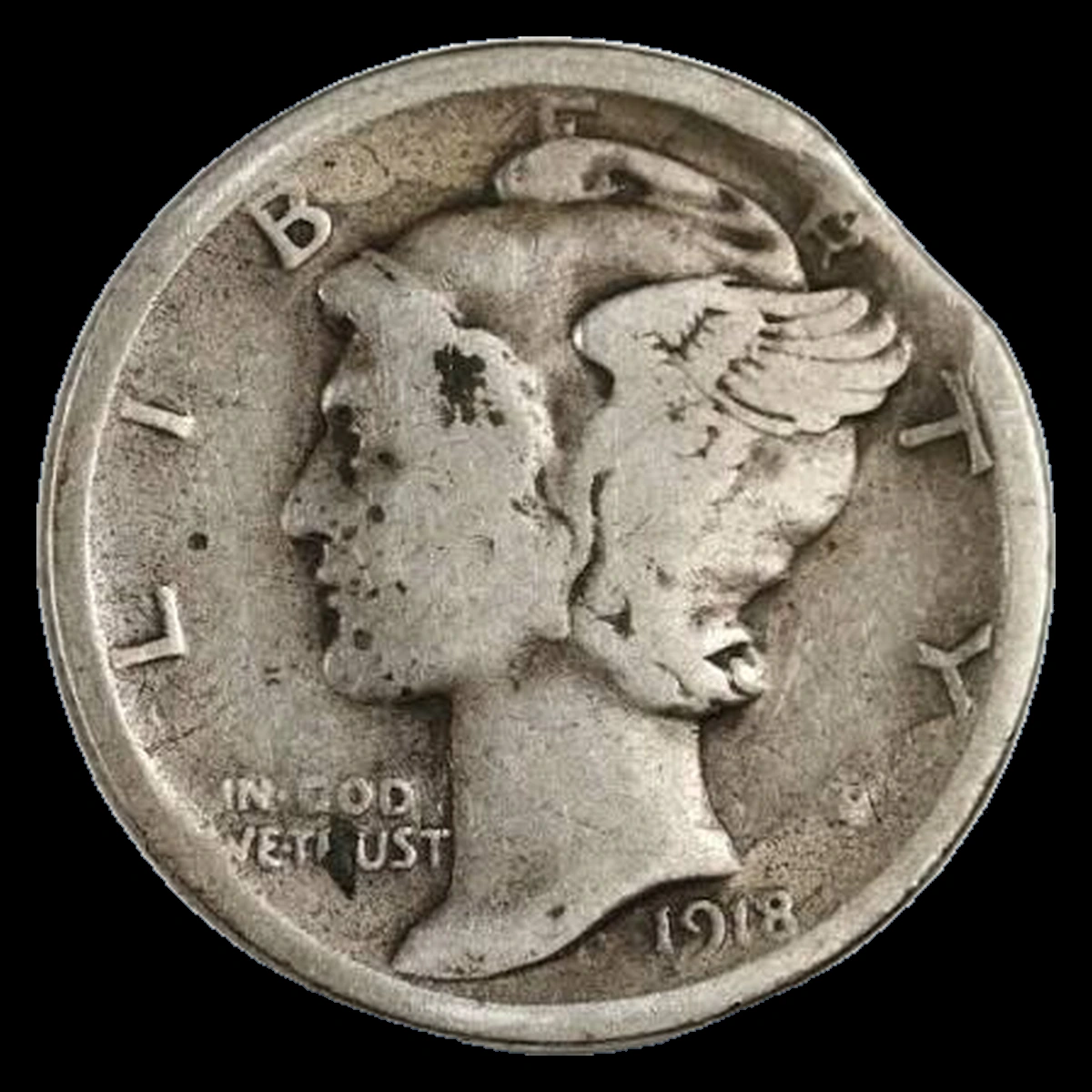
6. 1918 Dime The Edge Has an Irregular Missing Section: Ragged Clip Error
The reported 1918-D clip has a rough boundary rather than a neat curved bite. An incomplete blank cut along the rough edge of the metal strip can produce that appearance before striking.
The dealer catalog described an unworn coin with some original toning, or natural surface color. It gave no fixed clip percentage or clock position.
How to Identify
Look at how the design and rim formed beside the rough missing section. A genuine ragged clip does not have to look like a smooth crescent.
File marks, fresh cuts, bent metal, or tearing through finished details may explain later damage. The neighboring struck features should fit a blank that was already incomplete.
Measure across intact parts and consider the weight of the missing metal. Weakness opposite the gap can support the comparison, but a low weight alone cannot show when the metal disappeared.
What It’s Worth
$60–$700 is the estimate for worn clips through attractive unworn examples. The dealer catalog’s $135 minimum bid was not a winning price.
The range includes the underlying Denver dime and its preservation. A rough gap must first show evidence of an original incomplete blank before it receives a mint-error valuation.
7. 1918 Dime An Opening Starts at Nine O’Clock: Cracked Blank Error
The documented 1918-D has a crack at the left edge around nine o’clock and an NGC AU58 grade. A 2014 Stack’s Bowers catalog offered it with two other error coins.
This is an actual opening in the blank’s metal. The description does not establish how far it passes through the coin, so both faces and the edge are needed.
How to Identify
Hold Liberty upright and follow the opening inward from the left rim. Turn the coin over without flexing it and inspect the corresponding area.
A side view can show which parts remain joined. Bending, crushed edge grooves, or a later blow may explain a break after minting instead.
Leave a sealed graded coin in its holder and use the recorded information. Do not widen an opening to test it.
What It’s Worth
$60–$700 is the estimate for genuine cracked blanks in circulated through modest unworn condition. The 2014 group offering provides no separate price for this dime.
A different 1945-D cracked-blank dime graded PCGS AU50 sold for $77 in September 2024. Its later, more common date is a lower-priced comparison rather than a fixed value for the earlier Denver coin.
8. 1918 Dime A Thin Flake Lifts from the Face: Lamination Error
A weakness inside the silver-copper mixture can let a surface layer separate while the rest of the dime remains intact. The layer may stay attached or fall away and leave a rough opening.
This is lamination, not automatically a crack through the whole disc. The layer itself is the feature to examine.
How to Identify
Look for the thickness of a separating sheet where it lifts or where a flake has been lost. Low-angle light can show the attachment without touching it.
Never pry an attached piece open. Scraping and corrosion can also remove surface metal, so compare the boundary with those possibilities.
Follow any related opening toward the edge and inspect both faces. A rough patch alone is weaker evidence than a visible layer continuing beneath intact metal.
What It’s Worth
$20–$400 is the estimate for genuine laminations in circulated through modest unworn condition. A larger attached flake can display the defect more clearly than a tiny rough spot.
A 1921-D with reverse lamination sold for $74 in February 2013 at NGC VG8, a heavily worn grade. Its scarce date and older result limit the comparison with a 1918 example.
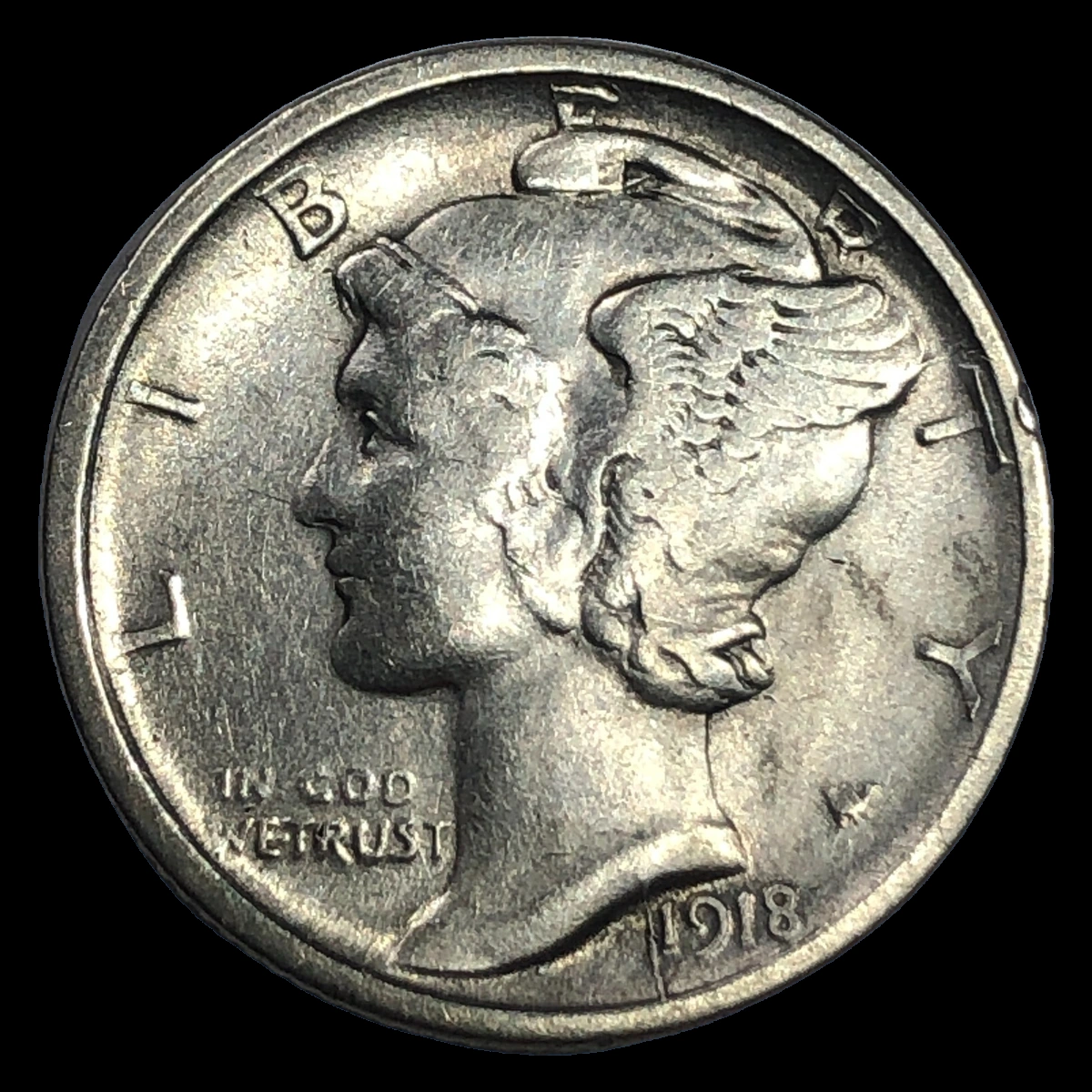
9. 1918 Dime A Ridge or Rim-Connected Lump Stands Up: Die Cracks and Cuds Error
A crack in a stamping tool leaves a raised line where silver enters the opening. A larger break reaching the die’s edge can instead produce a rim-connected patch called a cud.
The 1918 reports cover both without one universal route or position. The coin itself need not split for either feature to form.
How to Identify
Let light skim across the suspected line to reveal a solid raised center. A scratch cuts downward, even when its edges are pushed up.
For a larger patch, trace the natural connection to the rim. An isolated inner bump is not a cud, and an impact can create a mound beside a dent.
Look for seams or separate borders from dirt or added material. A genuine die feature should be part of the original struck metal rather than an attached deposit.
What It’s Worth
$15–$150 is the estimate for modest cracks, while stronger rim-connected cuds have an estimated $75–$600 range. These whole-coin figures cover circulated through lower unworn examples.
No particular 1918 auction result is assigned to the ranges. Ordinary condition and mint can explain much of the price, especially when the extra feature is only a tiny line.
Conclusion
The direction and height of a design matter: a backward sunken portrait, rounded extra strokes, and flat shelves point to different causes. At the edge, distinguish a missing segment from an intact blank crescent.
Finish by separating a raised die line, a real crack in the coin, and a thin peeling layer. Keep the mint and condition with the comparison, and leave mint attribution open when the error has replaced that part of the design.