Rare 2003 Penny Errors (List & Pictures)
A gray surface can lead to three different diagnoses among 2003 penny errors: missing copper, the wrong unused blank, or a cent design over an already-struck dime. The twelve groups here have estimated values of $2–$2,500.
A 2001 cent over a dime sold for $1,320 in September 2025, a different-year comparison. Begin with the metal and surviving designs, then inspect borders, weak details, and smaller die features.
| Visible clue | Possible category | Estimated value |
|---|---|---|
| Gray zinc with copper remnants | Missing plating | $50–$600 |
| Cent design on a smaller clad blank | Wrong planchet | $400–$1,500 |
| Cent and dime designs together | Cent struck over dime | $700–$2,500 |
| Design shifted on one face | Misaligned die | $5–$100 |
| Plain crescent on both faces | Off-center strike | $15–$500 |
| Expanded disc or stepped edge | Broadstrike or partial collar | $20–$400 |
| Localized weak detail | Grease-filled design | $5–$300 |
| Broadly shallow design | Low-pressure strike | $25–$300 |
| Extended Memorial step lines | Wavy steps | $2–$50 |
| Repeated front-design outline | Doubled die obverse | $5–$200 |
| Opposite-design trace | Clashed dies | $10–$150 |
| Raised line, bar, or rim blob | Die cracks, BIE, or cud | $2–$300 |
An ordinary 2003 cent is copper-plated zinc, weighs 2.50 g, and measures 19.05 mm across with a plain edge. A clad dime blank begins at about 2.268 g and 17.91 mm, although a cent strike can spread that smaller disc.
Record accessible measurements and photograph both faces and the edge. Keep sealed coins, especially collector Proofs, protected in their holders and use recorded measurements where available.
1. 2003 Penny Zinc-colored metal with copper remaining: Missing Copper Plating Error
Inspect the boundary between gray areas and surviving copper before assuming a cent is made from dime metal. A missing-plating error retains the zinc body of a normal cent but lacks part of its thin copper covering.
A Philadelphia 2003 example graded PCGS MS64 is described as ninety percent unplated. The percentage belongs to that specimen, not every gray cent found in change.
How to Identify
Look for intact struck detail continuing across the copper-to-zinc transition and compare it with the certified ninety-percent-unplated example. Chemical stripping can also remove copper, so the coating’s absence must be tied to production.
Inspect for pitting, corrosion, and disturbed surfaces without scraping the gray metal. A thin missing coat may change the weight only slightly, making weight alone an inadequate test.
What It’s Worth
$50–$600 is estimated for confirmed original missing-plating errors. Extensive loss on well-preserved metal can draw more interest than a small bare patch.
No disclosed sale price is supplied for the listed 2003 coin. A chemically stripped cent does not gain the same premium simply because most of its copper is gone.
2. 2003 Penny A cent design that exceeds a smaller blank: Struck on a Dime Planchet Error
A reported 2003-D error carries the cent design on an unused dime blank. Outer cent details may not fit because the disc started smaller than a cent planchet.
The dime blank has bonded outer layers around a copper center, unlike copper-plated zinc. It had not yet received Roosevelt, the torch, or the edge grooves made during a normal dime strike.
How to Identify
Compare weight, layered metal, and design coverage together rather than relying on a silver appearance. Final diameter need not equal the original dime diameter because striking can spread the blank.
Inspect for trimming or an added surface coating that could imitate the appearance. Search both faces for prior dime detail, which would move the diagnosis to the next category.
What It’s Worth
$400–$1,500 is the estimate for authenticated examples of the reported 2003-D type. A visible date and mintmark help establish the identity of a coin with incomplete outer design.
A 2007-D cent on a dime blank graded PCGS MS66 sold for $600 in March 2023. That same-series, different-year example supplies context without establishing a transaction for 2003.
3. 2003 Penny Dime details beneath Lincoln or the Memorial: Cent Struck Over a Dime Error
Here the smaller coin already had its own design before entering the cent press. Surviving Roosevelt, torch, or dime lettering can appear beneath the later cent strike.
A 2003 example graded PCGS MS66 appears in a specialist collection. The underlying dime’s date and orientation must be read from that actual piece rather than supplied from a comparison coin.
How to Identify
Identify a specific dime feature on either face and assess how the two designs overlap. Vague extra lines, small diameter, and gray color do not establish an already-struck dime.
The metal and weight should agree with the dime origin. Surviving edge grooves may be distorted or partly erased by the second strike, so their appearance also needs context.
Later pressure between finished coins can create misleading impressions. Authentication should confirm a sequence of genuine strikes rather than a squeezed transfer.
What It’s Worth
$700–$2,500 is estimated for authenticated 2003 examples, depending on condition and the clarity of both designs. MS66 describes an unworn coin with few marks.
A 2001 cent over a struck 2001-P dime, also graded PCGS MS66, sold for $1,320 in September 2025. That result does not establish a sale of the collection’s 2003 coin.
4. 2003 Penny Uneven borders on just one face: Misaligned Die Error
Set the metal question aside and compare centering on both sides. One narrow border opposite a wide one, with the other face centered, can indicate a die shifted sideways.
The die is the steel tool that stamps the design. The reported 2003 misalignment does not securely establish the specimen’s mint or finish.
How to Identify
Take straight-on photographs with the coin lying flat, since angled views distort border widths. Compare the space around the design all the way around each face.
Inspect narrow areas for wear, crushing, or grinding. Read the mintmark where present, and avoid identifying a collector Proof merely from a shiny surface.
What It’s Worth
$5–$100 is the estimate if a visible one-face shift is confirmed. A tiny uneven border can contribute little premium when the design still fits comfortably.
The range compares minor modern alignment errors. It neither authenticates the reported specimen nor supplies a selling price for it.
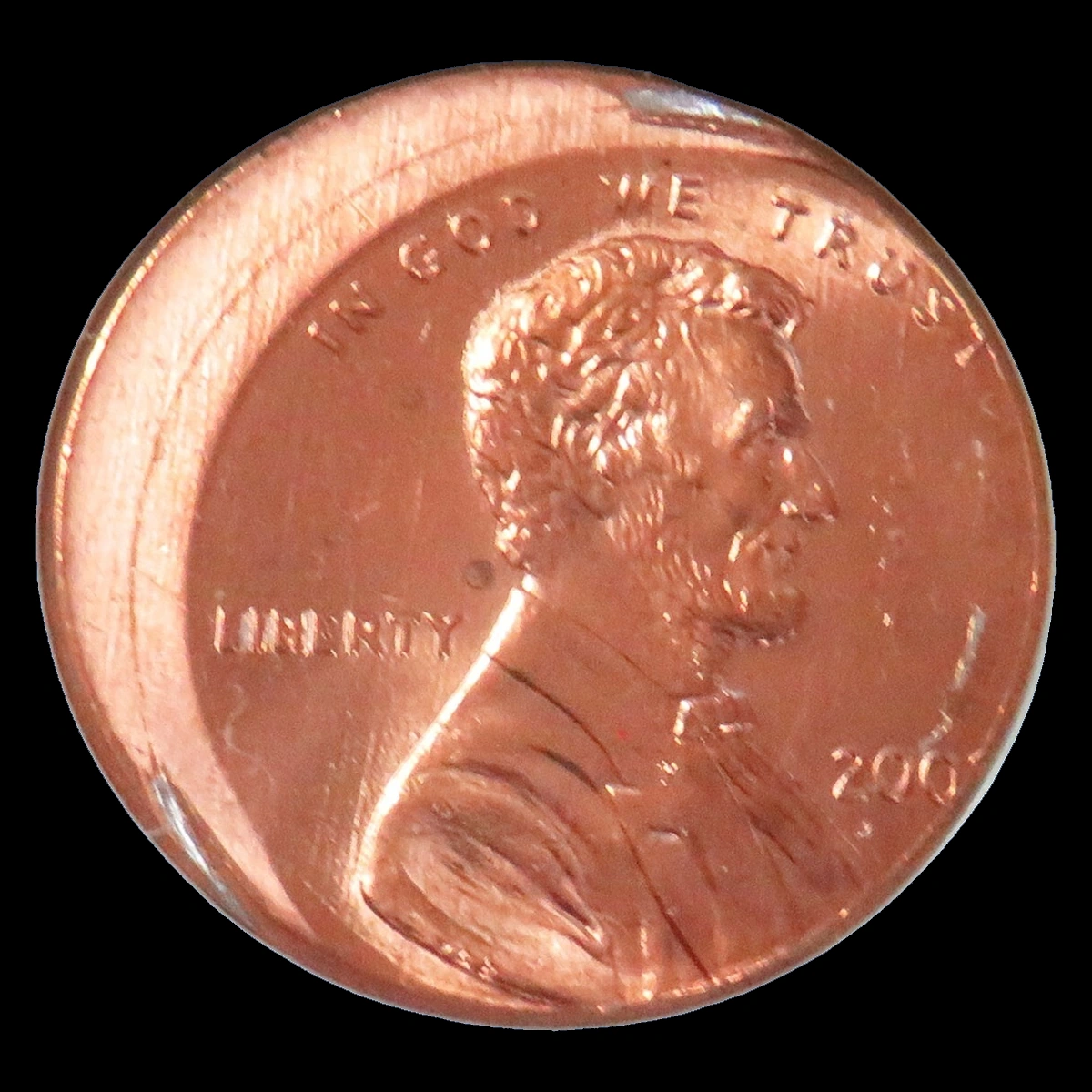
5. 2003 Penny Missing design beside an untouched crescent: Off-Center Strike Error
Both designs move together when the whole blank is out of position. The plain crescent remains original metal while some intended design falls beyond the blank.
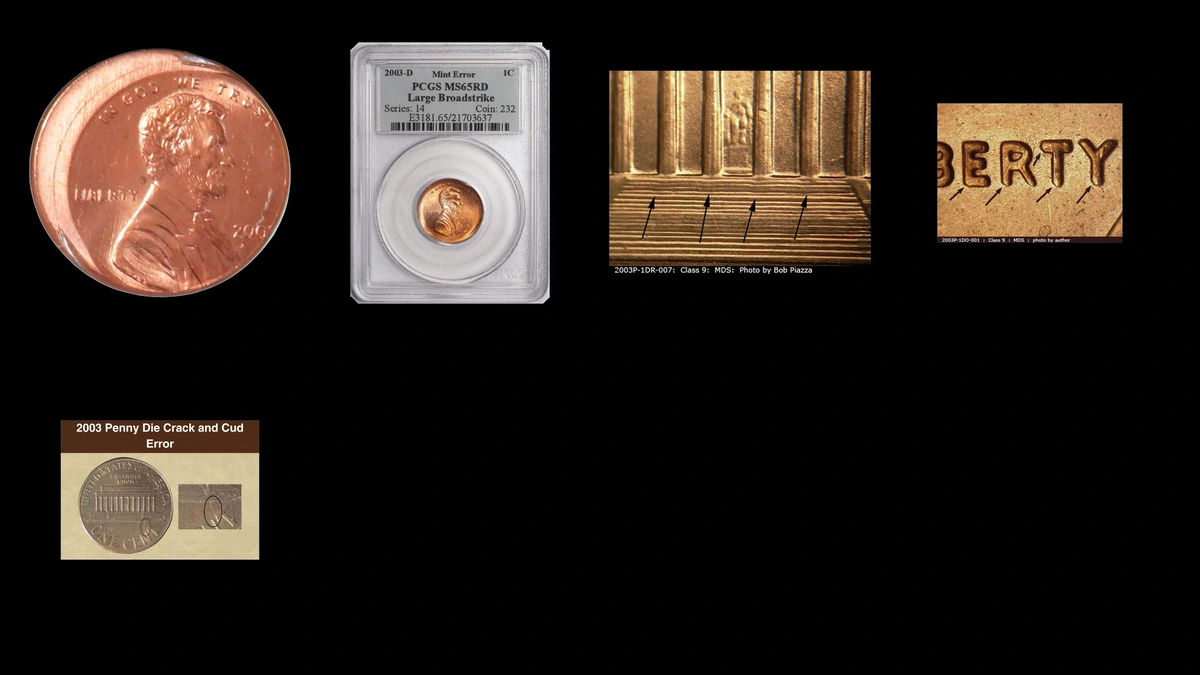
A published Philadelphia 2003 listing describes ten-percent displacement toward seven o’clock, or the lower left in an upright front view. Separate Denver reports should not inherit that direction or percentage.
How to Identify
Read the date and mint first, then track the same physical blank area across both faces. One centered face would point toward a different alignment problem.
Inspect the transition into the struck area for cutting, grinding, or scraped-away design. Copper color on the untouched crescent is normal and does not argue against the error.
What It’s Worth
$15–$500 is estimated for date-visible 2003 examples. Strong displacement with a readable year generally provides a more compelling comparison than a slight shift.
A 2006 cent struck four percent off center sold for $39 in March 2025, graded PCGS MS64 Red. The published ten-percent 2003 example has no verified realized price supplied here.
6. 2003 Penny Complete designs with extra width or an edge step: Broadstrike and Partial Collar Error
The collar is the retaining ring that limits the blank’s outward spread during striking. If the metal escapes that restraint, a broadstrike can retain complete designs on an enlarged disc.
When the collar controls only part of the thickness, the edge can instead show a step. Both collar-related appearances are reported for Philadelphia and Denver 2003 cents.
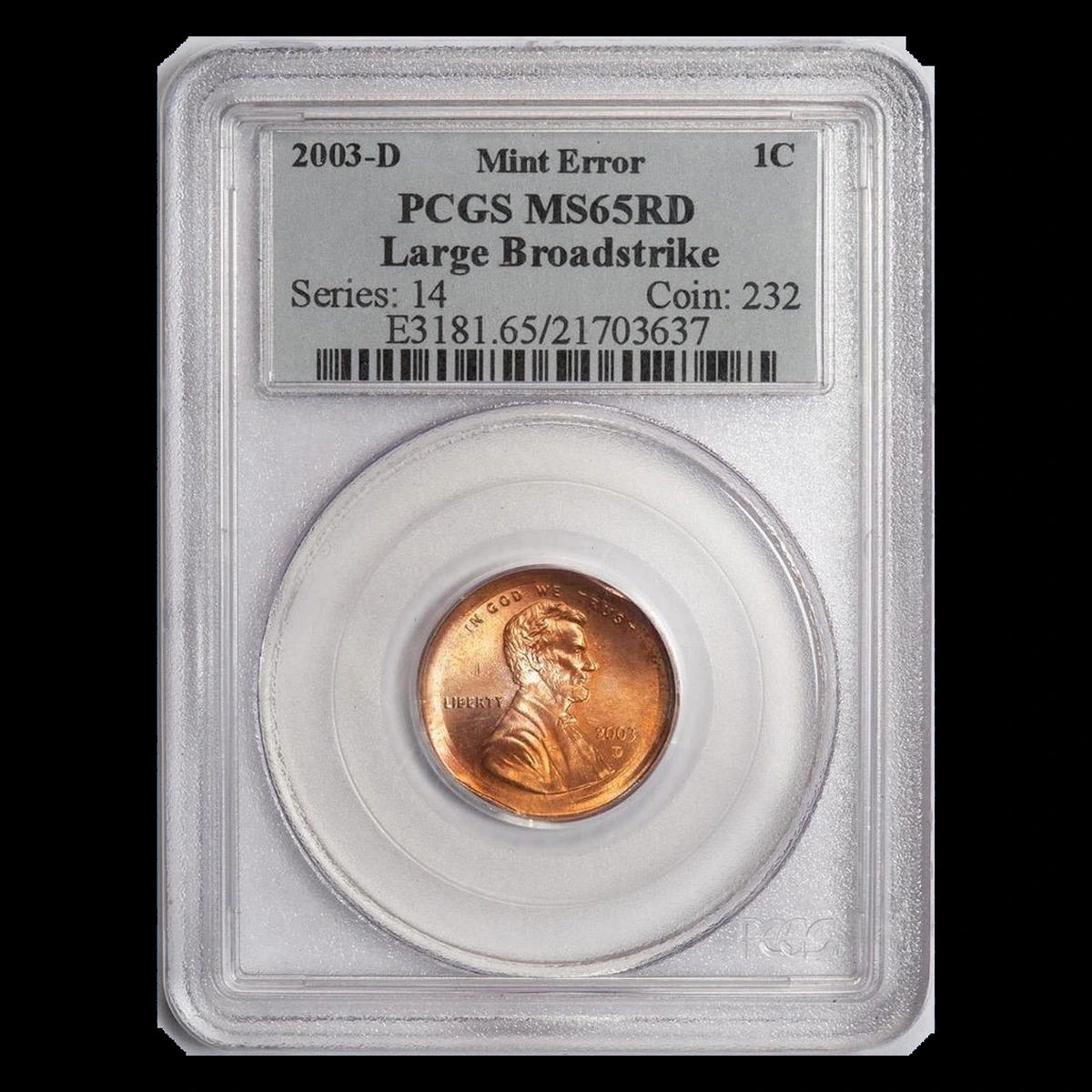
How to Identify
View the edge first to look for two levels, then examine the designs and measure any expansion. A cent already has a smooth edge, so absent grooves are not a diagnostic.
Natural spreading or a collar step must be distinguished from crushed lettering and rolled borders caused by later squeezing. Complete designs also separate this group from an off-center strike that loses part of the image.
What It’s Worth
$20–$400 is estimated across confirmed collar errors, from modest edge steps to conspicuous broadstrikes. Condition and the visibility of the effect influence buyer interest.
No particular 2003 transaction is supplied for these reports. A large spread can display more dramatically than a slight step, but later flattening is not an equivalent error.
7. 2003 Penny Local detail fading on an otherwise sharp coin: Grease-Filled Design Error
Small recesses in a die can become blocked with grease, preventing them from forming their normal raised details. A 2003-D graded PCGS MS64 Red appears in a collector showcase under this attribution.
The weak areas must be examined on the actual specimen. An absent L by itself does not identify grease as the cause.
How to Identify
Compare nearby letters and Lincoln’s high points with the affected patch. Local weakness surrounded by sharper design differs from broad circulation wear.
Check the faint area for pits, scrape marks, and disturbed metal. Examine the other face for additional blocked detail without requiring every grease error to affect the same location.
What It’s Worth
$5–$300 is the estimate for 2003 grease-filled examples, spanning slight detail loss to more obvious areas. Sharp surroundings can make the interruption easier to demonstrate.
A 2021-D grease error graded PCGS MS64 Red sold for $84 in September 2025. It supplies a later-date comparison, not a transaction for the showcased 2003-D.
8. 2003 Penny Shallow detail across much of the coin: Low-Pressure Weak Strike Error
Widespread softness requires an examination beyond a single missing letter. Insufficient striking pressure can leave shallow portrait and lettering detail while original blank surface remains.
The reported 2003 example needs its mint and finish confirmed. Calling it a die-adjustment strike does not establish that someone deliberately produced it while setting up the press.
How to Identify
Compare both faces with an ordinary coin of the same finish and look for undisturbed metal beneath the weak design. Worn high points, acid pitting, and grinding lines provide different explanations.
Inspect the edge for thinning or filing and consider whether reduced weight indicates later metal loss. Professional examination may be needed because general weakness alone cannot identify pressure or intent.
What It’s Worth
$25–$300 is a conditional estimate for a confirmed mint-made low-pressure strike. It compares weakly struck modern cents that retain convincing original surfaces.
The estimate does not authenticate the reported coin as a press test. A damaged cent with shallow detail remains outside the range for this proposed mint error.
9. 2003 Penny Wave-like extensions beneath the Memorial: Wavy Steps Error
Examine the steps below the columns for lines that seem to extend or trail away from their normal form. The Philadelphia feature once labeled a doubled die is now explained in its catalog as design extension.
That change matters when describing the coin. The visible trails should not be treated as a second complete design, and their exact cause should not be guessed from the nickname.
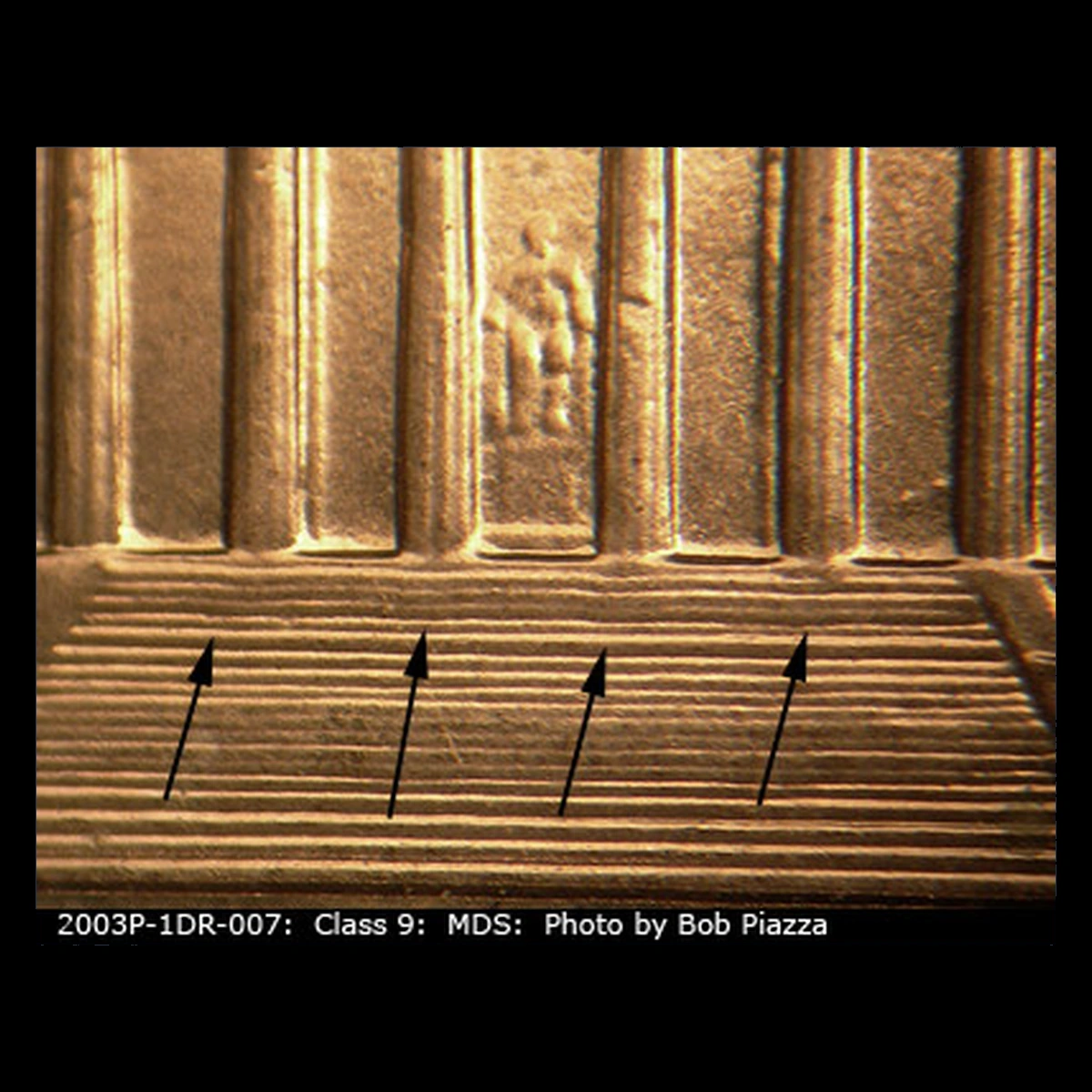
How to Identify
Compare the steps under more than one lighting angle with the photographed 2003 Philadelphia design extension. The candidate should match the actual extensions rather than merely look uneven.
A reflection can disappear when the light moves, while wear or ordinary strike doubling can also distort the steps. Denver coins need a separate reference rather than an assumed match to this no-mintmark example.
What It’s Worth
$2–$50 is estimated for a clearly matched wavy-steps example. The comparison concerns a minor design feature, not a major doubled-die rarity.
No confirmed 2003 sale price accompanies the catalog photographs. Sharp visible trails are more useful than an older doubled-die label on a weak or worn coin.
10. 2003 Penny An additional portrait or letter outline: Doubled Die Obverse Error
Reported front-side doubling on Philadelphia and Denver cents includes areas around the eye, ear, lettering, or date. Each report requires a particular comparison rather than combining every area into one universal pattern.
A doubled die contains the extra shape before it strikes the blank. General thickening can also arise from worn tools, movement during striking, or broken copper plating.
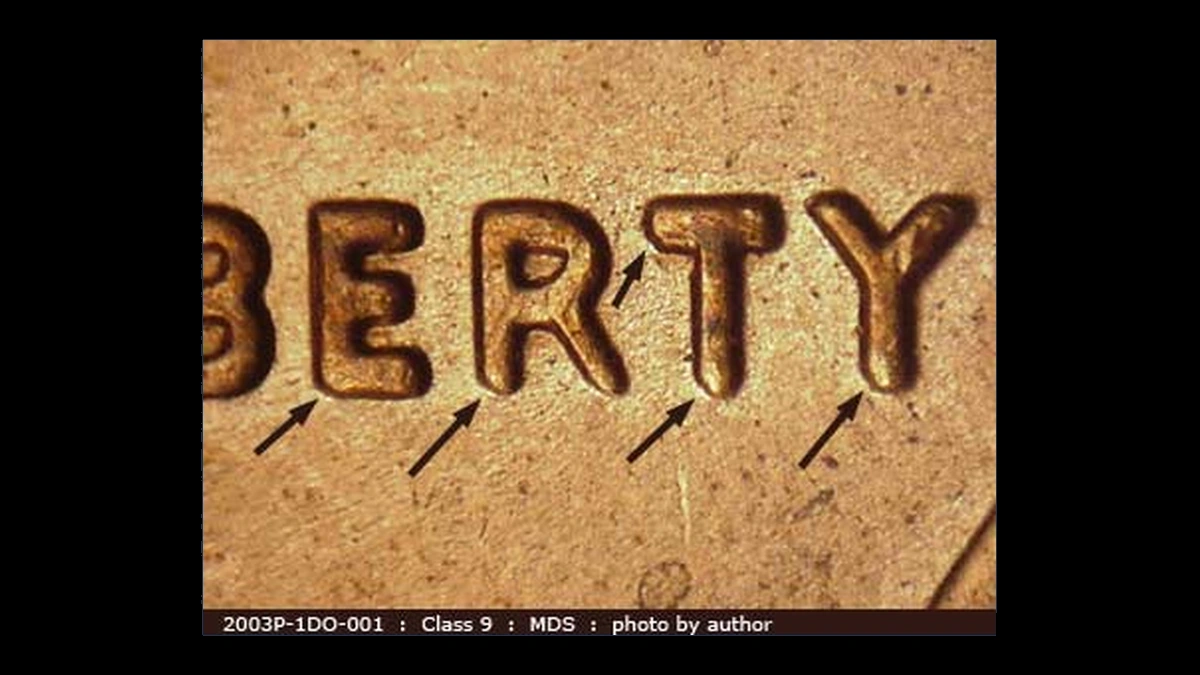
How to Identify
Choose a reference for the correct mint and examine only the features that reference establishes. An additional eyelid contour on one variety cannot confirm an unrelated letter feature on another.
Change the light to distinguish a rounded repeated outline from a low flat shelf or split coating. The shape and position should match the confirmed example rather than a vague impression of blur.
What It’s Worth
$5–$200 is estimated for confirmed minor doubled-front varieties of this date. Clear attribution and well-preserved surfaces support stronger comparisons.
No specific 2003 auction result is supplied. Prices for famous older doubled dies should not be transferred to these smaller modern features.
11. 2003 Penny Faint pieces of the opposite design: Clashed Dies Error
Unwanted Memorial contours near Lincoln, or portrait traces on the back, can result from contact between dies without a blank. The tools acquire marks that can then appear on coins struck afterward.
A Philadelphia 2003 clash is reported. Its design relationship matters more than deciding whether one isolated line appears raised or recessed.
How to Identify
Follow a recognizable contour and compare it with the corresponding part of a normal Memorial cent. Dirt, reflections, and scratches should not be joined into an imagined second design.
Examine the rim and faces for crushing from later pressure between finished coins. A deeply impressed mirror image needs a different explanation from faint traces copied through die contact.
What It’s Worth
$10–$150 is the estimate for modest confirmed clashes on this date. A clear opposite-design match on clean surfaces supports the stronger portion.
This is a modern Memorial-cent comparison range, not a documented sale of the reported Philadelphia piece. Faint but genuine lines can be collectible without commanding a large premium.
12. 2003 Penny Raised cracks, letter-gap bars, or rim lumps: Die Cracks, Cuds, and BIE Chips Error
Even a specially made collector Proof can record a cracked die. The documented 2003-S reverse has a raised line from the upper-left border through the T in UNITED toward the area above the third column from the left.
A short diagonal crack also appears near the left roof edge. Separate ordinary-coin reports describe BIE bars between B and E and larger rim-connected lumps called cuds.
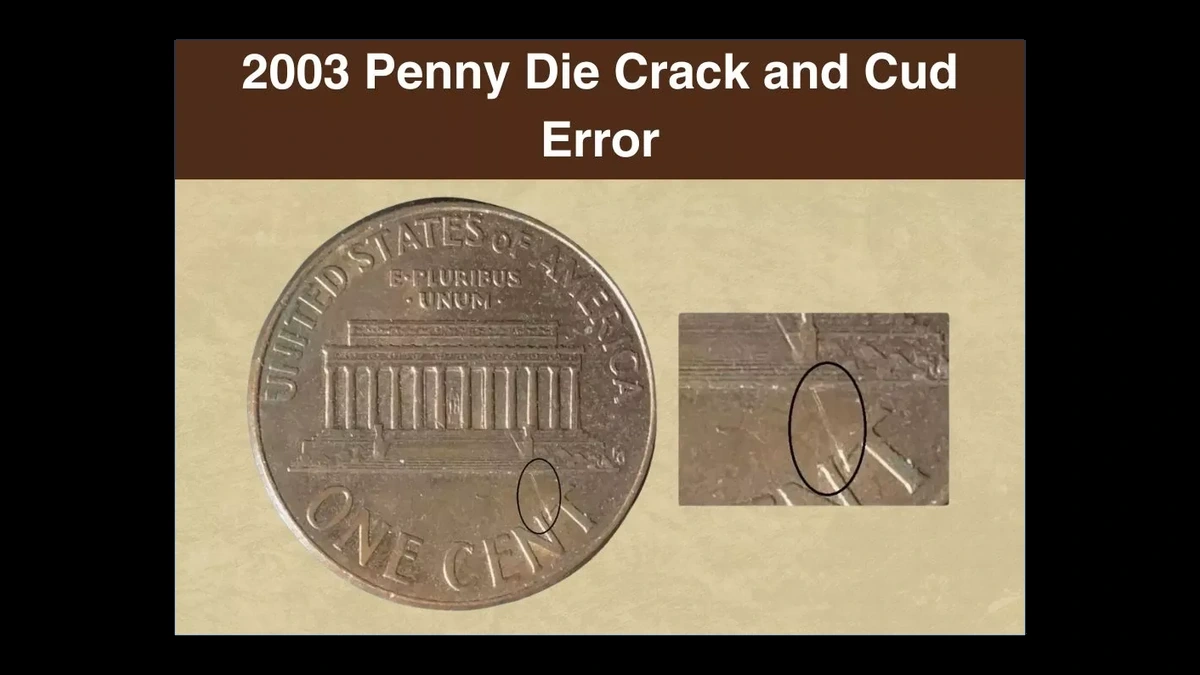
How to Identify
For the Proof, confirm the S and compare the precise reverse route with the CONECA description. Its narrow ridge should not be relabeled as a large cud.
For a BIE candidate, verify the location in LIBERTY; for a cud, follow solid raised metal to the rim. Scratches are recessed, and a raised internal bump without rim connection is a different form.
What It’s Worth
$2–$300 is estimated across these distinct die-break features. Fine cracks and small BIE bars generally occupy the lower portion, with more substantial confirmed rim breaks capable of attracting more.
No sale of the documented 2003-S crack is supplied. A Proof’s finish and preservation contribute to its whole-coin value alongside the visible defect.
Conclusion
Three gray-looking cents can have three different histories, and three weak designs can have different causes as well. Use composition, surviving images, surface condition, and the relationship between the two faces to narrow the possibilities.
The $2–$2,500 estimates become useful after the specific feature is identified. Preserve the original surfaces, keep mint and finish distinctions clear, and avoid transferring one specimen’s measurements or diagnostic positions to another.