Rare 1998 Penny Errors (List & Pictures)
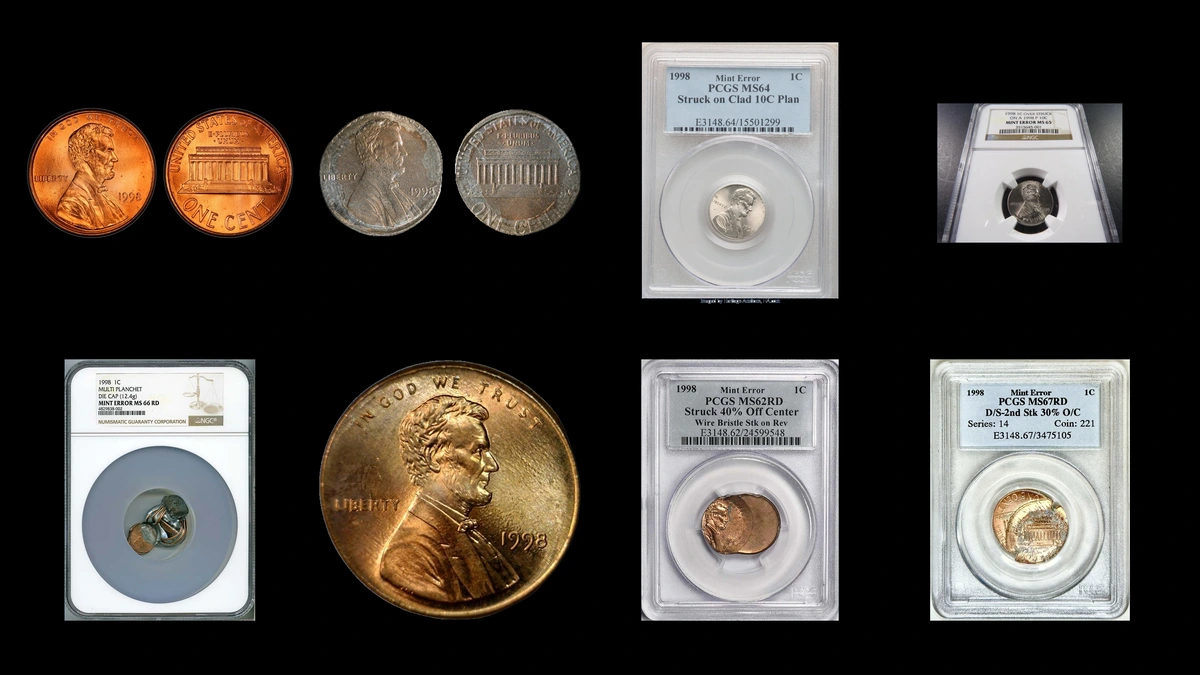
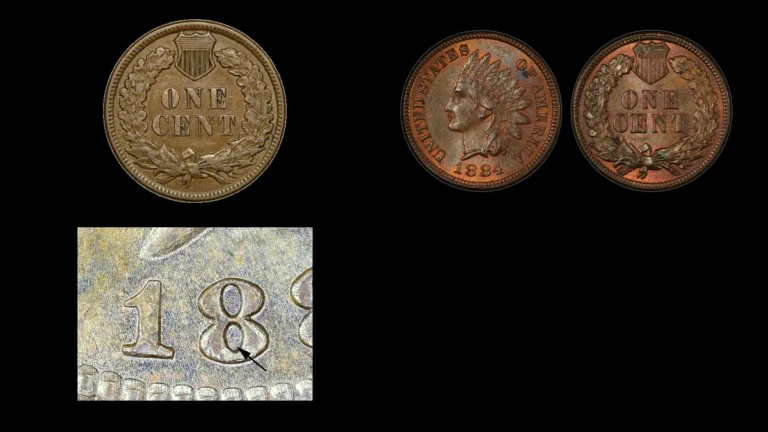
The same AM spacing can be normal on one 1998 penny and unusual on another. A top-grade Close AM Proof has a $4,500 eBay record from July 2015, while a different-year cent-over-dime auction comparison brought $2,340 in March 2025.
The fourteen groups of 1998 penny errors have estimated values of $2–$5,000. Identify finish and letter spacing first, then examine metal, outline, and extra impressions.
| Main clue | Category | Estimated value |
|---|---|---|
| AM spacing differs from normal for finish | Wide AM or Proof Close AM | $10–$5,000 |
| Gray exposed zinc on a full-size cent | Unplated blank | $50–$800 |
| Different blank metal or size | Dime or smaller zinc blank | $400–$2,500 |
| Dime design beneath the cent | Cent over dime | $700–$4,000 |
| Two blanks remain joined | Bonded pair | $1,000–$5,000 |
| Missing edge metal | Clipped planchet | $15–$250 |
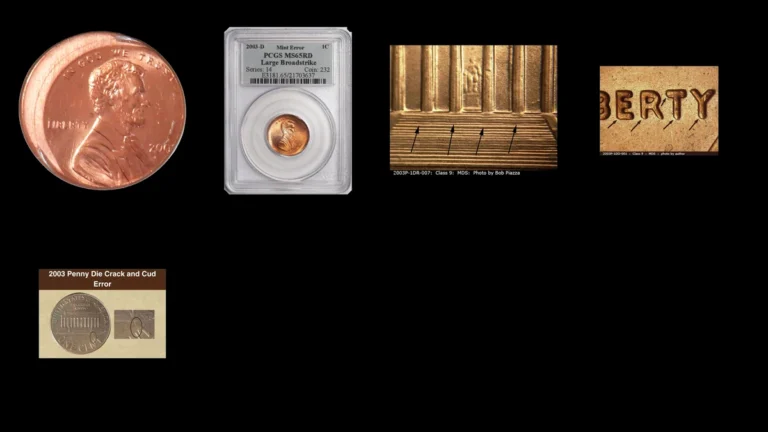
| Complete design on expanded metal | Broadstrike | $20–$350 |
| Incomplete design beside blank metal | Off-center strike | $20–$600 |
| Several design positions | Repeated strikes or flipover | $50–$1,200 |
| Backward detail plus later impressions | Brockage with repeated strikes | $100–$1,500 |
| Raised walls around the portrait | Front die cap | $100–$1,500 |
| Local weak or recessed area | Strike-through | $5–$300 |
| Raised bar between letters | BIE or other chip | $2–$100 |
| Extra statue or column detail | Doubled Memorial | $5–$200 |
A normal 1998 cent is copper-plated zinc, weighs 2.50 g, and measures 19.05 mm with a smooth edge. A clad dime has bonded pale outer layers around copper and starts near 2.268 g and 17.91 mm.
Use measurements and a 10× magnifier for safely accessible coins, keeping sealed specimens intact. Avoid pulling joined metal, flattening unusual shapes, or cleaning exposed zinc.
1. 1998 Penny Check Finish before the Letter Gap: 1998 Wide AM and Proof Close AM Error
Ordinary cents normally have nearly touching A and M, while 1998-S Proofs normally have a gap. The scarce combinations are a Philadelphia circulation cent with Wide AM and an S Proof with Close AM.
A Proof is a specially made collector coin, not simply a shiny penny. These varieties use the other reverse-design style rather than doubled letters.
How to Identify
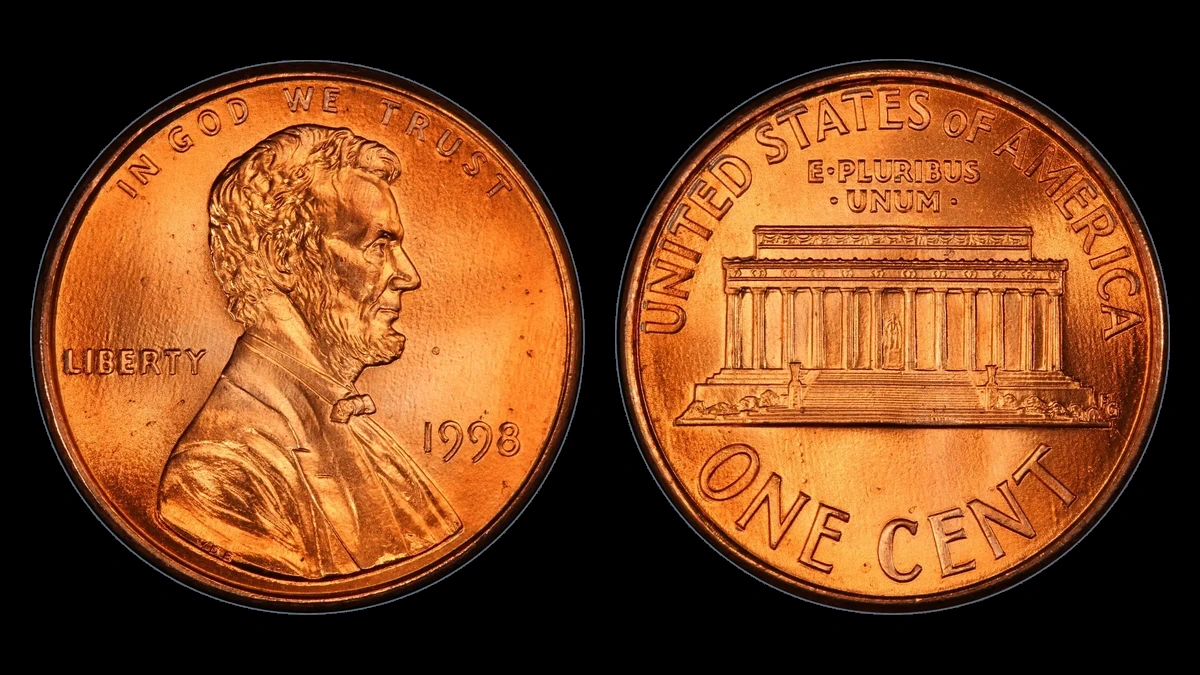
Confirm the date, mintmark, and finish before examining AMERICA. Then check FG: the initials sit nearer the Memorial on Wide AM and farther away on Close AM.
The whole reverse style should agree with the letter spacing. Polishing an ordinary Close AM cent does not turn its normal design into a rare Proof.
What It’s Worth
Ordinary Wide AM cents have an estimated $10–$1,000 range, while S Proof Close AM examples are estimated at $300–$5,000. Preservation causes large differences within each group.
A red MS67 Wide AM brought $940 in June 2014. PCGS records $4,500 on eBay in July 2015 for a PR70 Close AM Proof, an exceptional record rather than a routine ordinary-cent value.
2. 1998 Penny A Gray Cent without Copper Plating: 1998 Unplated Blank Error
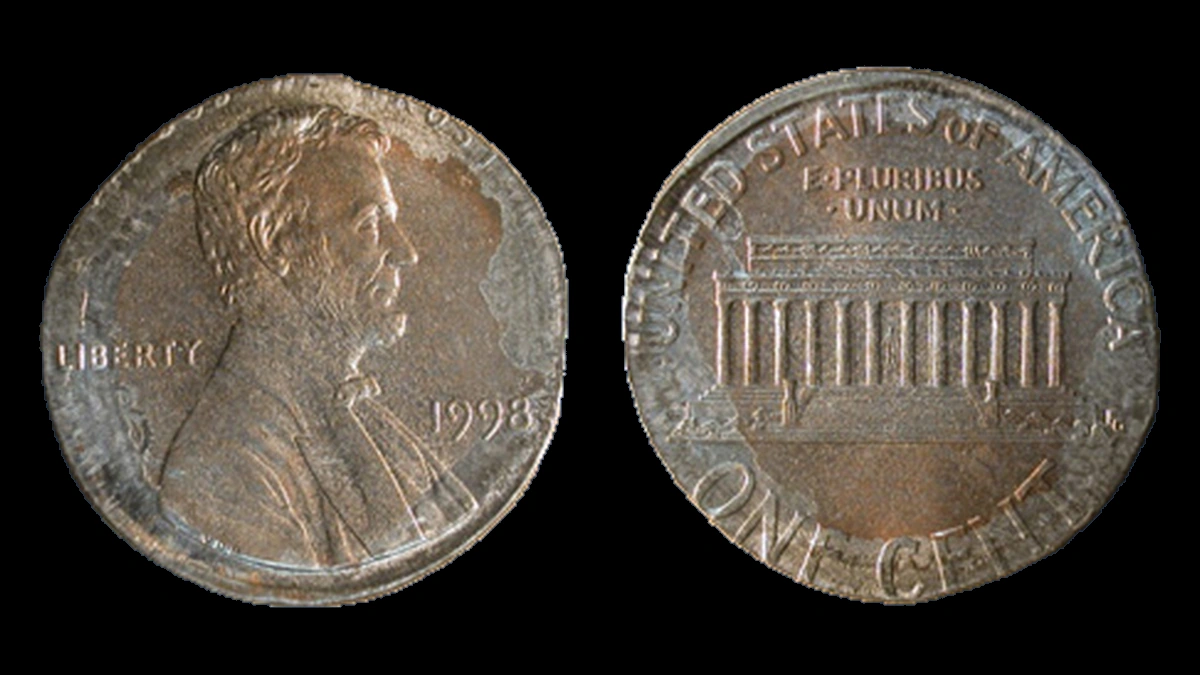
A 1998 example was offered in a PCGS MS64 holder labeled Unplated Planchet. It represents a zinc blank struck without its normal copper coating.
This is separate from the smaller 2.05 g zinc blank below and from a cent made on dime metal. All may appear pale in photographs, but they have different construction histories.
How to Identify
Inspect fine lettering, fields, and edge for original struck surface rather than pits or chemical attack. Copper can be stripped from a finished cent, so gray color is not sufficient.
Record this coin’s own dimensions and weight. Do not borrow the smaller blank’s 2.05 g figure or scratch the edge to test the metal.
What It’s Worth
Confirmed unplated examples have an estimated $50–$800 range. The original surface’s condition helps establish both identification and value.
A 1995-D MS63 unplated cent brought $180 in March 2023, while a 1995 MS67 brought $660 that January. Neither is a sale of the documented 1998 MS64 coin.
3. 1998 Penny A Dime Blank or a Smaller Zinc Blank: 1998 Wrong-Blank Error
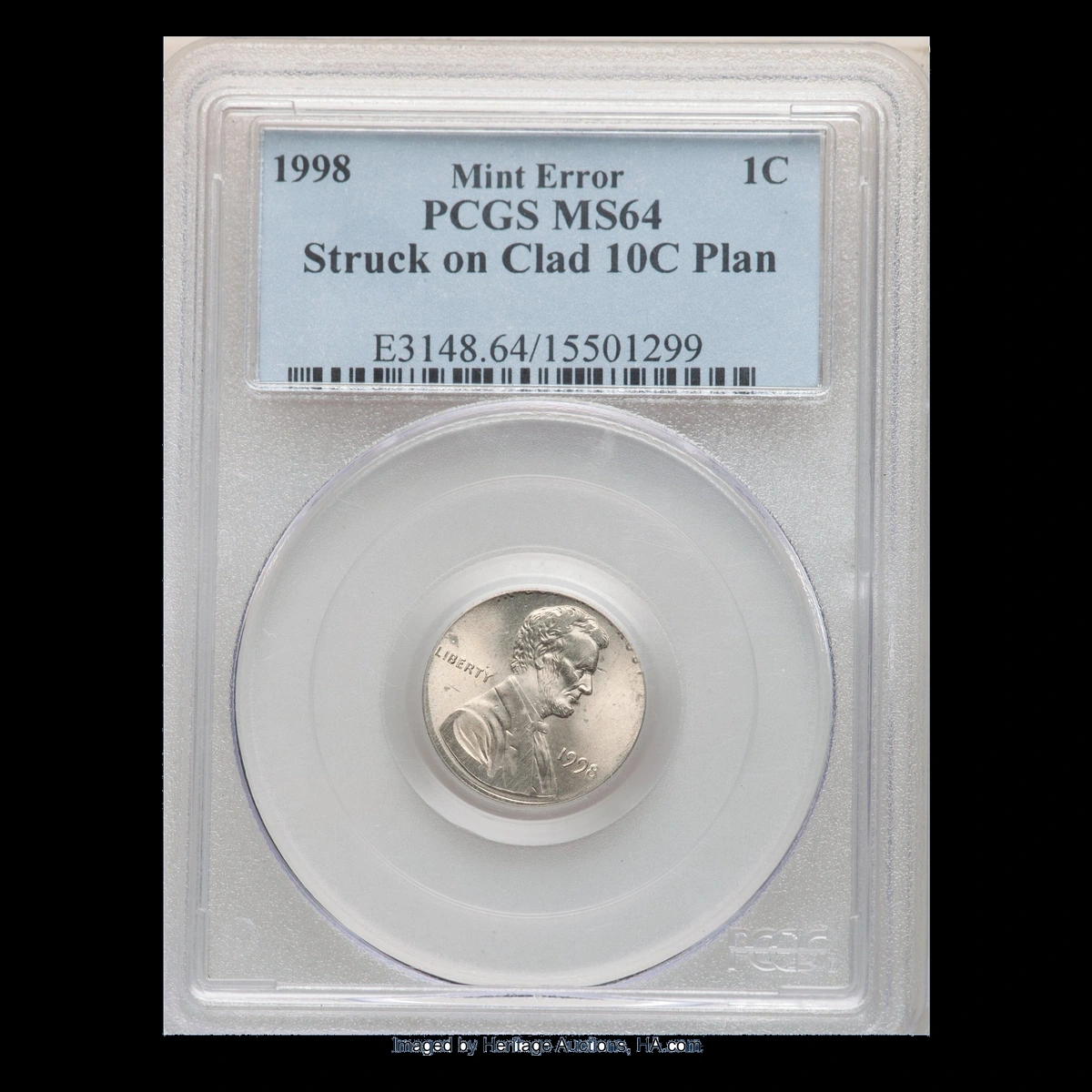
The Denver dime-blank report concerns the bonded metal normally used for dimes. A separate Philadelphia piece weighs 2.05 g and has a smaller zinc blank with a little copper-colored material near its center.
Mike Diamond rejected that zinc piece’s older oval-clip-on-an-unplated-cent label. He considered a foreign-coin blank likely but did not establish its country or denomination.
How to Identify
Compare actual weight, dimensions, and edge construction before choosing between dime layers and zinc. An earlier dime design would identify a finished host coin rather than an unused blank.
The small-blank analysis explains the rejected clip attribution. The 2.05 g measurement and central copper-colored material belong only to that specimen.
What It’s Worth
An authenticated dime-blank cent has an estimated $400–$1,500 range. The smaller foreign-type zinc blank has a broader conditional estimate of $500–$2,500.
A 2007-D cent on a dime blank brought $600 in March 2023. That known-blank comparison does not establish the zinc piece’s country or price.
4. 1998 Penny An Earlier Dime Design Survives: 1998 Cent over a Dime Error
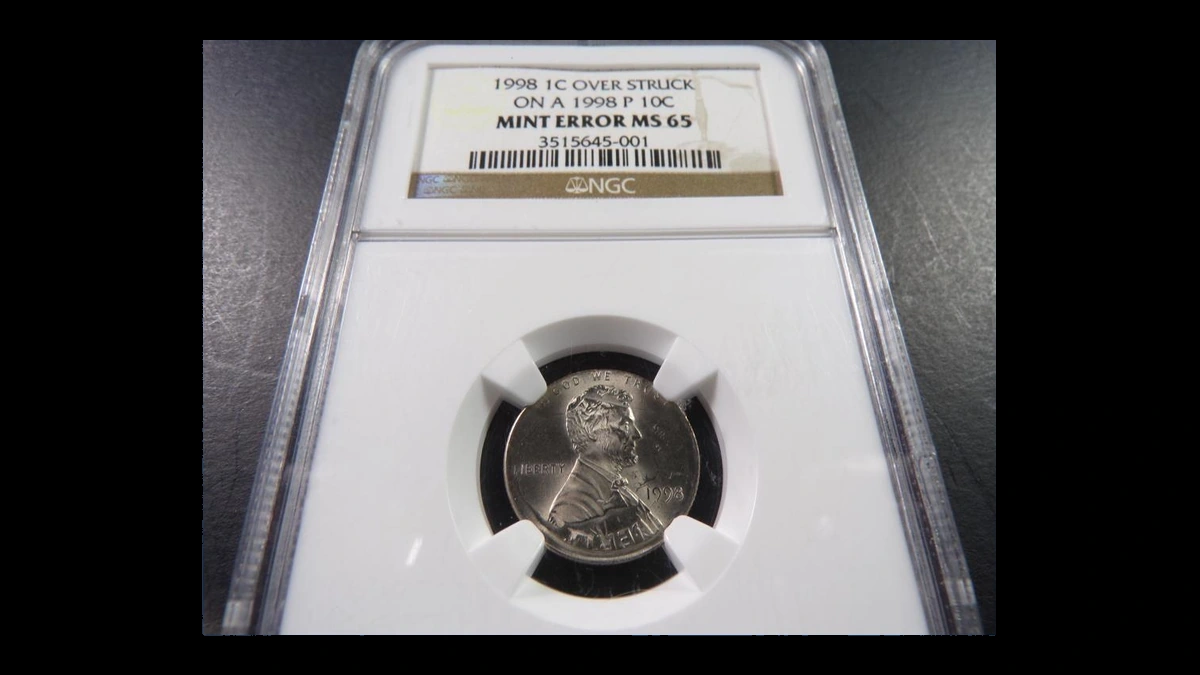
A finished dime can enter a cent press and receive Lincoln and the Memorial over its existing design. Recorded examples include 1998 cents over 1997-P dimes and others over 1998 dimes.
Philadelphia and Denver reports concern separate pieces. A mintmark from the older dime may appear away from the cent’s normal mintmark location.
How to Identify
Locate Roosevelt or torch detail before attempting to read a second date. Trace the older designs beneath the cent impressions on both faces.
Attach each date and mintmark to the correct design rather than completing a partly visible mark from another specimen’s description. The dime host’s weight and layered metal remain useful despite expansion during the second strike.
What It’s Worth
Confirmed cent-over-dime errors have an estimated $700–$4,000 range. Clear impressions and original surfaces provide stronger comparisons.
A 2001 cent over a 2001-P dime brought $1,320 in September 2025, and a higher-graded example from that year brought $2,340 in March. Those are different-year results rather than recorded sales of the 1998 pieces.
5. 1998 Penny Two Blanks Stay Connected: 1998 Bonded Pair Error
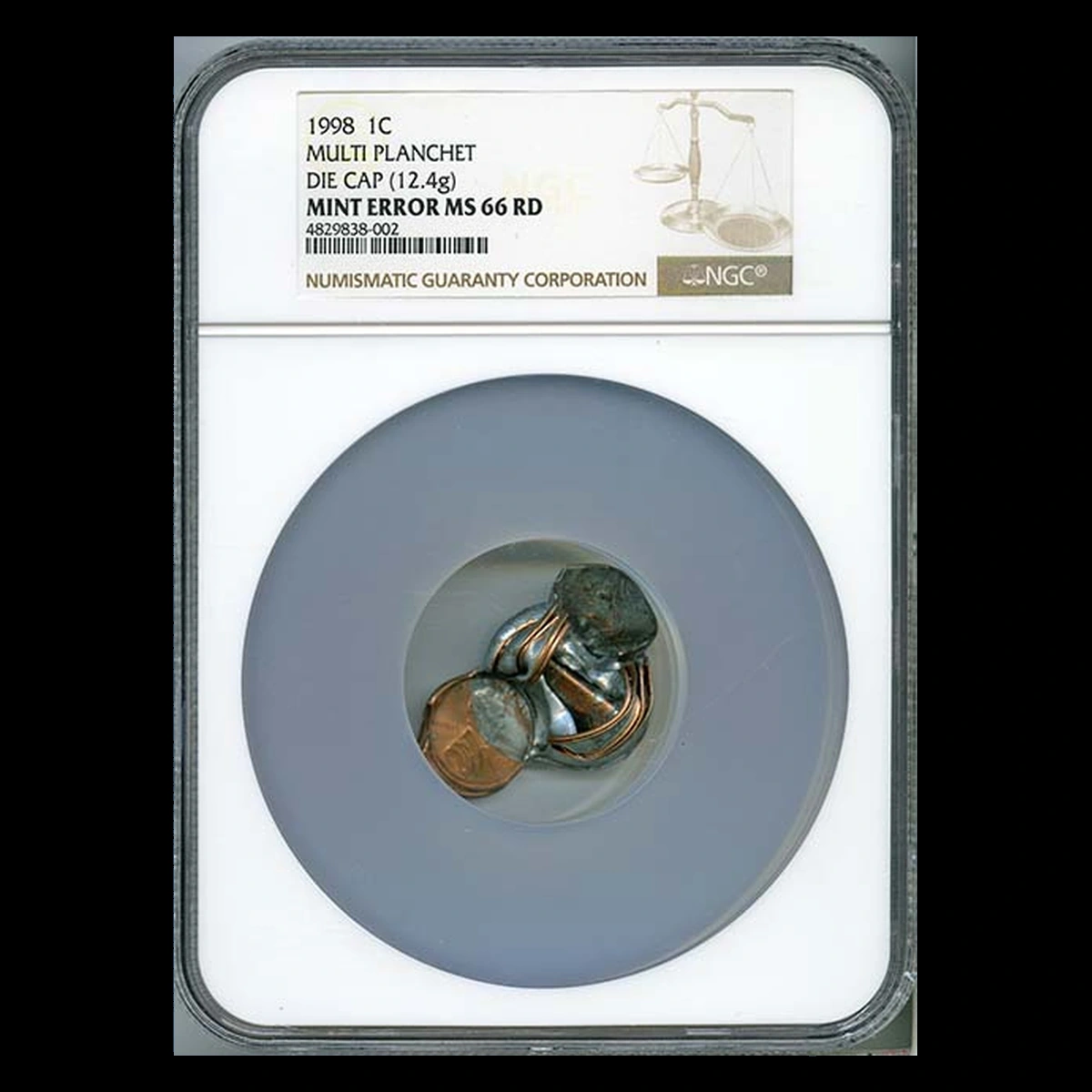
Two blanks struck together can expand and remain joined as one object. A published Philadelphia example has substantial spread and an NGC MS65 Red grade.
Another auction listing also describes bonded 1998 blanks. The shared date and grade do not establish that both records show the same piece.
How to Identify
Inspect the joint and both outer faces without pulling or flexing them. Original design should meet metal that spread as part of the strike.
Glue, solder, heat damage, or separate cut surfaces can point toward later assembly. Two normal cent blanks start with about 5 g of metal, but that theoretical total is not a recorded weight for either listing.
What It’s Worth
An authenticated, visually clear bonded pair has an estimated $1,000–$5,000 range. The figure values the joined object as a whole.
A 2001 pair was advertised at $2,850. That was an asking price for another year, not a completed sale or an established value for the 1998 pair.
6. 1998 Penny Metal Missing before the Design: Reported 1998 Clip Error
A blank-cutting punch crossing an earlier hole or the strip’s edge can leave an incomplete disc. The cent design subsequently forms on the remaining metal.
The year reports do not define a single mint or gap size. The separate small zinc blank discussed above should not automatically be reclassified as a clipped ordinary cent.
How to Identify
View the gap from above and the side, looking for original detail formed against an existing missing boundary. Fresh cutting lines, ridges, or filing can reveal later removal.
Opposite-rim weakness may support a genuine clip but is only one clue. Low weight confirms absent metal without showing when it was removed.
What It’s Worth
Genuine clips have an estimated $15–$250 range. Condition, readable identity, and the original boundary matter more than gap size alone.
A small straight clip on a 2021 cent brought $114 in September 2025. The later date and specific shape make it a general comparison.
7. 1998 Penny The Whole Design Fits Expanded Metal: 1998 Broadstrike Error
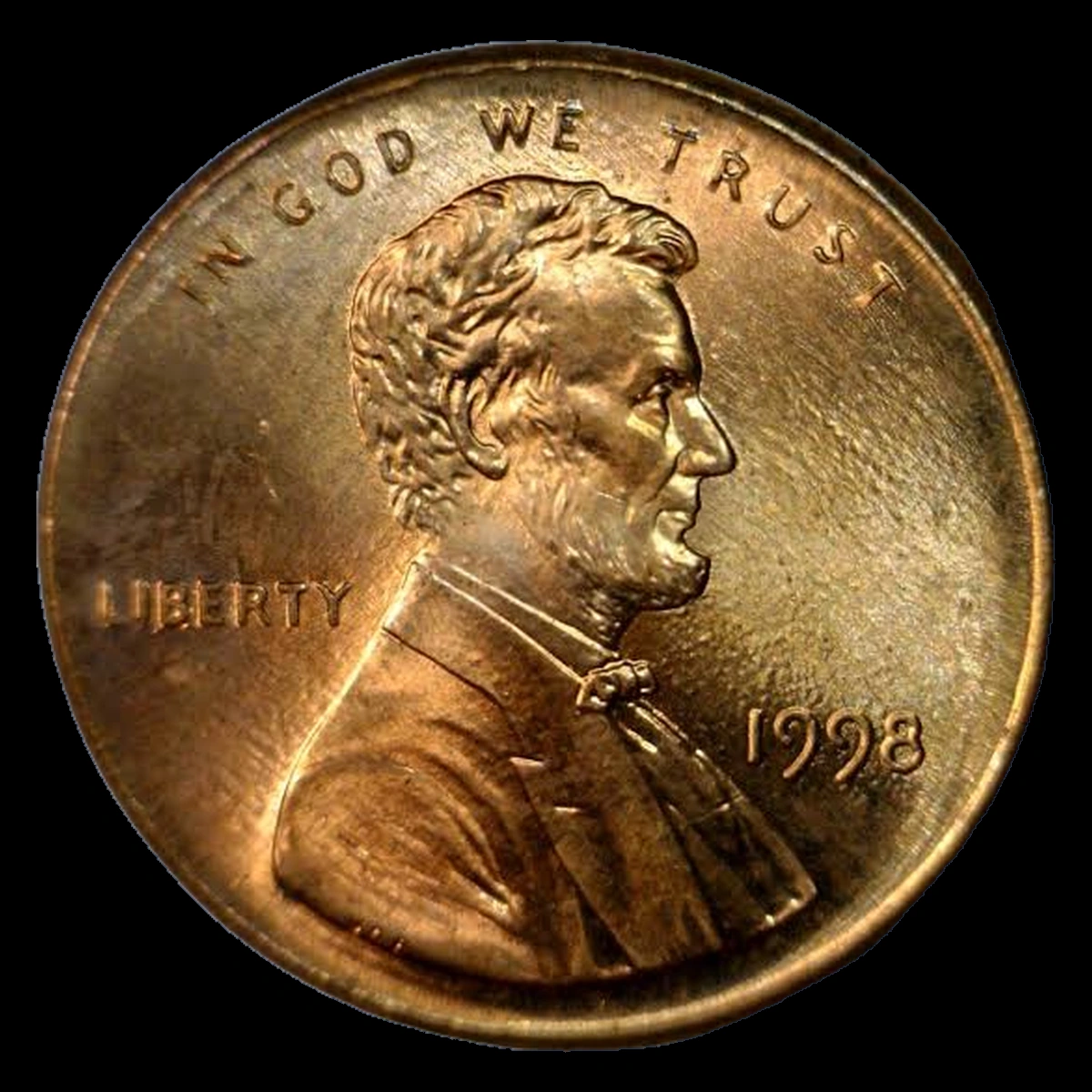
A broadstrike forms when the collar does not confine the blank normally. Metal moves outward, leaving a larger outline around complete designs.
Some 1998 coins also show repeated strikes or backward impressions, but a simple broadstrike can be examined independently. A smooth edge alone proves nothing because pennies normally have one.
How to Identify
Read all outer lettering on both faces before measuring several diameters. The expanded border can be uneven while still retaining the intended designs.
Look for flattened letters, hammering, and pressure damage from later widening. Original outward spread should fit naturally formed detail rather than crushed high points.
What It’s Worth
A confirmed readable broadstrike has an estimated $20–$350 range. More obvious spread and better preservation support stronger comparisons.
A 1999 MS65 Red broadstrike brought $67 in March 2023. If a 1998 coin also has another striking error, assess the combined piece instead of adding separate maximum prices.
8. 1998 Penny A Plain Crescent and Lost Design: 1998 Off-Center Strike Error
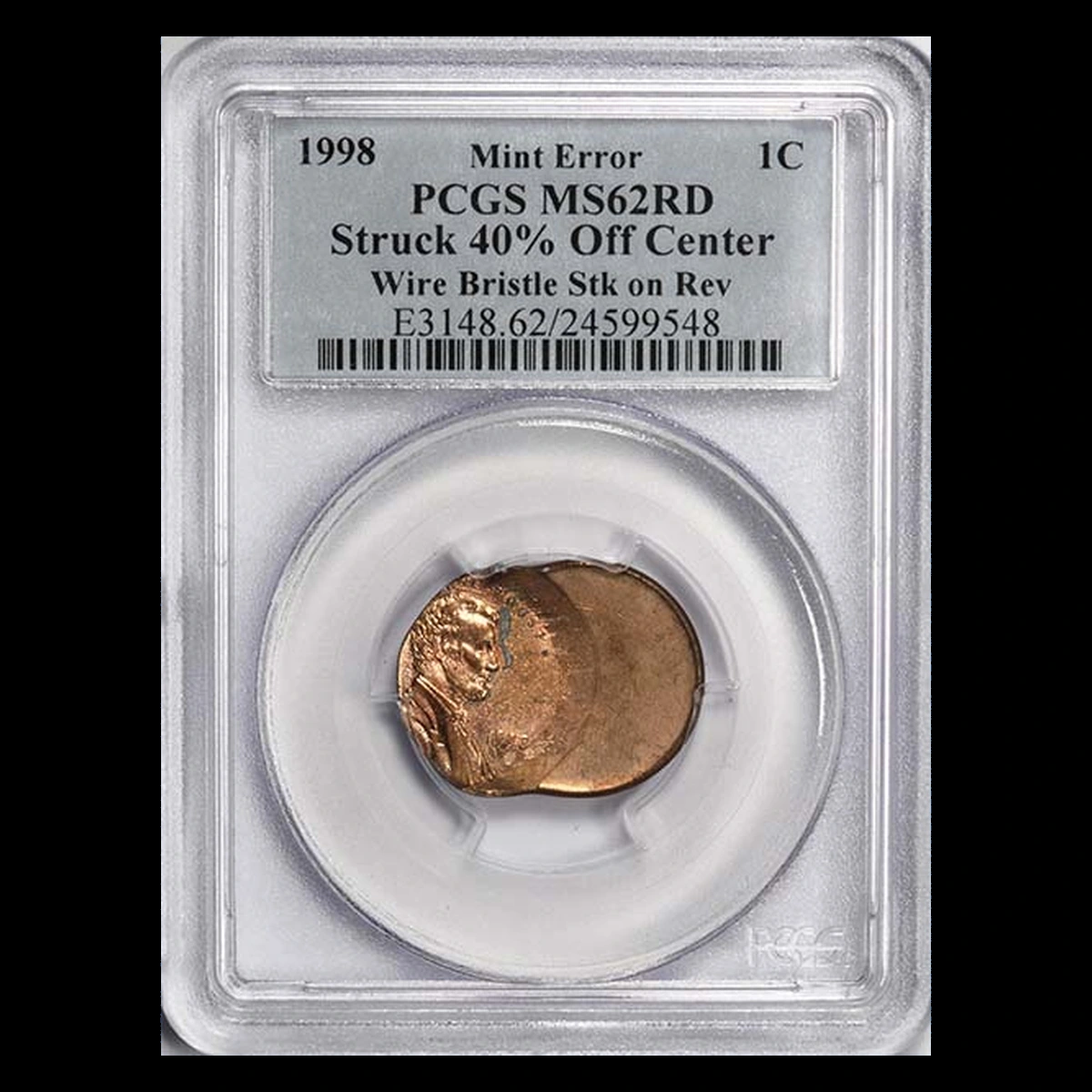
A misplaced blank can receive only part of the intended design, leaving original plain metal elsewhere. Both faces should reflect the same displacement.
An owner reported a Wide AM example about thirty percent off center in an ANACS MS65 Red holder. The reverse variety and shifted strike are separate features on that one coin.
How to Identify
Read the date and follow the boundary between struck and plain metal on both faces. A mainly one-sided shift may involve a misaligned die rather than an off-center blank.
Check AM spacing independently if Wide AM is claimed. The offset does not prove that variety, and the owner’s report does not establish a direction for every 1998 off-center cent.
What It’s Worth
Genuine examples with useful surviving identity have an estimated $20–$600 range. A dramatic shift and intact date can enhance appeal.
A 1999 cent ten percent off center brought $47 in March 2023. That modest example does not price the reported Wide AM combination, which requires its own whole-coin assessment.
9. 1998 Penny Several Design Positions: 1998 Repeated Strikes and Flipover Error
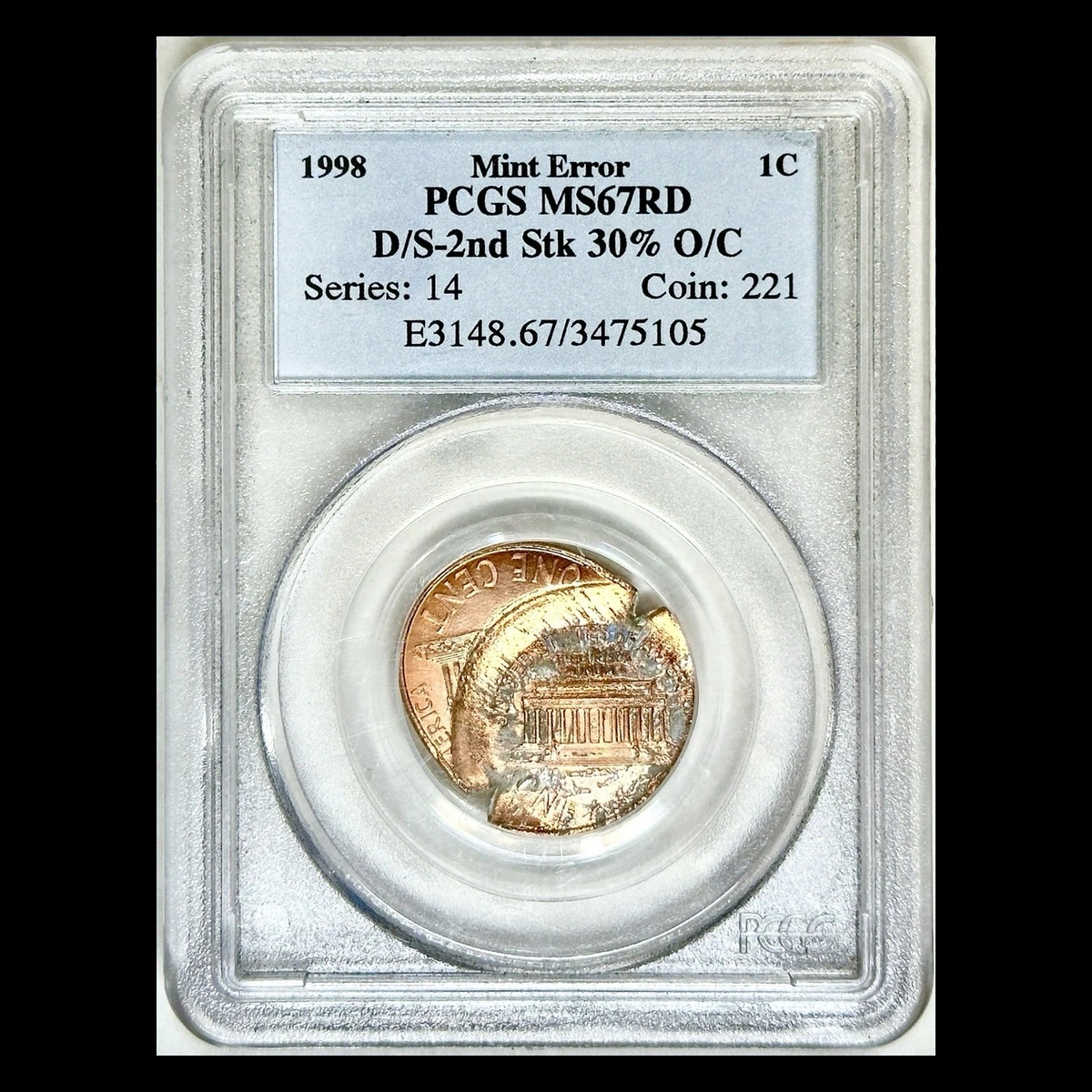
Published examples include second strikes forty or seventy-five percent off center and a separate repeatedly struck piece with extensive spread. Each records a coin moving between blows.
Another cataloged example flipped over and was struck again within the collar. That event placed remnants of front and back designs on the same face.
How to Identify
Follow one recognizable date, word, or portrait fragment at a time into its struck position. A flipover requires mixed front-and-back details, not simply rotation within one face.
Check for later squeezing and distinguish separate impressions from flat shelves around letters. Do not combine percentages or shapes from different coins into an invented striking sequence.
What It’s Worth
Clearly identified repeated strikes have an estimated $50–$1,200 range. Readable overlaps and surfaces matter more than a claimed number of blows.
A 2000 flipover double strike brought $408 in March 2025. It provides a nearby-year comparison with its own shape and preservation.
10. 1998 Penny Backward Detail beneath Later Impressions: 1998 Brockage with Repeated Striking Error
A struck coin caught against another blank can create a sunken mirror image, called a brockage. A later blow may then overlap that image.
One 1998 description records an expanded portrait and backward LIBERTY on the reverse, followed by an approximately 85% off-center strike with the back blocked. Another report concerns a different piece with several backward impressions.
How to Identify
Confirm that the backward letters sink into the surface, then trace the later strike’s boundary. Compare the opposite face while keeping the blocked portion separate from surviving earlier detail.
Later pressure between coins can create a false mirror impression. Crushing or tool marks that conflict with the apparent sequence need investigation.
What It’s Worth
An authenticated combination has an estimated $100–$1,500 range. Clear mirrored lettering and an understandable sequence increase its usefulness as a comparison.
A simpler 2001 partial brockage brought $79 in March 2025. That lower result is not a price for a dramatic 1998 repeated-strike combination, and separate brockage and double-strike estimates should not be added together.
11. 1998 Penny Walls Rise around Lincoln: 1998-D Double-Struck Front Die Cap Error
A coin sticking to the front die can stretch around it under further pressure. The cap is the coin that covered the tool, distinct from another blank later struck beneath that covering.
The cataloged Denver specimen is described as double struck and a front die cap in NGC MS65 Red and Brown. Its exact cap depth is not established by the label.
How to Identify
Look inside for the Lincoln design and repeated-strike details, then follow continuous surface into the walls. Natural stretching differs from a sharp later bend through finished letters.
Do not flatten the cap or pull its sides outward. Its shape and surviving design need to explain the same striking history.
What It’s Worth
Authenticated caps have an estimated $100–$1,500 range across depth, clarity, and condition. Repeated striking is part of this object’s history rather than a separate item to price.
A 1999 deep front cap in MS64 Red brought $660 in March 2023, while a 2000 front cap brought $312 in June 2025. Neither sets an exact price for the 1998-D.
12. 1998 Penny A Local Interruption in the Design: Reported 1998 Strike-Through Error
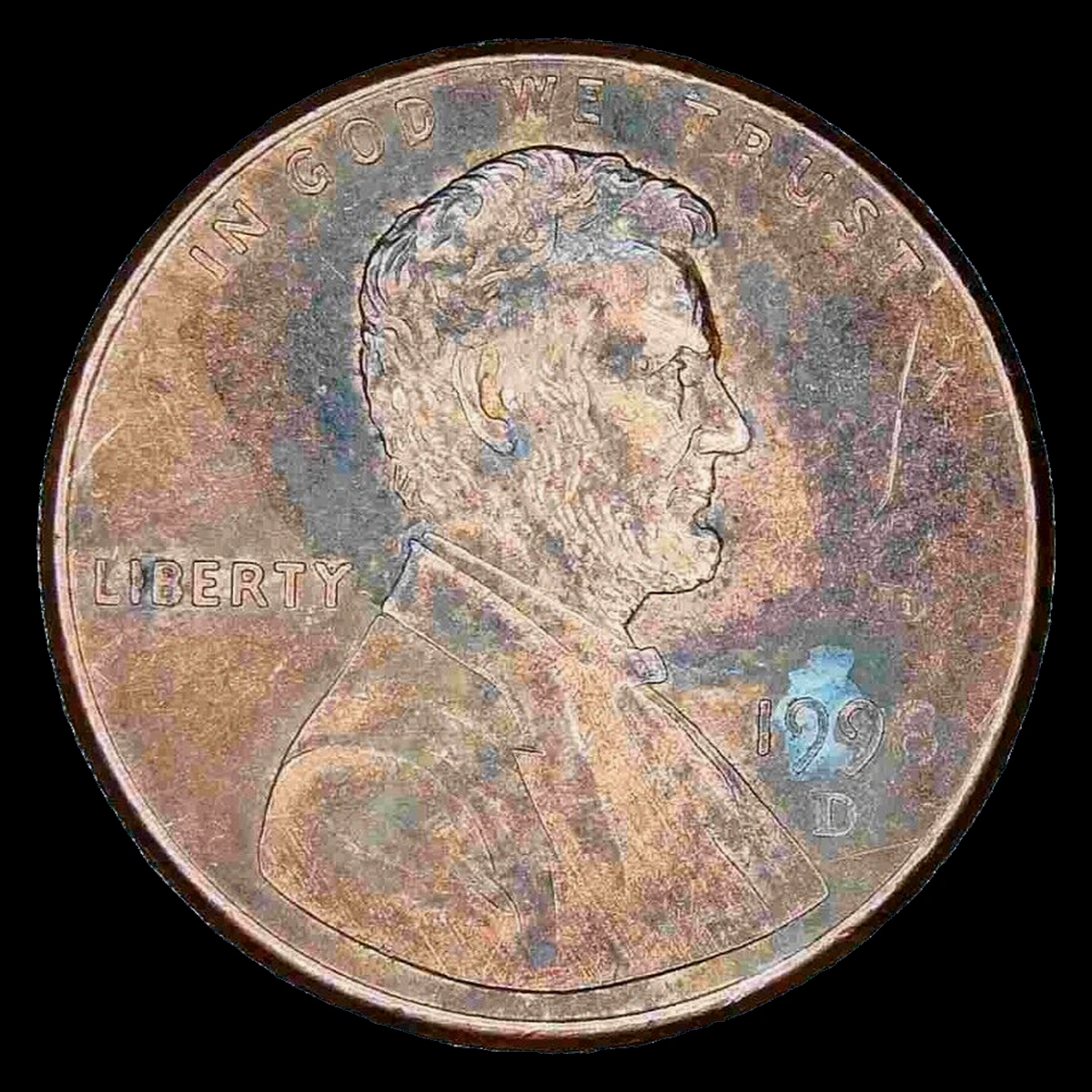
Material between a die and blank can suppress detail or leave an impression beside sharp design. The affected area formed that way during the strike.
The reports establish no common face, location, or obstruction for 1998. Grease, cloth, or wire should be named only when the actual evidence supports it.
How to Identify
Trace the boundary from sharp detail into the weak patch using changing light. Original texture differs from scraping lines or corrosion.
A later dent may raise a lip around its edge, while general wear affects exposed features elsewhere. Compare both faces rather than judging one isolated hollow.
What It’s Worth
The estimated range is $5–$300, covering minor blocked details through larger clear impressions. Undamaged surroundings help establish the error.
A 2017-D front strike-through brought $228 in March 2025. It supplies related-type context without documenting a specific 1998 sale.
13. 1998 Penny Raised Metal between Letters: 1998 BIE and Other Chips Error
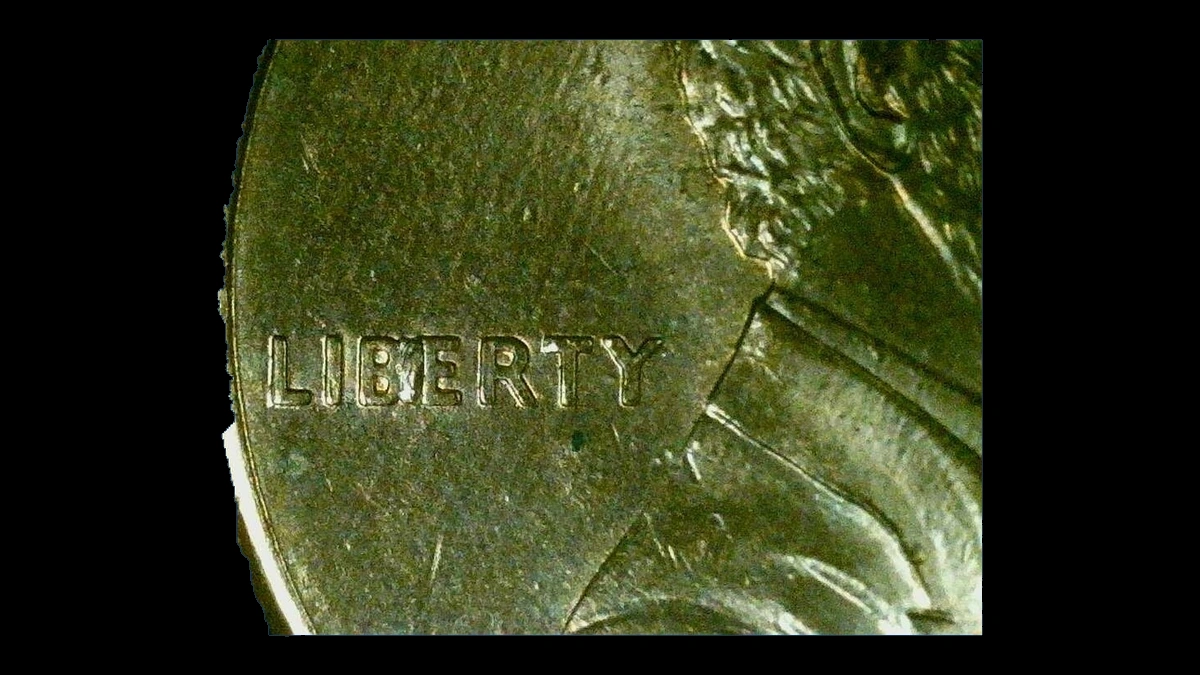
A small die chip between B and E in LIBERTY can leave a bar resembling an extra I. Philadelphia and Denver examples are listed in specialist catalogs.
Other letter-area chips belong to their own locations and shapes. A bump near I or L is not automatically BIE.
How to Identify
Locate the actual letter gap and check whether the mark rises as part of the struck surface. A scratch can leave a groove with displaced metal beside it.
Inspect for a plating bubble or attached dirt without picking at the feature. Its precise position is more informative than an elaborate nickname.
What It’s Worth
Small letter chips have an estimated $2–$100 range, with simple BIE bars usually near the inexpensive end. Clear larger shapes on clean coins can attract stronger interest.
No record sale is assigned to every listed chip. Wear and corrosion can obscure even a genuine raised feature.
14. 1998 Penny Extra Lines inside the Memorial: 1998 Doubled Reverse Details Error
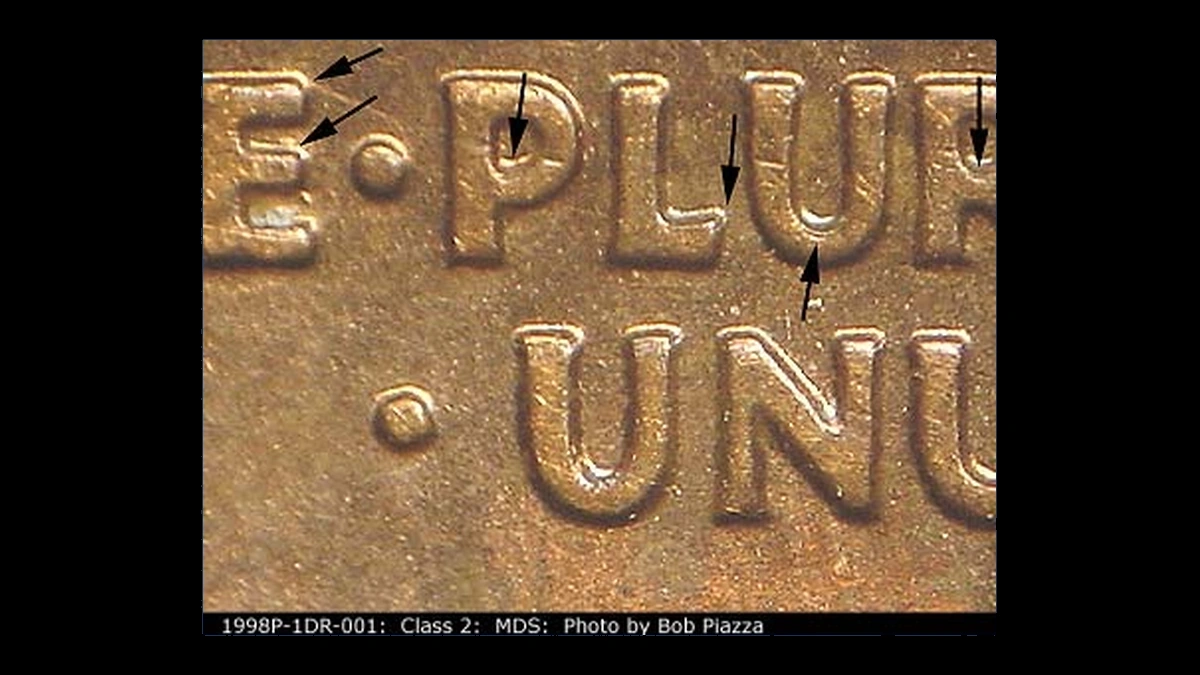
The central statue, its foot, and nearby columns provide useful places to inspect for extra design contours. Philadelphia examples include details near the statue and seventh column, while Denver has separate patterns in other openings.
The duplication exists in the die before striking. Normal building steps should not be mistaken for extra columns simply because they look unusual when enlarged.
How to Identify
Count columns from the left and match the mint to the appropriate 1998 variety photographs. Follow one extra shape through its full visible length.
Exclude flat strike shelves, copper splits, and scratches. Combining marks from several different varieties does not establish one matching die.
What It’s Worth
Identified minor doubled Memorial details have an estimated $5–$200 range. Strong recognizable shapes on well-preserved coins provide better comparisons than vague thickness.
These estimates concern minor reverse varieties. High prices for famous doubled portraits should not be transferred to a small extra column or statue line.
Conclusion
For 1998 cents, identify the version before judging a letter gap and the metal before judging a gray surface. Those two steps prevent ordinary Close AM circulation coins and altered zinc cents from receiving the wrong comparison.
The estimated $2–$5,000 span also includes complex shapes and combined strikes. Preserve their relationships, keep specimen-specific measurements separate, and value each complete coin or bonded object rather than adding maximum prices for individual features.