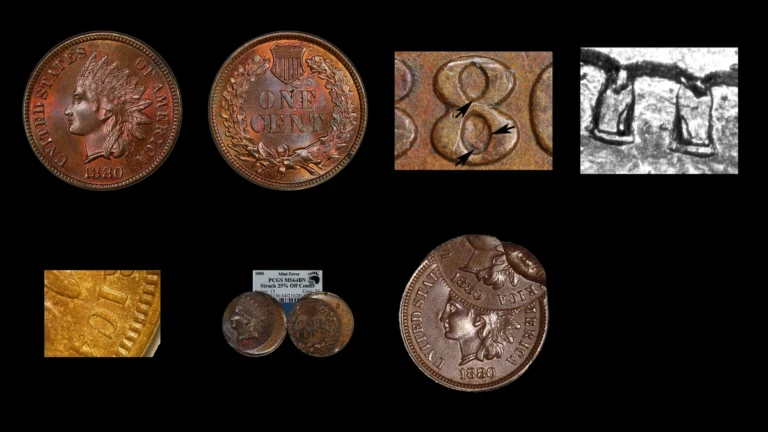
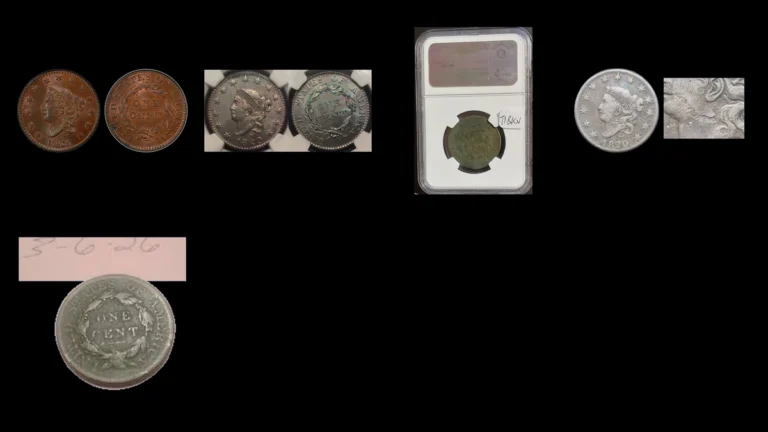
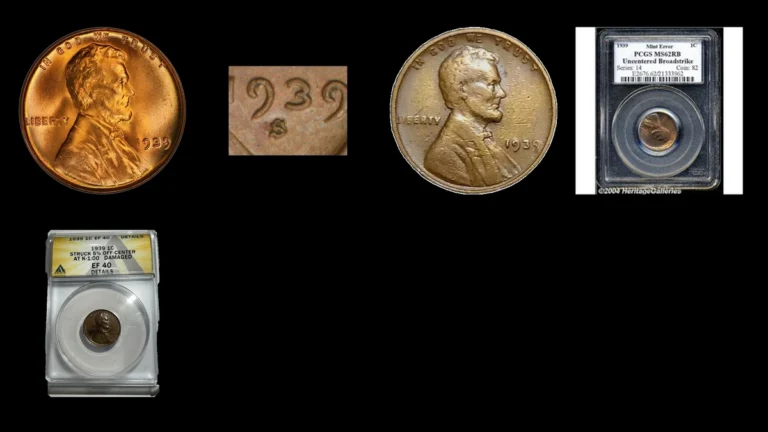
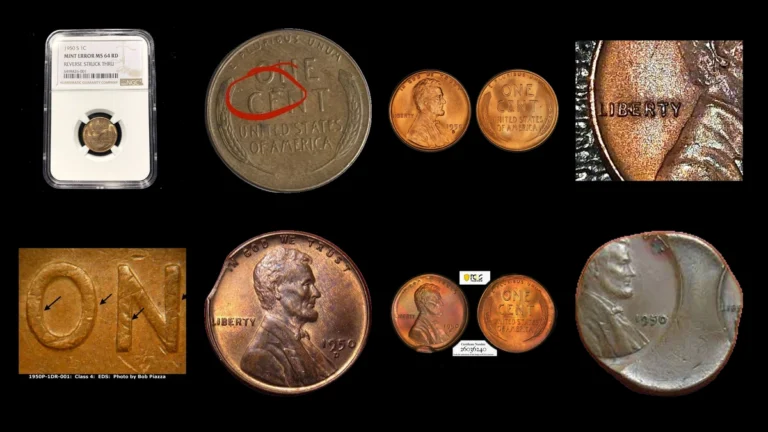
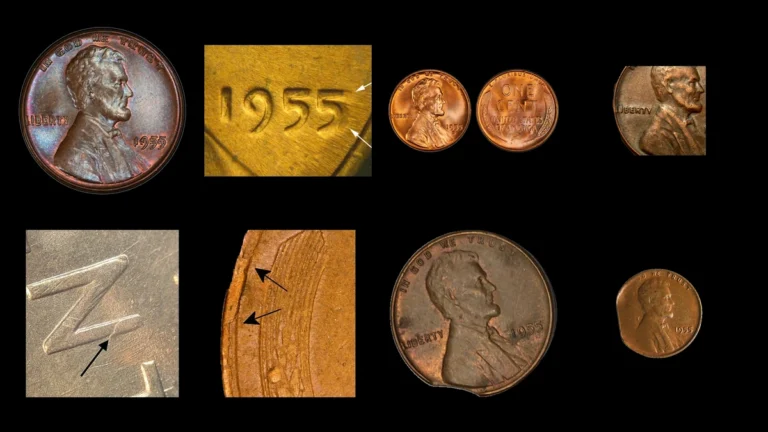
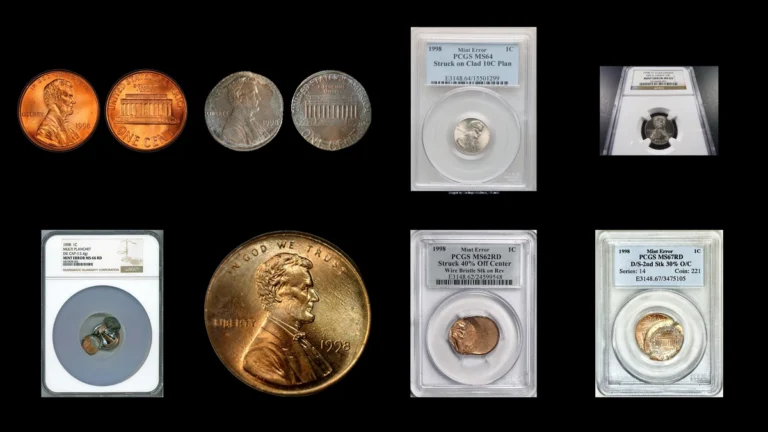
Rare 1974 Penny Errors (List & Pictures)
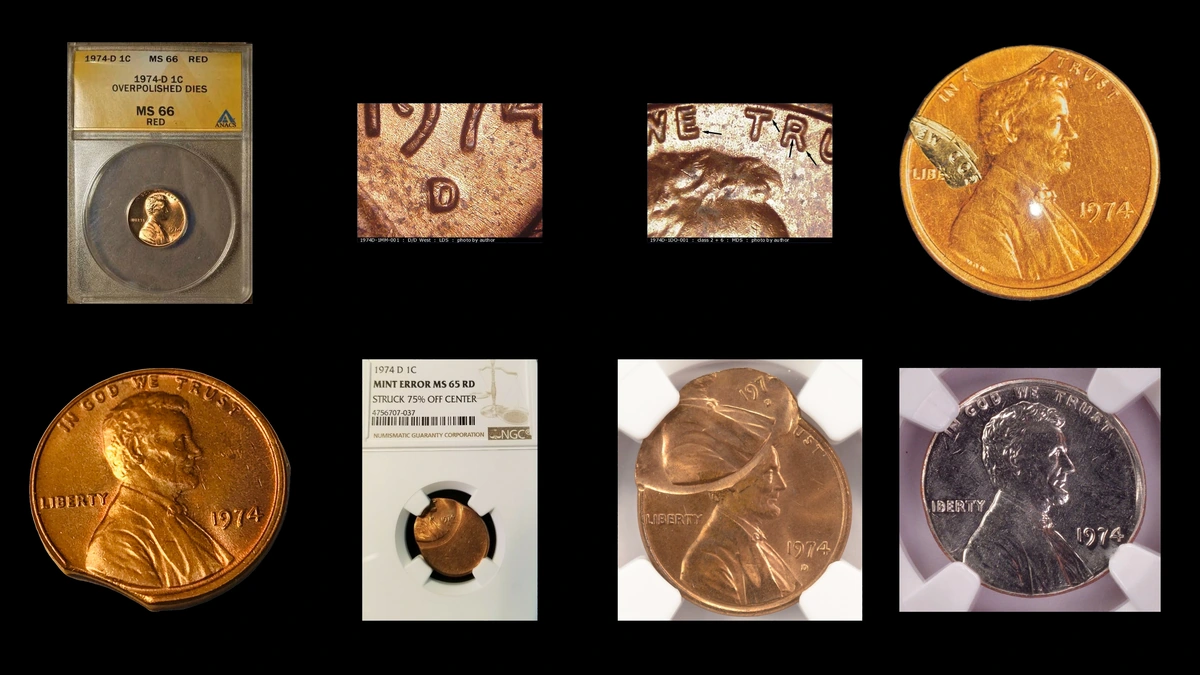
Among the supplied sales for 1974 penny errors, a San Francisco cent on a Philippine blank reached $19,200 in January 2023. Estimates range from $2 for minor lost details to $50,000 for an extraordinary matched pair, with that upper figure covering both pieces together.
Inspect small design changes before moving to edge defects, extra impressions, and the metal or partner coin involved.
| What to examine | Error family | Estimated value |
|---|---|---|
| Missing or repeated small details | Die polishing, repunched mintmark, doubled die | $2–$250 |
| Missing edge or displaced design | Clip, off-center strike, double strike | $10–$1,000 |
| A mound and embedded steel | Die break with retained fragment | $5,000–$15,000 |
| Smaller pale coin | Dime blank, dime overstrike, or foreign blank | $250–$30,000 |
| Two matching error coins | Paired strike involving two obverse dies | $10,000–$50,000 for the pair |
A normal 1974 copper-alloy cent weighs 3.11 grams and measures about 19.05 millimeters across a plain edge. A scale and careful measurements are useful for blank and metal questions, while a magnifier and angled light reveal most design evidence.
Record each coin separately when a report involves multiple pieces. Leave embedded material untouched and keep certified examples in their holders.
1. 1974 Penny Shallow details disappear beside sharper ones: Overpolished Die Error
A die can lose shallow parts of its design when polished too heavily. Coins struck afterward reproduce that reduced design rather than losing the details through later circulation.
The recorded Denver example illustrates polishing used to reduce clash marks from contact between the dies. The supplied report does not establish one universally missing letter for all 1974-D candidates.
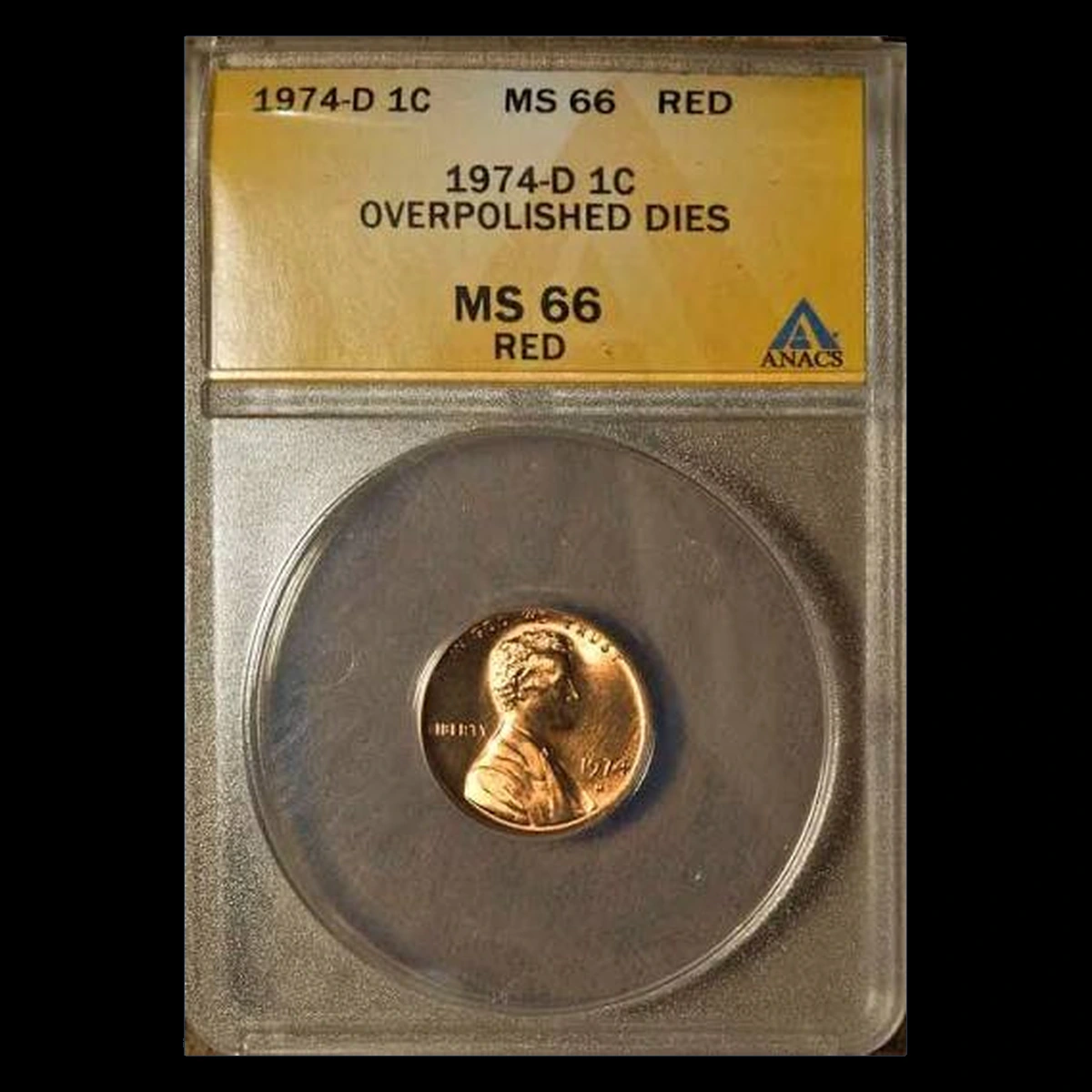
How to Identify
Inspect the actual missing area and compare neighboring raised details with the portrait’s high points. Local loss amid sharp original detail is more informative than general wear.
Any polishing lines used for attribution must match the documented die. Fine scratches can also come from cleaning the finished coin, which has a different origin.
What It’s Worth
Identified overpolished-die examples are estimated at $2–$75. Visibility of the affected area and the remaining coin’s condition influence collector interest.
This range is based on comparable Memorial-cent effects, rather than a verified completed sale of the reported Denver piece.
2. 1974 Penny Extra curves around D or S: Repunched Mintmark Error
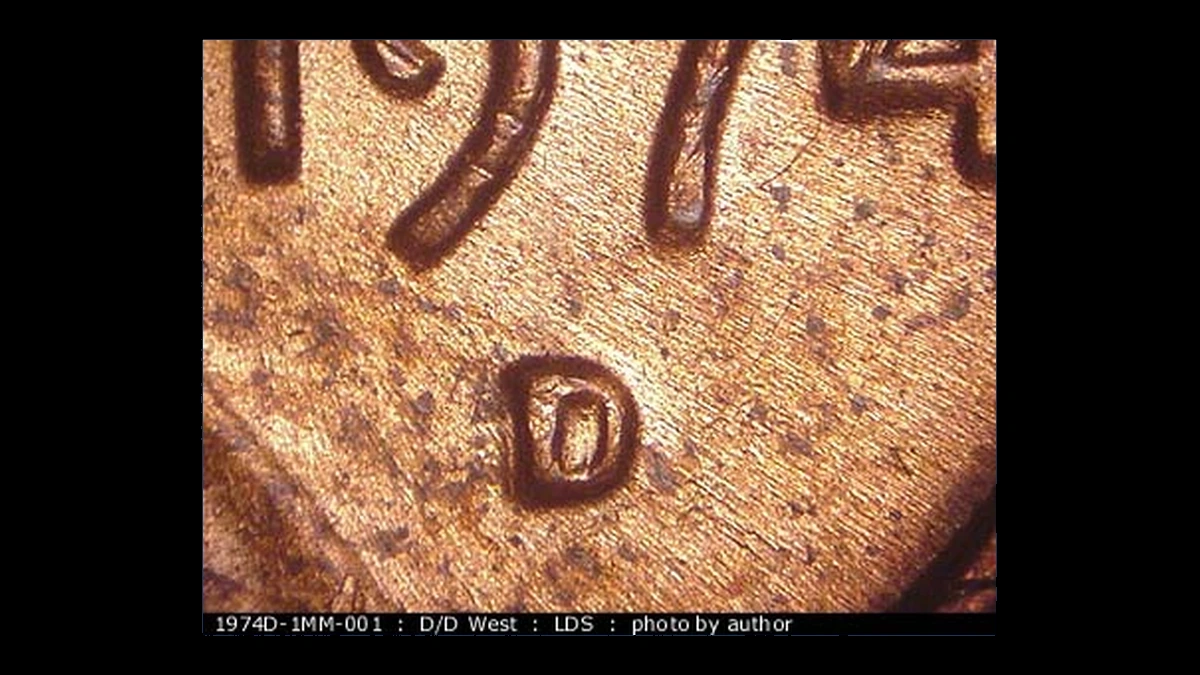
Repeating a hand-applied mintmark punch in another position can leave traces of the earlier impression on the die. Later coins then carry the same extra strokes.
Denver reports include repeats in several directions and tilted placements, while San Francisco examples include extra S outlines below the main letter. A separate D-over-S claim proposes two different letters and needs its own evidence.
How to Identify
Follow the complete main letter and match the extra upright, curve, or tip with the appropriate variety. Two repeats in the same direction can still belong to different dies.
For D over S, require independently recognizable S structure beneath the D. A bump or a confirmed D/D photograph cannot establish that different-letter attribution.
Distinguish an ordinary S cent from a Proof made for collectors. The mintmark alone does not determine its format.
What It’s Worth
Confirmed D or S repunches are estimated at $3–$200. A separately authenticated D-over-S pattern has a conditional estimate of $25–$250.
The conditional range neither confirms the general D-over-S report nor supplies a realized sale. Strong, recognizable extra letter structure matters more than an uncertain catalog label.
3. 1974 Penny Notches or extra edges in the motto: Doubled Die Error
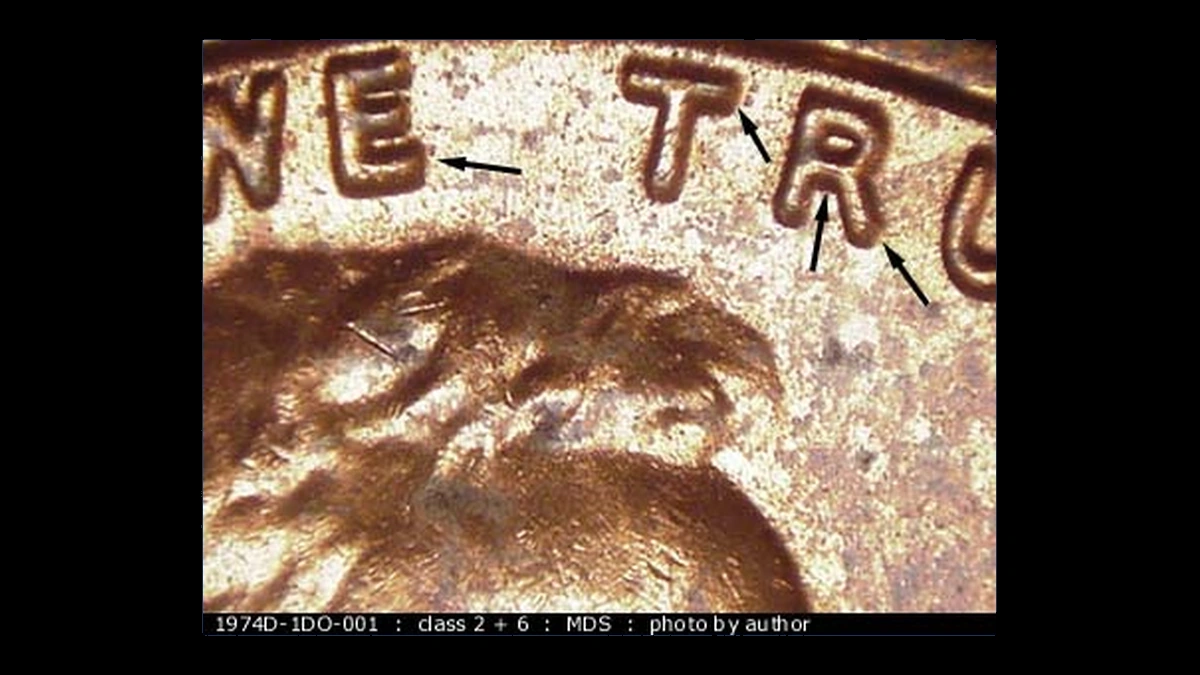
Some Denver varieties show repeated design around the final 4 or within the front lettering. One reported pattern affects E in WE and TR in TRUST.
The repetition belongs to the die itself, so a single strike can transfer it to the coin. A separate San Francisco report concerns LIBERTY and TRUST, with its exact catalog identity and ordinary-versus-Proof status needing confirmation.
How to Identify
Match actual notches and raised extra outlines in the relevant letters. General thickness, background scratches, or flat ledges from movement during striking cannot substitute for that pattern.
Keep the date and mintmark in view when selecting a reference. A Denver diagnostic cannot authenticate the reported San Francisco variety, and shine alone does not establish Proof manufacture.
What It’s Worth
Correctly identified minor doubled-die obverses are estimated at $5–$250. Stronger separation and better surfaces tend to support the higher end.
The range compares small Lincoln-cent varieties and is not anchored to a major 1974 doubled-die sale. Applying it to the S report requires confirmation of both the repeated design and the coin’s format.
4. 1974 Penny A rim mound accompanies embedded steel: Die Break with Retained Fragment Error
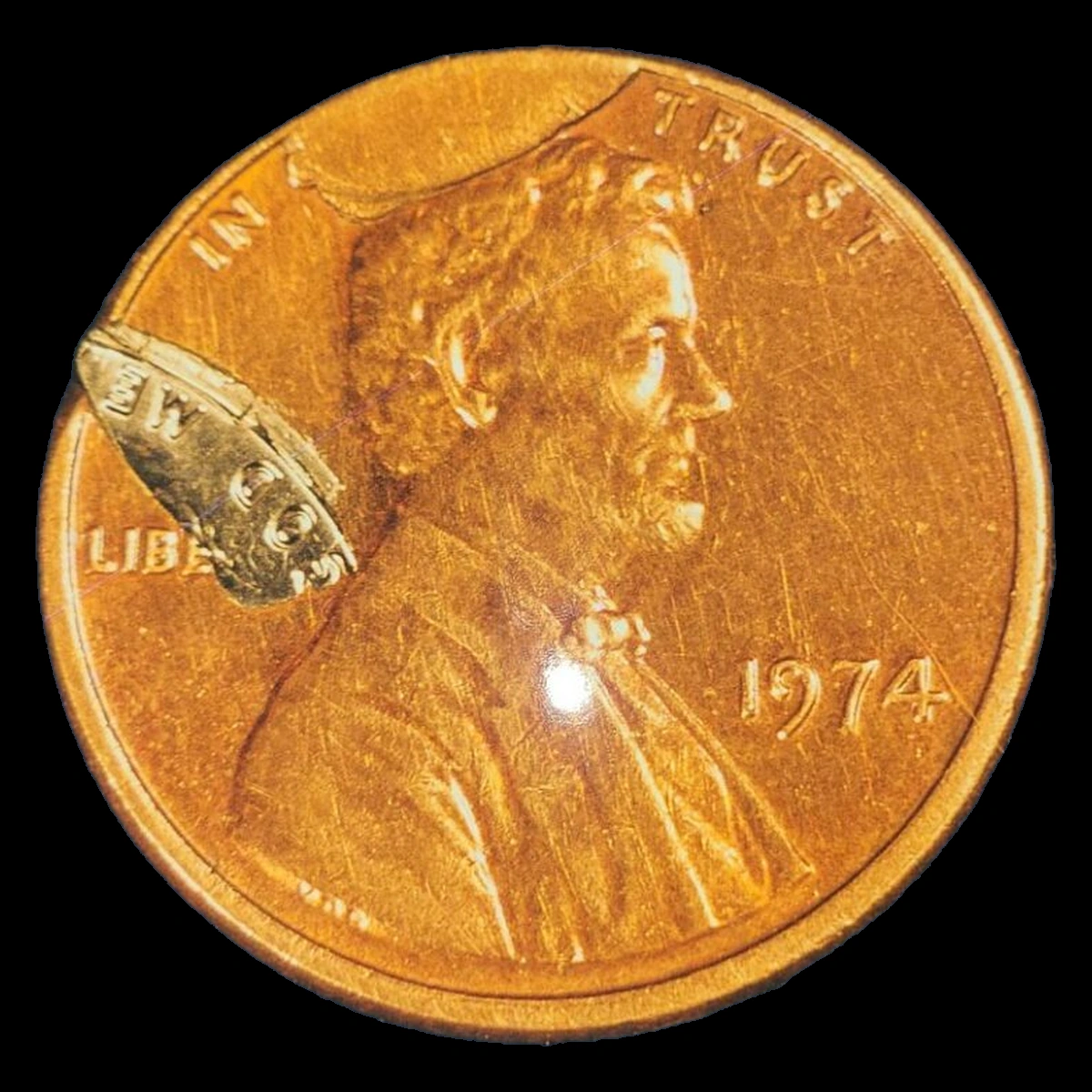
One 1974-S cent records two effects of a broken die. A raised obverse patch occupies the rim area between nine and eleven o’clock, while the missing steel fragment became embedded above the Memorial on the reverse.
The mound, called a cud, formed where coin metal entered the gap in the damaged die. Parts of E PLURIBUS UNUM were subsequently struck into the retained fragment.
How to Identify
On the documented coin, the obverse patch extends about three millimeters inward. Examine that area separately from the reverse fragment, then relate the two features to the same event.
The fragment should show its actual outline, contact with the cent, and partial motto impression. Loose metal placed on a coin does not reproduce that evidence.
Do not pry at the steel or try to expose material underneath. Its presence also complicates comparison with the weight of an ordinary cent.
What It’s Worth
This exceptional combination is estimated at $5,000–$15,000 with the fragment intact. The range does not describe an ordinary cud without the retained steel.
The 1974-S example graded NGC MS63 Red and Brown sold for $9,000 at Heritage on April 24, 2021. Its color designation describes a mixture of copper-red areas and darker toning.
5. 1974 Penny Part of the outline is absent: Clipped Blank Error
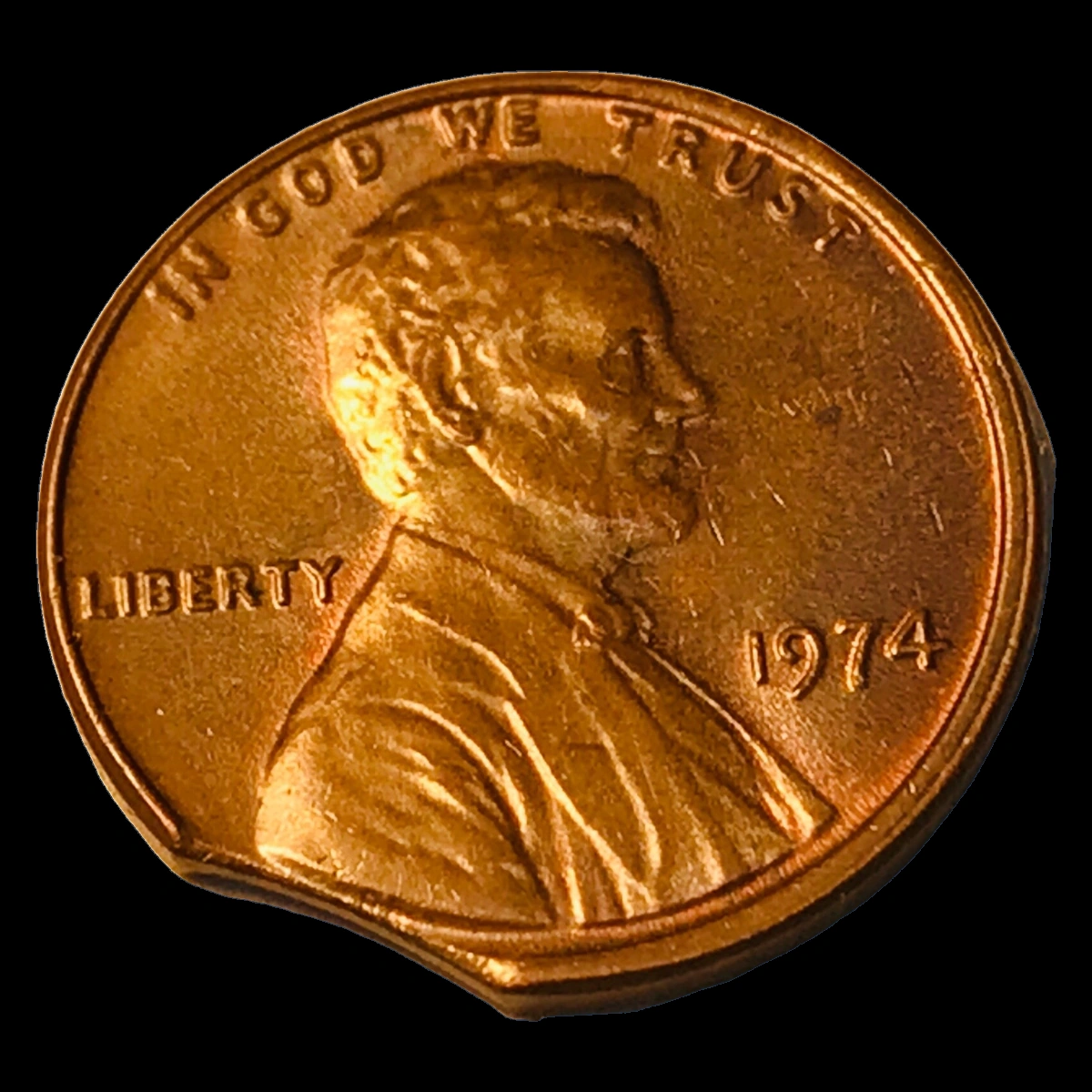
A blank punched from an incomplete part of a metal strip can be missing a section before it reaches the dies. Striking then forms the rim and design around that existing gap.
1974 clips are reported without fixing a single gap shape or mint for every example. Curved, straight, and irregular boundaries require inspection of the particular coin.
How to Identify
Examine both ends of the gap for the way the original rim formed. Filing grooves, saw marks, or sharp burrs may reveal later removal of metal.
A weak rim opposite a curved clip can be supporting evidence, though its strength varies. Reduced weight confirms that metal is missing but does not establish when it disappeared.
Measure a surviving intact span when comparing diameter. The short distance across a gap is not the blank’s original diameter.
What It’s Worth
Genuine clipped 1974 cents are estimated at $10–$250. The boundary’s authenticity, missing section, and preservation matter more than dramatic appearance alone.
A 1967 copper-alloy cent with a 13% straight clip sold for $39 in July 2021. Its straight shape and earlier date should stay attached to that comparison.
6. 1974 Penny The design misses part of the blank: Off-Center Strike Error
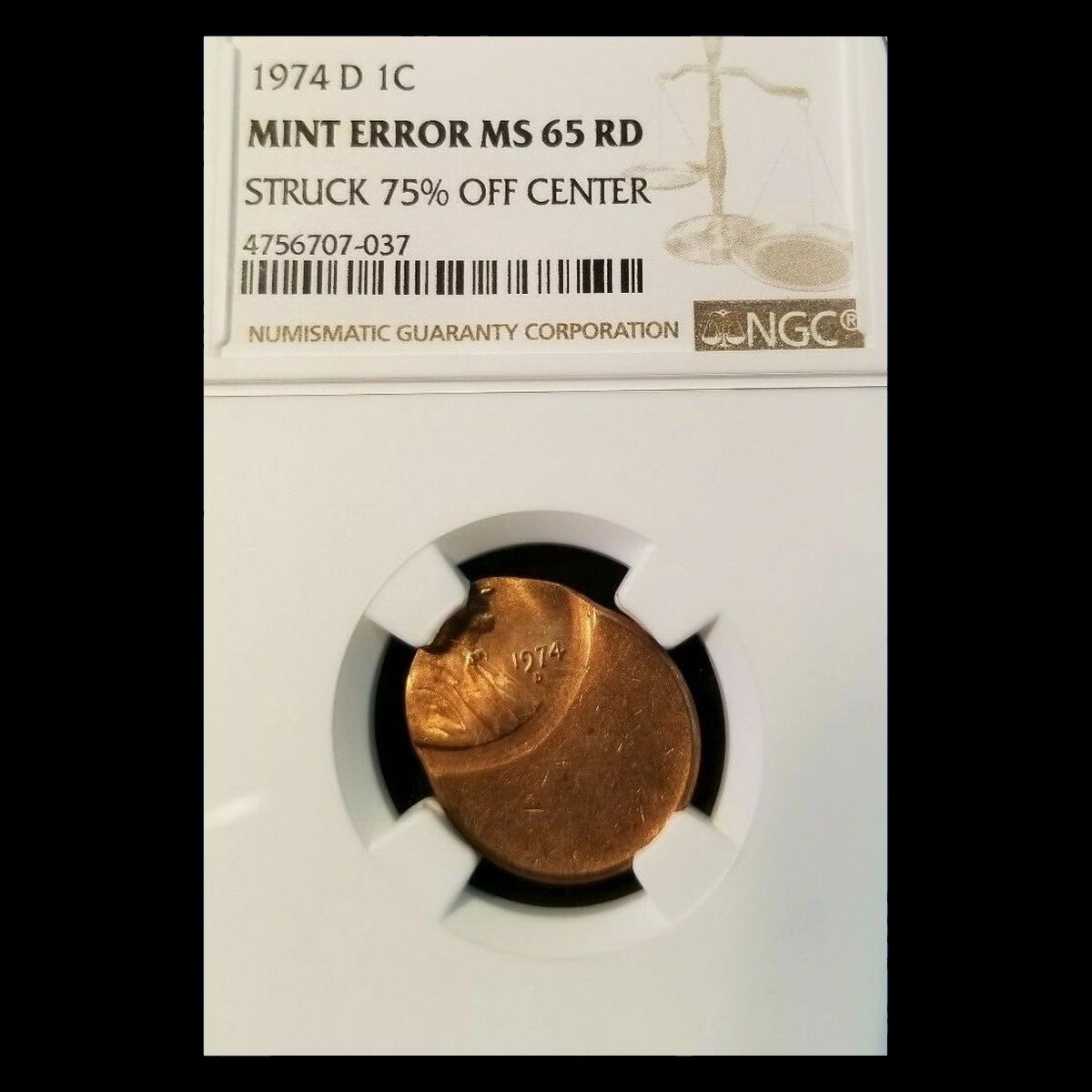
When a blank lies partly outside the dies, part of the design falls beyond its edge and another area remains unstruck. The missing percentage describes design displacement, rather than the amount of metal removed.
A no-mintmark 1974 example is about 85% off center toward eleven o’clock, while a separate Denver piece has a similar displacement toward nine-thirty. A San Francisco circulation cent has a smaller shift of about 20%.
How to Identify
Establish the surviving date and mintmark before estimating the offset. The S example is an ordinary issue, so it should not be matched with Proof prices merely because it bears that letter.
Compare the missing design and natural blank areas on both faces. Grinding or cutting should not account for the supposedly unstruck crescent.
A complete design within an expanded outline may indicate a broadstrike instead. A shift confined to one face can indicate one misaligned die, a different problem.
What It’s Worth
Dated examples are estimated at $15–$600. Surviving identity and original surfaces remain important even on strongly displaced coins.
A 1977-D cent struck 85% off center sold for $45 in January 2022. That later-year result demonstrates why a large percentage alone cannot determine value.
7. 1974 Penny A second impression lands elsewhere: Double Strike Error
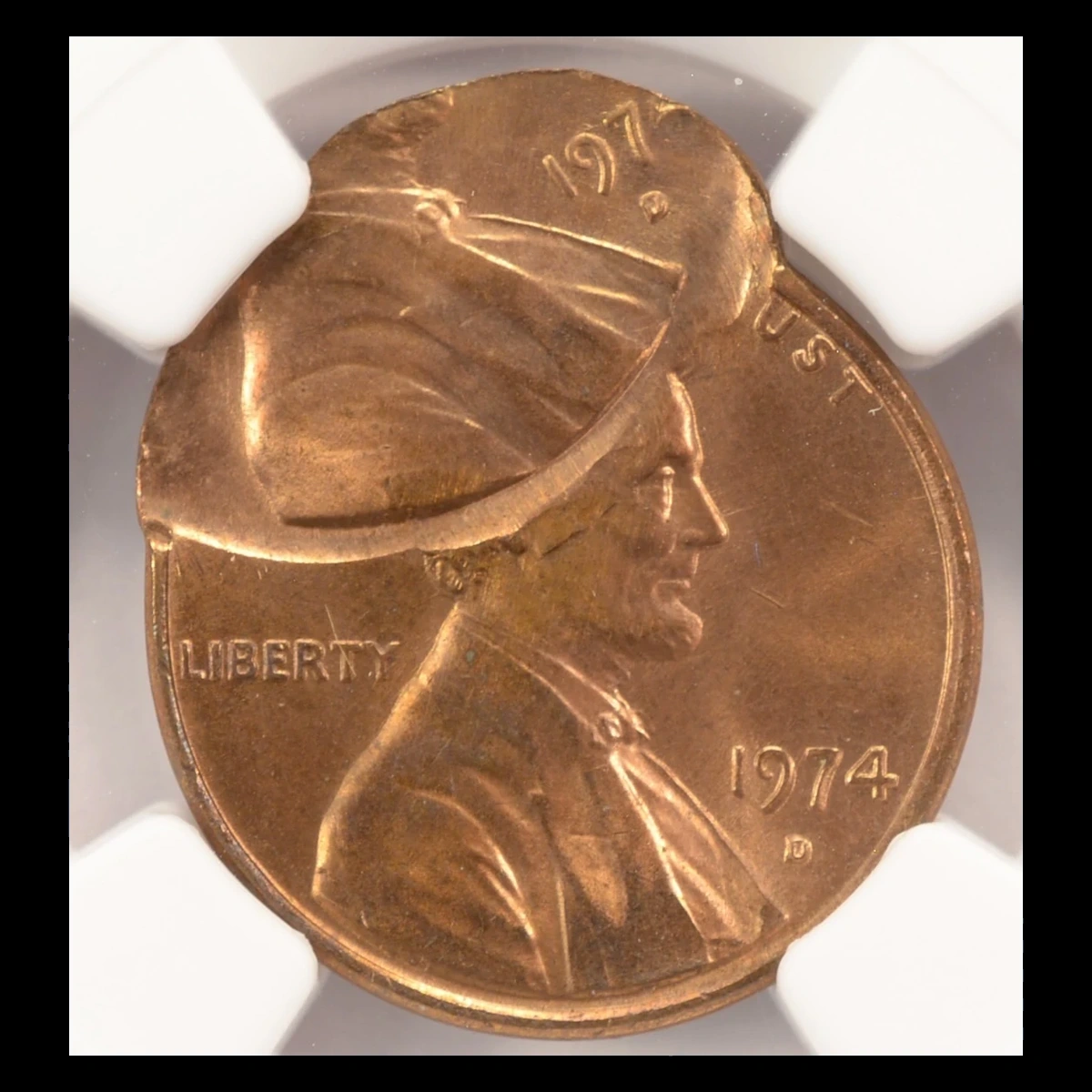
A cent can remain in the press and move before another strike. The second impression may then occupy a separate area of the same piece of metal.
A no-mintmark 1974 example has its second strike about 80% off center. A Denver example has an approximately 85% shift plus a blocked design area, but the supplied description does not identify which face was blocked.
How to Identify
Locate the second strike boundary and connect portrait, date, or lettering fragments inside it. Tiny flat ledges beside individual letters do not demonstrate another whole-coin strike.
Follow the displaced area onto the other face and inspect the edge for seams or joined pieces. Both impressions should be part of one continuous coin.
Any blocked area on the Denver example must match its own documentation. Do not invent a face or obstruction from a short listing description.
What It’s Worth
The estimated range is $50–$1,000 for genuine double strikes retaining an identifiable 1974 design. Separation and the clarity of any additional obstruction affect the result.
A 1979 cent with an off-center second strike sold for $204 in September 2023. It provides a copper-alloy comparison without supplying a sale of either 1974 coin.
8. 1974 Penny A smaller pale blank carries only cent designs: Dime Planchet Error
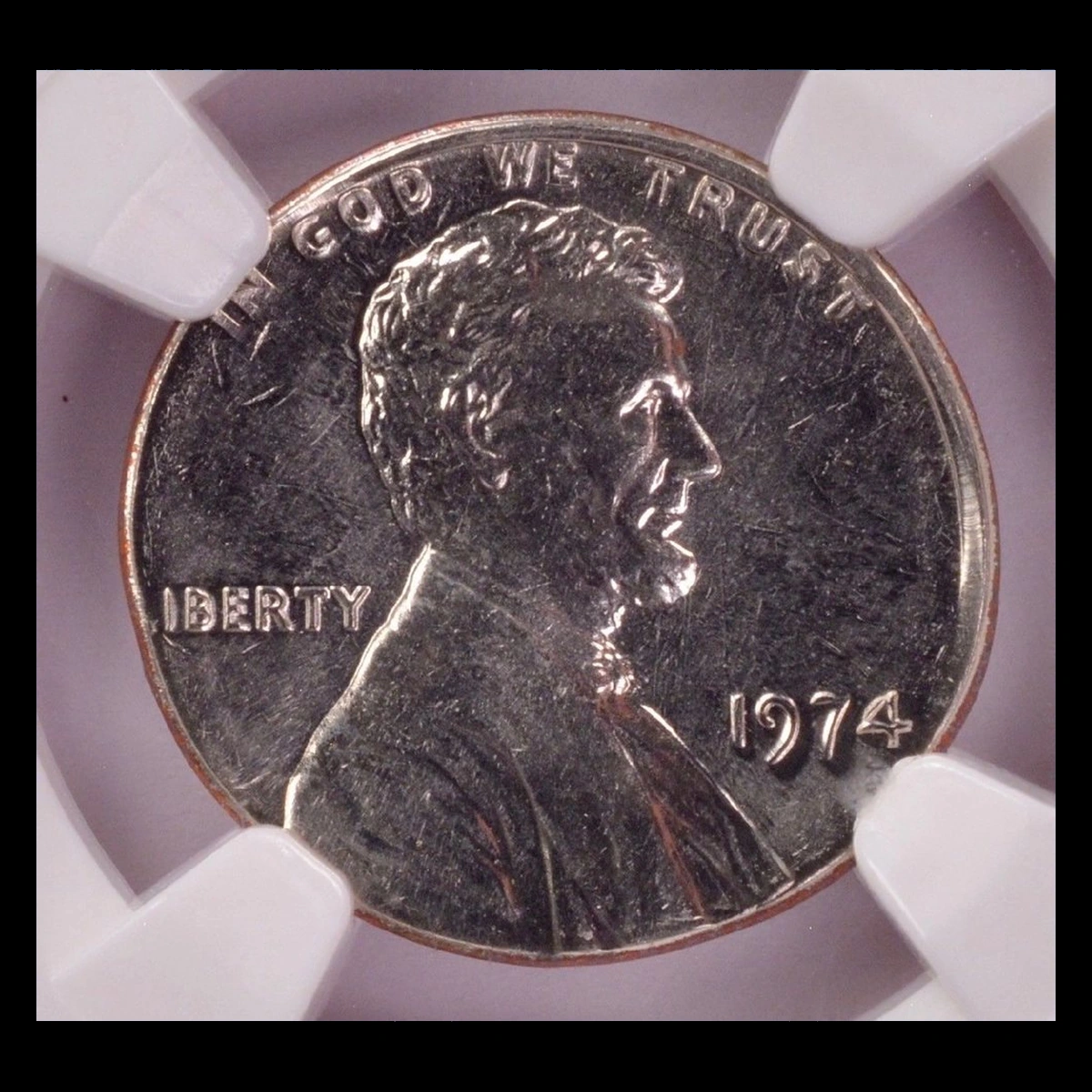
An unused dime blank can enter the cent press, leaving too little space for the normal cent design. This wrong-planchet error does not require an older dime portrait underneath Lincoln.
The supplied 1974 year report lists the type without identifying a certified specimen or mint. A candidate therefore needs its own complete attribution.
How to Identify
A clad dime blank begins near 2.268 grams and 17.91 millimeters, with a copper core between pale outer layers. Compare weight, dimensions, and edge structure together, allowing for expansion during striking.
A coating can make an ordinary cent look pale, while grinding or corrosion can reduce its weight. Neither creates the expected combination of an original dime blank and a cent strike.
If recognizable Roosevelt or torch details remain, investigate an overstrike on a finished dime. Those earlier designs distinguish the next category.
What It’s Worth
An authenticated 1974 cent on a clad dime blank is estimated at $250–$1,500. The range is conditional on a confirmed specimen rather than a realized result for the broad year report.
A 1976-D dime-planchet cent brought $480 in December 2024. Its date and condition remain separate from any proposed 1974 example.
9. 1974 Penny Older dime details survive beneath Lincoln: Cent over Dime Error
A finished dime already has its own designs before it reaches the cent dies. An overstrike can leave portions of those earlier features visible within the newer cent design.
A record describes a 1974-D example graded 64 by PCGS. It establishes a reported two-denomination coin, but does not establish the year of the host dime or a realized price.
How to Identify
Trace a feature belonging to a dime, such as Roosevelt’s portrait or the reverse torch. Then independently locate the date and D belonging to the cent strike.
Do not combine scattered digits from the two designs into an invented host date. Check that both designs share one continuous layered object rather than two attached coins.
The dime’s original size and weight provide context, although the cent strike can spread it. The grade describes preservation, not the percentage of underlying design visible.
What It’s Worth
The estimate is $600–$3,000 for an authenticated example, with understandable designs from both denominations adding appeal. This is a value for the complete coin.
A 1973-D cent over a dime sold for $4,560 in July 2022, above this general range. That stronger individual comparison shows the importance of specific condition and design survival; it does not set an automatic price for 1974-D.
10. 1974 Penny A tiny lightweight blank lacks the normal reverse: Philippine Planchet Error
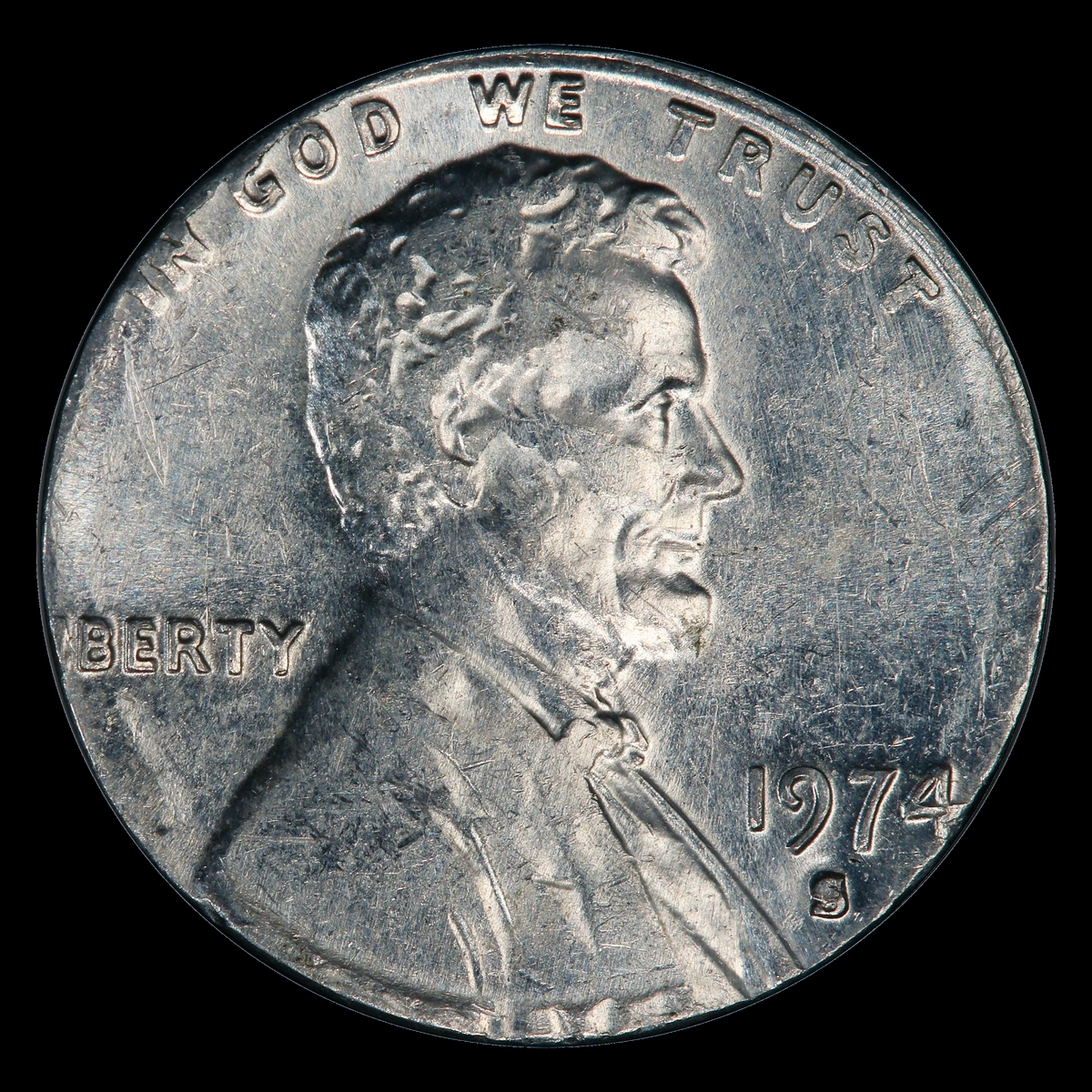
The documented 1974-S example was struck on a blank intended for a Philippine one-sentimo coin. Its standard alloy is 95% aluminum and 5% magnesium, distinct from experimental United States aluminum cents.
The small blank leaves L in LIBERTY outside the struck design. The auction description attributes the mostly blank reverse to another blank underneath, which blocked the Memorial impression.
How to Identify
Check the surviving 1974-S design, reduced outline, absent L, and blocked reverse as one combination. A pale color alone cannot establish a foreign blank.
The intended Philippine blank’s standards are 0.5 gram and 15.25 millimeters. These are reference specifications, not published measurements of this particular struck coin.
Professional metal analysis can test the alloy without cutting the piece. Low weight by itself cannot separate this error from corrosion, alteration, or another material.
What It’s Worth
This specific foreign-blank and blocked-reverse combination is estimated at $10,000–$30,000. The PCGS-graded 61 example sold for $19,200 on January 12, 2023.
The grade describes an unworn coin with noticeable surface imperfections. The sale supports this identified combination, rather than a premium for any silver-colored 1974-S cent.
11. 1974 Penny Two pieces preserve matching impressions: Mated Pair from Two Obverse Dies Error
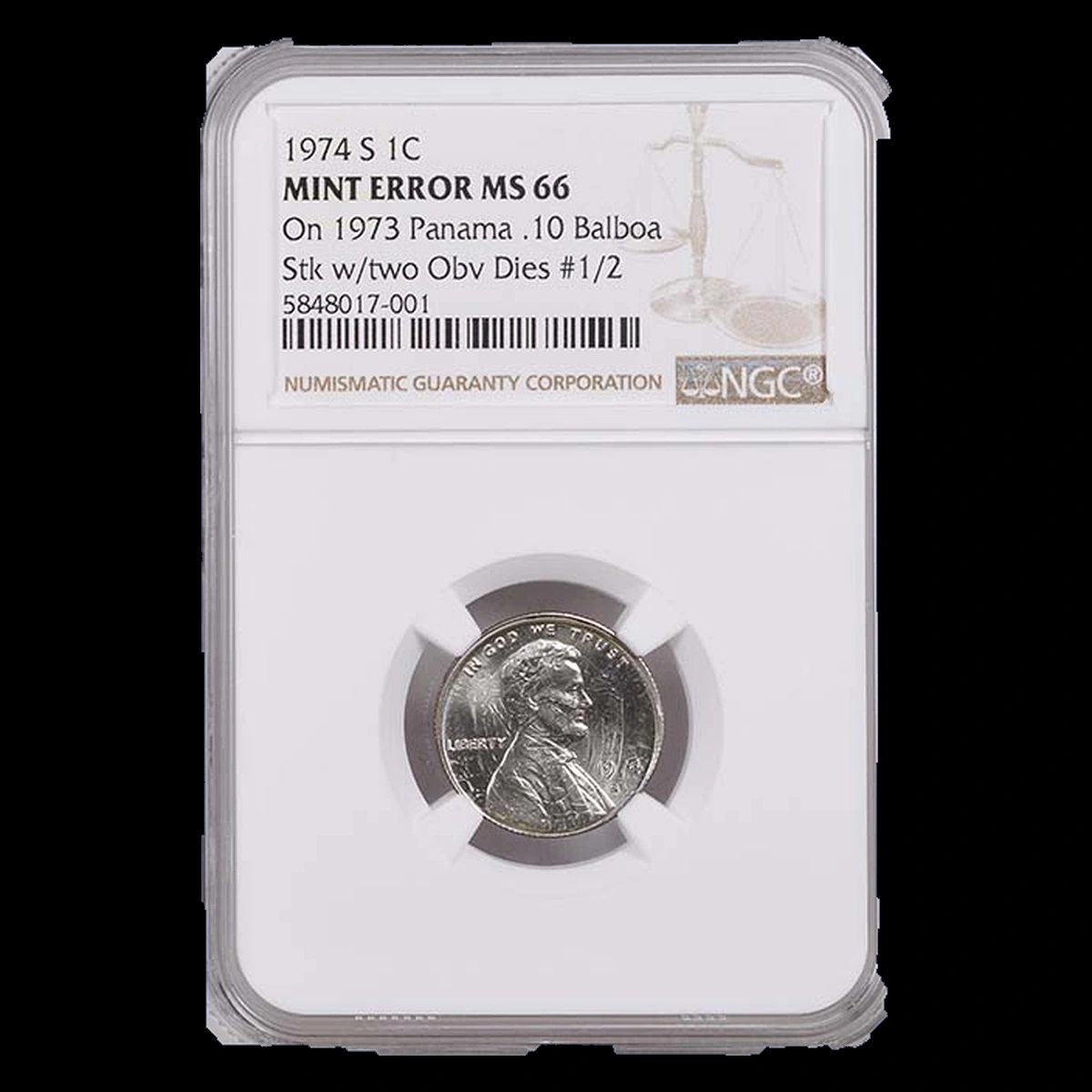
This error involves a finished 1973 Panama one-tenth-balboa coin stacked above a copper cent blank. Two different 1974-S cent obverse dies struck the stack from opposite sides.
One die added Lincoln to the Panama host, while the other added Lincoln to the copper partner’s outer face. At their point of contact, the Panama design impressed a sunken backward image into the copper.
How to Identify
Photograph and identify each piece separately. On the Panama host, distinguish surviving Panama details from the new Lincoln impression; on the copper partner, separate raised Lincoln details from the incuse mirror image of Panama’s design.
Compare the contact images across the two pieces. Their S mintmarks differ because two distinct front dies were involved.
The Panama host used a clad dime blank, while its partner began as a copper cent blank. Separate weights and edge observations should reflect that difference, rather than treating the event as one ordinary double-headed cent.
What It’s Worth
The complete authenticated pair is estimated at $10,000–$50,000. This is a combined estimate for both matching pieces, with no realized sale supplied in the cited account.
Mint Error News describes the pair and its unusual arrangement. Its matching contact impressions and two obverse-die strikes are central to the identification.
Comparison points include the $19,200 foreign-blank 1974-S cent and a 1981 cent-over-half-dollar coin sold for $13,200 in July 2021. Neither result is a completed sale of this pair or a price for each partner.
Conclusion
The strongest 1974 error identification connects every claimed feature to the same physical coin, or to both partners when a pair is involved. A blank’s composition, surviving earlier design, and retained material can matter as much as the visible cent date.
Use estimates only after making those distinctions. Keep reported varieties conditional where evidence is incomplete, and preserve attached fragments so the unusual manufacturing event remains available for examination.