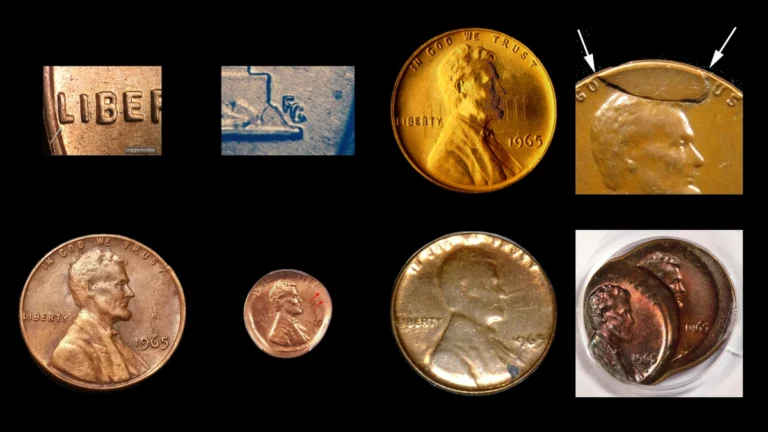
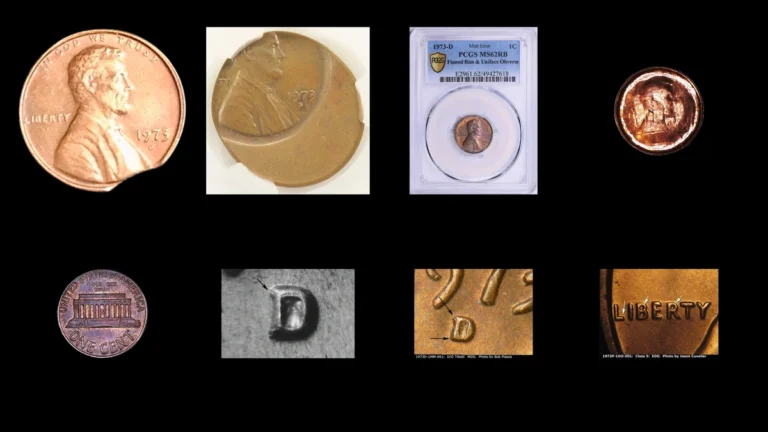
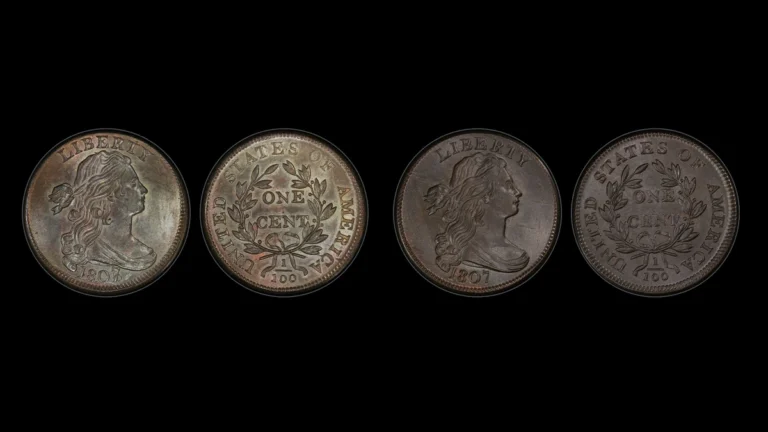
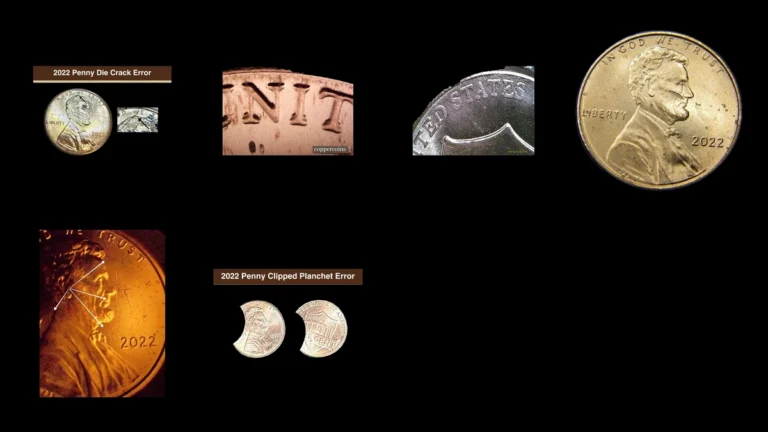
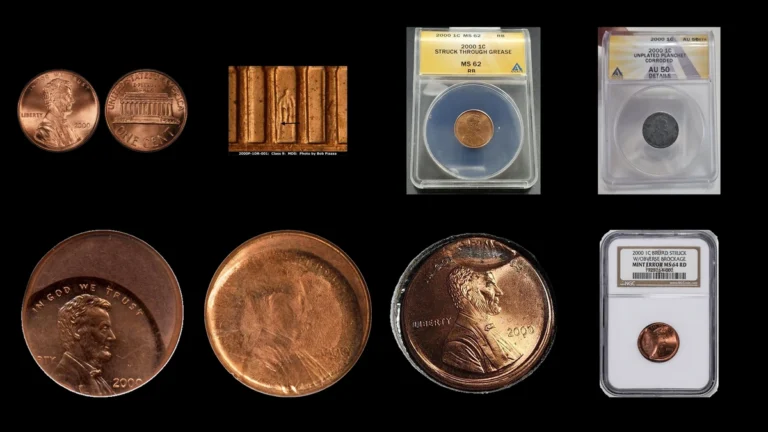
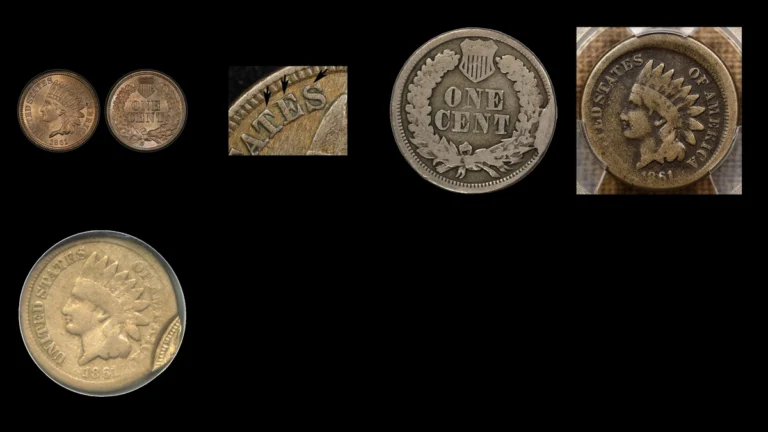
Rare 1923 Penny Errors (List & Pictures)
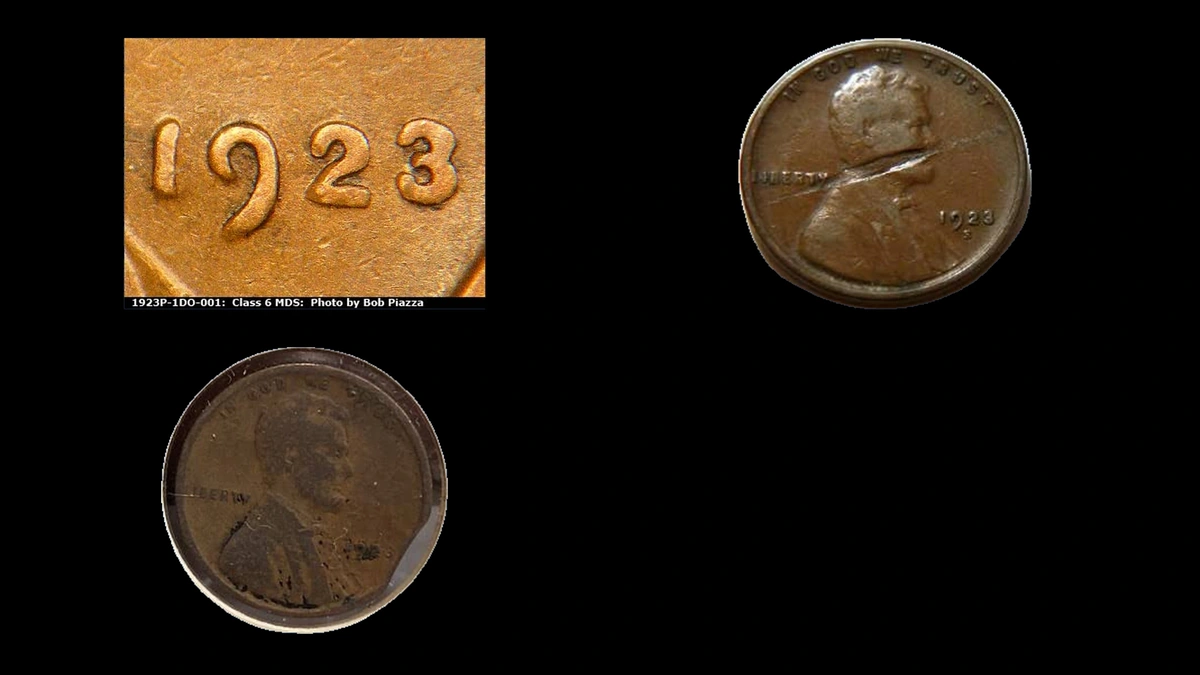
A 1923-S cent struck off center brought $384 at auction in 2019. Most unusual marks need a closer explanation before that sort of comparison becomes useful.
Estimated whole-coin values for 1923 penny errors run from $2 to $900. Start with the eye and lettering, examine the surface, then turn the coin sideways to check its edge.
| Visible clue | Possible error | Estimated value |
|---|---|---|
| Extra eyelid outline | Doubled die | $15–$200 |
| Raised line or lump | Die break | $2–$400 |
| Peeling layer or recessed line | Lamination or struck-through | $5–$250 |
| Gap in the outline | Clipped planchet | $20–$400 |
| Expanded or stepped edge | Broadstrike or partial collar | $35–$500 |
| Displaced or repeated design | Off-center or multiple strike | $50–$900 |
An ordinary 1923 cent is a copper-alloy coin weighing about 3.11 grams and measuring 19.05 millimeters across. Record those measurements once if the coin is accessible, and leave certified pieces in their holders.
1. 1923 Penny An Extra Line at the Eye: Doubled Die Obverse Error
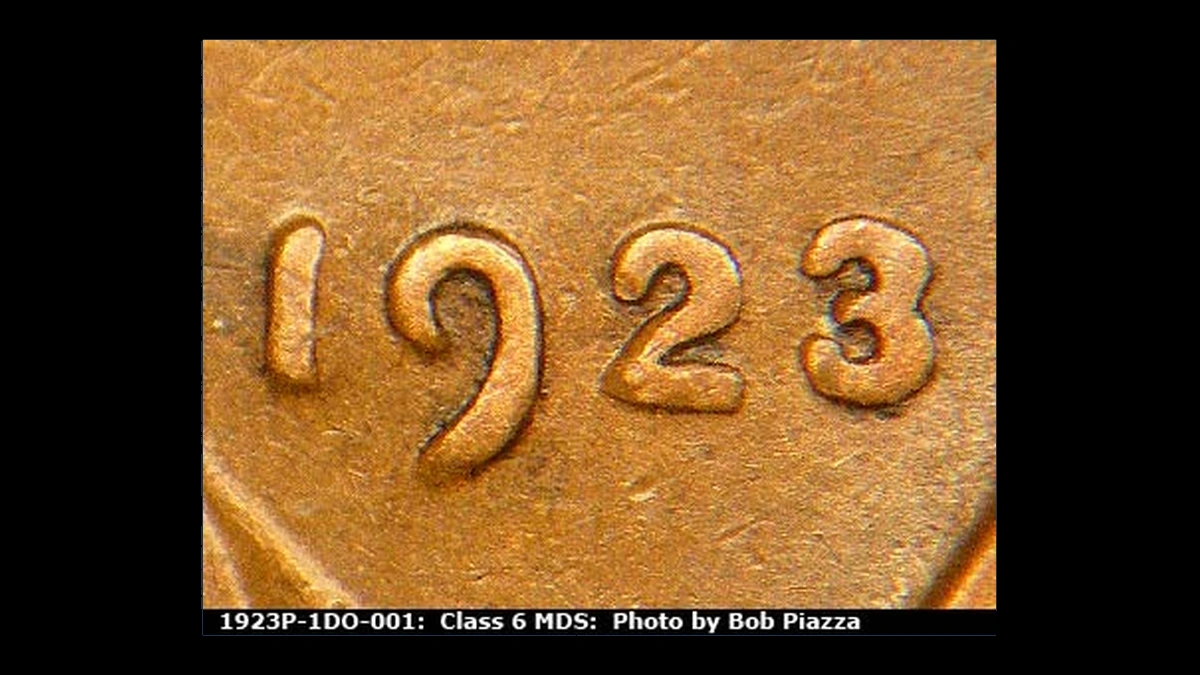
The reported Philadelphia variety has a second eyelid outline. This small front-side feature comes from the die, the steel tool that carried the design before striking the penny.
How to Identify
Confirm the absence of a mint letter beneath the date, then inspect the eye under magnification. An S coin needs its own attribution and cannot be identified from the Philadelphia eyelid report.
Change the light direction and compare the stable extra outline with a photograph of the recognized variety. Blur, wear, and a flat shelf alongside the detail are insufficient evidence.
What It’s Worth
Allow an estimated $15–$200 for a correctly matched coin, with better-preserved eyelid detail supporting the upper portion. This is a comparison-based estimate for a minor variety, not a documented 1923 auction price.
The much bolder doubling associated with certain other Wheat cent dates does not supply a suitable price shortcut.
2. 1923 Penny Metal Standing Above the Design: Die Cracks, Chips, and Cuds Error
A hairline ridge, an interior bump, and a rim-connected patch can all record damage to a die. Coin metal entered the tool’s crack or missing area and emerged raised.
How to Identify
Use low side lighting to establish that the feature rises from the surface. A recessed scratch has the opposite shape.
Call a small interior break a chip; reserve cud for a larger break joined to the rim. The Cuds on Coins catalog includes a Philadelphia 1923 example, but smaller reported breaks can occupy other positions.
Look for original continuous metal around the patch rather than a seam from solder or another attached substance.
What It’s Worth
The estimated range is $2–$400 across these related errors. A faint crack belongs toward the low end, while a conspicuous genuine cud can attract substantially more interest.
No sale amount is supplied for the cataloged Philadelphia cud. The range draws on comparable Wheat cent breaks and includes the underlying coin.
3. 1923 Penny A Loose Copper Layer: Lamination Error
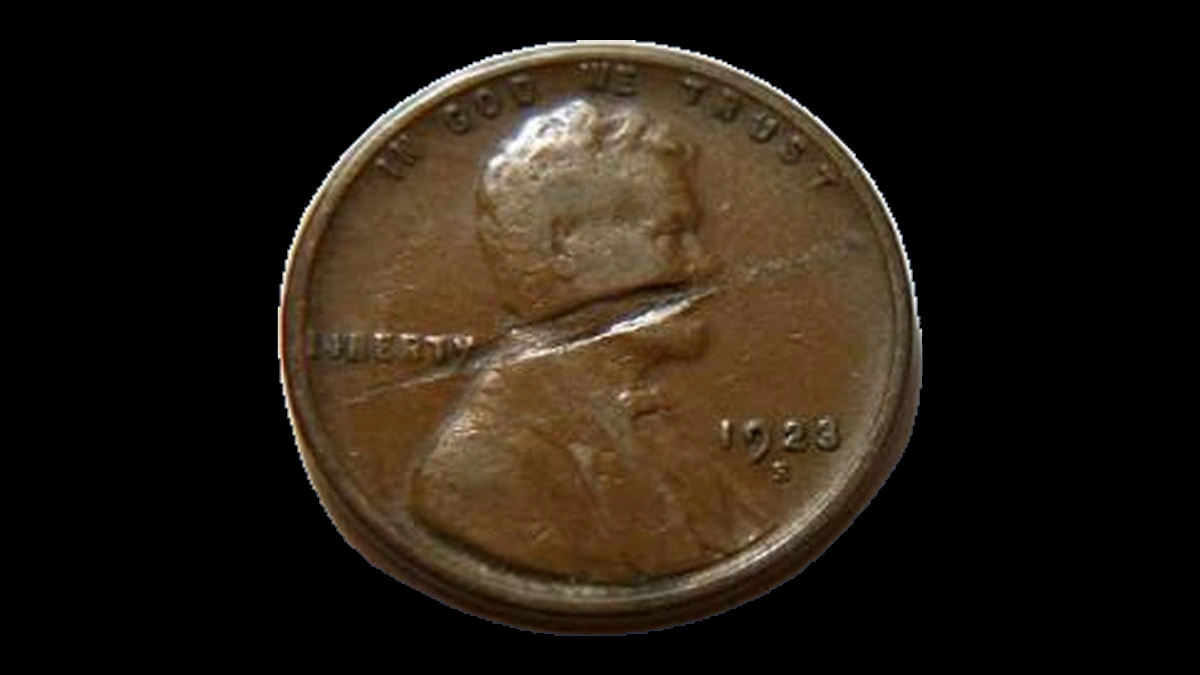
A lamination follows a weakness inside the alloy, allowing a thin layer to separate. The flap can remain attached and even lie nearly flush with the surrounding surface.
How to Identify
Find the boundary where the thin layer joins the original metal without lifting it. Missing flakes and retained flaps have different appearances, and only lost metal necessarily reduces the weight.
A reported 1923-S flap lies on the lower-right front near five o’clock. Philadelphia reverse laminations are separate reports, so their locations should not be transferred to the S coin.
What It’s Worth
Estimated whole-coin value is $5–$150 for ordinary circulated through modest-grade examples. The flap’s visibility and the cent’s mint and preservation all matter.
A 1966 front-lamination cent graded MS63 Brown sold for $61 in 2021. That later copper cent offers context, not a recorded 1923 result.
4. 1923 Penny A Fine Sunken Trace: Struck Through Thread Error
Thread caught between a die and the blank can prevent the design from reaching a narrow strip of metal. After the thread leaves, the coin retains its recessed impression.
How to Identify
Follow the depression through the surrounding struck detail. A later scratch commonly cuts existing features and pushes metal into sharp lips beside the groove.
The documented Philadelphia coin has its thread impression on the front. Its description does not justify placing the trace across a particular letter or part of Lincoln’s face without the photograph.
What It’s Worth
A genuine 1923 thread strike has an estimated value of $40–$250. A clear original trace on an unworn coin generally makes the stronger comparison.
The PCGS MS64 Red and Brown example sold for $156 at Heritage on January 15, 2018, as recorded in Coin World’s auction information. That grade describes an unworn cent retaining a mixture of red and brown copper color.
5. 1923 Penny Part of the Disc Is Missing: Clipped Planchet Error
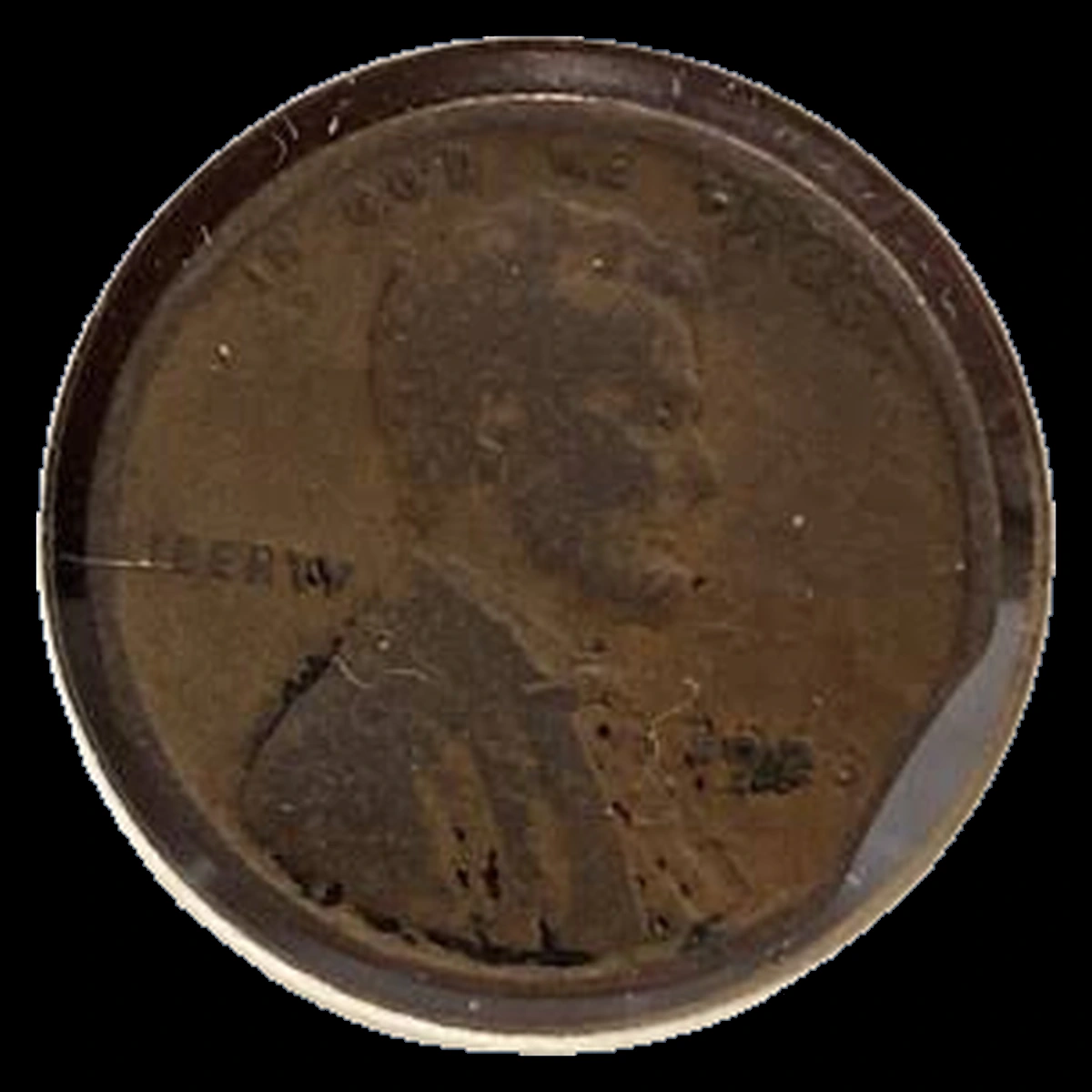
A clip leaves the metal disc incomplete before striking; planchet is the collector’s term for the prepared disc. Reported 1923 shapes include a Philadelphia straight clip and a San Francisco double curved clip.
How to Identify
Inspect the ends of each gap where they meet the surviving rim. Natural strike flow around the opening supports a pre-strike shortage, while sawing marks and burrs suggest later cutting.
Check the opposite rim for possible weakness, treating it as supporting evidence rather than a requirement for every clip. The reported S coin weighed 2.99 grams; that measurement belongs to one example.
What It’s Worth
Confirmed clips have an estimated whole-coin range of $20–$400. A small worn clip and a clear double clip should not receive the same automatic valuation.
A Philadelphia ANACS AU55 rim clip appeared at GreatCollections in 2025, but the supplied listing provides no usable sale amount. A different-year 1939 clip graded MS64 Brown sold for $180 in 2023.
The reported 1923-S double clip carried an MS60 Details label. Its stated condition problem must be considered along with the error.
6. 1923 Penny A Wide Coin with Complete Lettering: Broadstrike Error
Read the words around both faces before judging an enlarged penny. A broadstrike spreads beyond normal width because the collar, the ring controlling its edge, failed to contain the metal.
How to Identify
The full intended design should remain on the expanded disc. It may sit unevenly, as on the reported 1923 XF45 uncentered broadstrike, without becoming an off-center strike.
Compare several diameter readings and examine the edge for hammering or later flattening. Enlarged width by itself cannot show when the spreading occurred.
What It’s Worth
Use an estimated $35–$300 for genuine 1923 broadstrikes. Strong natural expansion and attractive surfaces can improve the value within that range.
A 1939 broadstrike graded MS62 Red and Brown brought $46 in 2004. It is an older sale of a different date, not the price of the reported 1923 XF45 piece.
7. 1923 Penny A Step Along the Edge: Partial Collar Strike Error
Viewed from the side, the edge may have a narrow supported portion and a wider projecting portion. This happens when the planchet sits partly outside the collar during striking.
How to Identify
Rotate the plain edge under a light to find the transition between contained and expanded metal. A face-only picture can hide the useful evidence.
Separate that manufactured step from a bent rim or a localized impact. A documented Philadelphia MS62 Red coin also has close overlapping strikes, which need a separate look at its faces.
What It’s Worth
Estimated value is $50–$500 for a genuine 1923 partial-collar cent. Clarity of the edge profile helps determine where a particular coin fits.
The PCGS MS62 Red combination sold for $312 at Heritage on April 29, 2018. That amount bought the entire coin, including its multiple-strike feature.
8. 1923 Penny The Image Runs Off the Disc: Off-Center Strike Error
A blank that lands away from the center of the dies receives an incomplete design with unused metal beside it. Both faces should reflect the blank’s displaced position.
How to Identify
Look for missing outer design as well as the blank area. An uneven border with complete lettering may instead be a broadstrike, while displacement on only one face can involve a misaligned die.
The documented 1923-S shifts about 10% toward ten-thirty and has a weak L in LIBERTY. A separate Philadelphia report places a 10% shift toward seven o’clock; the two directions describe different coins.
What It’s Worth
The estimated range is $50–$750 for genuine, identifiable 1923 off-center cents. Preservation and readable date information matter alongside the amount of displacement.
The NGC MS63 Brown 1923-S sold for $384 on September 10, 2019. A greater percentage off center does not guarantee a higher price.
9. 1923 Penny Nearby Impressions Overlap: Multiple Strikes Error
Several blows can leave closely spaced design remnants when a coin stays in the press and moves only slightly. Here, repetition comes from additional strikes rather than a doubled design already present on the die.
How to Identify
Trace the displacement through more than one feature and examine both faces. Consistent overlapping impressions provide stronger evidence than one thick letter or a flat shelf.
The reported Philadelphia PCGS MS62 Red piece also has a partial-collar edge. Its supplied description does not establish an exact number of blows or a direction of movement.
What It’s Worth
Close-overlap multiple strikes carry an estimated whole-coin range of $150–$900. Distinct repeated detail and original copper surfaces improve the comparison.
The recorded combination brought $312 in April 2018, the same transaction discussed under partial collar strikes. Do not add those two category estimates to value that one coin.
Conclusion
The most useful first distinction is whether the extra feature rises, sinks, or changes the edge. That observation narrows the possibilities before small details such as the eyelid need closer study.
For pricing, match the mint and preservation as well as the error itself. Keep the $2–$900 estimates separate from documented sales, and treat a coin carrying multiple features as one collectible.