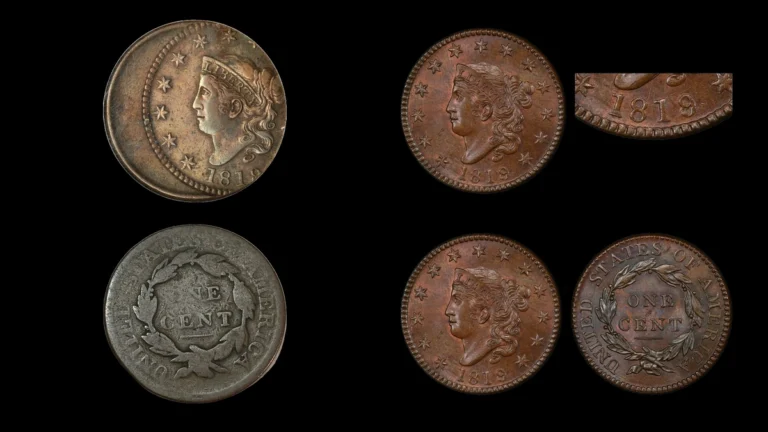
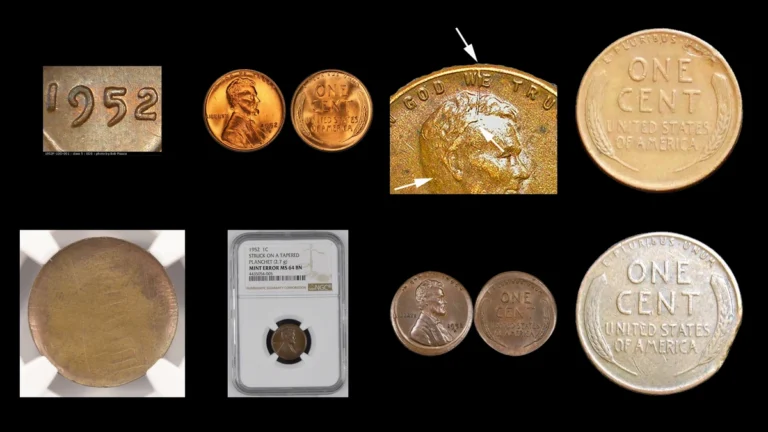
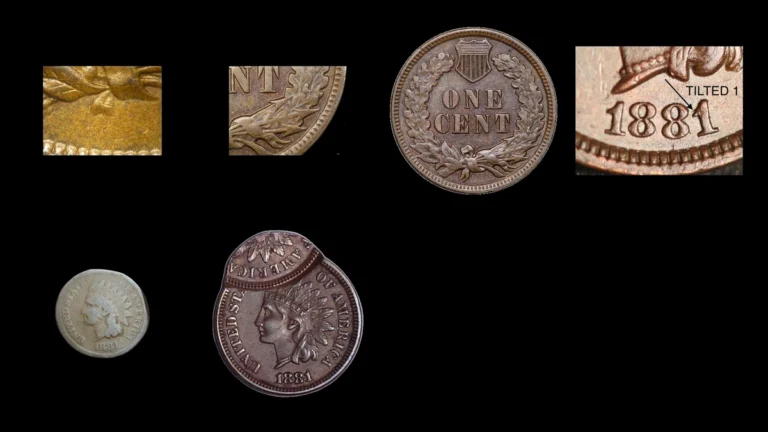
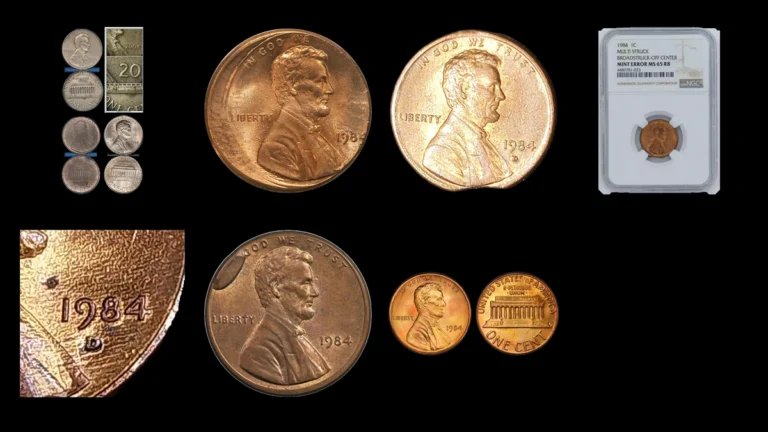
Rare 1919 Penny Errors (List & Pictures)
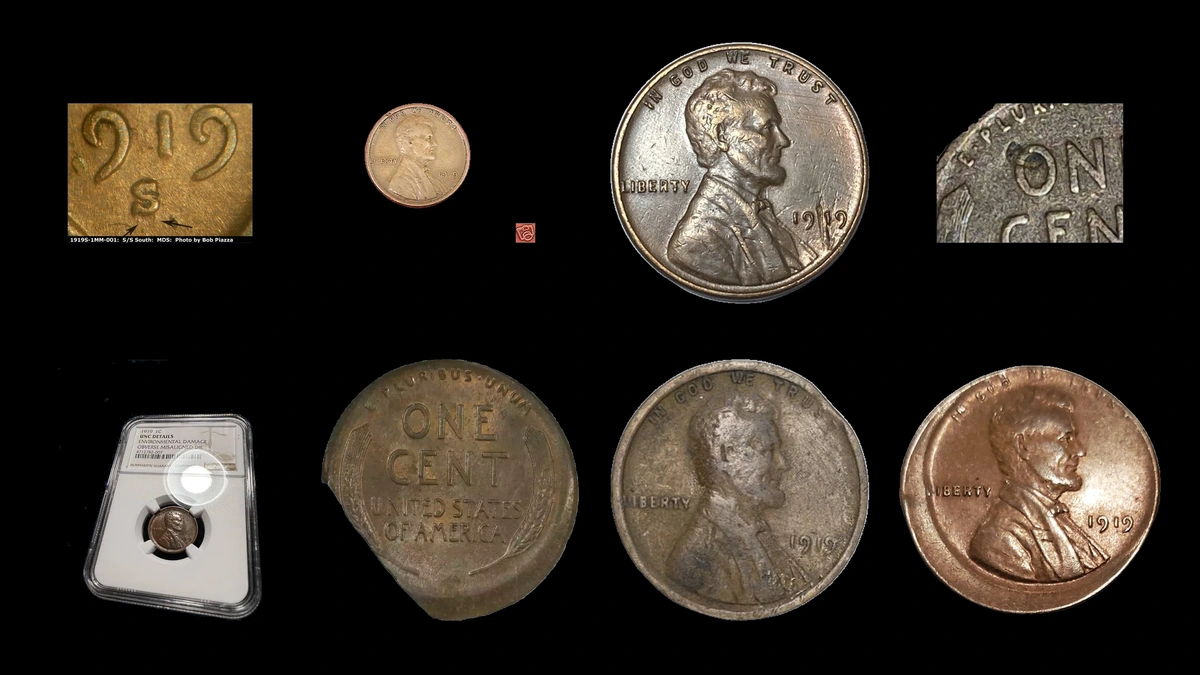
A triple-struck cent brought $1,020 in March 2025, the highest supplied auction result here. Estimated whole-coin values for 1919 penny errors extend from $2 to $4,000, with the upper figure informed by a dealer’s asking price.
Inspect both faces before naming the error: a shifted image, a turned reverse, and a backward impression describe different events. Several can appear on the same penny.
| Clue | Possible cause | Estimated value |
|---|---|---|
| Extra letter or design outline | Repunched mintmark, doubled die, or clash | $5–$250 |
| Raised, peeling, or sunken metal | Die break, lamination, or struck-through | $2–$400 |
| One face shifted or turned | Misaligned or rotated die | $2–$500 |
| Wide outline or missing edge | Broadstrike or clip | $15–$650 |
| Blank crescent or large depression | Off-center strike or indent | $40–$900 |
| Pale metal | Possible foreign planchet | $250–$1,200 |
| Repeated or backward design | Multiple strike or brockage | $150–$4,000 |
For measurements, an ordinary 1919 cent is about 3.11 grams and 19.05 millimeters across, with a plain edge. Record weight and dimensions once when safe; those numbers support an examination but do not prove a particular error.
1. 1919 Penny Another Stroke Beside the Mint Letter: Repunched Mintmark Error
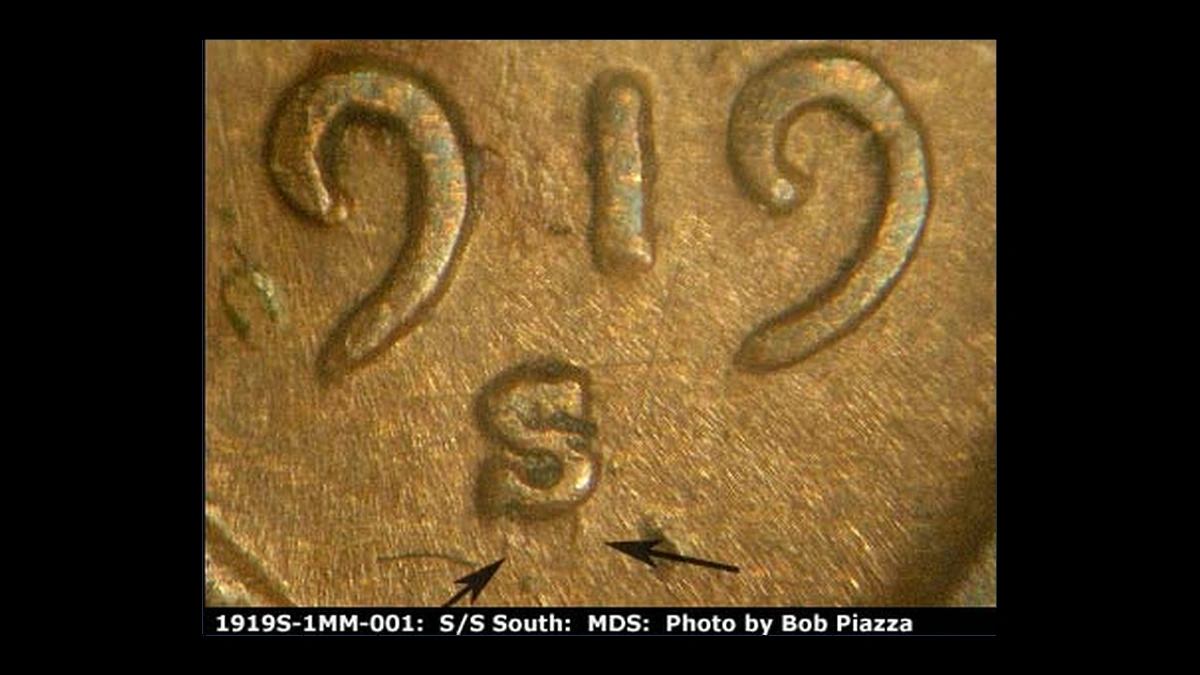
Inspect the D or S below 1919 for a fragment of the same letter in a second position. Hand-punching a mintmark into the die more than once could leave an earlier impression partly exposed.
How to Identify
The cataloged San Francisco example has a remnant near the S’s lower-left tip. A Denver candidate needs a matching D reference rather than that S diagnostic.
Trace a recognizable curve or stroke through the extra metal. Philadelphia cents had no P mintmark, so a bump beneath their date cannot be a repunched P.
What It’s Worth
Genuine, clearly identified 1919 repunched mintmarks are estimated at $10–$250. This range uses comparable early Wheat cent varieties rather than a supplied same-year auction result.
Wear or corrosion that obscures the earlier punch makes the variety less useful to collectors.
2. 1919 Penny Repeated Detail on the Wheat Side: Doubled Die Reverse Error
The Philadelphia report concerns E PLURIBUS UNUM and wheat detail. A duplicated design in the reverse die can repeat on every coin struck from that tool.
How to Identify
Confirm the coin has no mintmark, then compare its reverse with the exact attributed variety. Unusually thick lettering alone is insufficient, particularly on a worn coin.
Look for the same extra outline at the same feature under changing light. Flat shelves caused during striking do not establish a doubled die.
What It’s Worth
Allow an estimated $10–$200 for a correctly matched 1919 doubled reverse. This is a modest-variety estimate, with no specific auction transaction supplied.
Better remaining detail helps buyers see the feature that earns the premium.
3. 1919 Penny A Trace from the Opposite Face: Die Clash Error
A faint shape in an open area may belong to the penny’s other design. The dies can acquire such traces when they meet without a blank and later transfer them to coins.
How to Identify
Compare the mark with the opposite face at the same scale. Several surviving curves should fit one consistent position rather than require separate adjustments to make them match.
Random scratches and die-polishing lines do not form an opposite-side design. The general 1919 report establishes no universal mint or location.
What It’s Worth
Estimated whole-coin value is $5–$125 for a genuine 1919 clash. The range is based on comparable Wheat cent clashes, not a documented sale of a particular 1919 specimen.
A recognizable transferred shape carries more weight than a collection of unexplained lines.
4. 1919 Penny Raised Lines and Patches: Die Cracks and Major Breaks Error
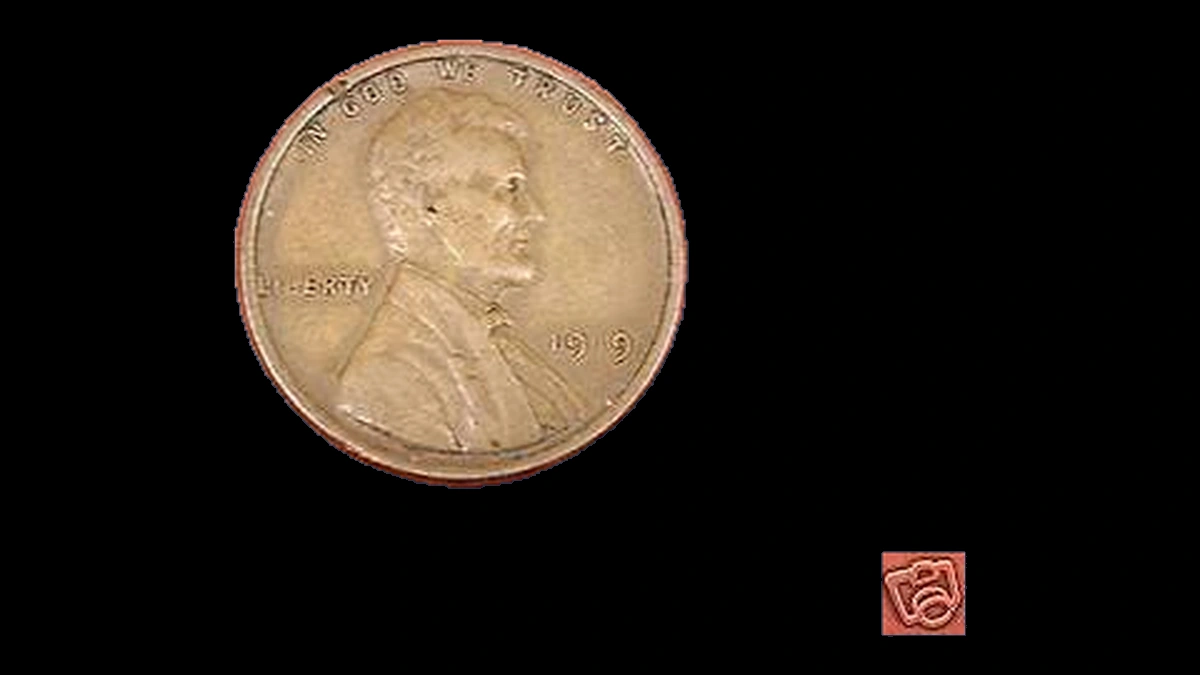
Metal standing above the surface can reproduce a crack or missing section in the die. A large patch connected to the rim is called a cud.
How to Identify
Follow the feature under side lighting to distinguish a raised ridge from a recessed scratch. For a larger break, inspect its connection to the rim and any weakness on the opposite face.
Philadelphia major-break listings include ANACS VG8 and XF45 examples, while San Francisco breaks and Denver cracks are also reported. These descriptions do not establish one shared location.
What It’s Worth
Estimate $2–$400 across small cracks and prominent genuine breaks. Tiny lines often add little beyond the underlying penny’s ordinary value.
No usable sale amounts are supplied for the VG8 and XF45 listings. The size and clarity of the break, along with condition, guide the estimate.
5. 1919 Penny A Thin Layer Separates: Lamination Error
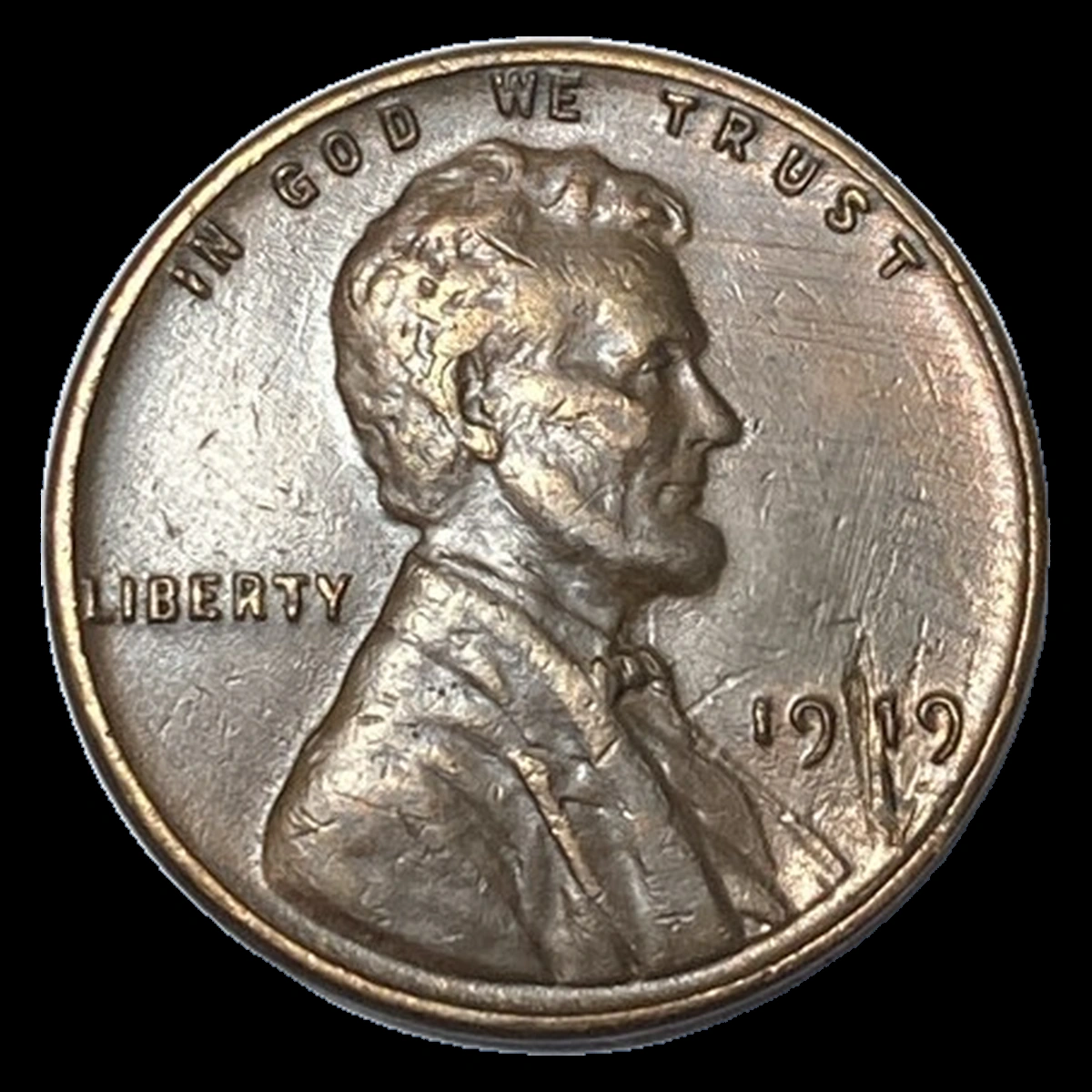
A flap or shallow exposed layer indicates weakness within the coin’s alloy. This is different from brown striping that changes color while leaving the surface intact.
How to Identify
Use a low viewing angle to locate a real layer boundary or attached flap without lifting it. Granular corrosion and scraped metal need separate explanations.
The supplied 1919 report concerns the front but does not establish a mint or precise position. It also does not describe an entire disc split into two halves.
What It’s Worth
Ordinary circulated through modest-grade laminations are estimated at $5–$150. A visible original separation generally makes a stronger example than a tiny rough patch.
A 1966 front lamination graded MS63 Brown sold for $61 in 2021. That later copper cent is a comparison, not a 1919 transaction.
6. 1919 Penny A Local Area Failed to Form: Struck Through Material Error
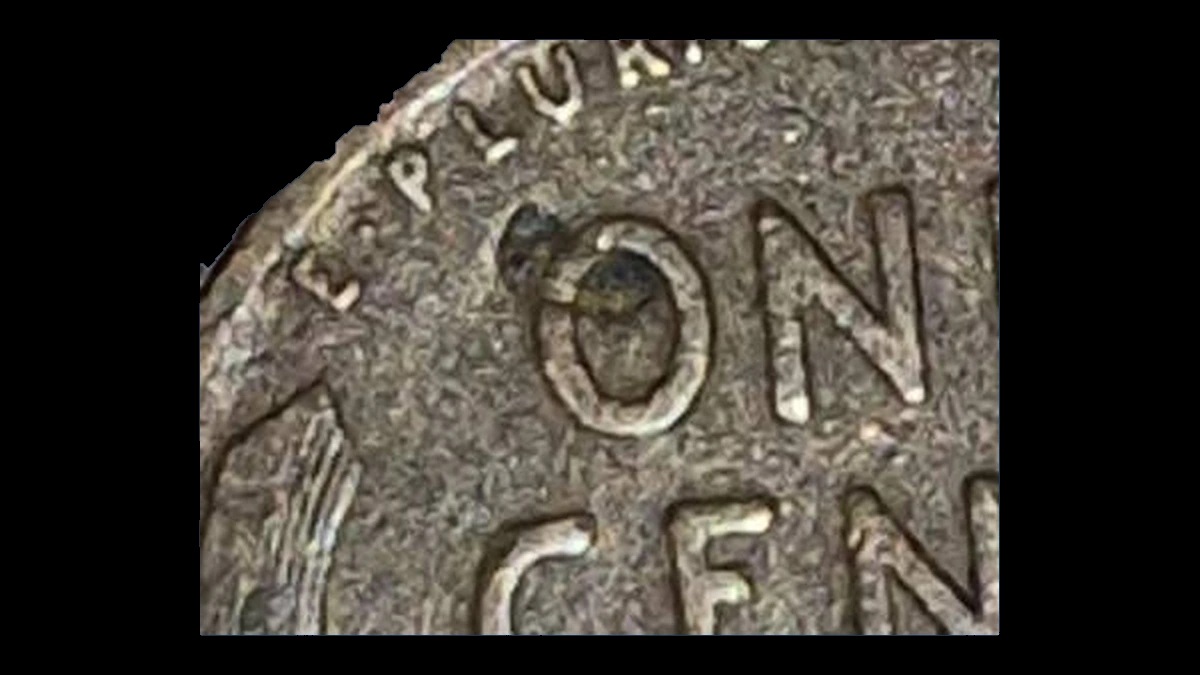
Material trapped between a die and the planchet can leave a depression or an interruption in the design. The obstruction’s shape may remain after the material itself is gone.
How to Identify
Compare the affected area with nearby sharp detail and inspect its boundary. A later cut may cross completed lettering and push metal into sharp lips.
The general 1919 report does not identify the material or mint. A separate compound-error cent has a reverse lint trace, which should not be used to name every unrelated struck-through mark.
What It’s Worth
Confirmed 1919 struck-through errors have an estimated range of $15–$300. Small weak spots generally attract less interest than a convincing, clearly visible impression.
A 1923 thread strike graded MS64 Red and Brown brought $156 in 2018. Its known thread impression does not establish the material on a 1919 coin.
7. 1919 Penny Only One Face Sits Sideways: Misaligned Die Error
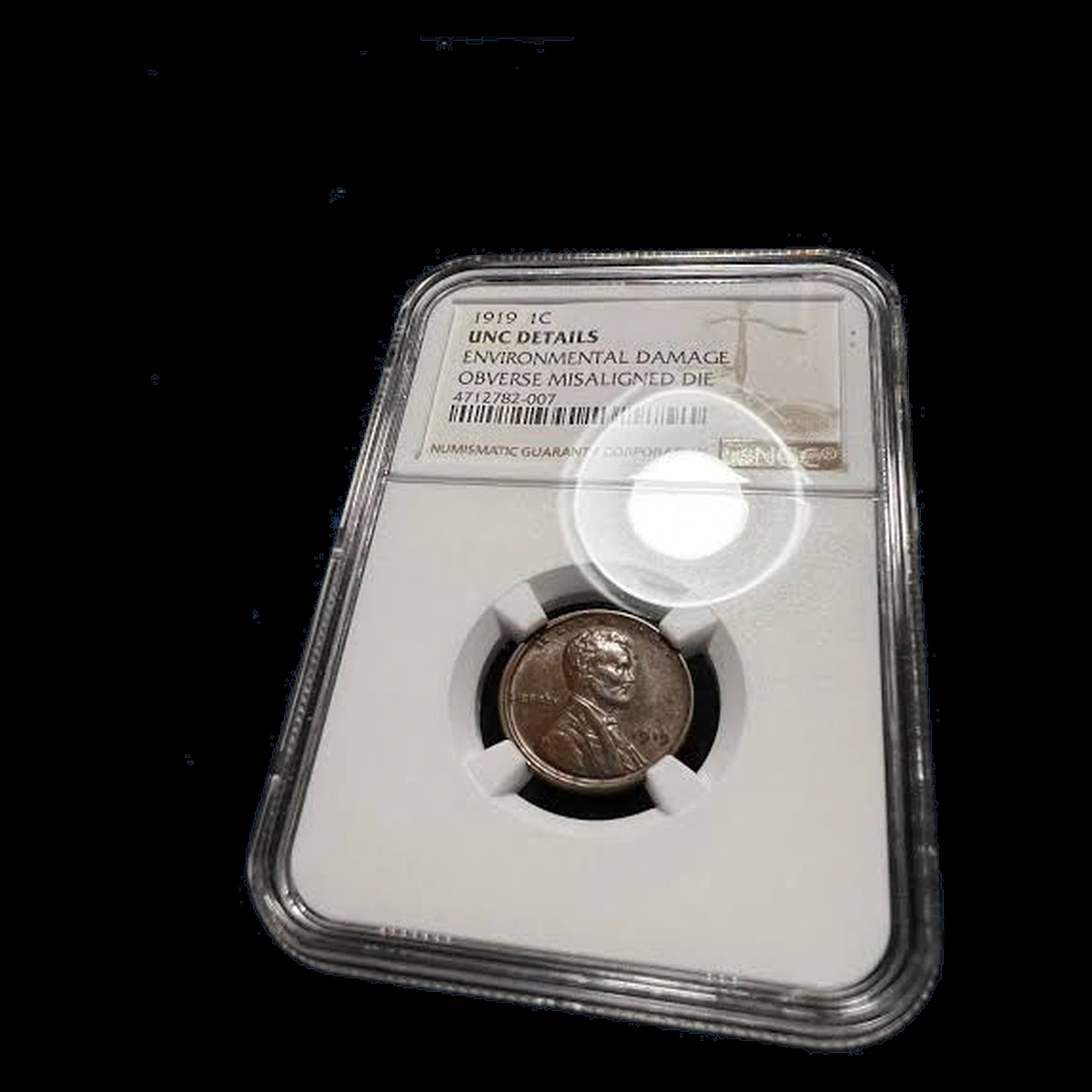
Compare the borders on the two faces. One shifted image opposite a centered image can result from a die moving sideways while the blank remains seated.
How to Identify
Take straight-on photographs of both faces at matching size and compare design placement inside the metal circle. Check the edge for bending or squeezing that could distort the apparent border.
A slight uneven rim is not enough by itself. The reported 1919 type comes without a firmly established mint or measured displacement.
What It’s Worth
The estimated range is $2–$100 for modest through clearly visible misalignment. Very small shifts may add almost nothing to the coin’s usual value.
This estimate is mechanism-based rather than tied to a recorded 1919 sale.
8. 1919 Penny The Reverse Tilts after a Proper Flip: Rotated Die Error
A die can turn away from its intended orientation without moving sideways. The resulting reverse looks tilted when Lincoln starts upright and the coin is flipped top to bottom.
How to Identify
Practice the same flip with an ordinary U.S. cent, keeping a fixed turning axis. Repeat the test on the candidate; inconsistent angles suggest handling rather than an error.
A Philadelphia NGC MS65 Brown broadstrike has about 30 degrees of counterclockwise rotation. A Denver rotation is reported separately with no confirmed angle.
What It’s Worth
Genuine rotations are estimated at $10–$500, depending on the angle and the whole coin. Small rotations often bring only modest premiums.
The Philadelphia broadstrike with roughly 30-degree rotation sold for $431.25 in April 2006. That price includes both features and cannot value rotation alone.
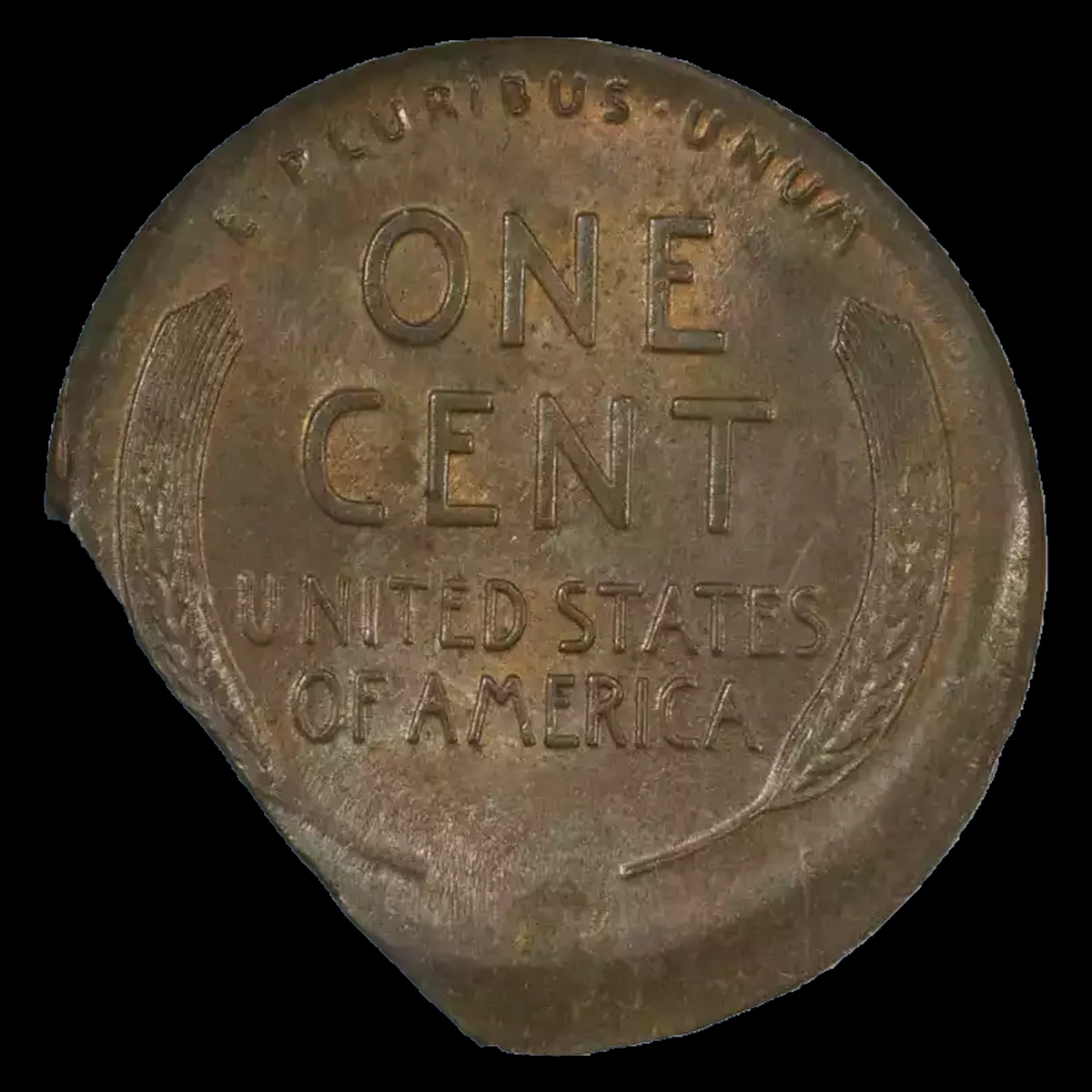
9. 1919 Penny Complete Designs inside an Expanded Border: Broadstrike Error
The collar normally limits the blank’s outward flow during striking. Without that restraint, the penny can spread wider while retaining its full intended design.
How to Identify
Check all outer lettering and inspect the edge for later hammering. A wider disc with incomplete design requires consideration of an off-center strike.
Reports include a Philadelphia PCGS MS63 Brown piece and a San Francisco example made from a blank lacking its usual pre-strike raised rim. Another Philadelphia broadstrike has lamination and corrosion; the corrosion remains damage.
What It’s Worth
Estimate $35–$600 for genuine 1919 broadstrikes. Spread, condition, and accompanying mint errors influence the comparison.
The $431.25 sale in 2006 is the rotated broadstrike already discussed. It is not a separate sale or a standard price for every expanded cent.
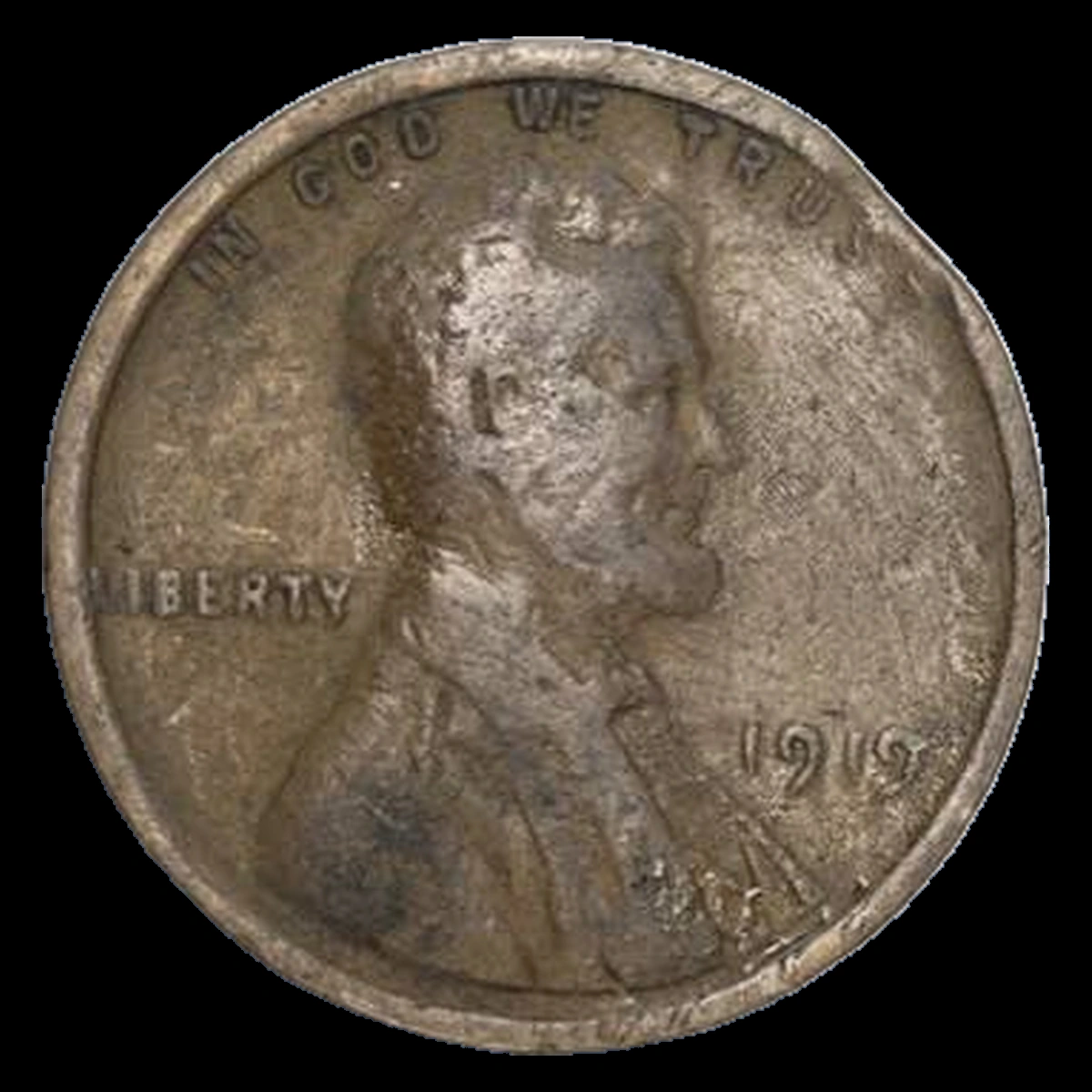
10. 1919 Penny Gaps Interrupt the Outline: Clipped Planchet Error
A planchet is the metal disc prepared for striking. If it begins incomplete, the finished cent can show a curved or straight gap with the design formed around it.
How to Identify
Inspect the rim transitions at each end of a gap and look across the coin for possible rim weakness. Saw marks or sharp cuts through finished detail suggest later removal.
An NGC MS64 Red and Brown example has two overlapping curved clips. A separate Philadelphia NGC MS63 Brown cent combines a straight clip with broadstriking, so missing metal and expanded width can coexist.
What It’s Worth
Genuine 1919 clips carry an estimated whole-coin range of $15–$650. Clear overlapping gaps or combined errors in stronger condition may attract more interest.
A 1939 MS64 Brown clipped cent sold for $180 in 2023. That different-year sale does not price either documented 1919 combination directly.
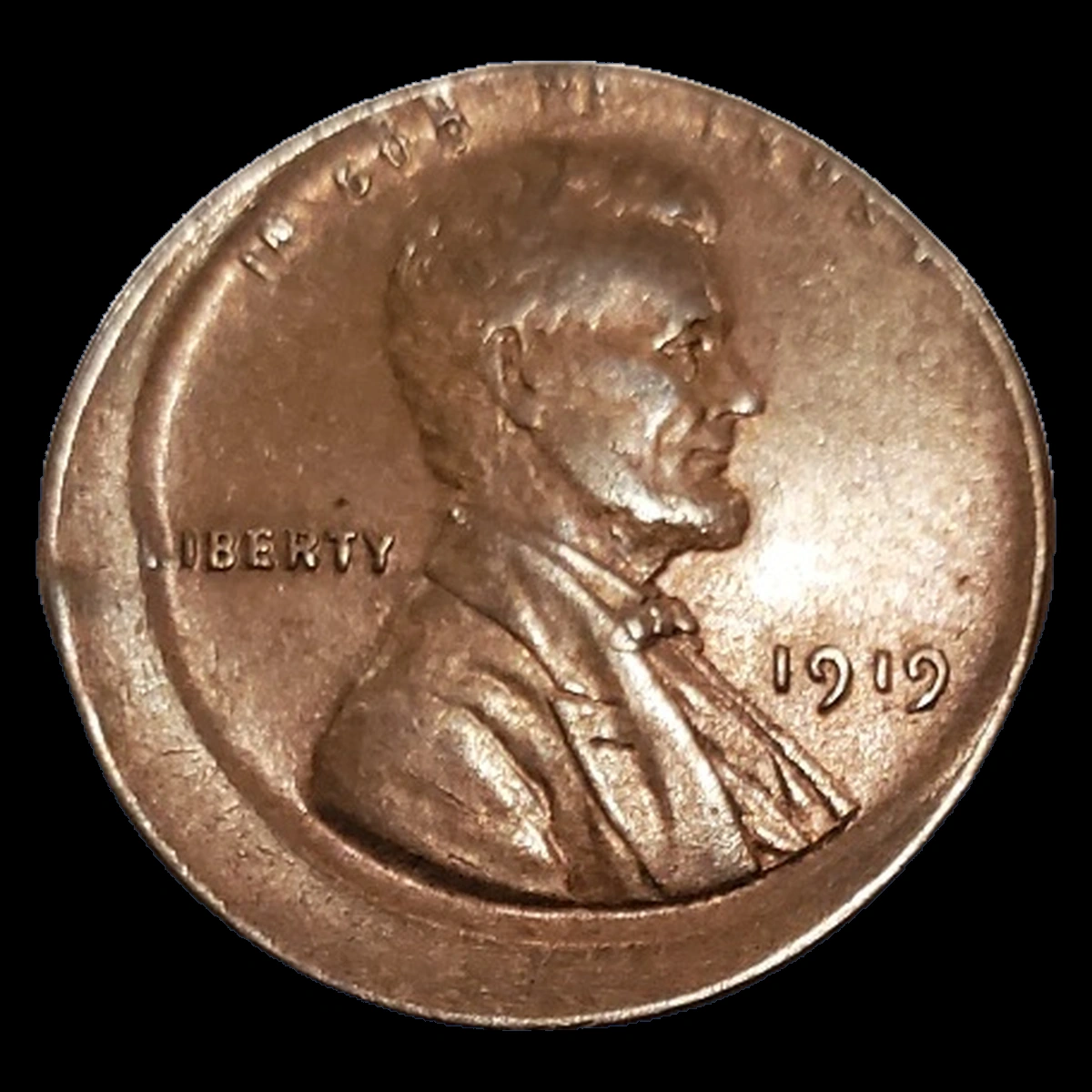
11. 1919 Penny The Design Misses Part of the Blank: Off-Center Strike Error
Unused metal beside an incomplete image shows that the blank was misplaced between the dies. Both faces should fit that same physical displacement.
How to Identify
Read the date and any mintmark before selecting a comparison, then inspect the blank area for erased detail. A single shifted face can instead result from die misalignment.
The supplied examples include Philadelphia shifts of 5% and 40%, plus a 1919-S shifted 25%. Those figures belong to individual specimens.
What It’s Worth
Estimate $40–$800 for genuine 1919 off-center cents with readable dates. Large displacement helps only when balanced against identification and preservation.
The NGC MS63 Brown 1919-S at 25% brought $480 in July 2021. A Philadelphia MS62 Brown example at 40% sold for $524.60 in June 2026.
12. 1919 Penny A Broad Depression on an Expanded Coin: Indent Error
Another disc overlapping a blank during striking can press a curved depression into it. The recorded Philadelphia example combines an approximately 30% front indent near six o’clock with broadstriking.
How to Identify
Follow the depression’s curved boundary and the way the adjacent design stops at it. A later gouge needs to be excluded by examining displaced metal and the struck surface.
The NGC MS63 Brown coin also has a fine reverse lint trace near six o’clock. That small trace is separate from the broad front depression, and no overlapping disc accompanied the coin.
What It’s Worth
The estimated whole-coin range is $150–$900 for an indent of this scale combined with broadstriking. No sale amount is supplied for the recorded MS63 Brown piece.
Its lint trace is another feature of the same collectible, not a retained object or a second coin to price separately.
13. 1919 Penny Pale Metal beneath the Design: Foreign Planchet Error
An ANACS AU50 1919 cent was identified as struck on a copper-nickel Argentina 10 centavos planchet. The blank was unused; the description does not indicate an earlier Argentine coin design.
How to Identify
Record weight and size, then seek non-destructive alloy testing before assigning a country. Plating can make an ordinary copper cent look nickel-colored.
Another foreign-planchet example is graded XF40 Details with tooling and no firmly identified country. Its reported 3-gram weight does not establish the denomination or belong automatically to the Argentina example.
What It’s Worth
Correctly identified foreign-planchet errors of these reported kinds are estimated at $250–$1,200. Uncertain blank identity and later tooling reduce the strength of a comparison.
The Argentina-planchet AU50 coin sold for $345 in February 2002. That historical result is not a current guaranteed quote.
14. 1919 Penny Several Design Positions Survive: Double and Triple Strikes Error
Repeated blows can leave separate design impressions when a coin fails to leave the press and moves between strikes. A later blow may partly flatten the earlier image.
How to Identify
Trace one repeated letter through its positions, then test another feature for the same movement. Multiple ridges around a single letter do not prove multiple strikes.
The Philadelphia PCGS AU55 double strike has a second blow 25% off center. Triple-struck pieces need evidence of three impressions rather than an assumption based on a busy-looking surface.
What It’s Worth
Estimated value is $150–$1,500 for genuine double and triple strikes. The number of blows matters together with how clearly the surviving impressions can be seen.
The AU55 double strike brought $288 in June 2019. An NGC MS64 Brown triple strike sold for $1,020 in March 2025.
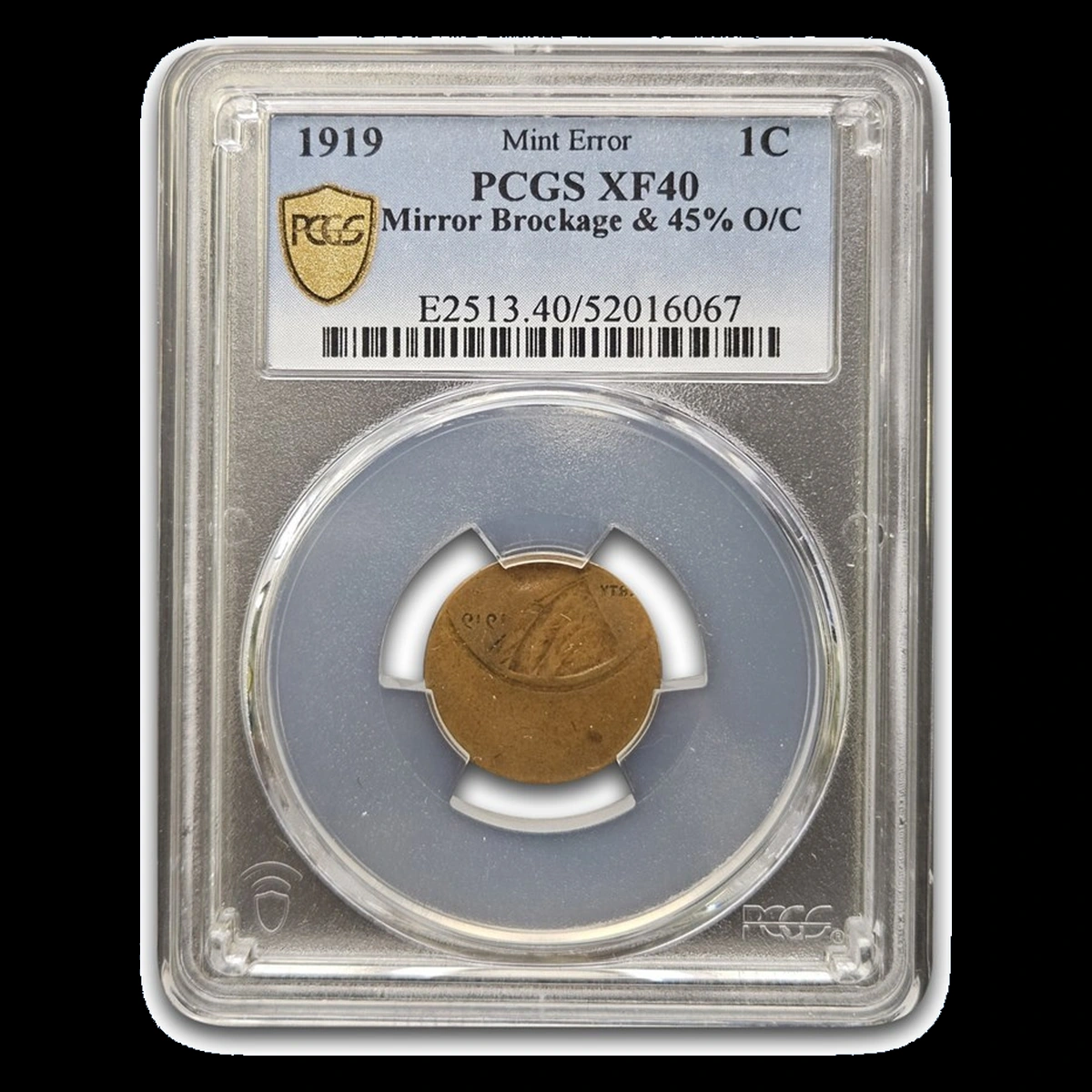
15. 1919 Penny Backward Letters Sink into the Coin: Mirror Brockage Error
A struck coin trapped against a new blank can act as the stamping surface. Its raised design leaves a recessed mirror image called a brockage.
How to Identify
Choose a readable word and check that it runs backward and sits below the surrounding metal. Examine the edge and impression boundary for crushing from two finished coins squeezed together later.
The listed Philadelphia PCGS XF40 piece combines mirror brockage with a 45% off-center strike. Keep the readable date and unused metal visible when comparing it.
What It’s Worth
The estimated range is $1,500–$4,000 for a comparably visible, authenticated compound error. Its upper end is informed by retail pricing and is not a resale promise.
APMEX’s recorded example was offered at $3,995. That is a dealer asking price, not a completed auction result.
Conclusion
Use the whole coin to test an explanation: both faces establish displacement, the edge helps reveal later damage, and a close-up can settle a small mintmark feature. Several genuine errors may belong to one specimen.
The $2–$4,000 estimates cover very different objects. Compare the actual combination and preservation, and keep the dealer’s brockage offer separate from the documented multiple-strike sales.