Rare 1932 Penny Errors (List & Pictures)
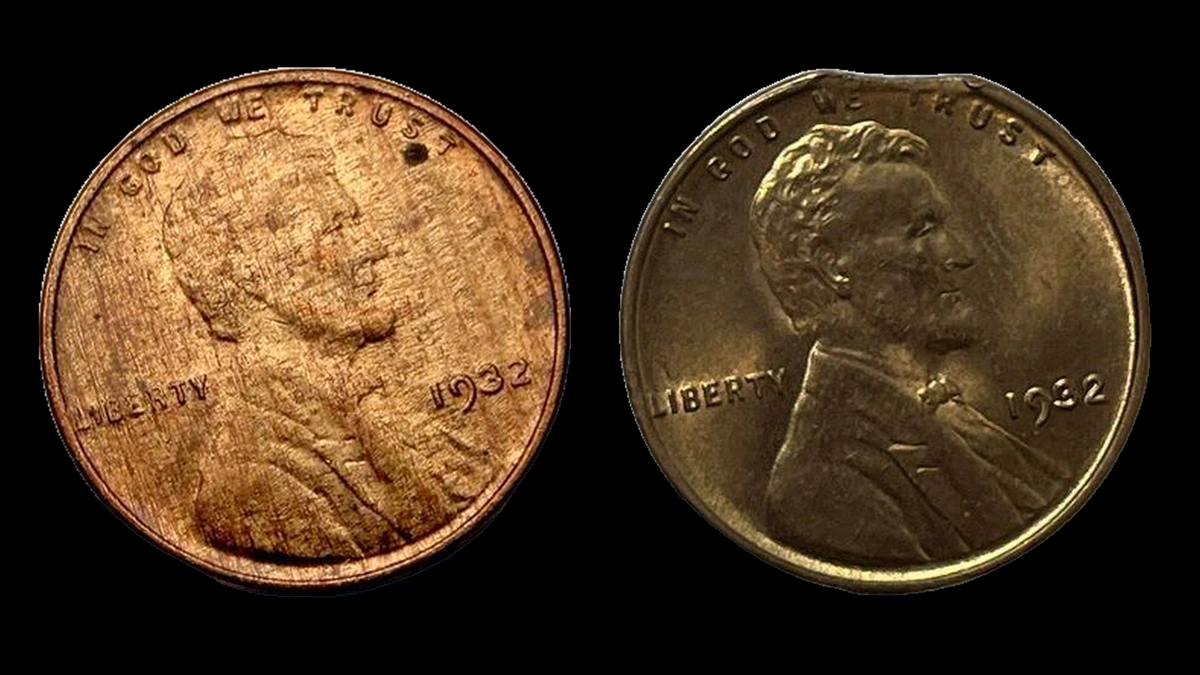
The small D on a Denver cent is normal; genuine 1932 penny errors require evidence beyond its size. Estimated values for the reported categories range from $2 to $600.
The highest supplied sale used as context is $288 for a different-year 1946-S major die break in March 2021. Begin with the mintmark and lettering, then inspect raised marks, peeling metal, missing edges, and displaced designs.
| What you see | What to investigate | Estimated value |
|---|---|---|
| Extra D or raised letter outline | Reported repunched mintmark or doubled obverse | $10–$500 |
| Raised line, letter-space bar, or rim mound | Die crack, BIE chip, or cud | $2–$600 |
| Flake or rough shallow patch | Lamination | $5–$250 |
| Original gap in the outline | Clipped planchet | $15–$350 |
| Unused metal beside incomplete design | Off-center strike | $30–$600 |
A complete copper-alloy 1932 cent normally weighs about 3.11 grams and measures 19.05 millimeters across its smooth edge. Measurements help assess the entire object, while clear magnified images establish small design differences.
Save full views of both faces and the edge before focusing on one mark. Avoid cleaning, and protect any attached layer from being disturbed.
1. 1932 Penny A second D shape beside the mintmark: Reported Repunched Mintmark Error
In this period, a worker punched the mintmark into the die by hand. A repeat in a shifted position could leave part of an earlier D visible on later coins.
The 1932-D repunched mintmark is a reported candidate requiring a specific match. The ordinary small D is not itself an error, and Philadelphia cents have no letter to repunch.
How to Identify
Compare an ordinary 1932-D first to establish the normal mintmark shape. Then trace whether the extra curve or upright genuinely fits another D.
Change the light and photograph the feature again to exclude a reflection. A lone bump, stain, or general seller’s error tag cannot establish an earlier letter impression.
Retain the comparison images for a specialist attribution. No direction or catalog identity should be invented from the broad report.
What It’s Worth
A genuine matched example has a conditional estimate of $10–$200. The range compares minor Wheat-cent mintmark varieties rather than a reported auction result for an established 1932-D specimen.
A clear second outline with good preservation would support a stronger comparison than a worn, uncertain trace. The normal small D receives no repunch premium merely for being small.
2. 1932 Penny Raised extra outlines on the front: Reported Doubled Die Error
A doubled die carries repeated design before striking the coin. A 1932-D doubled-obverse entry appears in an auction category, establishing a Denver report rather than a universal variety for all 1932 cents.
The date, LIBERTY, and motto are places to inspect. The supplied report does not establish that every one of those areas is doubled on the same specimen.
How to Identify
Confirm the D and identify the candidate’s actual repeated feature before selecting photographs. A no-mintmark coin needs separate supporting evidence.
Compare the raised shape of the affected letter with a matched example. A low flat shelf caused by strike movement or a generally thick word cannot replace a variety diagnostic.
What It’s Worth
A correctly identified minor 1932-D doubled obverse has a working estimate of $10–$500. Strength of the feature and condition influence the comparison.
A different 1936 FS-103 graded ANACS MS63 Brown sold for $70 in June 2024. That unworn but marked coin has its own die and diagnostics; its sale does not confirm or price the 1932-D report.
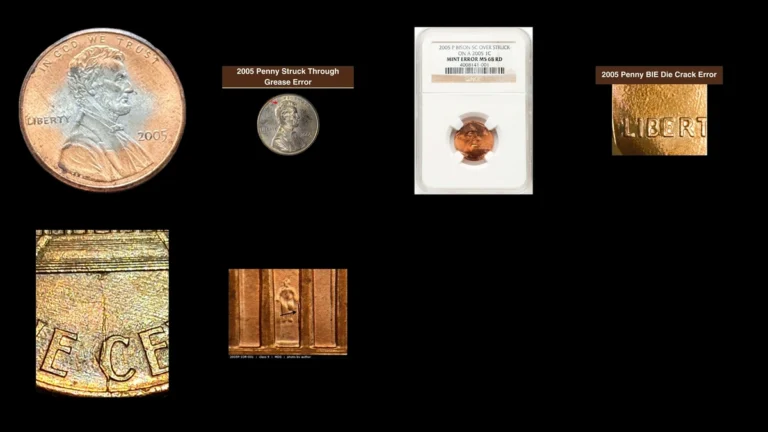
3. 1932 Penny A raised trail, BIE bar, or rim patch: Die Breaks Error
Coin metal entering a crack in a die leaves a raised line. A small cavity between B and E in LIBERTY can leave the extra bar called BIE.
A larger missing die section connected to its edge creates a rim-connected mound called a cud. These different forms should be named according to their location and structure.
How to Identify
Move the light to establish whether the feature stands above the surface or is cut into it. A scratch can push up a narrow ridge, so examine the entire groove rather than one bright edge.
Follow a proposed cud to its rim connection and inspect the opposite face and edge for squeezing. Added solder or glue needs a different explanation from original raised coin metal.
The small BIE bar belongs in its specific letter gap. It should not inherit a rim-break identification because another specimen has a larger mound.
What It’s Worth
Small cracks and BIE chips are estimated at $2–$50; clear larger cuds at $50–$600. Amount of displaced design and preservation help separate the ranges.
A 1946-S major break graded ANACS AU50 sold for $288 in March 2021 in Heritage’s archive. That later Wheat cent with light wear provides context for a larger break, not a price for a tiny 1932 crack.
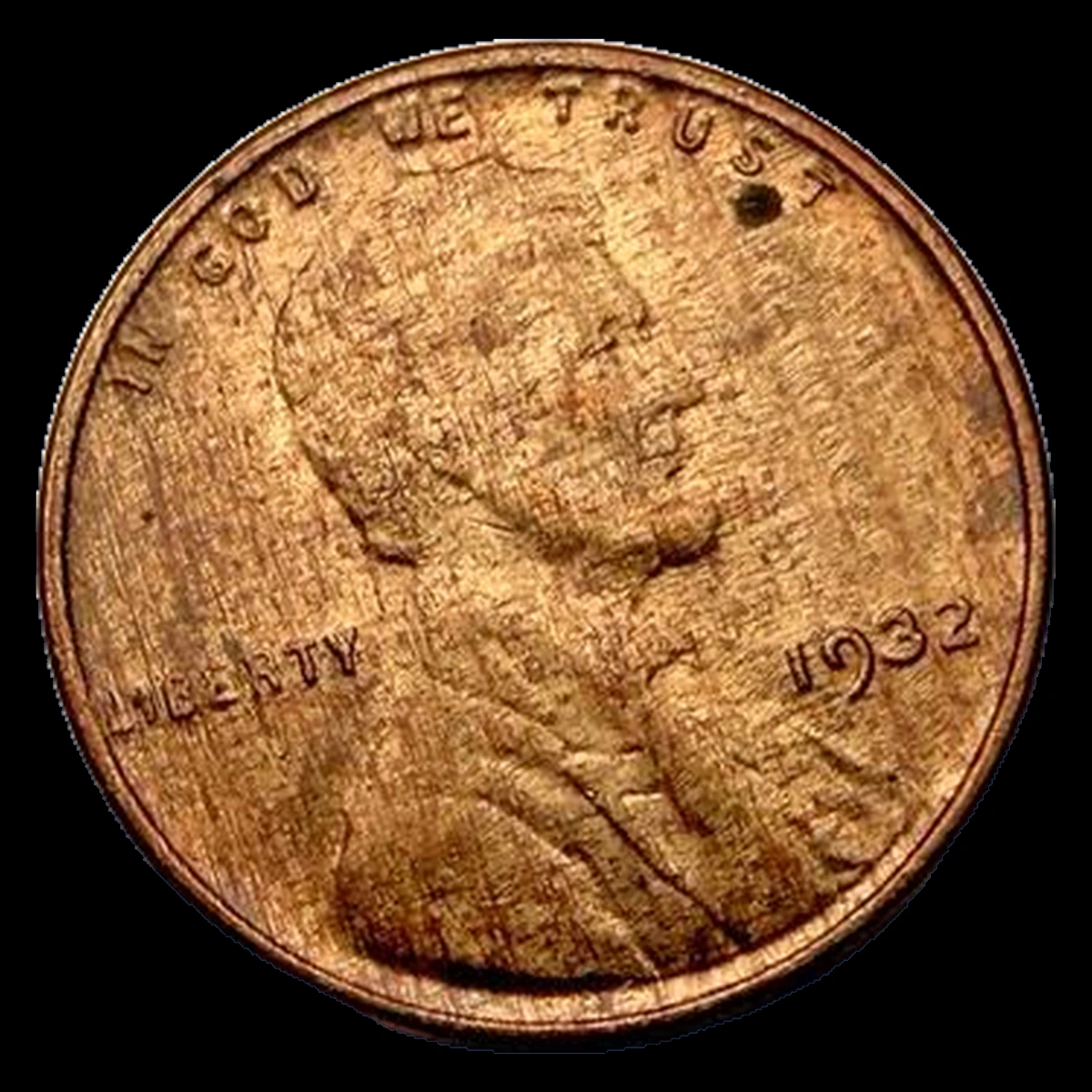
4. 1932 Penny A thin surface layer separates: Lamination Error
A weak internal boundary in the alloy can leave an attached flap or an exposed rough patch. The 1932 reports include collector-found or offered Philadelphia pieces without one standard peeling pattern.
The alloy extends throughout these cents. Their layer separation is not the loss of thin copper plating over a modern zinc center.
How to Identify
Follow the seam at an already exposed edge under side lighting. Do not lift, scrape, or press the layer back into place.
A scraped patch can cut through completed design without exposing a continuous thin layer. Corrosion can instead leave pits across the surface.
Read the location from the coin itself rather than transferring an obverse patch from another example. If a flake remains attached, little weight may have been lost.
What It’s Worth
Modest laminations are estimated at $5–$75, with larger clear separations around $75–$250. These figures require genuine alloy failure rather than roughness from damage.
A 1952-D obverse lamination sold for $35 in July 2013. That later Wheat-cent comparison does not assign a realized price to a collector-reported 1932 piece.
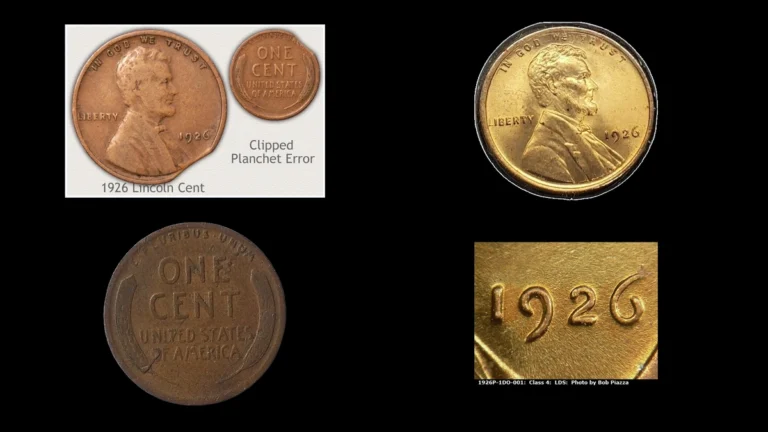
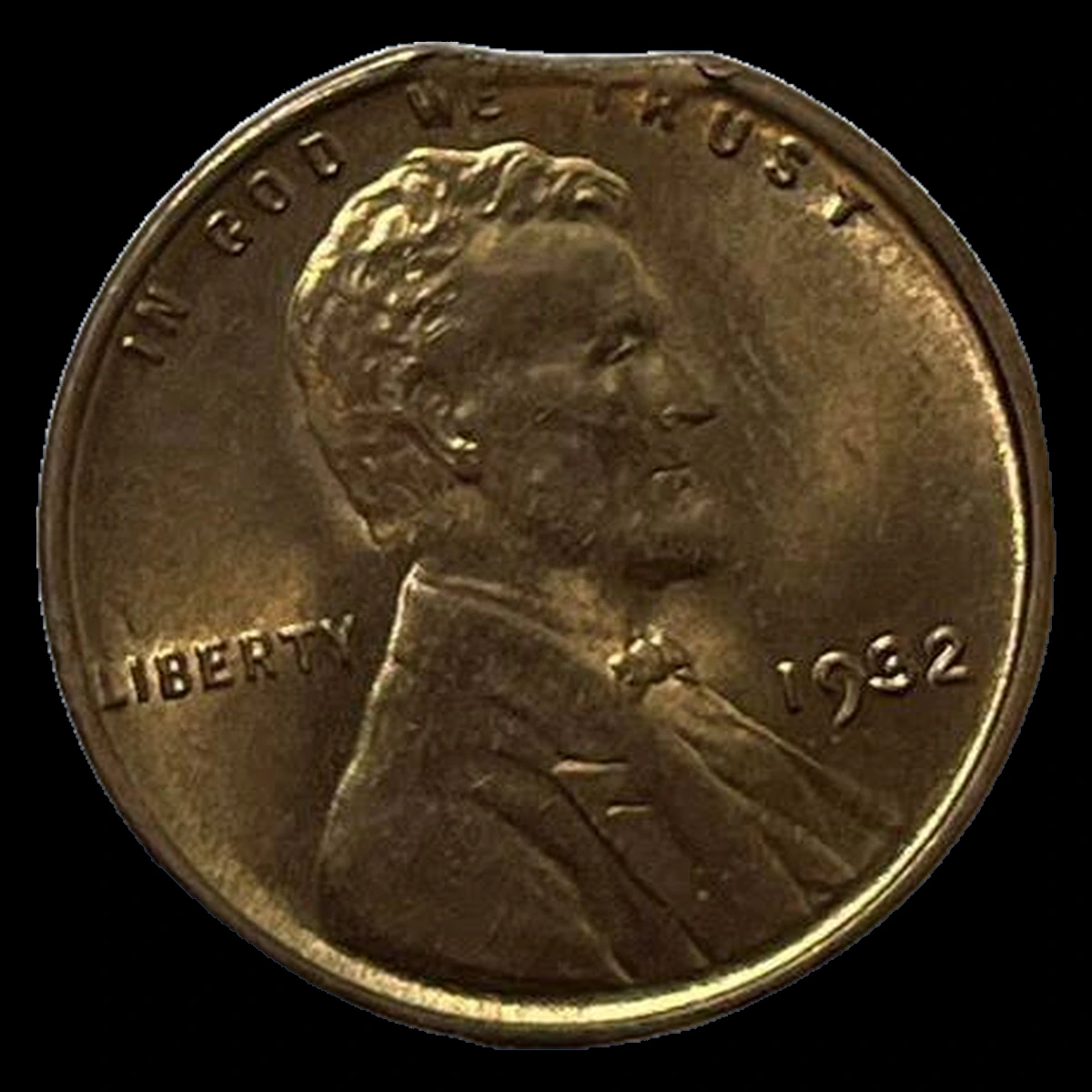
5. 1932 Penny The rim ends around missing metal: Clipped Planchet Error
A clipped planchet reaches the press with part of its intended outline already absent. Striking forms the design around the incomplete prepared blank.
The 1932 report does not establish a single mint or gap shape. A familiar curved clip photograph cannot determine the boundary on an unexamined coin.
How to Identify
Inspect both ends of the gap for original rim formation and the way nearby design meets it. Cutting through completed lettering indicates a later event.
Examine the surviving edge for file marks and fresh burrs. Weakness opposite a genuine clip can be supportive, but it does not replace scrutiny of the gap itself.
A low weight confirms reduced metal without proving when it disappeared. Corrosion and cutting can also make a cent light.
What It’s Worth
Genuine 1932 clips are estimated at $15–$350. Size of the missing section, date clarity, and original surfaces all matter.
A 1967 cent with a 13% straight clip sold for $39 in July 2021. That later Memorial-cent result is a general mechanism comparison, not evidence that the 1932 report has the same shape.
6. 1932 Penny A plain crescent remains beside missing design: Off-Center Strike Error
A blank sitting partly outside the dies receives only portions of the intended designs. Unlike a clip, the plain crescent remains original coin metal.
Off-center cents are reported for 1932 without one fixed direction or mint. A dramatic undated Wheat cent cannot be assigned to this year by appearance alone.
How to Identify
Read the complete date where possible, checking the final digit carefully. Compare both faces at the same scale so their incomplete designs can be related to one displaced blank.
If the reverse is centered and complete while only the front shifts, investigate a misaligned die instead. The two mechanisms do not produce the same evidence.
Inspect the unused area for grinding or cuts that erased an existing impression. Natural blank texture matters as much as the dramatic outline.
What It’s Worth
Dated genuine 1932 off-center cents are estimated at $30–$600. Readable identity and preservation can be more useful than an extreme shift that loses the year.
A 1936 cent struck 15% off center, graded ANACS MS60 Brown, sold for $63 in January 2022. That nearby-year unworn but marked coin is a comparison rather than a 1932 transaction.
Conclusion
A reported 1932 error category is a reason to investigate a feature, not a substitute for identifying the actual coin. The extra D, raised letter, natural seam, or original missing boundary must supply the evidence.
Keep other years’ sales labeled as comparisons and preserve full photographs alongside close-ups. That approach makes even a small feature understandable without turning normal mintmark size or ordinary damage into an unsupported variety claim.