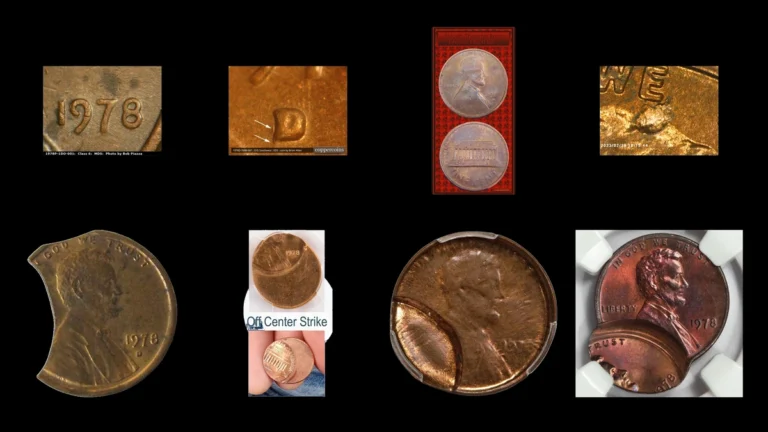
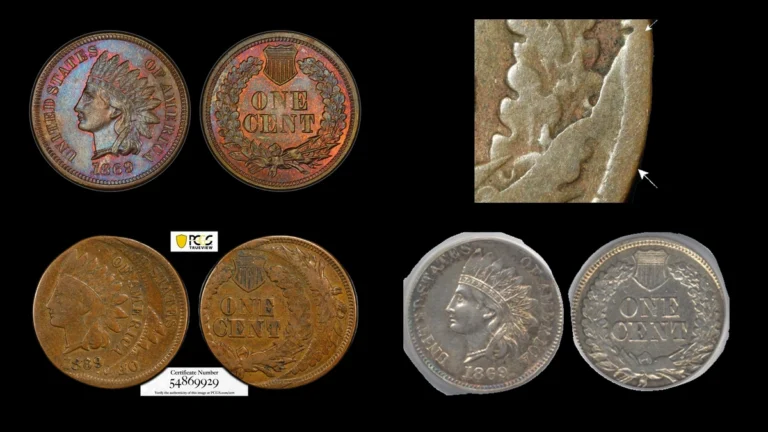
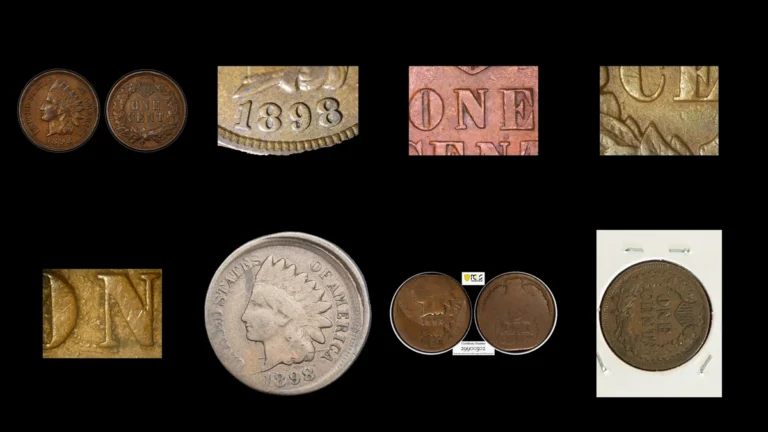
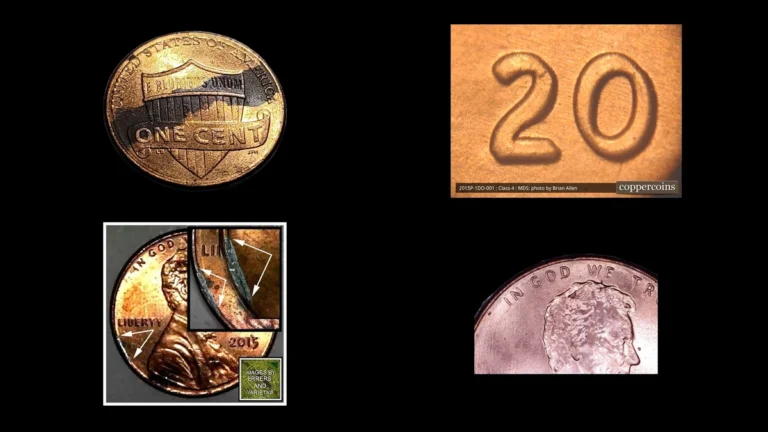
Rare 1911 Penny Errors (List & Pictures)
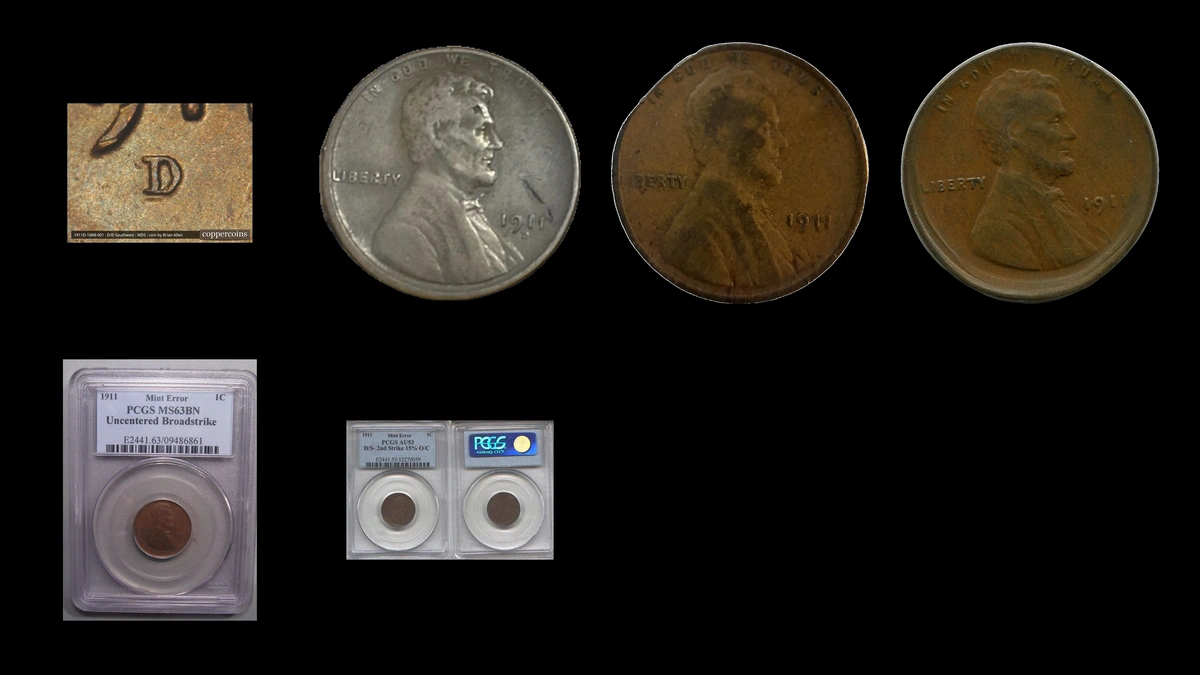
The tiny letter below the date is a good place to start with 1911 penny errors. A San Francisco cent with a repunched S sold for $780 in 2023, while other mistakes changed the whole coin’s shape.
The eight groups here have estimated whole-coin values of $3–$2,000. Examine the letter and surface first, then use both sides to understand an unusual outline or overlapping design.
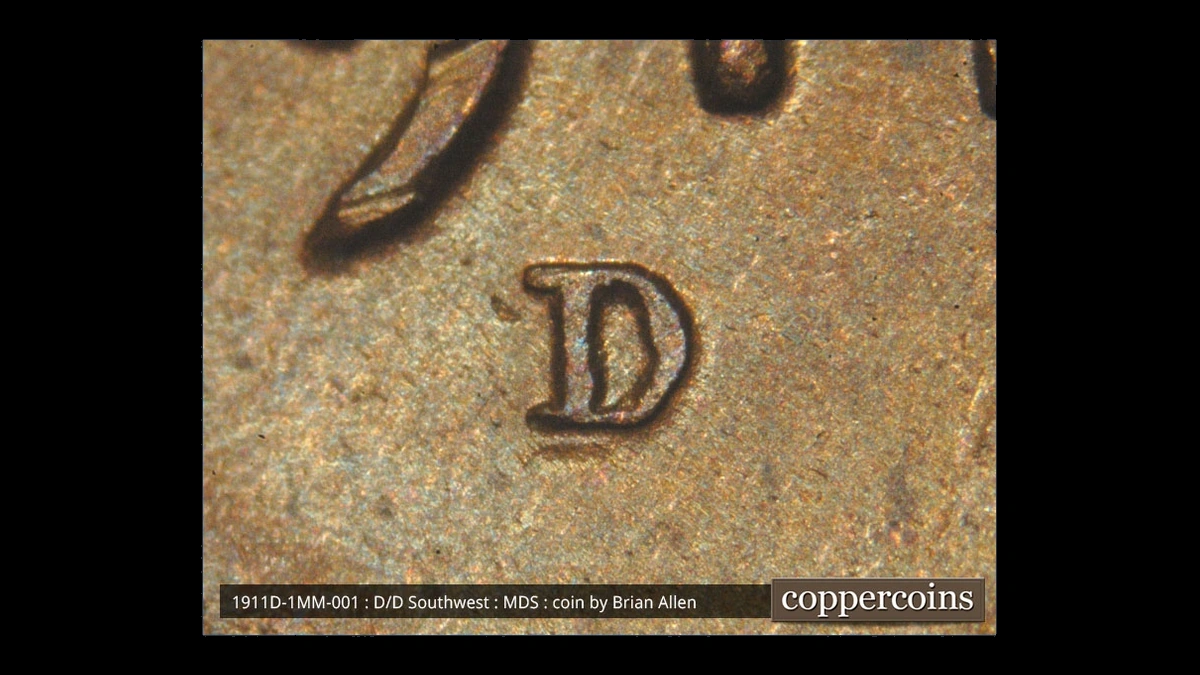
1. 1911 Penny The Mintmark Shows an Earlier Letter: Repunched D or S Error
D/D means a D was punched over an earlier D on the die; S/S means the same thing happened with an S. A small part of that earlier letter can remain visible on coins struck from the tool.
How to Identify
Align the main mintmark with a photograph of the exact variety, then compare the extra curves and tips. A mintmark sitting higher or lower than usual is not enough to establish a second punch.
The recorded Denver repunched mintmark needs its own comparison, as do the San Francisco varieties. A flat shelf beside the letter can come from movement during striking rather than an earlier punch.
Include the date in a full-front photograph before taking the close-up. That keeps the tiny feature connected to the correct mint and year.
What It’s Worth
$25–$1,000 is an estimated range for many identifiable 1911 repunched mintmarks. A Denver FS-502 graded MS63 Brown sold for $586.80 in November 2023.
An S/S graded MS64 Red and Brown brought $780 at the same sale. These prices cover the entire coins, including their condition and mint, rather than a fixed surcharge for any extra mintmark stroke.
2. 1911 Penny A Narrow Line Rises above the Copper: Die Crack Error
A crack in a die creates a narrow opening that copper can fill during striking. The resulting line stands above the penny’s surface.
How to Identify
Change the light angle and compare the line with the height of a nearby letter. A cut sinks below the surface, while a genuine die-crack line is raised metal.
The general 1911 report does not specify one route across the portrait or letters. Follow the actual line instead of assigning it a BIE or large rim-break name that its shape does not support.
Inspect the surrounding area for corrosion and pushed-up metal from an impact. Those can also produce uneven surfaces.
What It’s Worth
$3–$100 is the comparison-based whole-coin estimate for ordinary 1911 cents with small genuine cracks. A faint line may contribute very little to a worn penny’s value.
No particular 1911 crack sale is supplied. A bold, continuous mark is easier to show to another collector, but the mint and grade can still account for much of the total price.
3. 1911 Penny Part of the Opposite Design Appears: Die Clash Error
When the two dies meet with no blank between them, they can leave marks on one another. Later coins may carry faint fragments of the opposite design.
How to Identify
Draw or photograph only the extra shape you can actually see, then compare it with the other side of a normal cent. Two surviving details should fit the same placement, rather than requiring a different angle for each line.
The supplied report does not fix one mint or location for all 1911 clashes. A group of scratches is not a clash simply because it seems unusual.
Deep backward impressions can also be made by squeezing finished coins together. Check both faces and the edge for that kind of later pressure damage.
What It’s Worth
$5–$150 is an estimate for a genuine clash on an ordinary circulated or modest-grade 1911 penny. A recognizable fragment generally adds more interest than weak, hard-to-explain traces.
The range uses comparable Wheat cent clashes, not a confirmed auction result for a particular 1911 example.
4. 1911 Penny A Flap or Shallow Patch Reveals a Layer: Lamination Error
Weakness inside the copper alloy can let a thin surface layer separate. This is lamination, rather than the loss of plating from a modern zinc cent.
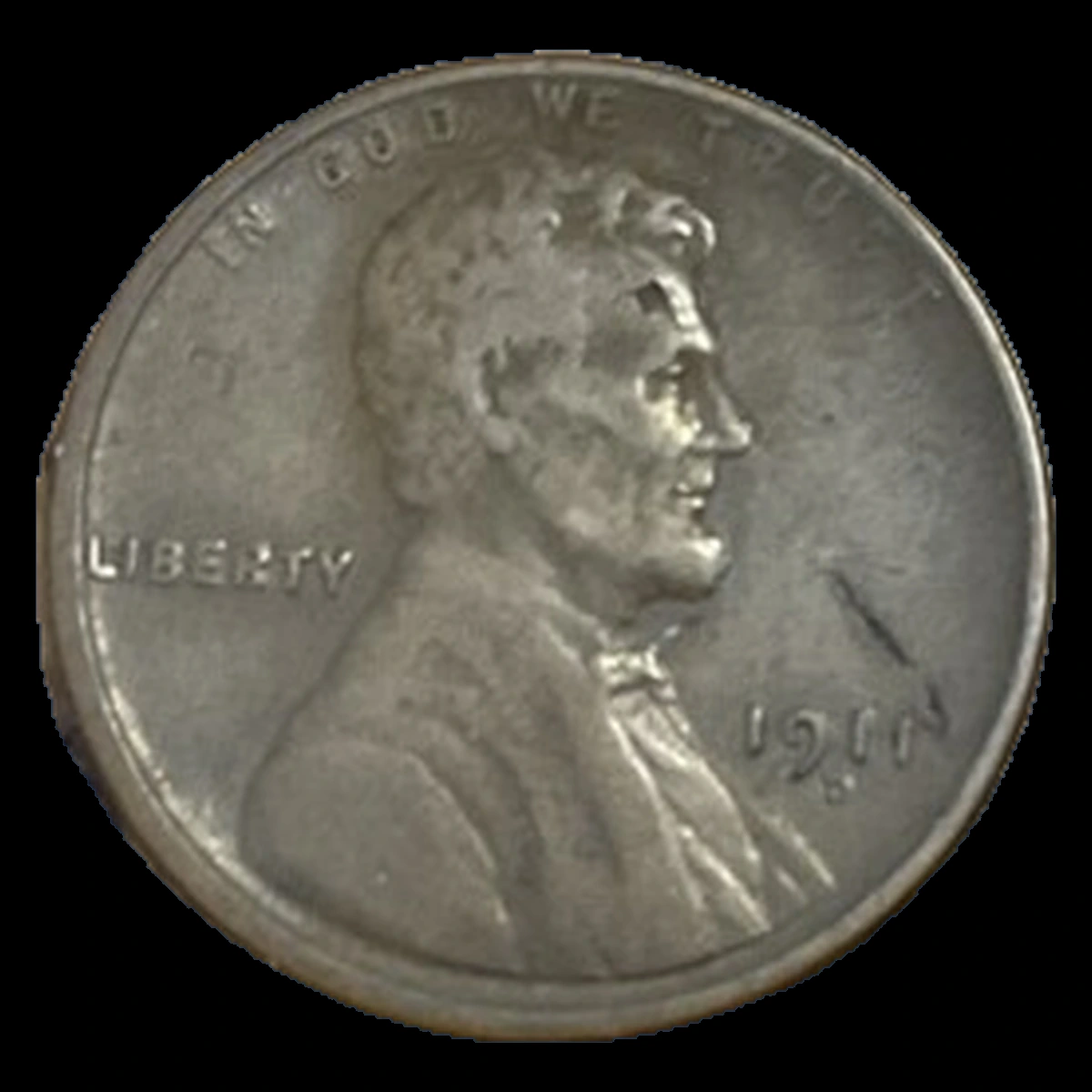
How to Identify
A Philadelphia dealer example has peeling near nine-thirty on the back. Denver and San Francisco reports concern separate specimens and do not establish that same location.
Inspect the attached end of a flap or the layered boundary of a missing patch under low light. A flat color streak has no physical separating edge.
The Denver coin graded VF35 Brown by NGC also has a repunched mintmark. Keep those two features distinct, and leave loose copper attached.
What It’s Worth
$10–$250 is a working estimate for ordinary circulated or modest-grade 1911 laminations. Larger natural separations can be more noticeable, although surface condition still matters.
A 1966 front lamination graded MS63 Brown sold for $61 in 2021. That later-date result is not a sale of the 1911 Philadelphia, Denver, or San Francisco pieces.
The Denver coin’s mintmark and peeling belong to one object. Adding two separate whole-coin estimates together would overstate what those estimates mean.
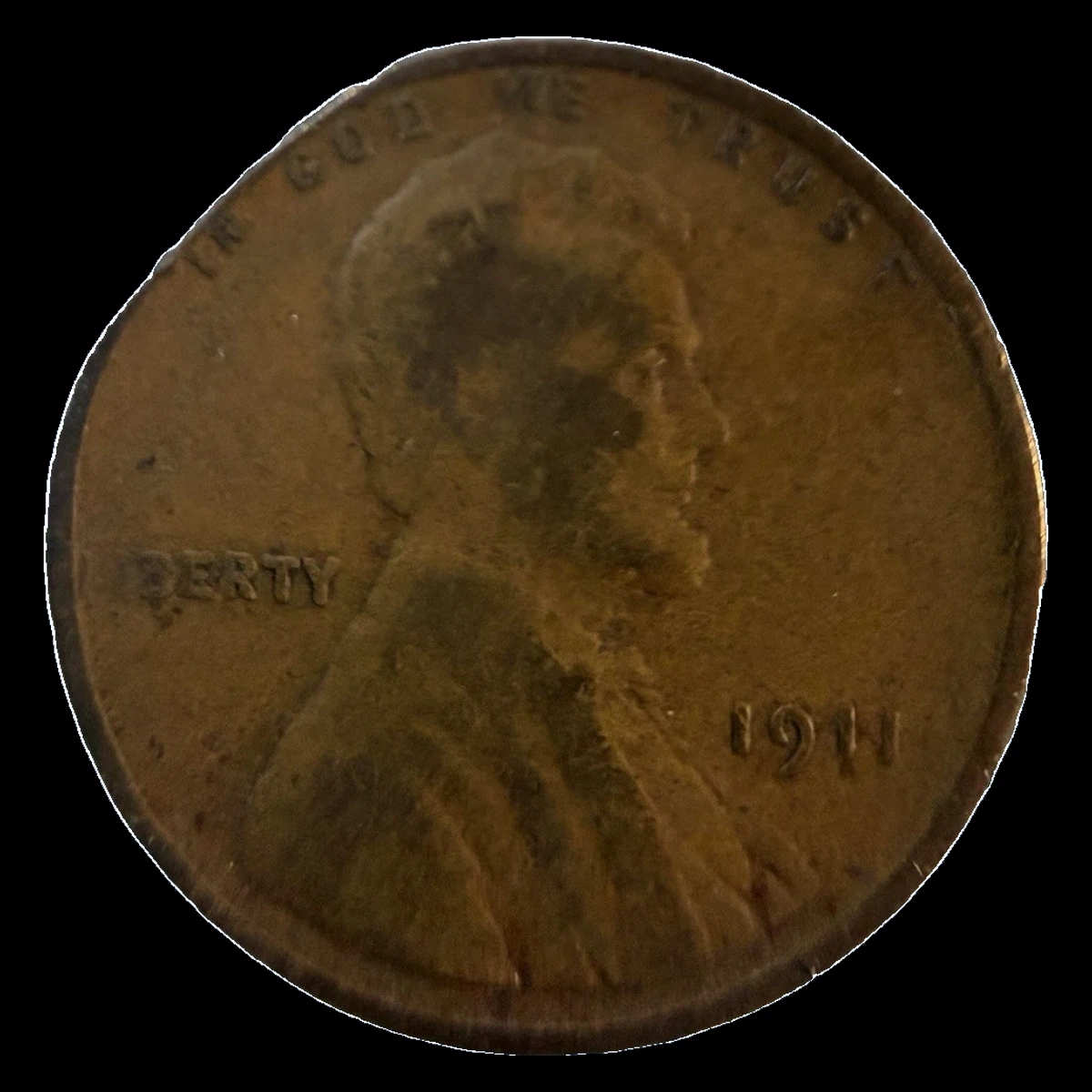
5. 1911 Penny The Round Edge Has a Curved Gap: Clipped Blank Error
A curved clip starts when the blanking punch overlaps an existing opening in the metal strip. The incomplete blank can still pass through the press and receive a design.
How to Identify
Study both ends of the gap where they meet the intact rim. Natural struck transitions differ from saw marks or a sharp cut through completed detail.
The 1911 report does not establish one mint or clip position. A weak rim opposite the gap may help support a clip, but it does not settle every case.
A normal cent is about 3.11 grams and 19.05 millimeters across. Both a genuine missing blank section and a later cut can lower the weight, so measurements must be considered with the edge.
What It’s Worth
$20–$400 is an estimated range for genuine 1911 curved clips. Readable dates, clear original boundaries, and better preservation help buyers judge the feature.
A 1939 clipped cent graded MS64 Brown sold for $180 in 2023. It offers a different-year comparison for the error, not a transaction assigned to an unspecified 1911 clip.
6. 1911 Penny Blank Metal Remains beside an Incomplete Design: Off-Center Strike Error
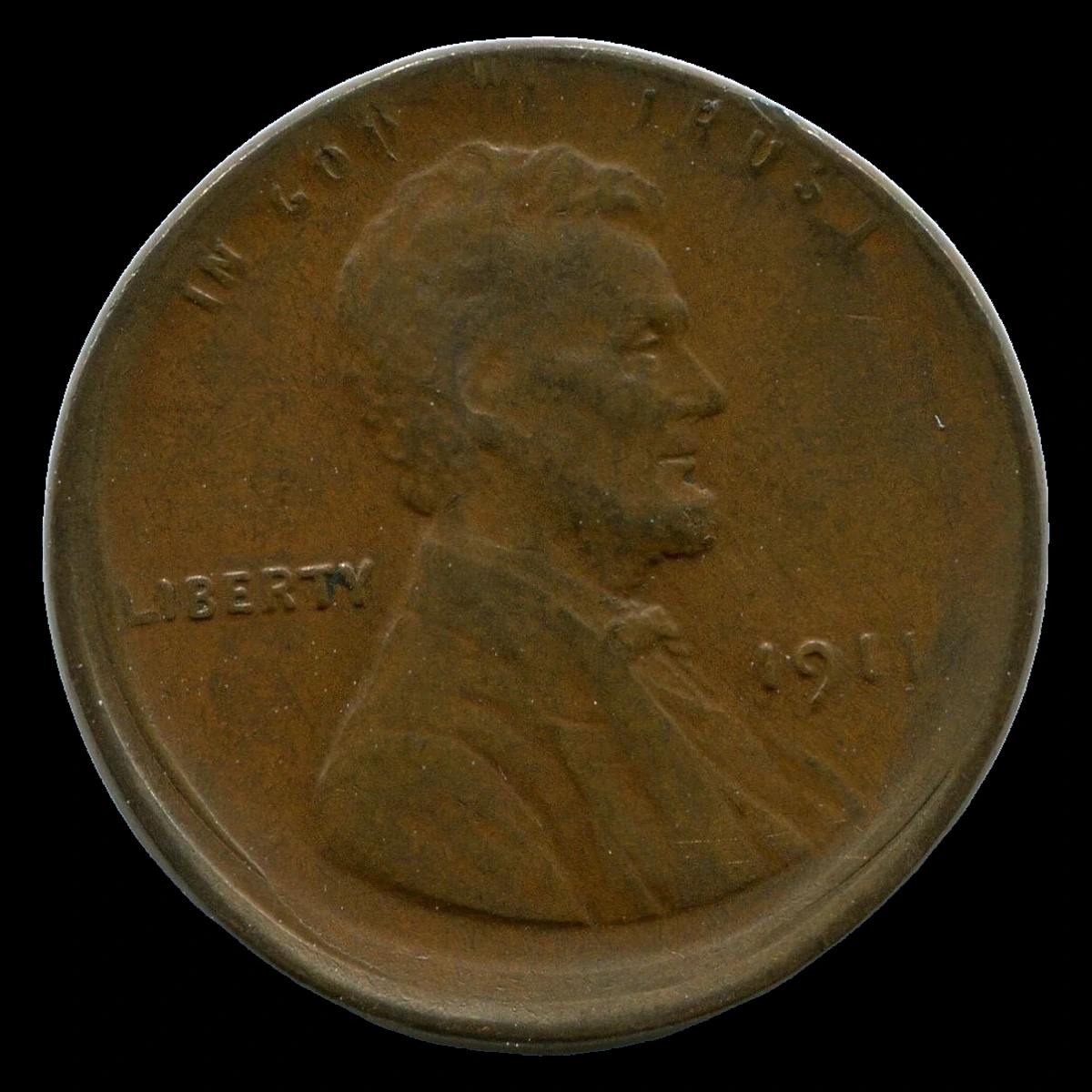
A blank that misses its intended position can receive only part of the design. The unused crescent and the missing picture are two results of the same misplaced strike.
How to Identify
The Denver example is 10% off center toward two o’clock and graded VG10 by ANACS, showing heavy wear. The San Francisco example is 15% off center toward ten-thirty and graded VF20 by PCGS.
On that S coin, Lincoln remains visible while much of IN GOD WE TRUST runs beyond the blank. Do not transfer its direction or surviving lettering to the Denver photograph.
Turn the coin over while keeping track of the same physical edge. Both designs should fit the same displaced blank; an uneven rim on one face alone does not establish it.
What It’s Worth
$75–$800 is a working range for ordinary through stronger 1911 off-center examples. The worn Denver 10% piece sold for $159 on January 3, 2022.
No sale amount is supplied for the San Francisco VF20 specimen. Its mint issue, condition, and different displacement need to be considered together.
7. 1911 Penny The Penny Spreads around a Complete Picture: Broadstrike Error
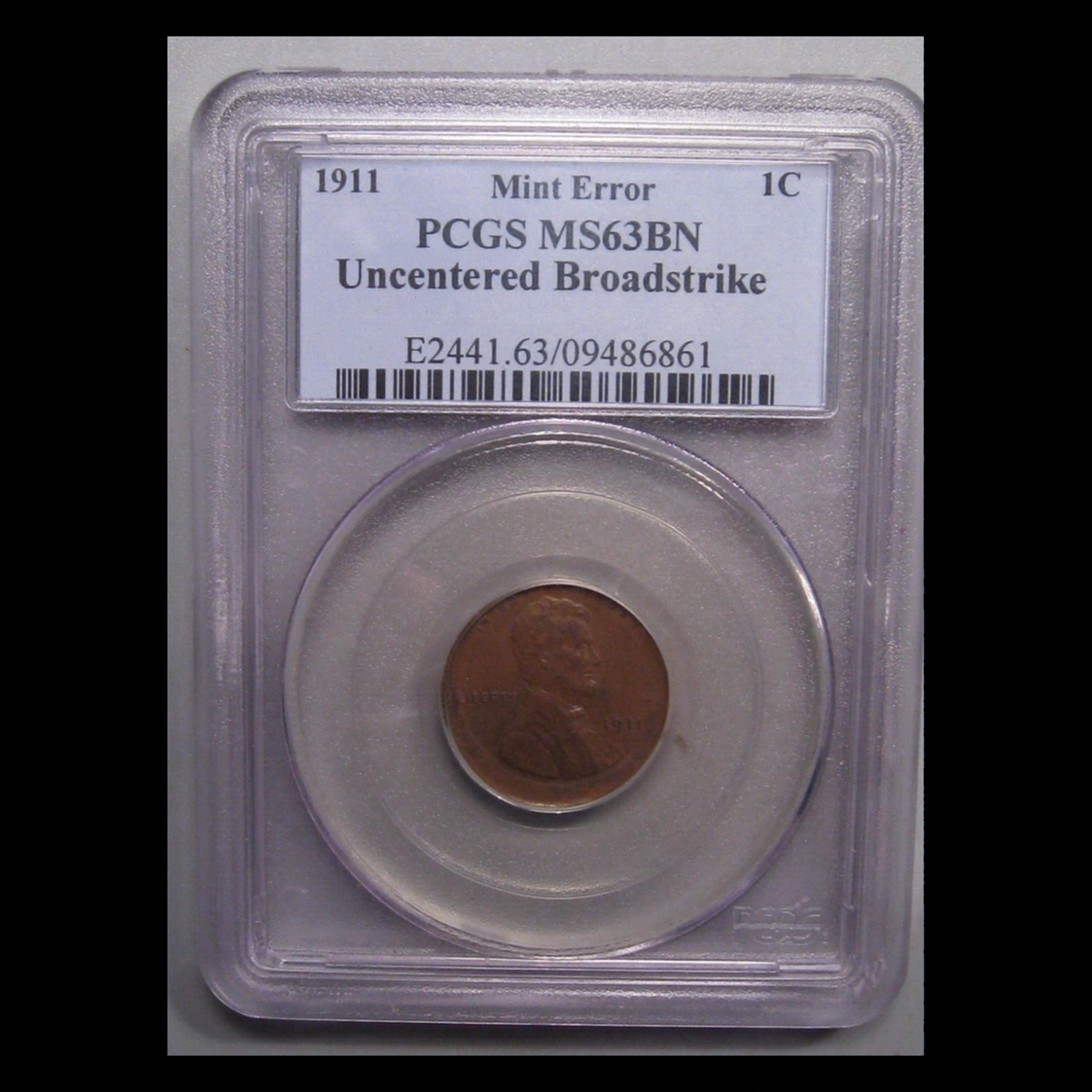
An expanded coin can keep all its intended design. In a broadstrike, the collar that normally controls the edge failed to contain the metal.
How to Identify
The cataloged 1911-S example has a centered, complete design and an NGC MS63 Brown grade. Follow the outer lettering through the narrowest margin to confirm that none of it runs off the coin.
Examine the expanded border for signs of later flattening, folding, or an added ring. Increased width with roughly normal weight can fit a broadstrike, but those measurements alone do not exclude alteration.
What It’s Worth
$100–$1,200 is an estimate for genuine 1911 broadstrikes, including the underlying value of early mintmarked coins. The San Francisco catalog entry establishes an example but supplies no price quoted here.
A 1919 broadstrike with an additional rotation brought $431.25 in 2006. Its different date and extra error prevent that amount from being treated as a direct sale of the 1911-S piece.
8. 1911 Penny Several Impressions Overlap: Double or Triple Strike Error
A coin that remains in the press can receive another blow after it moves. Earlier letters or design outlines may survive beside the new ones.
How to Identify
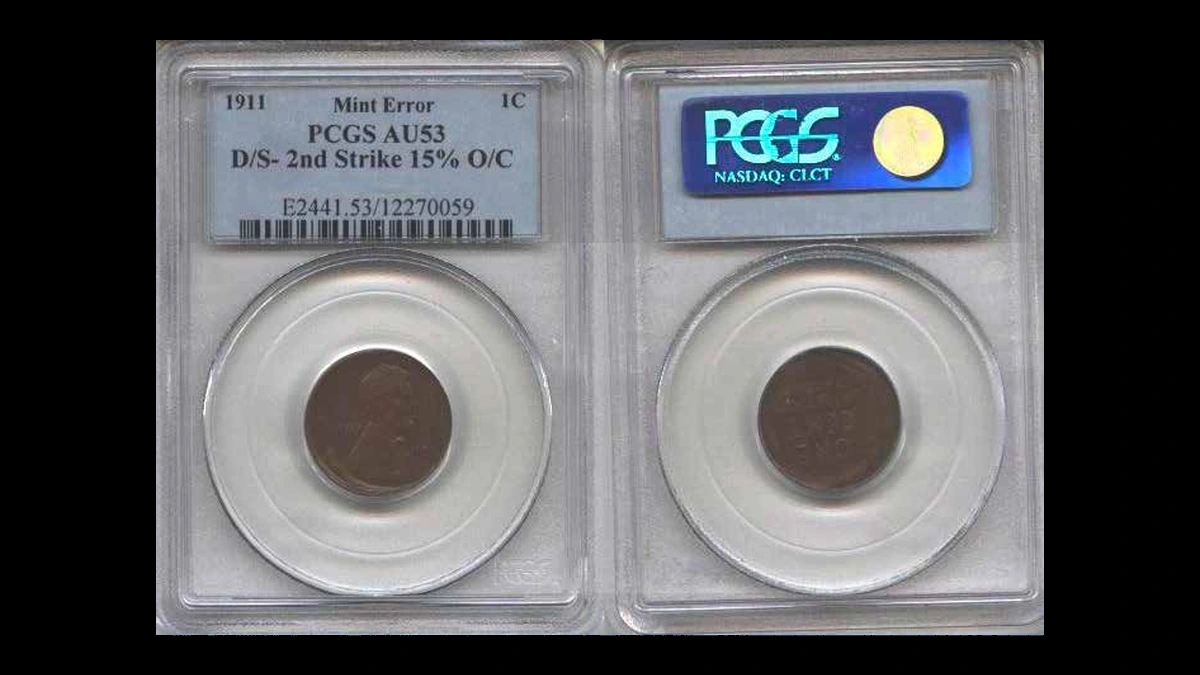
One Philadelphia example graded AU53 by PCGS has a centered first strike and a second strike 15% off center. A different PCGS VF25 piece has a 10% second displacement.
A dealer also describes a triple strike whose second and third blows were broadstruck and slightly rotated. Its extra spread and repeated lettering should not be assigned the mint, grade, or angles of either double-struck example.
Trace one repeated letter, then check another to see whether both follow the same sequence of movement. A thick letter alone does not prove that a coin was struck twice or three times.
What It’s Worth
$250–$2,000 is a working estimate for genuine 1911 double and triple strikes. Readable earlier impressions often explain the error better than the number of strikes by itself.
A 1919 triple strike graded MS64 Brown sold for $1,020 in March 2025. That is a related early Wheat cent sale, not a confirmed transaction for the supplied 1911 pieces.
Conclusion
The easiest comparison is one that matches the mint, error shape, and condition of your penny. A small extra S, a natural peeling layer, and an overlapping second strike each call for different evidence.
Keep the original surfaces intact and photograph both sides before enlarging a detail. When two mistakes occur on the same coin, describe both but use a single whole-coin value.