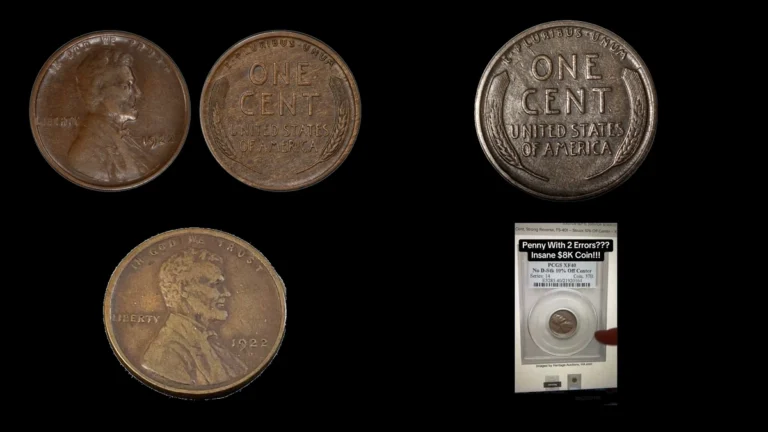
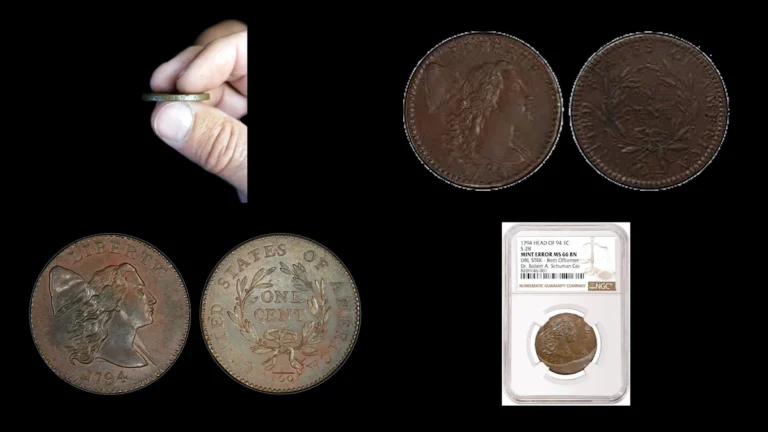
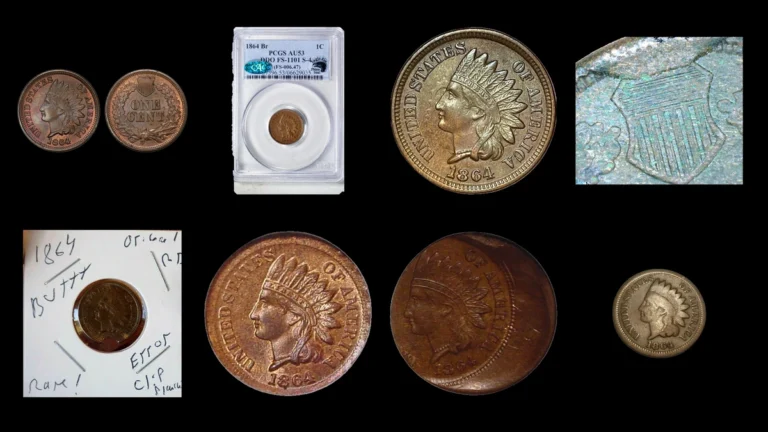
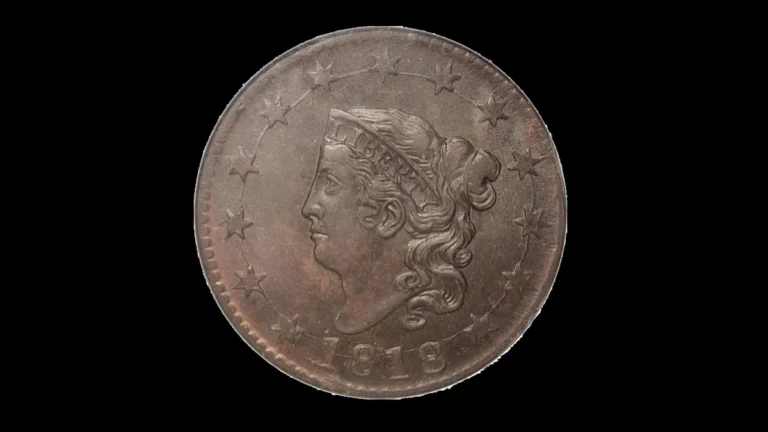
Rare 1937 Penny Errors (List & Pictures)
Estimated values for 1937 penny errors run from $3 to $3,000, covering small die varieties and larger striking mistakes. The highest supplied completed-sale comparison is $2,640 for a different-year 1941-D cent on a silver dime blank in September 2024; the reported 1937-S wrong blank has no established metal identity.
Start with the eye, lettering, and mintmark, then examine the edge and any incomplete or repeated design.
| Visible feature | Possible category | Estimated range |
|---|---|---|
| Extra eye, letter, or mintmark detail | Doubled die or repunched mintmark | $3–$2,000 |
| Outlined raised patch or missing edge | Retained die break or clip | $5–$250 |
| Wide or displaced design | Broadstrike or off-center strike | $40–$400 |
| Interrupted portrait or another impression | Struck-through fragment or double strike | $100–$1,500 |
| Unexpected metal or dimensions | Reported wrong planchet | $500–$3,000 if confirmed |
A standard 1937 cent is a 95% copper alloy, weighs about 3.11 grams, and measures 19.05 millimeters across its plain edge. Measurements are helpful for altered or unusual blanks, but exact design matches usually depend on clear magnified photographs.
Leave surfaces uncleaned and anything apparently attached undisturbed. Keep a certified coin in its holder while using its recorded measurements and images.
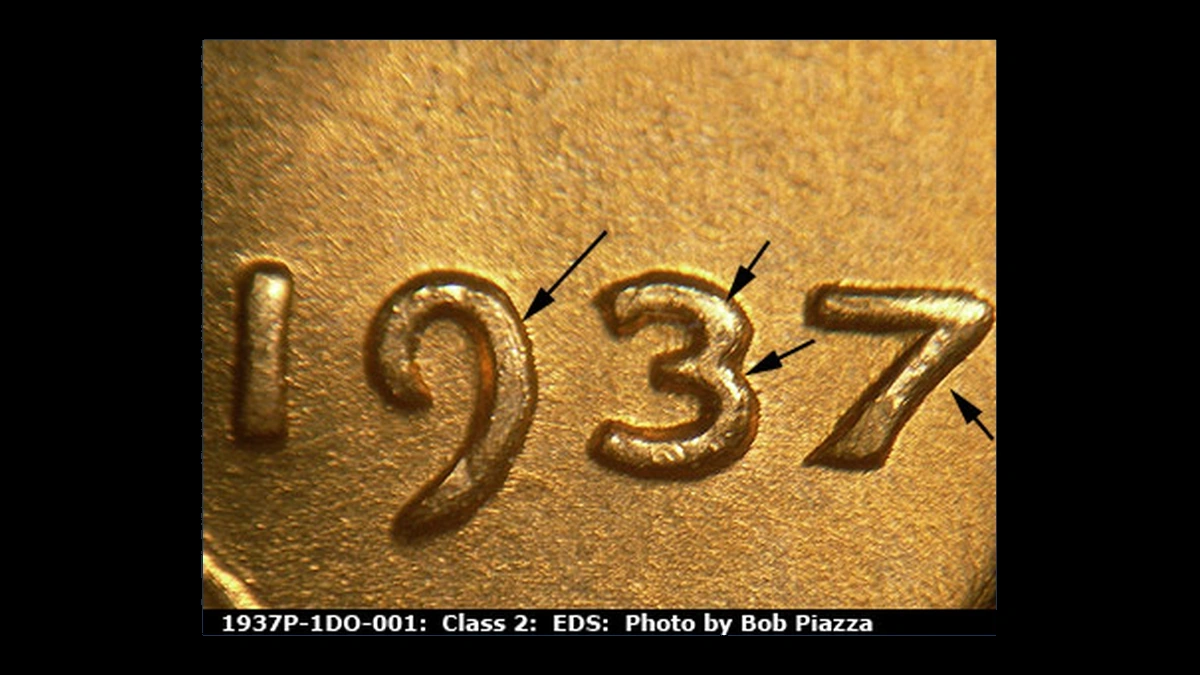
1. 1937 Penny An extra eyelid or repeated Wheat detail: Doubled and Inherited Design Error
The design can be repeated on a die before any coin is struck. Some Philadelphia dies also inherited slight doubling from an earlier tool used in their manufacture, giving several dies a shared minor feature.
Other 1937 varieties have additional independent details, and Denver and San Francisco varieties affect both faces. A Philadelphia Proof has a listed doubled reverse near the left Wheat ear.
How to Identify
Establish ordinary strike versus Proof before comparing photographs. Both Philadelphia issues lack a mintmark, so that absence cannot distinguish the specially made collector coin.
For the Proof reverse, inspect the left Wheat ear and stem. For an obverse eyelid variety, match the actual position of the added line instead.
Philadelphia WDDO-005 places its extra eyelid above the principal one, while several other varieties place it below. Slight inherited doubling alone should not be promoted into a rare individual variety.
What It’s Worth
Ordinary-strike varieties are estimated at $3–$150, with slight inherited doubling generally toward the modest end. The Proof reverse has a whole-coin estimate of $200–$2,000.
The Proof range includes the collector issue’s underlying value and is not a pure error premium. No completed variety sale is supplied for it here.
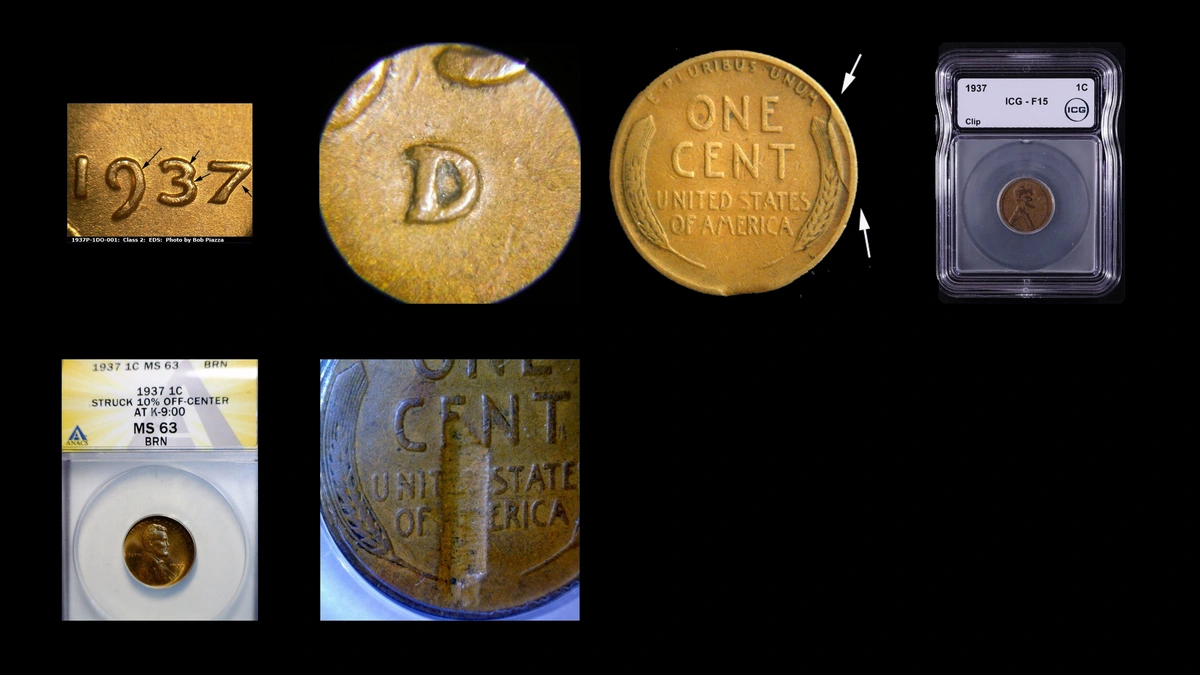
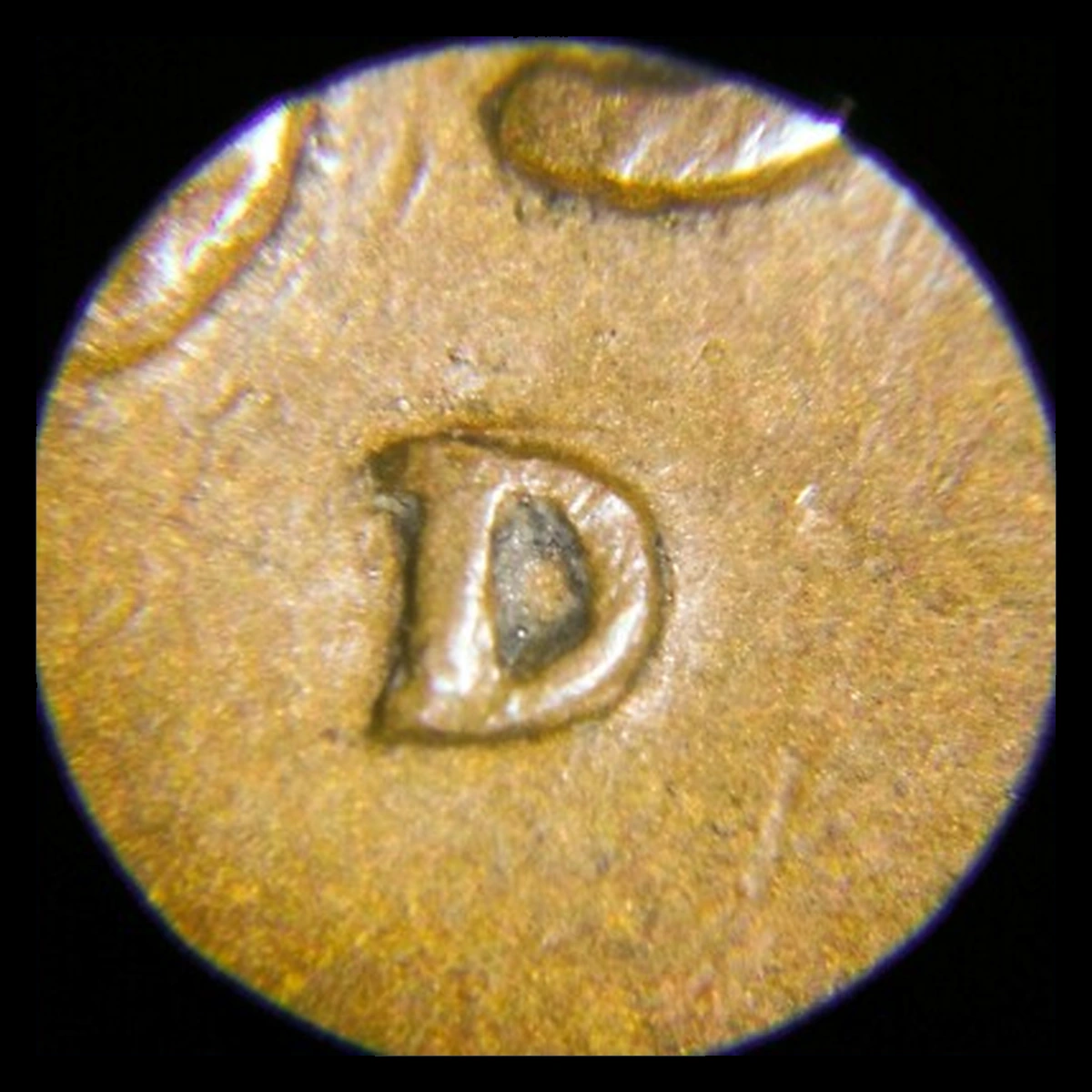
2. 1937 Penny Earlier D or S curves surround the mintmark: Repunched Mintmark Error
Mintmarks were hand punched into dies, and repeated placements could leave more than one letter outline. Denver examples include traces above, below, or beside D, with some showing three positions.
The two listed San Francisco varieties both have extra S detail toward the left. Their smaller distinguishing marks still require separate matches.
How to Identify
Use the actual mint letter to select a reference without assuming it determines the repeat direction. Denver D-WRPM-007 has reported traces below and toward the upper left.
The Wexler photographs help distinguish the separate D and S patterns. Follow recognizable letter remnants rather than flat shelves or isolated bumps.
A triple-punch attribution requires the additional outlines to be visible. Counting three lumps around a thick D is not enough.
What It’s Worth
Modest through stronger repunches are estimated at $3–$100. Clearly visible extra curves on attractive surfaces are generally easier to appreciate than traces obscured by wear.
This is a collecting range rather than an individual realized sale for each numbered variety. The label alone cannot establish a premium.
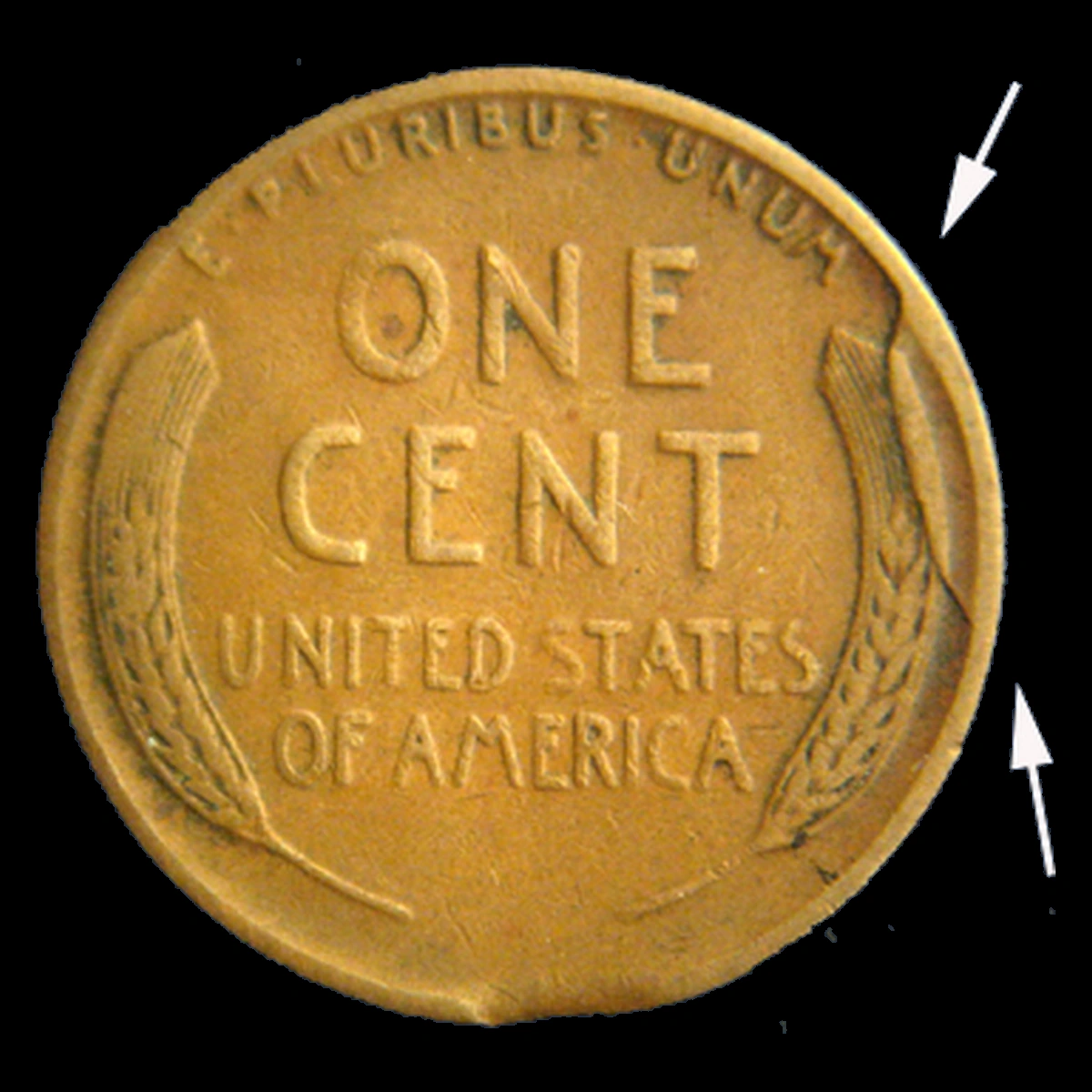
3. 1937 Penny A rim-area patch retains its design: Retained Die Breaks and Cracks Error
A fractured die section can remain in place and continue striking its design. If it shifts, coins may show an outlined patch or changed surface height while preserving letters inside the area.
The 1937 records also include earlier thin cracks before larger breaks developed. Several examples affect the reverse, but each variety has its own location and shape.
How to Identify
Compare the feature with the individual retained-break photographs. A crack anywhere near the rim cannot identify every listed 1937 variety.
Look for surviving lettering within a stepped or outlined area. That evidence fits a retained section better than describing the whole piece of die as missing.
Move the light across thin lines to distinguish raised die-crack ridges from scratches. Corrosion or an injured edge can obscure the original pattern.
What It’s Worth
Early cracks are estimated at $5–$30; clearer retained breaks at $25–$250. Strength and preservation of the feature guide the comparison.
These ranges do not represent separate completed sales for every stage. A tiny initial line should not receive a large shifted patch’s value merely because they belong to related die damage.
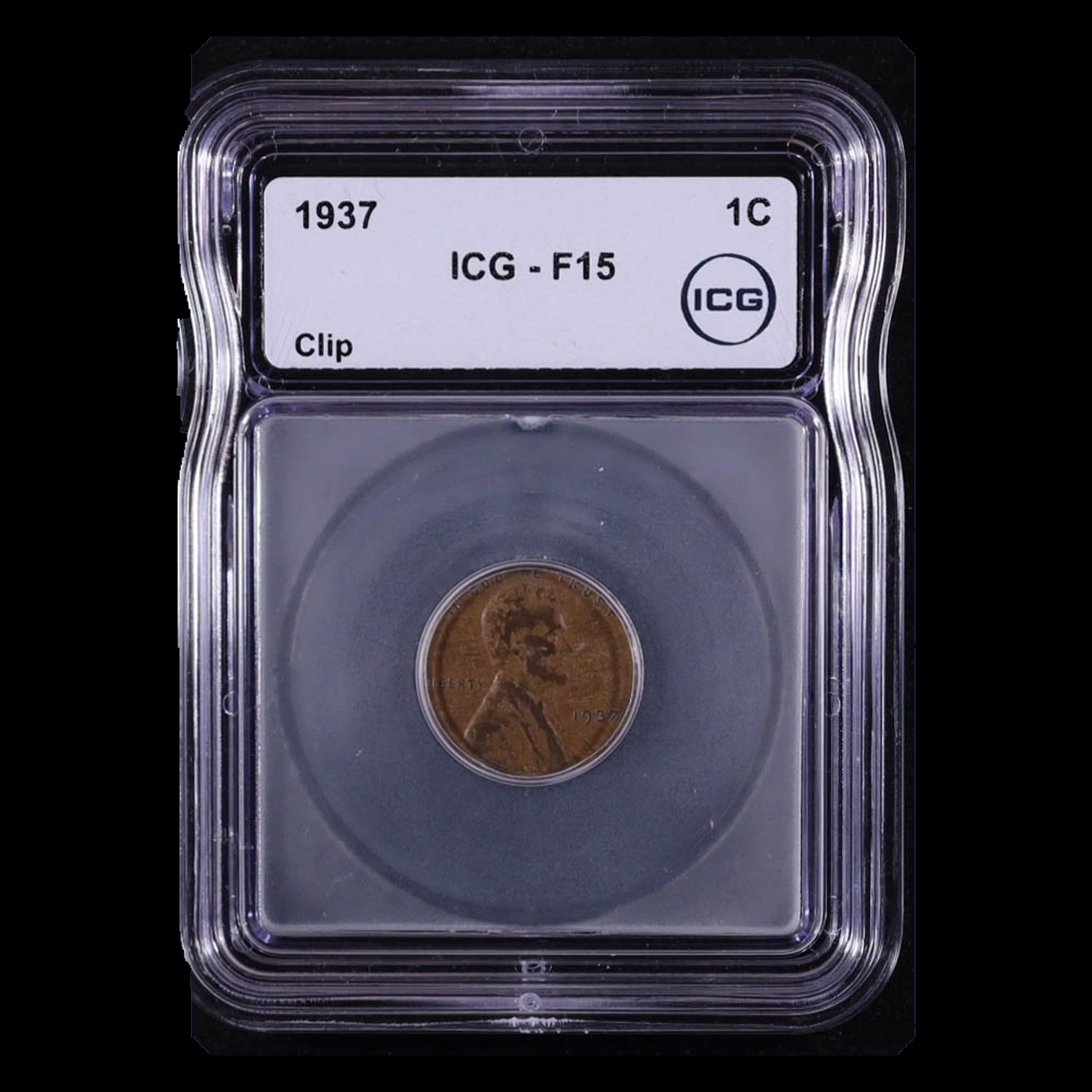
4. 1937 Penny An original gap interrupts the edge: Clipped Planchet Error
A blank can be incomplete when cut from the metal strip and still receive a normal cent design. The resulting clipped planchet has metal absent before striking.
A published Philadelphia 1937 example has a small clip, but its exact boundary shape is not specified. Its description should not automatically become a curved-clip diagnosis.
How to Identify
Examine both ends of the gap for the way the rim and nearby design formed. Metal flowing toward an existing gap can weaken details there.
Opposite-rim weakness can support the explanation, but may not be obvious. Filed grooves or sharp cuts through completed details instead suggest removal after striking.
A small clip may lose too little metal for a coarse scale to resolve. Use a precise measurement as supporting evidence rather than the sole test.
What It’s Worth
A small genuine 1937 clip is estimated at $10–$150. Clear original boundaries and attractive preservation affect where it fits.
A 1920 cent with a 7% curved clip graded PCGS AU55 sold for $49 in March 2025. That lightly circulated earlier Wheat cent is a comparison, not the reported 1937 specimen’s sale.
5. 1937 Penny The complete design looks small within a wide coin: Broadstrike Error
A blank can spread farther outward when the collar fails to restrain its edge. A broadstrike retains the intended design even if its border is uneven.
The documented 1937 example graded NGC MS66 Brown. Its width came from redistributing the blank’s metal, rather than adding copper.
How to Identify
Trace the outer lettering on both faces and confirm that the full design fits within the spread metal. Missing outer design points toward an off-center strike instead.
Inspect the broadest edge for crushed letters or impact marks that could show later hammering. Natural expansion should agree with the original strike.
What It’s Worth
Genuine examples are estimated at $40–$300. The NGC MS66 Brown broadstrike sold for $99 in April 2020.
That unworn coin had few marks despite its brown color. Compare original surfaces and completeness rather than treating color or width alone as the deciding factor.
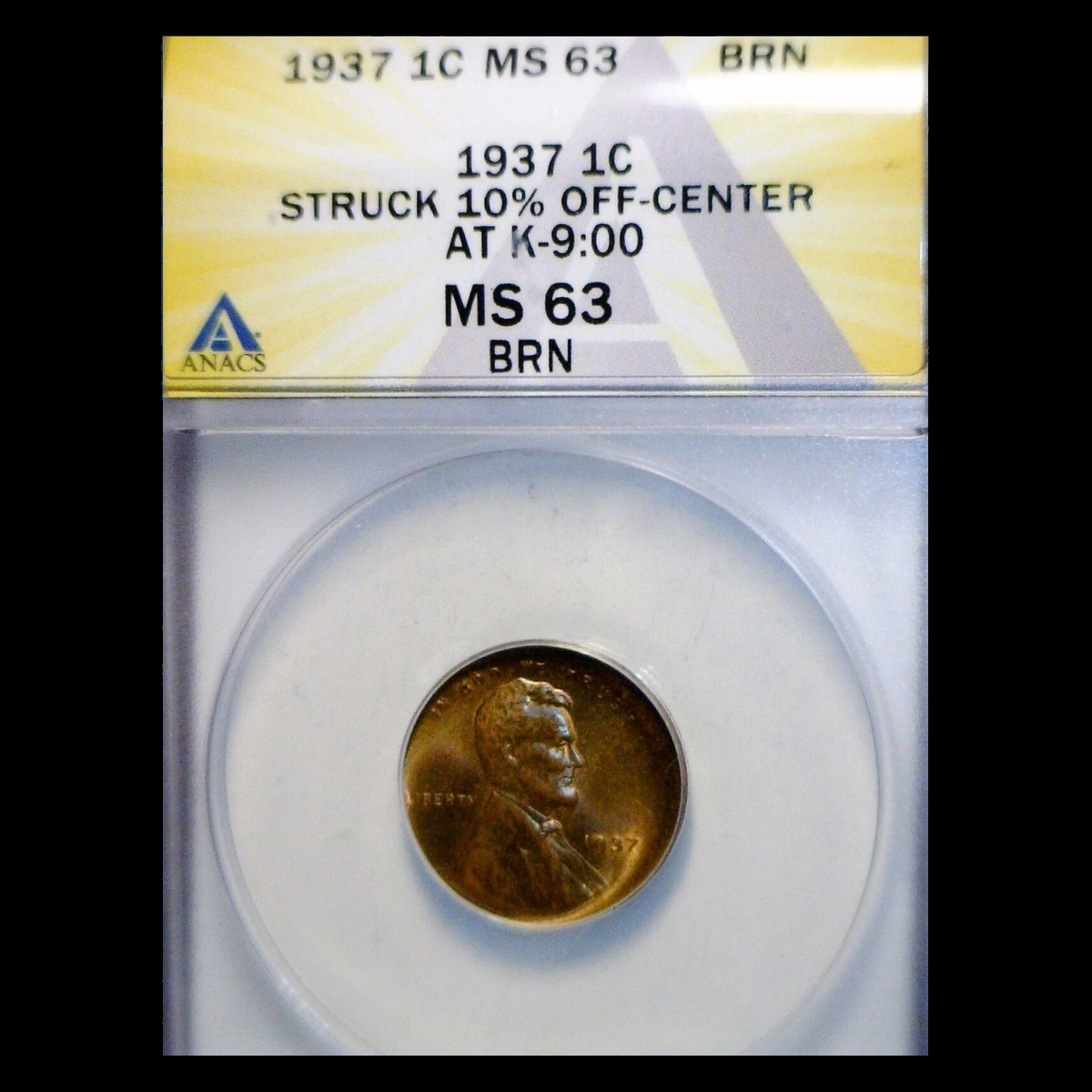
6. 1937 Penny Unused metal sits beside a partial design: Off-Center Strike Error
A blank partly outside the striking position receives design only where it overlaps the dies. The remaining crescent stays unstruck while other intended details fall beyond the edge.
Published 1937 examples include separate 15% and 20% displacements. Their mint identity and direction must be checked individually.
How to Identify
Start with the readable date and follow the natural boundary between design and unused metal. A ground-down surface differs from an original unstruck crescent.
Compare both faces in a consistent orientation. A shifted border on just one side may have a different cause from the whole blank being off center.
The percentage describes displacement, not missing copper. A simple off-center coin can retain approximately normal weight.
What It’s Worth
Estimated values are $40–$400, depending on displacement, condition, and date visibility. The 20% example graded PCGS MS64 Brown sold for $126 in September 2019.
That unworn but marked specimen supplies an actual 1937 result. Its percentage and price do not transfer automatically to the separate 15% coin.
7. 1937 Penny A fragment interrupts Lincoln’s portrait: Struck Through Error
The Heritage catalog describes a 1937 NGC MS63 Brown cent struck through a previously struck fragment. The obstruction prevented part of the portrait from forming normally.
The fragment had already received a coin design before it interfered with this strike. The description does not establish that it remains attached today.
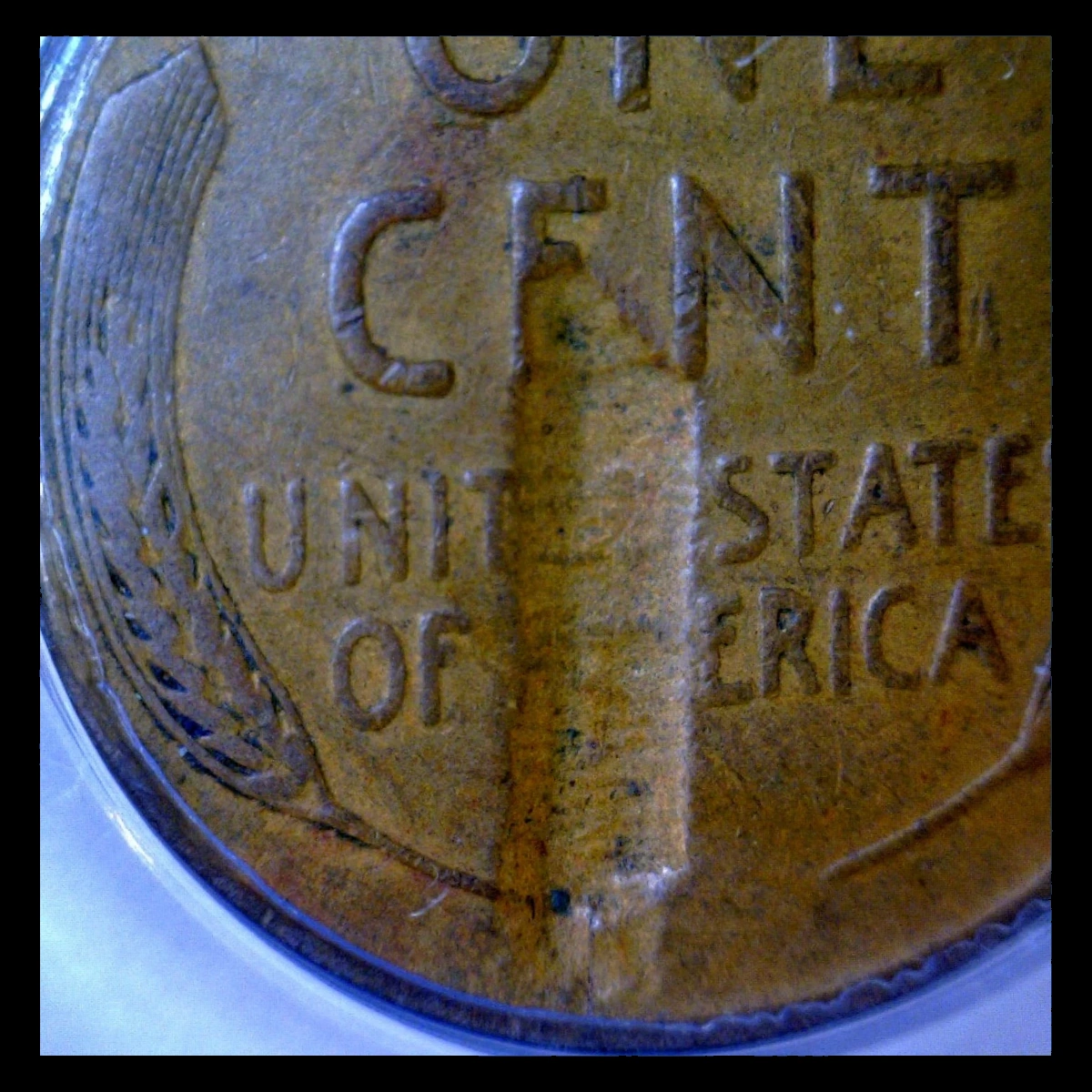
How to Identify
Examine the interrupted portrait for a defined impression and any design traces transferred from the fragment. The actual boundary is more useful than an unexplained dark patch.
A later blow can create a dent and freshly pushed metal without an original obstruction. Use low-angle photographs to assess depth, and do not probe anything that appears attached.
What It’s Worth
A clear 1937 fragment strike is estimated at $100–$750. Impression size, readability, and preservation influence the comparison.
The supplied year guide reports $515 for an MS63 Brown example, but that figure was not independently matched to a completed sale in the supplied evidence. It should remain a reported amount rather than a newly verified auction result.
8. 1937 Penny A second coherent image overlaps the first: Double Strike Error
A coin remaining in the press area can move and receive another design impression. Separate portraits, dates, or letter groups can record its two positions.
A published account describes a worn Philadelphia 1937 example without establishing its exact placement between strikes. That missing detail should not be filled in from another coin’s appearance.
How to Identify
Choose a repeated element and trace it far enough to establish a consistent second position. A fuzzy edge on one letter does not explain a second whole-coin strike.
Small extra features can instead belong to a doubled die. Examine the outline and overlapping metal for later pressing or attached pieces before interpreting the shifted designs.
What It’s Worth
Genuine double strikes are estimated at $150–$1,500. Understandable overlapping images and preserved surfaces support stronger comparisons.
The published account reports $190 for a worn Philadelphia piece sold in 2000. This older reported result supplies context without establishing a present price for every 1937 double strike.
9. 1937 Penny The blank’s metal or dimensions seem wrong: Reported Wrong Planchet Error
A year guide reports a 1937-S cent on an unintended blank and describes it as Fine, a circulated condition. The report names neither the intended denomination nor the metal.
The proposed mechanism is a wrong blank entering the cent press. Its unspecified identity prevents calling this particular coin silver or assigning it a foreign country.
How to Identify
Record the individual candidate’s weight and diameter before proposing a blank type. Inspect the edge for filing or a coating that could explain altered size or color.
Have its composition tested without damaging the surface. A proposed denomination must agree with the measured material and dimensions rather than a vague silver appearance.
What It’s Worth
A confirmed 1937-S wrong-planchet cent has a conditional estimate of $500–$3,000, to be adjusted after the actual blank is identified. It is not a verified price for the reported Fine example.
Mint Error News reports $2,640 for a 1941-D cent on a silver dime blank graded NGC AU58 in September 2024. That known silver comparison does not establish the 1937-S coin’s composition.
Conclusion
A useful 1937 error identification connects the visible feature to a specific process, from a repeated mintmark punch to a misplaced blank. Small shared doubling and a collector Proof also need different comparisons despite a common date.
Keep completed sales, reported figures, and conditional estimates distinct. When the source leaves the blank’s metal or a strike’s position unknown, photographs and measurements should resolve the question before a more specific name is applied.