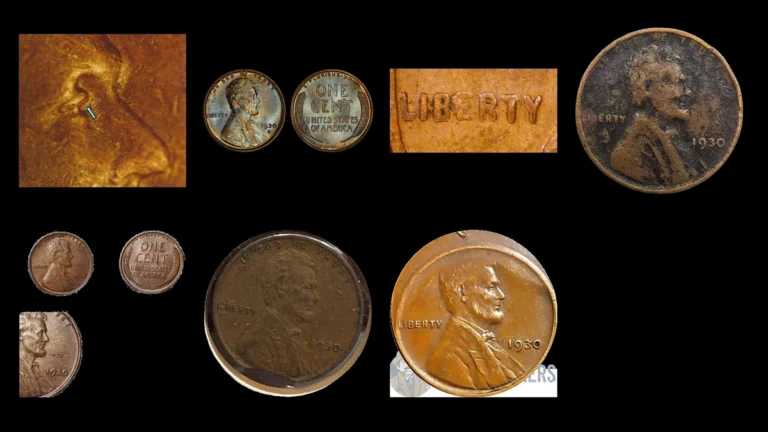
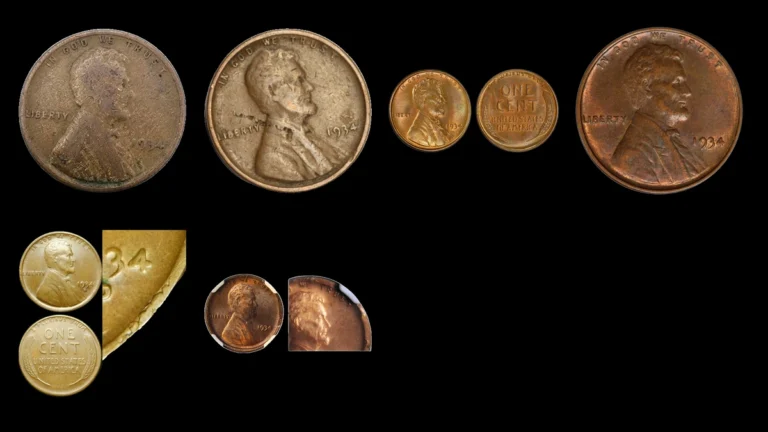
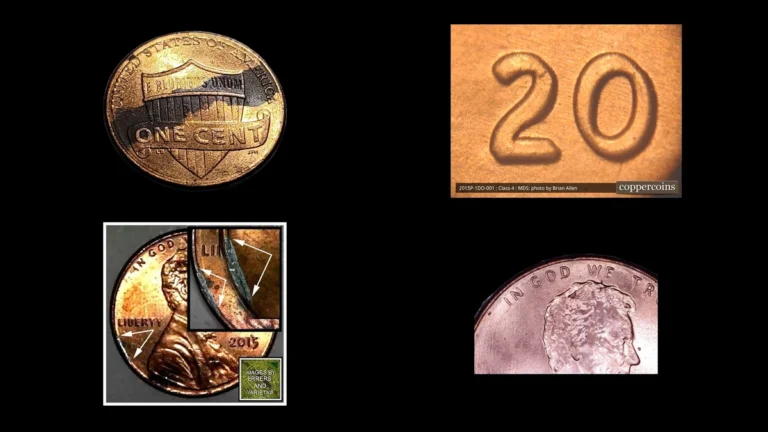
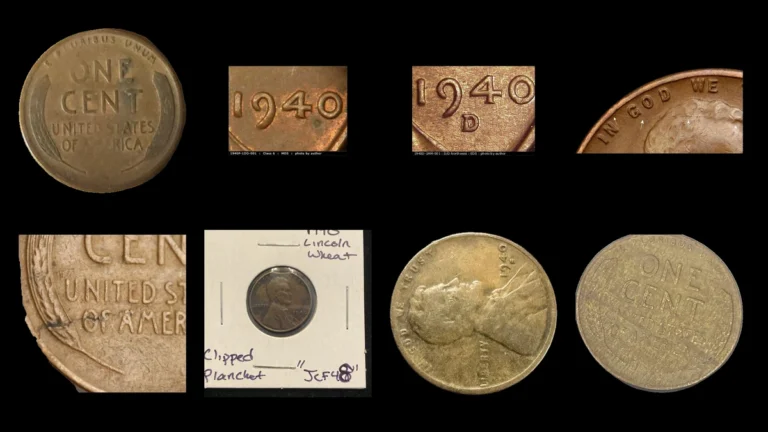
Rare 1872 Penny Errors (List & Pictures)
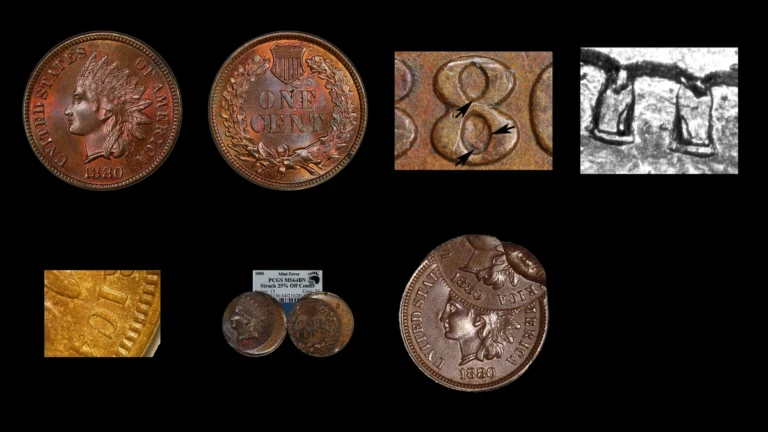
An 1872 repunched-date cent sold for $2,160 in January 2018. A later 1908 double strike supplies a separate comparison at $4,080 in June 2024, not a same-year result.
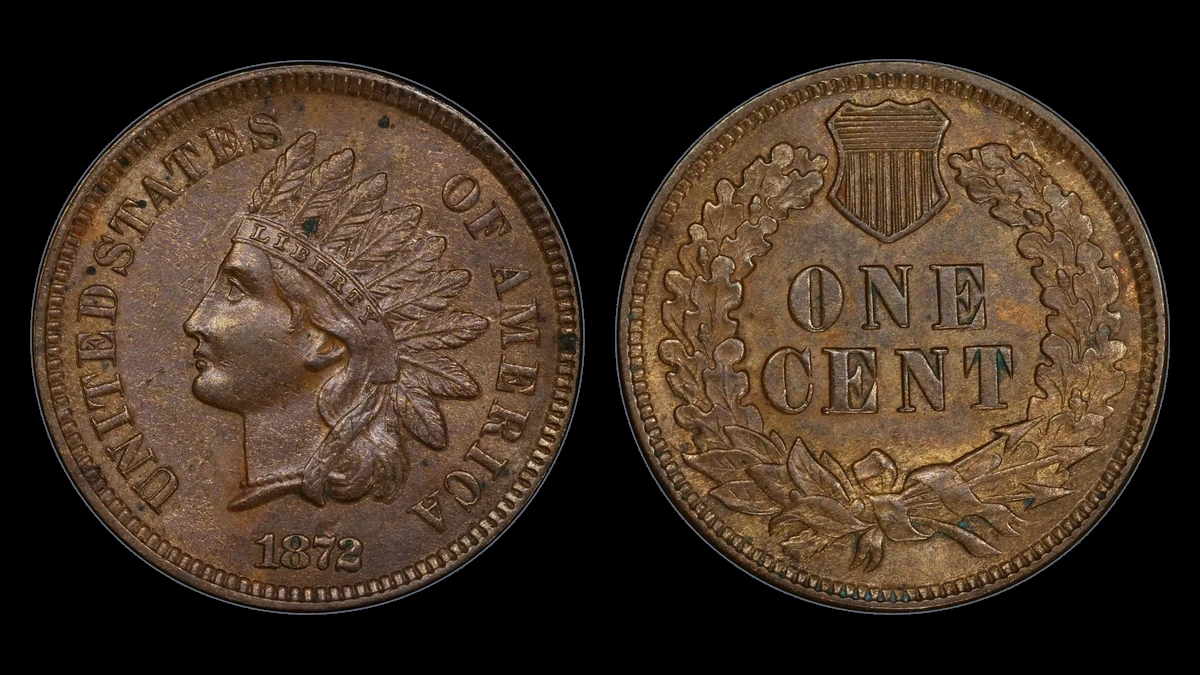
Estimated whole-coin values for 1872 Indian Head penny errors span $70–$5,000. Start with the date and headband, then examine raised marks and any repeated design; the underlying 1872 date already contributes collector value.
| Visible clue | Possible cause | Estimated value |
|---|---|---|
| Extra strokes beside date digits | Repunched date | $100–$3,000 |
| Fragment below and right of 8 | Misplaced date | $100–$2,500 |
| Extra detail at top of R | Doubled die | $150–$2,500 |
| Fine recurring mark near headband or border | Debris during die making | $70–$1,500 |
| Raised cheek lump or rim section | Die break | $70–$1,500 |
| Second displaced impression | Double strike | $600–$5,000 |
A normal bronze cent weighs about 3.11 grams and measures roughly 19 millimeters across, with a plain edge. Those measurements help assess the coin itself, while the small varieties depend on exact design matches.
1. 1872 Penny A Digit Has an Earlier Outline: Repunched Date Error
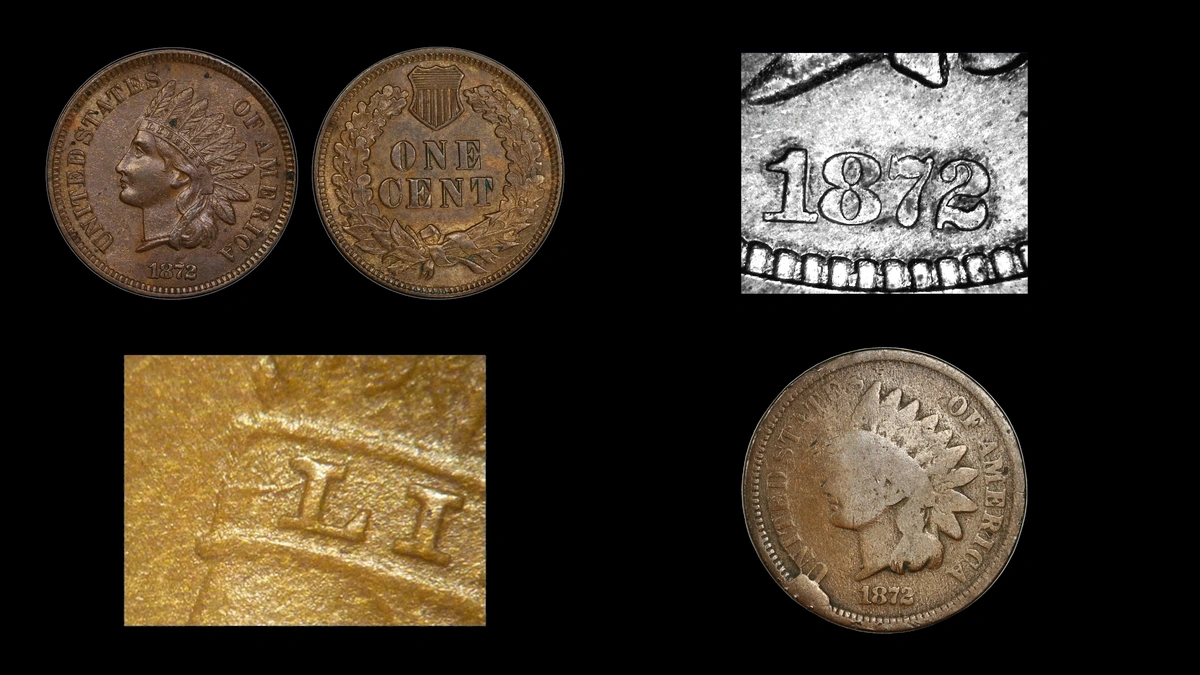
One or more numerals can retain extra strokes from a previous date-punch position in the die. The finished cent copies both positions in a single ordinary strike.
How to Identify
Confirm the full date reads 1872 before tracing small marks around the 1, 8, 7, and 2. Compare all affected digits with one attributed variety rather than assembling a match from unrelated photographs.
FS-301, also called Snow-1, is one recognized pattern. Other reported forms need their own directions and shapes; a flat striking shelf does not establish a repunched date.
What It’s Worth
Matched 1872 repunched dates are estimated at $100–$3,000 as whole coins. Wear, surface problems, and the strength of the extra strokes affect where they fit.
PCGS records an FS-301/Snow-1 graded MS65 Red and Brown at $2,160 from Heritage on January 3, 2018. That unworn result does not set the price for every variety or grade.
2. 1872 Penny A Number Curve Sits among the Border Teeth: Misplaced Date Error
The reported misplaced fragment lies below and slightly right of the normal 8. It came from the date punch touching the die in the wrong location before the main date was completed.
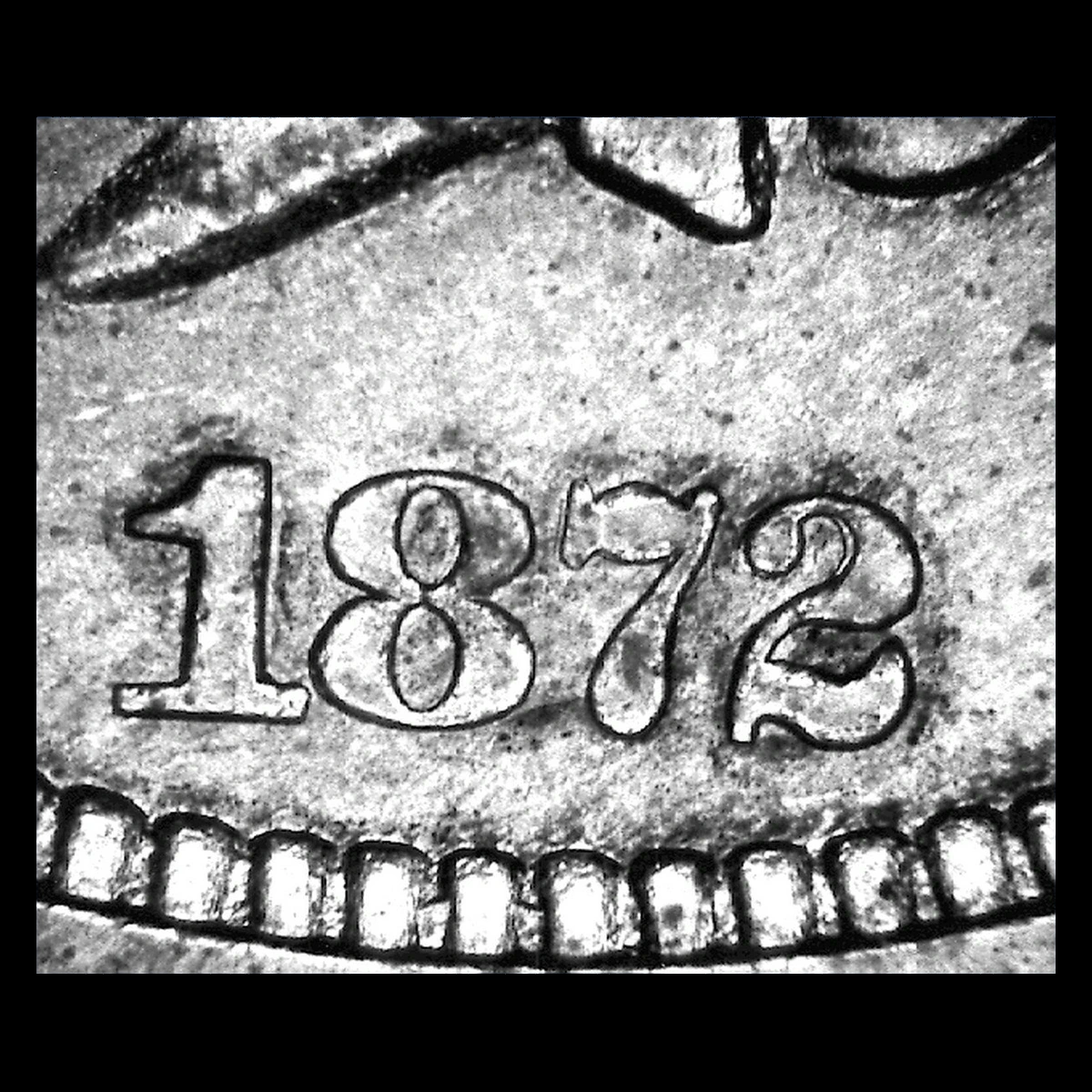
How to Identify
Keep 1872 upright and compare the fragment’s curve, its gap from the normal 8, and the neighboring border teeth. Its separate position distinguishes it from a remnant attached closely to the main digit.
A shapeless lump or corrosion between the teeth is insufficient evidence. Leave the border untouched while making the comparison.
What It’s Worth
A clearly matched misplaced-date cent is estimated at $100–$2,500. Much of the whole-coin figure can still come from preservation and the underlying date.
A 1908 FS-301 misplaced date graded MS65 Red and Brown has a recorded $1,187 eBay result from December 2021. That later-date marketplace result is not a sale of this 1872 variety.
3. 1872 Penny The R in LIBERTY Has Extra Upper Detail: Doubled Die Error
The recorded doubled-die feature sits at the upper end of the headband’s R. It was present in the die before a single blow transferred the design to the coin.
How to Identify
Compare the attributed doubled R under low-angle light. A generally thick or worn letter does not reproduce that specific extra outline.
The same variety also has a repunched date, formed by a separate step in die preparation. Match that associated date pattern to the same tool rather than borrowing another 1872 date variety.
What It’s Worth
Clearly identified examples are estimated at $150–$2,500, including the coin’s date and condition. The accompanying repunched date is another feature of the same coin.
An 1887 FS-101 doubled-front cent graded MS63 Brown sold for $1,380 in June 2025. It is a different headband variety, so it supplies context rather than an exact 1872 price.
4. 1872 Penny A Fine Mark Repeats near LIBERTY: Debris during Die Making Error
Debris caught while a raised master design was pressed into a die can leave a lasting tool defect. Coins struck afterward reproduce it without a fresh object landing on each blank.
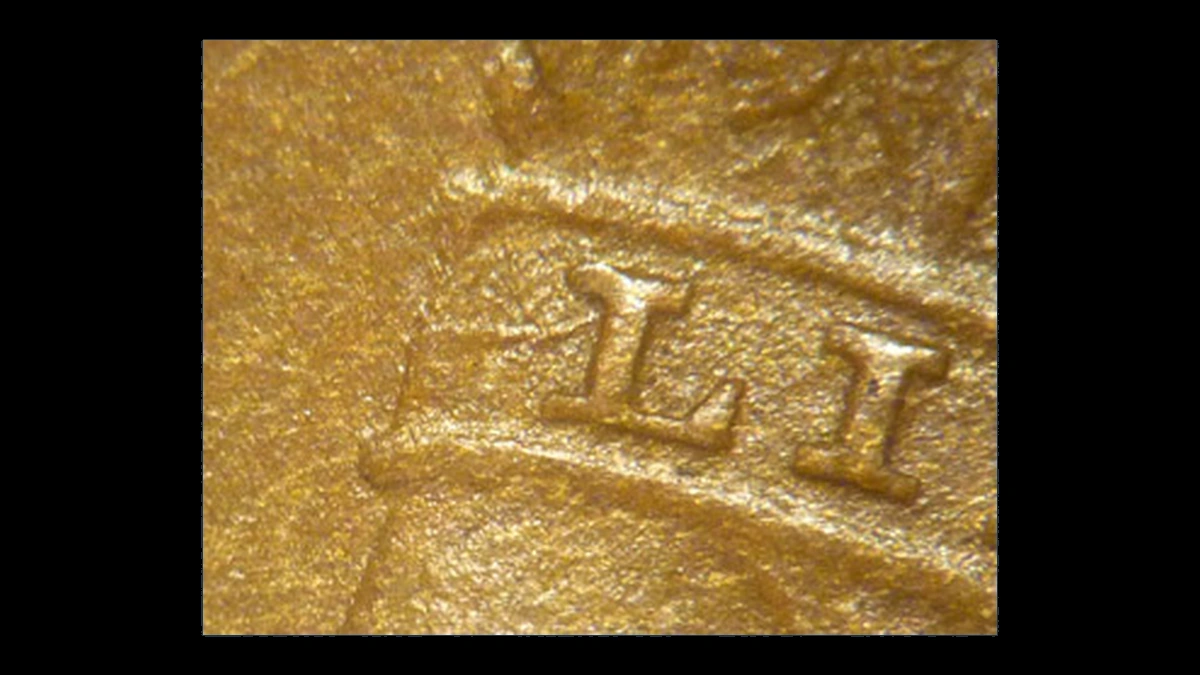
How to Identify
The catalog records separate examples near L in LIBERTY and in the lower-left border. Choose the correct photograph and match the mark’s full relationship to nearby design.
This process is often called a hub-through mark. Consistent repetition on coins from the same tool is more useful than a single line merely resembling a thread or scratch.
What It’s Worth
The estimated whole-coin range is $70–$1,500 for a correctly matched 1872 die-making mark. The older date and preservation can account for most of the price.
No separate auction result is supplied for these small defects. A faint mark on a worn coin may add little beyond its normal collectible value.
5. 1872 Penny A Cheek Bump, Raised Line, or Rim Patch: Die Breakage Error
A missing piece of die can create raised metal on a coin, from a small cheek chip to a larger rim break. Narrow cracks instead produce raised lines.
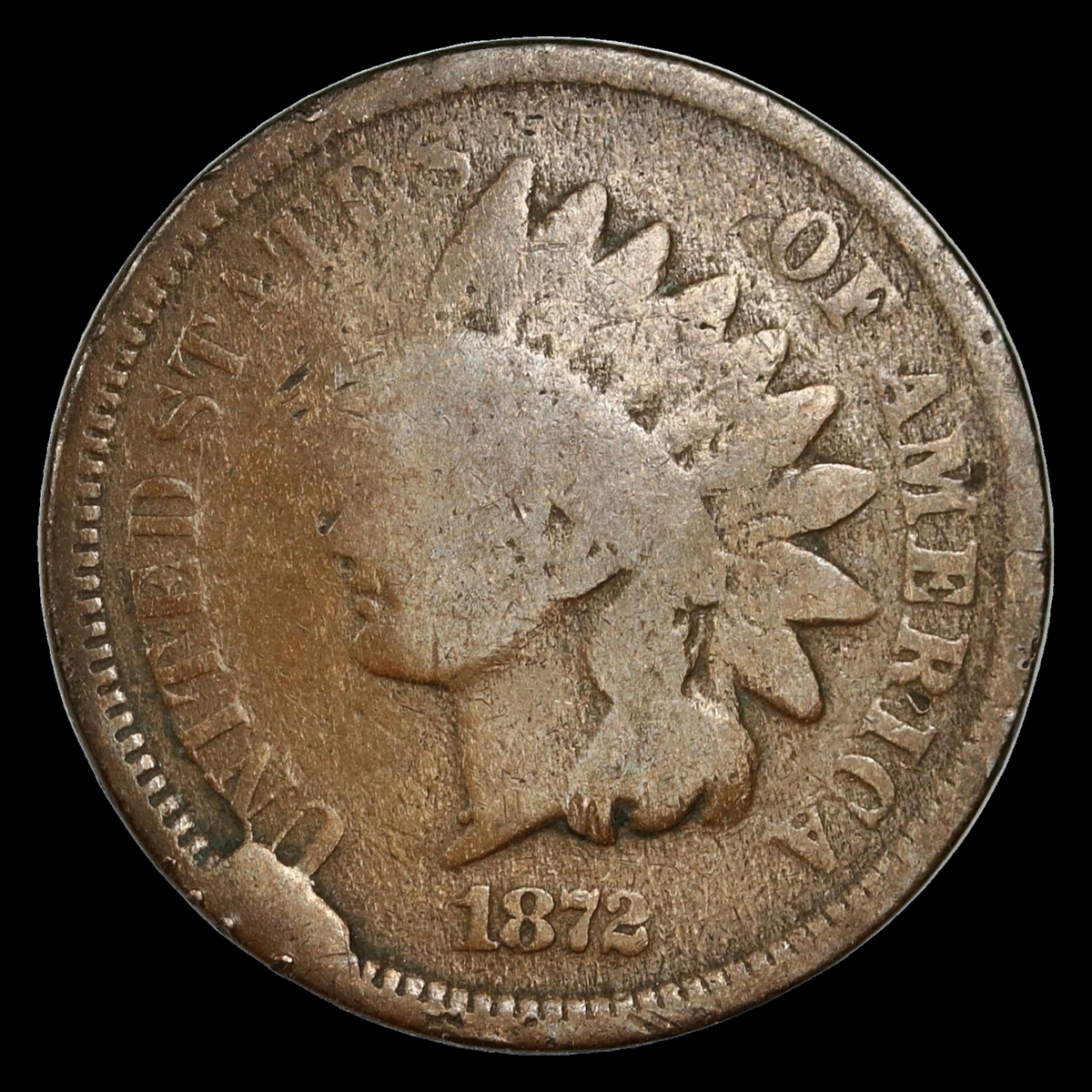
How to Identify
For the cheek example, inspect the lump in front of the ear for an original raised surface rather than an impact hollow. Its shallow-N reverse is a normal design style, not another error.
Other reports include lines above UNITED, reverse rim-to-wreath cracks, and larger breaks at different border positions. Compare the appropriate front 7–7:45 or reverse 11:30–12:30 area and note whether design survives inside a retained section.
What It’s Worth
Ordinary 1872 coins with these identified features are estimated at $70–$1,500. Small worn cracks and chips may add very little to the date’s existing value.
A larger clear break in stronger condition can justify a different assessment, but no separate recorded sales are supplied here. Corrosion, cleaning, and crushed edges remain condition problems.
6. 1872 Penny A Second Image Appears at the Lower Right: Double Strike Error
The reported cent received another blow about 80% off center toward five o’clock. Only a small portion of the later design reached the coin, while the original account says the date remained complete.
How to Identify
Locate the actual 1872 date and trace recognizable repeated detail into the lower-right impression. A flattened patch without a second design cannot establish a double strike.
The reported pit in ONE is separate later damage. Record it in the condition assessment without using it to prove or dismiss the two-strike sequence.
What It’s Worth
Genuine dated 1872 double strikes are estimated at $600–$5,000. Preservation and the clarity of both impressions guide that broad range.
A 1908 double strike graded MS62 Brown sold for $4,080 in June 2024. It is a different-year comparison and supplies no realized price for the reported 1872 coin with the pit.
Conclusion
For 1872, distinguish a date remnant beside a digit from a fragment in the border and an extra outline on LIBERTY. Those clues describe different steps in preparing a die.
The $70–$5,000 estimates include the collectible value of the underlying date. Judge a larger repeated strike by its visible sequence, and keep later damage separate from the original mint-made feature when selecting a comparison.