Rare 1868 Penny Errors (List & Pictures)
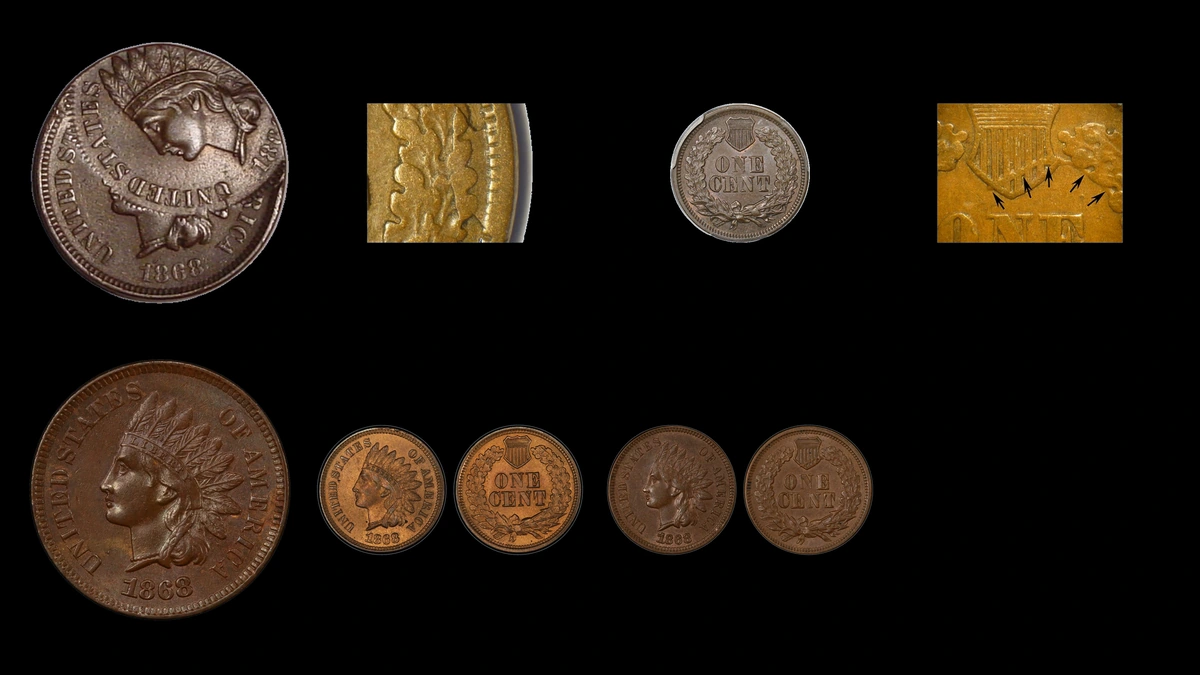
For 1868 penny errors, the highest supplied comparison is an 1869 dime-blank strike sold for $25,300 in January 2012. The 1868 counterpart is historically reported, without its own supplied sale.
Estimated whole-coin values span $40–$40,000, including that conditional rarity. Check size and strike placement, then the shield, lettering, and date.
Normal bronze cents weigh 3.11 grams and measure about 19 mm, with a plain edge. Record measurements once; small varieties also need design matches.
| Where to look | Possible finding | Estimated whole-coin value |
|---|---|---|
| Metal and outer design | Reported silver dime-blank strike | $10,000–$40,000, conditional |
| Overlapping portrait | Double strike | $600–$5,000 |
| Reverse rim and wreath | Die cracks and rim breaks | $40–$1,000 |
| Beside ONE CENT | Clashed dies | $40–$500 |
| Inside reverse shield | Tool-making defect | $40–$1,500 for circulation coins |
| Headband and initial | Doubled die | $100–$2,500 |
| Border beneath date | Misplaced date | $75–$2,000 |
| Numeral edges and loops | Repunched date | $50–$1,500 |
1. 1868 Penny A Smaller Silver-Colored Body: Reported Dime-Blank Strike Error
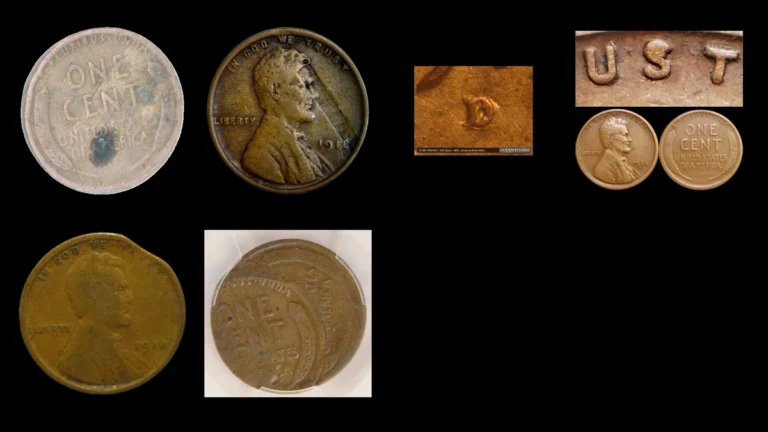
The rare report concerns cent designs impressed on a silver blank intended for a dime. Its smaller diameter would leave insufficient room for the cent’s full outer design.
USPatterns records an 1868 example reported by Don Taxay, without providing a photographed, graded specimen in the supplied account. That limits what can be claimed about the particular object.
How to Identify
Measure the actual coin and inspect how the outer design ends at its edge. Period dime specifications are 2.48 grams and 17.90 mm, but those are reference figures, not recorded measurements of the reported 1868 error.
Check for plating and a filed-down edge, then seek professional analysis of the metal. A blank need not already have the grooves found around a finished dime, so edge grooves are not a required starting clue.
What It’s Worth
The conditional estimate is $10,000–$40,000 for an authenticated 1868 specimen. The historical report itself does not establish a transaction at any point in that range.
The nearby-year 1869 example sold for $25,300 in January 2012 and was described as AU55, with light wear and old cleaning. Neither its grade nor its result should be assigned to an unverified pale 1868 penny.
2. 1868 Penny A Second Portrait Shifts Upper Right: Double Strike Error
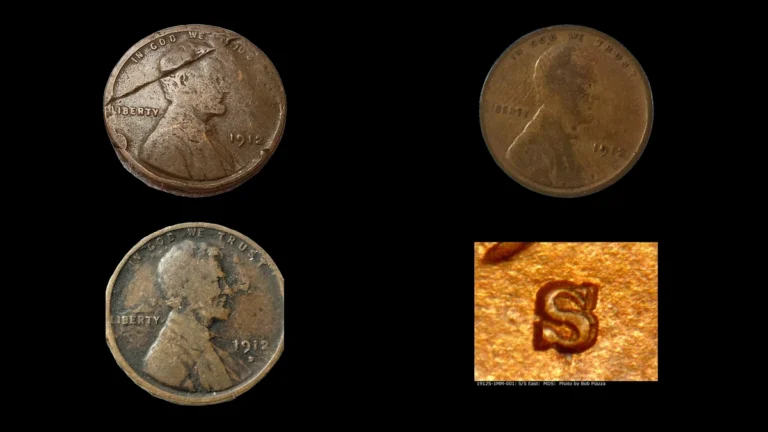
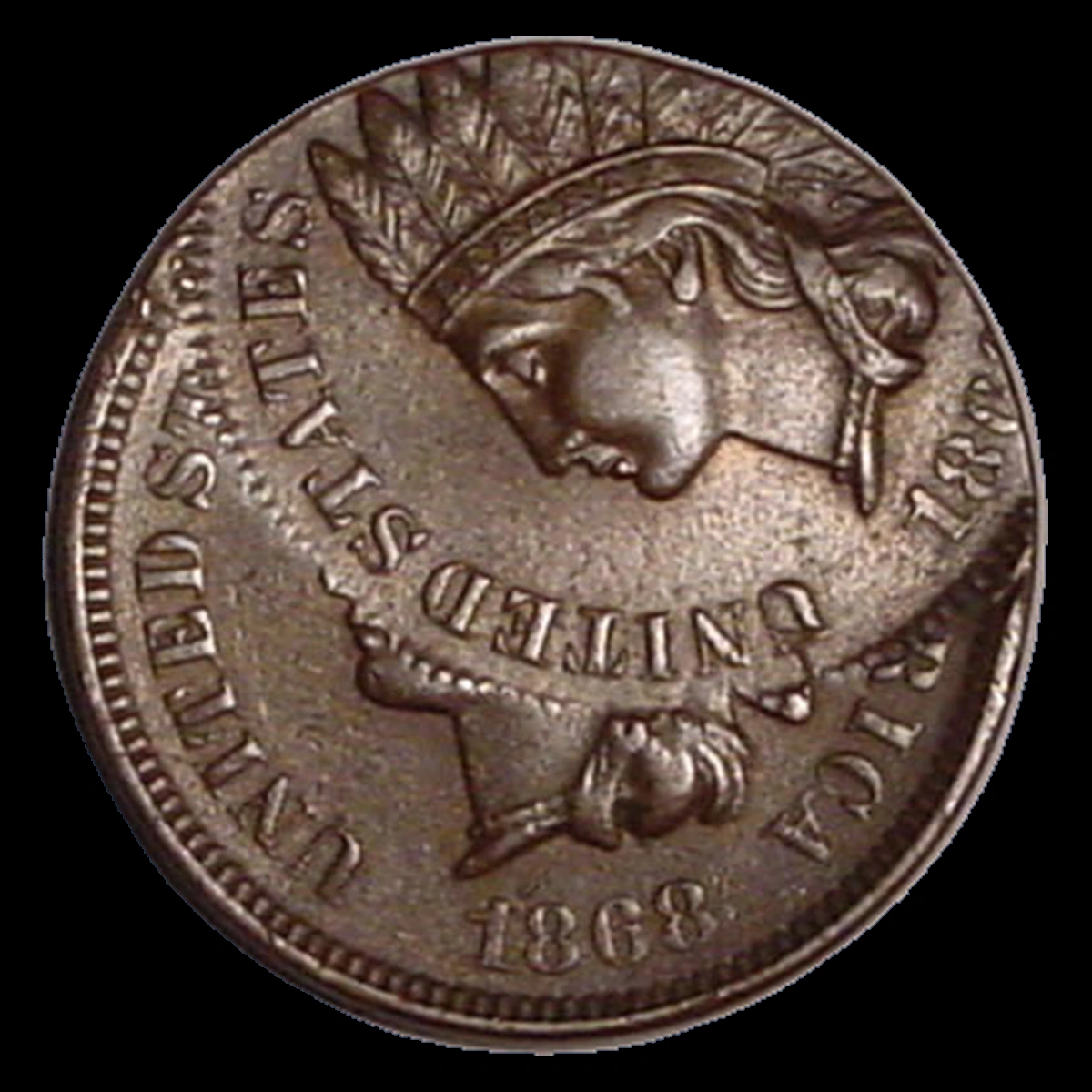
The recorded strike sequence begins with a centered design and ends with another impression about 35% off center toward 1 o’clock. Movement between blows placed the second image across the first.
How to Identify
Use the centered portrait as an anchor and trace recognizable details into the upper-right strike position. Several connected design fragments should support the same displacement.
Inspect the intersection of the impressions and the edge for joined or altered metal. A little flat ridge following a single letter does not explain this large two-image pattern.
What It’s Worth
Estimate $600–$5,000 for a genuine dated example, with clarity and condition affecting the result. The supplied account describes the 1868 sequence without assigning it a sale price.
An unworn 1908 double strike graded MS62 Brown sold for $4,080 in June 2024. It provides context for another Indian cent with two strikes, but its date and overlap differ.
3. 1868 Penny Lines or Broken Patches Reach the Rim: Die Cracks and Rim Breaks Error
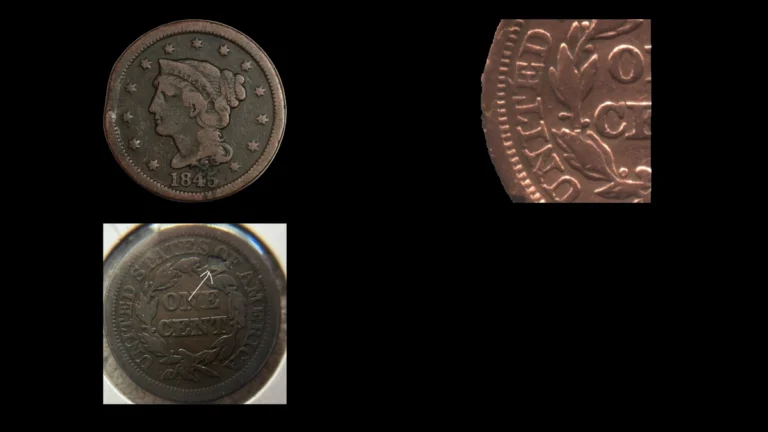
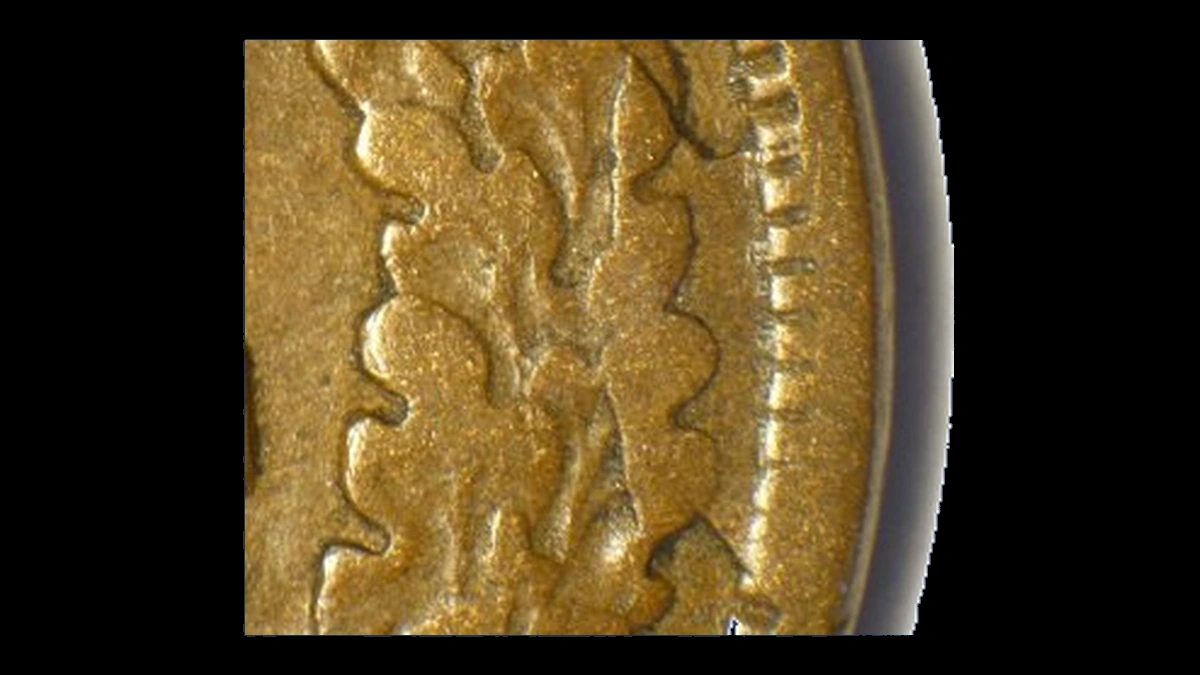
The reverse wreath and shield provide useful landmarks for these raised defects. Cataloged rim-break areas include roughly 2:45–3:30 and 11:15–12:45 on different examples, with additional crack paths beside the shield and through the wreath.
Coin metal entering a cracked die leaves a ridge. A larger broken section can leave a broad patch, although a fragment that remains in place may preserve some design within that area.
How to Identify
First establish whether the feature is raised and whether it meets the border. Compare the entire path or patch with the appropriate example, rather than relying on a shared clock position.
Retained breaks need not be smooth blank lumps because design can remain inside them. Check the neighboring edge for impact or squeezing that could have pushed metal inward after minting.
What It’s Worth
The estimated whole-coin range is $40–$1,000. Fine cracks on worn examples usually contribute less than a substantial recognizable break, and no individual result is supplied for each listed pattern.
Corrosion or damaged rims can obscure the original boundaries. The high estimate assumes both a desirable defect and suitable preservation.
4. 1868 Penny Unfamiliar Outlines Flank ONE CENT: Clashed Dies Error
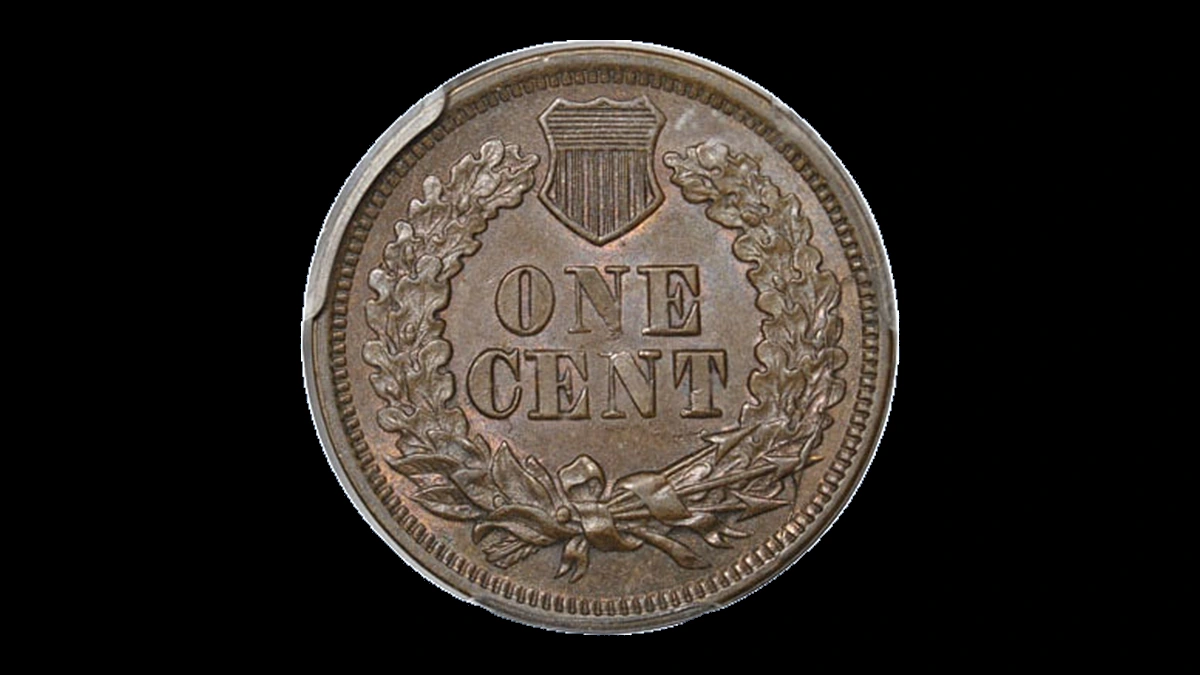
The spaces beside the reverse denomination can preserve traces of the front design. Those traces originate when the two dies, the steel stamping tools, contact each other without a blank between them.
Later coins copy the unwanted marks along with the normal reverse. The recorded 1868 example has traces around both sides of ONE CENT.
How to Identify
Keep a front-design photograph beside the reverse and identify the shape that could have transferred. Follow its bends through the clearest area rather than matching one short straight line.
Scratches and tool-polishing lines can occupy the same open spaces. A convincing relationship to the opposite design makes the clash identification useful.
What It’s Worth
A recognizable clash has an estimated whole-coin range of $40–$500. No specific 1868 sale is supplied here, and a faint trace may add little to the date’s underlying collector value.
5. 1868 Penny An Unusual Shape Repeats Inside the Shield: Tool-Making Defect Error
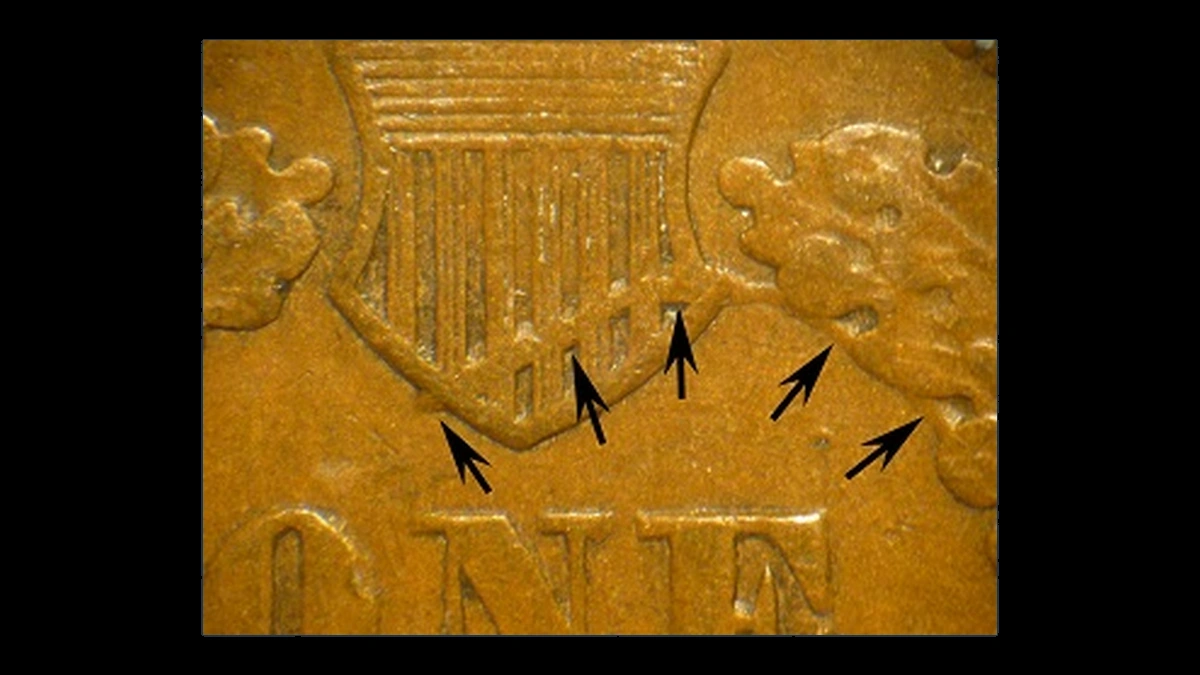
A larger shield-area mark is recorded on a circulation example, while fine line-like marks are reported on Proofs. These are different appearances and should not share an undifferentiated photograph.
The proposed cause is material trapped when a master design was pressed into the steel die, a defect called hub-through. Coins subsequently struck by that die reproduce the unwanted shape.
How to Identify
Compare the boundary of the shield defect against its fixed surrounding details on another coin from the same die. An exact repeating shape supports an origin in the tool, rather than loose debris affecting just one coin.
Use circulation examples for the larger mark and Proof references for the finer reported lines. A Proof is a specially made collector coin; polishing an ordinary cent does not give it that status.
What It’s Worth
Circulation examples have an estimated range of $40–$1,500; Proofs with a small tool-making mark are estimated at $500–$3,500. Both ranges price the entire coin.
No supplied transaction isolates the value of these marks. Much of a Proof’s price concerns its manufacture and preservation, so that range cannot be transferred to a worn circulation coin.
6. 1868 Penny Headband Letters Have Repeated Outlines: Doubled Die Error
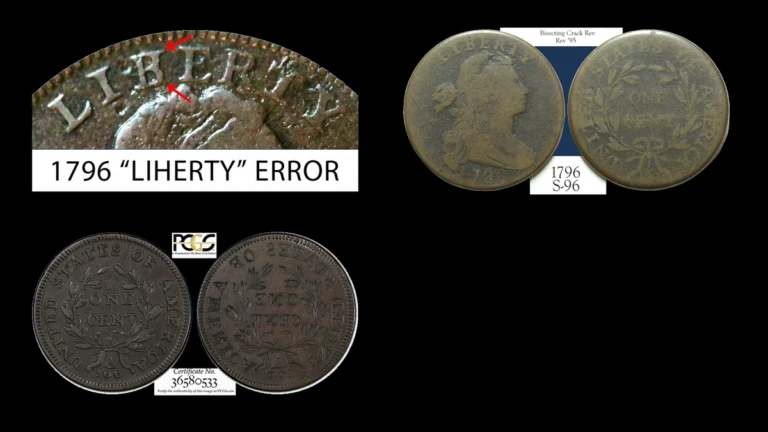
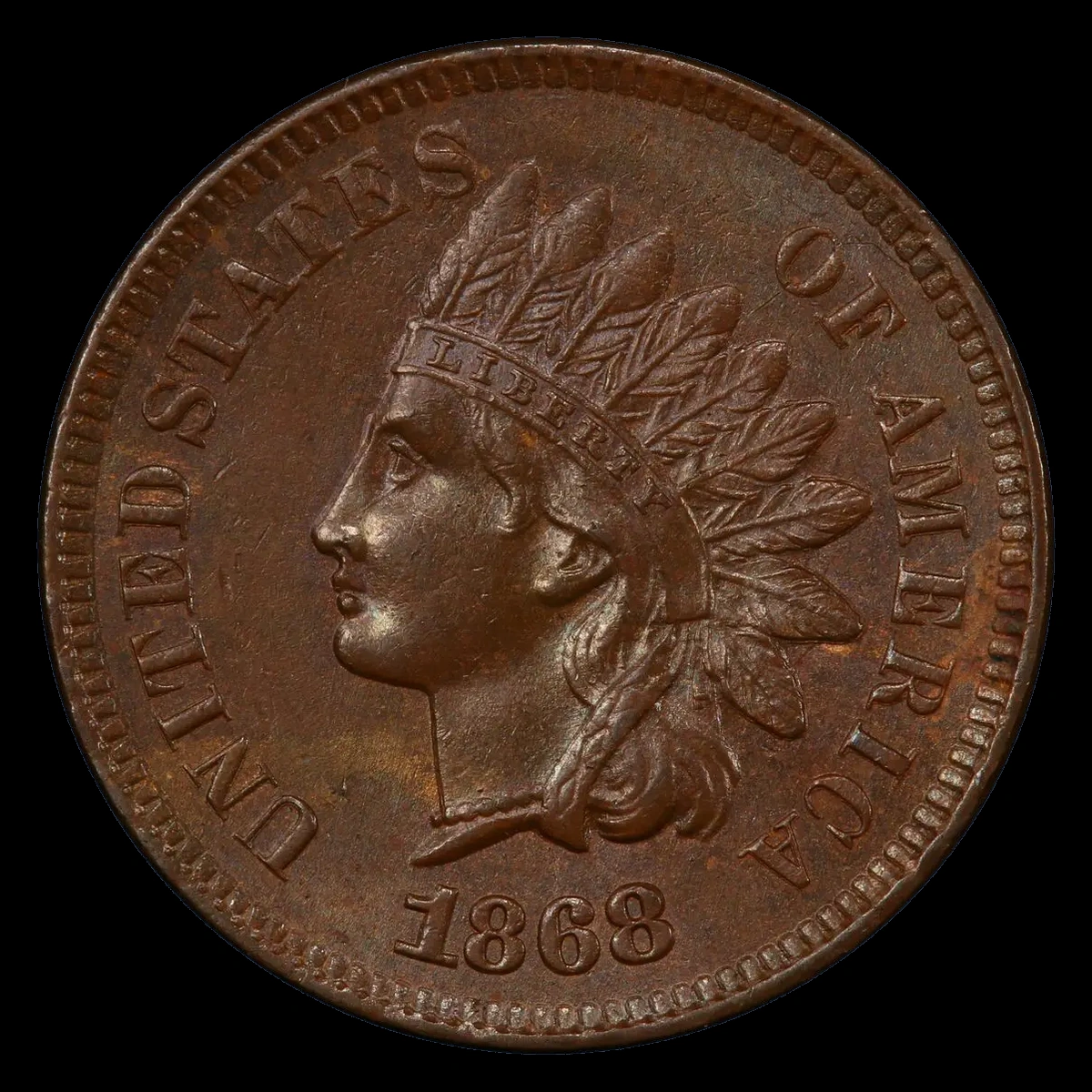
One recorded 1868 pattern affects RTY in the headband and the small designer’s L at the portrait’s base. Another concerns IBERTY.
These repeated details were part of the die’s design before the coins were struck. The patterns should be matched separately rather than combined into a single list of required doubled letters.
How to Identify
Choose the pattern first, then follow its raised repetition around letter corners under changing light. A reflection shifts with the light; a low flat shelf may indicate movement during striking.
For the RTY pattern, include the small L in the comparison. A repeated date stroke cannot substitute for the named headband and initial details.
What It’s Worth
A clearly matched 1868 doubled die has an estimated range of $100–$2,500. Strong separated detail and good preservation support higher comparisons than faint doubling on a worn coin.
An 1887 FS-101 doubled-front cent graded unworn MS63 Brown brought $1,380 in June 2025. That sale concerns another date and does not establish a result for either 1868 pattern.
7. 1868 Penny Extra Digits Hide Below the Date: Misplaced Date Error
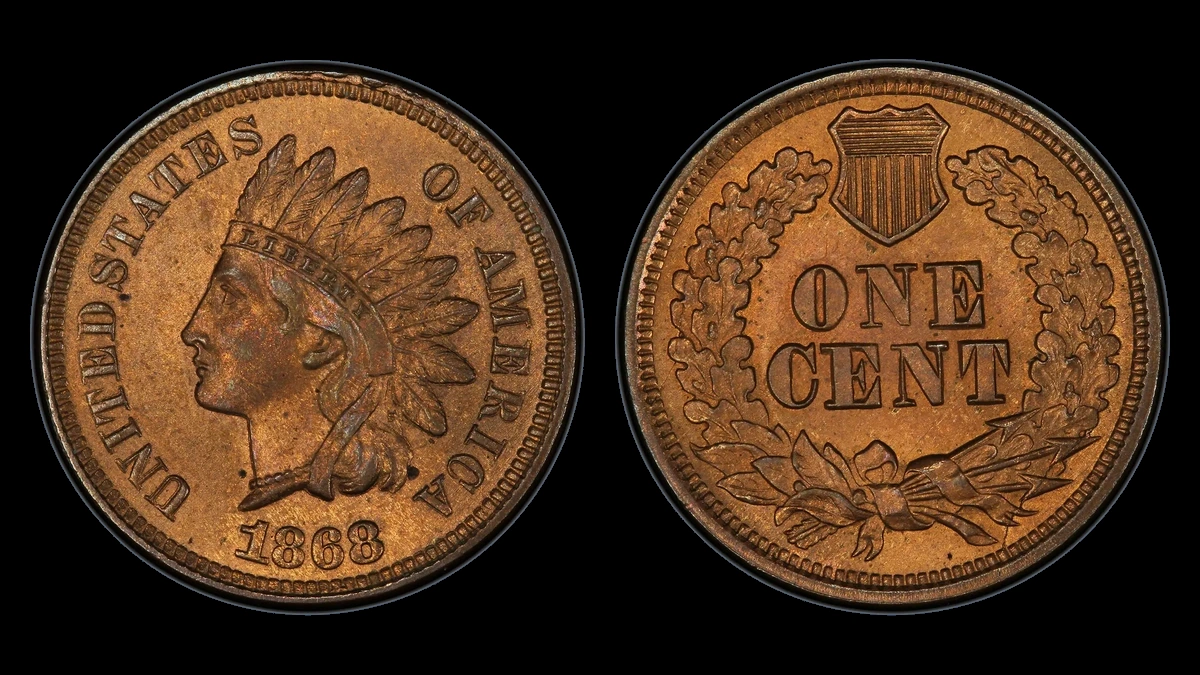
Look among the border teeth beneath 1868 for fragments that resemble a 6, an 8, or a longer group of numbers. Different reported forms preserve different parts of a date punch applied outside its intended position.
How to Identify
Keep the normal date upright while comparing the extra fragment with an identified 1868 variety. The neighboring teeth establish its position more precisely than the fragment’s general shape.
Low-angle light can separate a numeral curve from a damaged tooth. Do not combine the 6 from one reference and the 8 from another into a variety that the coin does not show.
What It’s Worth
The estimated range is $75–$2,000 for identifiable whole coins. A recorded $1,187 eBay result from December 2021 concerns a 1908 FS-301 graded MS65 Red and Brown, an unworn different-year comparison.
Clear fragments and attractive surfaces strengthen the match. An irregular border tooth without recognizable numeral detail does not support the same estimate.
8. 1868 Penny Earlier Strokes Remain Around the Main Date: Repunched Date Error
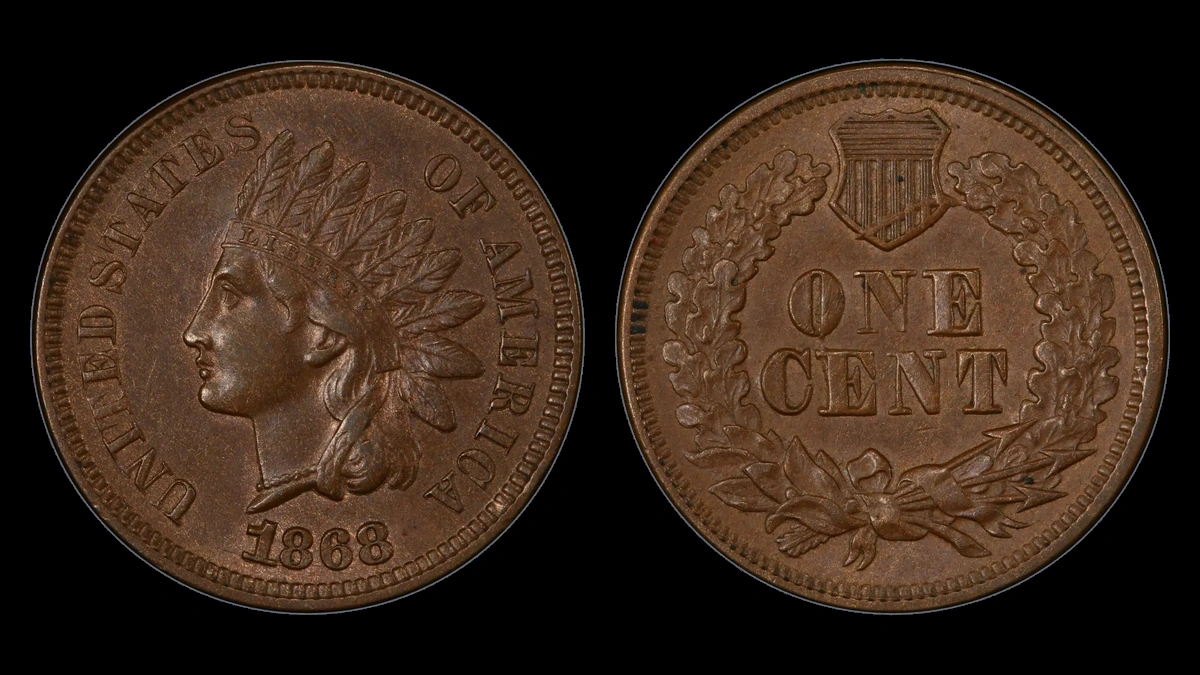
Inside loops and along numeral edges, an earlier date impression may survive beside the stronger final one. This occurred when the separate date punch shifted between applications to the die.
Several 1868 forms have been recorded. Their extra strokes differ in direction and placement, even though the same preparation process explains them.
How to Identify
Compare the date with both an ordinary example and one specific variety photograph. Trace recognizable digit shapes instead of treating a thick numeral as sufficient evidence.
All the visible extra strokes should agree with that one pattern. Repunching the date does not require a second portrait or a second strike on the finished coin.
What It’s Worth
Matched examples have an estimated whole-coin range of $50–$1,500. An unworn 1872 FS-301 graded MS65 Red and Brown sold for $2,160 in January 2018, but that stronger different-date result is not an 1868 sale.
Conclusion
Start an 1868 examination with evidence that can be recorded: size, weight, the placement of overlapping designs, and close photographs of the exact marks. Those observations help separate metal errors from varieties created in the stamping tools.
The reported silver-blank rarity remains conditional without an authenticated specimen comparison. For bronze cents, retain the distinction between circulation and Proof coins, and value each complete coin according to its identified feature and preservation.