Rare 1894 Penny Errors (List & Pictures)
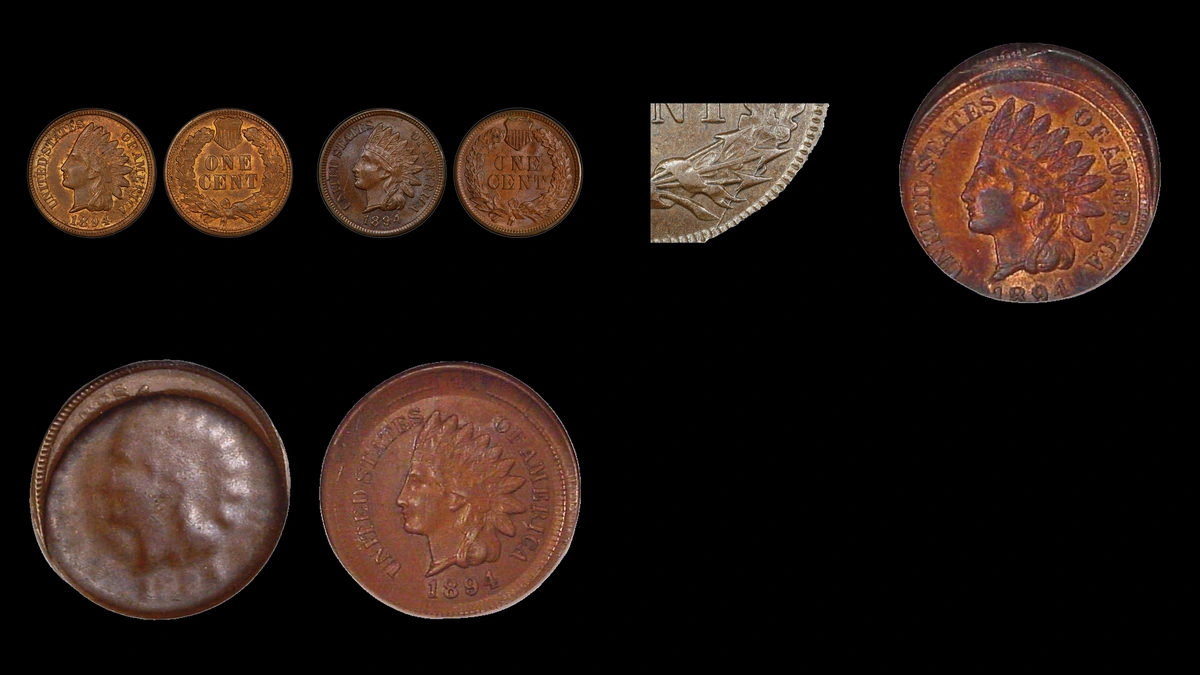
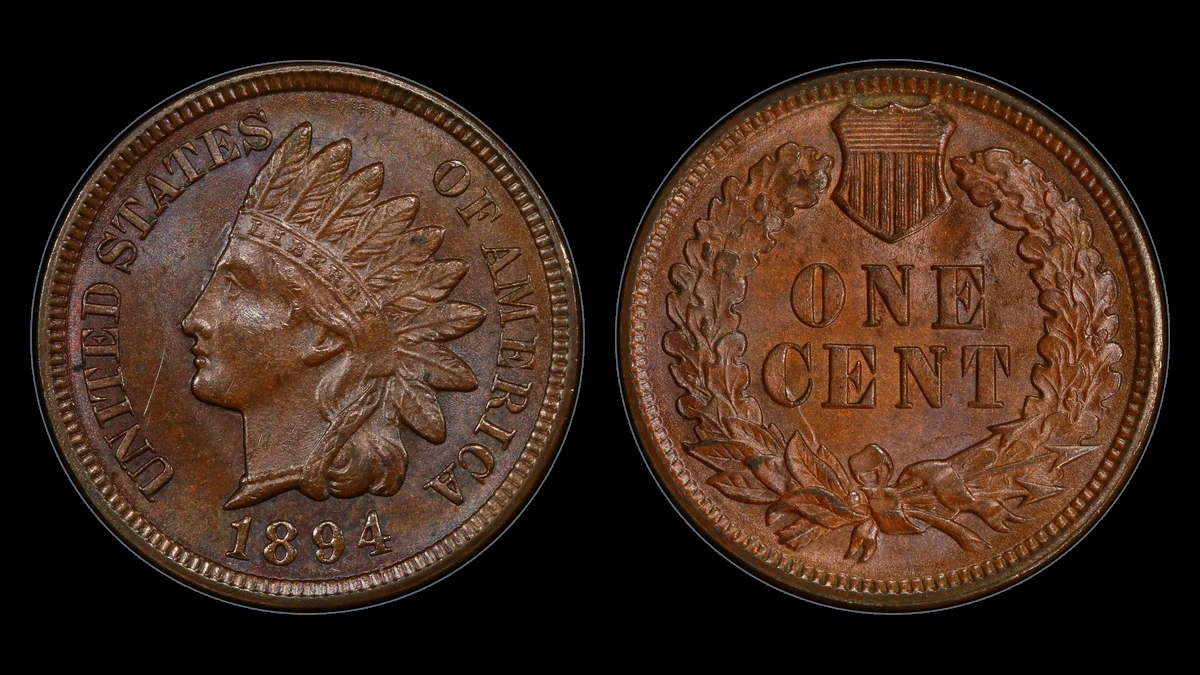
An exceptionally preserved 1894/1894 cent sold for $30,000 at Heritage in August 2019. Its MS66 Red grade is central to that record among 1894 penny errors.
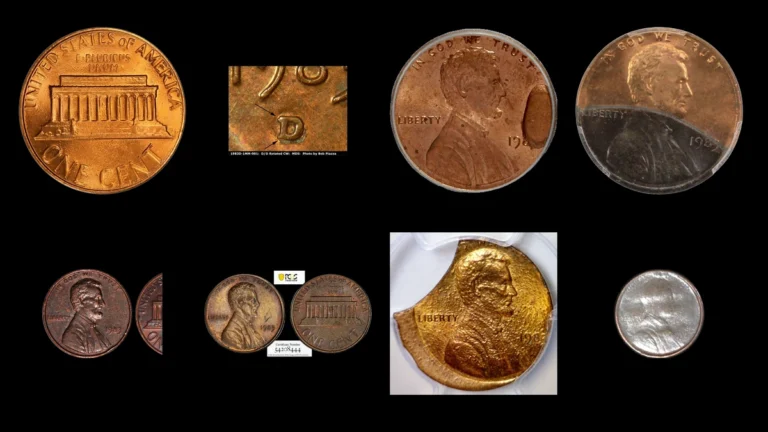
Estimated whole-coin values range from $5 to $30,000. Begin with the date and reverse rim, then examine missing metal, depressions, and repeated designs; several of the documented coins combine more than one feature.
| What you see | Possible category | Estimated value |
|---|---|---|
| Extra strokes beside date | Repunched date | $50–$30,000 for ordinary strikes |
| 94 fragments below date | Misplaced date | $40–$1,500 |
| Raised reverse boundary | Crack or retained break | $5–$1,000 |
| Small missing edge | Clip | $50–$500 considered alone |
| One displaced design | Off-center strike | $100–$750 |
| Two impressions | Double strike | $250–$3,500 |
| Large depression | Indent | $300–$2,500 |
| Expanded edge and mirror design | Broadstrike with brockage | $500–$5,000 |
A standard bronze 1894 cent weighs about 3.11 grams and is 19.05 millimeters across, with a plain edge. Record actual measurements on safely accessible coins, recognizing that clips remove metal while displaced strikes can simply reshape it.
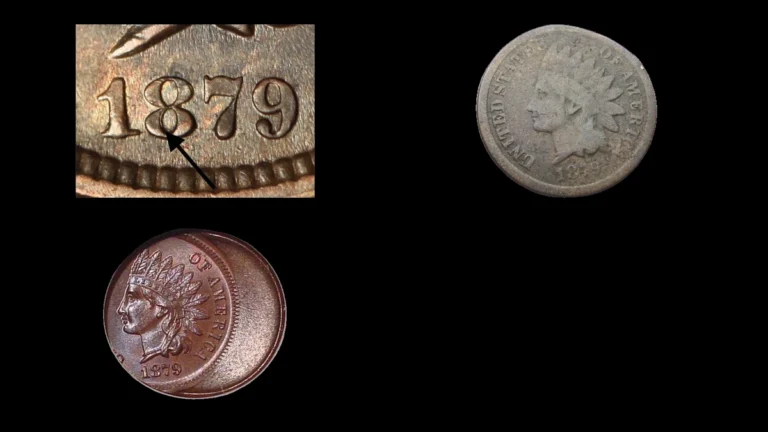
1. 1894 Penny Extra Numerals beside 1894: Repunched Date Error
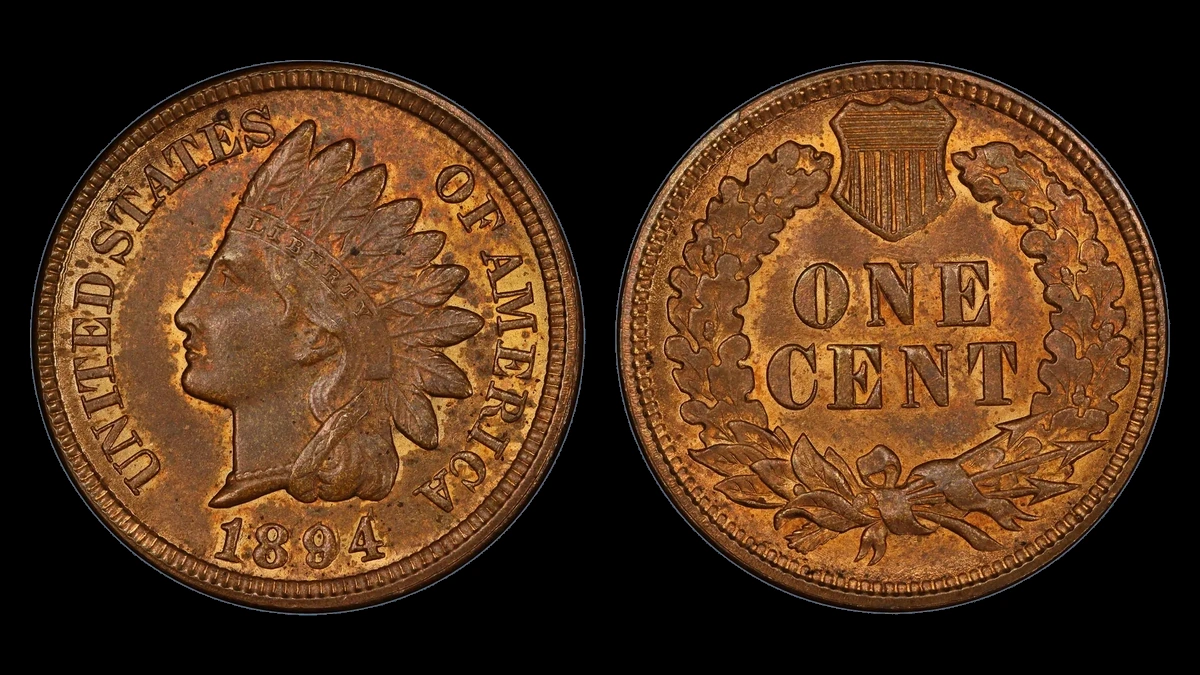
The famous ordinary-strike 1894/1894 variety has earlier strokes above and right of the normal digits. A second-looking 9 and an upper point beside 4 are useful starting clues.
How to Identify
Photograph all four numerals and compare the upper-right remnants with Snow-1, also called FS-301. The date punch entered the die in more than one position; the coin itself did not need a second strike.
A separate Proof variety has an earlier stroke below the projecting tip of 1. Establish that specially made collector finish independently, then use its own diagnostic rather than the ordinary variety’s pattern.
What It’s Worth
Ordinary 1894/1894 cents are estimated at $50–$30,000, while the separate Proof repunch has a whole-coin estimate of $300–$3,000. These ranges include condition and finish, not just an extra date stroke.
The PCGS MS66 Red example brought $30,000 at Heritage in August 2019. Its exceptional red surfaces and preservation are far above the usual circulated comparison.
2. 1894 Penny Another 94 Hides in the Border: Misplaced Date Error
Snow-2 preserves portions of 9 and 4 among the teeth below the main date. The date punch struck the die too low before the properly positioned impression was completed.
How to Identify
Compare the two digit fragments and their spacing beneath the normal 94. Regular border teeth and irregular lumps do not become numbers simply because they occupy that area.
MPD-001 and FS-402 are additional identifiers for this misplaced-date feature. It differs from the close upper-right repunching on Snow-1.
What It’s Worth
Identified Snow-2 examples are estimated at $40–$1,500. Clear fragments and stronger preservation support the higher comparisons.
PCGS records approximately $1,028 for an MS64 Red example at Heritage in February 2014. That result belongs to the misplaced 94 rather than the record-priced 1894/1894 repunch.
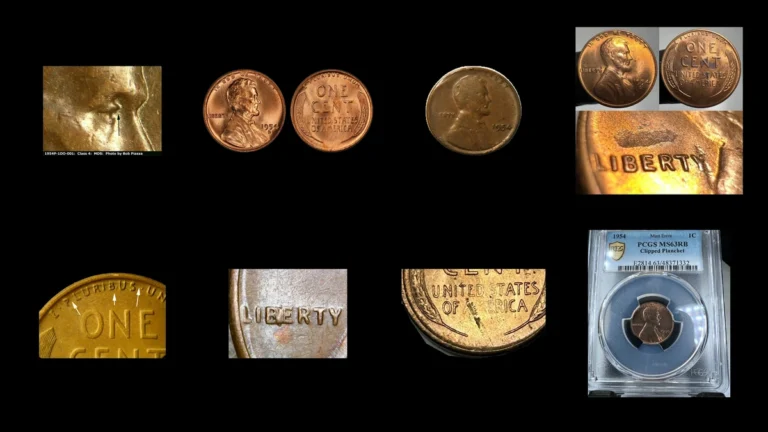
3. 1894 Penny A Reverse Crack Outlines a Section: Retained Die Break Error
One repunched-date die pairing develops a raised reverse crack near 10:45. A later stage outlines a larger section from 9:15 to 10:45 while the broken die piece remains in position.
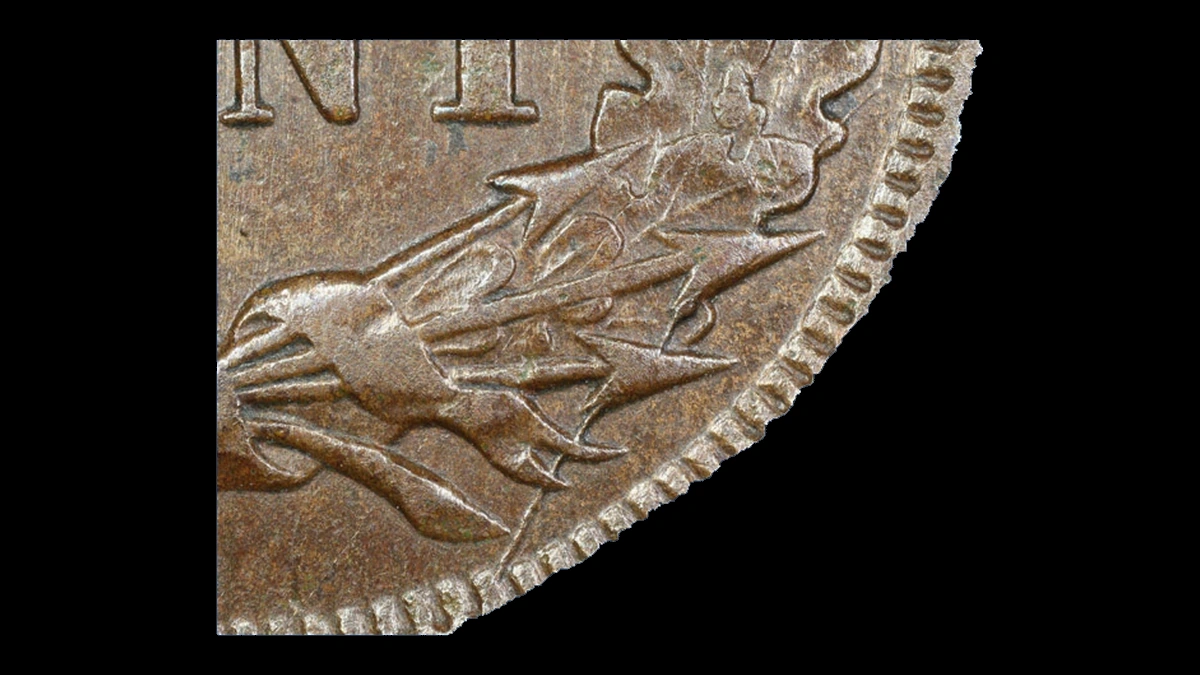
How to Identify
Follow that boundary and look for surviving design inside the retained section. A design-free lump from a piece that fell out would have a different appearance.
Another recorded crack runs between 3:15 and 5:15 and needs its own comparison. Check the corresponding front date and examine suspicious patches for added metal or edge squeezing.
What It’s Worth
Estimated values span $5–$1,000, with modest cracks around $5–$100 and more visible retained breaks around $50–$1,000. The actual die stage and condition matter.
On a valuable repunched-date coin, the date variety remains part of the same valuation. Adding the maximum break estimate to the maximum repunched-date estimate would overstate the comparison.
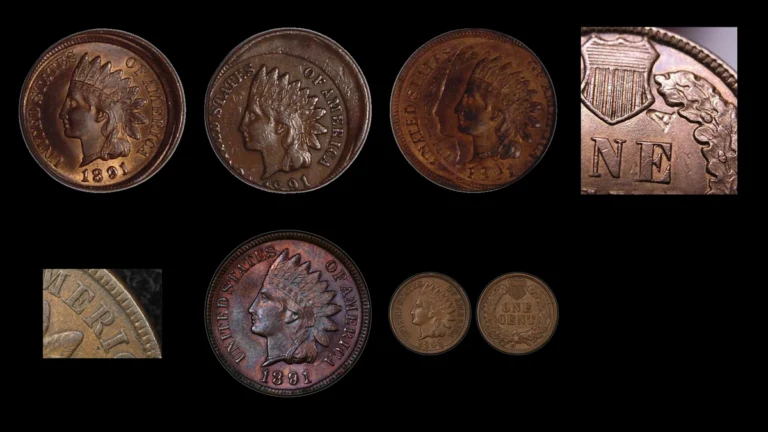
4. 1894 Penny A Small Gap below the Design: Clipped Blank Error
The documented clipped 1894 cent has a small missing section near six o’clock and also received two strikes. Its date remains readable beside the gap.
How to Identify
Inspect the transitions between the gap and the struck rim for natural formation around missing metal. Later cutting can leave grooves through an already finished edge.
The ANACS MS60 Red-Brown example has a far off-center second strike near the top. Separate the lower clip from the upper distortion rather than assuming both irregular areas are missing blank metal.
What It’s Worth
A modest genuine 1894 clip considered alone is estimated at $50–$500. The documented clipped double strike needs a separate combined whole-coin assessment.
No isolated sale price is supplied for its small gap. The much more conspicuous second impression can drive a greater portion of that coin’s value.
5. 1894 Penny One Image Sits Low on the Disc: Single Off-Center Strike Error
The published example is 5% off center toward six o’clock. It has one reported displaced design, unlike the separate coins with additional blows.
How to Identify
Compare straight-on views of both faces and examine the lower design boundary. The small shift can be harder to recognize than a large unstruck crescent.
Check the rest of the coin for a coherent second portrait or set of letters. If one exists, the single-strike explanation no longer describes the complete sequence.
What It’s Worth
Identifiable single off-center 1894 cents are estimated at $100–$750. Preservation and how much date and design survive affect the comparison.
Mint Error News listed the NGC MS62 Brown 5% example at $225. That is a published listed price, not a confirmed auction realization.
6. 1894 Penny Two Impressions Occupy Different Positions: Double Strike Error
Repeated strikes need not overlap. One published 1894 coin has a first strike 5% off center toward eight o’clock and a separate second impression 95% off center toward twelve.
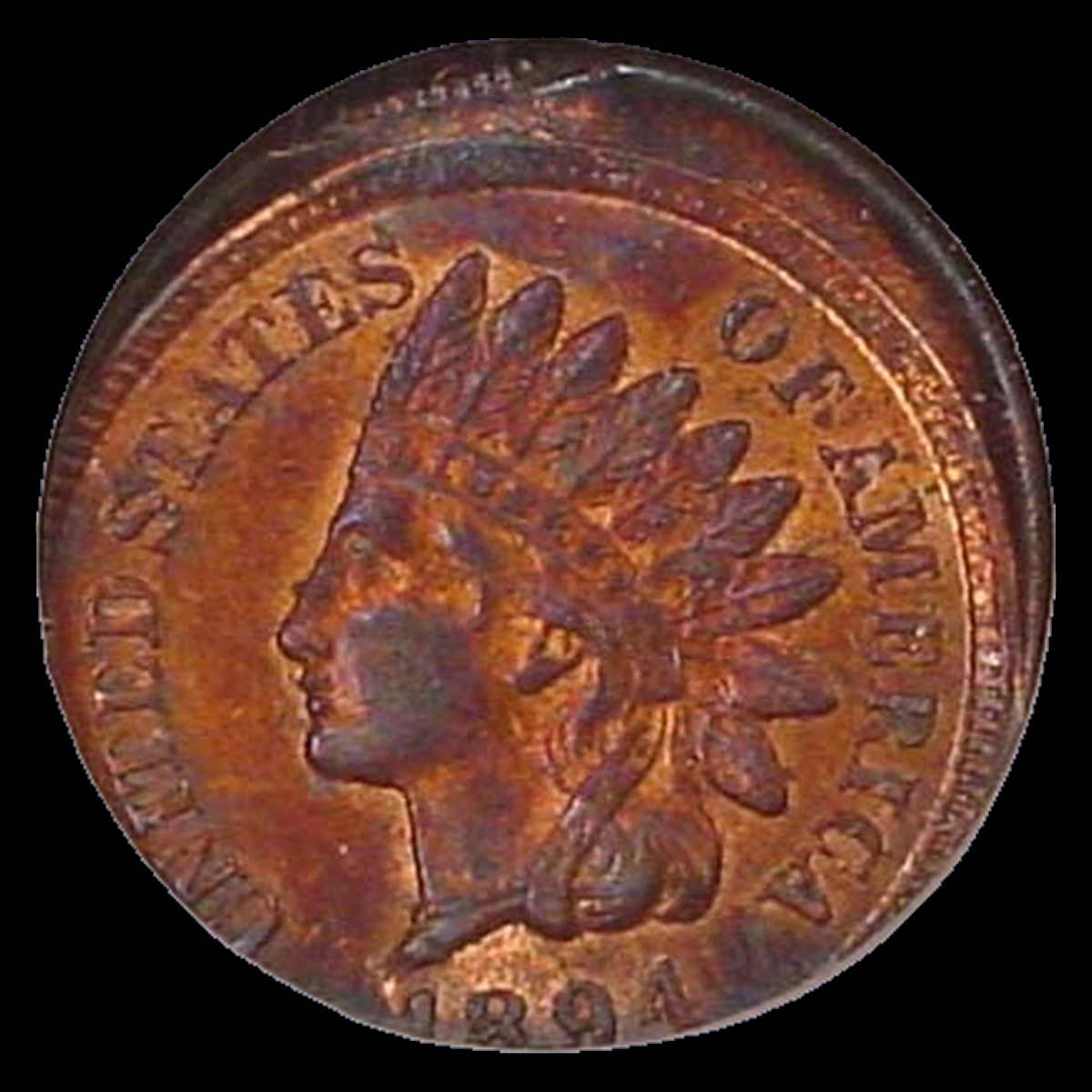
How to Identify
Keep the whole outline in view so the tiny separate second impression is not cropped out. That example is NGC MS61 Red-Brown.
A different NGC VF30 coin has a second strike 75% off center and two dates. Trace the related lettering and portrait for each image rather than combining the two specimens’ directions or grades.
What It’s Worth
Confirmed 1894 double strikes have an estimated range of $250–$3,500. Layout, readable overlap, preservation, and accompanying clips affect the total.
The NGC VF30 75% example sold for $517.50 at Heritage in January 2008. Its worn condition is part of that useful same-year comparison.
7. 1894 Penny Most of the Front Is Depressed: Large Indent Error
The reported NGC MS64 Brown coin has a 90% front indent. An overlapping object, such as another blank, can block the die and press a broad depression into the coin during striking.
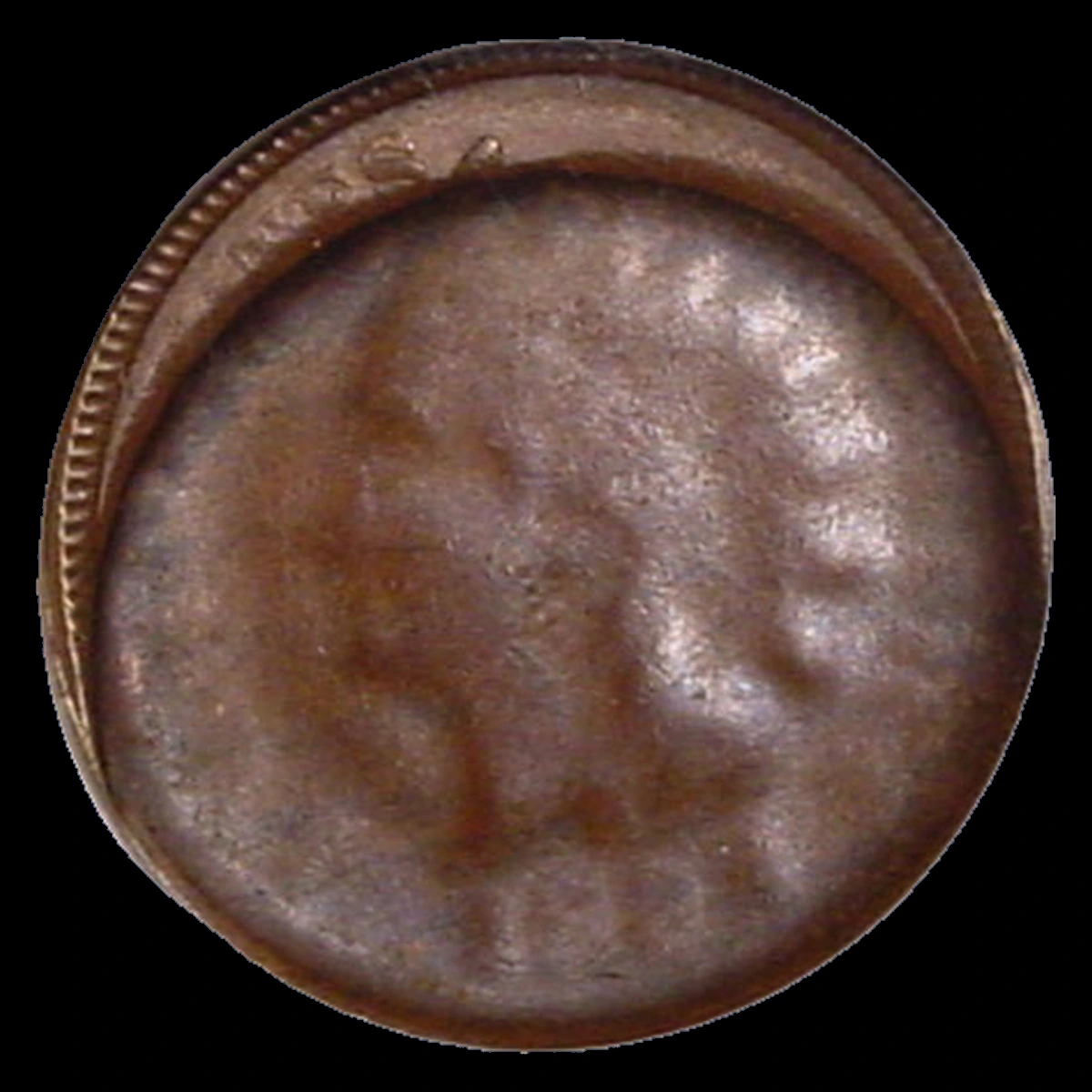
How to Identify
Examine the depression’s boundary together with the reverse and edge. A later blow may cut or crush completed detail and leave damage that does not fit the original strike.
The report does not identify the obstructing object’s metal. If the recessed area contains recognizable reversed lettering, consider a brockage rather than assuming a plain blank-shaped indent.
What It’s Worth
An authenticated large front indent is estimated at $300–$2,500. Its original boundary, surviving design, and condition matter more than the percentage alone.
No realized sale is supplied for the published MS64 Brown specimen. The range is an estimate for the whole coin.
8. 1894 Penny A Wide Edge with a Sunken Mirror Image: Broadstrike and Brockage Error
The recorded NGC MS62 Brown example combines expanded metal with a reversed design on the back. The collar failed to contain the spread, while another struck coin impressed its raised design into the blank.
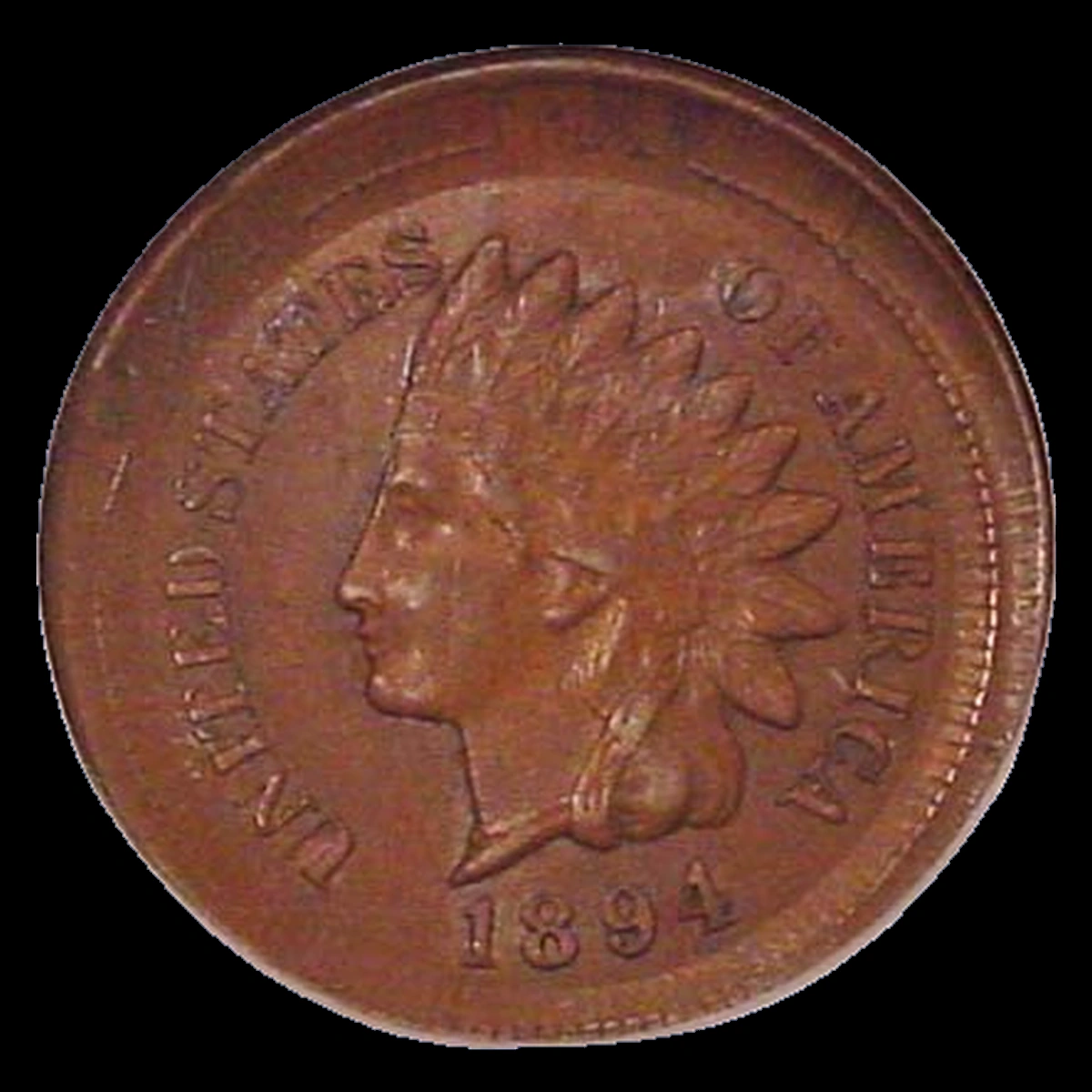
How to Identify
Check that the reverse image is both recessed and mirror-reversed. Weak ordinary lettering remains in its normal direction and cannot establish brockage.
Inspect the complete expanded outline and edge for later squeezing or filing. The strike-related spread and mirrored impression must make sense together on the same coin.
What It’s Worth
The combined-error estimate is $500–$5,000 for comparable authenticated 1894 pieces. The clarity of the mirror design and preservation affect the comparison.
No final sale is supplied for the published MS62 Brown coin. A broadstrike without a recognizable brockage should not inherit this combined range.
Conclusion
Keep small date differences separate from the larger movements of a coin in the press. A misplaced 94, a close date repunch, and two whole impressions each require their own evidence.
The $5–$30,000 estimates cover modest cracks through exceptional red varieties. When two errors share one cent, assess that actual combination and condition once, with listed prices clearly distinguished from completed auction sales.