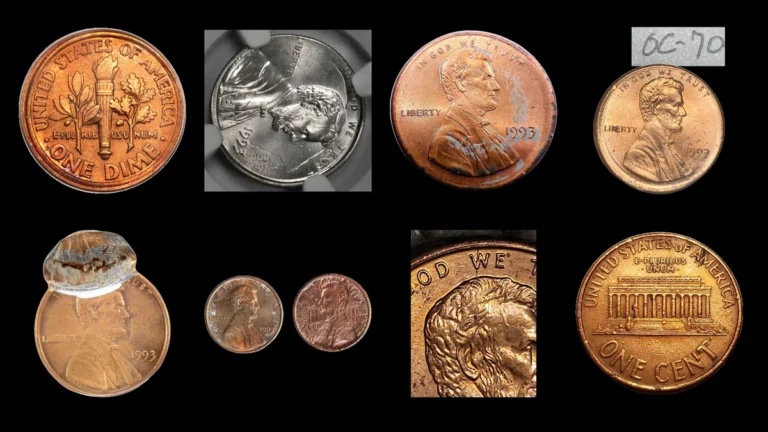
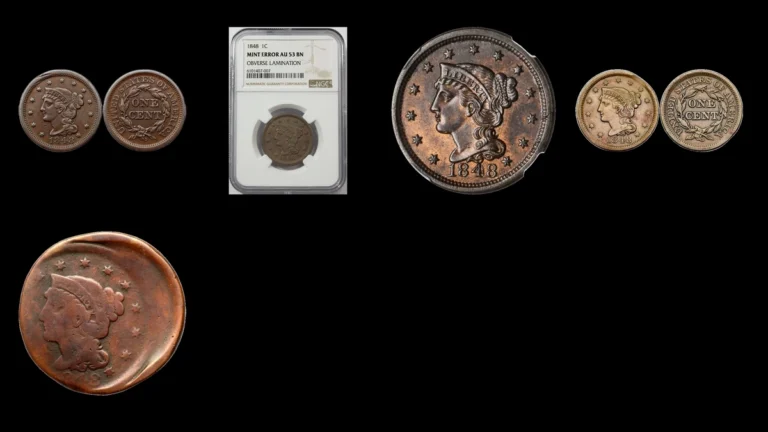
Rare 1857 Flying Eagle Penny Errors (List & Pictures)
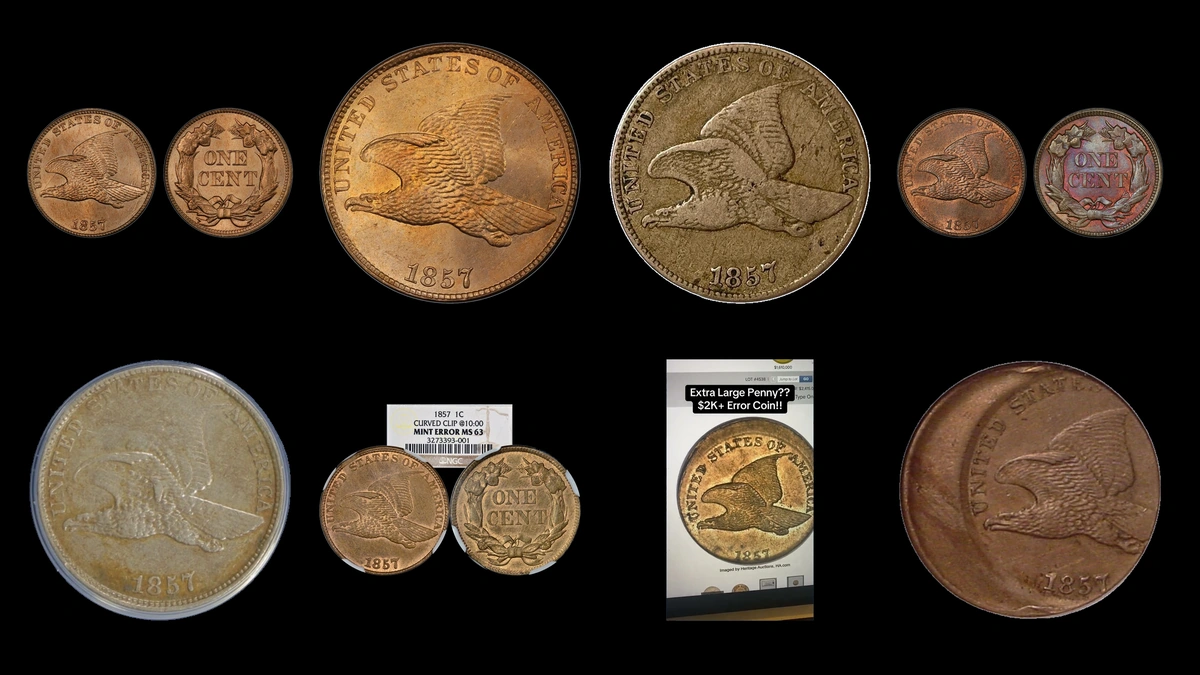
A Flying Eagle cent can carry traces of a larger coin’s design without having been struck on that coin’s metal. The distinction matters for 1857 Flying Eagle cent errors, which include clashes with dies for three other denominations.
A half-dollar clash example sold for $8,625 in January 2007, within an overall estimated range of $30–$15,000. Inspect unusual outlines, date details, and the coin’s shape separately before selecting a price comparison.
| Visible evidence | Possible error | Estimated range |
|---|---|---|
| Traces from a larger coin | Clash between denominations | $150–$15,000 |
| Repeated inscription and eagle details | Doubled die | $150–$5,000 |
| Extra date strokes or hidden digits | Repunched or misplaced date | $50–$3,500 |
| Raised wing lump or rim patch | Die chip or cud | $30–$2,000 |
| Missing metal or altered strike outline | Clip, broadstrike, or off-center strike | $100–$10,000 |
| Reverse nearly sideways | Rotated dies | $80–$1,200 |
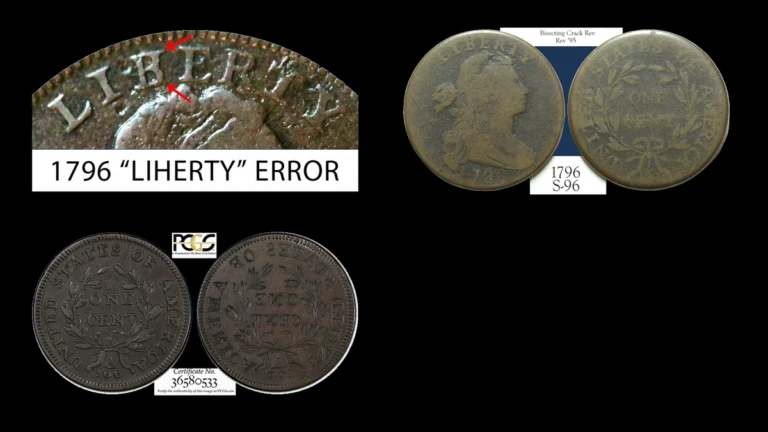
1. 1857 Penny Another Denomination’s Design Appears Faintly: Die Clash Error
The three recorded cross-denomination varieties involve a $20 gold-piece die, a half-dollar die, and a quarter die. Contact between dies without a blank transferred outlines that later appeared on Flying Eagle cents.
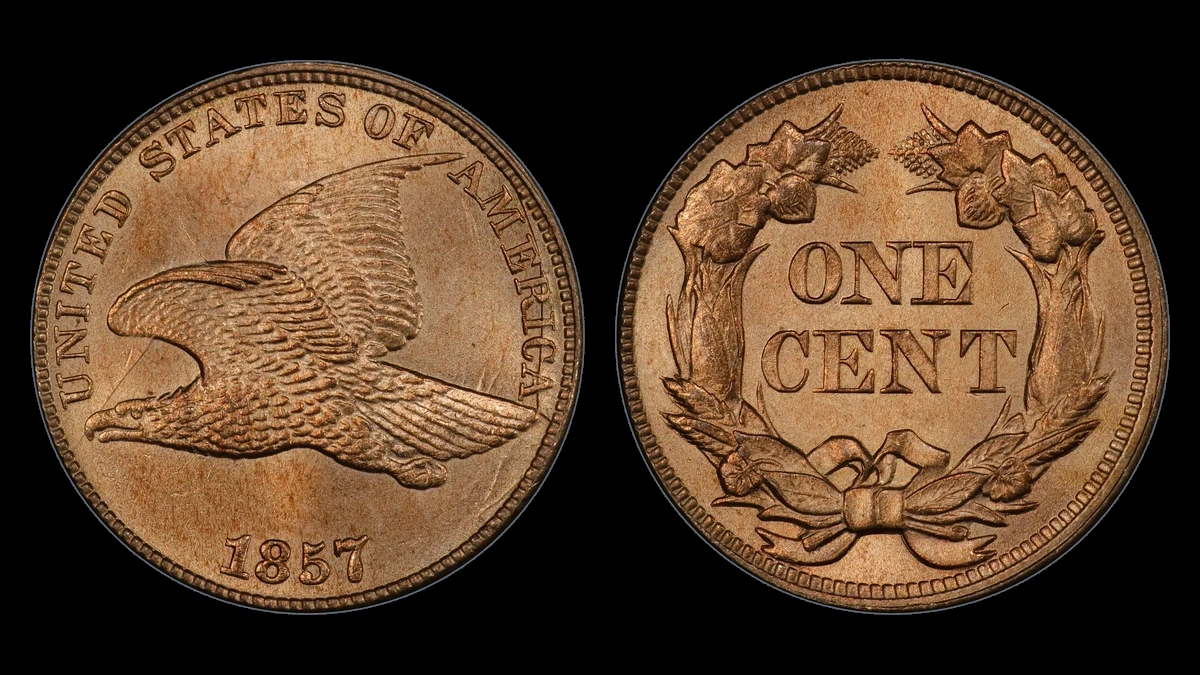
How to Identify
For the quarter clash, look for the eagle’s neck through ONE and shield lines through CEN. The $20 clash has portrait traces around AMERICA and below the cent eagle’s beak, while the half-dollar variety requires its own different portrait match.
Trace enough of the foreign design to identify which denomination supplied it. These are extra die-transferred marks on a copper-nickel cent, not proof of a gold or silver planchet or another full strike.
What It’s Worth
$150–$15,000 is the estimated range across the different clashes and conditions. The specific attribution is crucial because the three varieties have separate markets.
An NGC MS66 half-dollar clash sold for $8,625 in January 2007, while an MS62 quarter clash brought $1,380 in February 2006. PCGS’s review of the $20 clash discusses its premiums, which should not be transferred to either of those other varieties.
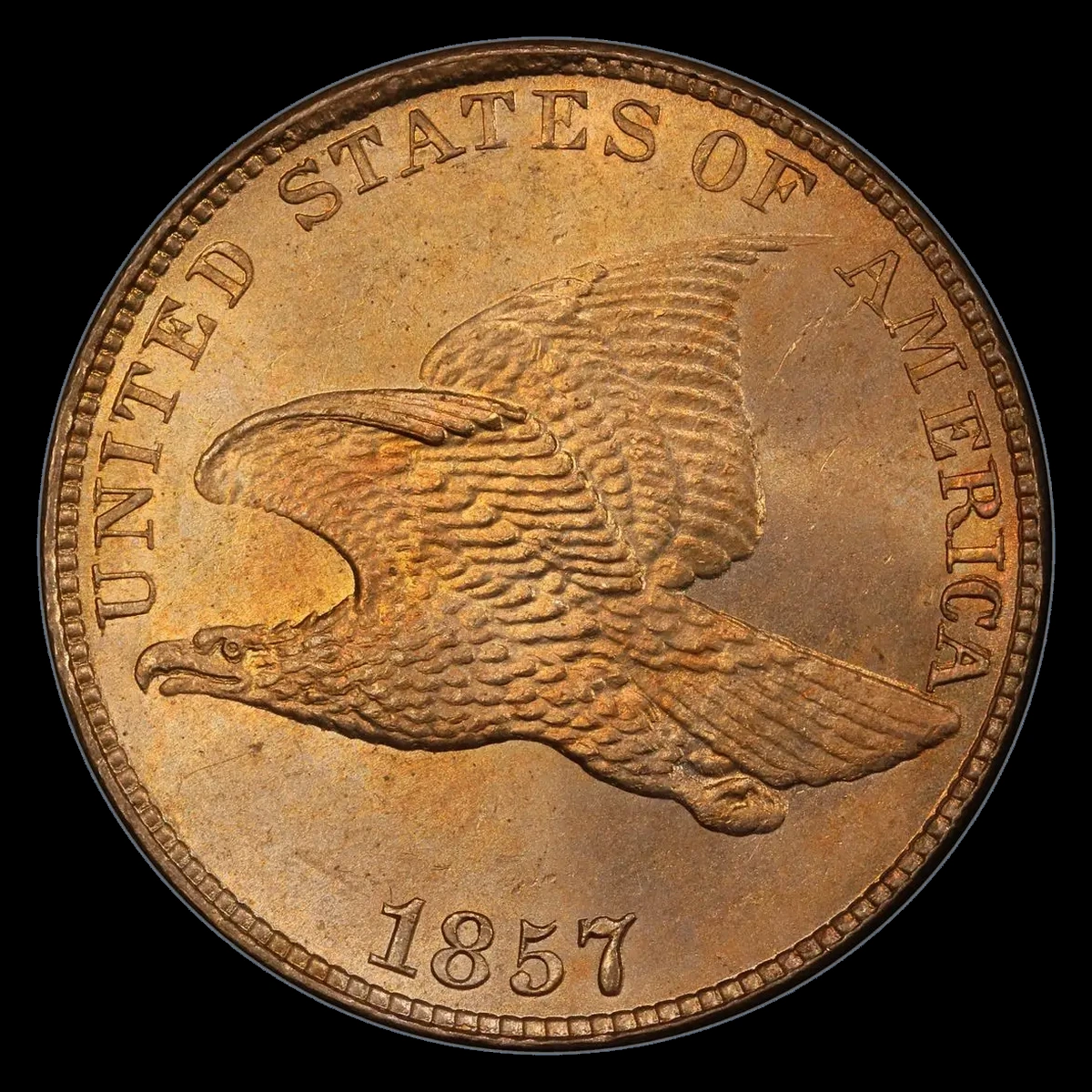
2. 1857 Penny Several Eagle and Letter Details Repeat: Doubled Die Error
The described Snow-3 pattern links doubling in the inscription with the eagle’s eye, beak, tail, and border teeth. A slight clockwise difference while the die’s design was being formed created repeated details that appeared together on its coins.
How to Identify
Follow the same rotational pattern from letters into recognizable eagle features. Several matching raised outlines provide better evidence than a thick letter or a flat shelf in isolation.
Check border teeth where wear has left them readable. Do not force an attribution from an indistinct rim, and use the correct variety photograph rather than treating all 1857 doubled dies as Snow-3.
What It’s Worth
$150–$5,000 is the estimated range for identified doubled dies, from worn to sharply preserved examples. Visibility across several design areas makes a comparison more convincing.
An 1857 Snow-5, also called FS-104, graded PCGS MS64 sold for $2,820 in January 2016. It is a same-year but different-variety result, not the auction record for the clockwise Snow-3 pattern.
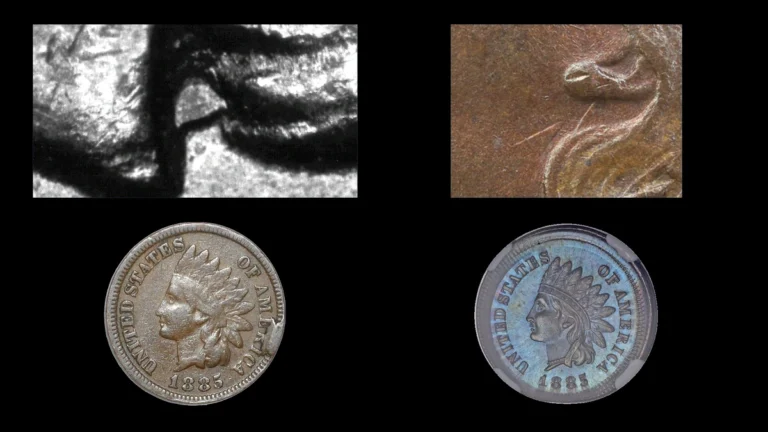
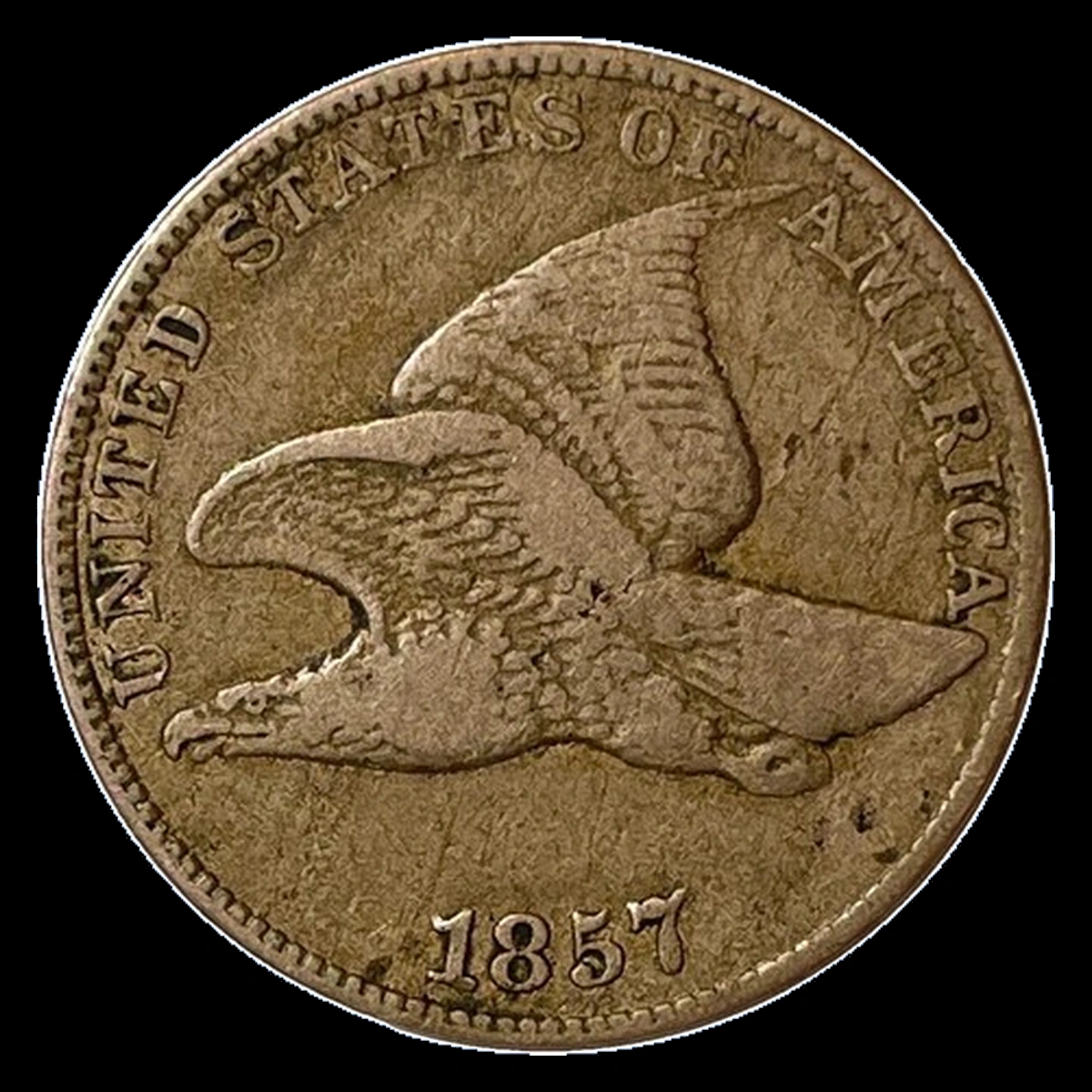
3. 1857 Penny Small Digit Fragments Hide Within the Bird: Misplaced Date Error
Snow-16 places unwanted date-punch traces in the eagle’s neck and chest. The date was mistakenly punched in that area twice before its proper placement below the bird.
How to Identify
Use the normal date as a guide to numeral shapes while comparing the fragments within the upright eagle. Their precise position matters more than a general impression of extra lines in the feathers.
A wing chip accompanies this variety and may remain conspicuous after wear obscures the digits. The pictured Snow-16 example provides a comparison, but the chip alone cannot replace the misplaced-date evidence.
What It’s Worth
$50–$2,500 is the estimated range for clearly identified Snow-16 coins. Strong surviving fragments and attractive unworn surfaces support different comparisons from heavily worn pieces.
An ANACS example described with both the misplaced date and interior break sold for $161 in July 2003. That is one complete-coin price, while the seller’s MS63 example supplies a condition reference without a quoted completed sale.
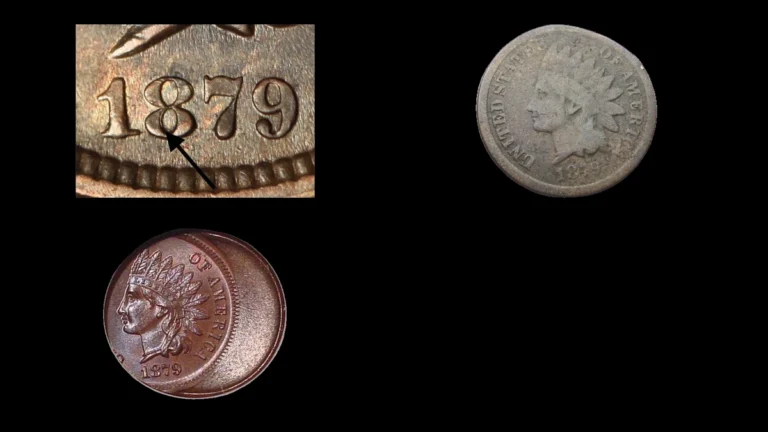
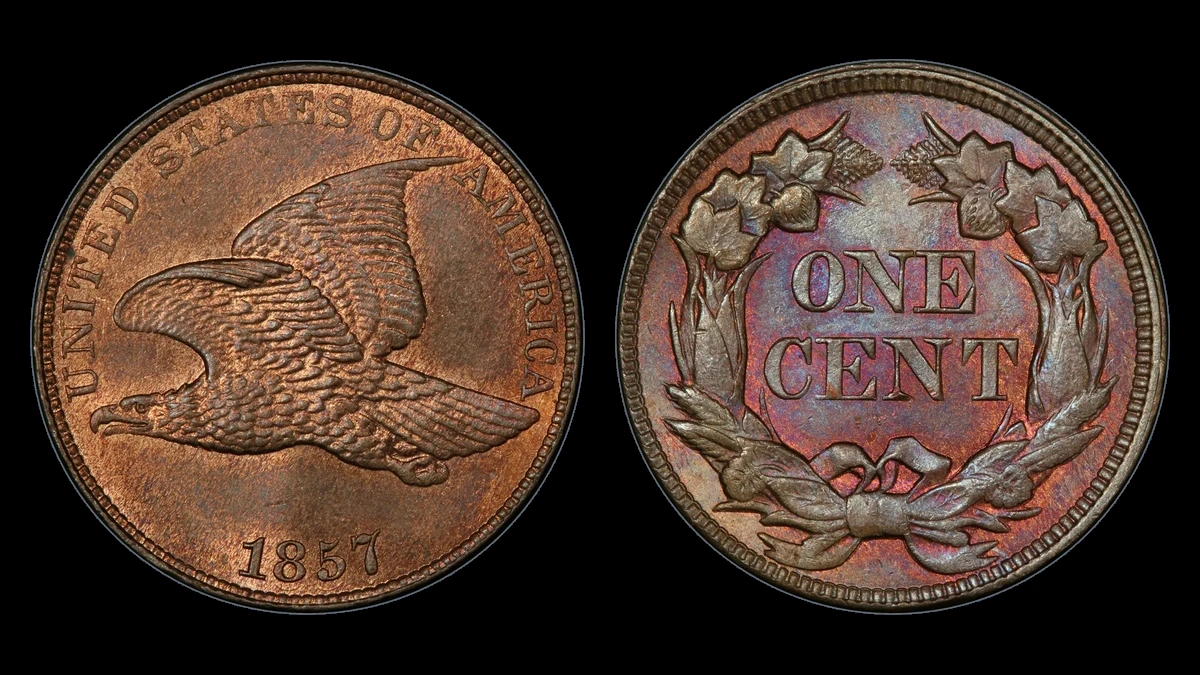
4. 1857 Penny Earlier Strokes Follow the Normal Date: Repunched Date Error
Unlike misplaced digits inside the eagle, repunched-date remnants remain close to the intended 1857 date. Repeated placement of the hand-applied punch could leave visible parts of its earlier impression in the die.
How to Identify
Examine the 8, 5, and 7 individually, tracing a suspected extra curve or stroke into a recognizable numeral fragment. Its placement should make sense as part of an earlier version of that same digit.
Use a documented repunched-date photograph to confirm the exact pattern. Scratches, impact ridges, and flattened shelves can produce extra-looking edges without preserving another punch impression.
What It’s Worth
$75–$3,500 is the estimated whole-coin range for identifiable repunched dates. The specific variety and preservation matter more than a generic doubled-date label.
An 1864 L bronze Indian Head repunched date graded MS65 Brown sold for $1,560 in July 2024. Its different metal, design, and high grade make it broad collector-price context rather than a direct 1857 comparison.
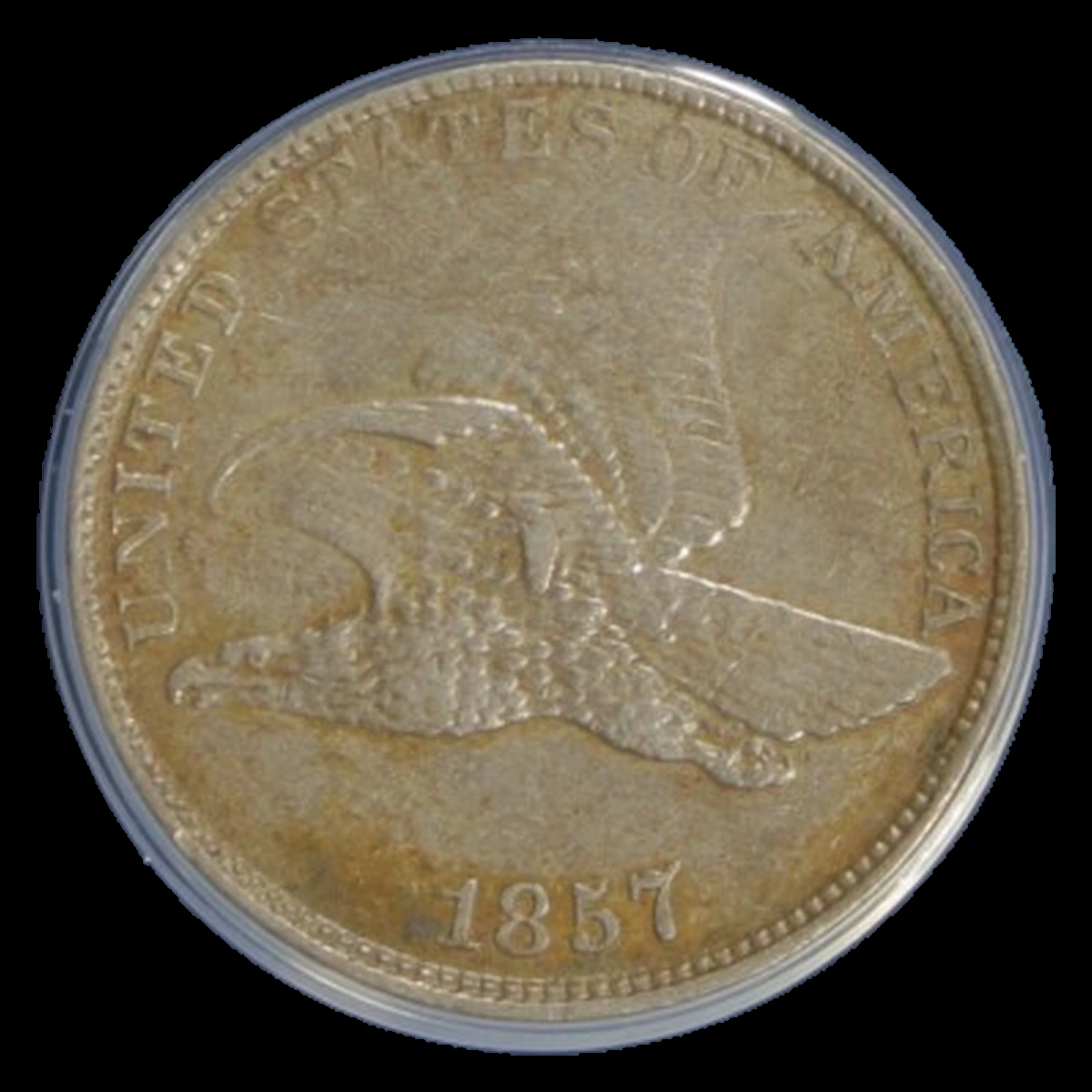
5. 1857 Penny A Lump Stays Inside the Wing or Joins the Rim: Die Chips and Cuds Error
The interior wing chip associated with Snow-16 stays within the design. Separate 1857 examples have larger rim-connected patches on the upper-left or upper-right reverse.
Both result from metal entering missing portions of a die. The rim-connected form is called a cud, which should not be confused with the smaller internal wing chip.
How to Identify
Establish where the raised metal begins and ends before naming it. Around a wing chip, compare the surviving feather lines; at a cud, follow the patch into the original rim.
Look for a folded border, solder, or a seam that would suggest alteration. Upper-left and upper-right reverse cuds are separate examples, not an expected pair of defects on the Snow-16 coin.
What It’s Worth
$30–$2,000 is the estimated whole-coin range for these chips and breaks. Tiny chips may add little, while bold genuine cuds on well-preserved coins need stronger comparisons.
The $161 July 2003 Snow-16 result includes both its interior chip and misplaced date. It cannot be counted once for each feature or used as a fixed price for a large reverse cud.
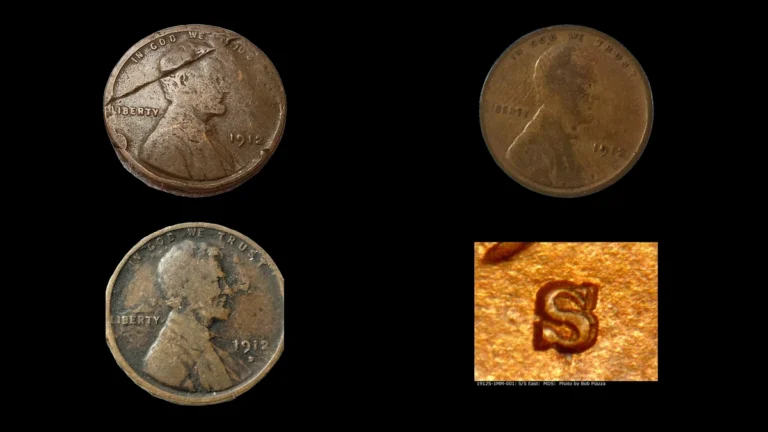
6. 1857 Penny A Curved Bite Removes the Upper-Left Edge: Clipped Planchet Error
The recorded NGC MS63 example has a curved clip near 10 o’clock. The blank-cutting punch overlapped an existing hole in the metal strip, leaving the disc incomplete before striking.
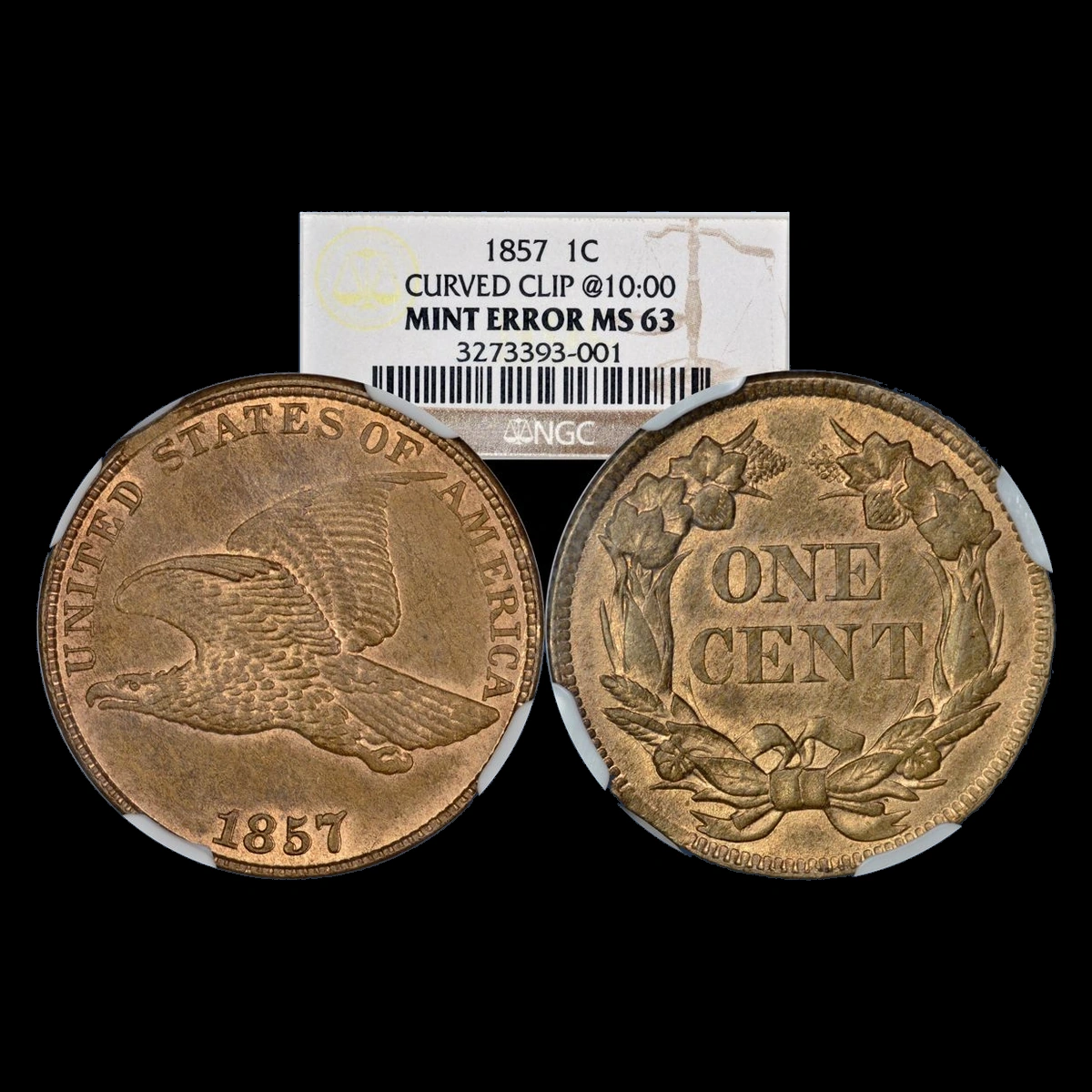
How to Identify
Examine both ends of the curve for the way the original rim weakens or changes near the missing metal. Opposite-rim weakness can support a clip, but saw marks or filing through finished detail point toward later removal.
A normal copper-nickel Flying Eagle cent weighs 4.67 g and is about 19 mm across; measure an intact span on a safely handled loose coin. These references also help with the shape errors below, while sealed coins should remain in their holders.
What It’s Worth
$100–$3,000 is the estimate across varying clip size and condition. No completed sale is supplied for the pictured unworn MS63 specimen.
A 1939 Lincoln cent with a clip, graded MS64 Brown, sold for $180 in January 2023. That later design illustrates the error class, while the Flying Eagle coin requires its own series and condition comparison.
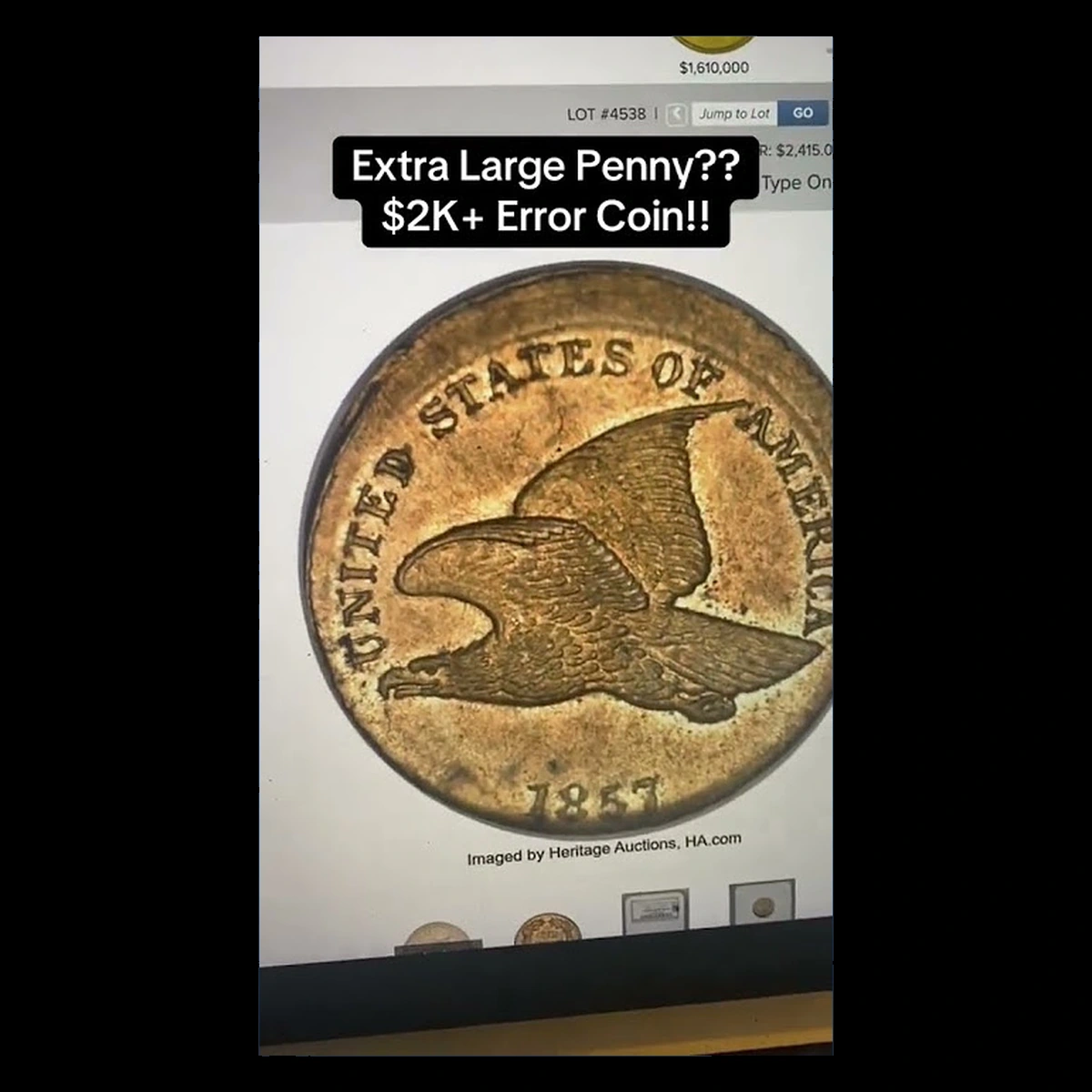
7. 1857 Penny Uneven Spreading Surrounds a Complete Design: Broadstrike on a Type 1 Blank Error
The recorded MS62 Brown 1857 cent is described as an uncentered broadstrike on a Type 1 blank. Striking outside the collar allowed its metal to spread beyond the usual outline.
Type 1 refers to a blank that had not received a raised edge before striking. It does not indicate another metal recipe or a different Flying Eagle design.
How to Identify
Confirm that all intended outer lettering remains present despite the uneven border. Missing design beyond the metal instead requires considering an off-center strike.
Inspect original edge features to investigate the skipped rim-forming step after establishing the broadstrike. Hammering and filing can also distort an outline, so width alone does not confirm either part of the description.
What It’s Worth
$300–$4,000 is the estimated range for identifiable broadstrikes. Condition, natural spreading, and evidence for the blank preparation affect the comparison.
An 1864 copper-nickel Indian Head broadstrike with a retained rim break sold for $646.25 in August 2016. It offers a same-metal comparison but carries a different design and an additional die defect.
8. 1857 Penny Unstruck Metal Opposes Missing Design: Off-Center Strike Error
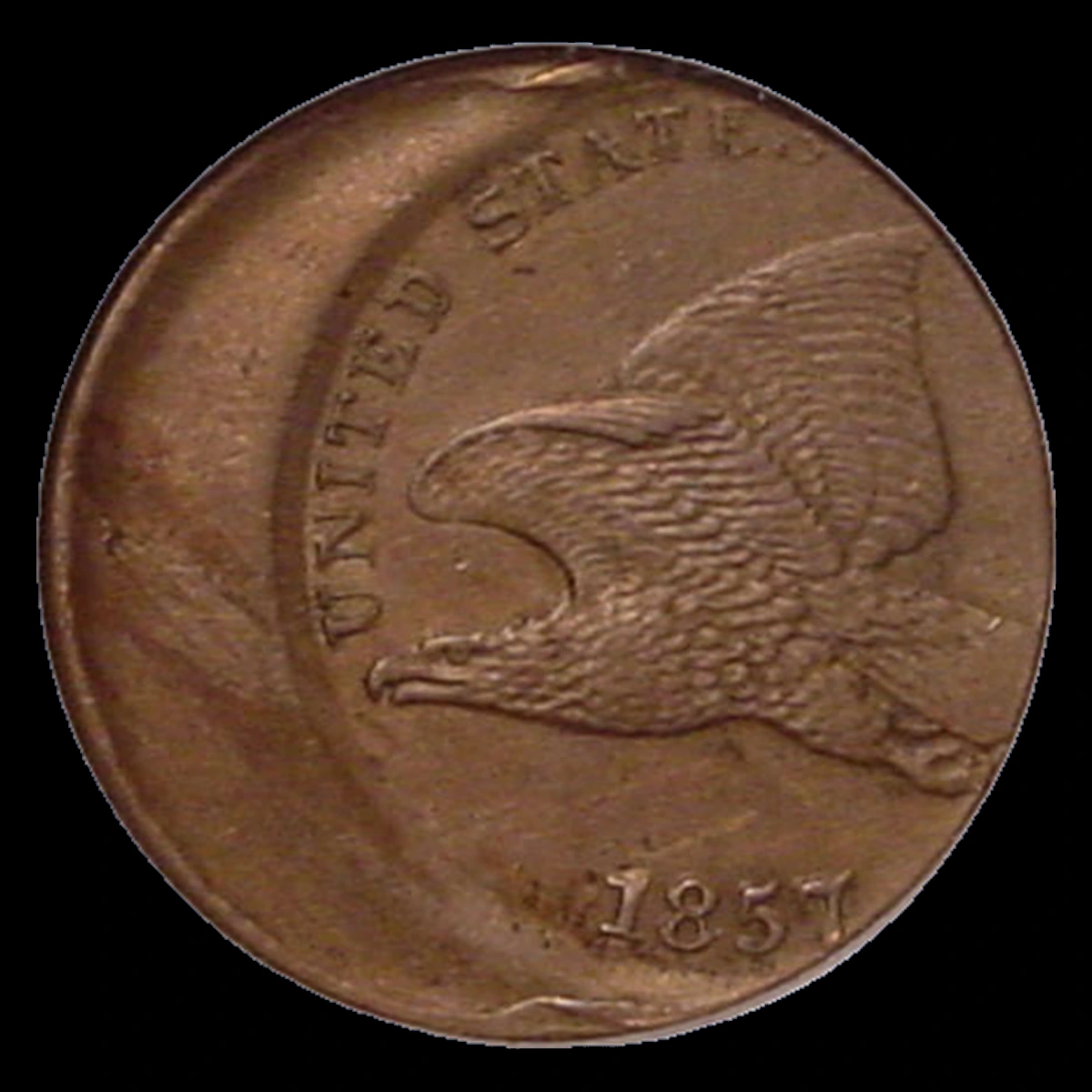
Look for the relationship between an unused crescent and design lost at the opposite edge. That pattern can show where the blank sat incorrectly between the dies.
How to Identify
Read the date before estimating the displacement, then compare both faces’ strike boundaries. The recorded PCGS XF45 coin is 25% off-center, with circulation wear but much of its design retained.
The blank crescent remains metal, unlike a clip, while a broadstrike retains its complete intended design. Inspect the untouched area for grinding or flattening that would suggest later alteration.
What It’s Worth
$500–$10,000 is the estimated range for genuine Flying Eagle off-center cents. This short series needs its own comparisons rather than prices borrowed automatically from common later pennies.
The 25% off-center PCGS XF45 example sold for $7,800 on September 29, 2025. A much more worn 10% off-center coin brought $517.50 in January 2006, a different specimen with both less displacement and greater wear.
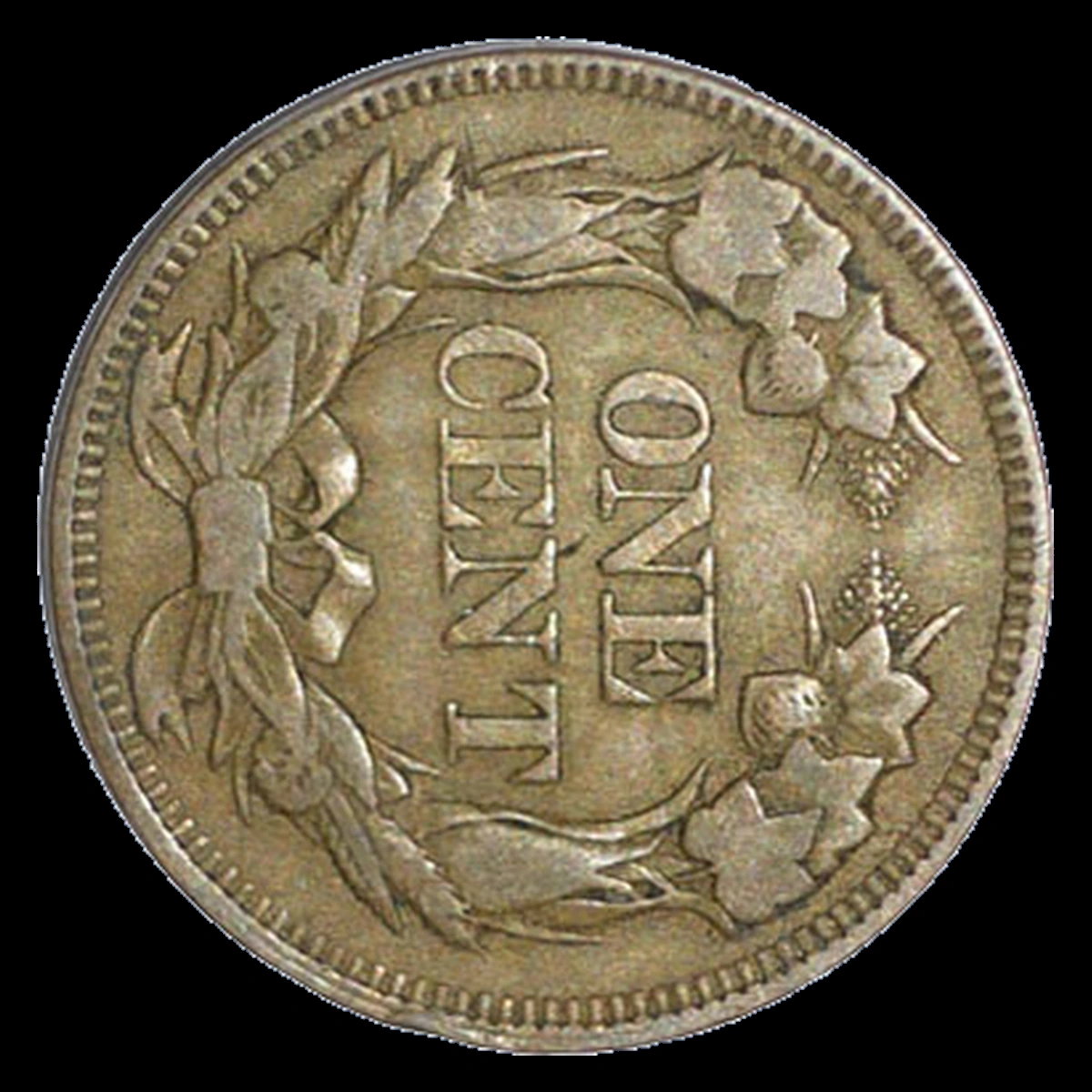
9. 1857 Penny ONE CENT Appears Nearly Sideways: Rotated Dies Error
An 1857 example is recorded with an 89-degree clockwise rotation. The dies’ unusual rotational relationship can leave complete, centered designs on a normally round coin.
How to Identify
Fix the coin in a clear holder, level the date, and flip from top to bottom without a sideways twist. A normally aligned U.S. coin shows an upright reverse after that motion.
Record the flip continuously and measure the actual angle against an upright guide. Separately rotated photographs cannot prove the alignment, and the edge should be checked for a join between altered halves.
What It’s Worth
$80–$1,200 is the estimate for collectible substantial rotations in different conditions. A small tilt is a weaker comparison than a clearly sideways reverse.
An 1858 Large Letters Flying Eagle cent with rotated dies, graded Fine 12, sold for $154 in June 2026. Its considerable wear and different year do not set a fixed price for the recorded 1857 89-degree example.
Conclusion
For an 1857 Flying Eagle cent, the location and shape of an extra mark matter more than how strange it first looks. Cross-denomination clashes, doubled dies, and misplaced dates arise in the tools, while clips and displaced strikes change the blank or its impression.
Use the $30–$15,000 estimates with the correct variety and condition. Where a chip and misplaced date share a coin, their sale remains one whole-coin result.