Rare 1907 Penny Errors (List & Pictures)
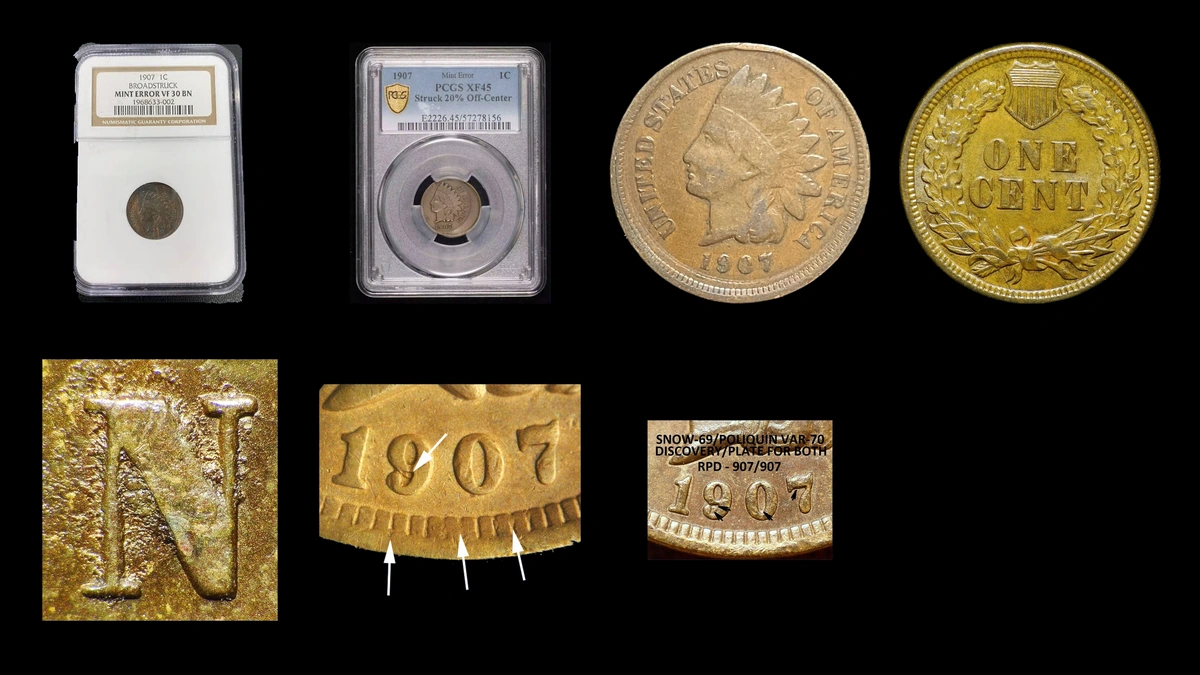
Two overlapping portraits helped make one double-struck cent worth $1,265 in January 2012. Other 1907 penny errors require close inspection of leaves, numerals, or surface texture.
Estimated whole-coin values span $5–$5,000, including separately valued Proofs. Start with the outline and strength of the designs, then examine smaller die features.
Normal bronze cents weigh 3.11 grams and measure 19.05 mm, with a plain edge.
1. 1907 Penny The Border Expands around a Complete Design: Broadstrike Error
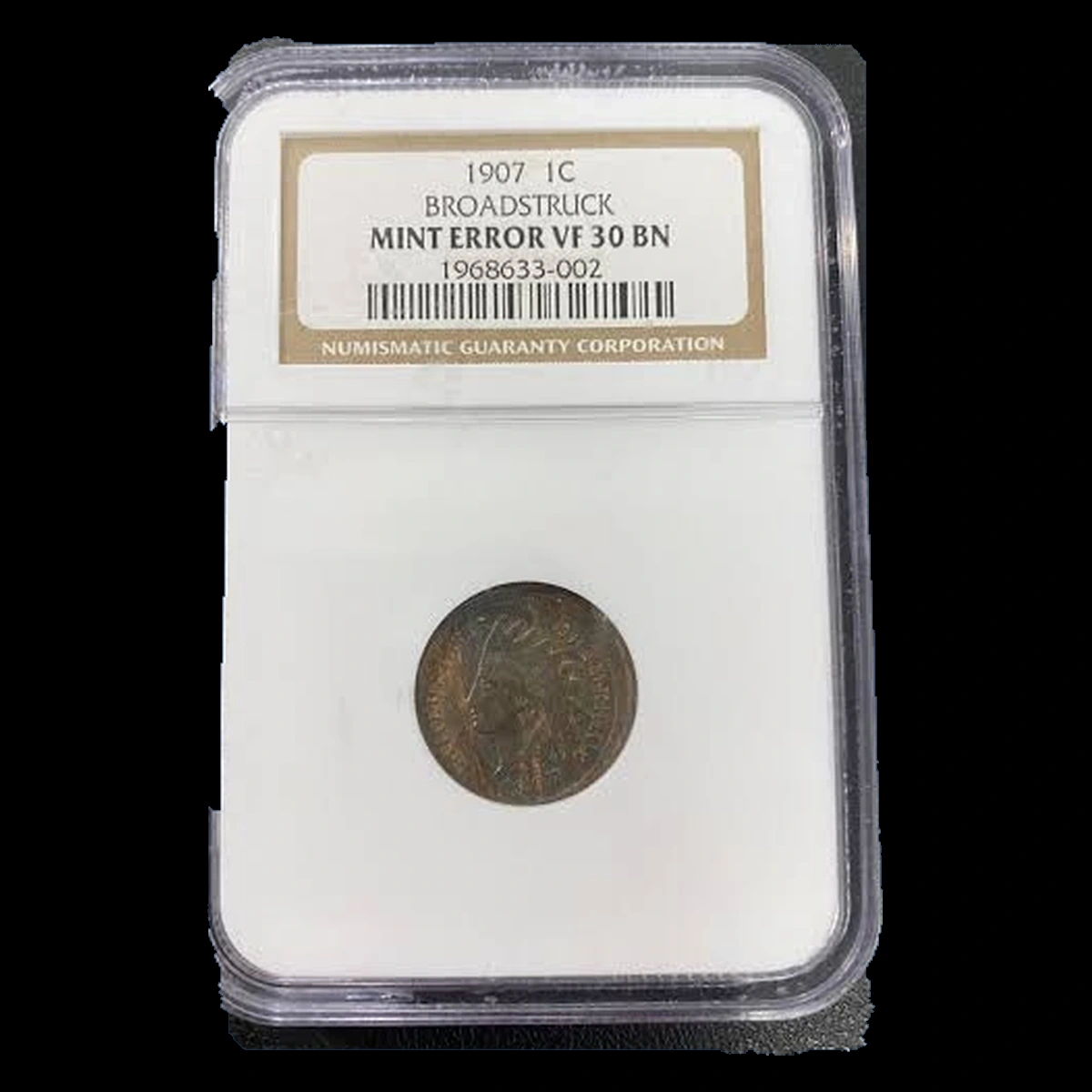
Without normal support from the collar, the ring surrounding the blank during striking, metal can spread outward. The resulting broadstrike keeps the intended design on the coin despite its wider outline.
How to Identify
Measure several spans and inspect the design around both faces. Outer details should remain present rather than disappear beyond the edge of a displaced blank.
Spreading alone does not remove metal, so weight should be considered with the shape. Crushed portrait details, grinding, or a folded edge may instead explain a coin flattened after minting.
What It’s Worth
Genuine examples have an estimated range of $75–$1,000. An NGC VF30 coin, showing noticeable wear, sold for $139 in January 2023.
A separate XF40 example was offered at $185, an asking price rather than a completed sale. Its better remaining detail does not give it the VF30 coin’s sale history.
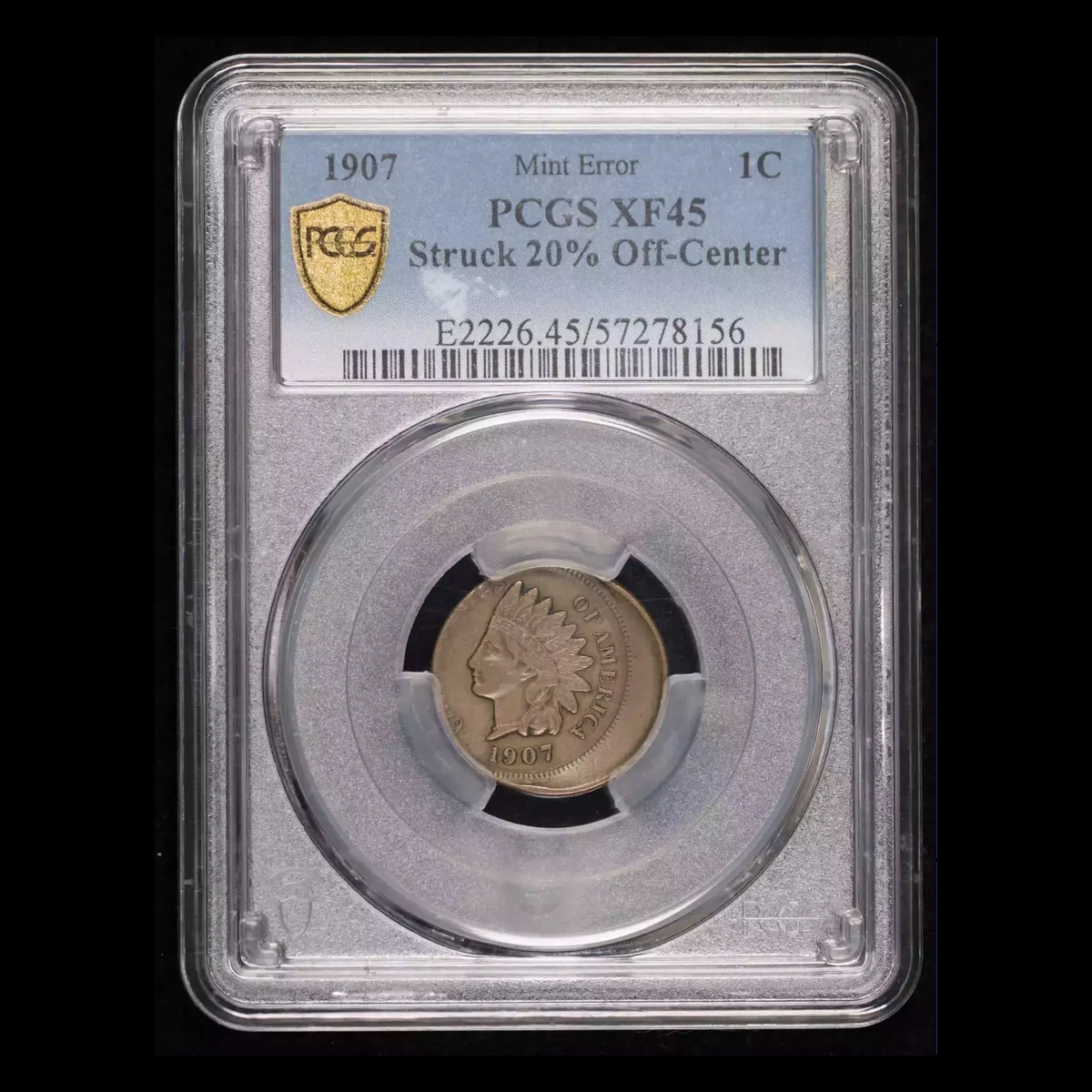
2. 1907 Penny Unstruck Metal Remains beside a Partial Design: Off-Center Strike Error
A blank that misses its centered position can retain a bare crescent while losing part of the intended design. The metal remains present even though some lettering or portrait detail never reaches it.
Two documented examples differ substantially: one is 50% off center toward 2 o’clock, and another is 35% off center toward 10 o’clock. Their grades and surfaces differ too.
How to Identify
Read the date and compare both design boundaries with one displaced blank. If the back is centered while only the front shifts, consider a misaligned die rather than the same off-center mechanism.
Inspect the unused metal for filing or grinding that erased a finished design. Match the correct direction and surviving details instead of treating every large crescent as the same specimen.
What It’s Worth
Estimated values are $75–$2,500 for dated 1907 off-center cents. These records show the importance of condition as well as displacement.
| Recorded example | Condition | Result |
|---|---|---|
| 50% toward 2 o’clock | PCGS MS64 Brown, unworn | $977.50, January 2012 |
| 35% toward 10 o’clock | AU58, very slight wear and small green-corrosion areas | $431.25, February 2005 |
An undated piece cannot inherit the 1907 identification merely from its Indian Head design.
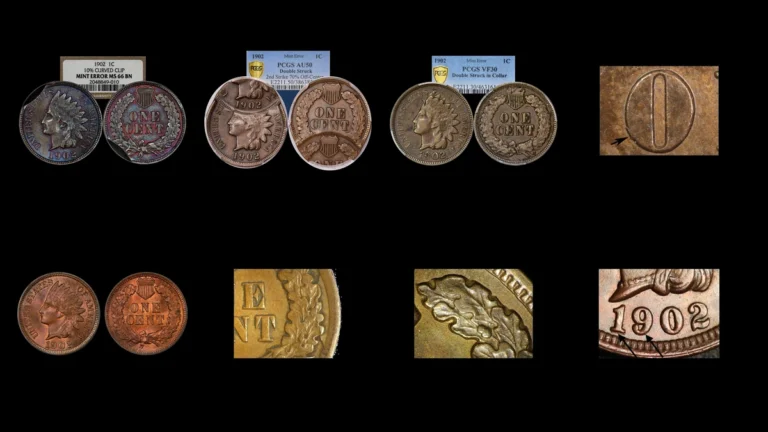
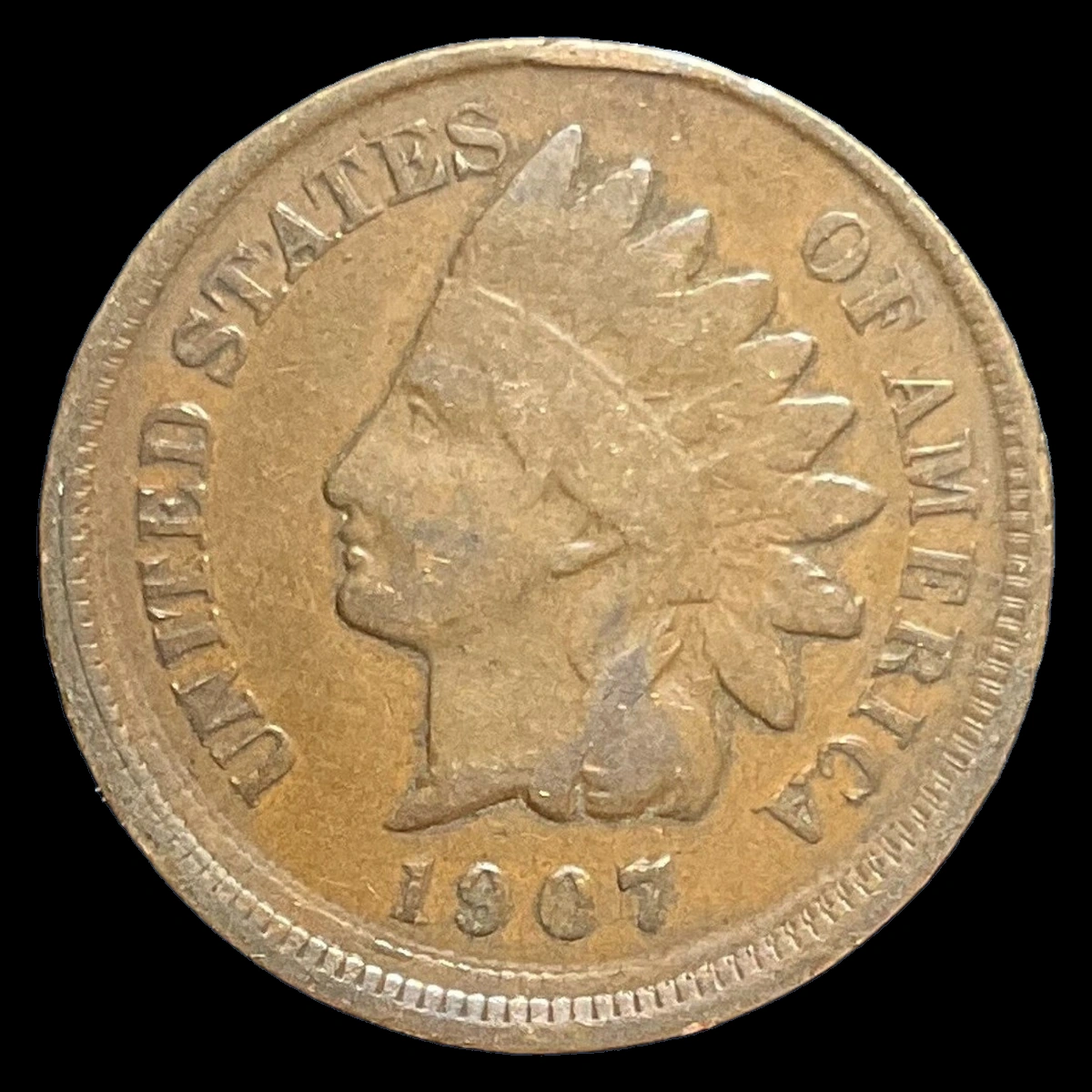
3. 1907 Penny An Earlier Image Survives beneath Another: Double Strike Error
The recorded 1907 double strike has a second impression about 50% off center. The coin remained in the press and moved before another blow flattened part of the earlier design.
How to Identify
Locate an earlier portrait fragment and connect it with the letters that belong to the same strike. Then determine whether the reverse overlap agrees with that movement.
A second date helps when visible, but a tiny shelf on one numeral is insufficient. Inspect the edge for joined pieces and avoid borrowing a clock direction from another double-struck coin.
What It’s Worth
The estimated range is $300–$3,500. The NGC VF30 example with a 50% second strike sold for $1,265 in January 2012, and the archive also identifies an Eagle Eye Photo Seal.
VF30 indicates noticeable wear with much design remaining. A higher grade alone cannot guarantee a stronger result if the two impressions are harder to distinguish.
4. 1907 Penny The Reverse Is Almost Blank: Struck Through a Die Cap Error
Faint wreath and lettering traces on a nearly blank reverse can result from a thin metal covering over the die. That covering forms when an earlier coin sticks to the tool and stretches during later strikes.
The documented NGC AU50 example was labeled as having a one-sided back, but Heritage noted surviving design beneath the cap effect. It received a strike through the covering; it was not itself the stuck coin that became the cap.
How to Identify
Tilt the reverse under low light to find weak outlines across the face without rubbing or polishing it. Compare their weakness with the stronger front design.
Heavy wear on both sides, grinding lines, or metal removed from the back would support other explanations. The surviving reverse traces are central to the particular documented cap-struck example.
What It’s Worth
Identified examples have an estimated range of $150–$2,000. The NGC AU50 coin, with light circulation wear, sold for $373.75 in February 2010.
Its result concerns faint design blocked during striking, not a reverse made blank by later removal.
5. 1907 Penny Raised Lines Cross the Face or Outline Rim Patches: Cracks, Chips, and Retained Breaks Error
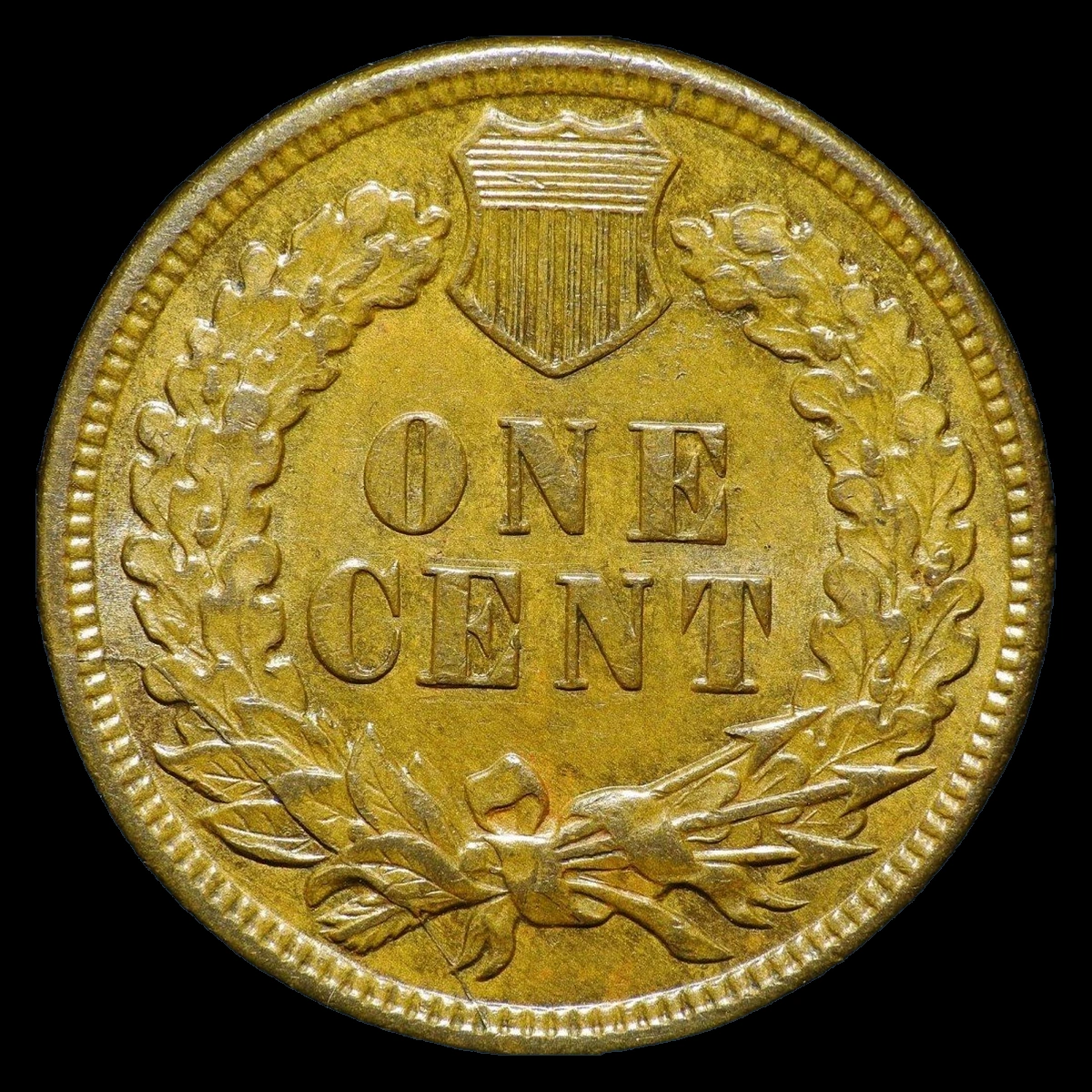
A recorded crack follows the chin and crosses the lips; at a later stage, a chip joins the upper and lower lips with raised metal. The coin copies openings in the damaged steel die.
Separate reverse examples have retained rim breaks around 3:15–4:45 or 2–3:30, where fractured steel remained present and could still reproduce some design. Other wreath cracks and edge breaks have their own paths.
How to Identify
Compare the narrow facial crack and larger lip chip as different stages. A raised line must be distinguished from a cut-in scratch.
For a rim patch, inspect the physical edge for folding or added metal and look for design within the retained section. Match its boundary separately; the portrait crack does not prove a particular reverse pairing.
What It’s Worth
Minor cracks and chips have estimated values of $5–$100; clearer retained breaks and larger patches may fall around $40–$750. Size, preservation, and the exact form affect the comparison.
A 1946-S cent with a cud sold for $288 in March 2021. That later missing-die-piece error provides broad context rather than a sale of a 1907 retained break.
6. 1907 Penny Small Raised Bumps Cluster on the Reverse: Rusted-Die Marks Error
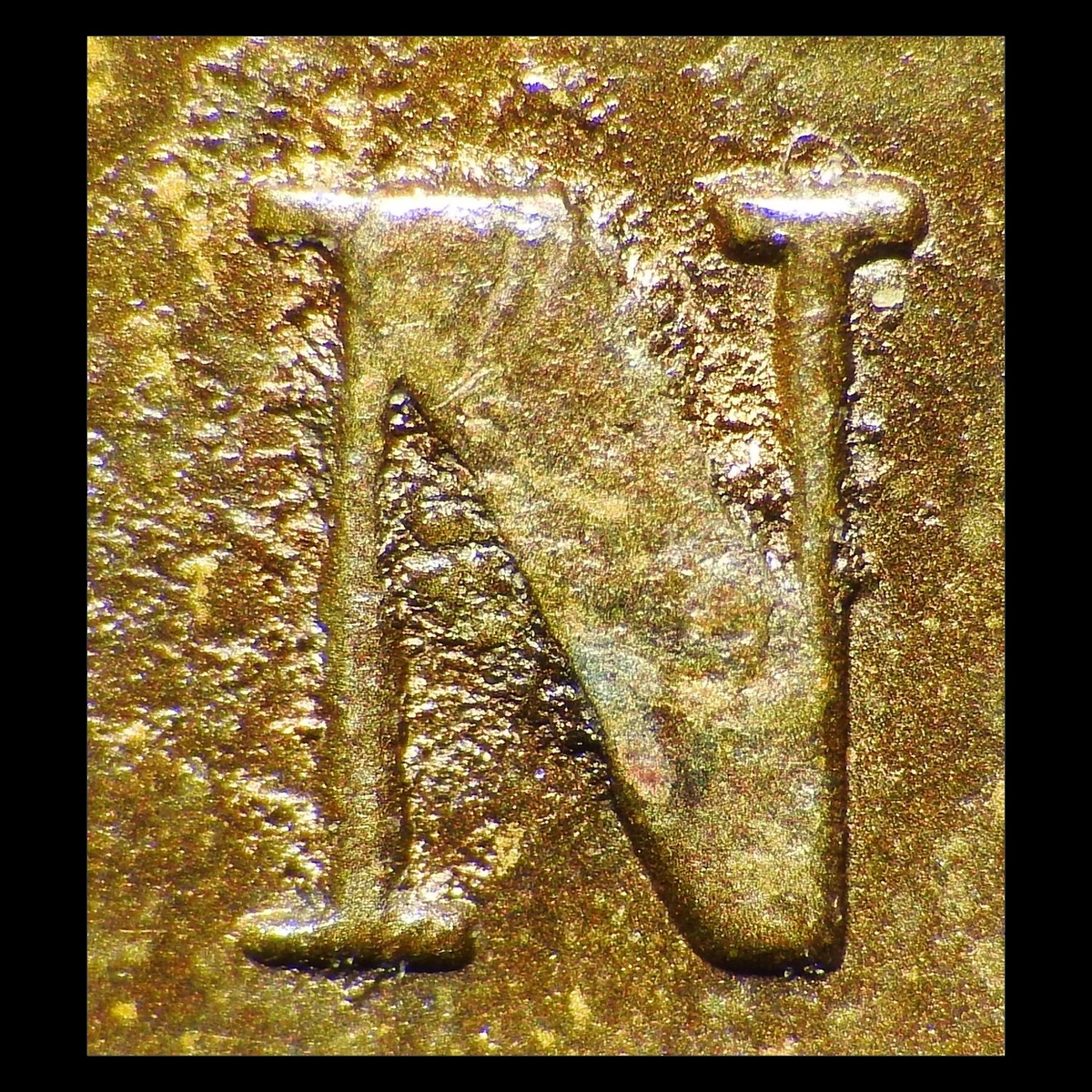
Look around the N in CENT for raised roughness associated with one recorded tool. Separate patterns occur beside the shield, including the upper-left wreath, with particular repunched-date varieties.
Rust pits in a steel die can fill with coin metal and leave bumps during striking. Corrosion of the finished bronze coin is a different process.
How to Identify
Use low-angle lighting to see whether the texture rises above the surface or eats into it. Do not clean the area in an attempt to reveal more bumps.
Match the texture’s location beside fixed design details using the correct reference. Similar roughness elsewhere cannot identify the same rusted die.
What It’s Worth
The estimated whole-coin range is $5–$150 for ordinary matched examples. Such marks often serve mainly as identification clues, with wear and surface preservation explaining much of the price.
If a repunched date accompanies the rust pattern, assess the combination once. Active corrosion or heavy cleaning can reduce appeal instead of adding an error premium.
7. 1907 Penny Wreath Veins and Leaf Edges Repeat: Doubled Dies Error
One reverse variety repeats detail in the right wreath, while another affects both wreaths with stronger separation on the right. The repetition already existed in the die and could be copied by a single strike.
The first also has date repunching and clashes, but those features do not replace matching the leaves. A separately reported front-doubling category needs a front-specific identification.
How to Identify
Begin with the right wreath’s veins and outer edges, then determine whether the left side shares the pattern. Follow physical raised repetition rather than a moving highlight.
Keep any portrait-shaped clash trace separate from a doubled vein. For a proposed front variety, use its own reference; neither reverse doubling nor a repunched date proves extra front lettering.
What It’s Worth
Identified doubled reverses have an estimated range of $20–$1,500; a confirmed minor front variety may fit $15–$750. Condition and the actual pattern control the comparison.
An 1889 doubled-reverse cent with light wear sold for $240 in July 2025. That is a different-year comparison, and any associated date or clash feature belongs in one complete-coin valuation.
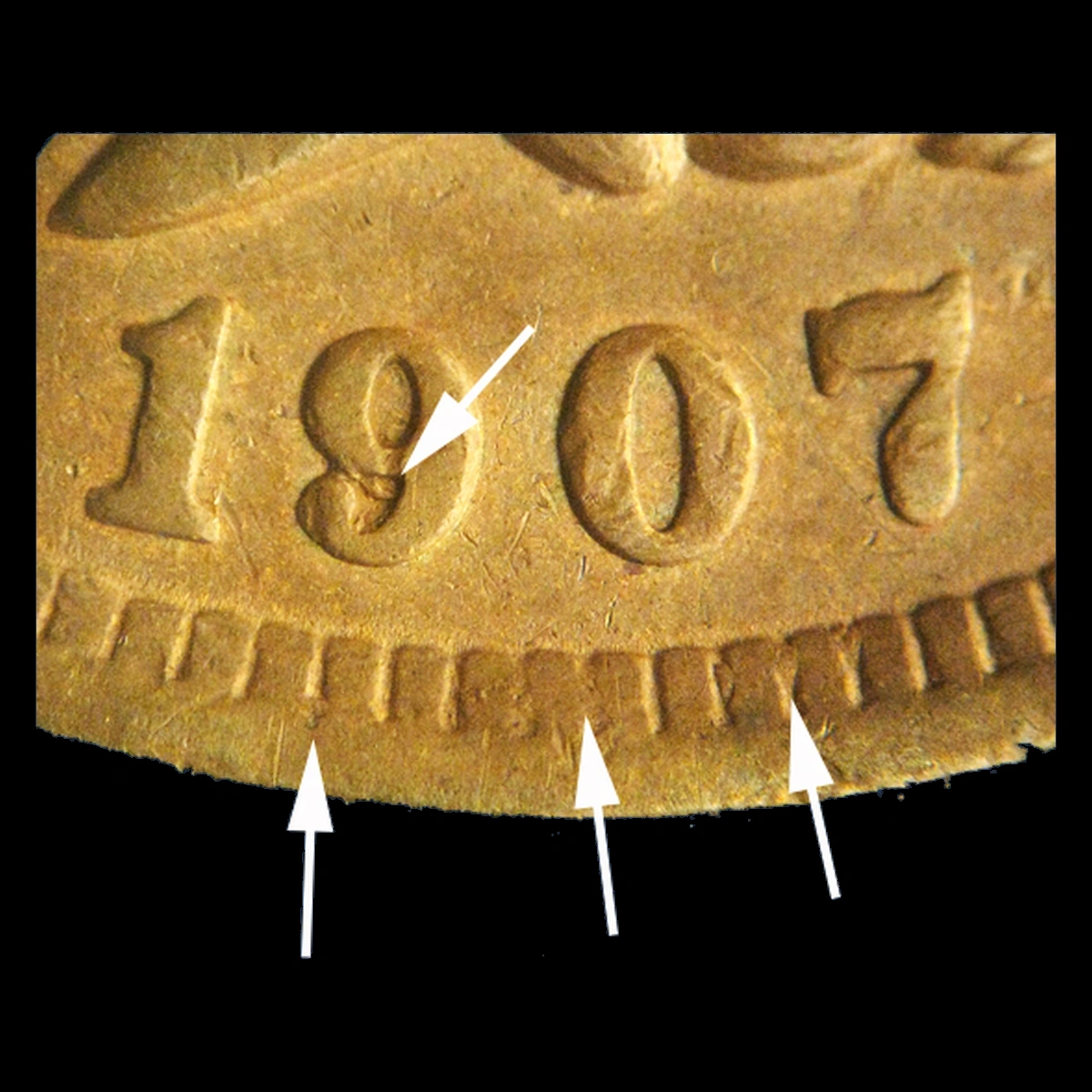
8. 1907 Penny Numeral Tops Appear in the Border: Misplaced Date Error
One pattern places the top of an extra 0 beneath the normal 0. Other recorded forms show parts of 907 shifted beneath the date, or separate 07 and 7 fragments.
The date punch touched the die outside its intended position and left traces that survived into coinage. Possible 1 tops have also been reported, but need a clear numeral-shape match.
How to Identify
Photograph the full date and teeth below it to preserve the fragment’s position. Compare its shape and leftward or rightward offset with the correct variety.
A dot is not enough to reconstruct an invisible 1. Check for filing or pushed metal around the teeth before treating an irregular projection as a punched number.
What It’s Worth
The estimated range is $20–$2,000 for identified varieties. A 1908 misplaced-date cent in unworn condition with some red color has a recorded $1,187 eBay result from December 2021.
That other-year result does not price every 1907 fragment. Clear numeral shapes and exact placement remain necessary.
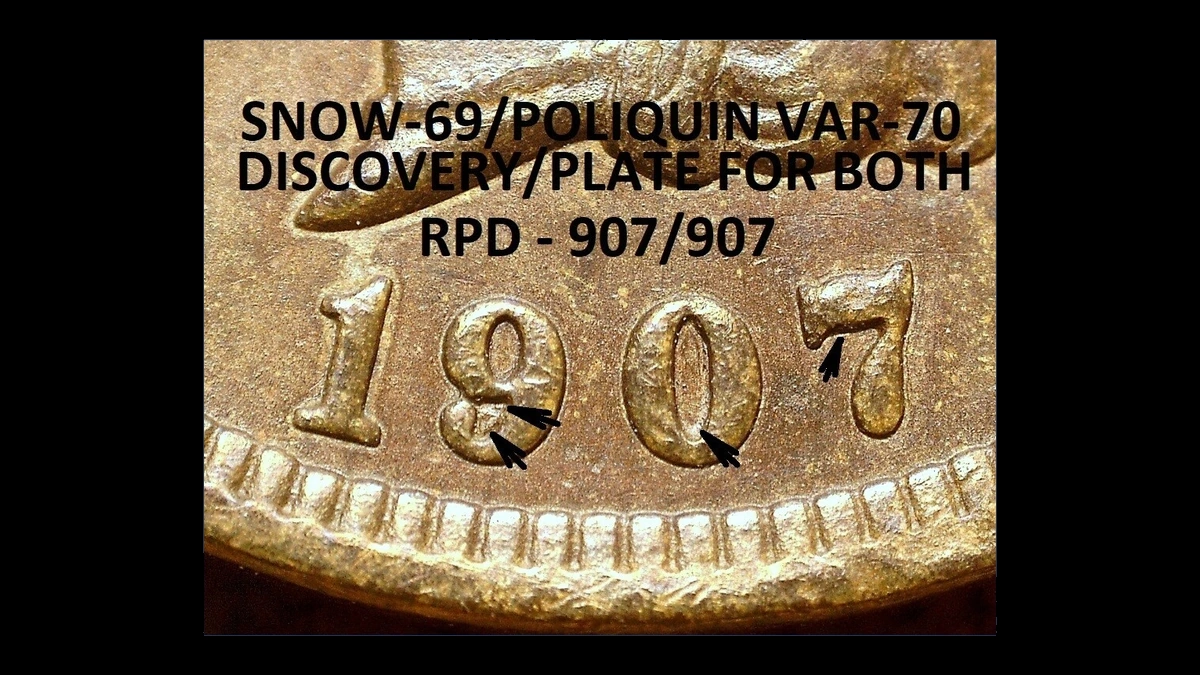
9. 1907 Penny Extra Curves Remain inside the Date: Repunched Date Error
A repeated application of the date punch can leave earlier strokes near the main numerals. One 1907 form shows an earlier 9 to the right and above; another has upward remnants in the lower loop of 9 and two within 0.
Other patterns affect 7 or several digits. Companion cracks, tool lines, and rust marks help identify particular dies without changing the date-punch explanation.
How to Identify
Start with the clearest remnant and trace a recognizable loop, base, or upright stroke. The right-and-upward 9 reference applies to that direction only.
Compare all visible earlier strokes with one chosen variety. A flat shelf beside one number cannot supply a missing pattern across the rest of the date.
What It’s Worth
Matched examples have an estimated whole-coin range of $10–$1,500. Strong separation, original color, wear, and surface damage influence where a coin fits.
Do not add separate maximum estimates if the same penny also carries a misplaced digit or rim break.
10. 1907 Penny Small Raised Marks Identify a Proof Die Pair Error
One Proof die pair places small raised areas on the lower half of the date’s 1, with matching reverse-border marks around 3:45–4 o’clock. The reverse group includes a short line.
Proofs were specially made collector coins, and these marks help identify their tools. The marks alone do not establish die breakage or another strike.
How to Identify
Establish Proof manufacture from the coin as a whole before comparing tiny markers. A polished circulation cent does not become a Proof because it has a bright surface.
Match both the lower 1 shapes and the reverse border marks to the same pair. These marks should not be identified as misplaced date fragments merely because they lie among border teeth.
What It’s Worth
The estimated whole-coin range is $300–$5,000 for a properly identified Proof. Most of the value concerns Proof quality, preservation, and original color.
The illustrated catalog example is PR64 Red and Brown, but its photograph supplies no auction result. The markers are not a separate price to add to the normal Proof value.
Conclusion
The broadest changes are often the easiest starting point on a 1907 cent, but fine leaf repetition or a numeral fragment can identify a different kind of variety. Follow the evidence on both faces before selecting a comparison.
Preserve the distinction between an off-center strike and a displaced second strike, between die rust and coin corrosion, and between Proof markers and ordinary date varieties. Price combined features as one coin with its actual wear and surfaces.