Rare 1903 Penny Errors (List & Pictures)
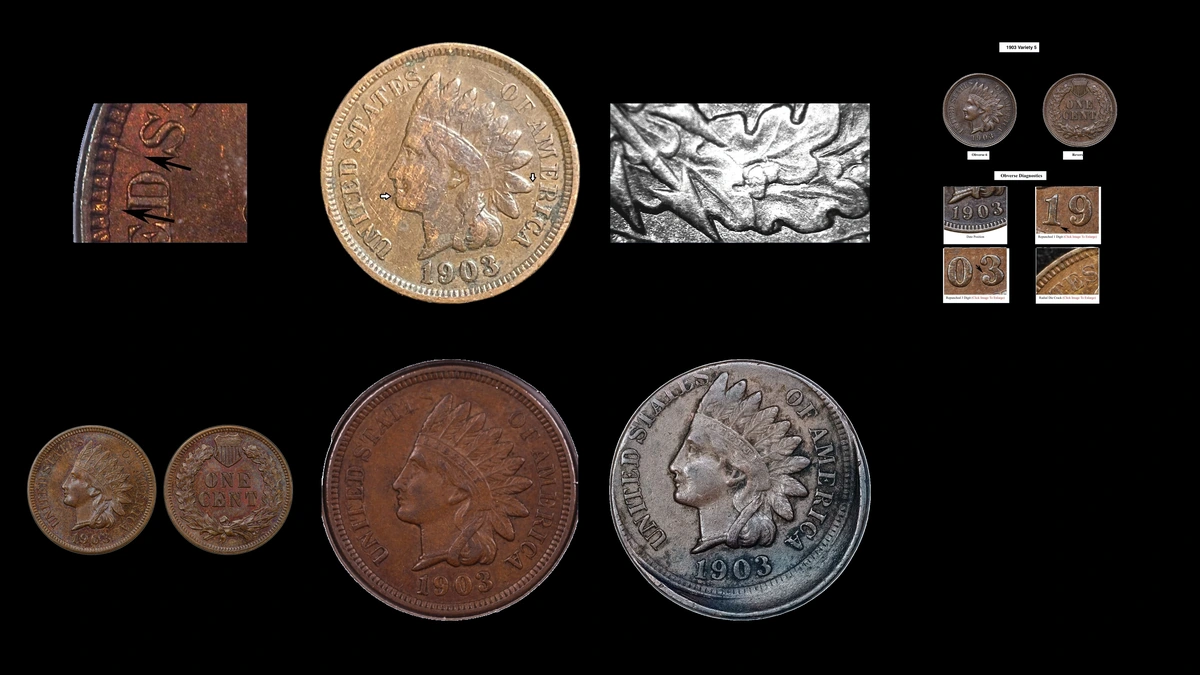
Some 1903 Indian Head penny errors can be understood from one letter: raised lines beside D, roughness beside T, or an earlier stroke inside a date digit. Others change the whole outline.
The estimated whole-coin ranges below span $5–$5,000. A same-year off-center cent brought $632.50; a stronger supplied misplaced-date comparison is a different-year 1878 coin at $1,920, so the two prices describe different features and specimens.
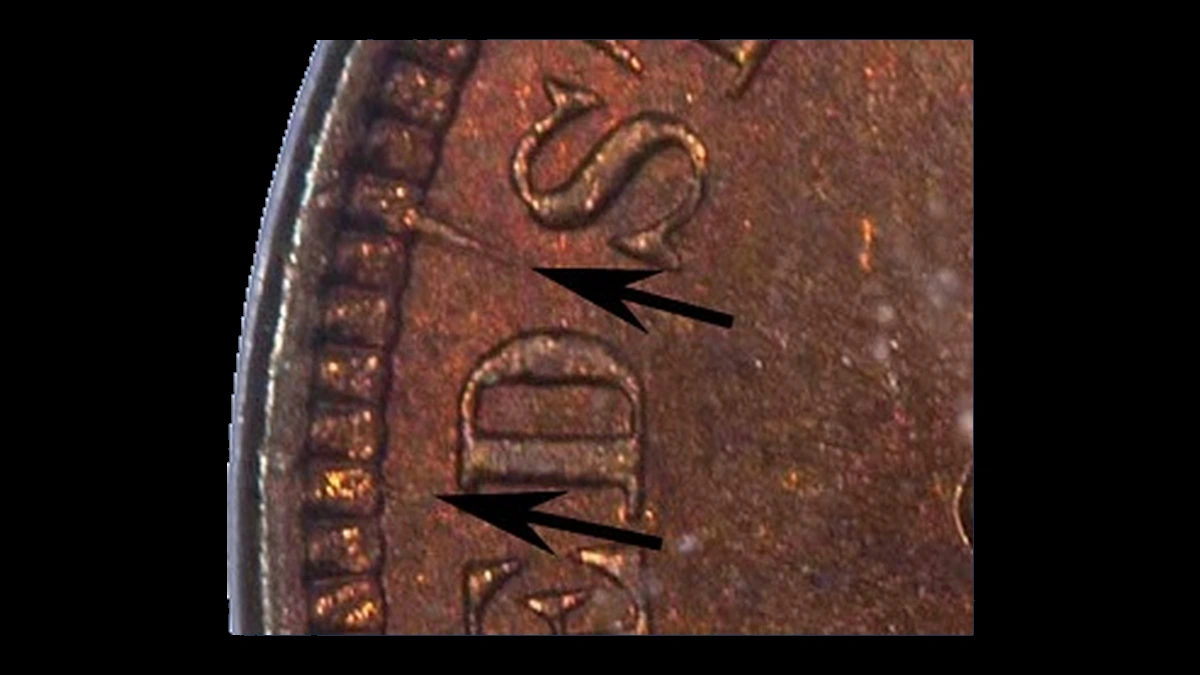
1. 1903 Penny Raised Lines Flank the D in UNITED: Die-Filing Marks Error
A file can cut grooves into a die, the steel tool that stamps the coin. Metal entering those grooves creates raised lines on later pennies.
How to Identify
The recorded pattern has small lines before and after D in UNITED on the front. Compare their exact paths while keeping the letter visible in the photograph.
Lines cut into a finished penny are different: they may cross already formed raised detail. A separate repunched-date pairing has other lines extending from the border into letters and needs its own reference.
What It’s Worth
$5–$100 is a whole-coin estimate for ordinary matched examples. These marks often help identify a die while adding little separate value.
Clarity and preservation matter more than the number of lines. A scratched or cleaned surface does not receive the same comparison simply because the damage is beside UNITED.
2. 1903 Penny Small Bumps Appear beside T in CENT: Rusted Die Error
Rust pits in the back die can become raised points on the penny. The supplied variety has this rough texture beside T in CENT and also has clash marks.
How to Identify
Inspect the bumps under changing light to see whether they rise from the original surface. Corrosion of the finished coin can instead leave pits, deposits, and disturbed copper.
Trace any longer transferred outline separately. A clash may occur on the same coin, but it cannot establish the location and texture of the rust marks.
What It’s Worth
$5–$150 is an estimated range for ordinary examples with the matching die pattern. Small raised roughness often serves mainly as an identification clue.
The accompanying clash is part of that same coin’s appeal. Do not add two maximum whole-coin estimates or extend the rust attribution to every dark patch on the back.
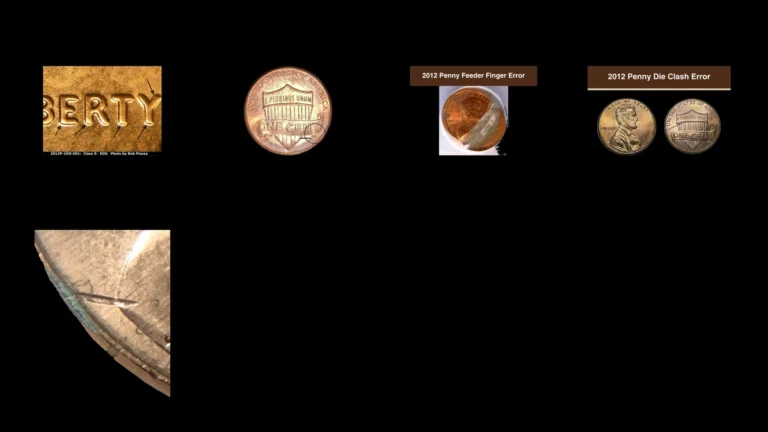
3. 1903 Penny An Opposite-Design Outline Shows through: Die Clash Error
Late stages of the Snow-3 die pair show clashes on both faces. The dies hit each other without a blank and subsequently left extra design traces on coins.
How to Identify
Use a late-stage Snow-3 comparison when the front date pattern matches that variety. An earlier coin from the same dies may predate the clash.
The other pairing with rust beside CENT is a separate example. Match its actual transferred outline instead of using the rust bumps to complete a missing shape.
A short scratch or unexplained straight line is not enough. Follow recognizable curves from the opposing portrait or back design.
What It’s Worth
$10–$500 is an estimate for ordinary examples with recognizable clashes. Fainter marks and more wear generally make weaker comparisons.
A Snow-3 repunched date sold for $495 in March 2014. That result is not separately established as a sale of the late clashed stage and should not be treated as a clash-only price.
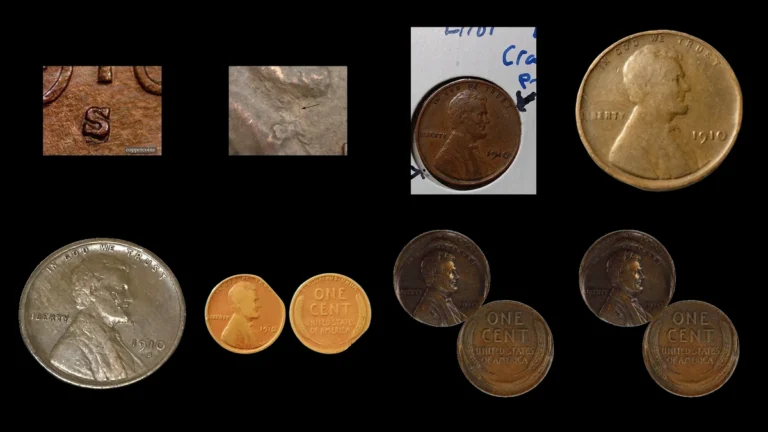
4. 1903 Penny The Lip, Feather, or Date Gains a Raised Patch: Die Failures Error
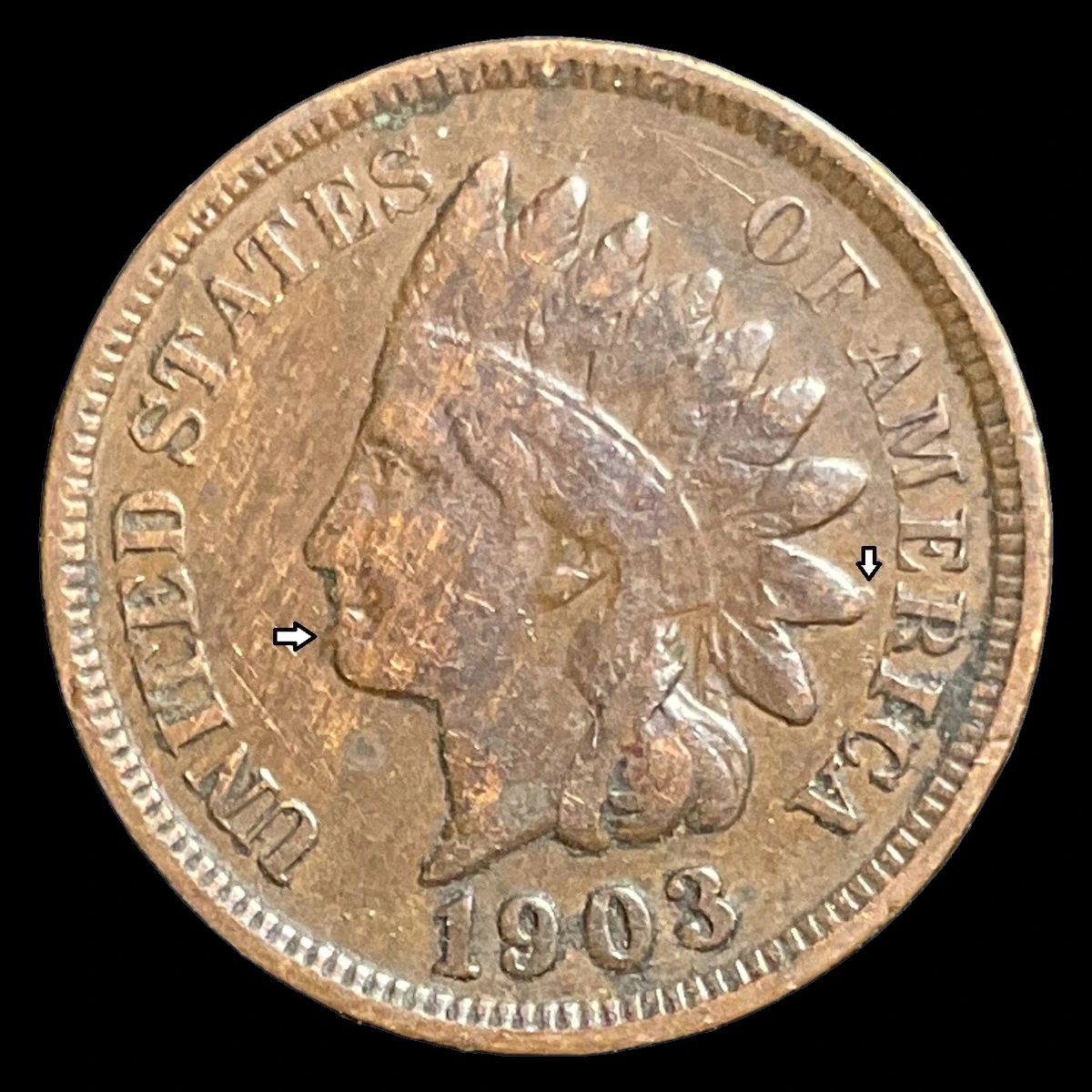
A chip below the lower lip can grow toward the chin into a beard-like patch. A later stage of that die also shows a break at the eighth feather.
How to Identify
Match the lip patch and feather to the same stage rather than demanding a developed break on an earlier coin. Another die has a crack from 1 toward 9 with a chip in the lower 9 loop.
Separate back patterns include narrow cracks, a break near two-fifteen to two-thirty, and swelling beside the lower-right part of N in CENT. Swelling does not automatically prove that a die piece fell away.
Check the affected boundary for original raised metal, added material, or edge folding. A scratched groove has a different shape from a solid ridge made by a cracked die.
What It’s Worth
$5–$100 suits small cracks and chips, while stronger matched failures can fall around $25–$750. The entire coin’s condition remains part of either range.
A 1946-S Lincoln cud brought $288 in March 2021. Its missing edge section provides broad context, not a direct price for every 1903 raised lump.
5. 1903 Penny Leaf Veins Have Extra Edges: Doubled Back Design Error
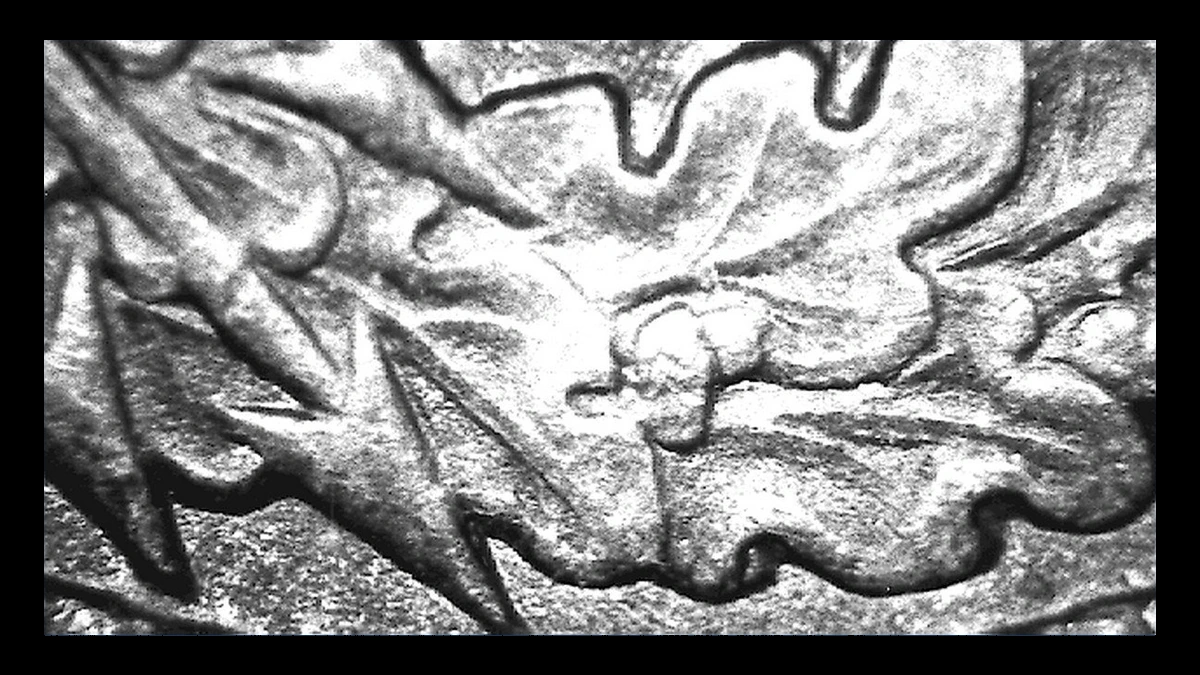
The cataloged Snow-8 variety repeats vein detail in both sides of the wreath. Its front also has date-punch remnants from a separate part of die preparation.
How to Identify
Compare several leaves on both sides with a Snow-8 reference. The front date strokes can support the pairing but cannot replace the doubled-wreath match.
A year guide separately reports front doubling under FS-101. That claim needs a front-specific reference; the known back variety does not establish doubling of the portrait or date.
Flat shelves from movement during striking and true date repunching have different explanations. Keep the face and mechanism connected to the actual repeated detail.
What It’s Worth
$20–$1,200 is an estimate for the identified doubled back, while a confirmed minor front variety can compare around $15–$750. Visibility and preservation guide the range.
A lightly worn 1889 doubled-back cent sold for $240 in July 2025. It is another date and die pattern, not a sale assigned to Snow-8 or the reported front category.
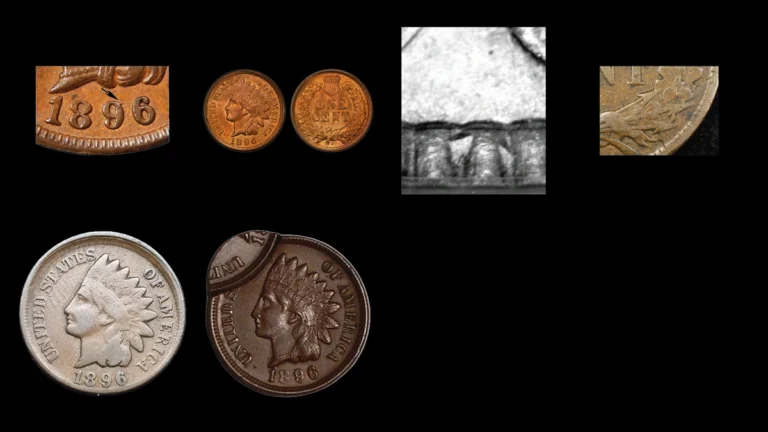
6. 1903 Penny Earlier Strokes Follow the Main Digits: Repunched Date Error
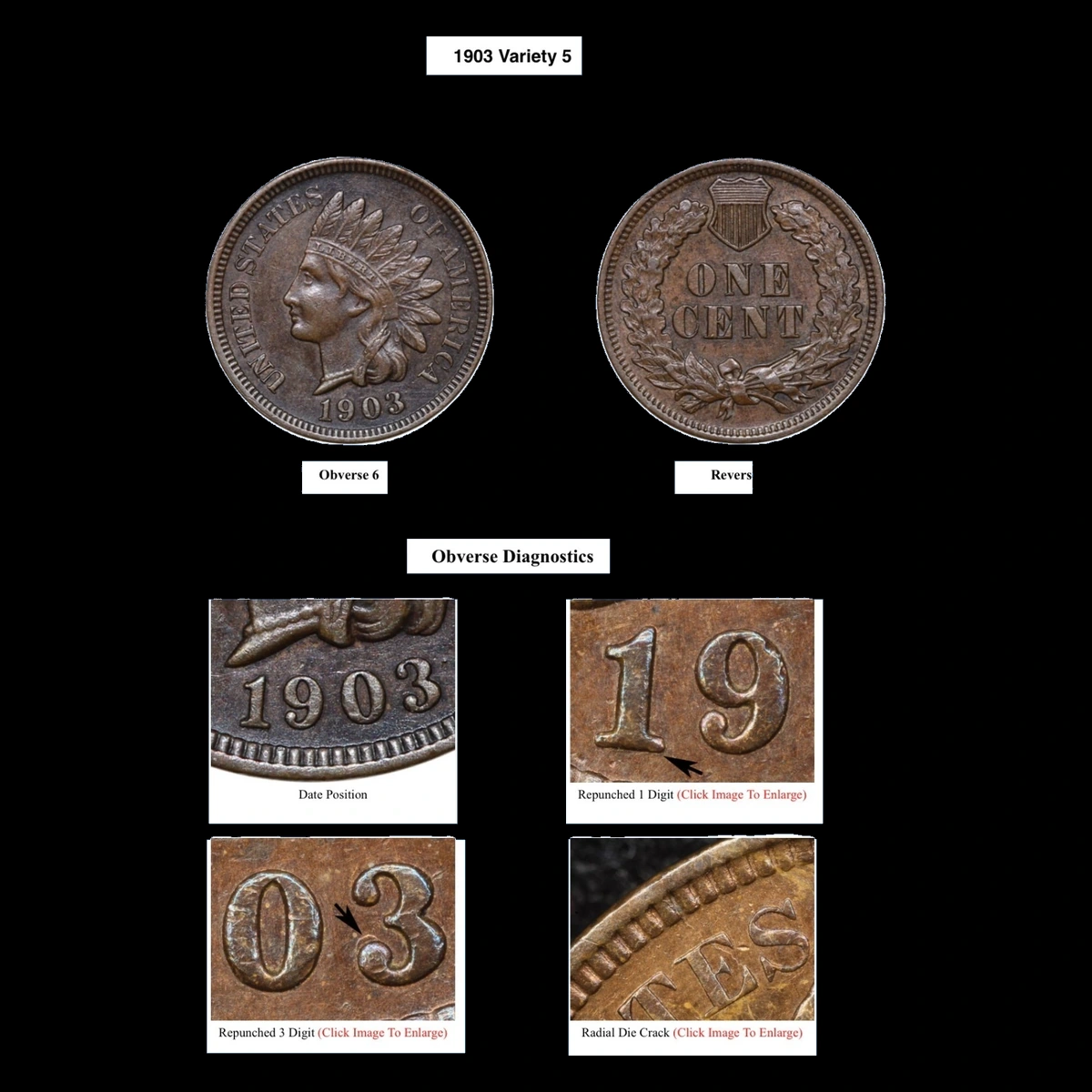
More than one position of the date punch can remain in the die. On Snow-3, extra strokes occur in several directions around the base of 1 and the date loops.
How to Identify
Photograph all four digits and compare every visible remnant with one documented pattern. Other varieties repeat only 3 or show upward detail inside 0.
If one digit seems to match but the others point in conflicting directions, reconsider the attribution. Combining photographs of different varieties does not identify a single die.
These features repeat the same date rather than proving an overdate or a second blow to the coin. Dirt, die chips, and flat striking shelves still need to be excluded.
What It’s Worth
$10–$1,500 is a working estimate across matched varieties and conditions. PCGS records a Snow-3 FS-304 AU58 Brown example at $495 in March 2014.
The AU58 grade indicates very slight wear. That specific result should not be assigned to every extra-looking 1903 date stroke.
7. 1903 Penny Digit Fragments Lie below the Date or Portrait: Misplaced Date Error
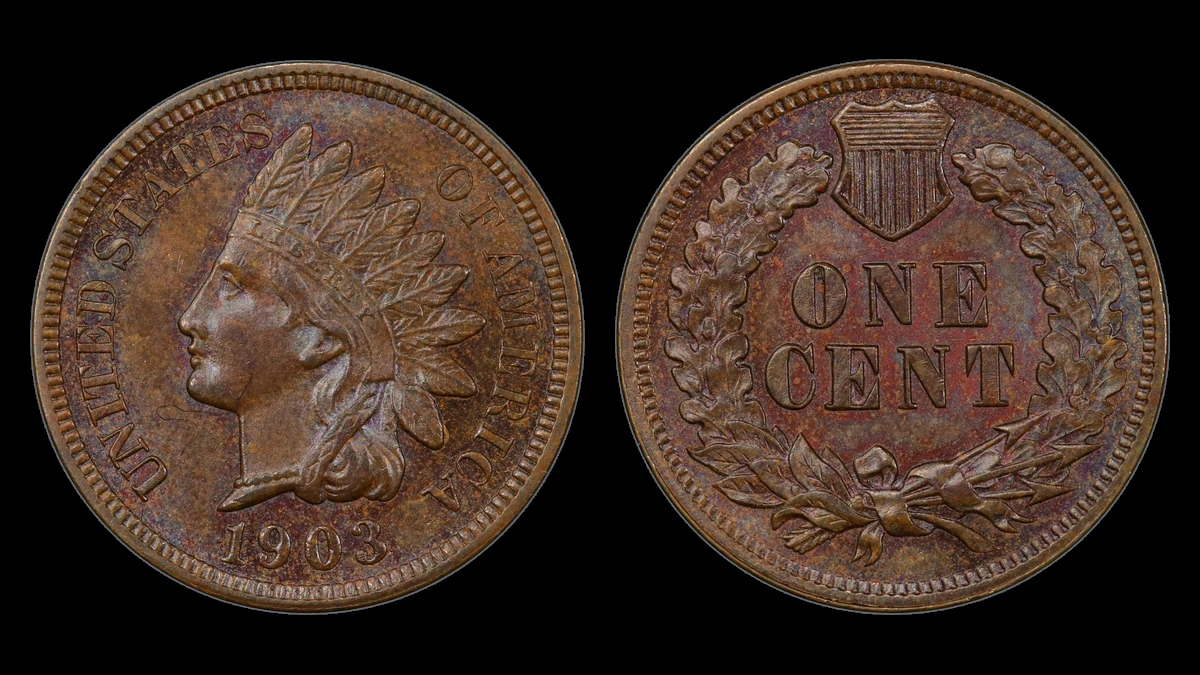
A date punch touching the wrong area of the die could leave numeral tops among the border teeth. Recorded forms include extra 190 fragments, separate 03 tops, and a possible 1 beneath the portrait.
How to Identify
Choose the reference for the actual location and keep the normal date or portrait nearby in the photograph. An incomplete fragment should be described by what survives, not expanded into an imagined full numeral.
A Proof variety has misplaced 03 and an earlier stroke inside 3. Its front die also served ordinary coins, so those date marks alone do not establish Proof status.
Identify the specially prepared collector finish separately and compare the complete die pairing. A shiny surface or catalog number cannot do that work on its own.
What It’s Worth
$20–$2,000 is an estimate for identified ordinary varieties. Suitable Proofs with the documented pattern have a separate whole-coin range of $300–$5,000, much of it reflecting their finish and preservation.
An unworn 1878 misplaced-date cent sold for $1,920 in October 2019. That different-year example shows how condition and clear fragments can combine without pricing an unclear 1903 bump.
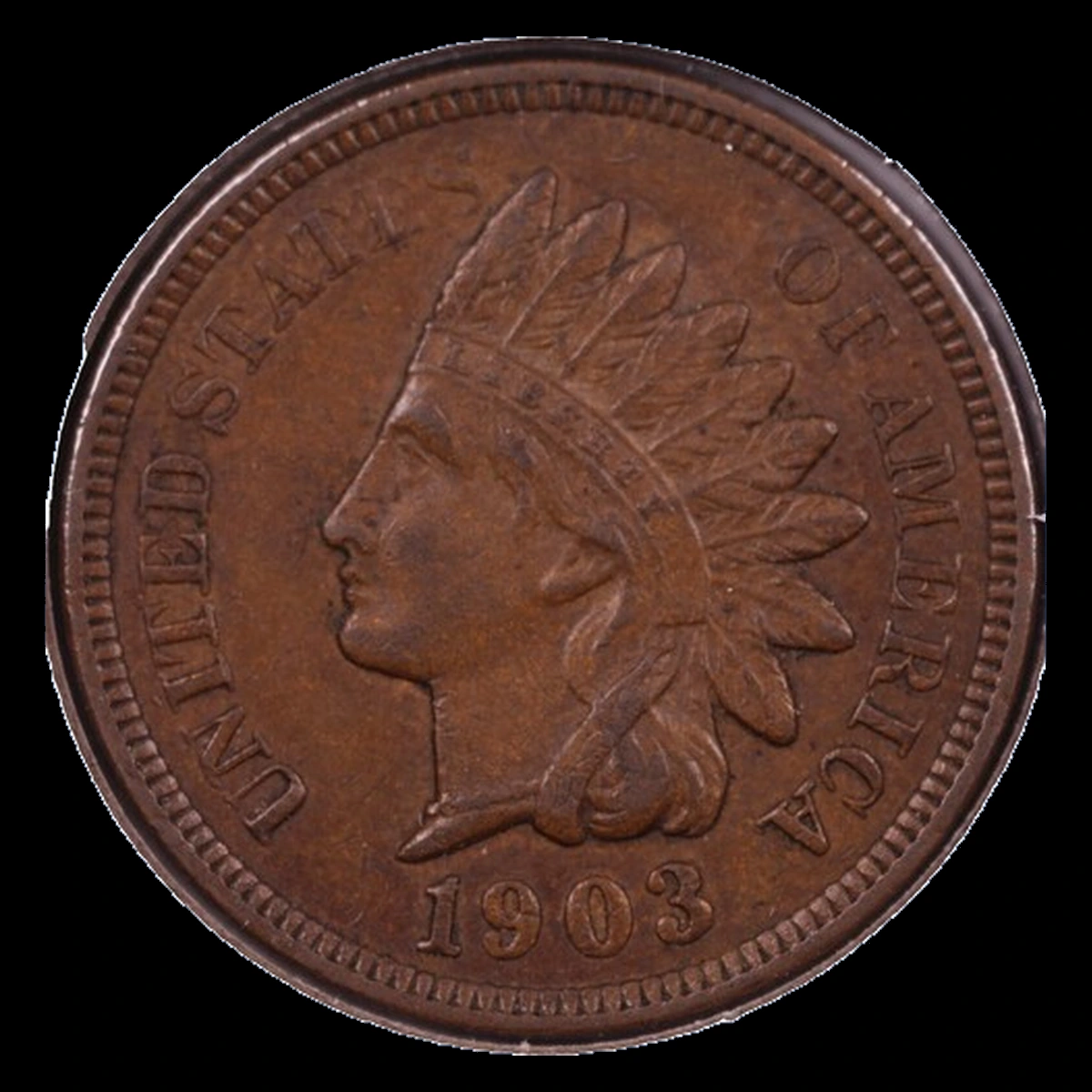
8. 1903 Penny The Coin Spreads around Its Design: Broadstrike Error
The collar normally limits a blank’s width during striking. Without normal restraint from that ring, the metal can spread outward around a complete design.
How to Identify
The recorded NGC Good 6 Brown example is heavily worn. Distinguish detail lost to circulation from design that originally ran beyond the metal.
A normal cent weighs about 3.11 grams and measures 19.05 millimeters across. A broadstrike can grow wider without losing metal, but later hammering can also flatten and spread a coin.
Inspect both faces and the edge for crushed letters or a folded lip. Width alone cannot establish that the expansion occurred during minting.
What It’s Worth
$50–$1,000 is an estimate across genuine broadstrikes with differing wear and spread. The NGC Good 6 Brown example sold for $114 in September 2025.
That provides a same-year result for a heavily circulated coin. Better preservation may support a stronger comparison, but later flattening receives a different assessment.
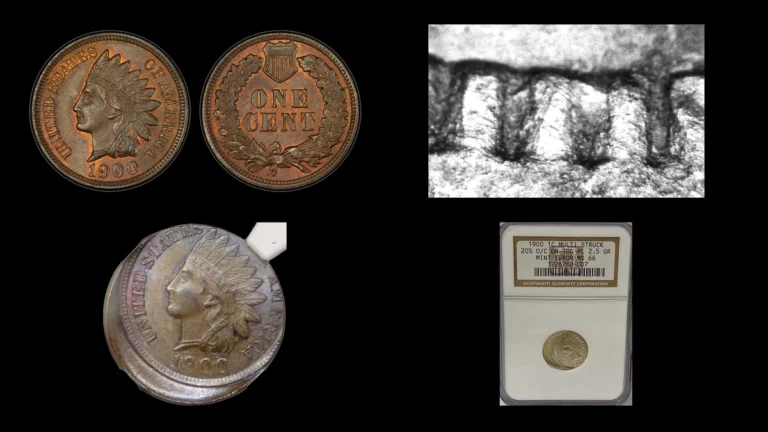
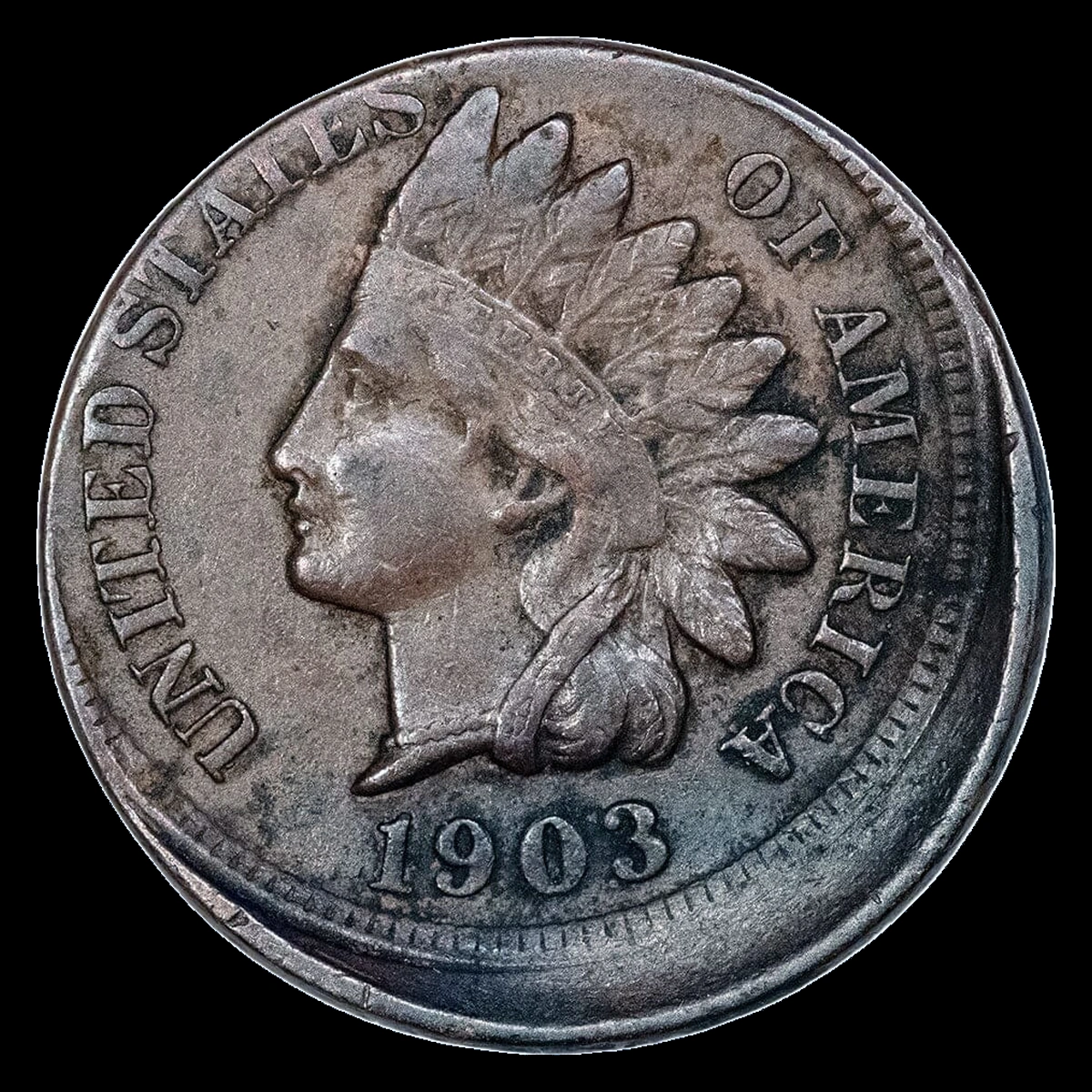
9. 1903 Penny The Design Runs off One Side: Off-Center Strike Error
The documented 15% example shifted toward nine o’clock, losing much of UNITED STATES while keeping a well-struck portrait. Its PCGS MS64 Brown grade describes an unworn coin with some marks.
How to Identify
Read the year and compare the front displacement with the back. Both faces should fit the same misplaced blank, with unused original metal opposite the shifted picture.
A separate 10% example is graded XF40 by NGC. Its direction is not supplied by the larger coin’s nine-o’clock description.
Check the bare area for grinding or filing that removed completed design. The plain crescent of an original off-center strike is still part of the blank.
What It’s Worth
$75–$2,000 is a working estimate for dated 1903 off-center cents. The 15% MS64 Brown specimen sold for $632.50 in May 2005.
The separate 10% XF40 coin brought $195.20 in March 2026. Those results value different conditions and shifts rather than assigning a flat amount to each percentage.
Conclusion
Raised file lines, copied rust pits, and later scratches can look alike in a flat photograph, so inspect their height and exact position. Date remnants and doubled leaf veins also need separate comparisons even when both occur on one coin.
Keep Proof and circulation identities distinct, then judge each penny’s whole condition and error. A complete view of both faces is the best companion to a promising close-up.