Rare 1866 Penny Errors (List & Pictures)
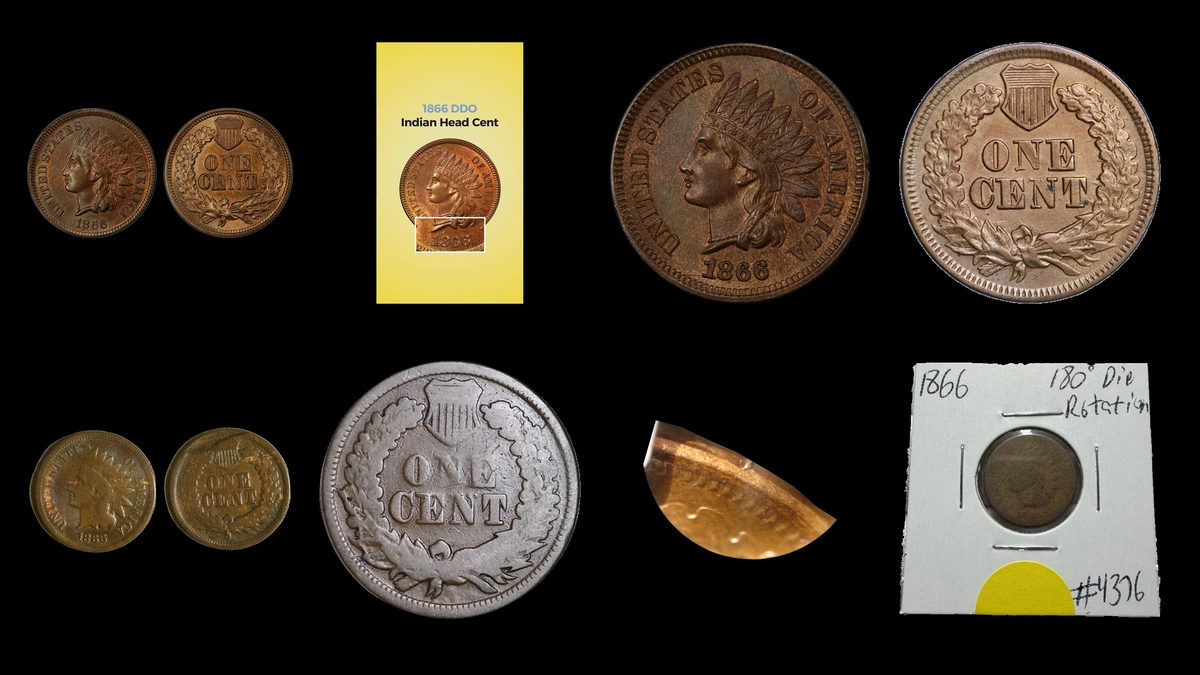
A red repunched-date cent sold for $7,800 at Heritage in 2025. Its MS65 Red preservation helped distinguish it from the many worn examples among 1866 penny errors.
Estimated whole-coin values run $30–$8,000. Begin with the date and headband, then inspect local surface marks, the edge, and the relationship between both faces before comparing prices.
| Visible clue | Possible category | Estimated value |
|---|---|---|
| Extra date strokes | Repunched date | $75–$8,000 |
| Digit fragments among beads or teeth | Misplaced date | $75–$3,500 |
| Repeated headband letters | Doubled die | $75–$4,000 |
| Faint outline, weak patch, or missing layer | Clash, grease, or lamination | $30–$750 |
| Raised break or local edge bulge | Die break or broken collar | $30–$2,000 |
| Nearly inverted reverse | Rotated dies | $150–$2,500 |
| Displaced or repeated design | Off-center or double strike | $200–$6,000 |
The normal bronze cent weighs 3.11 grams and measures 19.05 millimeters across, with a plain edge. Record actual measurements when accessible, while leaving certified coins sealed and any loose material untouched.
1. 1866 Penny An Earlier Date Position Remains: Repunched Date Error
Repeated date-punch placement can leave earlier strokes below some digits and above others. Those marks originated in the die, not from another year underneath the date.
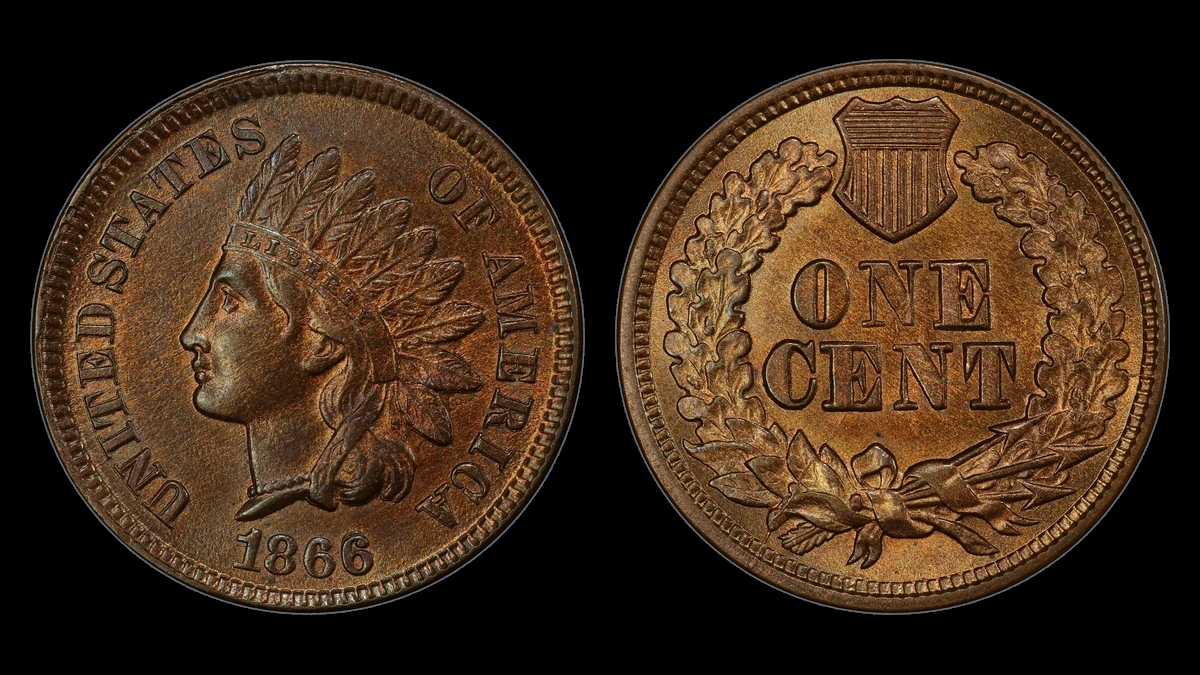
How to Identify
RPD-005 has a remnant below the small top projection of 1, another in the upper loop of 8, and an earlier stroke above the final 6. Compare all those positions together.
Snow-2 is a different pattern involving both 18 and 66. Use its own full-date photograph rather than identifying it from one RPD-005 position.
What It’s Worth
Identified repunched dates have an estimated whole-coin range of $75–$8,000. Particular variety, preservation, and remaining copper color shape that broad spread.
A Snow-2 MS65 Red example brought $7,800 at Heritage in 2025. A separate MS65 Red-Brown Snow-2 sold for $950 in April 2023, showing why the shared variety name alone cannot set the price.
2. 1866 Penny Digits Appear among Necklace Beads and Border Teeth: Misplaced Date Error
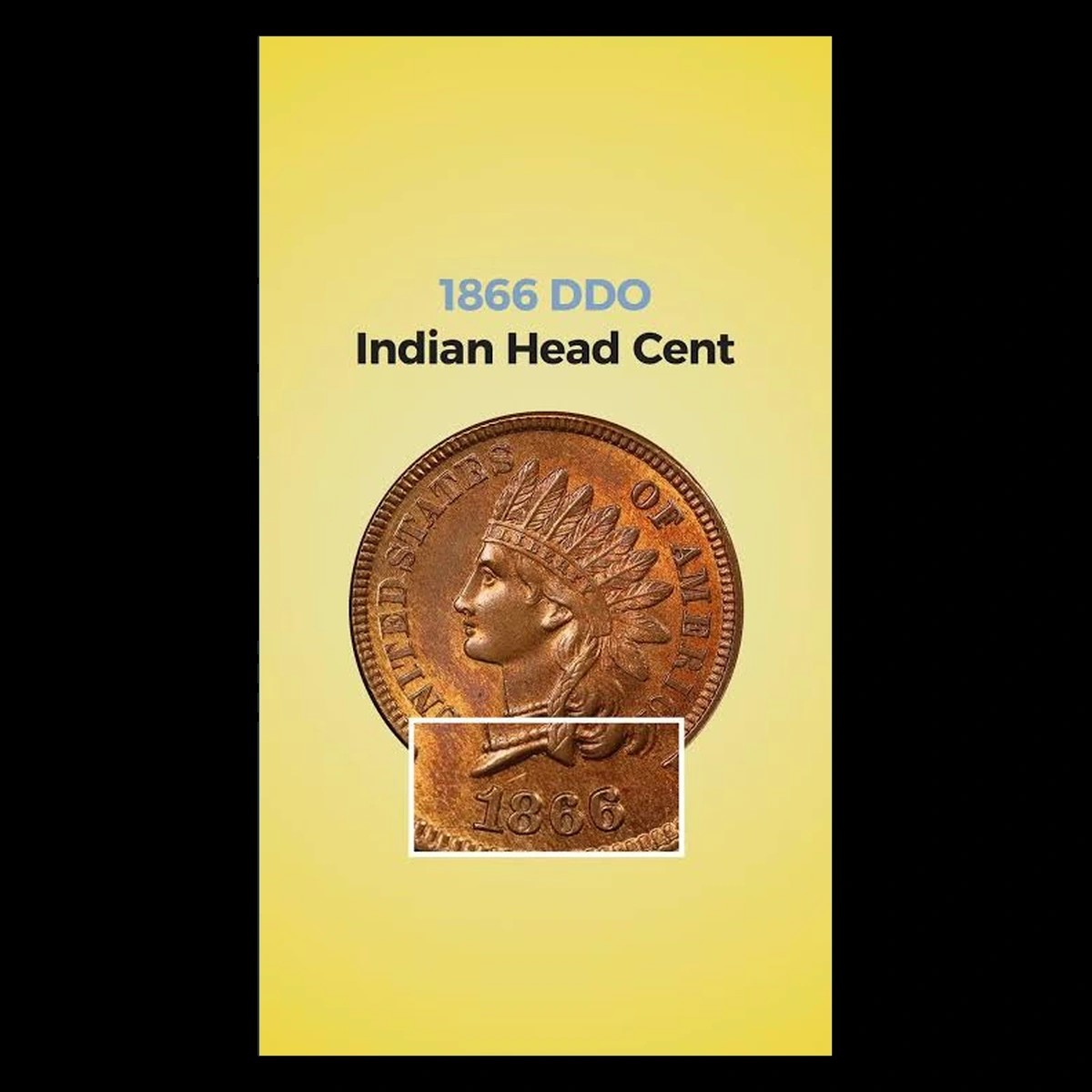
Snow-1 has a misplaced 1 in the necklace and extra 6 fragments in the lower border. The date punch had touched the die outside its intended location before the normal date was completed.
How to Identify
Compare the straight fragment among rounded necklace beads and the separate lower 6 remnants. Normal beads and border teeth must not be counted as extra digits.
Another variety has fragments of 866 among the border teeth and needs its own reference. Snow-1 also has doubled headband lettering, a different feature on the same die.
What It’s Worth
Matched 1866 misplaced dates are estimated at $75–$3,500. The pattern and amount of original detail affect the whole-coin comparison.
A Snow-1 with the accompanying doubled front, graded MS64 Brown, sold for $1,380 in July 2022. That is one combined price, not a separate amount to add for each type of extra detail.
3. 1866 Penny Extra Raised Edges Follow IBERTY: Doubled Die Error
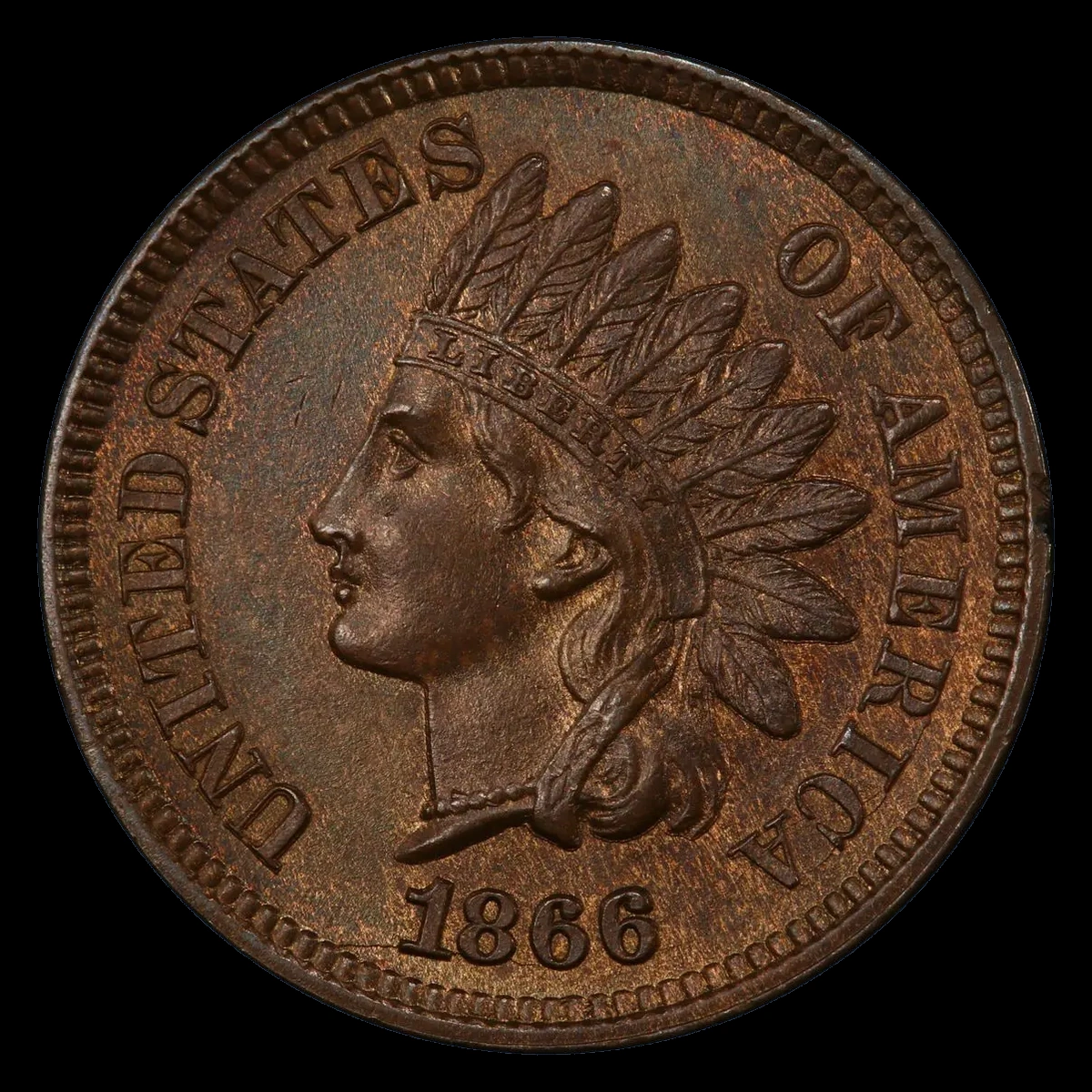
Snow-1 repeats detail across IBERTY on the headband. A separate 1866 front variety concentrates its repeated pattern at TY.
How to Identify
Check the readable headband under magnification and compare the full relevant letter sequence. Heavy wear can merge small repeated strokes, while a reflection can imitate a thin bright edge.
The repeated shapes were present in the die before striking. Flat shelves from movement during the strike do not establish that earlier doubled design.
What It’s Worth
Identified doubled fronts are estimated at $75–$4,000. Clear headband detail and preservation guide comparison within that range.
The Snow-1 MS64 Brown coin brought $1,380 at Heritage in July 2022, the same combination cited for misplaced digits. A separate MS63 Red-Brown example sold for $1,440 in May 2023; the shorter TY variety needs its own attribution.
4. 1866 Penny Unfamiliar Outlines Cross C in CENT: Die Clash Error
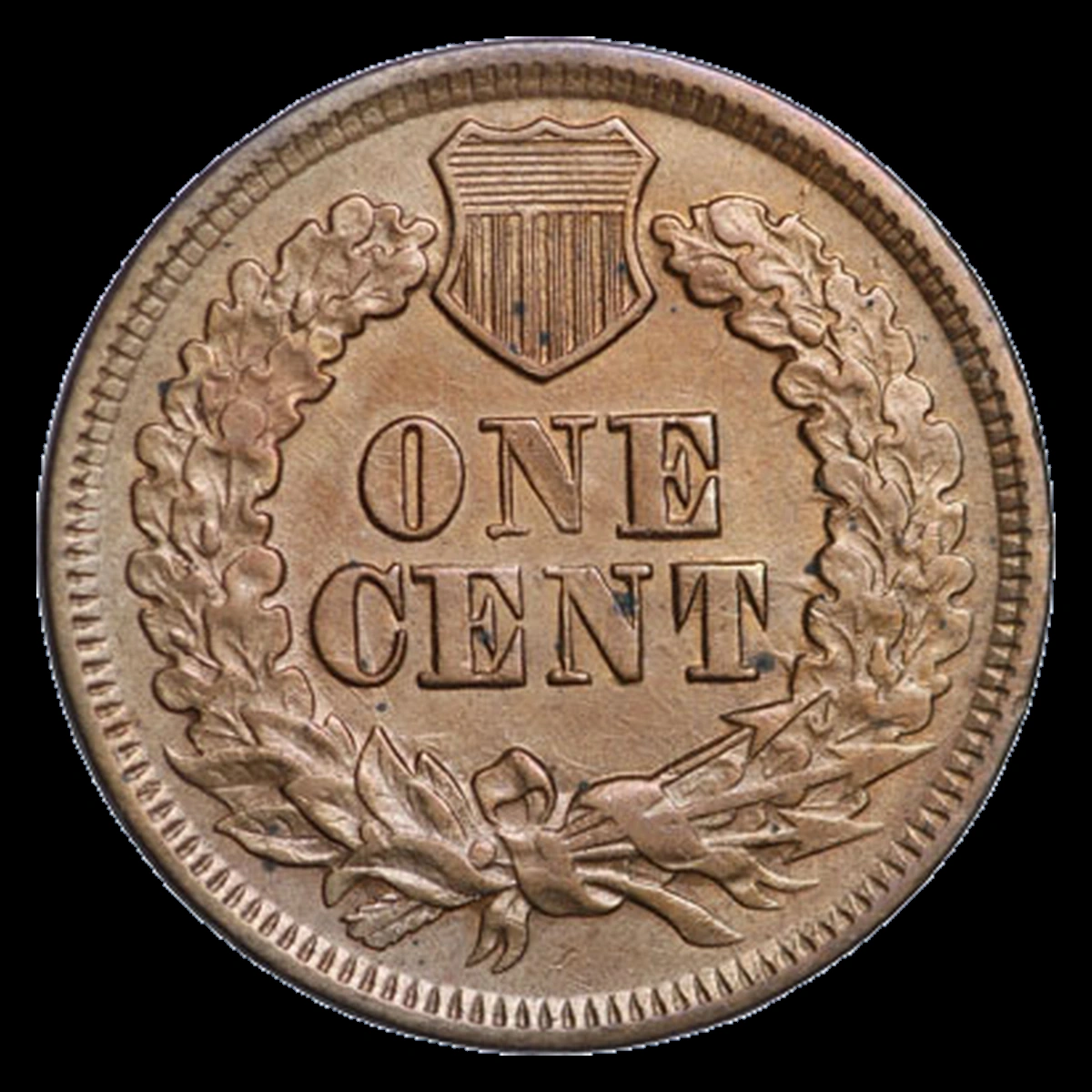
The cataloged pairing has a trace through C and others to the right of CENT. Such marks can form when the dies meet without a blank and later transfer their acquired outlines to coins.
How to Identify
Keep the denomination and adjacent field in one close-up so the normal letters anchor the comparison. Match the extra trace’s shape instead of labeling isolated roughness as a clash.
The same example also has misplaced date fragments. Those came from date punching, not from the dies colliding.
What It’s Worth
Identifiable clashes are estimated at $40–$750 as whole coins. Faint marks on worn copper generally belong near the modest end.
No sale amount is supplied for the illustrated pairing. Its misplaced digits and clash must be evaluated together rather than receiving two full prices.
5. 1866 Penny A Letter Is Soft beside Sharper Detail: Grease-Blocked Design Error
Grease packed in a die can prevent the blank’s metal from reaching part of the design. A recorded 1866 example is described as ANACS XF40 Brown, struck through grease.
How to Identify
Compare the weak area with neighboring features of similar height and with the coin’s circulation wear. Look for a local interruption rather than uniformly worn high points.
The collection record does not name a particular missing letter. Use the actual grading photographs and rule out grooves from later smoothing.
What It’s Worth
Recognizable grease-blocked detail on circulated 1866 cents is estimated at $30–$300. The underlying date and remaining condition contribute substantially.
The XF40 record is a graded description, not a completed sale. Slight weakness may add little if it is difficult to distinguish from ordinary wear.
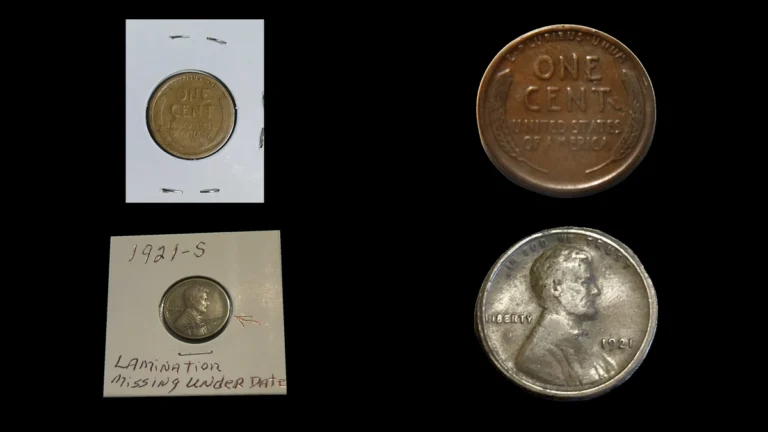
6. 1866 Penny A Shallow Layer Is Missing from the Reverse: Lamination Error
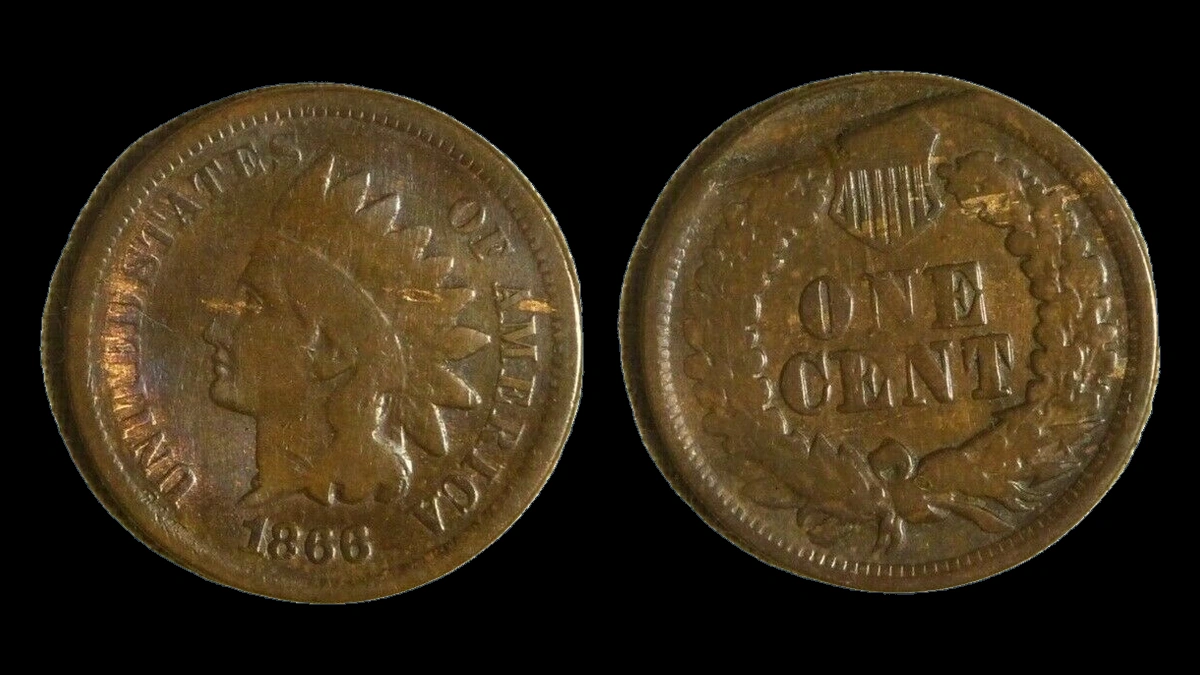
A weak sheet within the alloy can detach and expose a shallow irregular area. The reported reverse example was described by a seller as VG to Fine, without independent grading established here.
How to Identify
Follow the missing patch’s layer boundary under low light, leaving any attached flap alone. A hollow with sharp tool grooves or widespread pitting needs consideration of damage or corrosion.
The seller’s description gives no precise path through the wreath or lettering. A small loss may barely change the weight, so measurements cannot settle the cause alone.
What It’s Worth
The estimated range is $35–$400, with modest worn reverse laminations about $35–$200 and clearer examples in better condition about $100–$400. Additional damage affects the total.
An 1890 lamination graded NGC MS62 Brown sold for $104 in April 2010. That unworn later-date example is a mechanism comparison, not a sale of the seller-described 1866 piece.
7. 1866 Penny A Raised Line Becomes a Rim Patch: Die Cracks and Cuds Error
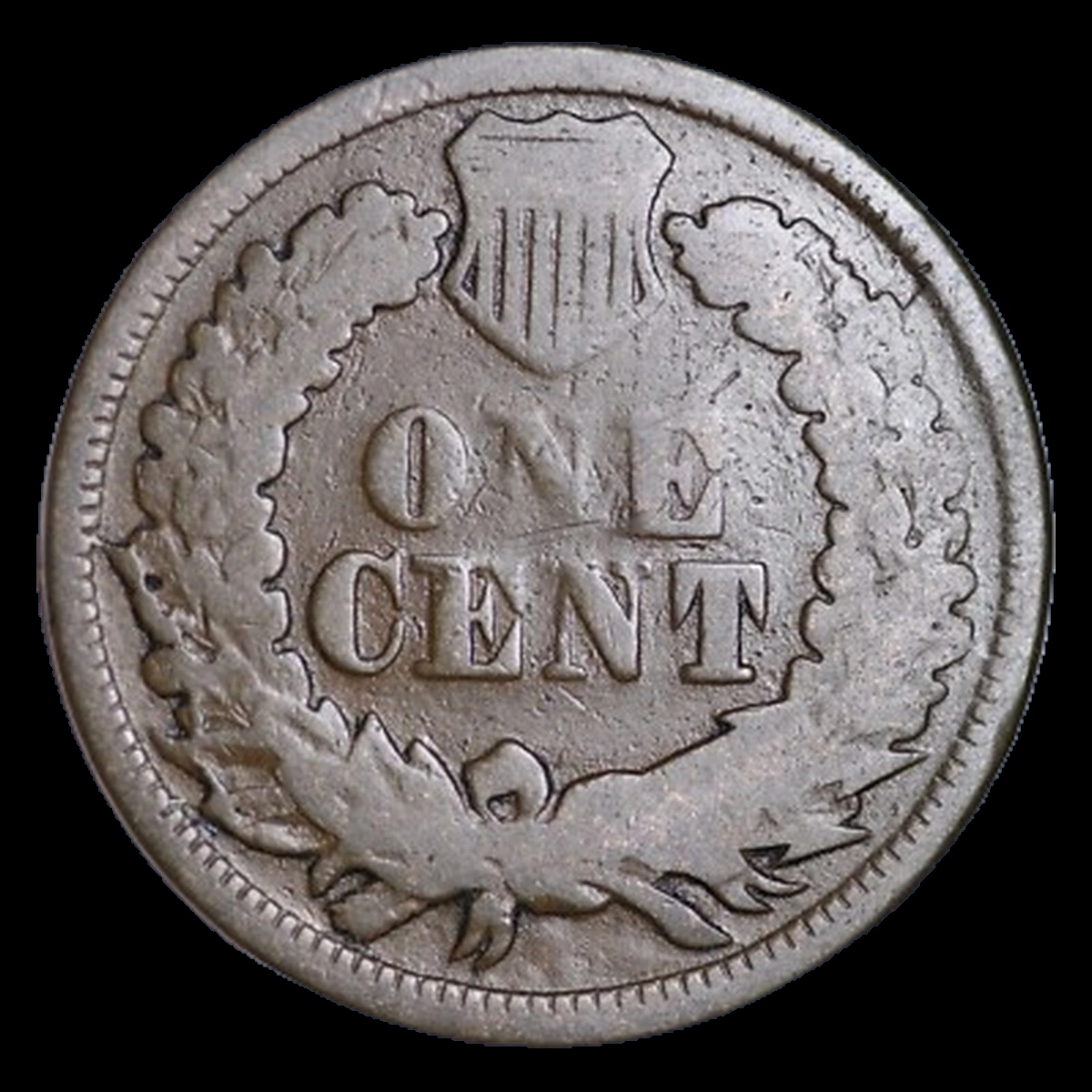
Front cracks are recorded near 1:15, 4:15, and 6:30. Larger failures include a reverse break at nine to 10:30, another at twelve, and a separate front break from 10:15 to eleven.
How to Identify
Select the correct face and position in the 1866 catalog. The twelve-o’clock reverse area has retained and fully broken stages, distinguished partly by whether design survives inside the section.
For thin lines, establish that the copper rises above the field rather than forming a scratch. For patches, inspect the adjacent edge for a fold, solder, or another added material.
What It’s Worth
Estimated values run $30–$1,500: minor worn cracks about $30–$150 and clear cuds or larger retained breaks about $100–$1,500. The precise failure and condition guide the comparison.
An 1866 reverse-cud cent graded PCGS MS62 Brown sold for $504 at Heritage in March 2021. That substantial break is not an exact price match for every catalog position or fine crack.
8. 1866 Penny The Edge Bulges Locally: Broken Collar Error
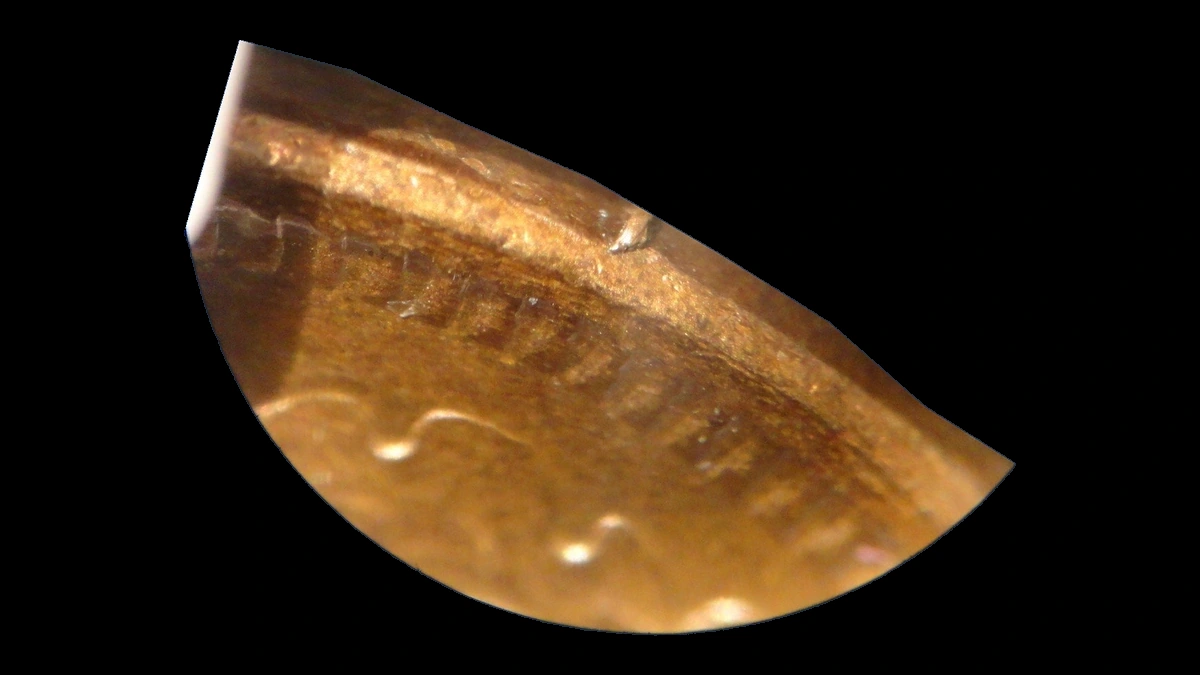
The collar is the ring that normally restrains metal during the strike. Broken portions can permit local outward spread, leaving an irregular outline rather than the broader expansion of a completely unrestrained blank.
How to Identify
Measure the widest and narrowest spans, then view the edge and nearby border teeth directly. The cataloged example associates local spreading with unusual lines around those teeth.
Its die also has repunched 18 and final 6, but that date match cannot prove collar damage on a normally shaped coin. Exclude filing, a folded lip, and later squeezing.
What It’s Worth
Genuine 1866 broken-collar cents are estimated at $100–$2,000. The original edge distortion and preservation affect the whole-coin value.
An older listing priced an 1886 NGC XF45 broken-collar cent at $195. That different-year dealer offer is not a completed 1866 transaction.
9. 1866 Penny The Back Remains Nearly Upside Down: Rotated Dies Error
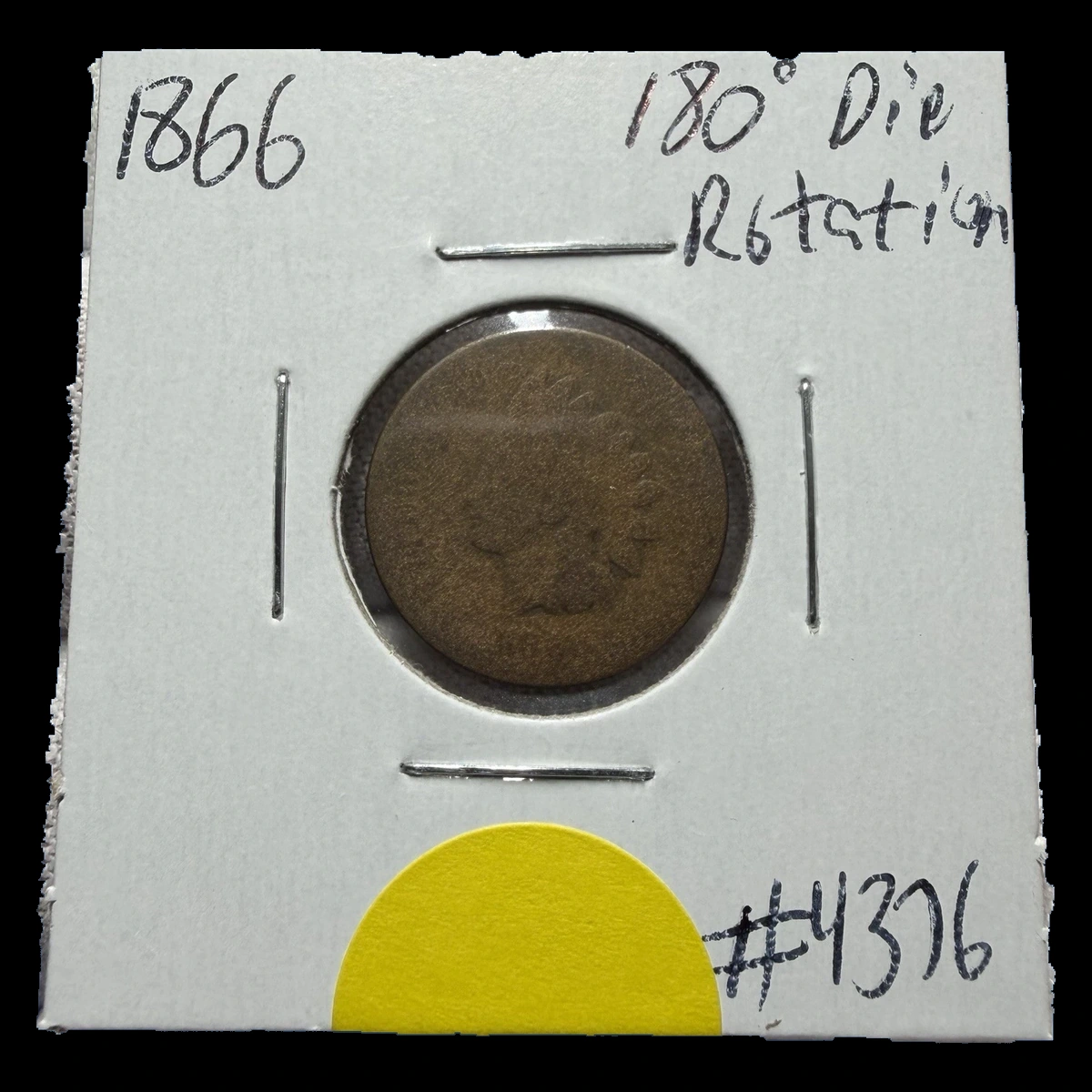
The reported die pairing has 178 degrees of clockwise rotation, close to a half-turn. Its front die also developed cracks and a break near 10:30.
How to Identify
Hold the date level, flip top to bottom without twisting, and repeat against a fixed guide. A normal reverse should become upright; the reported example remains nearly inverted.
Another pairing using the front die has no reverse rotation. The front cracks alone cannot establish the angle, and independently rotated photographs can conceal it.
What It’s Worth
A verified near-half-turn 1866 rotation is estimated at $150–$2,500. Its actual angle, preservation, and accompanying features belong in one assessment.
No final sale is supplied for the cataloged example. A slight photographic tilt does not qualify for this estimate.
10. 1866 Penny One Displaced Image Sits Low: Off-Center Strike Error
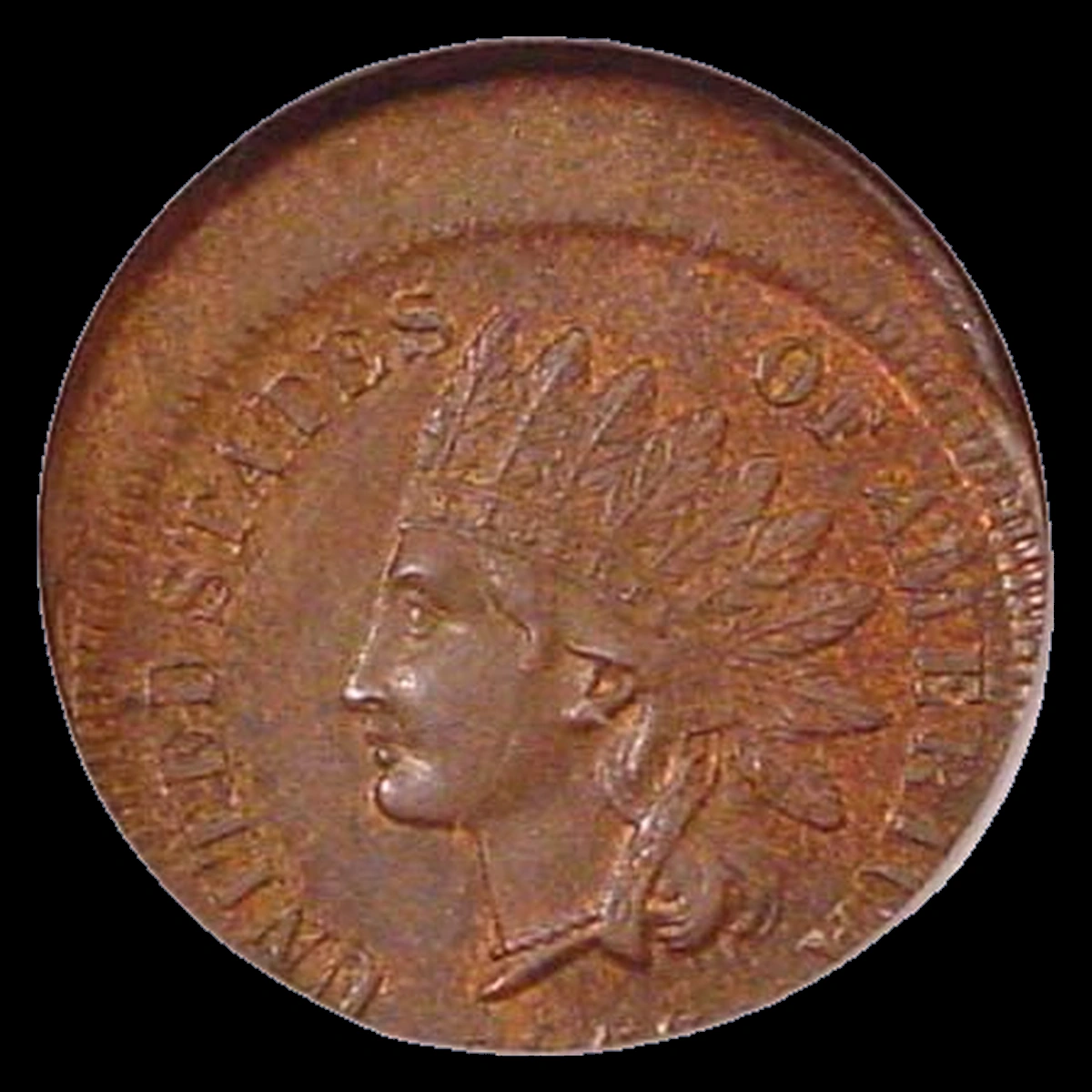
The Xan Chamberlain Collection example has a 20% shift toward six o’clock and an NGC MS64 Brown grade. Its unused crescent stayed outside the area reached by the dies.
How to Identify
Keep 1866 level and compare the lower strike position with the collection illustration. Check the reverse boundary against the same misplaced blank.
Inspect the unused metal for grinding or removed design. This coin has one reported displaced strike, unlike the separate piece with a tiny second impression.
What It’s Worth
Estimated values span $200–$6,000: circulated dated examples about $200–$1,000 and attractive well-preserved pieces about $1,000–$6,000. The readable date and original surfaces matter alongside displacement.
No final sale is assigned to the MS64 Brown collection coin. Its unworn grade cannot be transferred to a worn coin with a similar percentage shift.
11. 1866 Penny A Small Edge Impression Records Another Blow: Double Strike Error
The documented PCGS Fine 12 cent has a second strike 95% off center. Only a small part of the coin met the dies during that later blow; the percentage does not mean 95% of its metal is missing.
How to Identify
Trace recognizable design within the small extra impression and compare its position on the opposite face. An unexplained rim dent or die-break lump cannot substitute for a second struck image.
Inspect the edge for cuts, joins, or pushed-in damage. Keep enough surrounding first-strike detail in photographs to make the sequence clear.
What It’s Worth
Genuine double strikes are estimated at $400–$5,000. Preservation and convincing evidence of both blows matter more than the small second image’s size alone.
The PCGS Fine 12 example sold for $503.70 at Heritage in February 2010. A later listing without a visible final amount supplies no additional sale price.
Conclusion
The same 1866 cent can carry a repunched date and another independent feature, but each needs visible evidence. A matching date does not prove a broken collar, and front cracks do not establish reverse rotation.
Use the $30–$8,000 estimates with the actual variety, grade, and color. Preserve small fragments and surface boundaries, and keep dealer offers, collection descriptions, and completed sales distinct.