Rare 1802 Penny Errors (List & Pictures)
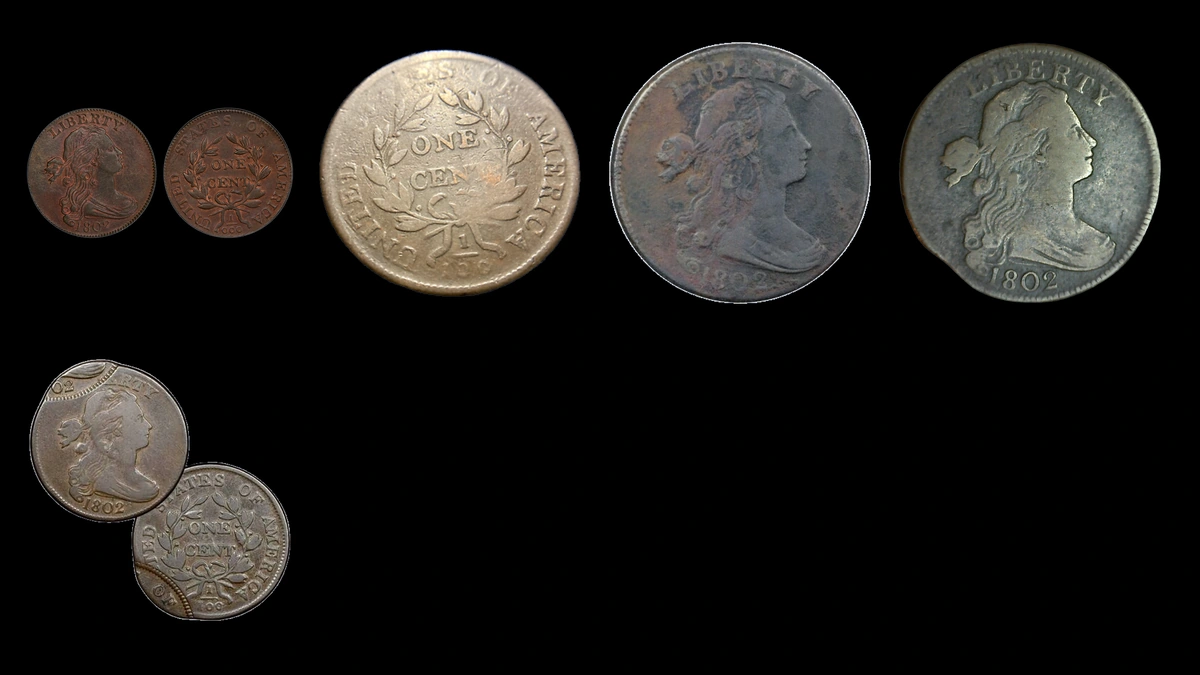
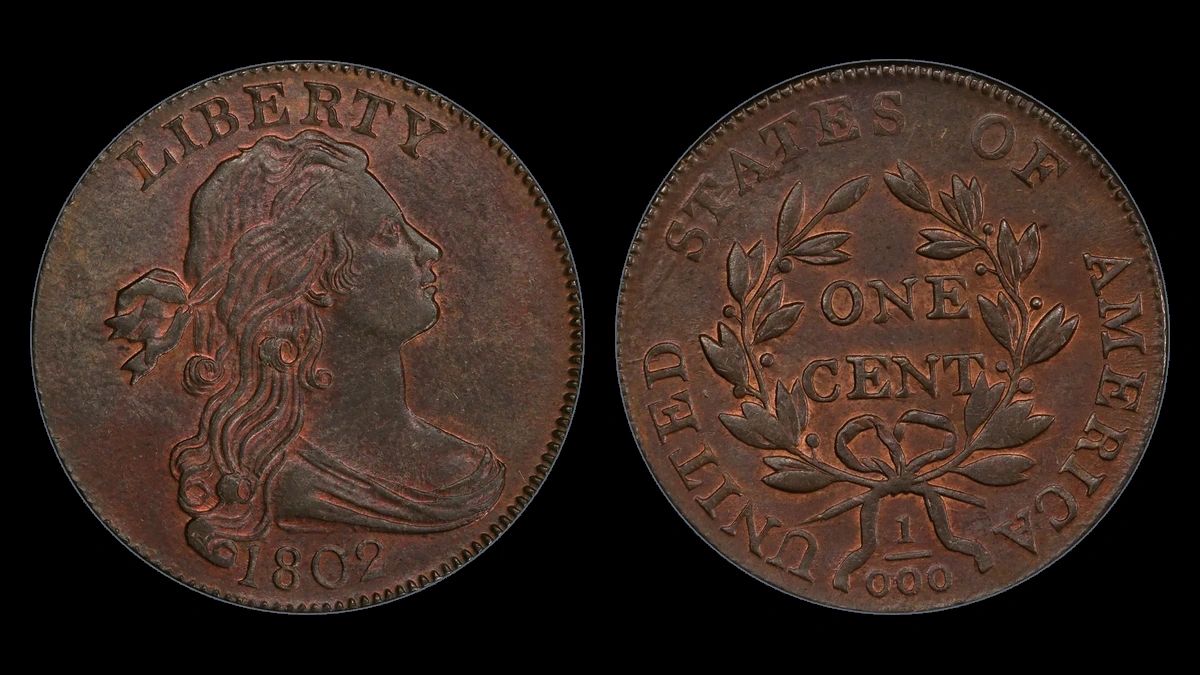
The fraction below the wreath is worth reading carefully on an 1802 cent. Some coins say 1/000, a mistake built into the design before any copper reached the press.
Other 1802 penny errors came from overlapping discs, damaged tools, or repeated strikes, with estimated whole-coin values of $50–$20,000. A double-struck example received a $3,000 winning bid before fees in 2007; its distinct second impression helps explain the interest.
1. 1802 Penny Wrong Fraction and Missing Wreath Stems Error
The S-228 variety reads 1/000 where the intended fraction was 1/100. Three zeros were engraved into the die, the stamping tool, and repeated on the cents it produced.
A different back design lacks both wreath stems and has two fraction bars plus a repeated final S in STATES. These features form a separate engraving variety rather than extra signs required on the 1/000 coin.
How to Identify
Magnify the fraction and count the visible shapes beneath the bar. Heavy wear can hide a thin 1, so an indistinct first digit should not automatically become a zero.
For the Stemless variety, compare both stem positions, the two bars, and the final S together. Check for fresh engraving cuts before relying on unusually sharp detail beside worn copper.
What It’s Worth
$100–$10,000 is the estimated range for these identified engraving varieties. The precise back design and the coin’s condition determine which comparisons are useful.
A different 1802 variety, S-232, sold for $1,611.15 in March 2004 at NGC AU58 with clash marks and a rim break. That is same-year condition context, not a recorded sale of the 1/000 or Stemless combination.
2. 1802 Penny Clash Marks Error
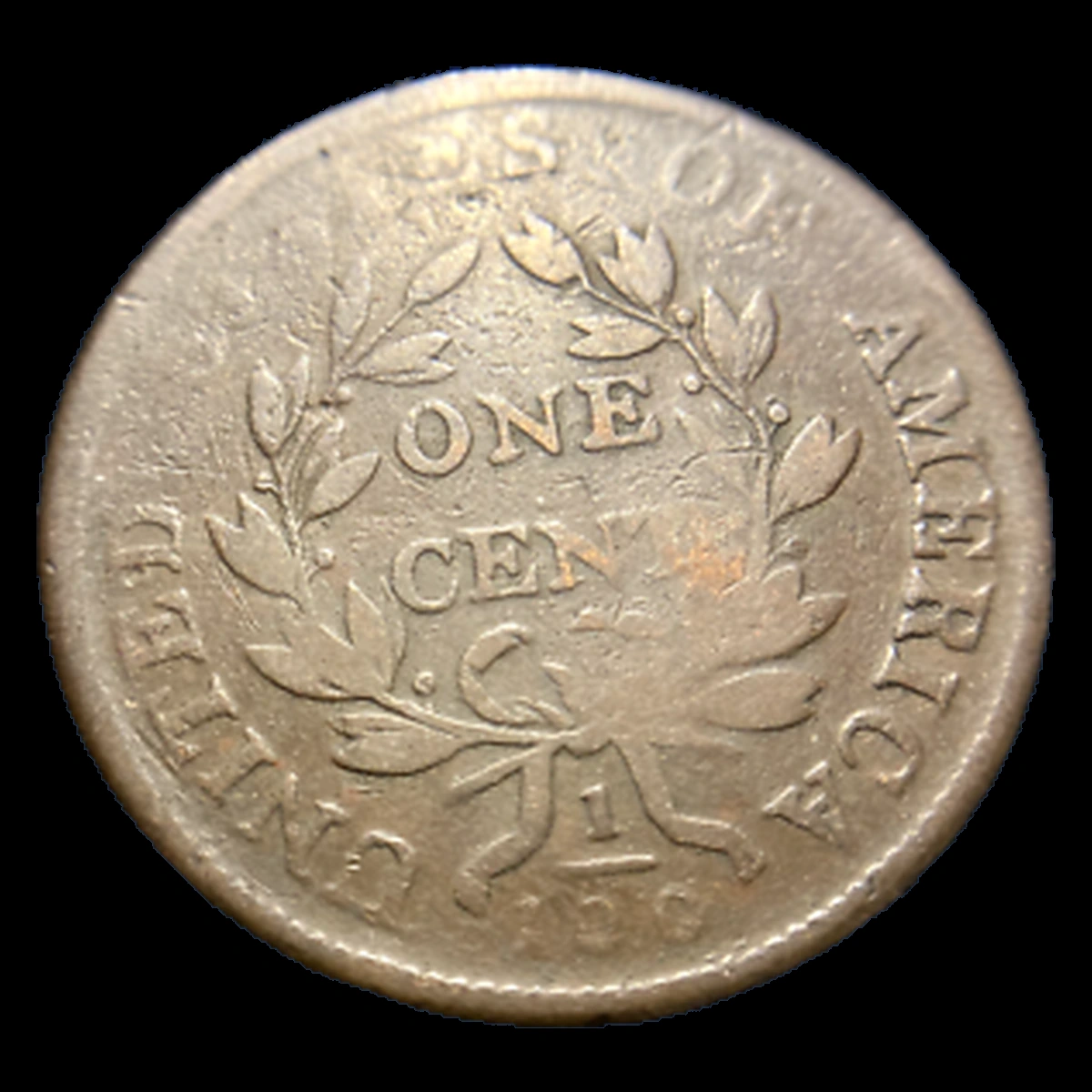
A trace of the wreath beneath Liberty’s chin belongs on the opposite face of a normal cent. It can appear there after the two dies strike each other without a blank between them and pass the resulting marks to later coins.
The S-227 variety shows the below-chin trace. A separate S-232 example has sunken tooth-like marks between the wreath and AMERICA, so clash marks should not all be described as raised lines.
How to Identify
Match the location and shape to the relevant variety. Compare below the chin for S-227, or between the wreath and AMERICA for the small S-232 impressions.
Use light from several directions to separate regular design-related shapes from scratches and pitting. A shadow that seems to join several marks may disappear when the light moves.
What It’s Worth
$50–$4,000 is the estimated whole-coin range for readable 1802 clash marks across worn through nearly unworn pieces. Faint traces may contribute little beyond the value of the cent itself.
The NGC AU58 S-232 with sunken tooth marks and a rim cud sold for $1,611.15 in March 2004. Its preserved surfaces and combined features received one price, rather than separate payments for each mark.
3. 1802 Penny Cracks and Rim Cuds Error
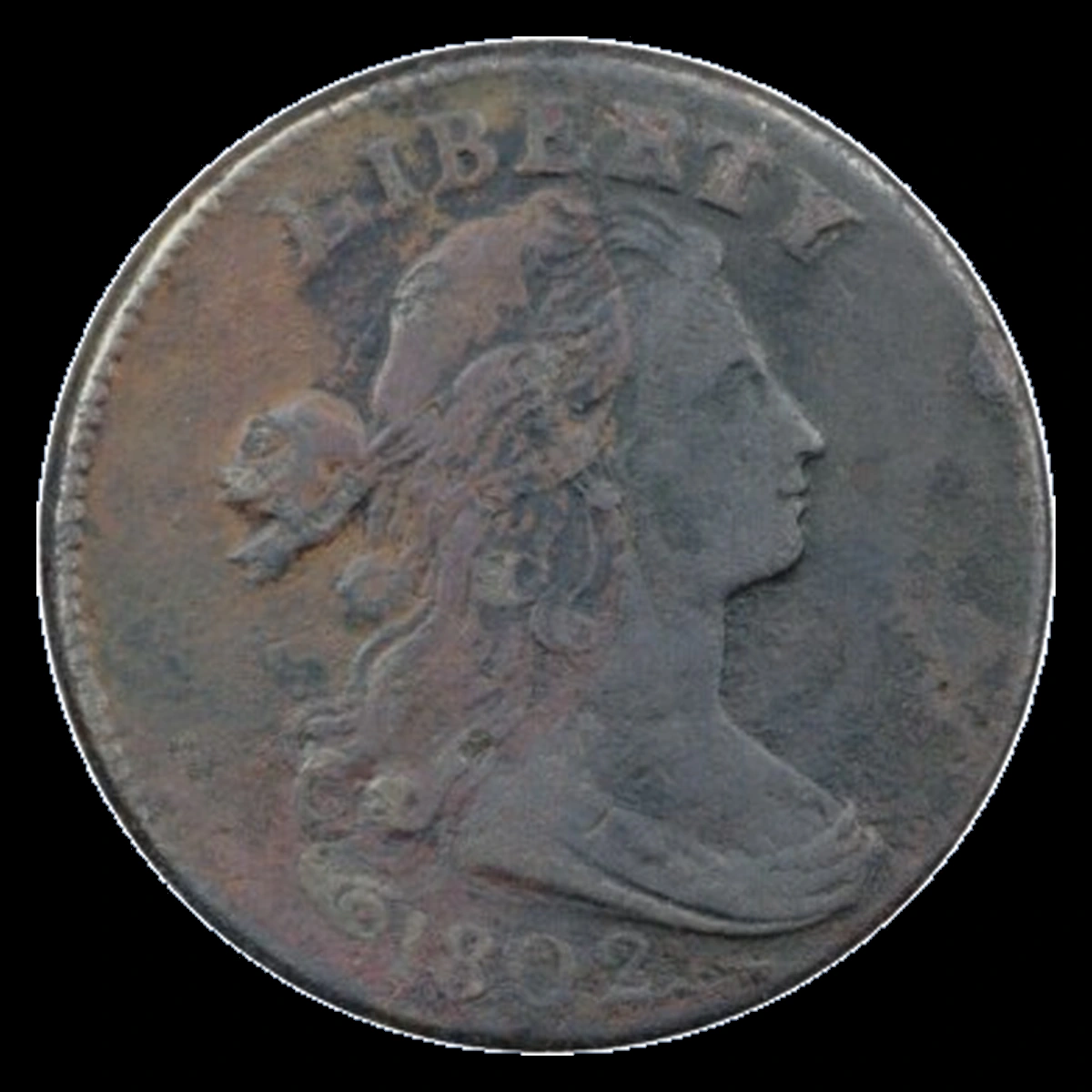
A raised line or enlarged break near B in LIBERTY records a different kind of die damage. Copper flowed into an opening in the tool and copied that opening as a raised feature.
On S-232, a larger patch joins the back rim above AT in STATES. This rim-connected break is a cud, and it should not be combined with the separate front break as one required pattern.
How to Identify
For a thin crack, check that the line rises above the surface rather than cutting through it. Keep the full word LIBERTY visible when comparing a mark near B.
A claimed S-232 cud should reach the rim above AT. Inspect its edge for a seam, attached material, or an impact that pushed copper inward.
What It’s Worth
$75–$6,000 is the estimated range for identifiable cracks and substantial rim breaks in varied conditions. It represents complete coins, not an amount added to another price.
A PCGS VG10 S-232 with the cud above AT sold for $244 in September 2026. The sharper NGC AU58 example brought $1,611.15 in March 2004 and is the same combined-feature sale described under clash marks.
4. 1802 Penny Small Edge Clip Error
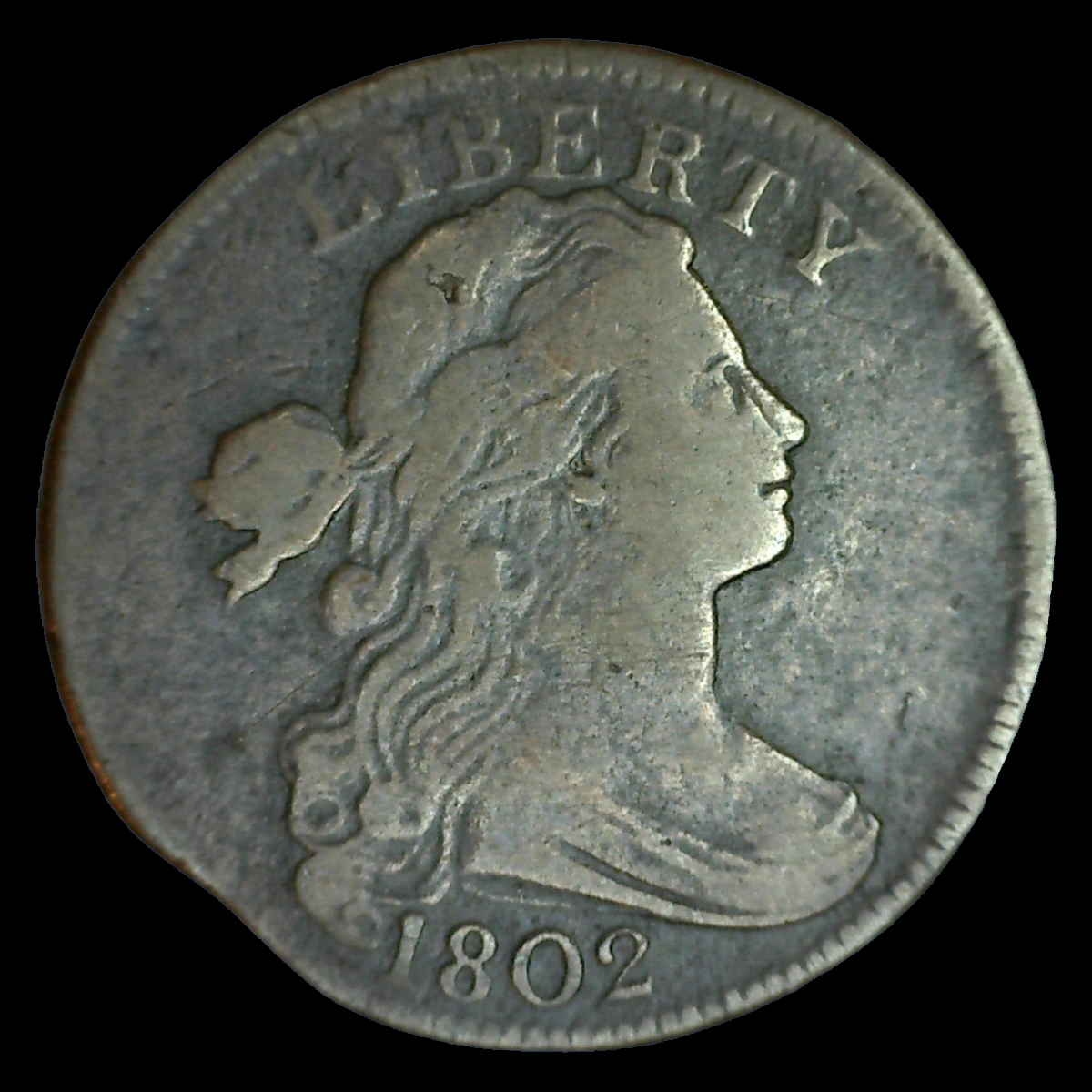
A reported Stemless cent has a tiny gap described as a planchet clip. A planchet is the blank disc, so this description means the copper was already incomplete before striking.
The seller called the coin Fine without supplying a grading-service certification or precise gap location. Its missing wreath stems concern the design and do not explain the separate missing edge metal.
How to Identify
Inspect both sides where the border approaches the opening. Natural weakening can support an original clip, while fresh cuts or filing marks suggest later removal.
A normal 1802 cent is about 10.89 grams and roughly 29 mm across, with a plain edge. A tiny clip may make only a small weight difference, so the surface of the gap matters more than the scale alone.
What It’s Worth
$100–$3,000 is the estimated range for an authenticated small clip on an 1802 cent. The variety and copper surfaces can contribute more than the small missing segment.
An 1851 large cent with a minor clip sold for $159 in January 2022 at NGC AU58. That later, lightly worn coin is a general clip comparison and does not give the reported 1802 coin a certified grade or sale price.
5. 1802 Penny Bent Pin Impression Error
A bent pin caught between a blank and a die can prevent the coin design from reaching part of the copper. The pin’s own outline, including its rounded head, can remain pressed into the surface.
The American Numismatic Society holds the recorded 1802 example. An early reference describes a pin about 33 mm long; that measurement refers to the object, not the diameter of the cent.
How to Identify
Follow the bent depression to its rounded end and examine how the normal design was blocked. A curved scratch alone does not reproduce all of those features.
Look for fresh cutting or a mark punched into an already finished design. Photograph the impression under changing light without rubbing it, and do not expect the pin to remain attached.
What It’s Worth
$500–$10,000 is an estimated range for comparable authenticated 1802 pin impressions. It is not a sale record or an appraisal of the museum’s coin.
A dealer offered an 1843 large cent with a thread impression at $890 as MS64 Brown. That asking price concerns a different object and date, while a clear pin head and bent outline require their own assessment.
6. 1802 Penny Overlapping Disc Indent Error
A smooth area shaped like a lens can form where another blank overlaps the cent during striking. One curved boundary comes from the other disc, and the coin’s own edge forms the other side.
This is an indent, and the American Numismatic Society records an 1802 example. The blocked area does not need to contain backward letters or a mirror portrait.
How to Identify
Check whether the smooth depression follows part of another round disc. Its boundary should differ from the ragged peeling edge of a copper layer.
Examine the edge for later bending or squeezing and study how the design meets the blocked area. If sunken backward lettering is present, a brockage transfer may be involved rather than a plain indent.
What It’s Worth
$500–$12,000 is the estimated range for authenticated 1802 indents. A clear overlap and attractive surfaces support stronger interest, without implying a transaction for the museum specimen.
An 1810/09 cent with an overlapping-disc effect and an off-center second strike sold for $2,520 in January 2022. Its additional strike and different date make it a broader comparison.
7. 1802 Penny Repeated Strikes and Mirror-Image Transfers Error
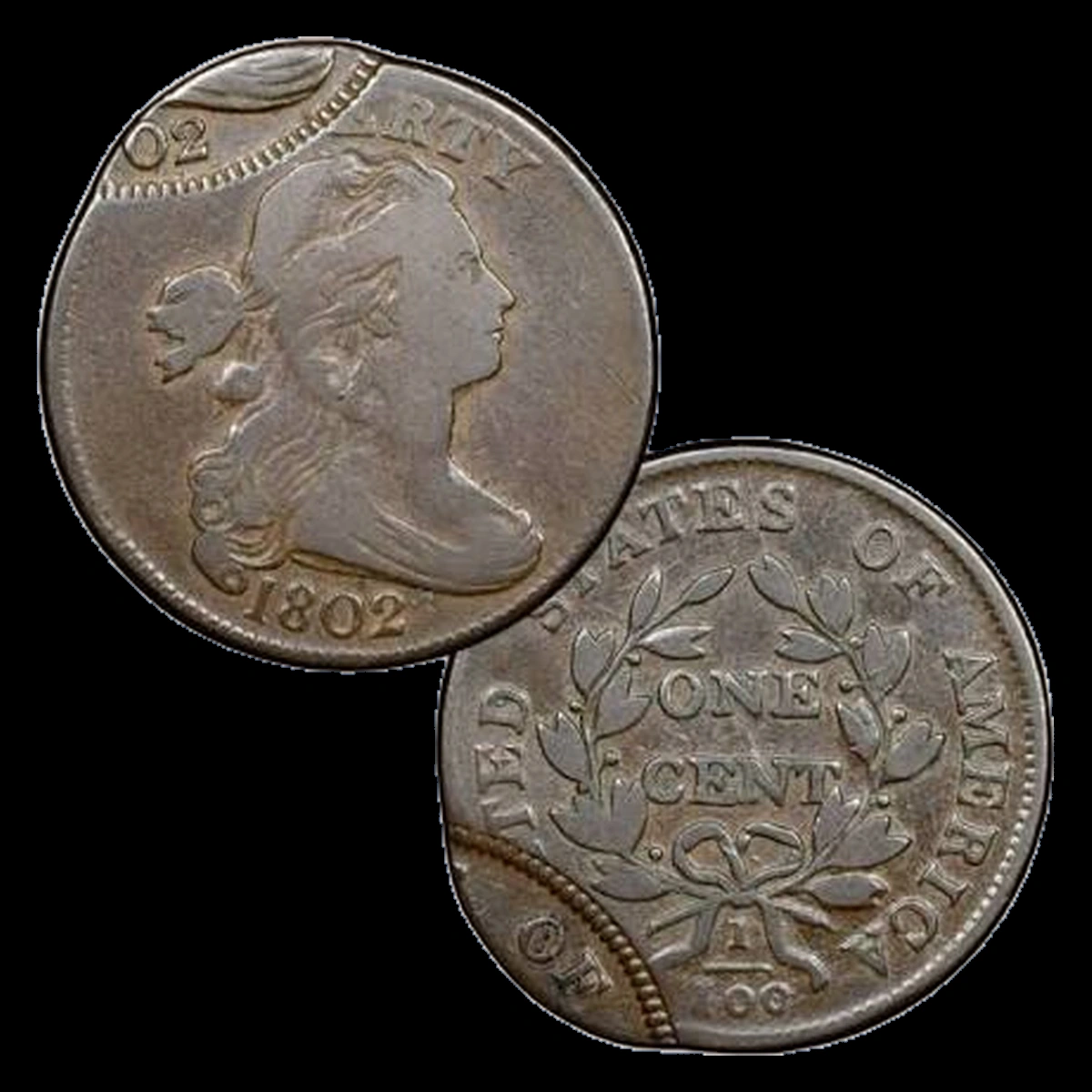
Repeated wreath leaves nearly a millimeter apart and an arc of impressed border teeth appear on an S-228 AU53 cent. A separate S-227 coin received a second strike 15% off center while its back was blocked, leaving the earlier back design in place.
Another recorded 1802 cent was flipped and struck over a partial brockage, a sunken mirror image transferred by a struck coin. A separate single-strike example was 15% off center toward one o’clock; that direction does not describe all the repeated strikes.
How to Identify
On the S-228 double-struck example, compare the separated wreath leaves and the impressed teeth across the hair. They help identify overlapping impressions rather than one blurred outline.
For S-227, distinguish the missing second back impression from the first back design that survived. A blocked second strike does not mean the entire face must be blank.
A brockage overstrike needs surviving sunken mirror detail alongside the later raised design. Two raised outlines by themselves do not establish that more complex sequence.
What It’s Worth
$500–$20,000 is the estimated range for clear double strikes through more complex brockage overstrikes. Readable layers of design and surface quality guide the comparison.
The NGC VF30 coin with the off-center second strike received a $3,000 winning bid before fees in 2007. An 1819 cent with partial brockage and an off-center strike sold for $5,175 in November 2010 as a different-year comparison.
Conclusion
The 1/000 fraction was a mistake in the tool, while a pin mark or overlap happened during striking. Keeping that distinction in mind makes the visible clues easier to interpret.
Use the estimated $50–$20,000 range for complete coins after matching the variety, accident, and condition. When one coin shows several features, its sale remains a single result rather than a collection of separate error values.