Rare 1843 Penny Errors (List & Pictures)
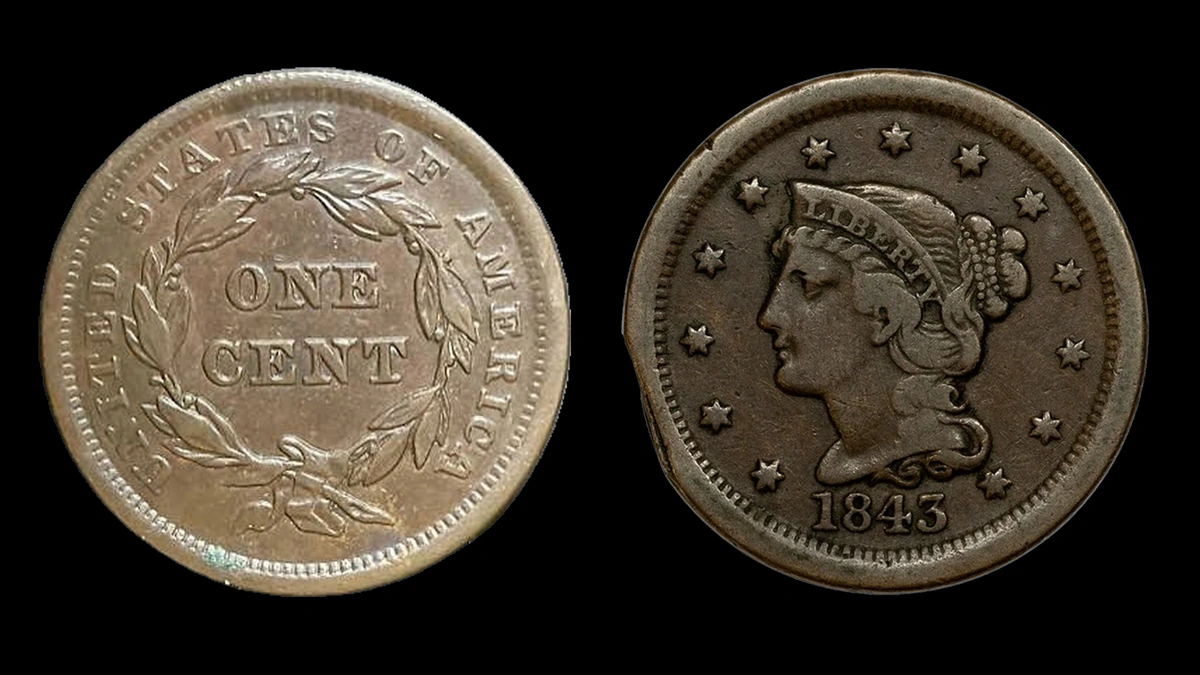
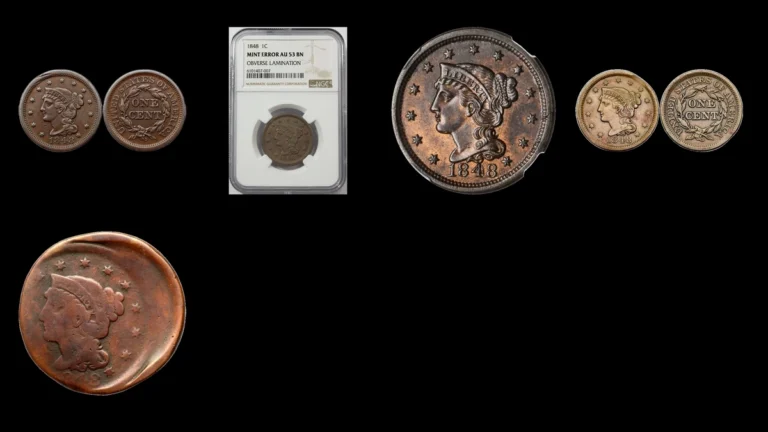
An undated Braided Hair cent struck on a half-cent blank sold for $3,220, but that comparison cannot be assigned to 1843. A dated 1843 off-center cent brought $2,160.
Estimated whole-coin values for 1843 penny errors span $15–$10,000, with the upper range for a wrong-blank candidate conditional on expert confirmation. Begin with the date and rim, then inspect surface interruptions and displaced designs.
| Visible clue | Category | Estimated value |
|---|---|---|
| Extra date strokes | Repunched date | $30–$4,000 |
| Raised line or rim lump | Die crack or cud | $15–$3,000 |
| Missing or peeling metal | Clip or lamination | $20–$1,500 |
| Impressed thin line | Struck-through thread | $75–$2,000 |
| Design displaced | Off-center strike | $300–$5,000 |
| Unusually light blank | Unconfirmed wrong-planchet report | $1,000–$10,000 if confirmed |
Normal head and letter-size combinations are design varieties, not minting accidents. A standard copper large cent weighs 10.89 g and measures 27.5 mm, with a plain edge.
1. 1843 Penny Small Repeated Date Strokes: Repunched Date Error
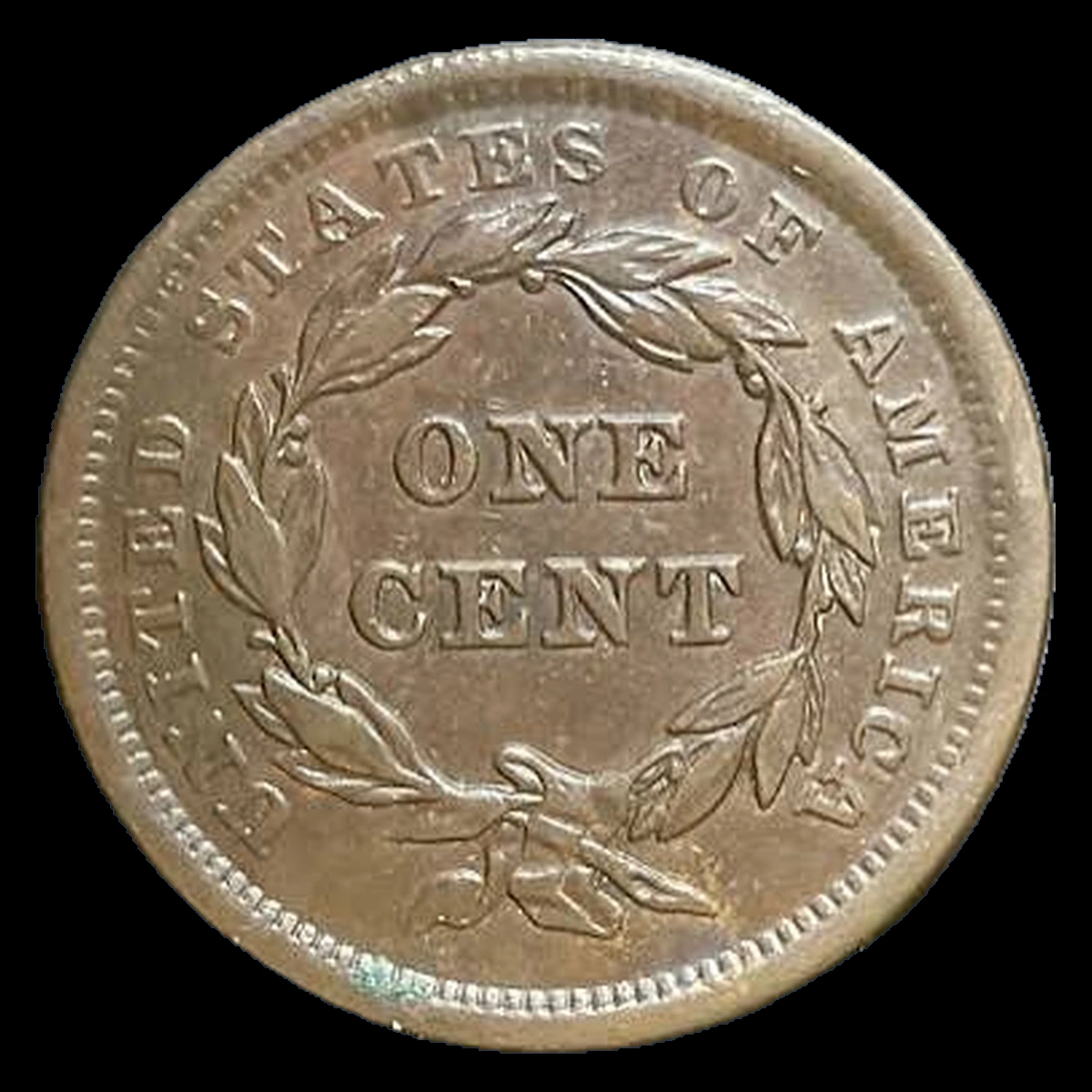
Parts of a first date impression can survive beside numerals punched into a new position. Reported 1843 varieties include repeated 843 on Petite Head, Small Letters coins and remnants at the bases of 18 on a Mature Head, Large Letters variety.
How to Identify
Determine the head and lettering combination before matching the date. Those two descriptions belong to different varieties and should not be combined into one set of required marks.
Weak remnants can vary with the die’s condition. Compare their shape and location rather than treating any nearby scratch as another numeral.
What It’s Worth
An estimated $30–$4,000 covers the whole coin across a broad range of preservation. Attribution and surface quality matter alongside the visible repunching.
A Mature Head N-6 coin with repunched 18 and a cud near star 13 brought $1,920 in February 2020. NGC graded it MS64 Brown, while the auctioneer offered a separate MS63 assessment.
2. 1843 Penny Raised Lines and Edge Patches: Die Cracks and Cuds Error
A thin raised line can reproduce a crack in the die. A larger rim-connected patch forms when part of that tool breaks away, producing a cud.
How to Identify
For Petite Head, Small Letters coins, reported cud positions include the area near stars 6 and 7 or above UN on the reverse. Separate varieties show a cud below the date’s 1 on Petite Head, Large Letters coins or outside star 13 on Mature Head, Large Letters coins.
Use the correct variety photograph for each position. A raised feature with missing normal detail differs from a dent that forces metal across the surface.
What It’s Worth
Estimated values are $15–$500 for ordinary die cracks and $75–$3,000 for cuds. These ranges value the coin as a whole.
The $1,920 N-6 auction record concerns the same combined cud and repunched-date coin described above. It does not establish two separate premiums.
3. 1843 Penny Part of the Outline Is Missing: Rim Clip Error
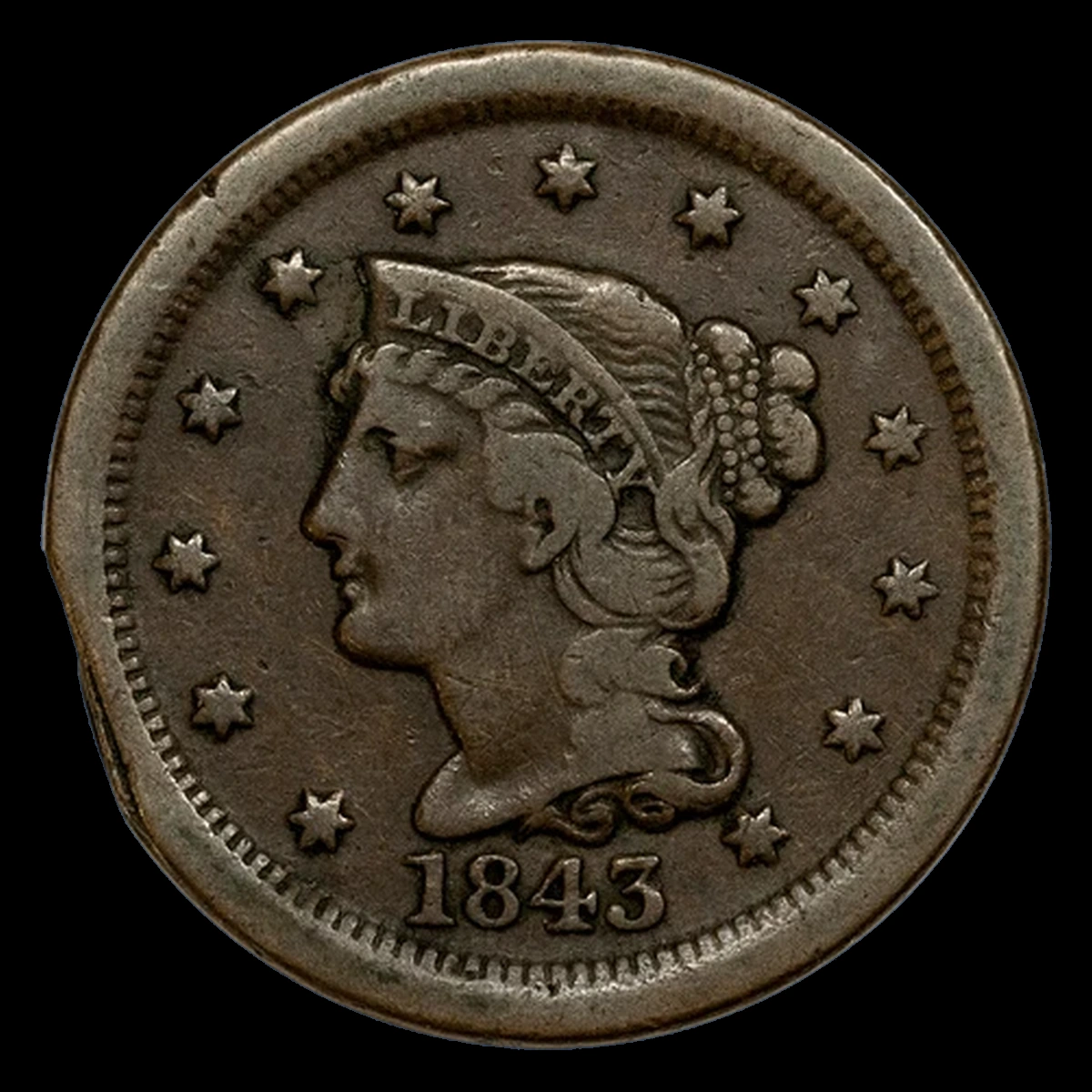
A clipped blank lacks a segment before the designs are struck. An 1843 dealer example was described as VF, meaning its details showed circulation wear.
How to Identify
Examine the missing segment together with nearby letters and the rim on both sides. The boundary should be assessed for evidence that the metal was absent during striking.
The supplied dealer description does not confirm the head version, clip shape, or direction. A modern cut cannot be ruled out merely because the coin weighs less than normal.
What It’s Worth
A genuine 1843 clip may fit an estimated $40–$1,000. Its clarity, size, and the condition of the remaining coin affect the comparison.
An 1852 clip graded NGC MS63 Brown sold for $384 in June 2024. That unworn, different-year coin is not a direct price record for the circulated 1843 example.
4. 1843 Penny Metal Peels from the Surface: Lamination Error
Weak bonding within the metal can let a thin layer separate. Two reported 1843 examples place the flaw in different areas, so a lamination need not occupy one standard location.
How to Identify
One seller-described, cleaned Fine coin has the flaw on the lower-right reverse. A separate ANACS VF35 Mature Head, Large Letters coin shows it on the front above stars 5 and 6.
Inspect the lifted or missing layer and the way the design crosses its boundary. Keep a shallow peeling layer separate from a deep split through the blank or a later gouge.
What It’s Worth
Estimated whole-coin values span $20–$1,500. Cleaning, wear, and the prominence of the separated layer can change the result substantially.
An 1855 MS62 coin combining lamination with a rim cud had a January 2011 catalog result of $460 before the buyer’s fee. It supplies a different-year combined-error comparison, not an 1843 sale.
5. 1843 Penny A Thin Impressed Trail: Struck Through Thread Error
A thread caught between a die and the blank can leave a narrow depression. A dealer listed an 1843 Petite Head, Small Letters example described as MS64 Brown.
How to Identify
Inspect whether the surrounding design formed around the recessed trail. A scratch made later may cut across the finished surface and disturb metal beside the line.
The supplied listing names neither a grading service nor the trail’s exact location. Those details should come from the actual coin and its documentation.
What It’s Worth
An estimated $75–$2,000 applies to the whole coin, with preservation accounting for much of the spread. A fine line alone does not explain an unworn coin’s full price.
The dealer’s $890 figure was an asking price. It is not evidence of a completed auction or independent certification.
6. 1843 Penny The Designs Miss Part of the Blank: Off-Center Strike Error
An off-center blow leaves bare metal beyond the struck area while losing part of the outer design. A documented 1843 Petite Head, Large Letters coin shows a 15% displacement.
How to Identify
Look at both faces to establish how the misplaced blank met the dies. The bare area should help explain the missing design without requiring a section of metal to have been cut away.
The documented coin retains its 1843 date and was graded PCGS VF30. Its supplied description gives no clock direction for the displacement.
What It’s Worth
Estimated values are $300–$5,000 for identifiable 1843 off-center cents. A readable date and clear displacement are useful when selecting comparisons.
Mint Error News reports the 15% VF30 example at $2,160 in May 2021. An undated large cent should not acquire an 1843 attribution simply because its error looks similar.
7. 1843 Penny A Much Lighter Coin: Reported Wrong-Planchet Candidate Error
An 1843 cent has been reported at 5.4 g, roughly half the standard weight. That observation raises a question about the blank but does not, by itself, confirm a wrong-planchet error.
How to Identify
Examine the dimensions, alloy, edge, and original strike together. Trimming, thinning, or loss of metal layers can also reduce weight.
A sealed certified coin should remain in its holder. The reported 5.4 g candidate needs its own expert assessment before it can be called a cent struck on a half-cent blank.
What It’s Worth
A conditional estimate of $1,000–$10,000 applies only if a genuine wrong-planchet strike is confirmed. An unexplained low weight does not support that range on its own.
An undated Braided Hair cent on a half-cent blank, weighing 4.69 g, sold for $3,220 on July 31, 2008. NCS described it as Fine Details with scratches; it is neither the 5.4 g candidate nor a confirmed 1843 coin.
Conclusion
The head and lettering combination helps narrow date varieties and cud positions on an 1843 cent. Larger defects need both faces and the edge to explain whether metal was missing, peeling, or simply outside the strike.
Keep the documented $2,160 off-center sale separate from the undated half-cent-blank comparison. The reported lightweight 1843 candidate remains a question to resolve before assigning a wrong-planchet value.