Rare 1840 Penny Errors (List & Pictures)
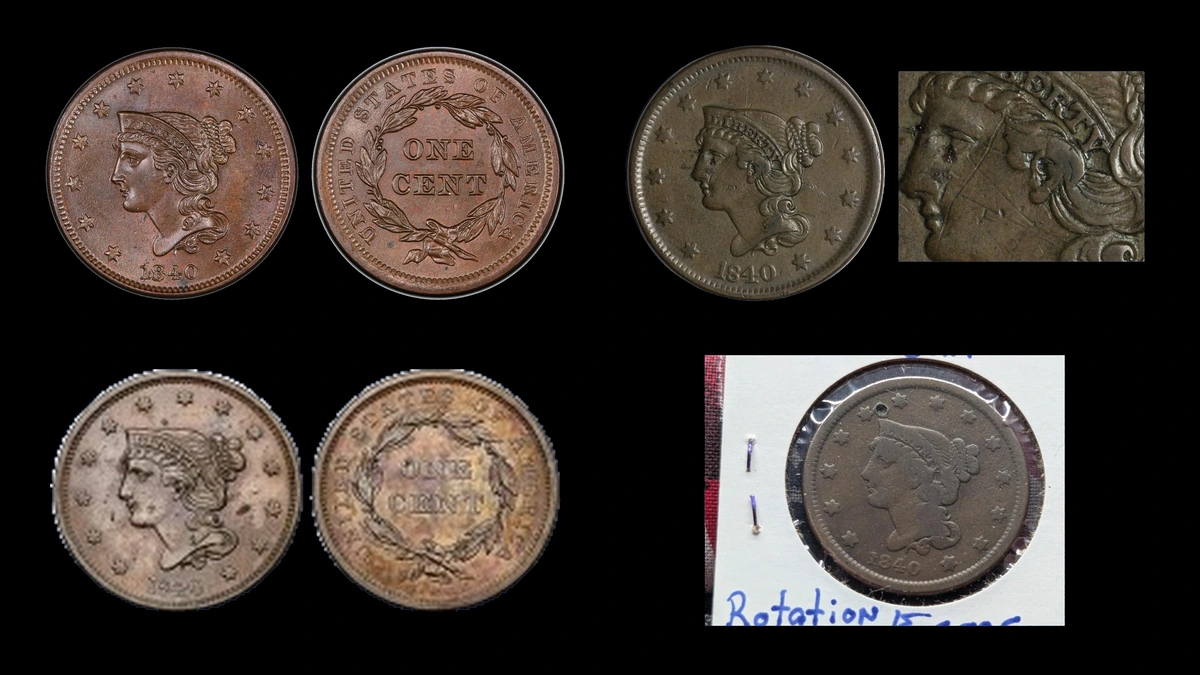
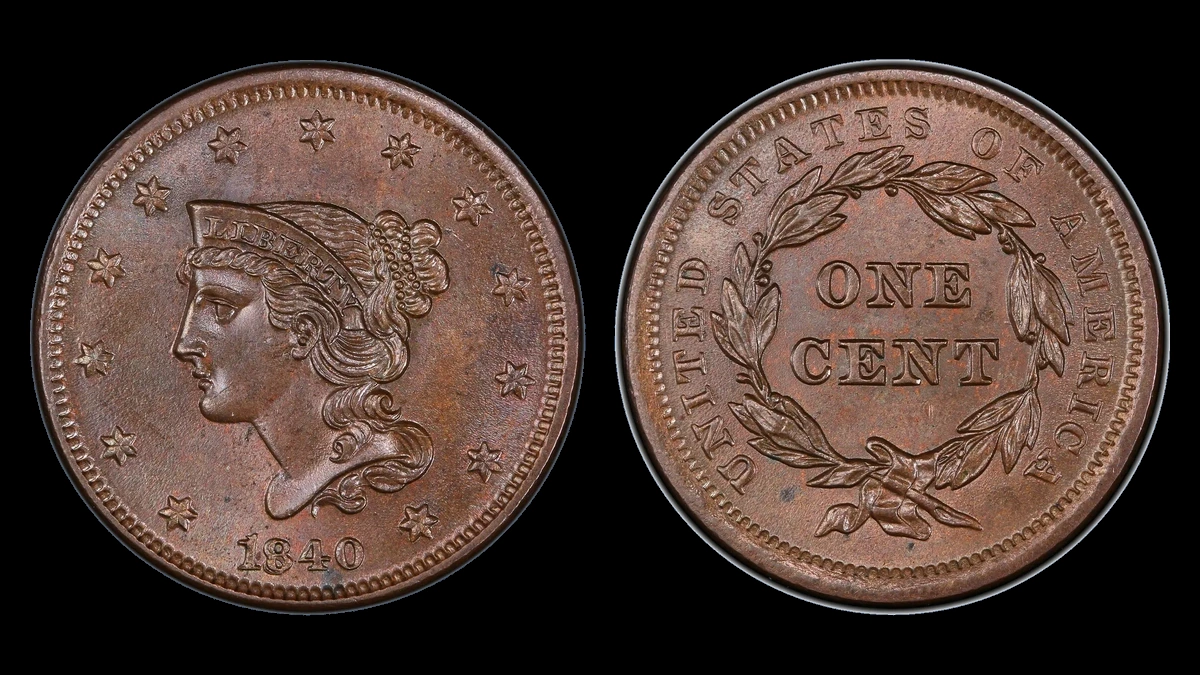
A small date is normal on some 1840 cents; smaller digits over traces of larger ones are a different matter. That distinction helps explain why one exceptional Small-over-Large 18 coin sold for $16,100 in December 2013.
The seven groups of 1840 penny errors here range from extra date strokes to peeling copper and a sideways back. Estimated whole-coin values span $20–$18,000, with the strongest prices requiring the right variety and condition.
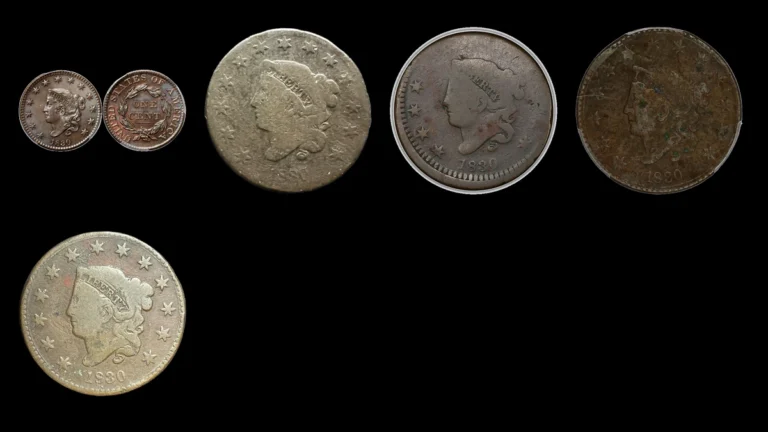
1. 1840 Penny Small 18 over Large 18 and Repunched Dates Error
The N-2 variety retains parts of larger 1 and 8 digits around the smaller final 18. A second date impression left those earlier strokes in the stamping tool.
Other 1840 varieties repeat parts of 8, 0, or 40. Small Date and Large Date are normal designs on their own, and the old 1840/39 name refers to tool defects near the date rather than a proven earlier year.
How to Identify
Examine the opening 18 with the rest of the date still visible. Match recognizable larger numeral strokes to the smaller digits instead of relying on a random raised lump.
For a repunched 0, compare the extra detail at its upper left with the relevant example. A scratch cutting through the date is a different feature, even if it passes close to a known variety’s marks.
What It’s Worth
$50–$18,000 is the estimated range across these date varieties. Many circulated examples fall around $50–$750, while better-preserved and exceptional Small-over-Large 18 coins extend roughly from $750–$18,000.
PCGS records a $16,100 result for an MS66 Brown Small-over-Large 18 at Legend in December 2013. That unusually high unworn grade is not comparable to every worn repunched 0.
A different repunched 40, cataloged as MS60, brought $2,160 including premium in May 2025. Each digit pattern needs its own variety and surface comparison.
2. 1840 Penny Die Cracks and Cuds below the Date Error
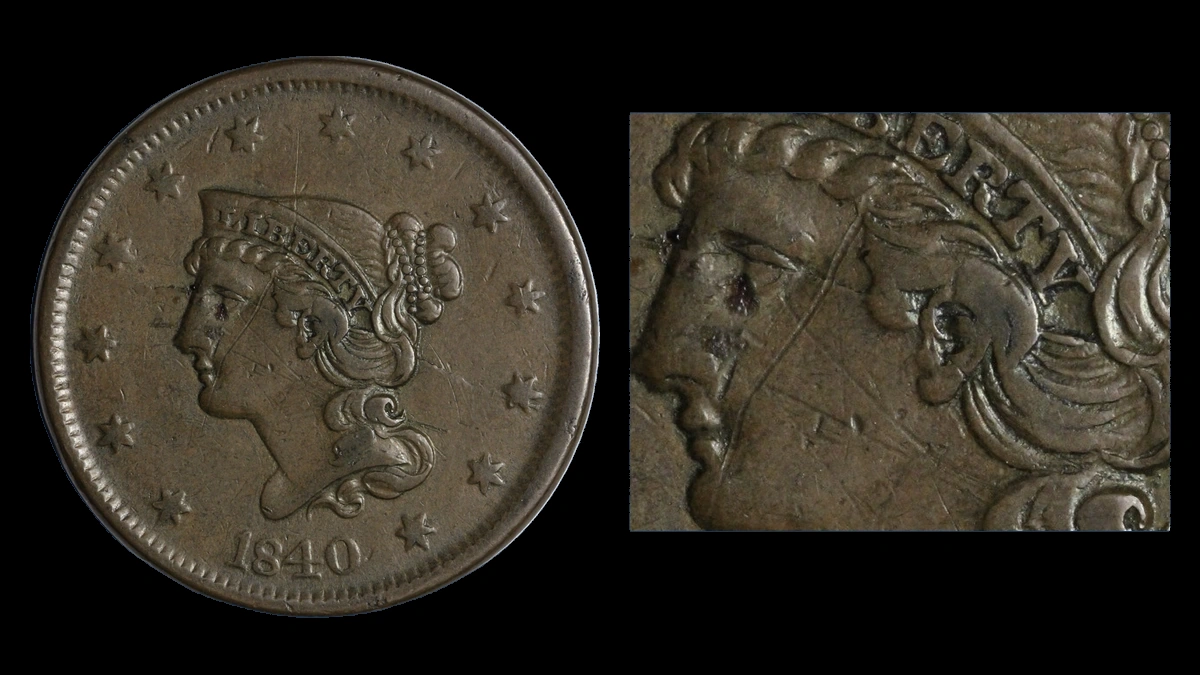
A raised line crossing the front of a Large Date cent records a crack in the die, the tool used to stamp coins. Copper entered the crack and left a ridge above the coin’s normal surface.
Larger tool breaks can leave raised rim patches called cuds. Separate examples include a Small Date cud below 840 and narrow breaks along the lower front rim of a Large Date cent.
How to Identify
Move light across the front and trace the raised line through the portrait. The written report does not map every curl or star, so compare the complete route with a matching photograph.
For a cud, examine how the patch joins the rim and how nearby design detail meets it. A folded edge or an attached lump can look raised without being a die break.
What It’s Worth
$25–$2,500 spans modest cracks through stronger rim breaks. Small cracks may fit around $25–$250, with clearer larger breaks around $100–$2,500 depending on condition.
A Large Date VF35 with the front-crossing crack brought $288 including premium in May 2025; it also had a small smoothed area on the back. An AU55+ coin with lower cuds and a repunched 0 brought $780 at that sale, pricing both features together on one cent.
3. 1840 Penny Original Hollows in the Blank Error
Three shallow depressions appear on one Large Date N-7: left of star 11, on the cheek, and beside the chin. The auction identified them as flaws present when the cent was struck.
The description does not establish a trapped bubble or a particular impurity as their cause. Later marks, including a fine scratch toward star 13, remain separate from those original hollows.
How to Identify
Study each hollow under angled light and compare how it meets the struck detail. A later dent may have a pushed-up lip, while widespread scattered pits may indicate corrosion.
Keep the three documented locations separate from the scratch toward star 13. Nearby damage does not become mint-made simply because an original flaw is also present.
What It’s Worth
$30–$1,000 is the estimated range for comparable circulated blank flaws. Lower-grade examples may fit around $30–$300, and better-preserved or scarcer varieties around $300–$1,000.
The N-7 sale in May 2025 realized $576 including premium. Its EF45 catalog assessment allowed for the hollows, so the flaws reduced the condition assessment rather than automatically adding value.
4. 1840 Penny Lamination near the Rim Error
A layer beginning at the rim and extending into the design can be peeling copper. This lamination forms where the original blank has a weak internal bond.
A 1996 catalog describes a Small Date example near one o’clock on the back and a separate Large Date example running from seven o’clock toward the ribbon. Those paths belong to two different coins.
How to Identify
First choose the correct date-size comparison, then inspect the reported area with a magnifier. Side lighting can reveal a thin edge or struck detail still carried on an attached flap.
Do not lift the layer or scrape a suspected deposit. Wax on top of the surface and grooves made by scraping have a different relationship to the copper underneath.
What It’s Worth
$20–$750 is the estimated range for 1840 laminations. Worn examples may fit around $20–$150, with more distinct flaws on better-preserved cents around $150–$750.
A separate Large Date VF30 sold for $108 including premium in May 2025. Its lamination lay below 84 and it had other surface issues, so it was neither of the two back-rim examples described above.
5. 1840 Penny Rim Clip Error
An incomplete blank can leave a gap in the outline before the design is applied. That is a clipped planchet, unlike a finished cent cut or filed later.
GreatCollections recorded an ANACS VF30 rim clip from the Rippere Collection. The available summary does not give its exact size or position.
How to Identify
Inspect both ends of the gap where the struck border approaches it. Possible rim weakness opposite the opening helps support a clip but is not proof by itself.
A normal 1840 cent weighs about 10.89 grams and measures 27.5 mm across. A small clip may remove little copper, so compare an intact span and check the opening for filing marks rather than expecting a large weight change.
What It’s Worth
$50–$2,000 is the estimated whole-coin range for genuine rim clips. Modest worn examples may fit around $50–$350, with clearer or larger clips on better-preserved coins around $350–$2,000.
The ANACS VF30 listing supplies a condition reference, but no completed price is assigned to it here. A readable date and an edge consistent with an incomplete original blank matter more than a dramatic-looking cut.
6. 1840 Penny Off-Center Strike Error
A bare crescent beside a partly missing design can show that the blank sat too far to one side in the press. Both faces received their designs in that displaced position.
The 1840 year guide reports this group without naming a percentage, direction, or date size. A dateless Braided Hair cent cannot establish the year by its portrait alone.
How to Identify
Find all four digits of 1840 and examine the last digit for alteration. Include the whole bare area in photos of both faces.
The missing design should fit one misplaced blank rather than one shifted front tool and a centered back. Check the bare copper for grinding or polishing that could imitate an unstruck area.
What It’s Worth
$500–$8,000 is the estimated range for identifiable 1840 off-center cents. Circulated dated examples may fit around $500–$2,500, with dramatic better-preserved coins around $2,500–$8,000.
A 30% off-center 1848 cent graded PCGS XF40 sold for $1,980 in December 2023. That different-year result does not supply a percentage or sale price for the 1840 report.
7. 1840 Penny Rotated Back Error
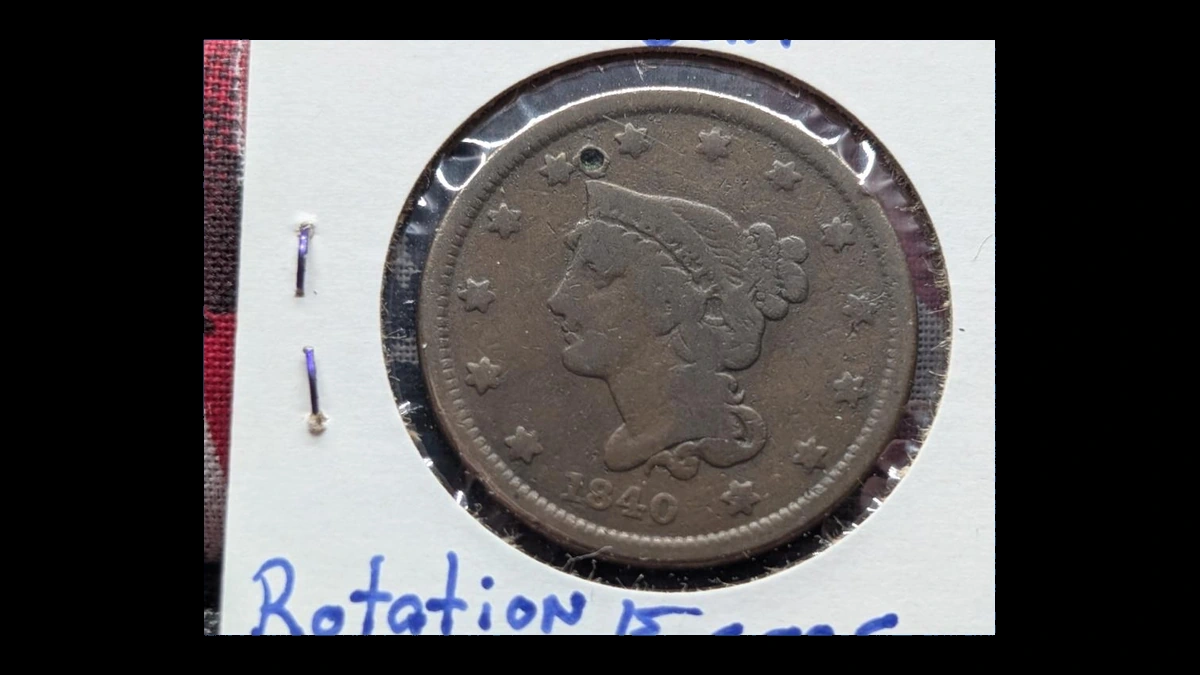
One Small Date cent has a back turned 95 degrees clockwise from normal alignment. Its portrait can look ordinary until the coin is flipped and the wreath appears almost sideways.
The dies had the wrong angle relative to each other during striking. Other examples of the variety have turns in the opposite direction, so the variety name alone does not establish the angle.
How to Identify
Hold the portrait upright and flip the coin from top to bottom without twisting sideways. A normally aligned United States coin should show an upright back.
Repeat beside a fixed guide and record both the angle and direction. The documented Small Date example ends just beyond a quarter turn clockwise; independently straightening each photo would conceal that relationship.
What It’s Worth
$40–$1,500 is the estimated range for substantial 1840 rotations. Similar worn examples may fit around $40–$300, with better-preserved coins around $300–$1,500.
The 95-degree clockwise F15 cent sold for $72 including premium in May 2025. Its wear and contact marks remain relevant even though the angle is easy to see.
Conclusion
On an 1840 cent, the small details and the whole-coin view answer different questions. Magnification helps with old date strokes and layer boundaries, while a controlled flip reveals the angle between the faces.
The estimated $20–$18,000 range includes exceptional varieties as well as modest flaws. Use the actual marks and condition to choose a comparison, rather than an old name such as 1840/39 or a normal date-size difference.