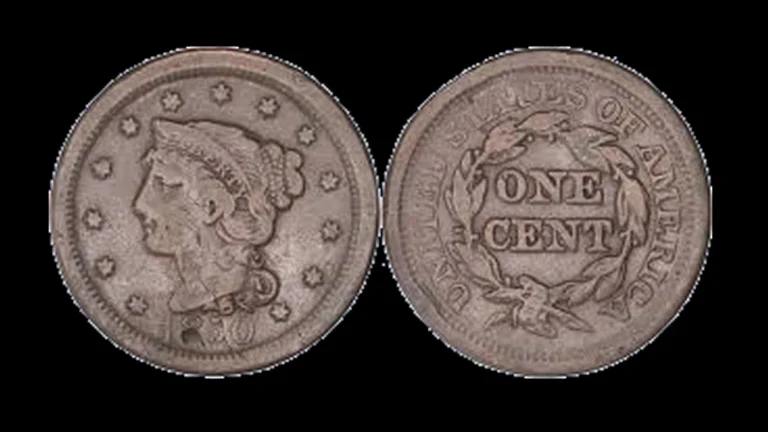
Rare 1879 Penny Errors (List & Pictures)
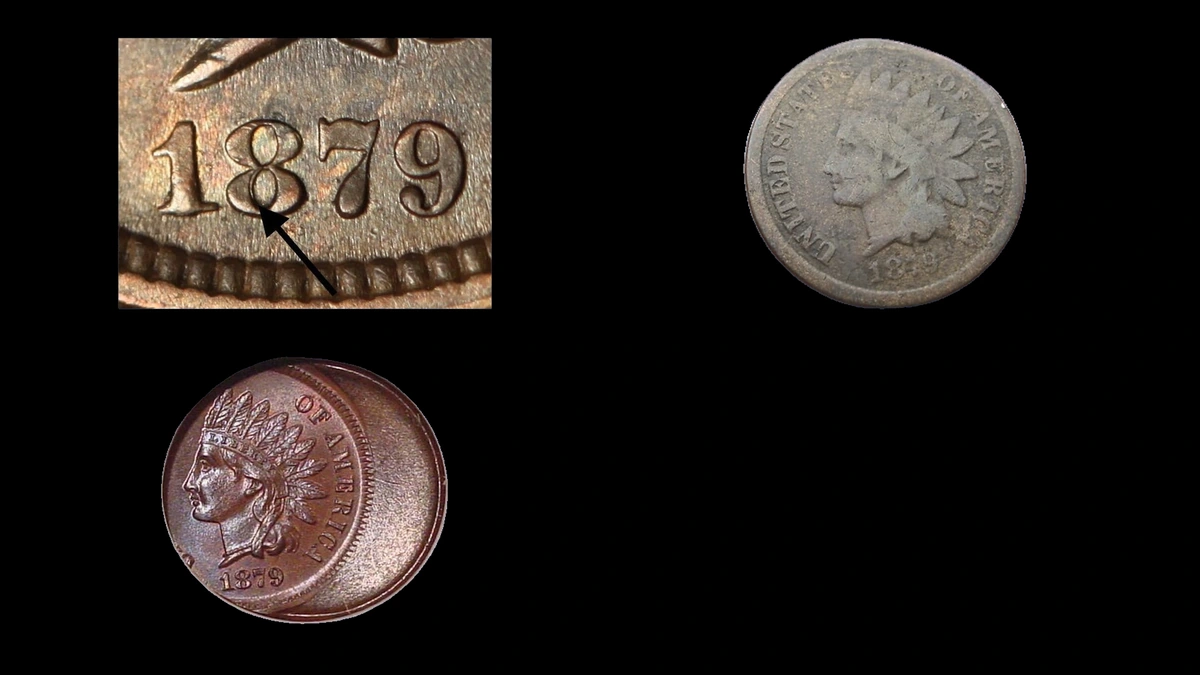
An 1879 cent made from unusual metal sold for $13,200 in February 2025. Its composition supported the error even though the auction description questioned an older foreign-country attribution.
Estimated whole-coin values for 1879 penny errors range from $5–$20,000. Inspect date strokes and surface marks first, then check the outline and any evidence of an unusual blank.
| Feature | Possible cause | Estimated value |
|---|---|---|
| Extra date strokes | Repunched date | $20–$2,000 |
| Recessed or peeling patch | Strike-through or lamination | $10–$750 |
| Raised reverse line or rim area | Die crack or retained break | $5–$1,500 |
| Missing edge segment | Clip | $20–$1,000 |
| Design displaced left | Off-center strike | $150–$5,000 |
| Unusual alloy | Wrong-metal blank | $8,000–$20,000 if authenticated |
The ordinary bronze cent weighs 3.11 g and measures 19.05 mm, with a plain edge. Record measurements without removing a certified coin from its holder or scraping the surface.
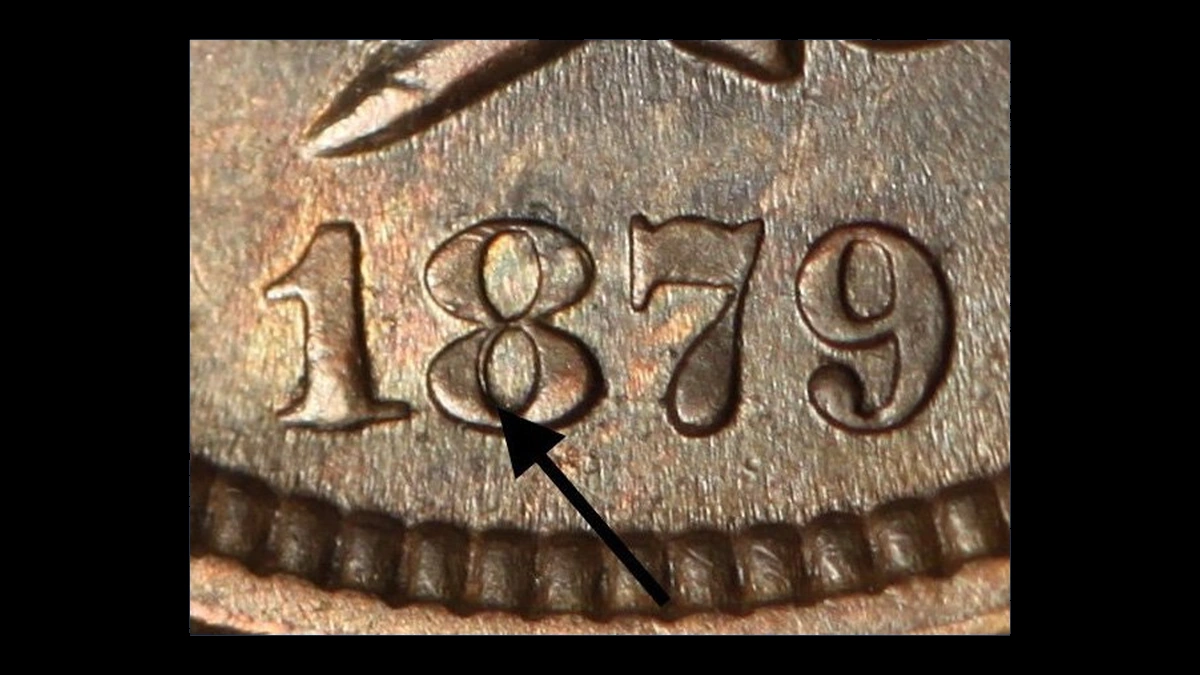
1. 1879 Penny Small Earlier Curves in the Date: Repunched Date Error
Repeated use of the date punch could leave part of an earlier numeral placement in the die. The extra strokes then appeared on coins struck from it.
How to Identify
One 1879 pattern shows earlier strokes toward the right inside the lower loop of 8 and upper loop of 9. Other patterns repeat the 9 above and below or the 8 toward the lower left.
Choose a matching image from the 1879 variety references. These arrangements belong to separate varieties and should not be combined into one required date pattern.
What It’s Worth
Estimated values are $20–$2,000, with circulated examples often around $20–$300. Attractive unworn coins require closer condition comparisons.
An 1895 Snow-1 repunched date graded MS64 Brown sold for $264 in November 2022. It provides another Indian cent transaction, not a sale for an 1879 variety.
2. 1879 Penny An Impression by the Lower Left Rim: Struck Through Material Error
A historical Jim’s Coins listing describes an obstruction mark between seven and eight-thirty on the front of an 1879 cent. The coin was described as Good, indicating heavy wear.
Material caught between the die and blank can prevent normal detail from forming. The supplied listing does not identify the substance involved.
How to Identify
With the date upright, inspect how the struck design meets the impression. Later impacts may flatten finished details and push metal around the affected area.
The recorded position identifies that example, not every strike-through. Do not name grease, cloth, or wire unless the visible evidence supports it.
What It’s Worth
An estimated $10–$300 covers genuine examples from worn to sharper pieces. The size and clarity of the mark influence the whole-coin value.
The historical $8.50 minimum bid was an opening amount, not a sale. A worn 1862 broadstrike with an additional struck-through feature sold for $192 in October 2022, offering only a different-date combined-error comparison.
3. 1879 Penny A Shallow Patch beside the Nose: Possible Lamination Error
An unworn PCGS MS64 Red and Brown coin has a shallow flaw near Liberty’s nose. Its auction title calls it lamination, while the description also allows a shallow struck-through impression.
How to Identify
Look for a thin lip or separating sheet at the patch’s boundary. That would favor a weak metal layer peeling away.
A depression without a separating layer could instead reflect material caught during striking. Both explanations concern the same patch, which is distinct from the worn lower-left-rim example.
Leave any attached metal untouched. Side lighting can help separate a layer boundary from scraping or corrosion.
What It’s Worth
Estimated whole-coin values are $25–$750 for a genuine shallow mint-made surface flaw. The unworn reference coin’s detail and remaining copper color are significant parts of its value.
No completed sale is supplied for the 1879 nose-side patch. An 1890 lamination sold for $104 in April 2010, providing a different-year comparison for the layer-defect explanation.
4. 1879 Penny Raised Wreath Lines and Rim Areas: Die Cracks and Retained Breaks Error
One reverse pattern has cracks near twelve, three, and five o’clock. A later stage develops a lower-right rim break in which broken die steel remains in place.
Because that steel can still carry design, some details may survive within the raised area. This is called a retained break.
How to Identify
Look for the break’s raised boundary and any design retained inside it. A rim dent or folded metal should not be identified from location alone.
Separate recorded examples occupy about 7:45–9:00, 4:45–5:00, or 1:00–3:00 on the reverse. Keep each position with its own reference rather than joining them into one large break.
What It’s Worth
Small cracks have estimated whole-coin values of $5–$100, while clearer retained breaks may fit $50–$1,500. A faint ridge can add little to a common worn cent.
An unworn 1866 Indian cent with a reverse cud sold for $504 in March 2021. Its missing-die-metal cud is a different year and break type from the 1879 retained examples.
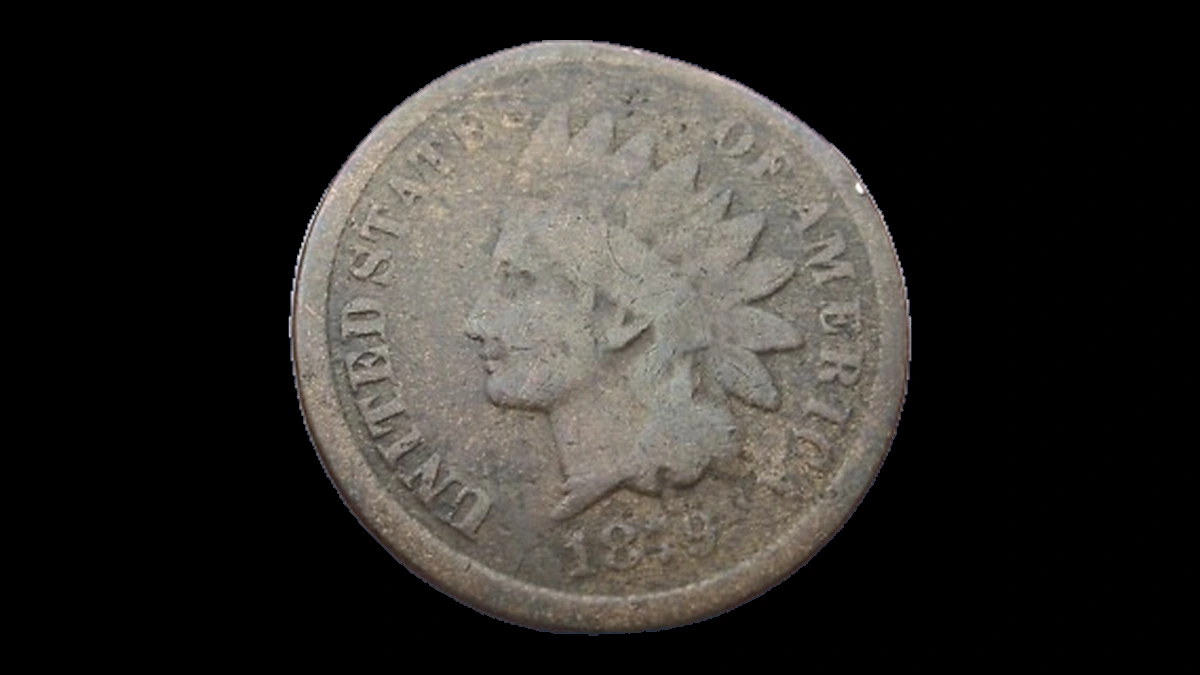
5. 1879 Penny A Gap in the Metal Outline: Clipped Planchet Error
An incomplete blank can reach the press and receive a normal cent design around its missing section. A seller described an 1879 clip as Very Good Details without supplying a grading-service record.
How to Identify
Inspect the boundary from the side and both faces. Filing marks, saw lines, or a fresh cut through older worn design can indicate later removal.
The description establishes neither a clip shape nor a direction. Rim weakness beside or opposite the gap may support a pre-strike origin, but it must fit the entire edge examination.
What It’s Worth
Estimate $20–$1,000, including about $20–$200 for genuine worn examples. Stronger pieces with better preservation occupy the higher part of the range.
An 1852 clipped large cent graded NGC MS63 Brown sold for $384 in June 2024. That larger copper coin offers broad context rather than a direct price for this worn Indian cent.
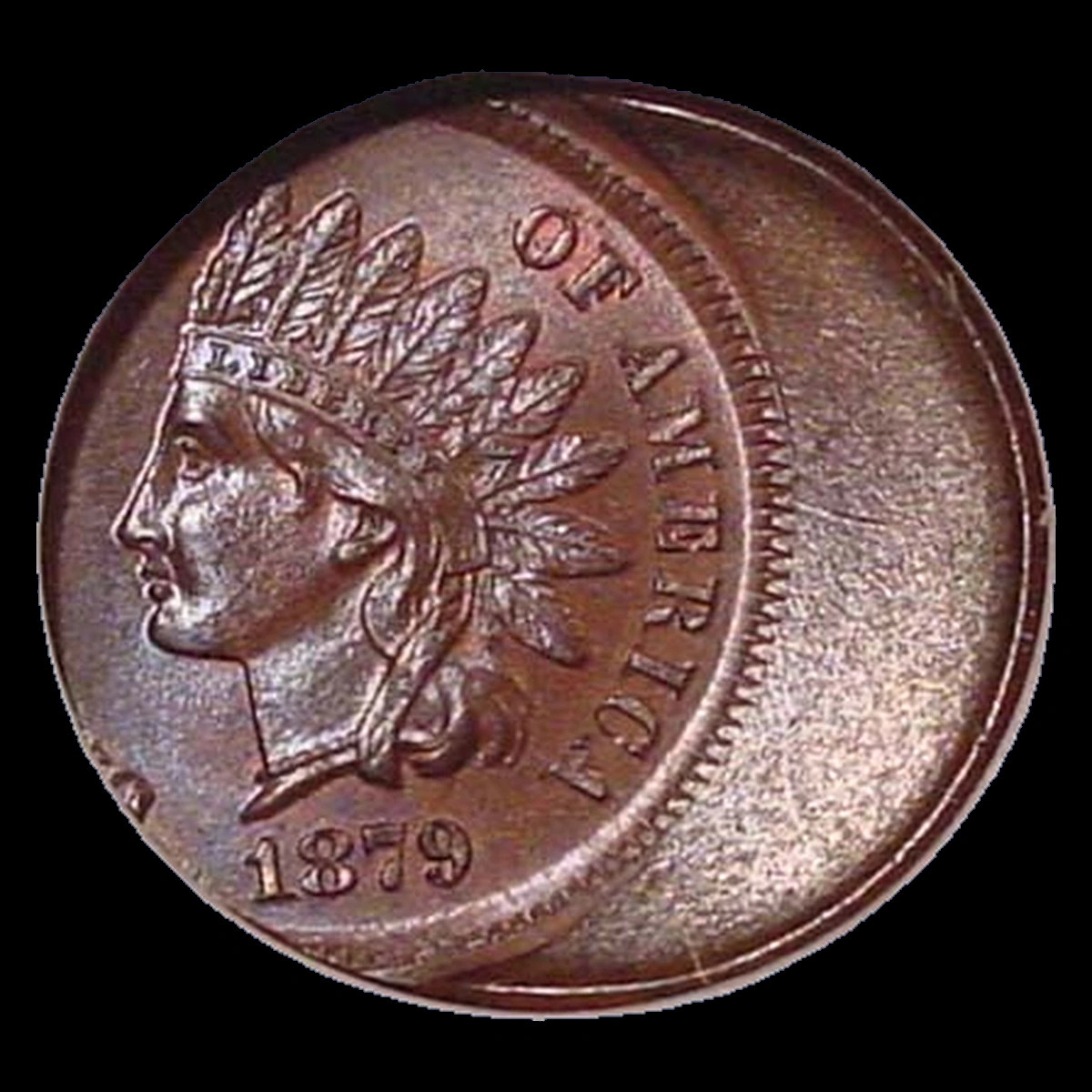
6. 1879 Penny A Bare Crescent beside the Design: Off-Center Strike Error
Two published records describe substantial leftward displacement on 1879 cents. One lists an NGC MS65 Brown coin at 30% off-center toward nine o’clock; another lists a PCGS MS65 Brown coin at 35% in that direction.
How to Identify
Compare both designs with the bare area that escaped the dies. A displaced blank affects their placement together, while movement of one die may leave the opposite design centered.
The two records must remain separate despite their matching date and direction. Inspect untouched blank metal at the design boundary rather than mistaking ground-away detail for an unstruck area.
What It’s Worth
Estimated values run $150–$5,000, with readable worn examples commonly considered around $150–$1,000. Attractive unworn coins with substantial displacement require their own comparisons.
A different 1895 cent struck 10% off-center sold for $231.80 in March 2026 at NGC AU58. That lightly worn, less displaced coin does not establish a sale price for either 1879 reference.
7. 1879 Penny Pale Metal with an Unusual Alloy: Wrong-Planchet Strike Error
A documented 1879 cent contains about 74% copper and 25% nickel, with small amounts of aluminum and iron. At approximately 3.20 g, its weight alone would not reveal that major difference from ordinary bronze.
The auction description challenged an older Colombian attribution. The unusual composition supports the wrong-metal category without establishing a specific foreign country or denomination.
How to Identify
The documented coin has weaker left-side lettering and clearer striking on the right. Compare those features with the full outline, while checking the edge for possible plating.
Pale color can come from surface alteration. Have the metal and original strike assessed by a qualified specialist without scratching the coin, and keep an old country label separate from the alloy evidence.
What It’s Worth
For an authenticated 1879 cent on a comparable unusual-metal blank, the estimated range is $8,000–$20,000. This range does not apply to a merely pale ordinary cent.
The PCGS AU58 auction example brought $13,200 in February 2025. Its reported metal analysis is stronger evidence than the questioned older country attribution.
Conclusion
Use a complete view of the coin to place small date strokes, surface patches, and rim breaks in context. The nose-side flaw has two possible mint-made explanations, while the two leftward off-center records describe separate examples.
The most valuable category here depends on confirmed unusual metal. A pale surface or slightly different weight can prompt examination, but neither alone supports the $13,200 auction comparison.