Rare 1811 Penny Errors (List & Pictures)
An AU55 overdate reached $66,125 in September 2009, while a double strike brought $16,200 in September 2025. These are separate highlights among 1811 penny errors, with estimated whole-coin values of $150–$70,000.
Inspect the full design before the tiny final-date remnant: one displaced image, two overlapping strikes, and a recessed mirror portrait tell different stories. Normal copper Classic Head cents weigh 10.89 grams and measure roughly 28 mm, with a plain edge.
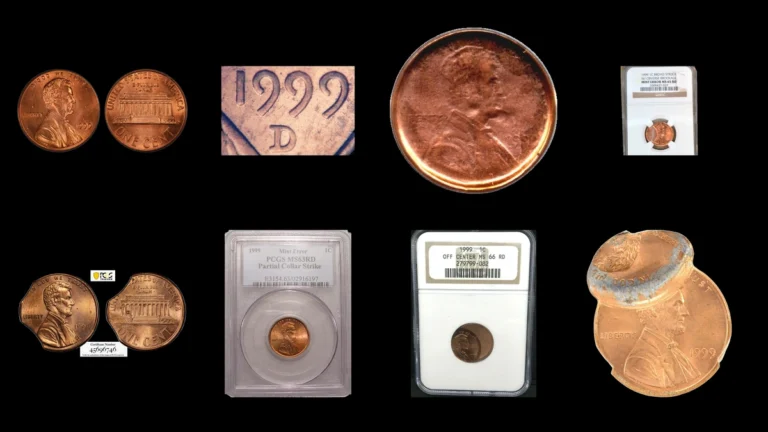
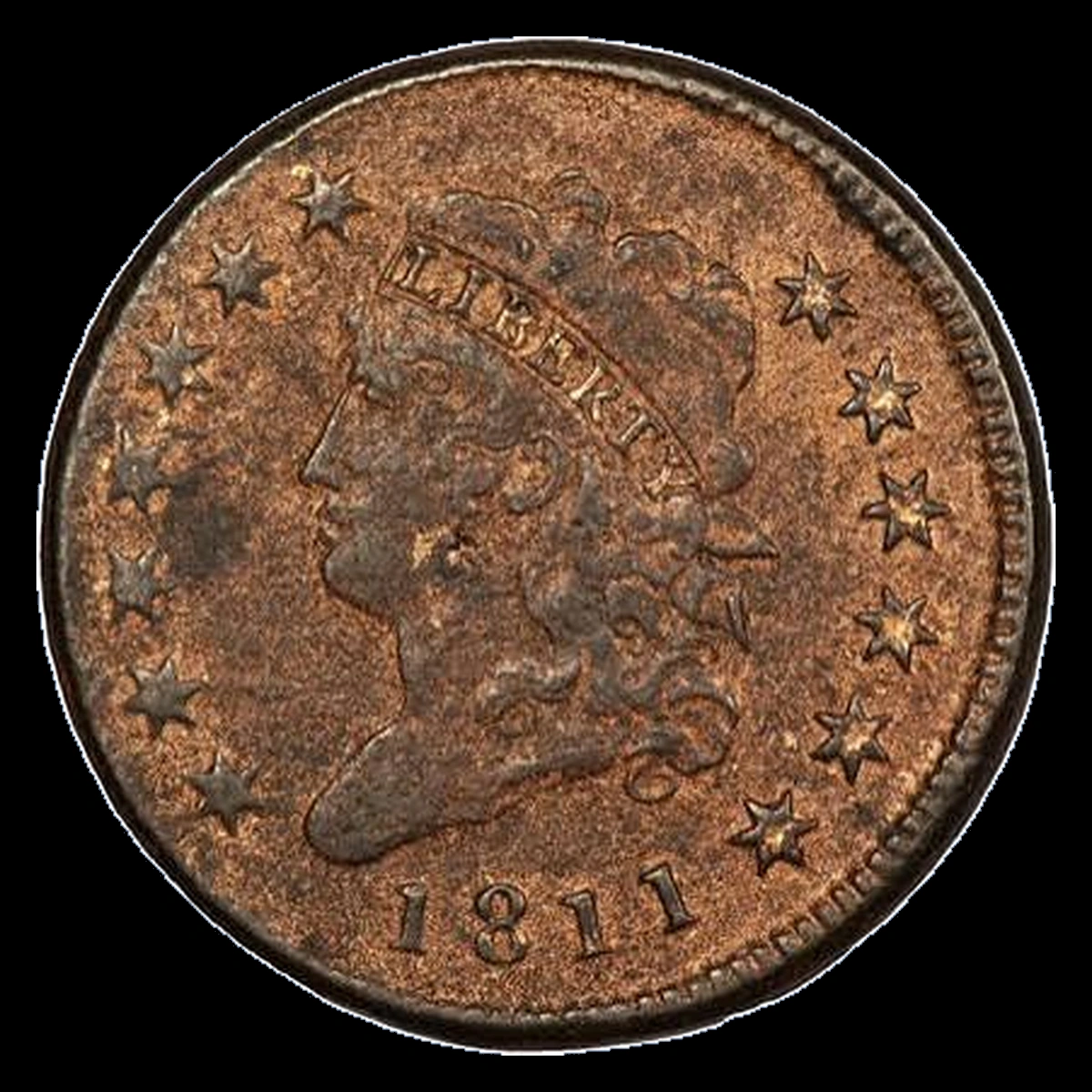
1. 1811 Penny One Design Misses Part of the Blank: Off-Center Strike Error
Breen’s early-cent reference records off-center examples for 1809 through 1812, including 1811. An improperly positioned blank leaves an unused crescent opposite the side where outer design misses the metal.
The amount of displacement varies. One misplaced blow is enough to make this error, without a second portrait or date.
How to Identify
Read the surviving year before judging the crescent and compare both faces. Their struck boundaries should agree with the same blank position.
Look for original unused copper rather than a cut surface or grinding marks. Scan for another impression too, because two distinct design sets require a repeated-strike explanation.
An irregular outline can change the measured span without proving metal loss. A single weak border does not establish an off-center strike.
What It’s Worth
The estimated range is $500–$8,000 for identifiable examples from moderately worn to sharper coins. A readable date and clear unused metal improve the comparison.
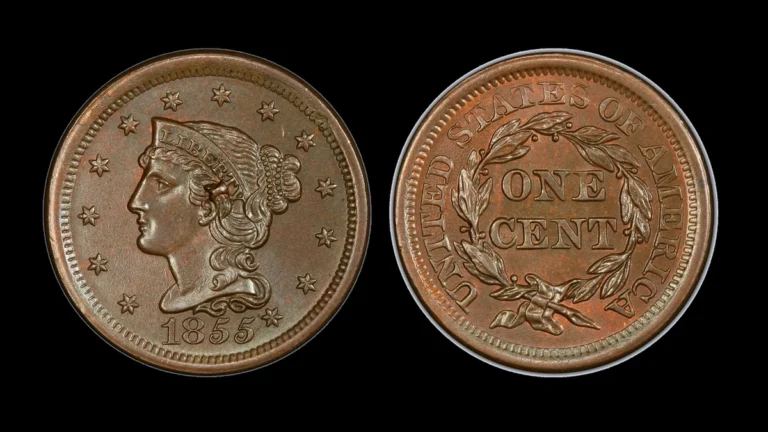
An 1855 large cent struck 70% off center sold for $1,092.50 in January 2009 at PCGS Fine 15. Its considerable wear, later date, and different design prevent using it as a fixed 1811 price.
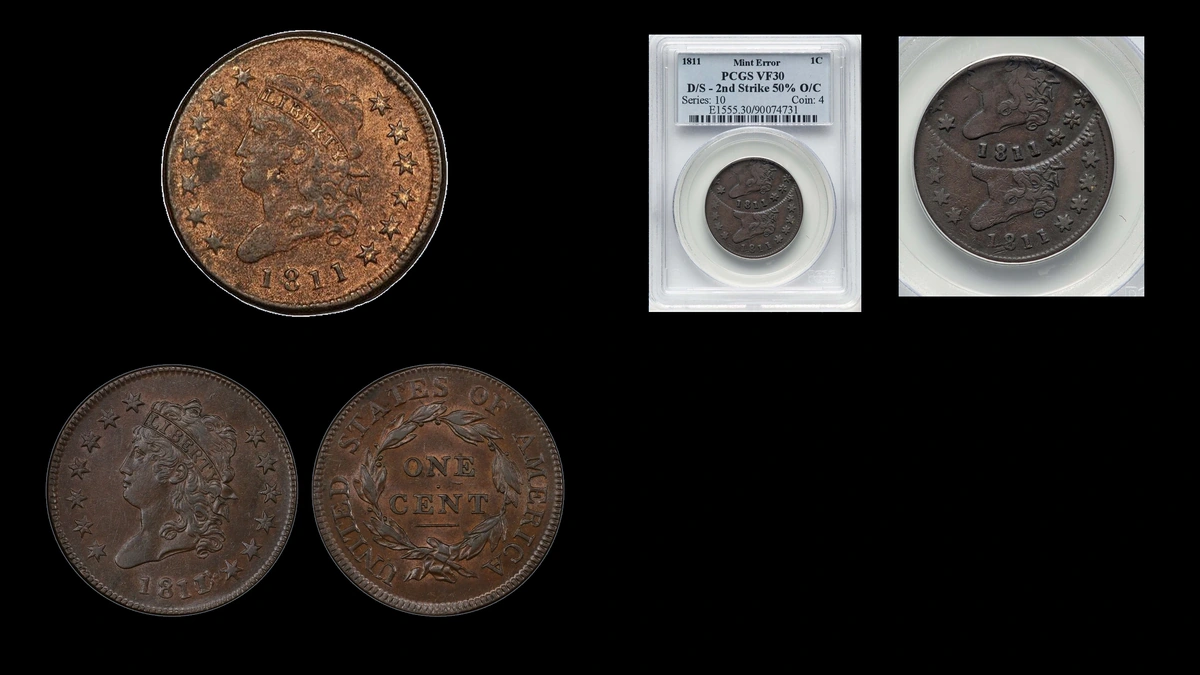
2. 1811 Penny A Second Image Lands Halfway Off Center: Double Strike Error
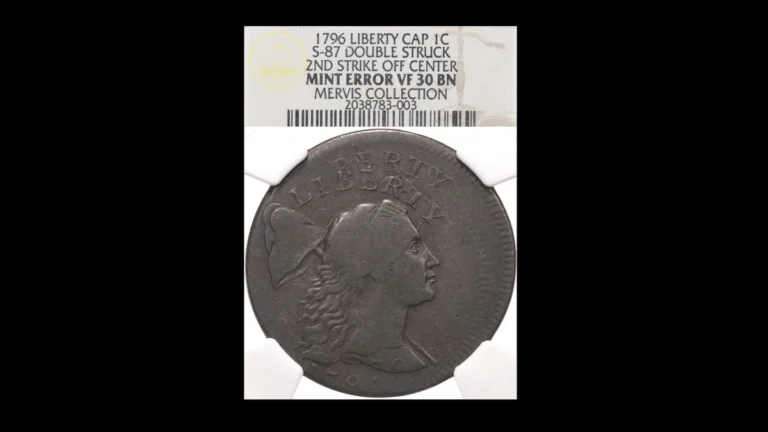
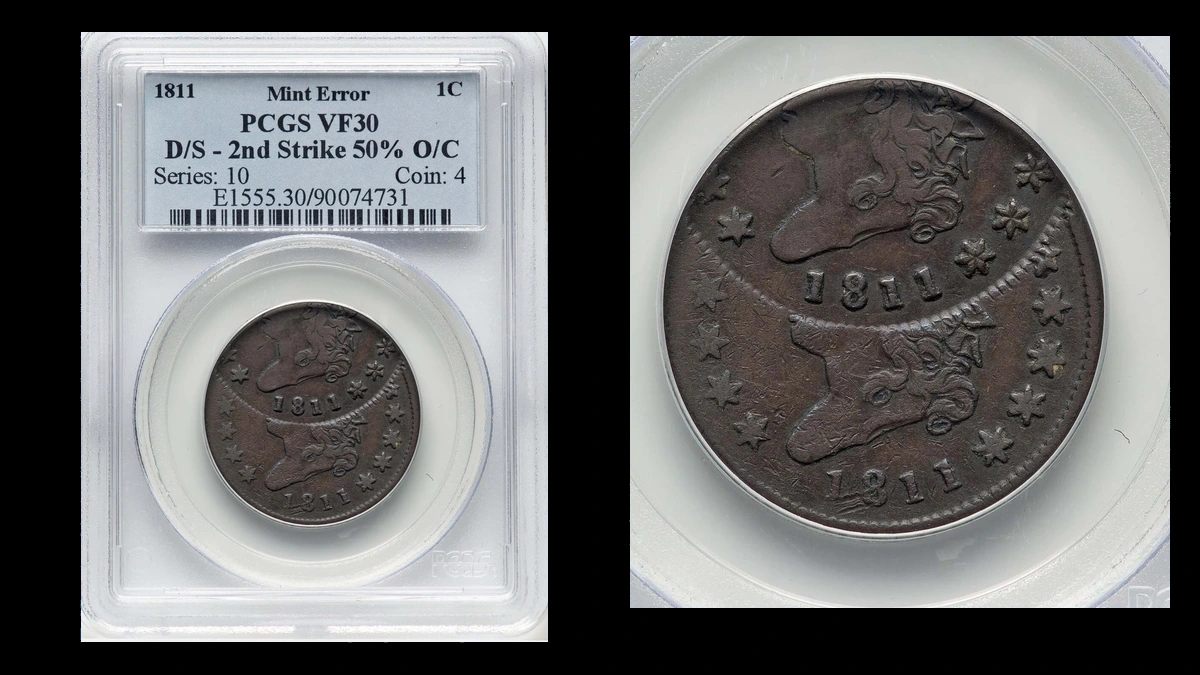
The documented S-287 example retains parts of its first design beneath a second strike displaced 50% off center. The same piece of copper remained in, or returned to, the striking area for another blow.
PCGS graded it VF30, a circulated grade with substantial detail remaining. Its two design positions are a much broader effect than a doubled-looking edge on one letter.
How to Identify
Trace one group of portrait, lettering, and border details, then map the other. The repeated features must fit a coherent second impression of the design.
Use full photographs to compare the recorded 50% layout rather than estimating from a cropped ridge. Inspect the edge for trimming or a join, allowing for outline distortion caused by striking.
What It’s Worth
The working estimate is $3,000–$25,000 for comparable identifiable double strikes. Weaker surviving impressions or heavier wear call for lower comparisons.
Mint Error News reported $16,200 in September 2025 for the PCGS VF30 example. Its double strike and displaced later impression share that one sale price.
3. 1811 Penny Liberty Appears Backward and Recessed: Brockage Error
A previously struck coin can press its portrait into another blank, producing a sunken mirror image. The new coin’s opposite face may still receive a normal raised portrait from the die.
The Jack Beymer collection included an 1811 brockage cataloged VG10 after allowance for damage. Deeply engraved initials cut across its reversed date after minting.
How to Identify
Compare straight-on photographs of both faces and establish that the unusual portrait is both backward and below the surface. A screen reversal can make lettering readable, but cannot prove its physical depth.
Trace the engraved initials separately from the original mirror impression on the Beymer coin. Inspect both faces and the edge for later squeezing, which can also transfer misleading recessed shapes.
What It’s Worth
Genuine examples have an estimated range of $1,000–$12,000, from damaged or worn pieces to sharper coins with attractive copper. Clarity alone does not erase later cuts.
The Beymer example sold for $1,440 including the buyer’s fee. Another heavily worn 1811 brockage in the same auction brought $4,080, showing how damage can outweigh the amount of remaining detail.
4. 1811 Penny A Thin Copper Layer Opens: Lamination Error
A weak internal layer can lift or detach before or after the coin receives its design. This lamination is a local metal separation rather than corrosion eating inward from the outside.
The supplied 1811 report gives no particular affected location. A small peeling strip also does not establish that the entire coin split into two halves.
How to Identify
Follow the layer boundary with side lighting, leaving any flap untouched. Thin overlapping metal or a shallow opening can show separation within the copper.
Compare nearby pits and scratches for other causes. Widespread rough holes favor corrosion, while fresh cuts and displaced lips can indicate later scraping.
Measure intact areas only if handling is safe. Missing copper and ordinary wear can lower weight, so the surface evidence remains essential.
What It’s Worth
The estimated whole-coin range is $150–$6,000. The date’s scarcity and the surviving surfaces account for much of that value.
A lightly worn 1839 large cent with two peeling areas brought $600 before the buyer’s fee in January 2026. That later design illustrates a metal-flaw comparison, not an 1811 sale or a separate value for each peeling area.
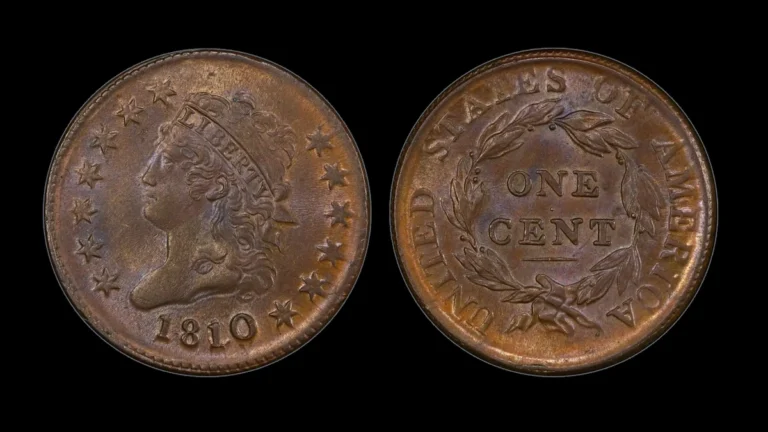
5. 1811 Penny The Final 1 Covers an Older 0: 1811/0 Overdate Error
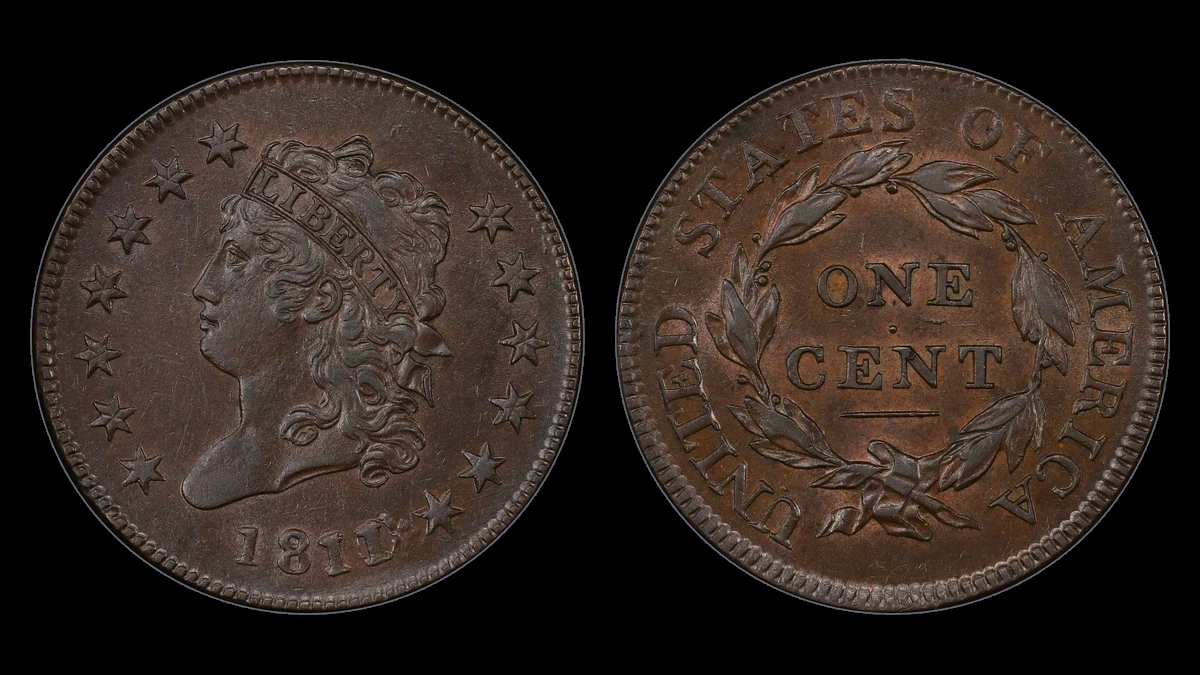
A surviving curve beneath the last 1 records a new digit applied over an earlier date on the die. The change occurred in the steel tool, not by striking an already finished 1810 coin with an 1811 design.
A raised horizontal line below the E in ONE provides another identifying detail. Wear can weaken the small curve at the date, making the paired comparison useful.
How to Identify
Inspect below ONE’s E, then return to the final digit and trace the older 0. Both areas should agree with photographs of an authenticated 1811/0.
A scratch cuts downward and cannot substitute for the raised reverse marker. Do not clean or probe the date to reveal imagined hidden strokes.
Ordinary-date and overdate cents share the same basic specifications. Weight and diameter can support the coin’s identity but cannot distinguish these varieties alone.
What It’s Worth
The estimated range is $200–$70,000, covering heavily worn identifiable examples through outstanding lightly worn coins. Clear detail and original surfaces are central.
PCGS records $66,125 at Goldberg in September 2009 for an AU55 example. That lightly worn coin’s preservation and sought-after variety explain the high whole-coin result.
Conclusion
The most useful 1811 comparison begins with the kind of evidence present: a single displaced design, repeated impressions, a mirror portrait, a copper layer, or an older numeral. Their causes remain distinct even when the coin looks unusual in several ways.
Preserve fragile metal and compare both faces. The high overdate and double-strike results belong to identified complete coins, while damage and wear can substantially change what another example is worth.