Rare 1863 Penny Errors (List & Pictures)
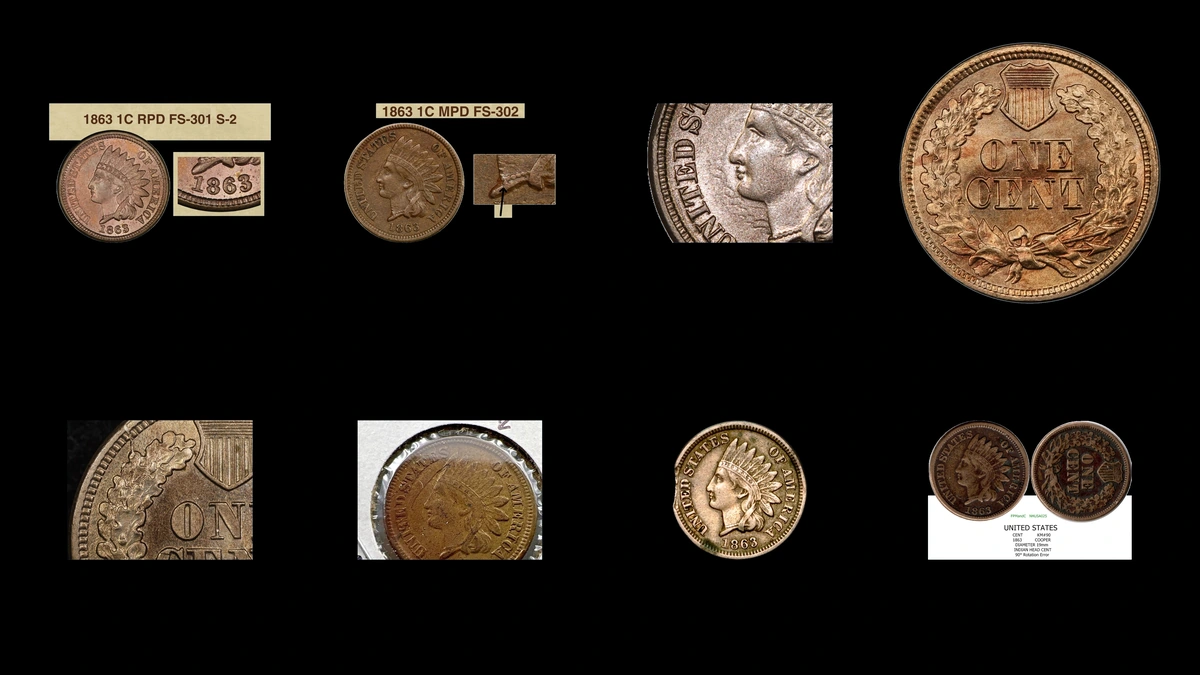
An 1863 die cap sold for $18,000 in 2020; a different-year cent on a dime blank brought $25,300 in 2012. Estimated whole-coin values for 1863 penny errors span $15–$50,000.
Work from the date and fine raised details toward the rim and overall shape, keeping unusual-metal reports separate from ordinary copper-nickel cents.
| Inspection area | Possible features | Estimated values |
|---|---|---|
| Date and border | Repunched or misplaced date | $35–$6,000 |
| Fine surface details | Rust, gouge, clash, doubling, or die breaks | $15–$3,500 |
| Metal and outline | Lamination, clip, broadstrike, or off-center strike | $20–$7,500 |
| Repeated designs or cup shape | Double strike or die cap | $400–$25,000 |
| Unusual edge or metal | Conditional reeded-edge error or dime blank | $1,000–$50,000 if authenticated |
An ordinary 1863 copper-nickel cent weighs about 4.67 g and measures about 19 mm, with a plain edge. Record loose-coin measurements without disturbing fragile metal; a certified coin can remain sealed.
1. 1863 Penny Earlier Strokes beside the Date: Repunched Date Error
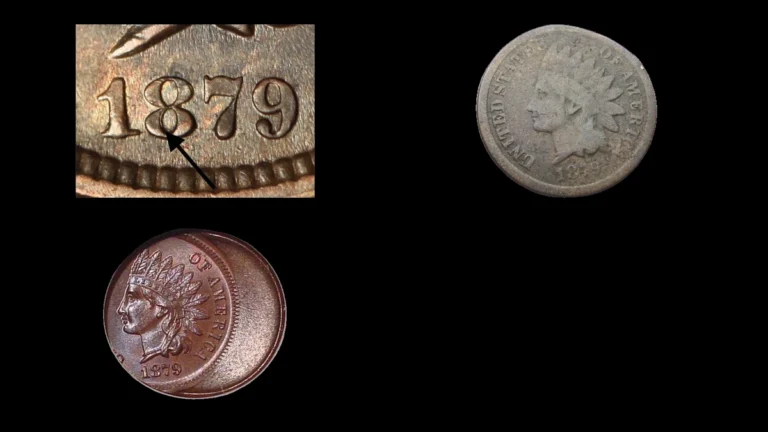
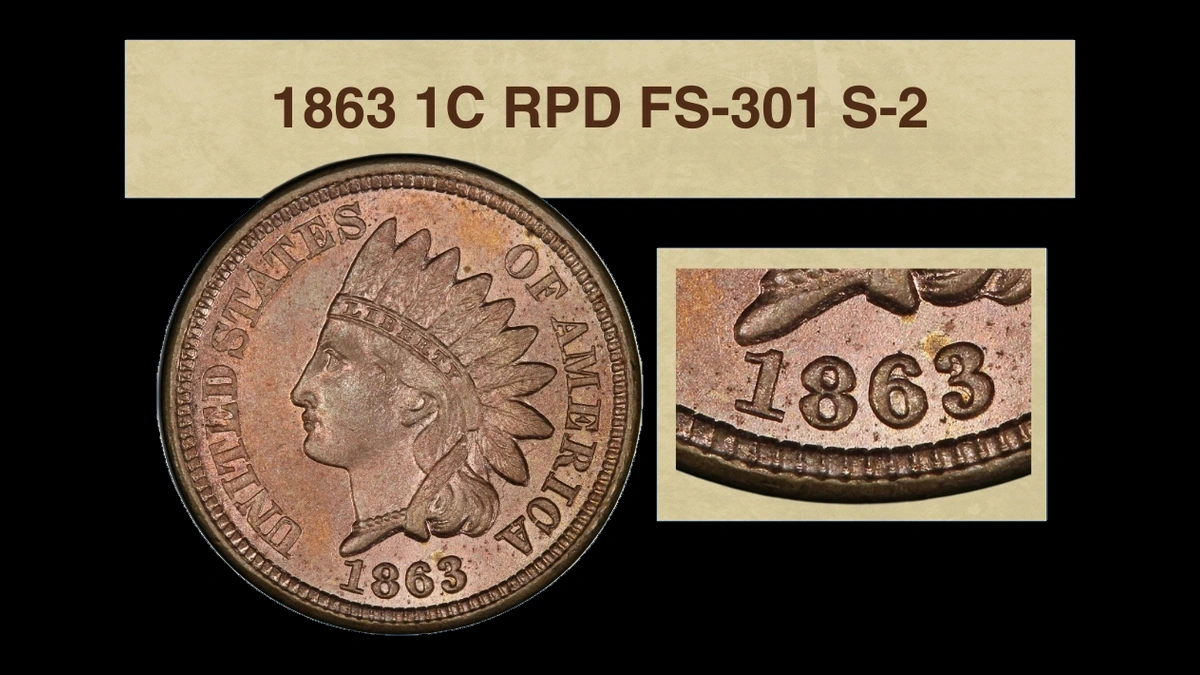
Some varieties have repeated strokes above 18, while others show them below and left of 863. These separate patterns resulted from shifted applications of the date punch to the die.
How to Identify
Compare the complete date with one attributed pattern. A recognizable raised numeral remnant is stronger evidence than a rough deposit or flat shelf.
The year remains 1863. An extra curve beside 6 does not establish an earlier year beneath it.
What It’s Worth
Estimated values are $35–$5,000, including roughly $35–$500 for circulated examples. Attractive unworn pieces account for the upper range.
An 1867/67 graded MS65 Brown sold for $2,500 in June 2000. That different-year repunched date illustrates a whole-coin result combining variety and preservation.
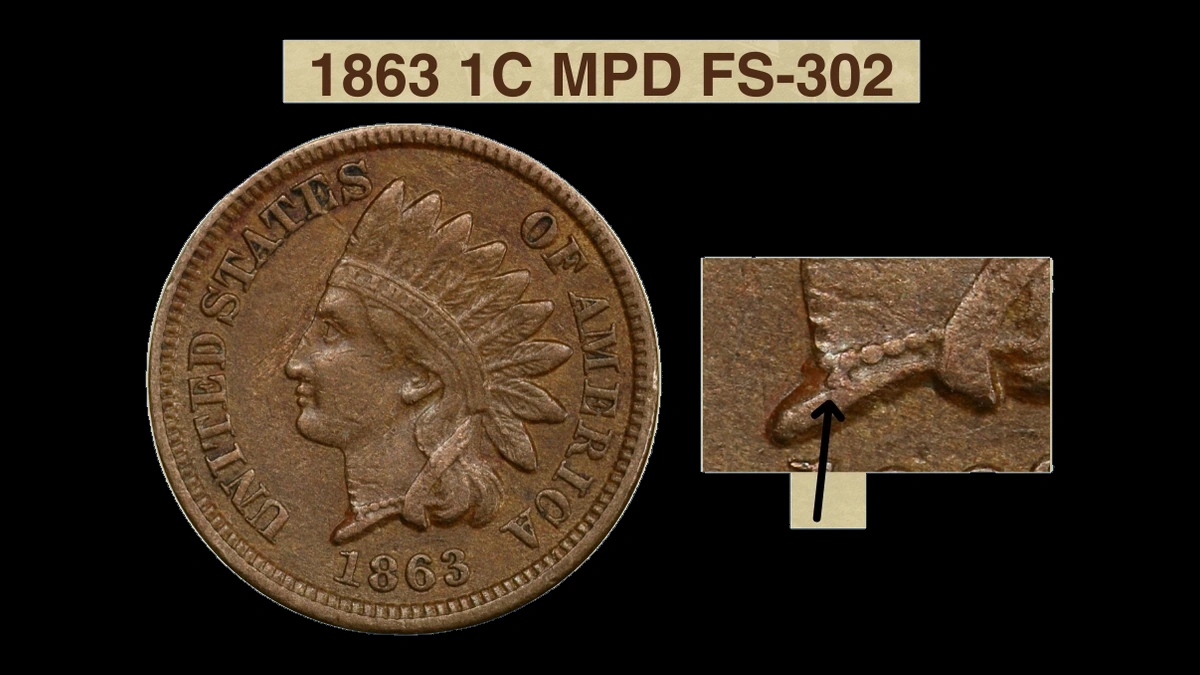
2. 1863 Penny Numeral Pieces outside the Date: Misplaced Date Error
A misplaced date punch can leave fragments among the lower border teeth or near the portrait. Reported 1863 examples include a 6 in the border, traces near necklace beads, and the base of a 1 beyond the bust tip.
How to Identify
These locations belong to separate varieties. Match the extra curve or base while keeping the surrounding beads, border teeth, or bust visible.
The 1863 references provide individual comparisons. A random raised dot is not enough to identify a numeral.
What It’s Worth
Estimated whole-coin values are $50–$6,000, with circulated examples around $50–$750. Visibility of the particular fragment matters for attribution.
An unworn red 1878 misplaced-date cent sold for $1,920 in October 2019. Its different date and pattern make it a comparison, not an 1863 result.
3. 1863 Penny A Raised Line at the Seventh Feather: Die Gouge Error
A cut in a die becomes a raised line on the coin because metal fills the recess. A recorded 1863 variety places such a line at the seventh feather.
How to Identify
Locate the feather with the full portrait in view, then compare the line’s position and endpoints. A similarly angled line elsewhere does not establish this variety.
Move the light to determine whether the mark rises above the surface. A scratch made on the coin ordinarily cuts downward.
What It’s Worth
Estimated values are $20–$750, with worn examples often around $20–$150. Preservation usually contributes more than this small tool mark.
No completed sale is supplied for the recorded feather gouge.
4. 1863 Penny Small Raised Bumps near UN: Die Rust Error
Pits left by rust in a steel die can create bumps on coins struck afterward. One 1863 report locates this texture near UN on the front; another concerns the reverse.
How to Identify
Compare the bump pattern with the appropriate variety photograph. The two reported locations need separate matches.
Die rust describes damaged steel, not rust growing on the cent. Corrosion pits and removable-looking deposits on the coin need a different explanation, and the surface should not be brushed clean.
What It’s Worth
Estimated whole-coin values span $15–$600, including roughly $15–$150 for worn examples. Clearer unworn coins can occupy the higher range.
These are estimates rather than a supplied auction record. Random surface roughness does not qualify on its own.
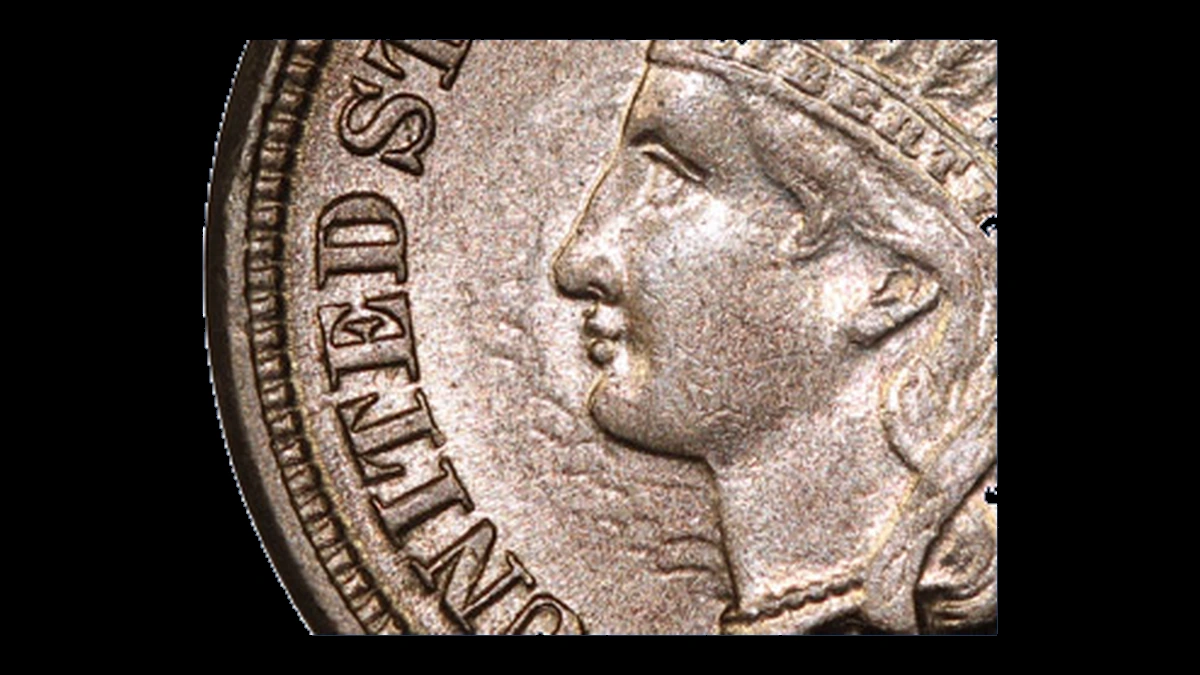
5. 1863 Penny Opposite-Side Outlines near the Neck: Die Clash Error
When the dies collide without a blank, they can exchange traces of their designs. An 1863 report describes an off-position clash near the neck.
How to Identify
Compare the extra outline with the opposite design and a reference for this clash. Other front and reverse clashes are separate examples, not additional required marks.
The cent itself need not have received two blows. A broad sunken backward portrait requires a different explanation from fragments copied through clashed dies.
What It’s Worth
Estimated values are $20–$1,500, with recognizable worn clashes often around $20–$200. The strength of the traces and surface quality guide comparisons.
An 1875 repunched-date cent with a small chip brought $5,040 in August 2020 in exceptional red, unworn condition. That broad tool-variety comparison is not a price for an 1863 neck clash.
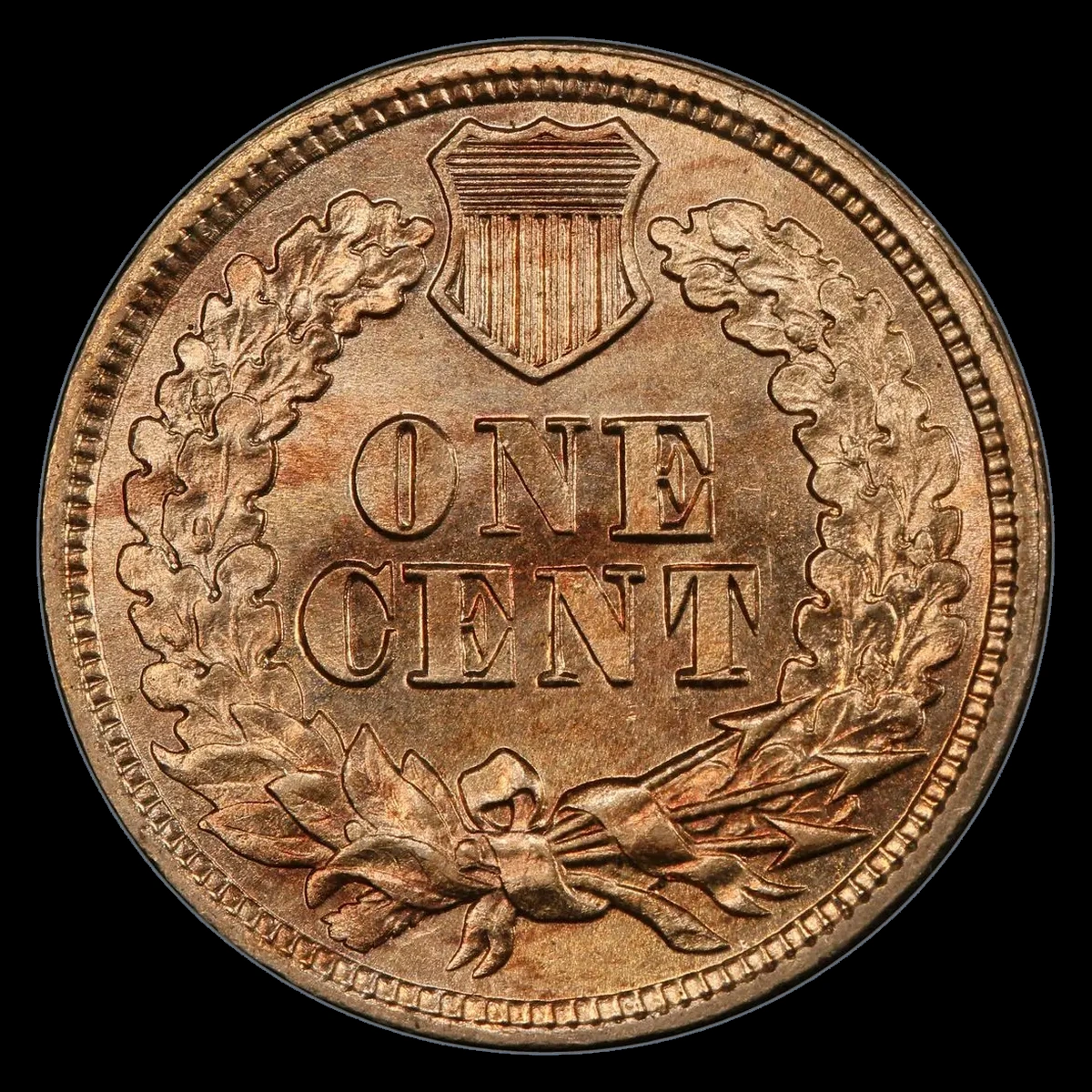
6. 1863 Penny Repeated Leaf and Ribbon Contours: Doubled Reverse Error
The FS-801 variety, also called Snow-10, shows repeated reverse design details. Its die acquired the doubling during manufacture, before any coin was struck.
How to Identify
Begin with the right wreath and compare the leaf and ribbon outlines shifted toward the lower left. Several details should agree with the confirmed pattern.
Other reported left-wreath doubling should not automatically receive the FS-801 name. Changing the light helps separate real fixed outlines from reflections.
What It’s Worth
Estimated whole-coin values are $100–$3,500, with recognizable circulated examples around $100–$800. Unworn coins occupy the higher range.
PCGS records an MS62 FS-801 sale at $1,560 in March 2023. MS62 indicates an unworn coin with noticeable marks.
7. 1863 Penny Interior Bumps and Raised Rim Boundaries: Die Breaks Error
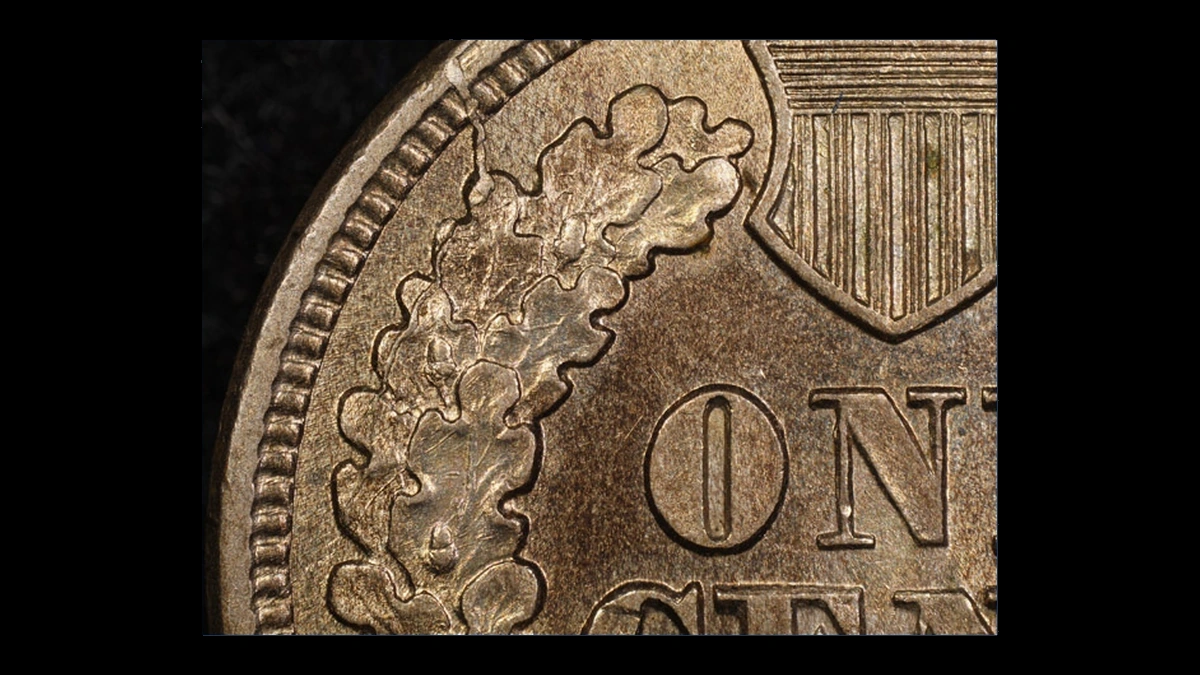
Separate 1863 reports describe chips below the ear, before the eye, and in T of CENT. A reverse retained break occupies about 9:30–11:15.
In a retained break, fractured steel remains in place but shifts. Its surviving design can still appear within the affected area.
How to Identify
Use the variety photographs to select the actual position and die stage. Small interior chips are not rim cuds.
For the upper-left reverse break, examine changes in surface level and retained detail. A dent that pushes rim metal inward should not be accepted as a broken-die feature.
What It’s Worth
Estimated values span $15–$2,500, with small worn cracks or chips around $15–$200 and clearer rim breaks around $100–$2,500. The ranges include the coin itself.
An unworn 1866 Indian cent with a reverse cud brought $504 in March 2021. That different-year result concerns a larger die failure.
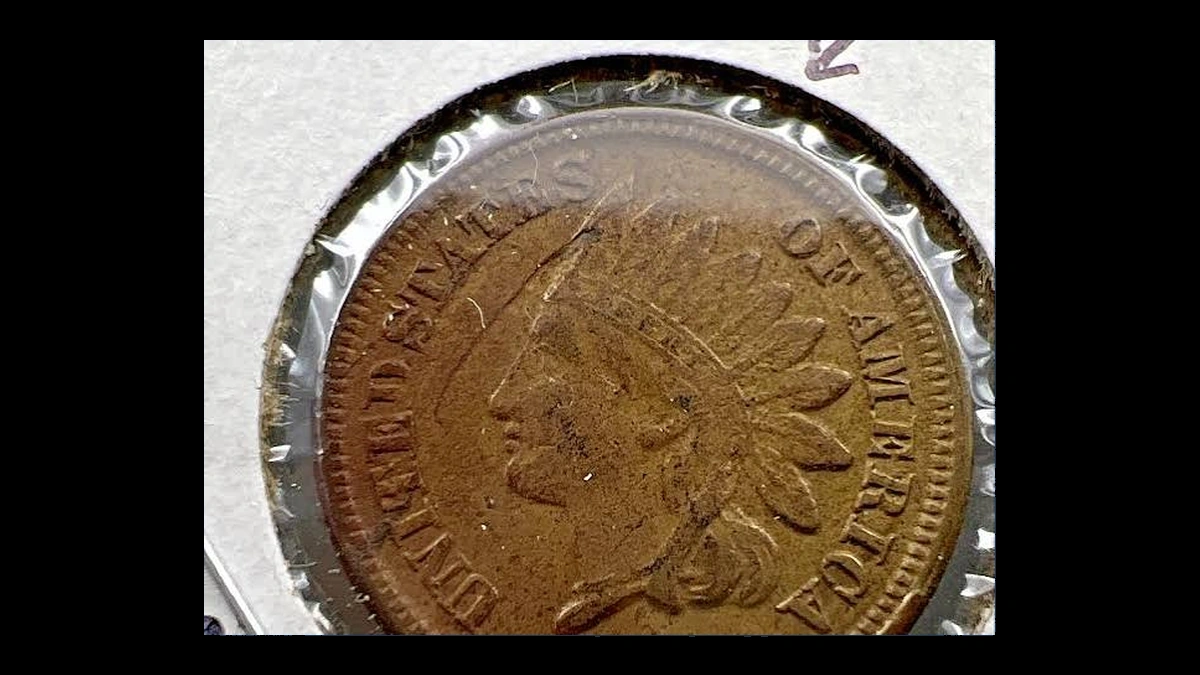
8. 1863 Penny A Layer Peels from the Front: Lamination Error
A dealer reported an NGC G6 cent with front lamination. The defect involves separation within the original metal, not loss of a modern outer coating.
How to Identify
Follow the thin layer’s boundary under side lighting. A scattered group of pits or a scraped depression does not establish this process.
The recorded coin is heavily worn, and the description supplies no exact path through the portrait. Leave any remaining flap untouched.
What It’s Worth
Estimated values are $20–$1,000, with worn examples around $20–$200. The G6 coin belongs with circulated comparisons.
No completed sale accompanies that dealer report. A large missing patch can reduce appeal by removing desirable details.
9. 1863 Penny A Segment Missing from the Outline: Clipped Planchet Error
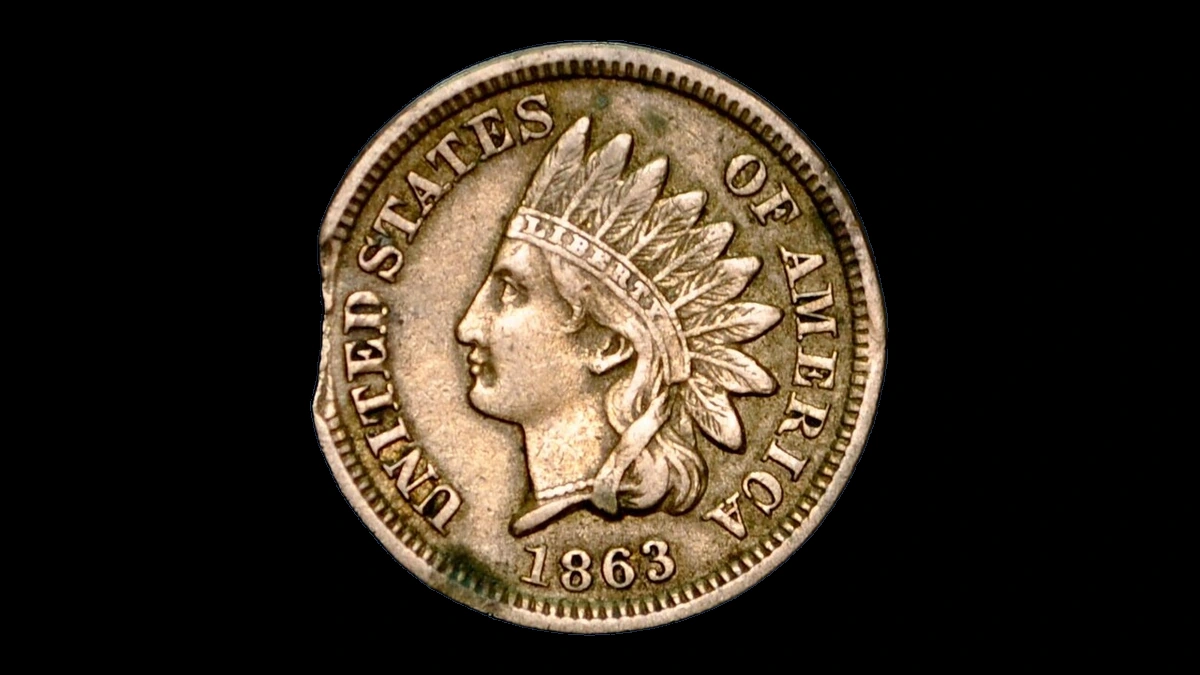
A seller described a lightly worn 1863 cent with a clip. The report identifies a candidate to examine, rather than a certified conclusion about its edge.
How to Identify
Inspect the gap’s side wall and both ends for saw marks, burrs, or a cut through finished lettering. The adjacent strike must fit metal that was absent before the blow.
Rim weakness opposite an original curved clip can support the identification, although not every genuine clip shows it. Low weight alone also fits later cutting or corrosion.
What It’s Worth
For a genuine clip, estimate $40–$2,000, with worn examples often around $40–$400. Attractive unworn pieces need better condition matches.
An unworn 1852 clipped large cent sold for $384 in June 2024. Its larger copper type makes it broad context rather than a direct price for the 1863 seller coin.
10. 1863 Penny Grooves on a Normally Plain Edge: Reported Reeded Edge Error
Regular edge grooves require special investigation on an 1863 cent. An accidental use of a grooved collar is one possibility, but the Judd-300 experimental issue also has a grooved edge.
How to Identify
Record the whole edge in overlapping views and examine the full designs and metal. Private Civil War tokens and later edge cutting must be separated from genuine cents.
A specialist should compare the piece with Judd-300 as well as ordinary issues. Groove spacing or normal cent measurements alone cannot distinguish an experiment from an accident.
What It’s Worth
A conditional estimate of $1,000–$15,000 applies to an authenticated accidental reeded-edge 1863 cent. It does not price grooves alone.
Judd-300 belongs to a separate experimental-coin market. Later alterations and private tokens also fall outside this estimate.
11. 1863 Penny The Reverse Leans Counterclockwise: Rotated Dies Error
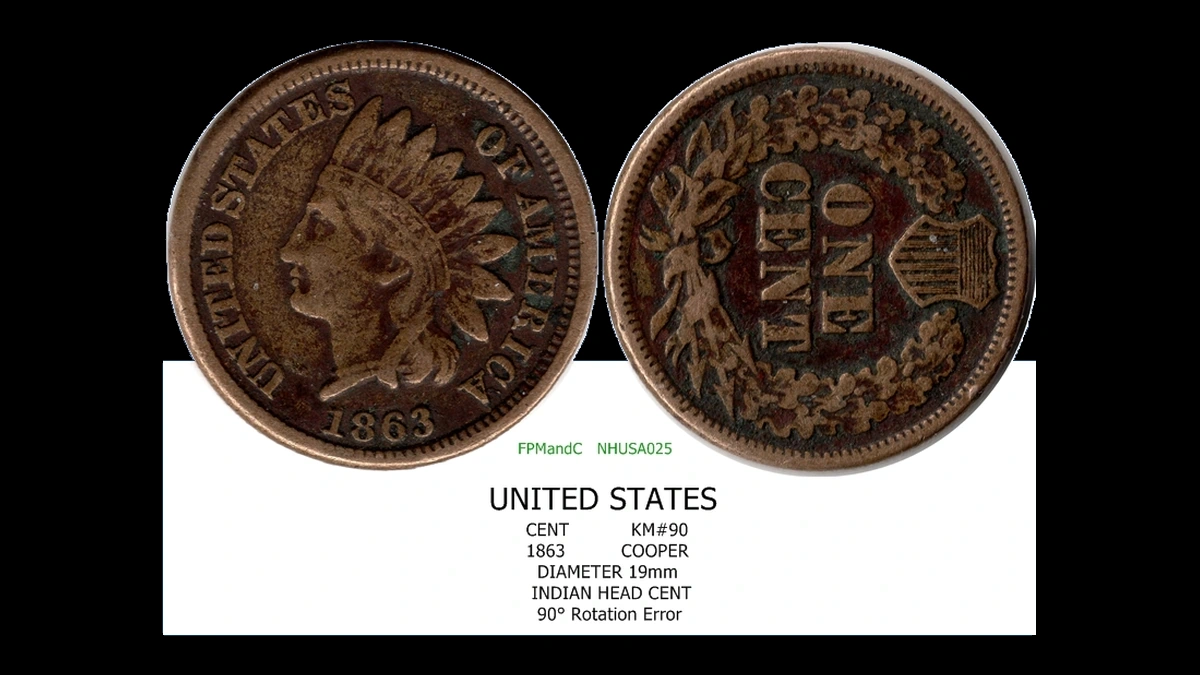
A recorded variety has approximately 25 degrees of counterclockwise rotation. The figure describes die alignment, not a percentage of off-center displacement.
How to Identify
Turn an upright portrait top to bottom while keeping a fixed vertical axis. The reverse should normally appear upright.
Repeat the movement before measuring the angle. Independent rotation of each photograph can conceal or invent the relationship between faces.
What It’s Worth
Estimated values are $25–$1,500, including roughly $25–$250 for circulated coins with a noticeable turn. Preservation accounts for much of the higher range.
No completed sale is supplied for the approximately 25-degree example. A slight lean on damaged copper can add little.
12. 1863 Penny A Wide Border around Complete Design: Broadstrike Error
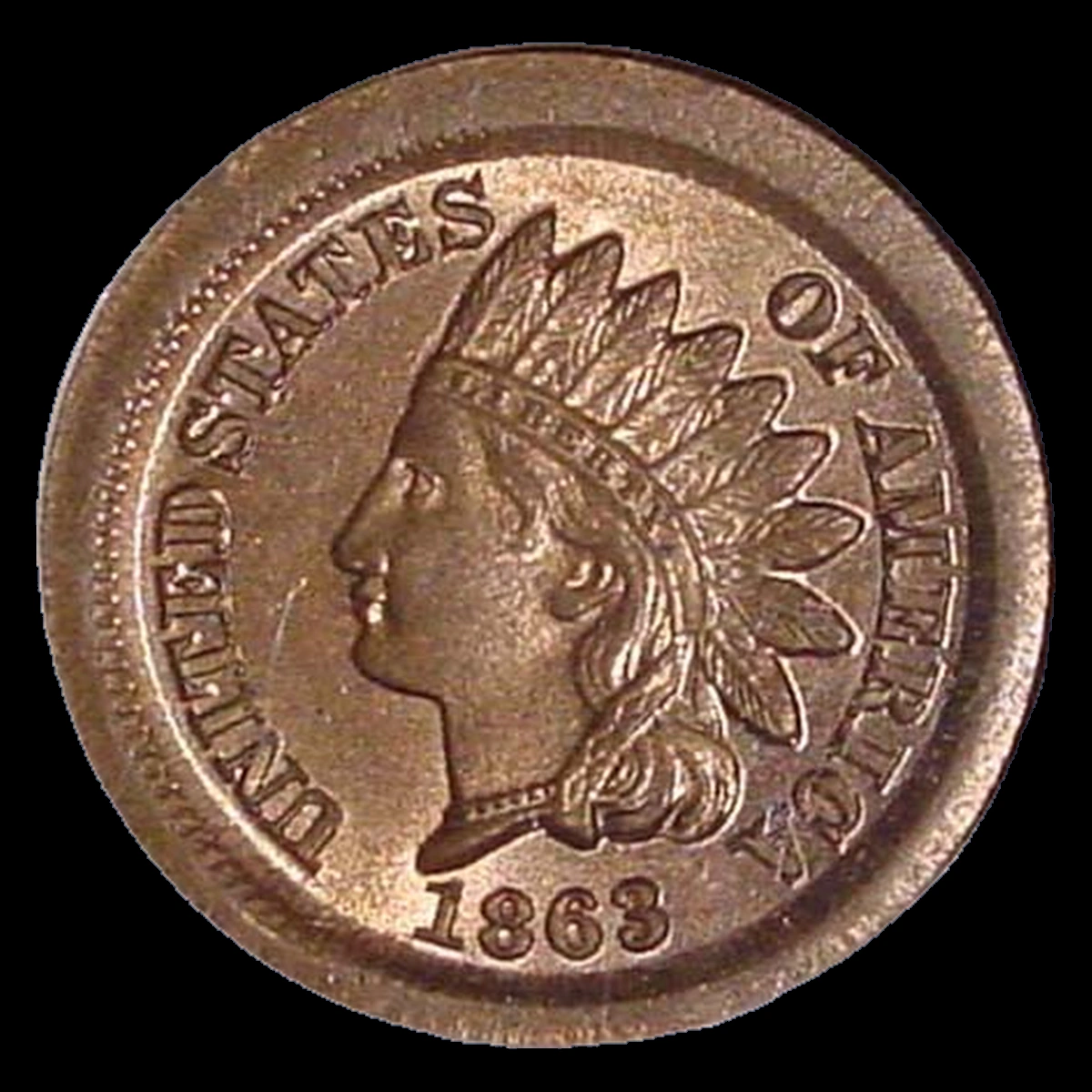
Without proper restraint from the collar surrounding the blank, metal can spread outward during striking. A centered 1863 collection example retains the main design and was graded NGC MS65.
How to Identify
Follow the outer lettering on both faces and compare the natural expansion around it. Later squeezing may instead flatten the design and leave pressure damage.
A normal cent already has a plain edge. Missing grooves therefore cannot prove that this coin was struck outside its collar.
What It’s Worth
Estimated values are $150–$6,000, with circulated broadstrikes around $150–$1,000. The MS65 collection piece belongs with unworn comparisons.
An old dealer record listed a separate uncentered broadstrike with a reverse crack at a $165 minimum bid. That opening amount is not a completed sale.
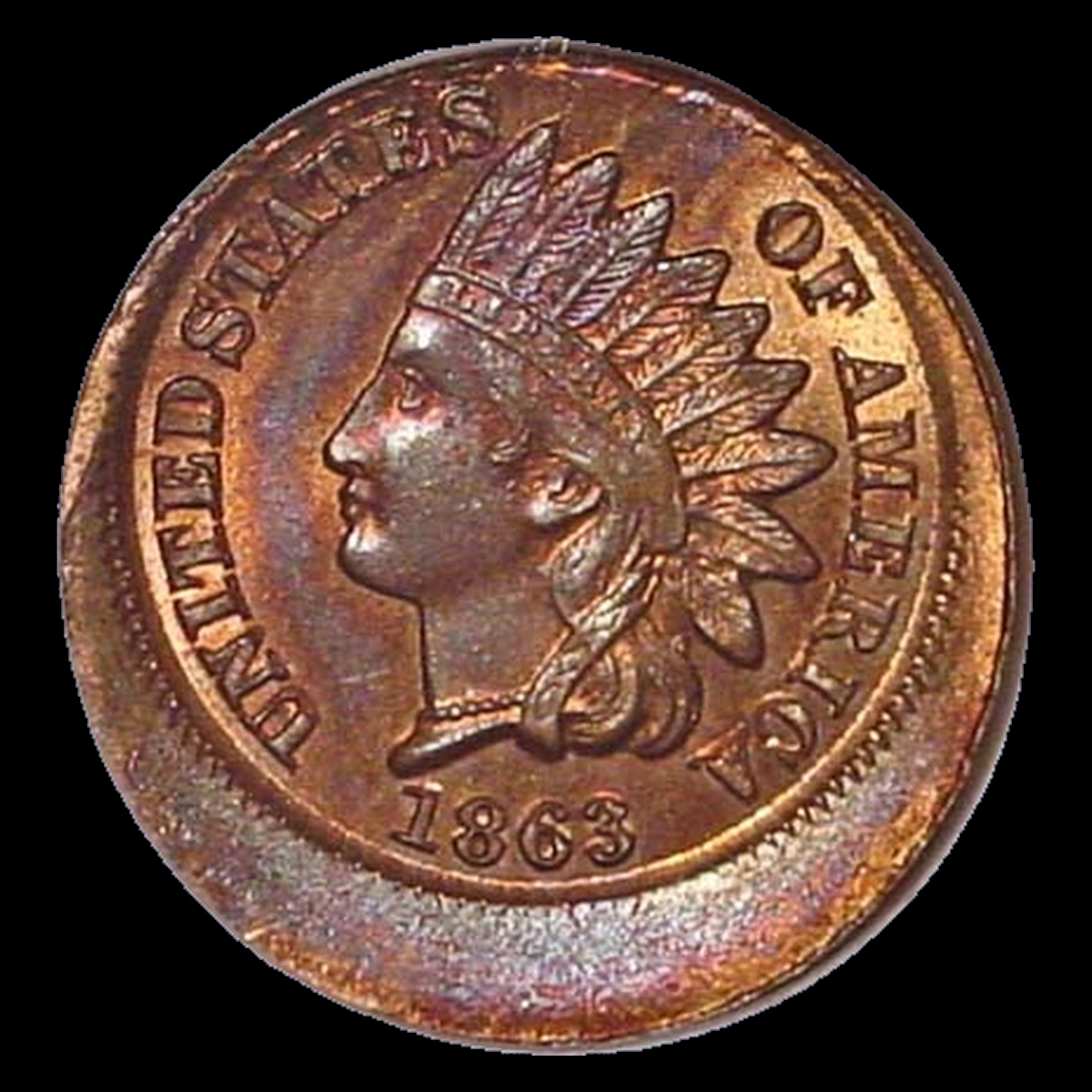
13. 1863 Penny The Design Moves toward Twelve O’Clock: Off-Center Strike Error
An NGC MS66 collection cent is recorded as 15% off-center toward twelve o’clock. It was struck on a Type 1 blank, meaning the blank had not received its prepared raised border.
How to Identify
Compare the missing outer design and bare metal on both faces. With the portrait upright, keep the date and complete outline visible when checking the stated direction.
Type 1 describes blank preparation here. It does not identify the earlier 1859 Indian cent design.
What It’s Worth
Estimated values run $150–$7,500, with readable worn examples around $150–$1,500. The documented MS66 piece represents unusually strong preservation.
A worn 1875 cent struck 12% off-center brought $391 in February 2005. It is a different-date sale, not a price for the 1863 collection coin.
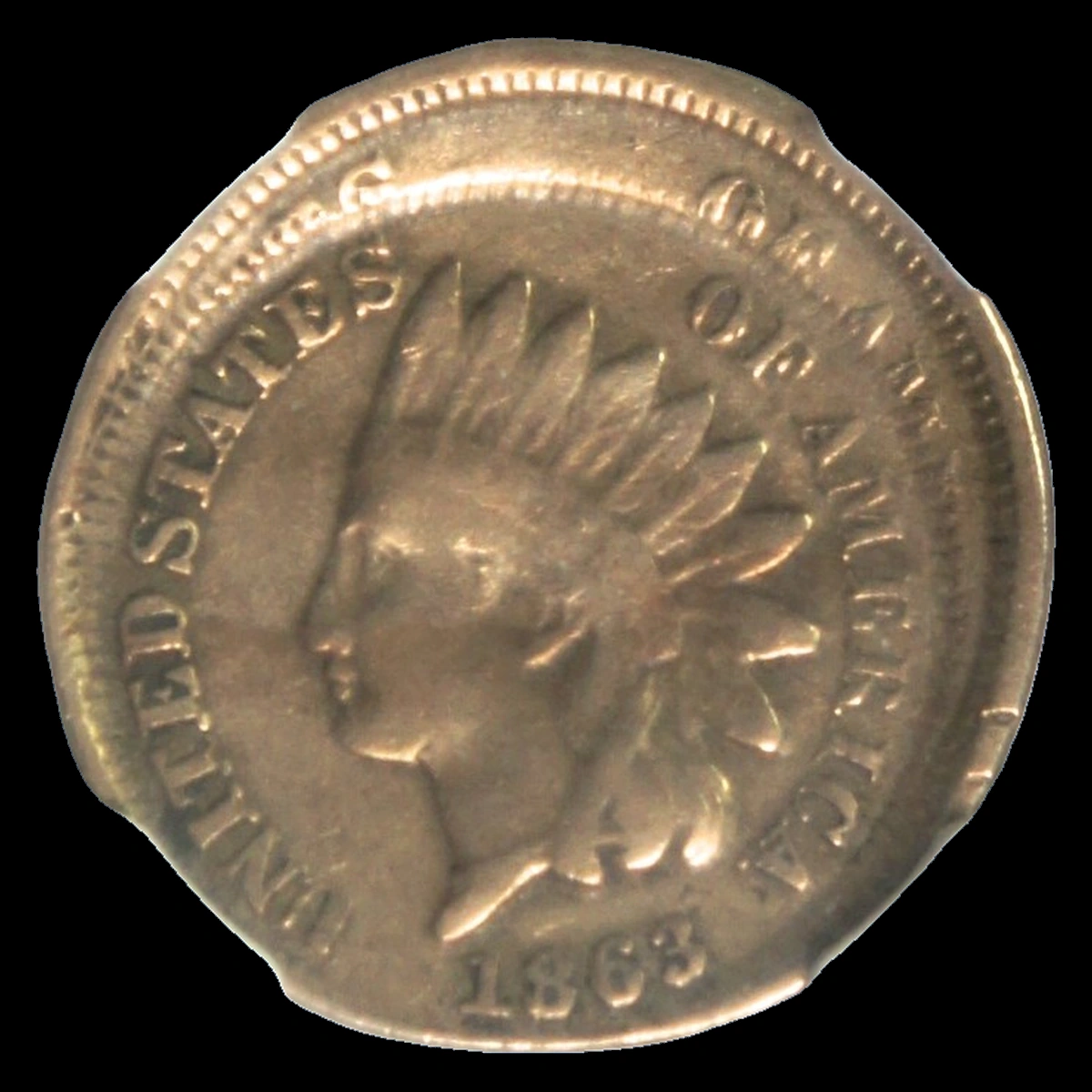
14. 1863 Penny Overlapping Designs with a Small Downward Shift: Double Strike Error
A recorded NGC VF30 cent first received a centered strike and then another about 5% off-center toward six o’clock. Parts of the earlier design survive beneath the later impression.
How to Identify
Trace extra letters or portrait outlines into a coherent second design position on both faces. A thick edge on one letter is insufficient.
The collector record describes a small shift on a circulated coin. Keep that direction and grade with the documented specimen.
What It’s Worth
Estimated values are $400–$10,000, with worn examples around $400–$2,500. Clearer impressions and stronger preservation can support more.
A corroded 1867 cent with an 85% off-center second strike sold for $517.50 in January 2006. That result shows why dramatic displacement does not override poor surfaces.
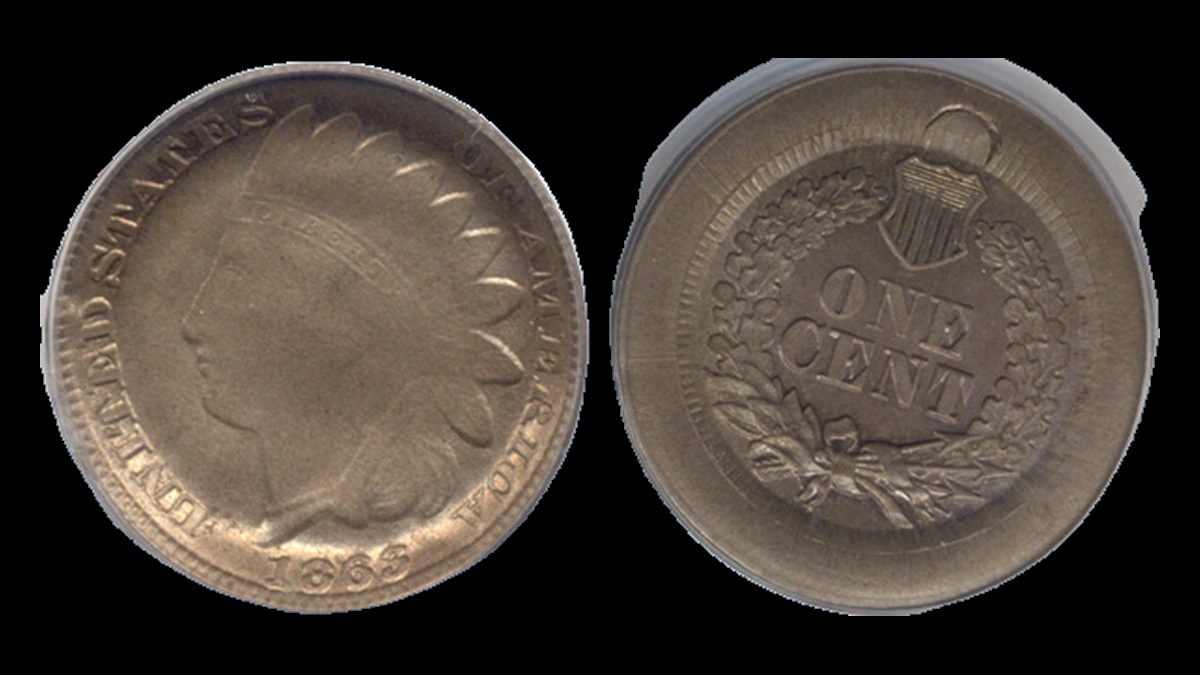
15. 1863 Penny The Coin Forms a Deep Cup: Die Cap Error
An 1863 cent clung to the front die and continued participating in later strikes. Repeated pressure drove metal around the tool, raising the sides and stretching the reverse lettering and wreath.
How to Identify
Compare the high walls with the expanded ONE CENT and wreath. A bent ordinary coin does not acquire the same relationship between repeated striking and stretched design.
The trapped coin is the cap itself, distinct from another coin struck through it. Photograph the opening and side profile without pressing the walls flat.
What It’s Worth
Genuine 1863 die caps have an estimated whole-coin range of $5,000–$25,000. Depth, surviving detail, and preservation guide the comparison.
The deep front die cap graded PCGS MS65 sold for $18,000 at Stack’s Bowers in August 2020. That result concerns an unworn, deeply formed example.
16. 1863 Penny A Small Silver Disc Carries the Cent Design: Dime Planchet Error
The historical record includes an 1863 cent struck on an unused silver dime blank, with auction appearances in 1968, 1977, and 1978. It does not describe a cent over an already struck dime.
How to Identify
A contemporary dime blank started near 2.49 g and 17.9 mm, smaller and lighter than the cent blank. Striking can expand it, so its final diameter need not equal the starting measurement.
Have the alloy, edge, and natural loss of outer cent design assessed together. Plating or trimming an ordinary cent cannot establish the attribution, and earlier dime design would require a different explanation.
What It’s Worth
An authenticated 1863 cent on a silver dime blank has an estimated value of $5,000–$50,000. The identification and preservation must support the comparison.
The historical dime-blank reference records $450 in June 1978 for the 1863 piece. A separate 1869 cent on a dime blank brought $25,300 in January 2012, offering a later-market, different-year comparison.
Conclusion
Small raised features on an 1863 cent often identify particular dies, while a widened outline or deep cup records a different striking event. Match the feature before comparing preservation and price.
Special edge and metal claims require a fuller identification than a face photograph provides. Keep Judd-300 experiments, accidental reeded edges, dime blanks, and ordinary copper-nickel coins in their appropriate comparisons.