Rare 2007 Nickel Errors (List & Pictures)
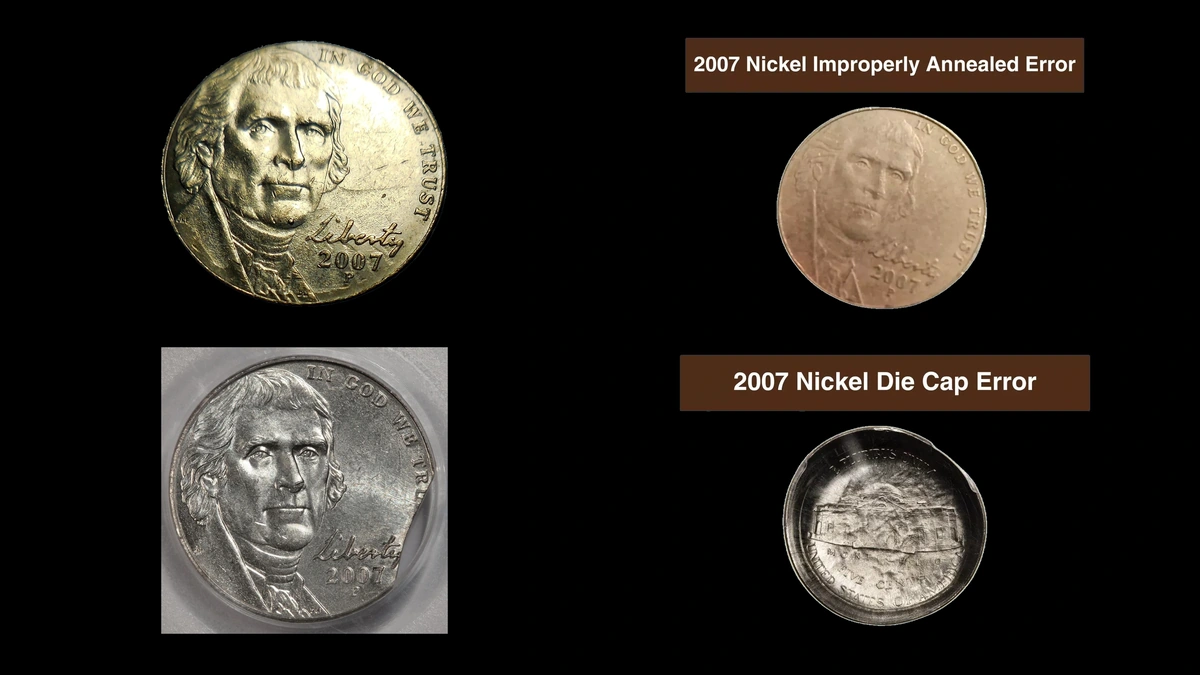
A nickel with a wider border needs a different explanation from one with missing lettering. The reported 2007 nickel errors below span roughly $3–$3,000, with the coin’s shape, surface and remaining design helping separate the groups.
A 2007-D nickel combining a double strike and large broadstrike brought $1,260 in August 2025. Begin with the small surface details, then compare the edge and the overall shape.
| Visible clue | Possible error | Estimated range |
|---|---|---|
| Raised extra outlines | Doubled die | $5–$75 |
| Raised line or rim-connected lump | Die crack or cud | $3–$200 |
| Unusual color across both faces | Improper annealing | $30–$250 |
| Expanded border with complete design | Broadstrike | $25–$250 |
| Part of the blank missing | Clipped planchet | $15–$350 |
| Interrupted detail on a proof | Struck through | $50–$400 |
| Design cut off at the edge | Off-center strike | $30–$500 |
| A blank-shaped depression | Indent | $100–$600 |
| Great expansion and repeat-strike traces | Double strike and possible die cap | $500–$3,000 |
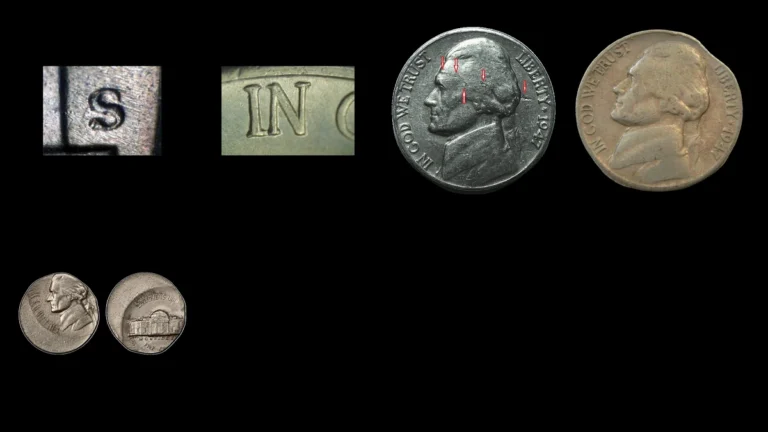
1. 2007 Nickel Extra Raised Outlines: Doubled Die Error
Reported 2007-P and 2007-D front-side doubling involves Jefferson’s cheek, hair or the motto. Reverse reports concern Monticello and its lettering, so the area requiring attention depends on the particular variety.
A doubled die receives a repeated design during manufacture and can pass it to multiple coins. The pattern on a Philadelphia coin should not be treated as the diagnostic pattern for a Denver coin.
How to Identify
Look for a distinct raised companion outline that stays visible as the light changes. Flat, shelf-like displacement and bright reflection along a single edge are weaker evidence than separated rounded details.
Record the mintmark and the exact letters or portrait features involved. A matching attributed example should repeat that arrangement, rather than merely look generally blurry.
What It’s Worth
$5–$75 is an estimated range for the reported doubled-die categories. Clear, identifiable doubling on a well-preserved coin is more useful to a buyer than an unconfirmed claim based on one photograph.
The supplied evidence does not establish a completed sale for a specific 2007 doubled-die variety.
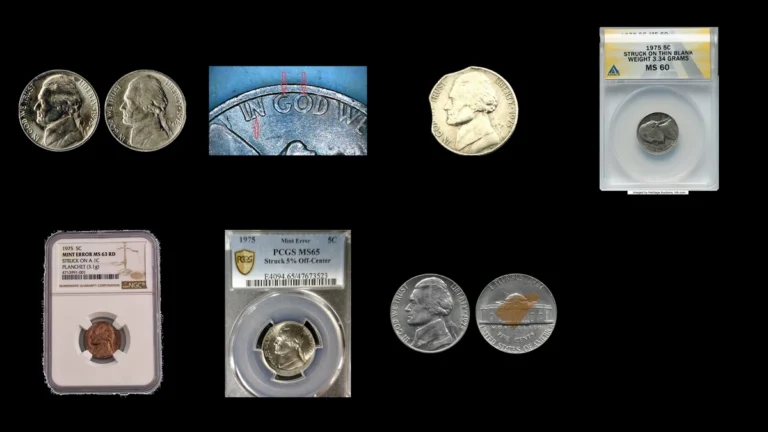
2. 2007 Nickel A Raised Line or Edge Lump: Die Crack and Cud Error
A raised line around Monticello can come from a crack in the reverse die. Reports also include a 2007-P rim cud, where a broken piece of the die left space for coin metal to rise into a larger lump.
How to Identify
Follow the line under angled light to determine whether it stands above the surface. A scratch cuts into the coin and may push small ridges up along its sides.
For a proposed cud, check that the raised area genuinely joins the rim and interrupts the expected design. Folded edge metal or an attached blob should not be confused with metal shaped by a broken die.
What It’s Worth
$3–$25 covers modest die cracks, while a substantial confirmed cud is estimated around $30–$200. Size and the amount of design replaced matter more than the mere presence of a line.
A 1983-P cud nickel graded PCGS AU53 sold for $63 in July 2022. That is a different-year comparison for the error class, not a sale of the reported 2007-P coin.
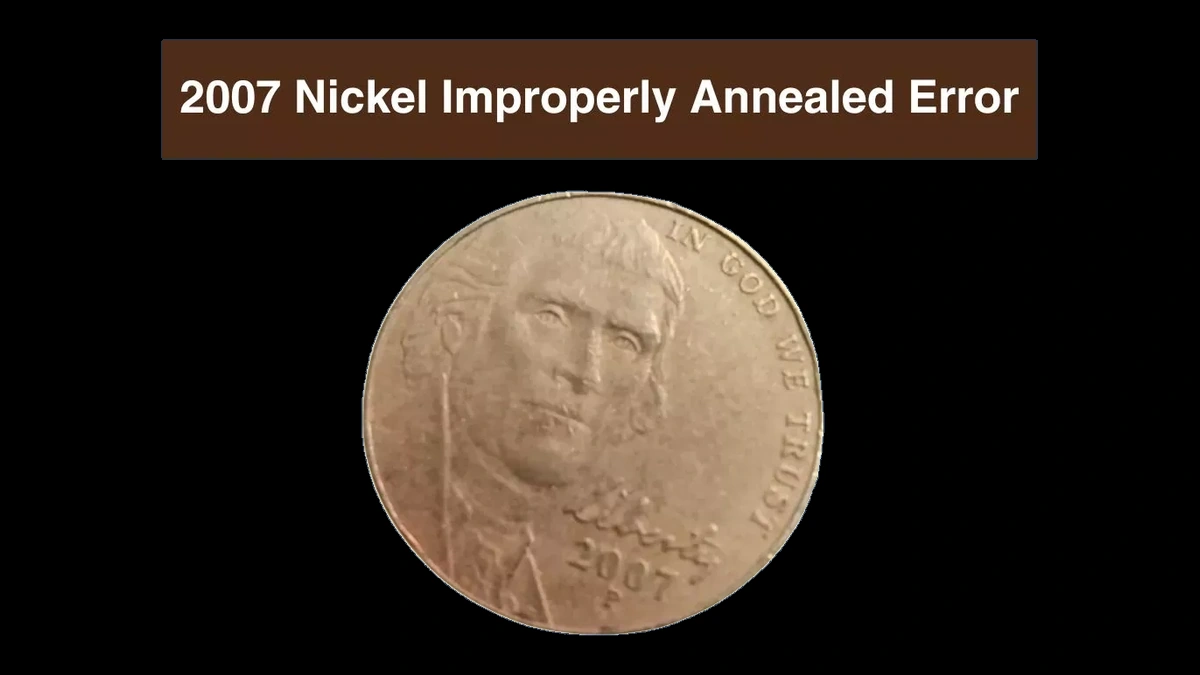
3. 2007 Nickel Coppery or Dark Faces: Improper Annealing Error
The reported 2007-D annealing error has unusual dark or coppery color on both faces. Annealing is the heating stage that softens blanks, and an abnormal heating environment can change the surface chemistry.
How to Identify
Photograph both faces and the edge in neutral light, including protected areas and worn high points. Color by itself cannot establish when or how a surface changed.
Staining, environmental exposure and later heating can imitate an unusual mint surface. The nickel is a solid copper-nickel alloy, so a coppery appearance is not evidence that a separate outer layer fell off.
What It’s Worth
$30–$250 is a conditional estimate for an authenticated annealing error. An attractive but unexplained color change does not justify that range.
A 2005-D Bison nickel certified NGC MS62 with an annealing error brought $119 in December 2022. Its different design and date make it context for collector demand rather than a direct 2007 valuation.
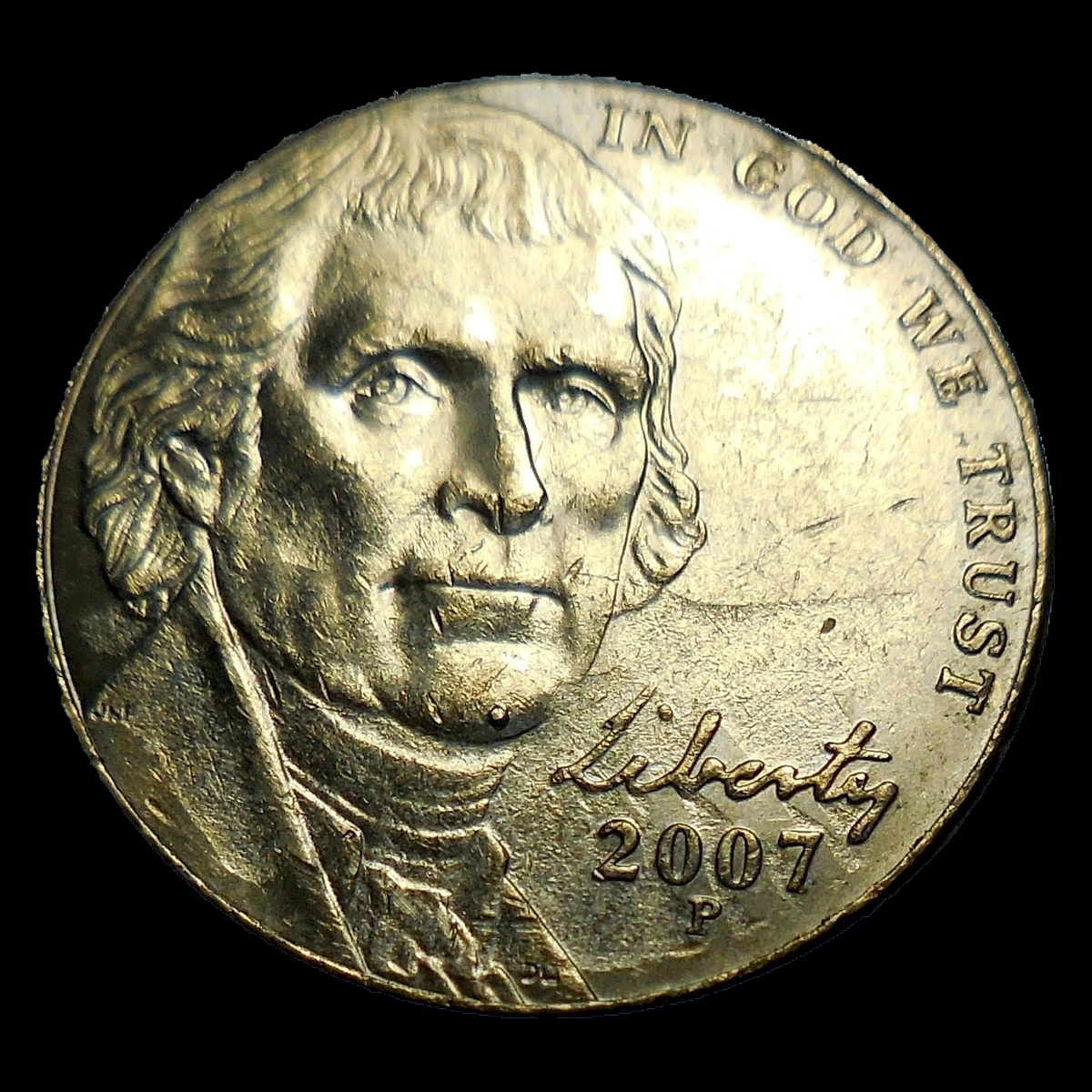
4. 2007 Nickel A Wide Border Around Complete Detail: Broadstrike Error
Broadstrike reports include a Denver example and a separate uncentered Philadelphia example. When the collar fails to contain the blank during striking, the metal can spread outward beyond the intended diameter.
How to Identify
Inspect the entire design before deciding that an uneven border means an off-center strike. A broadstrike can sit unevenly on its blank while still preserving all the intended design.
A normal nickel starts at about 5 grams and 21.21 millimeters across. For loose coins, those measurements offer useful context for expansion or missing metal; keep certified examples in their holders.
What It’s Worth
$25–$250 is the estimated range for a single broadstrike of this date. A clearly expanded, undamaged coin generally presents a stronger error than a barely enlarged example.
A 1999-P broadstrike graded PCGS MS63 sold for $89 in March 2025. The $1,260 compound 2007-D coin discussed below has additional features and should not set the price for every broadstrike.
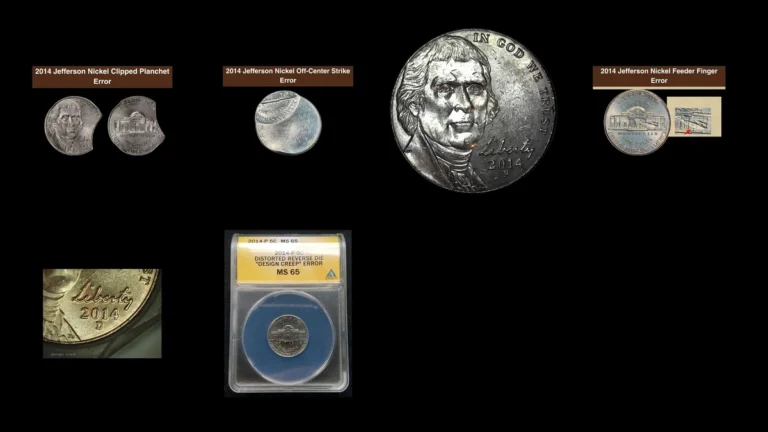
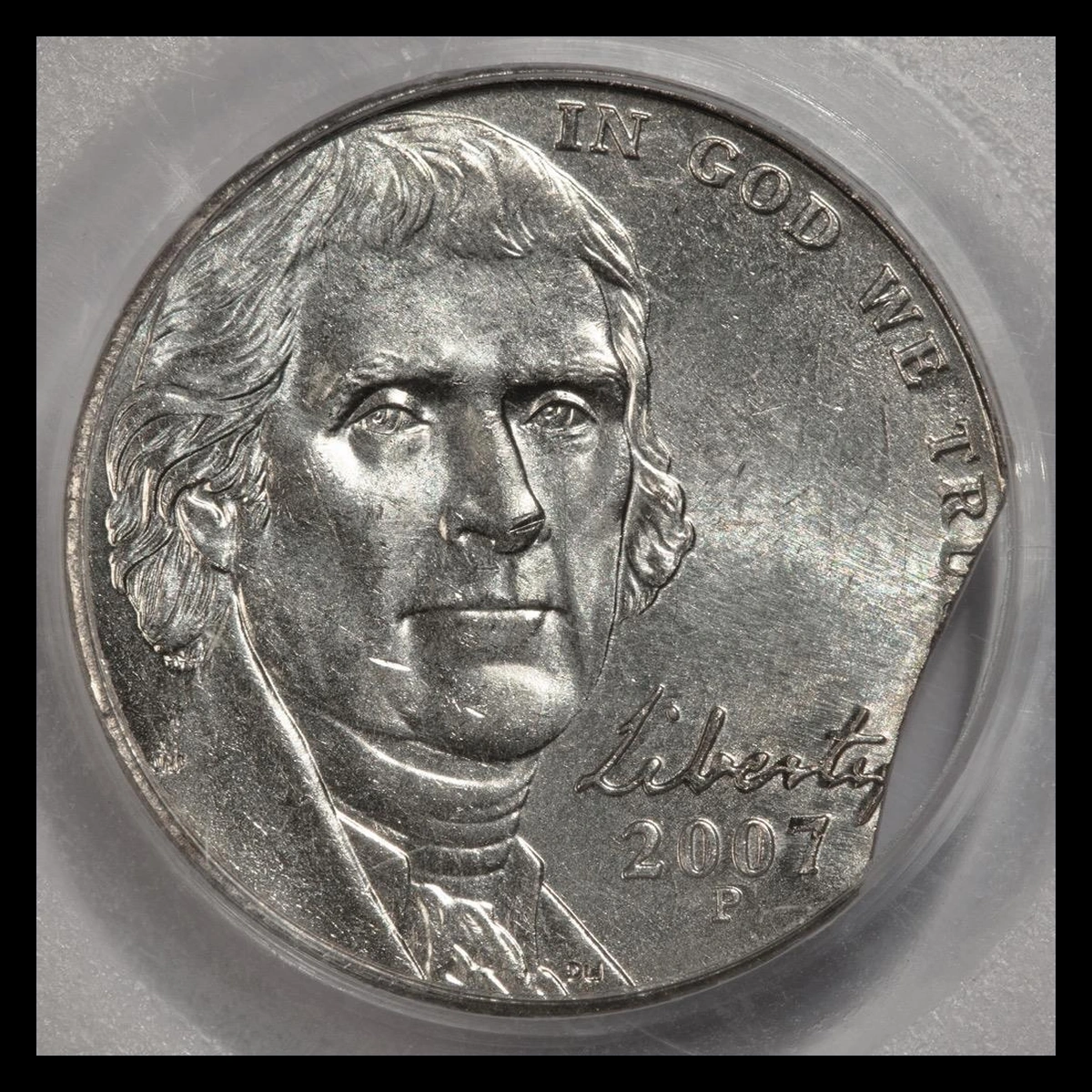
5. 2007 Nickel A Missing Section of Metal: Clipped Planchet Error
The supplied reports cover straight clips, a Denver double curved clip and a separate Denver elliptical example weighing 4.0 grams. These shapes arise from incomplete blanks, before the coin receives its design.
How to Identify
Examine each missing boundary for a natural transition in the struck design and rim. A newly cut notch with sharp tool marks does not explain itself as a mint clip.
The 4.0-gram figure belongs to the reported elliptical specimen alone. An oval outline made by squeezing a complete coin is not an elliptical clipped blank, and it does not gain credibility just by resembling that outline.
What It’s Worth
$15–$100 is a working estimate for modest clips, rising to about $75–$350 for more distinctive double or elliptical examples. Preservation and the clarity of the missing-metal pattern affect the result.
A 1997-P nickel with a 20% curved clip sold for $124 in March 2025. Neither its percentage nor its price should be assigned automatically to the 2007 reports.
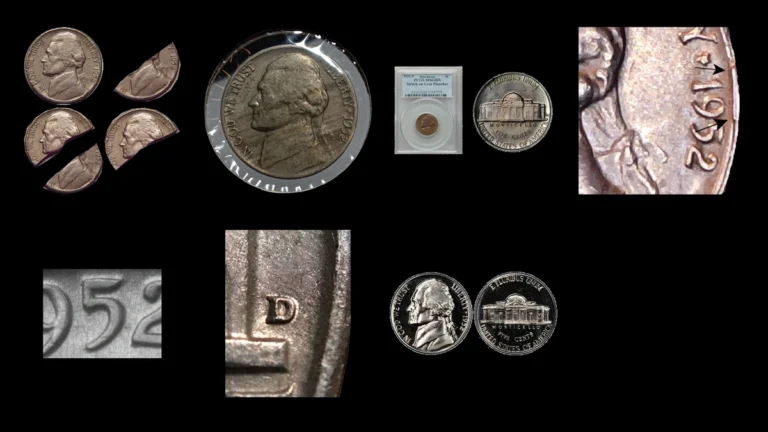
6. 2007 Nickel A Local Impression on a Mirrorlike Coin: Proof Struck Through Error
A documented 2007-S collector proof has a struck-through area on the front. Material between the die and blank interfered with the impression, although the supplied record does not identify that material.
How to Identify
Find the localized interruption in otherwise crisp proof detail. A later scratch or impact usually cuts or moves finished surface metal rather than leaving an area that failed to receive the expected die impression.
The recorded coin is NGC Proof 69 Ultra Cameo, describing its preservation and strong contrast between frosted devices and mirrored fields. Those terms do not describe the size or rarity of its struck-through area.
What It’s Worth
$50–$400 is an estimate for this proof error category. The extent and visibility of the affected area would help determine where a particular coin fits.
GreatCollections records the certified 2007-S proof as sold in August 2012. No realized price from that sale is supplied here.
7. 2007 Nickel Part of the Design Falls Outside the Coin: Off-Center Strike Error
Philadelphia off-center examples are reported for 2007. In this error, the blank sits far enough away from the dies’ intended position that some design never reaches the metal.
How to Identify
Find actual missing design on both sides, rather than judging only the width of an empty border. Complete detail on an expanded blank points back toward a broadstrike.
Confirm that enough of the date and mintmark survives to identify the coin. No fixed offset percentage or direction is established for all the reported 2007-P examples.
What It’s Worth
$30–$500 is the estimated span for off-center strikes, with dramatic displacement and a readable date often improving appeal. A slight shift is not equivalent to a major missing portion of the design.
A 1999-P nickel struck 15% off center sold for $64 in March 2025. It supplies a modest comparison without establishing the degree of displacement on a 2007 coin.
8. 2007 Nickel A Blank-Shaped Depression: Indent from a Clipped Planchet Error
A reported 2007-D nickel graded NGC MS62 was struck while another clipped nickel blank overlapped it. The overlapping blank pressed an indent into the coin beneath it.
How to Identify
Separate the coin’s outside outline from the depressed area inside it. The clipped shape belongs to the other blank, so the displayed coin need not itself have missing metal or a low weight.
A plain blank should not leave readable backward lettering. Such lettering would suggest contact with an already struck coin and call for a different explanation.
What It’s Worth
$100–$600 is an estimated range for this unusual indent configuration. The supplied material gives the grade and mechanism but no completed sale price for the described 2007-D example.
A clear outline of the overlapping blank and an intact surrounding coin make the sequence easier to demonstrate. Random dents or compressed areas after minting do not carry the same explanation.
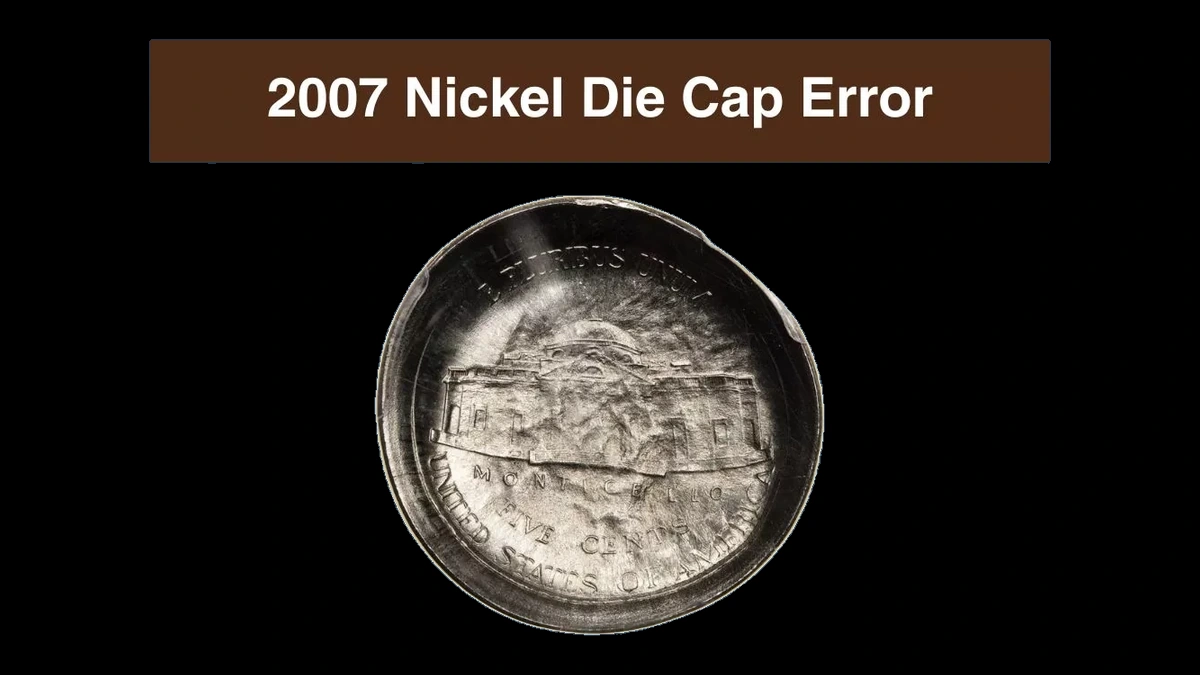
9. 2007 Nickel Great Expansion with Repeated Detail: Double Strike and Die-Cap Features Error
One 2007-D nickel combines major expansion with evidence of more than one strike. Its PCGS MS63 label calls it a double strike and large broadstrike, while dealer Mike Byers discussed it as a reverse die cap.
A die cap forms when a coin stays on a die and changes shape through continued striking. The cup-like edge and repeat-strike traces are therefore relevant observations, rather than the large diameter alone.
How to Identify
Use photographs of both faces and the side to assess metal flow, the raised edge and surviving repeated design. Do not flatten an unusual shape to make it easier to store.
A coin bent into a bowl after striking can have a curved edge without the same strike evidence. The supplied description also does not justify adding an unreported brockage or a specific number of strikes.
What It’s Worth
$500–$3,000 is an estimated range for dramatic authenticated examples of this compound type. The individual features belong to one coin, so their separate category estimates should not be added together.
The 2007-D PCGS MS63 double strike and large broadstrike realized $1,260 on August 31, 2025. That result is specific to the illustrated compound error.
Conclusion
The most useful first distinction is whether metal, design or merely color looks unusual. Missing metal points toward a blank problem, missing design toward strike placement, and extra raised detail toward the die or repeated striking.
Keep each reported specimen’s mintmark and features together when comparing values. The documented $1,260 compound error and the certified proof provide firmer reference points than an unexplained surface change.