Rare 1817 Penny Errors (List & Pictures)
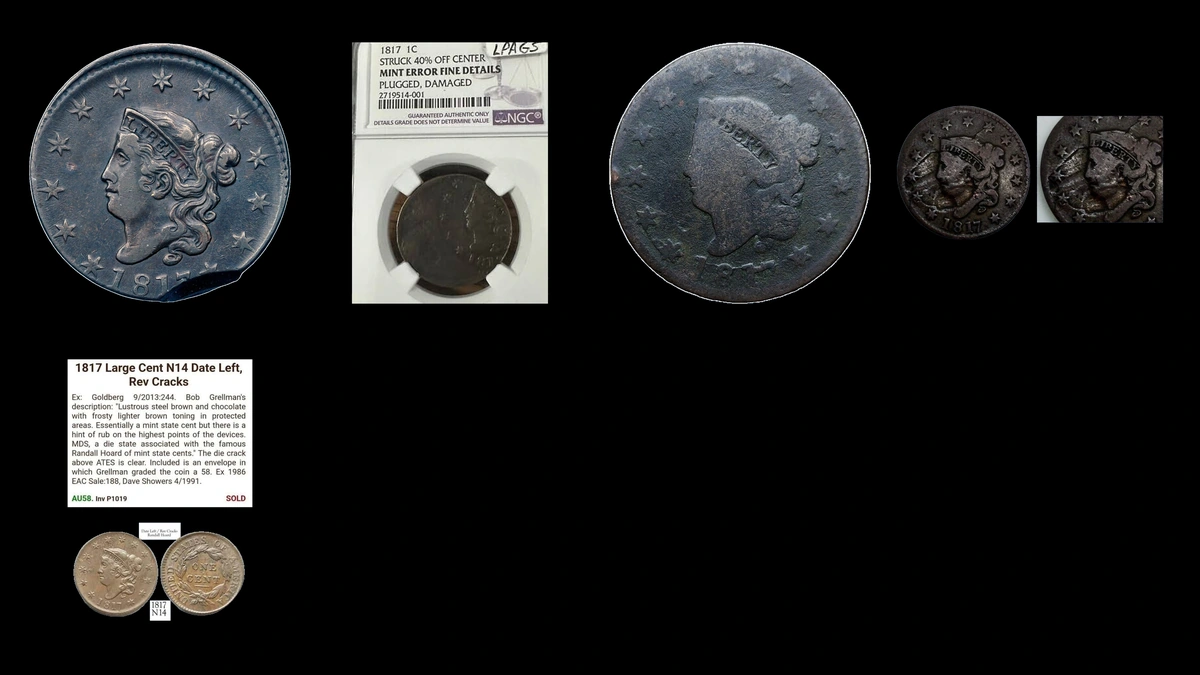
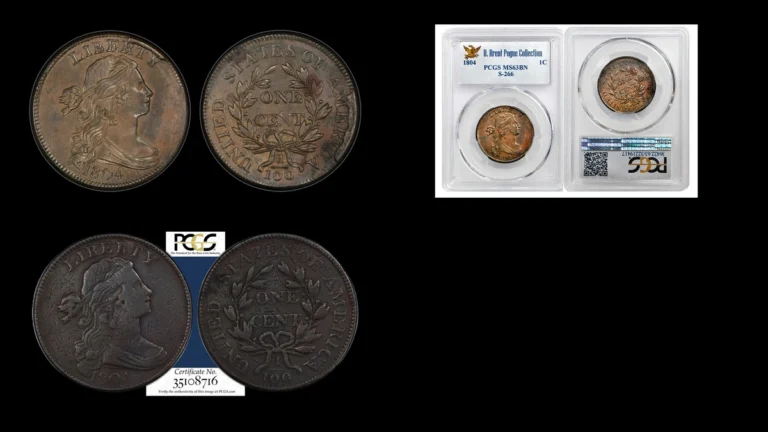
A fifteen-star brockage drew a $7,500 winning bid before buyer’s premium in January 2015. It had fifteen raised stars on one face and fifteen recessed mirror stars on the other, a striking example among 1817 penny errors.
Estimated whole-coin values span $20–$15,000. Establish the original 13-star or 15-star design, then examine the edge, design positions, and surface defects.
Both normal versions use copper blanks of 10.89 grams and roughly 28 mm, with plain edges.
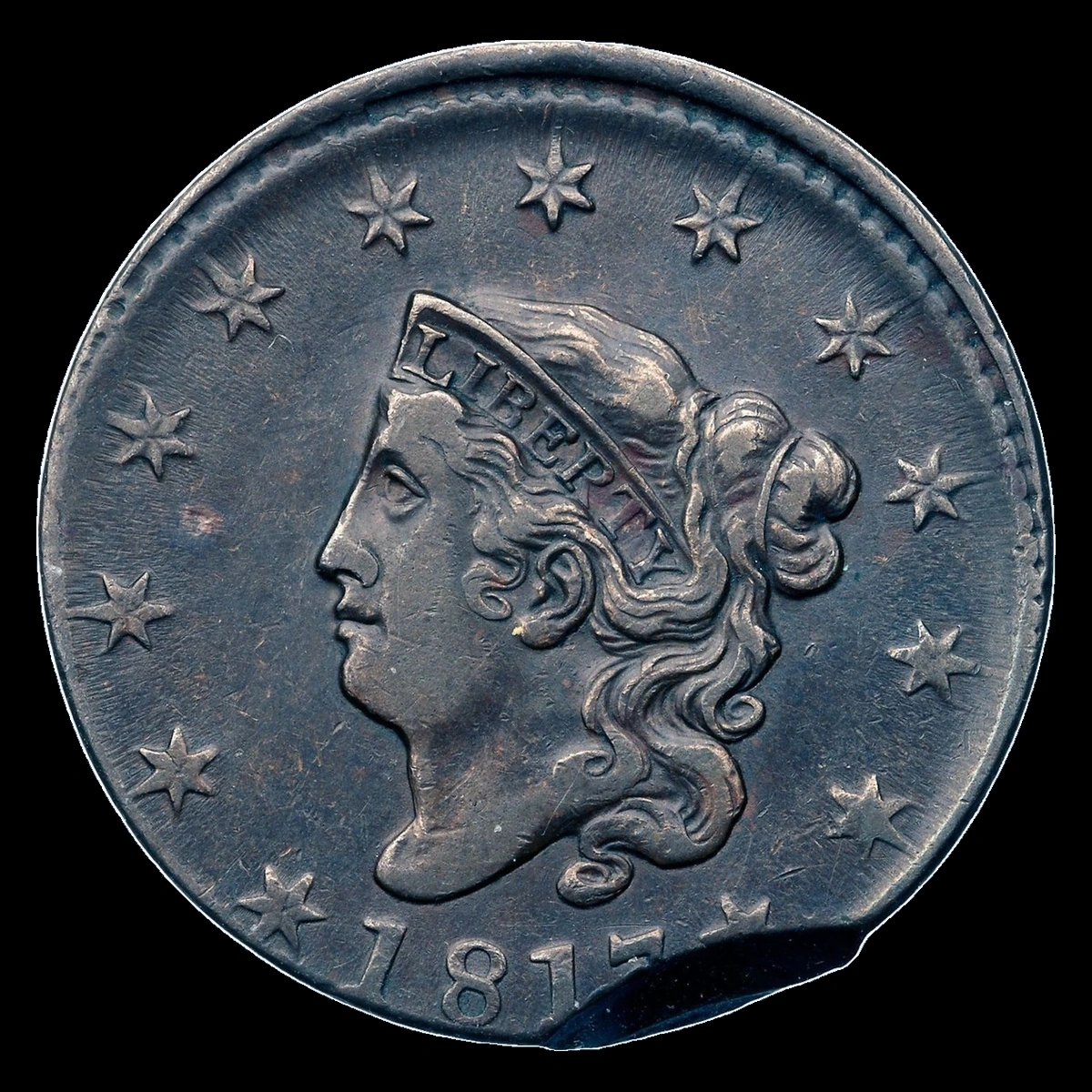
1. 1817 Penny The Outline Has a Missing Section: Rim or Straight Clip Error
One Mint Error News listing records a rim clip at 5 o’clock. A separate collector’s 13-star N-12 has a straight missing edge, without a supplied position or percentage.
A clipped blank was incomplete before striking. It differs from a shallow copper flake because it changes the disc’s outline rather than only a surface layer.
How to Identify
Inspect the gap wall and the way the struck border ends at each side. Filing or saw marks across completed detail suggest metal removed afterward.
Keep the 5 o’clock location with its own report, not the straight N-12. Opposite-rim weakness can support an original clip only when the gap and strike formation agree.
What It’s Worth
Worn small clips are estimated at $50–$400, with larger clear clips or better-preserved coins around $400–$2,500. No completed price is supplied for either reported specimen.
A large straight cut needs convincing original-blank evidence before it belongs in the error range. Shape alone cannot distinguish a clip from later removal.
2. 1817 Penny One Face Sits Closer to the Rim: Misaligned Die Error
A collector’s 13-star N-14 has a reverse shifted slightly toward 5 o’clock. A separate Heritage N-14 was described with sharp left borders and softer right borders caused by misalignment.
The die, the stamping tool, moved relative to its counterpart. This differs from the entire blank being off center under both dies.
How to Identify
Compare full photographs of both faces and measure the design’s spacing from the rim. A shift on only one face supports a different explanation from similarly displaced designs on both.
Judge spacing as well as sharpness because wear can soften a border. The collector’s specific direction belongs to that specimen rather than every N-14.
What It’s Worth
Slight misalignment on worn coins is estimated at $25–$250, while better-preserved pieces may fit $250–$1,500. Much of the price concerns the cent’s underlying condition.
The collector’s example was described as XF40 and the separate Heritage coin as NGC MS63 Brown. Neither has a supplied sale amount, and the unworn coin should not set a premium for a slight shift on a worn example.
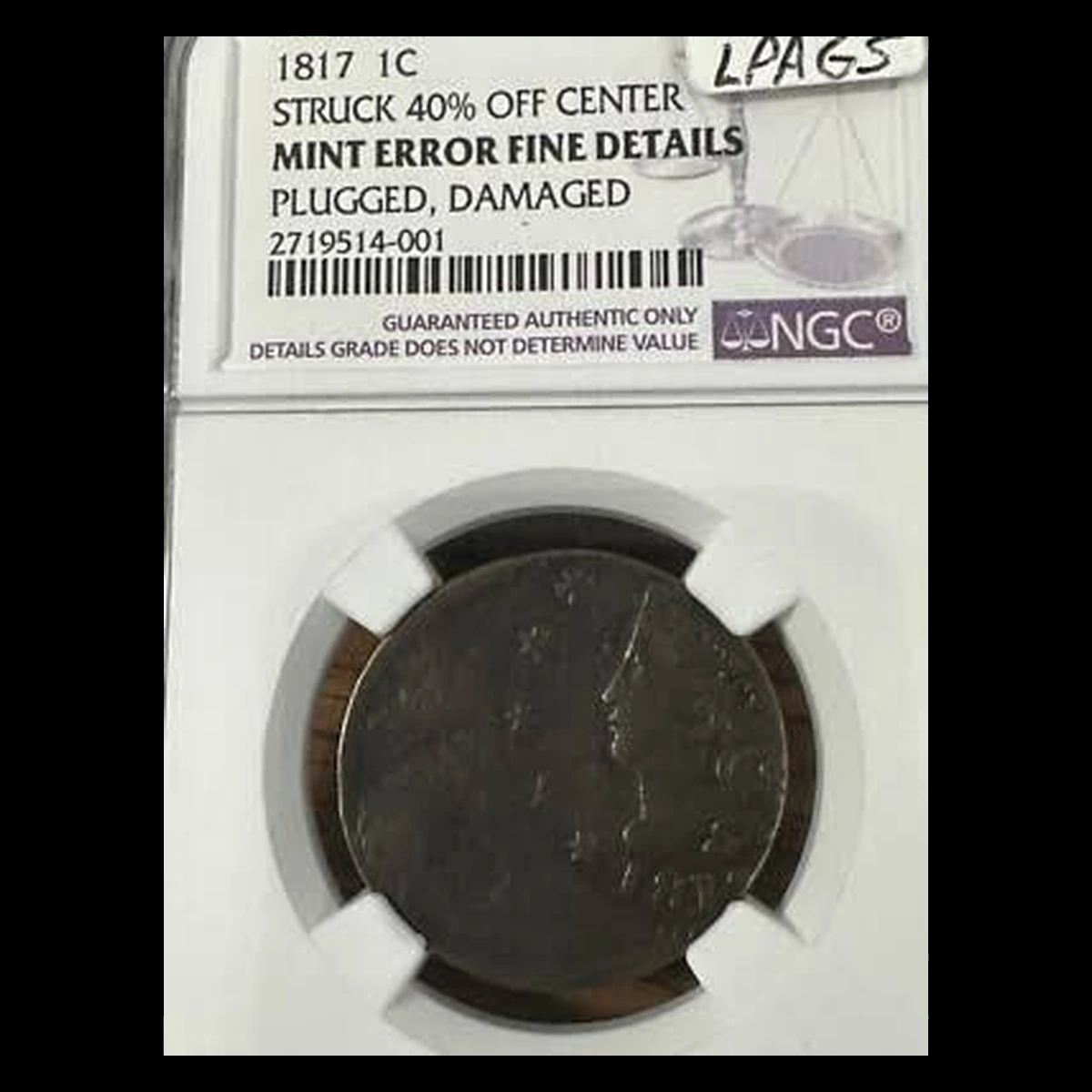
3. 1817 Penny Both Designs Miss Part of the Blank: Off-Center Strike Error
Both star-count versions occur with off-center strikes. The misplaced blank leaves unused copper on one side and design that runs out of space on the other.
The reports describe a 13-star N-11 at 30%, a fifteen-star N-16 at 25%, and a separate 15% example toward 4:30. Only the last description supplies that direction.
How to Identify
Keep date, struck edge, and bare metal in the same photograph and compare the reverse boundary. Both faces should agree with one displaced disc.
When missing design prevents a simple star count, use the surviving features to match the appropriate variety. Missing stars from a 13-star die do not create another normal star-count type.
What It’s Worth
Estimated whole-coin values are $500–$2,500 for worn examples and roughly $2,500–$7,000 for stronger pieces or desirable combinations. The fifteen-star issue requires its own comparison.
The 30% N-11 graded PCGS VG10 sold for $1,708 on March 23, 2026. That substantially worn 13-star coin does not establish a result for the other two descriptions.
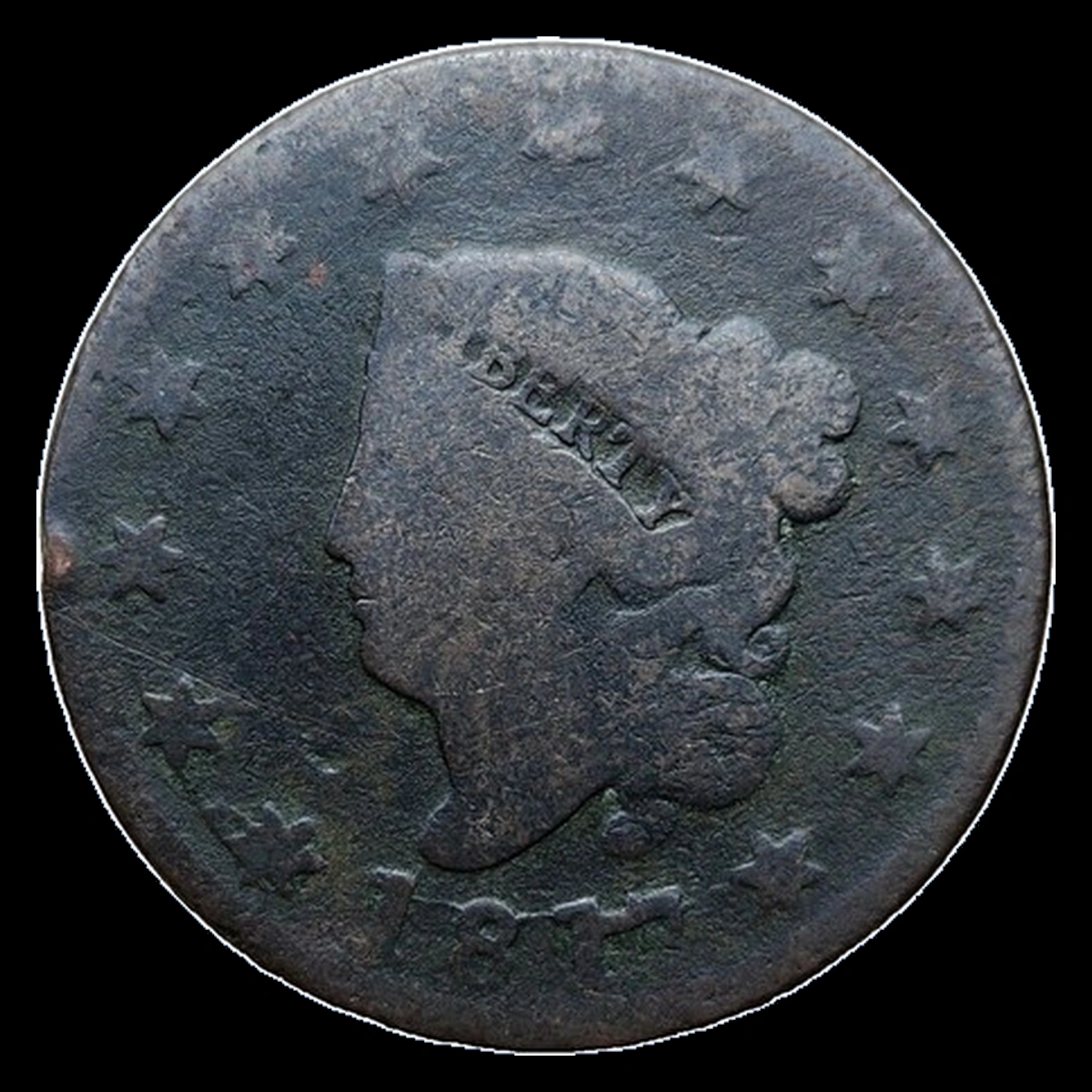
4. 1817 Penny The Back Leans Counterclockwise: Rotated Dies Error
Heritage described counterclockwise rotation on a fifteen-star N-16 graded ANACS MS61 Brown. The account notes minor marks and hairlines but does not give a measured angle.
Rotation changes orientation between the faces rather than shifting the wreath sideways toward the rim. Both designs can remain centered.
How to Identify
Count the original front stars, hold the portrait upright against a guide, and flip top to bottom without twisting. Repeat before measuring the reverse’s lean.
A separately straightened reverse photograph loses the relationship needed for this check. Record an actual angle rather than adding an unsupported number to the catalog’s direction.
What It’s Worth
Circulated fifteen-star rotated examples are estimated at $75–$800, with lightly worn or unworn pieces around $800–$5,000. Preservation and measured rotation guide that whole-coin comparison.
The reported MS61 coin has no sale price assigned here. An 1852 NGC MS65+ Red-Brown rotation sold for $2,350 in November 2014, but its stronger preservation and different variety remain attached to that result.
5. 1817 Penny A Small or Broad Extra Impression Survives: Double Strike Error
One sold 1817 cent has a second blow described as 95% off center, leaving only a limited area available for the extra impression. It has heavy wear and environmental damage.
A separate listing describes a second strike 50% off center toward 1 o’clock. That more substantial overlap and its direction do not describe the 95% coin.
How to Identify
Photograph the first portrait and date, then trace recognizable added design at the overlap. Dents and blurred letter edges cannot establish a second position.
A 95% off-center later blow may leave very little to follow because most of it missed the metal. Do not reconstruct the broad second image seen in a different 50% example.
What It’s Worth
Worn or impaired pieces have an estimated range of $200–$1,500, while clear examples with better surfaces may fit $1,500–$6,000. The visible extra design matters more than a large percentage alone.
The damaged 95% example sold for $264 on June 19, 2019. NGC described VG Details, retaining the distinction between heavy wear and a separate surface problem.
6. 1817 Penny Fifteen Stars Repeat in a Recessed Mirror Image: Brockage Error
The N-16 brockage has fifteen normal raised stars and fifteen backward sunken stars on its opposite face. This is not a new thirty-star front design.
A previously struck coin transferred its raised image into a new blank. Goldberg described the two impressions as aligned, with the strike slightly off center toward 9 o’clock, on an NGC VF20 coin.
How to Identify
Compare the two star patterns under side light to confirm actual depth as well as reversal. A shifted raised copy is not the same thing.
Examine the edge and metal flow for later pressing. A brockage without a readable date requires reliable specialist attribution rather than a year guessed from the portrait.
What It’s Worth
Clear circulated examples are estimated at $3,000–$8,000, with stronger desirable specimens around $8,000–$15,000. Mirror-image completeness and preservation affect appeal.
The fifteen-star NGC VF20 drew a $7,500 winning bid in January 2015, excluding buyer’s premium. A separately attributed 1817 PCGS VF35 has no result used here and must not be merged into that coin’s history.
7. 1817 Penny Small Copper Sheets Are Missing: Lamination Error
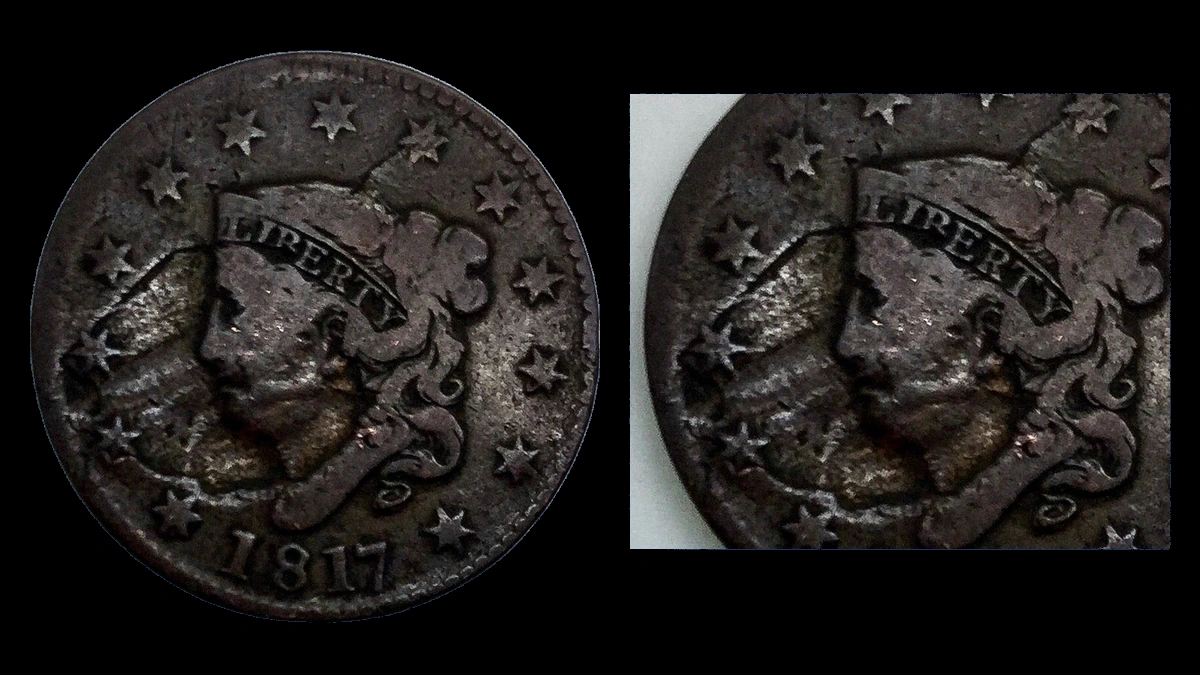
The 13-star N-3 has a noticeable flake missing beside star one and a smaller loss below a reverse wreath stem. A separate 13-star N-17 has minor separation at the top of UNITED’s U.
These shallow flaws came from weakness between copper layers. They do not describe an entire disc split into complete halves.
How to Identify
For N-3, begin at the lower-left first star and compare its boundary with the smaller reverse opening. For N-17, inspect the step at the top of U instead.
Keep tools away from fragile edges and seek a thin separation surface rather than general roughness. Corrosion and rim impacts need their own explanations even at a similar location.
What It’s Worth
Modest worn laminations are estimated at $25–$400, while stronger examples may fit $400–$2,000. Variety and preservation remain part of the complete value.
The PCGS AU58 N-3 sold for $930 in September 2020. The separate N-17 cataloged VF20+ brought $1,020 including premium in August 2025; neither figure is a standalone fee for a missing flake.
8. 1817 Penny Raised Date Lines or Reverse Patches Appear: Die Cracks and Cuds Error
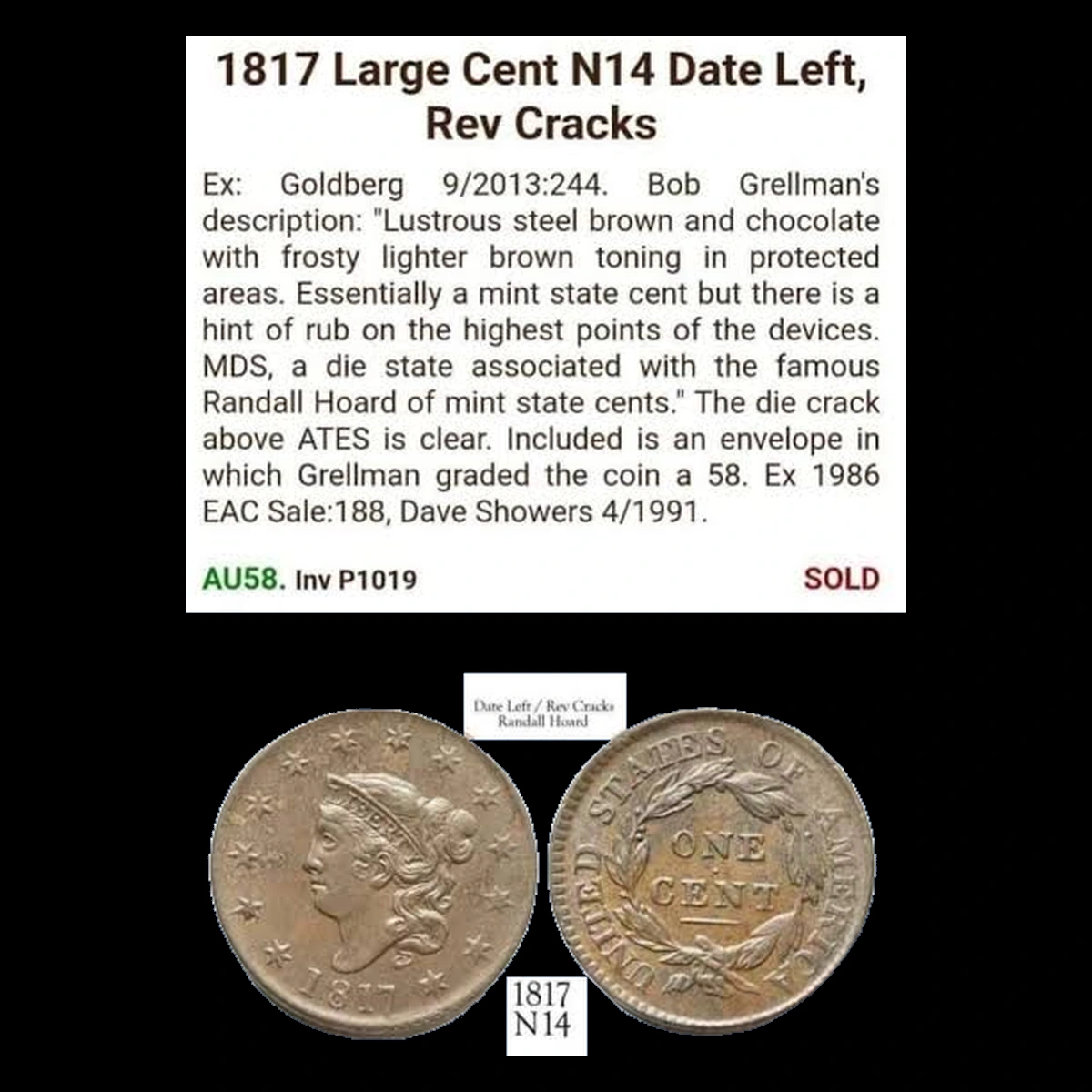
N-12 has a crack along the tops of the date digits between 1 and 7, while N-4 has a separately reported date-bottom crack. The 13-star N-17 has a cud joining TATE in STATES to the rim.
A later fifteen-star N-16 stage has a break near AM in AMERICA. Earlier examples can preserve normal letters and border there, so the stage must be considered.
How to Identify
Trace raised lines above or below the date using the correct variety reference. A scratched groove does not become a die crack simply because it crosses the same digits.
For the N-17 patch, follow its connection to the original rim and check for folded or added metal. Count stars before comparing the separate N-16 AM break, and use a later-stage image to see its completed form.
What It’s Worth
Modest cracks on worn cents are estimated at $20–$250; clear rim breaks can fit $100–$3,000 across varied conditions. The reported TATE-cud example is heavily worn.
An 1829 N-8 with three cuds sold for $810 in September 2020 at PCGS AU50. That lightly worn different-date coin is context rather than a price for an unworn or worn 1817 by default.
Conclusion
Begin an 1817 comparison with its original star-count design, then separate sideways die displacement from rotation and off-center striking. Missing copper layers and raised tool defects add different evidence, with die stage affecting what should be visible.
The brockage’s thirty total stars belong to two opposite-face impressions, and its $7,500 figure excludes premium. Keep every specimen’s direction, percentage, wear, and sale terms together when using the estimated ranges.