Rare 1800 Penny Errors (List & Pictures)
An old numeral beneath 1800 does not mean the coin received two strikes. The date may have been changed on the stamping tool before that tool ever touched the copper.
Seven groups of 1800 penny errors have estimated whole-coin values of $100–$25,000. An 1800/1798 cent graded XF40 sold for $7,800 in January 2024, while the other groups below need different checks for transferred designs, missing metal, or repeated blows.
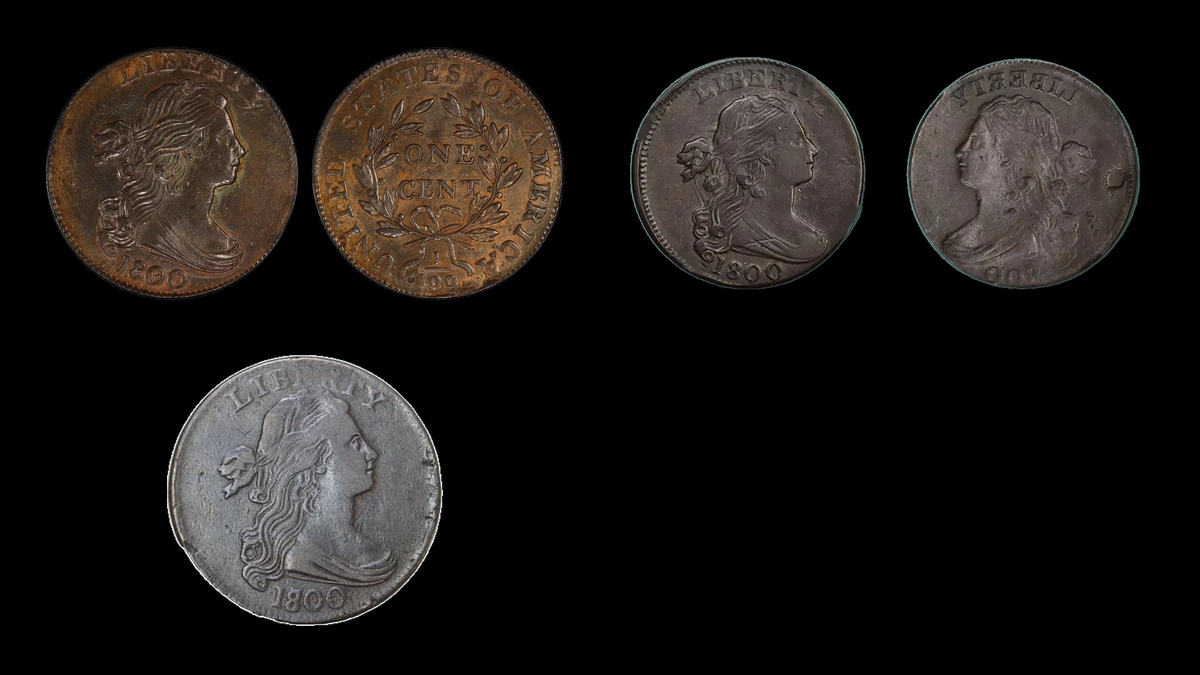
1. 1800 Penny Overdates beneath 1800 Error
Parts of an earlier date can survive when a tool is updated for a new year. A single strike then copies the combined numeral shapes onto the coin.
The 1800/1798 group belongs with Style One Hair, while the 80-over-79 group uses Style Two Hair. The portrait and date patterns need to match the same group.
How to Identify
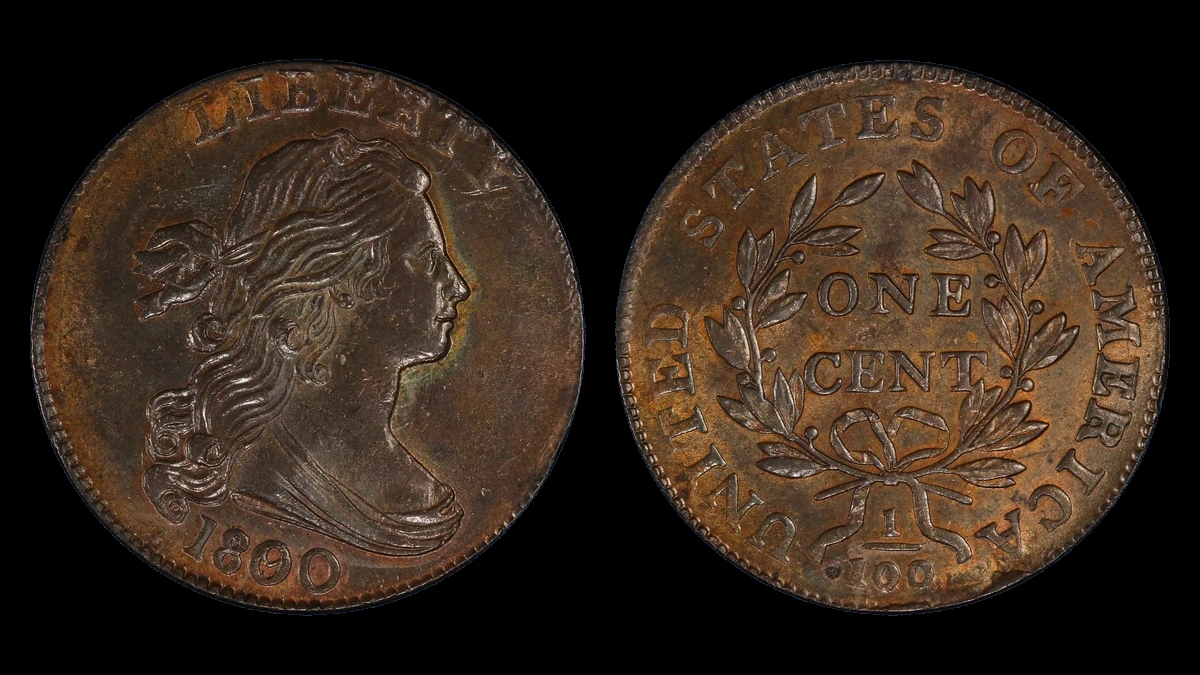
Select a full-coin reference with the correct hair style before enlarging the date. Compare old strokes around all four digits rather than choosing one convenient bump.
Move the light to inspect the surrounding copper for cuts or smoothing. The older remnants should form recognizable numeral parts without evidence that the finished date was reworked.
What It’s Worth
$200–$15,000 is the estimated range for authentic overdates. Worn examples may fit around $200–$5,000, with strong lightly worn survivors around $5,000–$15,000.
The 1800/1798 S-191 record lists $7,800 in January 2024 at XF40 Brown. That result belongs to Style One Hair and should not be assigned automatically to a worn Style Two example.
2. 1800 Penny Clash Traces behind the Hair Error
A faint shape behind Liberty’s hair can copy part of the back design. The dies, or stamping tools, touched without a blank between them and left marks that appeared on later cents.
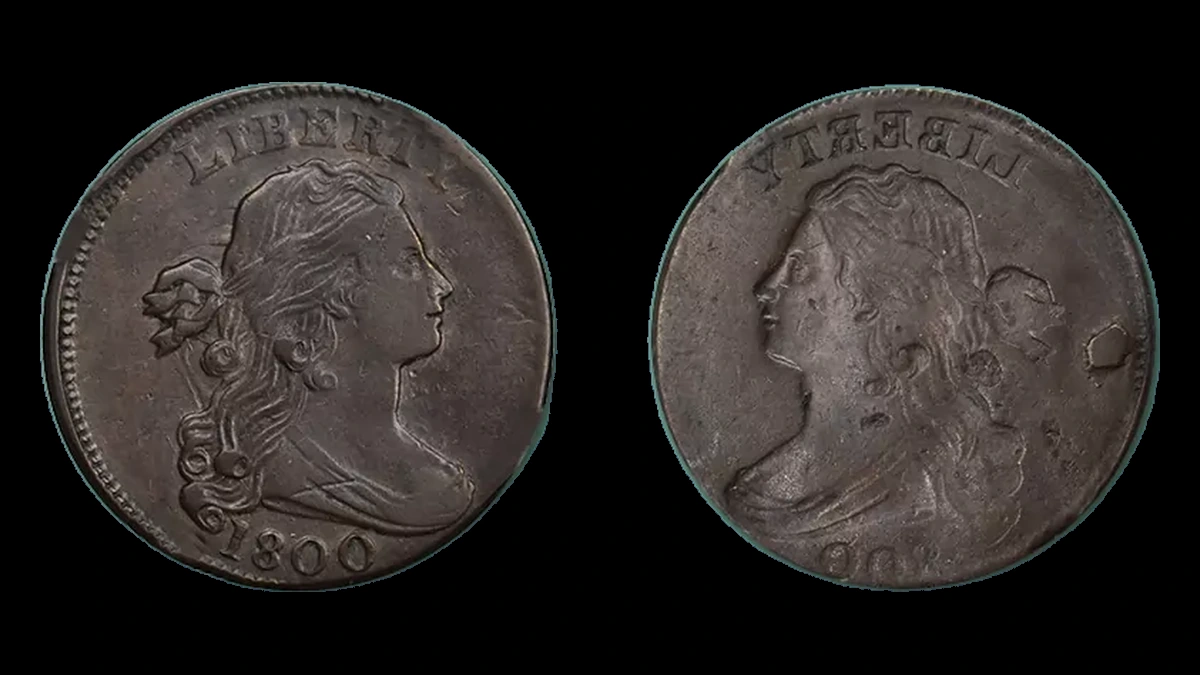
A documented S-209 brockage has these traces on its normal portrait face. A separate overdate is also described with clashes, but its catalog does not locate them.
How to Identify
Compare the extra outline behind the hair with an ordinary back design. Turn or mirror the reference image as needed to test whether the shape fits the opposing tool.
The small clash traces differ from the full sunken backward portrait on the other side of the S-209. Do not give the separate overdate the same mark location without its own evidence.
What It’s Worth
$150–$2,000 is the estimated range for worn 1800 cents with recognizable clashes. Date variety and surface condition can supply much of the complete value.
The separate overdate was described as VF35 with retoned surfaces, without a sale amount used here. An owner reported paying $1,500 in 2025 for an 1812 clashed cent in PCGS VF35, which is a different-year payment rather than an 1800 auction result.
3. 1800 Penny Retained Breaks and Rim Cuds Error
A broad raised area over Liberty’s lower curls appears on a cataloged G4+ cent. The broken piece of tool stayed in place, leaving a retained cud that can preserve design within the affected section.
The same cent has a swollen back with weak lettering. Another reported 1800 has a lower-back rim break and is a separate specimen.
How to Identify
Look for a boundary or change in level around the curls, including any detail still present inside it. Then compare the swelling and weak letters on that coin’s own back.
For a rim patch, inspect the edge for a later blow that folded copper inward. Do not combine the separate lower-back cud with the curl-break specimen.
What It’s Worth
$100–$2,500 is the estimated range for worn 1800 cents with clear large tool breaks. A readable date and natural surfaces help make the feature more appealing.
No sale amount is assigned to the heavily worn retained-cud example. An 1829 Coronet cent with three rim breaks, graded PCGS AU50, sold for $810 in September 2020 as a later, lightly worn comparison.
4. 1800 Penny Reported Clipped-Blank Possibility Error
A clip is a section missing from the original blank before the design is stamped. The incomplete disc can leave a gap with weakened nearby border details after striking.
The 1800 guide discusses this possibility using an 1804 comparison rather than identifying a particular clipped 1800 large cent. It remains a candidate to examine instead of a documented specimen to copy.
How to Identify
Check that the back reads ONE CENT, since an 1800 half cent is a different coin. A normal large cent began near 10.89 grams and roughly 29 mm, with a plain edge.
Inspect the gap for saw marks, file lines, or a fresh cut through finished detail. Lower weight and possible opposite-rim weakness support an assessment but cannot establish a clip by themselves.
What It’s Worth
$200–$1,500 is an estimated range for a confirmed clipped 1800 cent in worn condition. It is not a valuation of an established same-year specimen.
The guide’s 1804 comparison was offered at $2,550 with a 20% clip. That was an asking price for a much scarcer date, not a completed sale or an 1800 result.
5. 1800 Penny Off-Center Strike Error
One published dealer listing describes an 1800 cent struck 10% off center toward eight o’clock, in Good condition. Its blank missed the intended position and left some copper unstruck.
A separate auction record identifies an off-center 1800 graded NGC VG8. The first coin’s percentage and direction should not be assigned to that second specimen.
How to Identify
Line up the physical edge in photographs of both faces and locate the missing design. Both sides should explain one misplaced blank.
Inspect the bare arc and boundary for grinding or trimming. A wide border on one face alone can have a different cause from an off-center strike.
What It’s Worth
$200–$3,500 is the estimated range for 1800 offsets. Modest worn examples may fit around $200–$1,500, with clearer or better-preserved coins around $1,500–$3,500.
The 10% dealer-list example carried a $275 minimum bid. That is an opening requirement, not a reported amount paid.
6. 1800 Penny Repeated Strikes and Striking over a Brockage Error
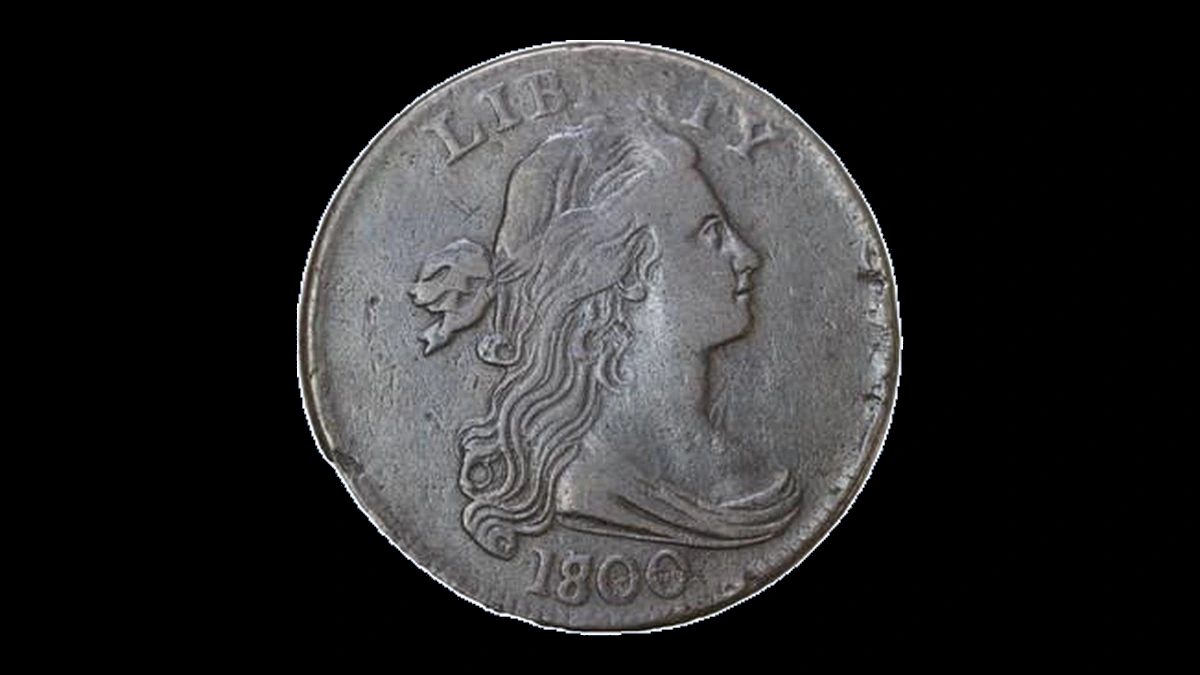
A cataloged double strike has two sets of ON in ONE about a millimeter apart. Its first strike shifted toward six o’clock and the next toward about one-thirty, with remnants on both faces.
A different historical example began with a brockage, a sunken backward design, before receiving another normal strike. That is a separate sequence from two ordinary raised impressions.
How to Identify
On the ordinary double strike, find the extra ON above the other set and trace related details. Its scratched X across the portrait and rim dent are later damage.
For a strike over brockage, locate backward sunken detail underneath later raised design. The historical record describes a 31 mm example, so its expanded size needs to be considered with the repeated strikes.
What It’s Worth
$250–$15,000 is the estimated range for these sequences. Worn double strikes may fit around $250–$3,000, with convincing strikes over earlier brockage around $3,000–$15,000.
No sale amount is assigned to either recorded 1800 example. An 1817 double strike with heavy wear and environmental damage sold for $264 in 2019 as a different-year comparison for an impaired coin.
7. 1800 Penny Full Sunken Backward Portrait Error
A brockage can replace the wreath side with a backward portrait pressed into the copper. An already struck coin stayed between a die and the next blank, transferring its raised face during the blow.
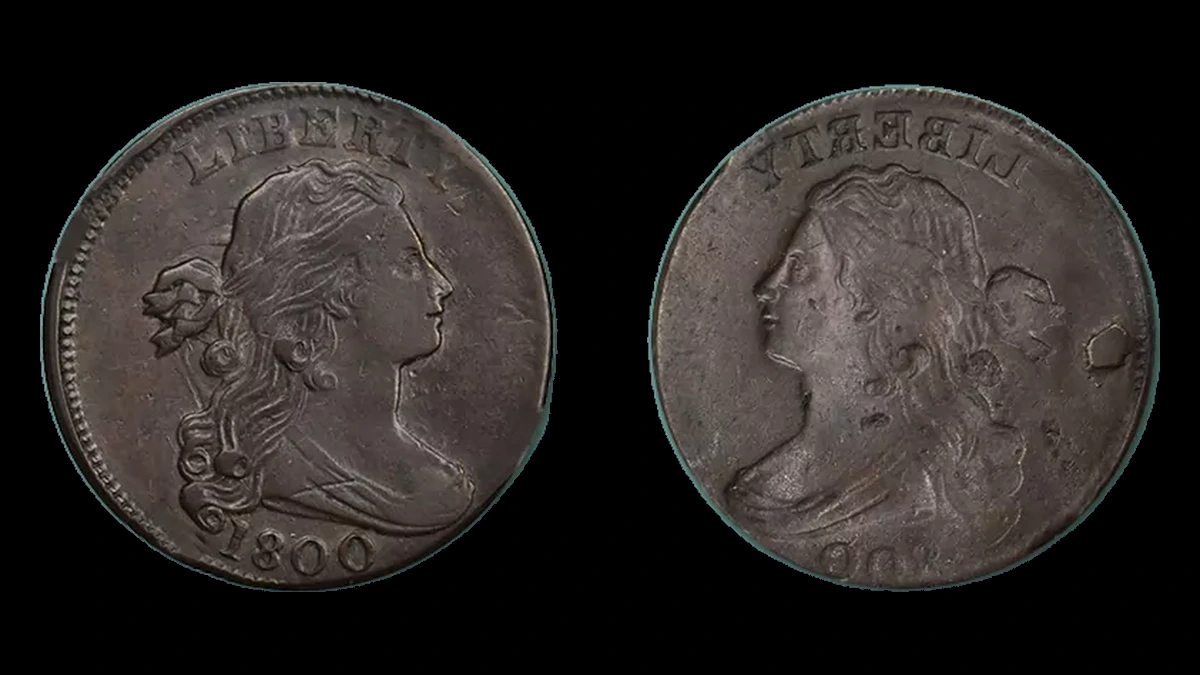
The featured S-209 has its normal portrait slightly toward three o’clock and its backward side stretched toward nine. Those directions belong to opposite faces of the same coin.
How to Identify
Check that backward letters and portrait details are also recessed, using side lighting. A mirrored picture can help read them but cannot show their depth by itself.
Compare both faces with the featured 1800 brockage. The normal face and edge should also support the strike instead of showing crushing from a later squeeze between coins.
What It’s Worth
$5,000–$25,000 is the estimated range for an identifiable worn 1800 brockage. A complete mirror portrait and attractive copper surfaces help support stronger prices.
The 1800 cataloger described AU50 sharpness without a sale price assigned here. An 1817 NGC VF20 brockage received a $7,500 winning bid before fees in 2015 as a later-series comparison.
Conclusion
An old date stroke was made in the tool, but a backward portrait came from another coin contacting the blank. A second normal strike can overlap either kind of earlier detail, so its surviving layers matter.
The estimated $100–$25,000 span covers complete coins with very different features and condition. Preserve both-face and edge photographs, and value combined features together instead of adding several full-coin prices.