Rare 2000 Nickel Errors (List & Pictures)
A genuine 2000-P nickel with Jefferson on both sides sold for $20,520 in April 2018. Most two-headed novelty coins are altered, so that remarkable result needs a very specific match.
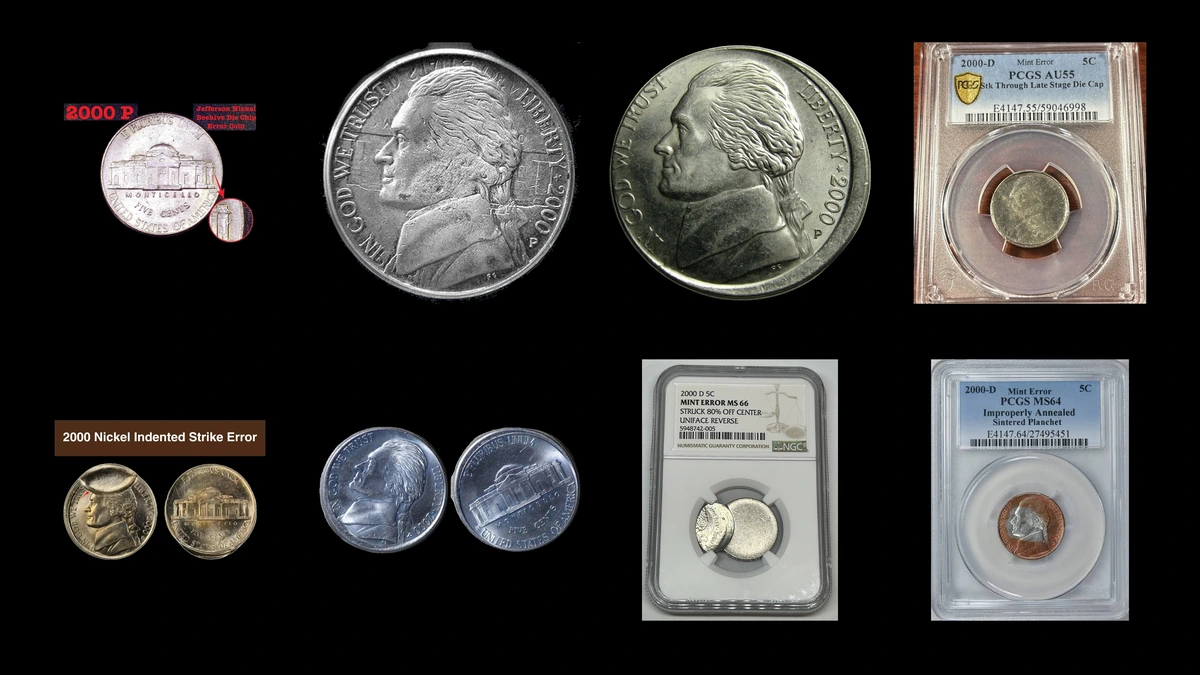
The eighteen groups of 2000 nickel errors here have estimated whole-coin values of $5–$100,000. Start with the design and outline before considering unusual metal or combinations of several strikes; the upper range belongs to the exceptional two-headed coin.
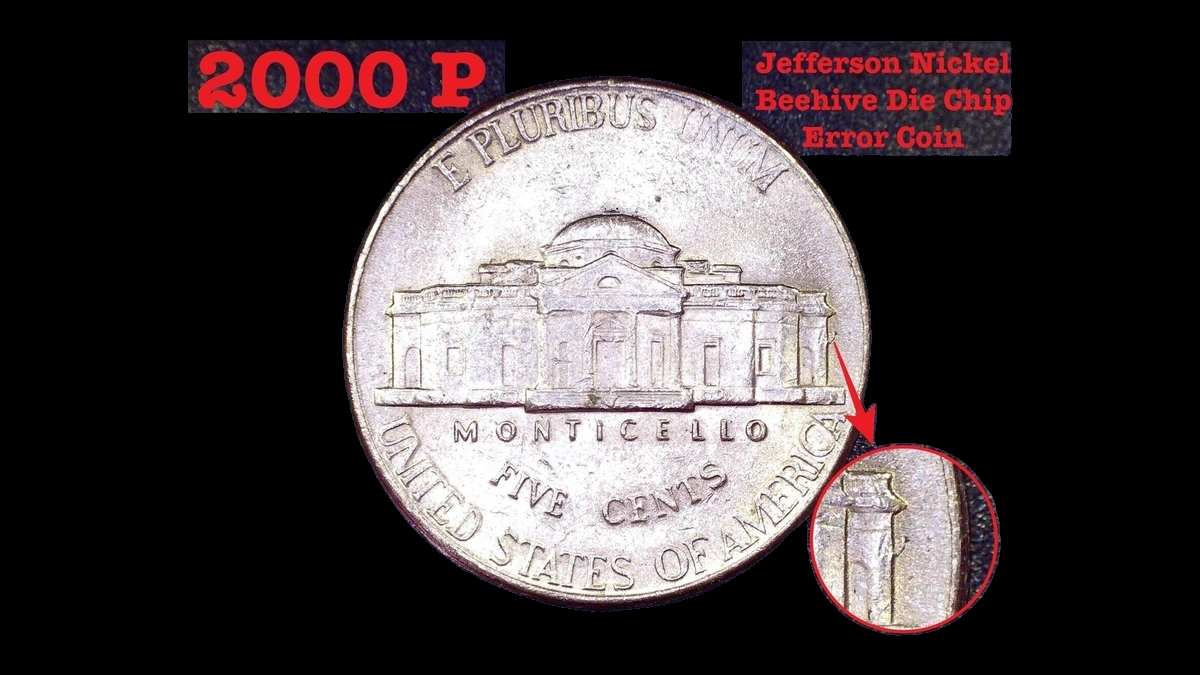
1. 2000 Nickel Retained Break below Monticello Error
A raised arc beneath the building is reported on a 2000-D nickel. It copied a break in the die, the tool that stamps the design.
The broken steel remained in place, making this a retained break. Some design can remain within the affected section, unlike an area where a piece of tool fell completely away.
How to Identify
Hold Monticello upright and move light across the arc to establish that it rises above the surface. A scratch cuts into it, while dirt may sit on top without being part of the struck metal.
Look for nearby scraping without cleaning the area. Other raised marks need their own comparison rather than inheriting this Denver location.
What It’s Worth
$5–$250 is the estimated range for the reported type. Small circulated breaks may fit around $5–$100, with stronger attractive unworn examples around $100–$250.
No completed sale is assigned to the specific Denver specimen. The arc’s clarity and the surrounding surfaces determine how useful the estimate is.
2. 2000 Nickel Die Clash Traces Error
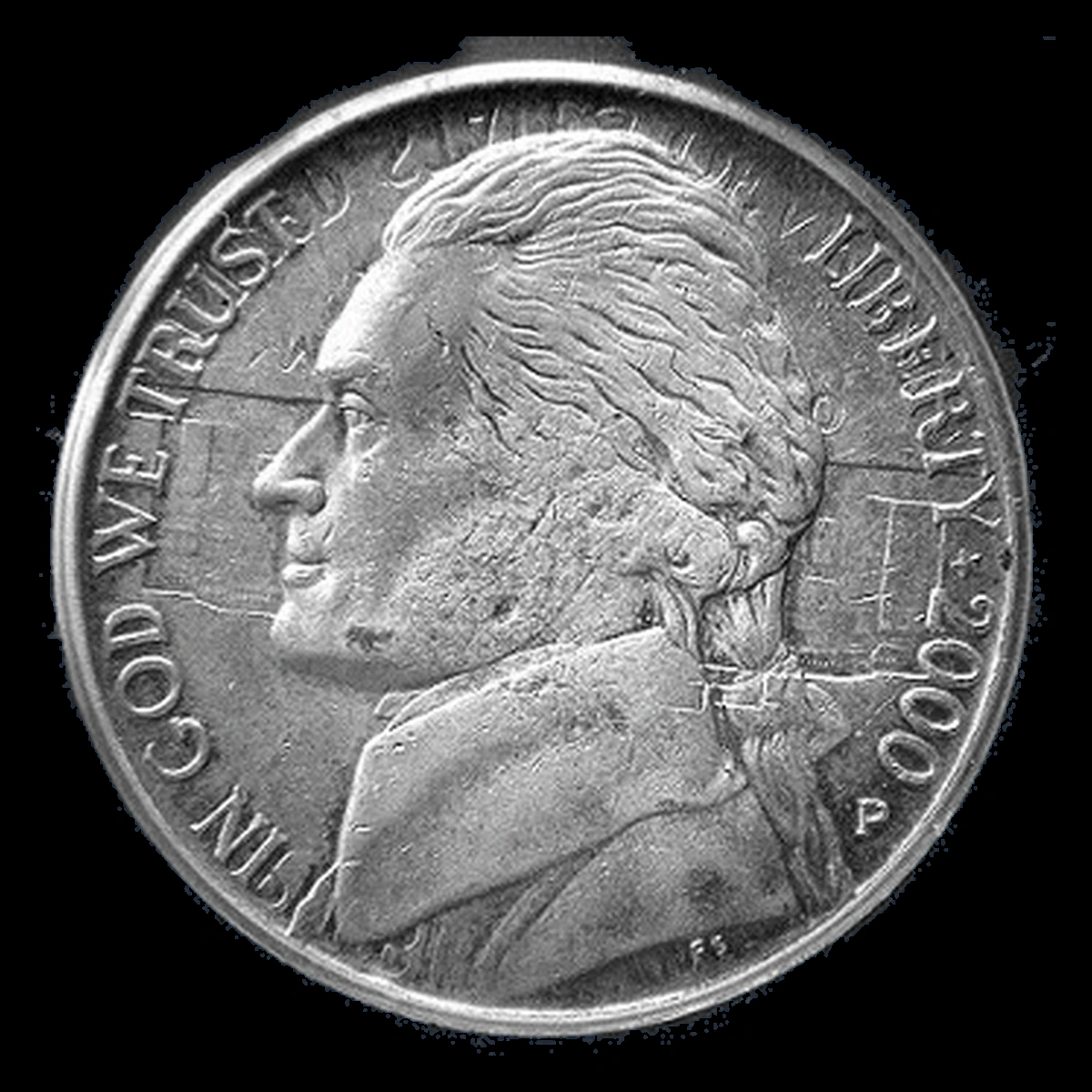
Fragments of Monticello can appear around Jefferson after the two dies strike each other with no blank between them. Later coins copy the resulting marks from the tools.
A cataloged 2000-P has clashes on both faces, including portrait traces on the back. These are fragments rather than a complete deeply impressed second design.
How to Identify
Match an unexpected contour on the front to the building, then look for another related fragment. Repeat on the back using the portrait as the comparison.
Several consistent shapes are stronger evidence than one suggestive line. Scratches can cross the same areas without repeating the opposing design.
What It’s Worth
$20–$500 is the estimated range, from faint readable clashes around $20–$150 to stronger appealing examples around $150–$500. An obvious two-sided pattern is easier to display.
The cataloged 2000-P in NGC AU58 sold for $408.25 in August 2010. That lightly worn coin’s historical result is not a fixed price for every extra contour.
3. 2000 Nickel One-Sided Die Misalignment Error
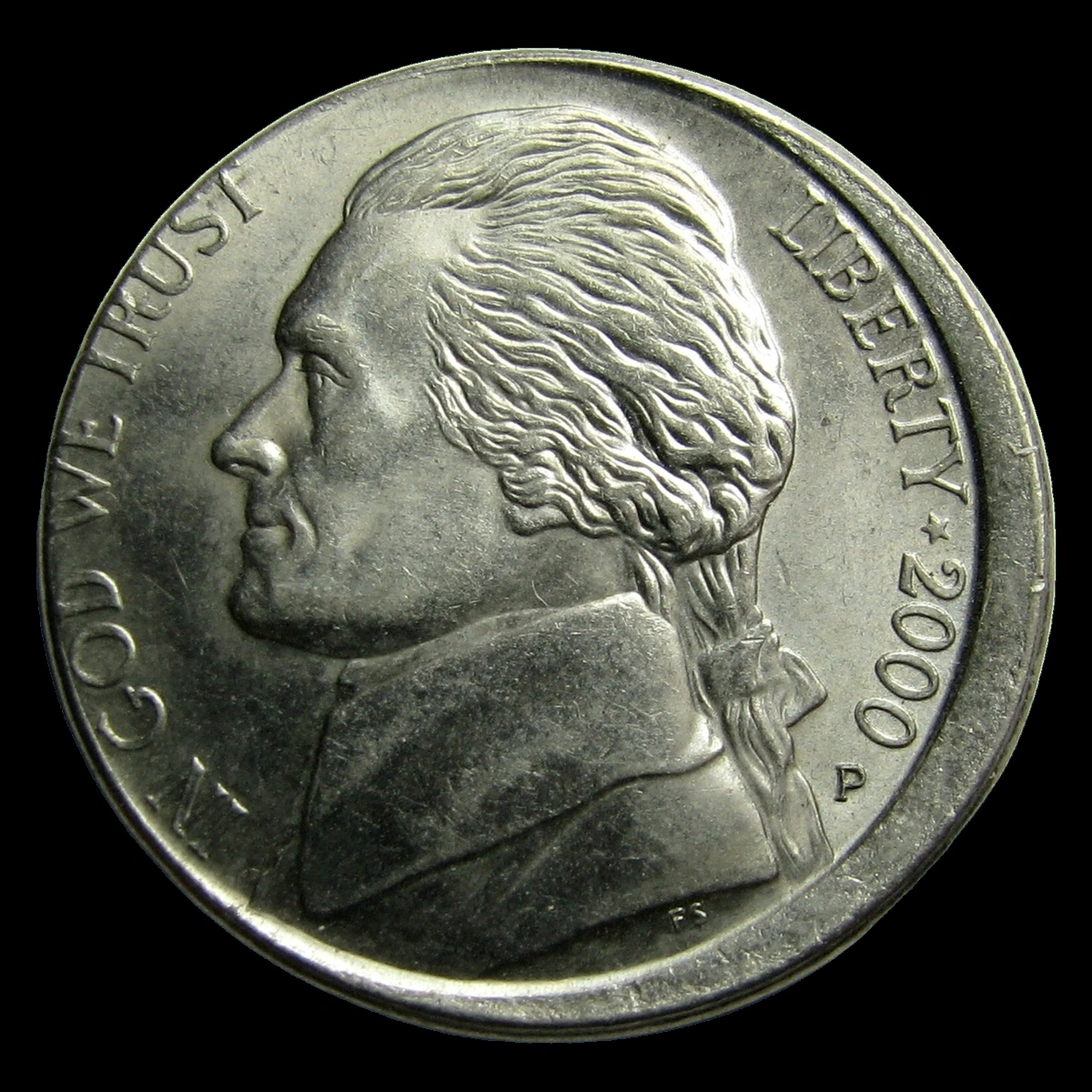
A portrait close to one rim while the back stays better centered can indicate a shifted tool. The whole blank need not have moved out of position.
The reported Denver front shifts downward. A separate Philadelphia listing reports misalignment without establishing the same direction.
How to Identify
Compare straight-on photographs of both complete faces. A corresponding bare crescent and displaced design on both sides instead suggest an off-center blank.
Inspect the narrow border for a crushed edge or copper-nickel metal pushed inward by an impact. An uneven margin alone does not prove tool movement.
What It’s Worth
$10–$300 is the estimated range for genuine misalignment. Modest circulated shifts may fit around $10–$75, with clear unworn examples around $75–$300.
The Philadelphia and Denver reports do not share one known sale price. High preservation can add value independently of the degree of misalignment.
4. 2000 Nickel Struck-Through Missing Detail Error
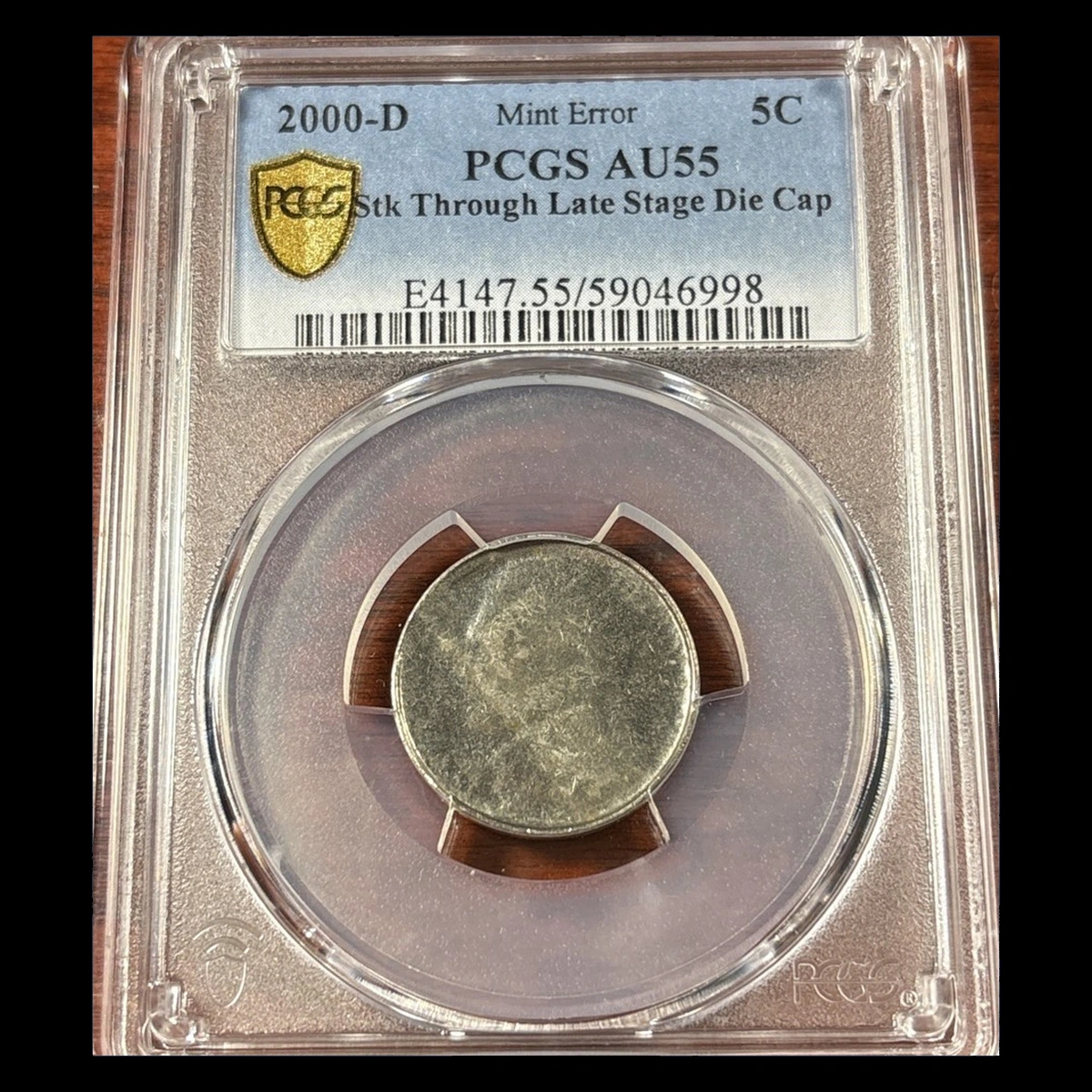
Material between a blank and a die can prevent part of the design from forming. Philadelphia examples include both local front-side interruptions and one with the entire front affected.
Separate reports attribute weak hair, letters, or building details to grease. A smooth area alone does not establish which material blocked a particular strike.
How to Identify
Compare the missing area with the strongest surviving detail and inspect its boundary for scraping. If a whole face is affected, the opposite face and edge become especially important.
A normal loose nickel is about 5 grams and 21.21 mm across, with a plain edge. Grinding may change both weight and the edge while leaving abrasive marks where the design used to be.
What It’s Worth
$10–$400 is the estimated range across modest interruptions and especially clear or dramatic obstructions. The working bands are $10–$150 and $150–$400 respectively.
A 2000-P PCGS MS63 example sold for $84 in February 2015. A separate MS66 coin described as completely struck through on the front brought $36 that month, showing that more missing design does not guarantee a higher result.
5. 2000 Nickel Oval Indent Error
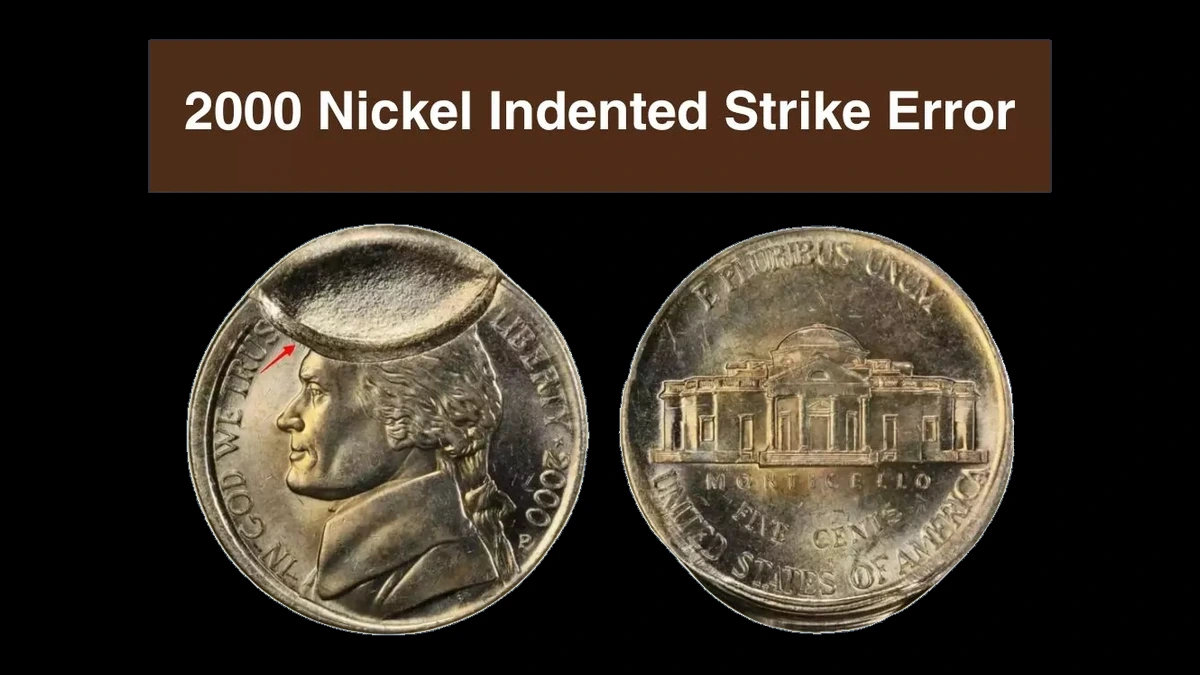
An oval hollow crosses part of the portrait and date area on a reported 2000-D, whose back is described as otherwise normal. Something overlapped the blank and blocked that section during striking.
The available account does not establish whether a complete blank or another object made the indent. Its shape should guide examination without supplying an invented object.
How to Identify
Look inside the hollow first for any sunken reversed lettering or portrait. Such detail would suggest contact with a struck coin rather than a plain overlapping object.
Follow how the ordinary design meets the boundary and compare the corresponding area on the back. An indent leaves metal beneath the hollow, unlike an actual clipped-away section.
What It’s Worth
$50–$750 is the estimated range for a genuine indent of this type. Modest circulated pieces may fit around $50–$200, with strong attractive unworn examples around $200–$750.
No realized price is assigned to the reported oval-hollow coin. A later punch mark does not enter the same range merely because it is deep.
6. 2000 Nickel Broadstrike Error
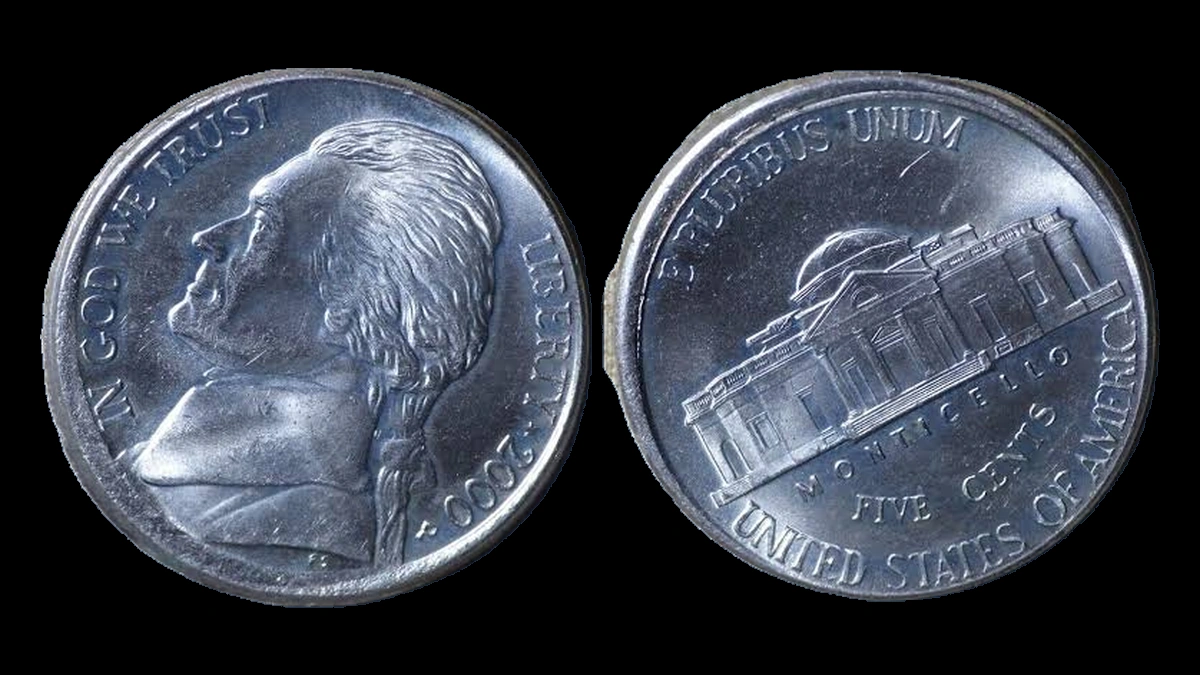
A broadstrike spreads outward while retaining the complete design. The collar ring failed to provide its normal restraint around the blank during the blow.
A Philadelphia example was graded PCGS MS63. The wider outline belongs to the strike itself rather than later hammering.
How to Identify
Measure several spans and examine both outer inscriptions for a complete design. Ordinary weight with an expanded outline supports further examination but is not proof alone.
Check for crushed high points or impact marks that could come from later flattening. Missing design opposite a bare crescent points instead toward an off-center strike.
What It’s Worth
$40–$600 is the estimated range for genuine examples. Straightforward broadstrikes may fit around $40–$150, with larger attractive spreads around $150–$600.
The 2000-P PCGS MS63 sold for $51 in July 2022. That complete-coin result shows why extra width alone does not set a high price.
7. 2000 Nickel Off-Center Strike Error
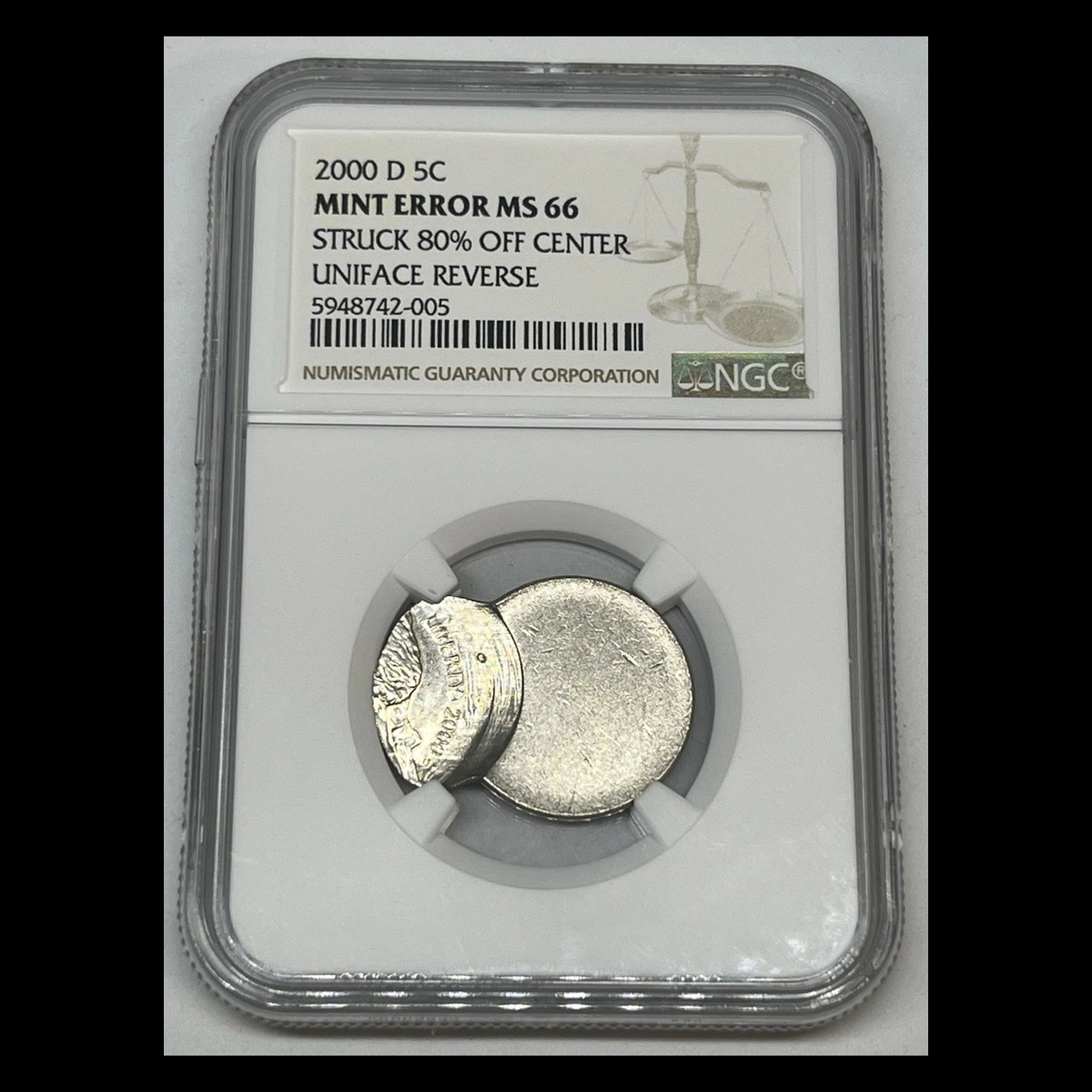
A blank partly outside the striking area receives incomplete designs beside untouched metal. Philadelphia records include separate 10% and 45% offsets, while a Denver example is reported about 35% off center.
These percentages belong to individual coins. A surviving date is needed to connect a partly missing design to the year 2000.
How to Identify
Compare the bare crescent on both faces and locate the original date and mint letter. Do not supply a missing letter from another coin with a similar offset.
Inspect the design boundary and edge for grinding or cutting. The unstruck area should remain original metal rather than a removed finished design.
What It’s Worth
$40–$600 is the estimated range, with modest shifts around $40–$150 and dramatic attractive dated examples around $150–$600. Each offset needs its own condition comparison.
A 2000-P in ANACS MS65 sold for $52 in April 2022. Older $138 records concern groups of two or five coins and are not individual prices for the listed 10% or 45% pieces.
8. 2000 Nickel Multiple Strikes Error
Earlier design fragments may remain when a nickel stays in the press for extra blows. Two Philadelphia examples were cataloged as triple struck, one explicitly with all three strikes off center.
A separate Denver report does not give the same layout. The visible overlap must establish how many impressions survive on each coin.
How to Identify
Trace each apparent portrait together with a matching run of letters on an enlarged photo. Later blows can erase portions of the earlier designs.
Check both faces before counting strikes. Thin flat shelves around individual letters can arise during one strike and do not prove three separate blows.
What It’s Worth
$250–$1,000 is the estimated range for clearly identified multiple strikes. The design separation and surface preservation matter more than simply multiplying a price by the number of blows.
A 2000-P ANACS MS65 triple strike sold for $480 in October 2022. The separate PCGS MS65 with all three strikes off center brought $660 in July 2021.
9. 2000 Nickel Bent Section with Unusual Collar Scraping Error
An illustrated 2000-P has strong collar scraping on the front and an unstruck section bent toward the back. Their relationship led to a proposed explanation involving exchanged upper and lower die positions.
This is a specific production interpretation rather than a name for every bent off-center coin. A later bend can imitate part of the outline without preserving the same sequence of marks.
How to Identify
Compare front, back, and side views with the illustrated example. The direction of scraping and bending matters more than the bent shape alone.
Look for plier marks crossing finished design, and never straighten the coin. A single width measurement cannot establish the proposed tool arrangement.
What It’s Worth
$150–$1,000 is the estimated range for an authenticated example matching this unusual production feature. Clear relationships between the marks support the assessment.
No sale is claimed for the illustrated 2000-P. An ordinary off-center coin with a later bent edge is a different comparison.
10. 2000 Nickel Burr or Edge Projection Error
A ragged projection attached near the edge is called a burr. Reports mention areas near Jefferson’s hair and LIBERTY or the back edge without establishing one authenticated coin with every listed position.
The extra metal may relate to blank preparation or movement of metal during production. It is not automatically peeling plating because ordinary nickels use a solid alloy.
How to Identify
Photograph the join from the side without bending or filing it. Follow the surrounding surface for a scrape, cut, or crushed area that might have pushed metal outward later.
Measure the main disc separately from the fragile projection. Attached glue or debris is different from a burr continuous with the coin’s metal.
What It’s Worth
$10–$300 is the estimated range for a genuine mint-made burr. Circulated examples may fit around $10–$100, with attractive unworn pieces around $100–$300.
The reported type has no specific sale result here. A rough edge needs evidence of its production origin before it receives an error premium.
11. 2000 Nickel Improper Annealing Error
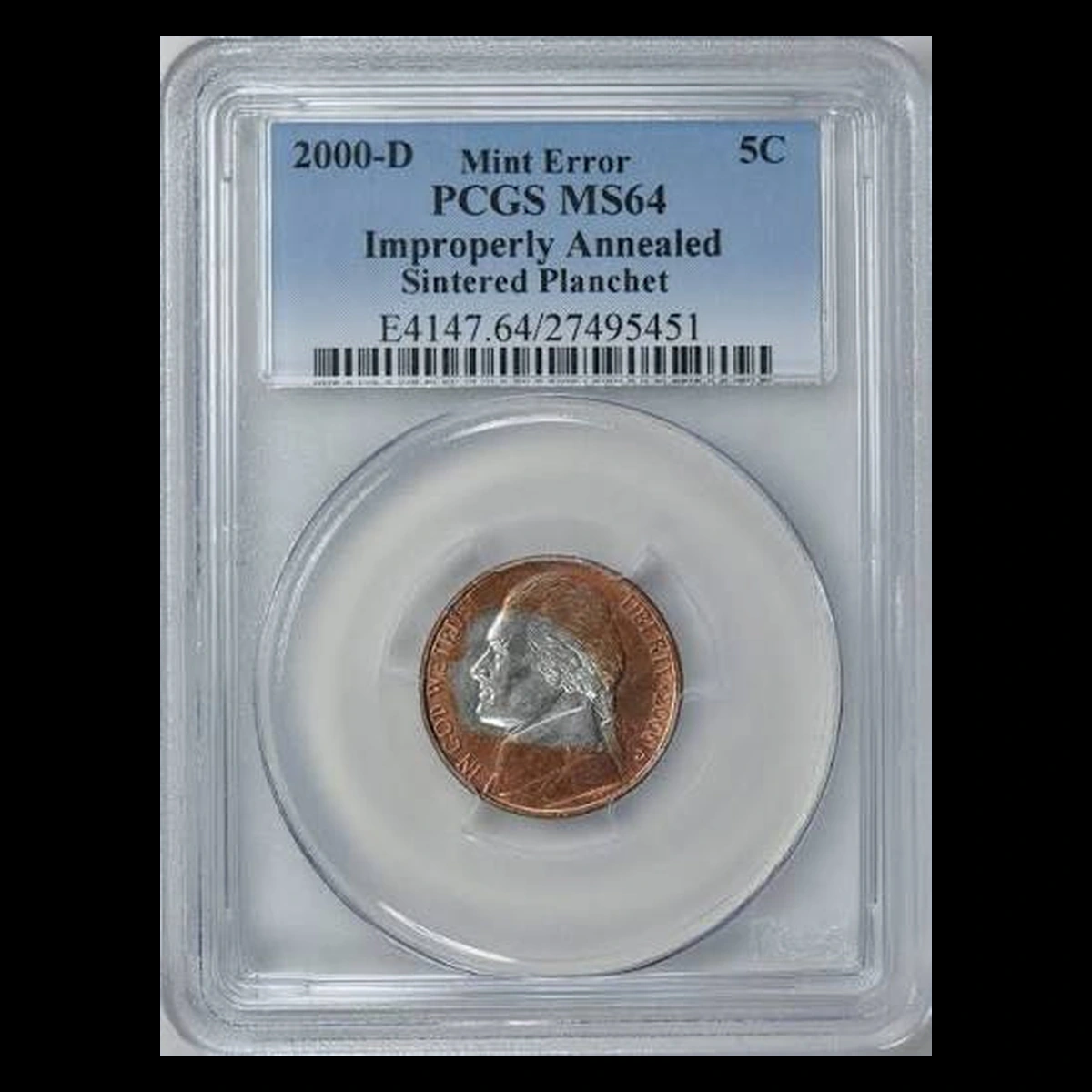
Annealing is the heating step that softens blanks before striking. A production problem can change the surface color or texture, and the year guide reports a 2000-D example.
Soil, chemicals, and heat applied later can produce similar effects. This is not a missing bonded outer layer of the kind used in a dime.
How to Identify
Compare the color under neutral lighting and inspect both faces and the edge for deposits, bubbles, or chemical attack. A full-weight coppery nickel does not become a cent-blank error just because of its color.
Preserve the surface for assessment rather than polishing it. A specific professional attribution is more useful than a photograph with a similar brown shade.
What It’s Worth
$30–$400 is the estimated range after the mint-made heating cause is established. Circulated examples may fit around $30–$150, with attractive unworn coins around $150–$400.
A 2005-D Bison nickel with improper annealing sold for $119 in December 2022. That later design is a comparison, not the reported 2000-D specimen’s sale.
12. 2000 Nickel Split after Striking Error
A nickel can separate through its own metal after receiving the design. One piece may keep a normal struck face opposite a rough exposed interior.
The Philadelphia report concerns this sequence within solid copper-nickel metal. It does not describe a normal outer clad layer falling away.
How to Identify
Study the exposed interior for a natural separation surface rather than repeated abrasive grooves. Check how the intact design meets the broken edge.
A separated piece should weigh less than the original 5-gram coin. Low weight alone does not distinguish it from a nickel deliberately ground thin.
What It’s Worth
$100–$1,200 is the estimated range for one genuine recognizable split piece. Many clear examples may fit around $100–$400, with especially attractive pieces around $400–$1,200.
No matching pair or sale price is established for the 2000-P report. A pair of halves would be a separate offering and should not be assumed included.
13. 2000 Nickel Front Die Cap Error
A coin that sticks to a die can rise around it as repeated blows stretch the metal into a wall. The resulting object is a die cap.
Stack’s Bowers cataloged a 2000-P front-side cap graded PCGS MS65. It is the shaped cap itself rather than a flat later coin struck under that covering.
How to Identify
View the wall and struck base together, following how the design stretches toward the edge. Tool cuts or sharp folds may reveal a cup made by later bending.
Record width and height without squeezing the wall. The original 21.21 mm diameter is a starting reference, not a shape the cap must retain.
What It’s Worth
$250–$1,500 is the estimated range for this cap type. Shallow examples may fit around $250–$700, with attractive stronger walls around $700–$1,500.
An undated Jefferson reverse-side cap sold for $300 in December 2025. That different cap position is not a sale of the dated 2000-P front cap.
14. 2000 Nickel Nickel Strike on a Cent Blank Error
A smaller copper-colored disc can carry nickel designs when an unused cent blank enters the wrong press. One cataloged 2000-P weighs 2.5 grams, matching a modern copper-plated zinc cent blank.
A separate example flipped and received another nickel strike. It repeats Jefferson and Monticello without requiring a Lincoln design underneath.
How to Identify
Compare weight with 2.50 grams and the starting diameter with 19.05 mm, allowing for spread during striking. Inspect the cut-off outer lettering and edge for plating or alteration.
Identify the actual surviving designs. Repeated Jefferson and Monticello support a nickel flipover, while Lincoln details would lead to an already struck host cent.
What It’s Worth
$300–$3,500 covers straightforward cent-blank strikes and flipover combinations. Their estimated bands are $300–$1,200 and $1,200–$3,500 respectively.
The 2.5-gram NGC MS66 Red example sold for $747.50 in August 2010. The separate flipover double strike brought $2,127.50 that month, valuing its combined features together.
15. 2000 Nickel Nickel Strike over a Finished Dime Error
Surviving Roosevelt or dime lettering beneath the nickel design shows that the smaller host had already been struck. A collector’s set records two examples involving 2000-P dime and nickel designs.
The set’s MS66 coin also lacks the dime’s back outer layer. That additional defect is not automatically present on the separate MS67 example.
How to Identify
Locate unmistakable dime features beneath the later design. A normal dime starts near 2.268 grams and 17.91 mm, but the later strike can expand it and distort its edge grooves.
A missing dime layer can reduce the expected weight. Keep that defect tied to the correct host coin rather than describing it as a missing layer from an ordinary solid-alloy nickel.
What It’s Worth
$500–$5,000 is the estimated range for the reported overstrikes. Clear examples may fit around $500–$2,500, with exceptional preservation or a distinct host defect around $2,500–$5,000.
No sales are assigned to the collector’s two coins. Readable lower designs and each complete combination need assessment without automatically adding a separate layer-loss price.
16. 2000 Nickel Nickel Designs over Lincoln Cents Error
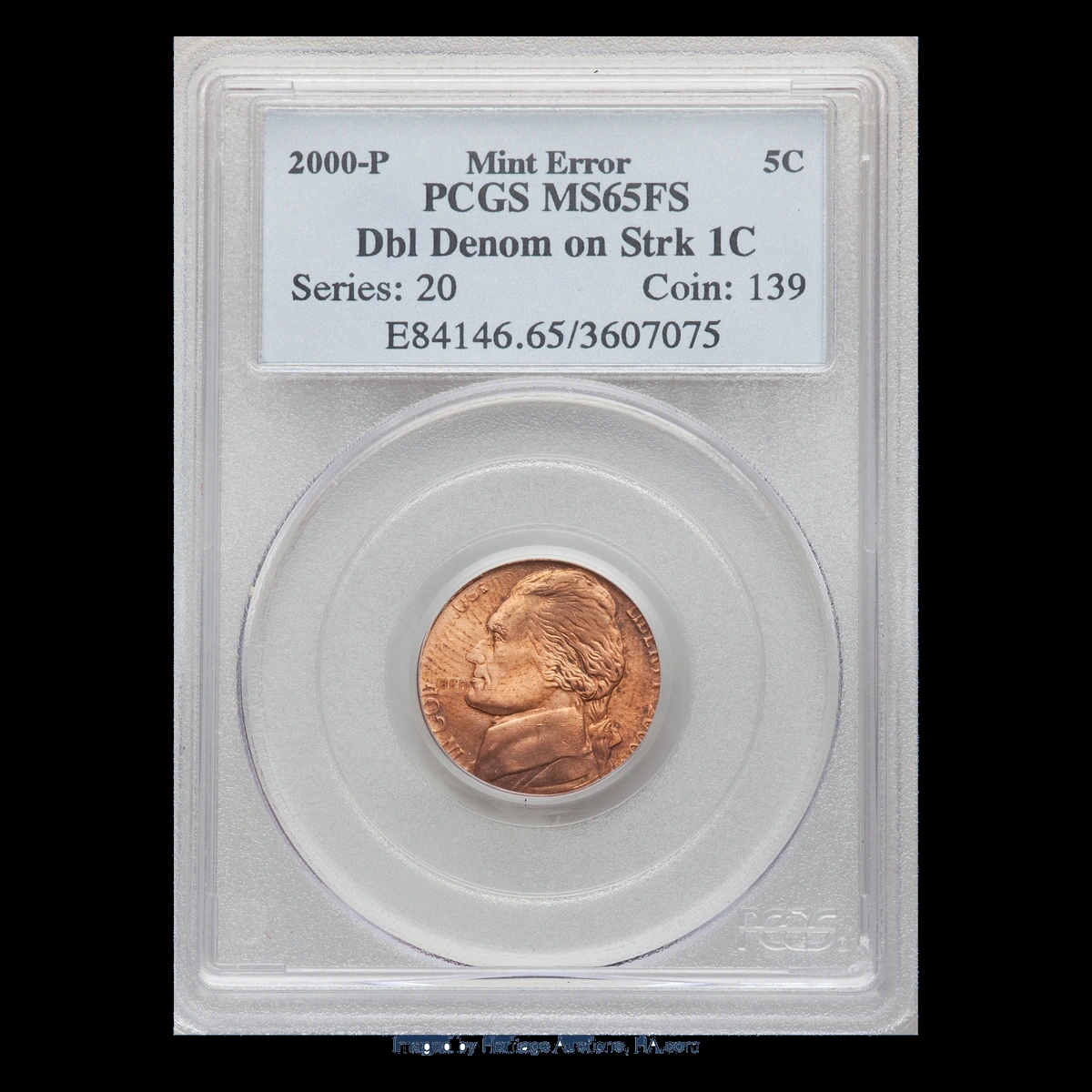
Philadelphia examples preserve host cents dated 1961, 1978, and 2000 beneath the nickel designs. The older two began as copper-alloy cents, while the 2000 cent used copper-plated zinc.
A separate Denver compound piece received two nickel blows over a 2000-D cent. Its later nickel strike was mostly off center and affected only one face.
How to Identify
Read the host and nickel dates separately where they survive, using Lincoln and cent lettering to establish the older design. Brown color alone cannot establish a 1961 or 1978 host.
The older cents began near 3.11 grams, compared with 2.50 grams for a 2000 cent. On the Denver compound example, trace the first nickel design before the later off-center blow so it is not mistaken for another Lincoln image.
What It’s Worth
$400–$15,000 is the estimated group range. Recognizable 2000-cent combinations may fit around $400–$3,500, with exceptional older-host coins around $3,500–$15,000.
The 1978-cent host brought $12,075 in March 2008, while a 1961-cent host sold for $6,300 in October 2021. A 2000-D nickel on a struck cent sold for $1,560 in September 2024.
Those are separate complete coins with different visible designs and preservation. A host date alone does not guarantee the same result.
17. 2000 Nickel Quarter Strike over a Nickel Error on a Cent Blank Error
This complex piece began as an unused cent blank and first received two 2000-P nickel impressions. A later state-quarter strike added another denomination.
The described quarter event is off center and includes a sunken mirrored back impression, or brockage. The readable nickel date does not establish the quarter’s state or year.
How to Identify
Identify the largest quarter features, then trace the nickel impressions beneath them. Side lighting helps separate sunken backward detail from crossing raised designs.
The starting cent blank was normally 2.50 grams and 19.05 mm, rather than a full nickel blank. Do not name a state, date, or Lincoln host design unless it actually survives in the recorded sequence.
What It’s Worth
$3,000–$20,000 is the estimated range for an authenticated piece matching this complex sequence. It is not a claimed sale of the illustrated coin.
The simpler 2000-P flipover nickel strike on a cent blank sold for $2,127.50 in August 2010. It lacked the quarter event, and adding several separate error prices would not reliably value the more complex object.
18. 2000 Nickel Two Jefferson Portraits Error
Two front dies installed together produced a genuine two-headed 2000-P nickel. The documented coin has weakly formed portraits on both faces but readable dates and P mint letters.
It need not show two perfect portraits to match the record. Most novelty two-headed coins, however, are altered pieces made by joining or reworking ordinary coins.
How to Identify
Inspect the complete edge for a joining seam, disturbed rim, or circular cut. Matching normal dimensions alone cannot establish authenticity.
Compare both raised portraits, dates, mint letters, and areas of weakness with the documented coin. Preserve their relationship in a turning video and obtain professional authentication before treating a find as this exceptional error.
What It’s Worth
$20,000–$100,000 is the estimated range for a genuine example with verified identity and condition. The upper figure includes a dealer asking price rather than another completed auction.
The PCGS MS65 example sold for $20,520 on April 26, 2018, and was later advertised at $100,000. Its unsold January 2017 auction appearance supplies no transaction price.
Conclusion
For a 2000 nickel, first identify the designs and decide whether metal is missing, added at an edge, or simply spread out. For a wrong-metal piece, surviving Lincoln or Roosevelt details separate a finished host coin from an unused blank.
The estimated $5–$100,000 span includes modest tool flaws and an exceptional authenticated two-headed coin. Treat combined features as one object and keep asking prices, lot totals, and actual sales in their proper roles.