Rare 1997 Nickel Errors (List & Pictures)
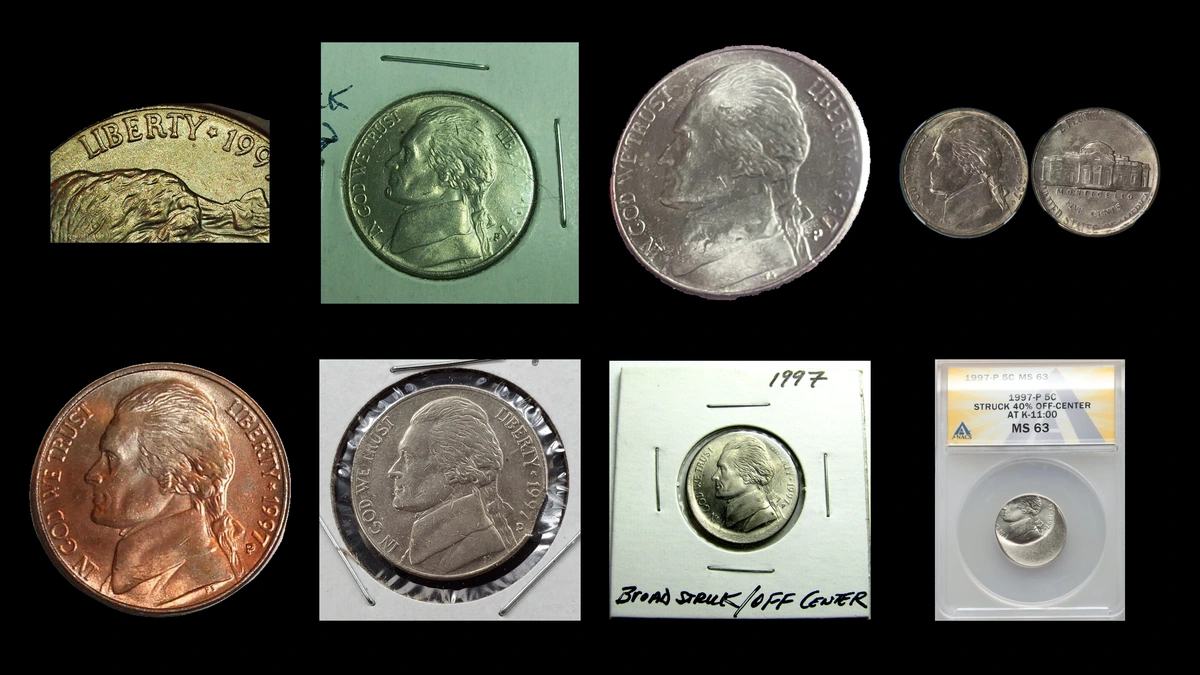
A 1997-P nickel with a huge reverse indent sold for $780 in March 2025. Estimated whole-coin values for 1997 nickel errors span $5–$1,200, from small raised lines to nickel designs on dime blanks.
Compare fine details first, then examine surface changes, edge boundaries, and the relationship between the complete designs and any unusual shape.
| Clue | Category | Estimated value |
|---|---|---|
| Raised line or repeated lettering | Die crack or doubled die | $5–$150 |
| Weak details or unusual color | Grease, weak strike, or annealing | $5–$350 |
| Missing or expanded outline | Clip or broadstrike | $30–$250 |
| Displaced or repeated design | Off-center or double strike | $30–$500 |
| Deep impression or small layered disc | Indent or dime blank | $150–$1,200 |
A normal nickel weighs 5.00 g and measures about 21.21 mm, with a plain edge and a uniform copper-nickel alloy. Ordinary coins, San Francisco Proofs, and the Philadelphia Matte Finish issue require appropriate finish comparisons.
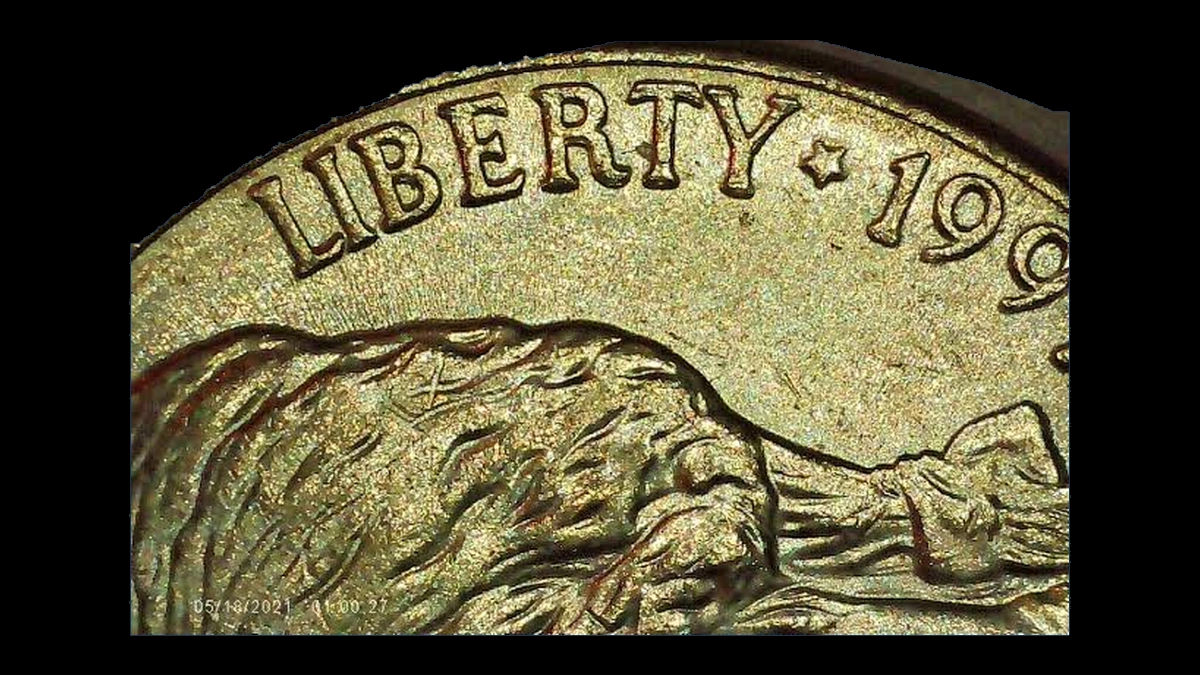
1. 1997 Nickel Extra Rounded Letter Edges: Reported Doubled Die Error
Reports mention LIBERTY and IN GOD WE TRUST on the front, plus reverse lettering below Monticello. They establish no single mint-and-finish combination for all these features.
How to Identify
Compare complete letters with a confirmed example of the same mint and finish. Rounded extra contours or split tips should remain fixed when the lighting changes.
A flat low shelf can come from movement during striking. General thickness alone does not show that the die carried repeated design.
What It’s Worth
Estimated values are $10–$150 for identified minor varieties. Clear separation and undamaged surfaces support stronger comparisons.
No directly matched specimen and sale accompany every reported face here. The range is guidance, not an authentication of any doubled-looking letter.
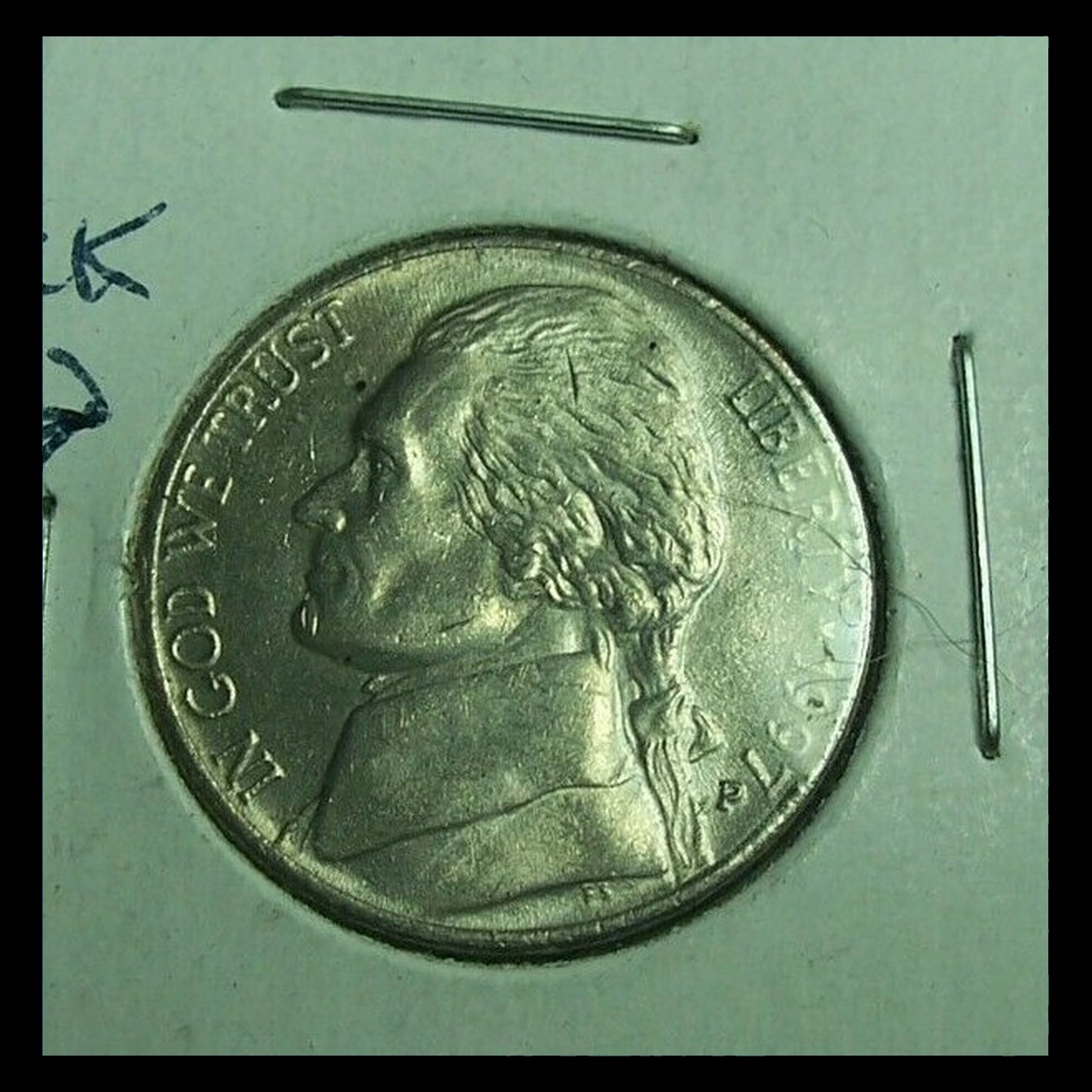
2. 1997 Nickel A Ridge Runs from the Head toward the Rim: Spike Head Crack Error
Collectors use Spike Head for some head-to-rim die cracks. Metal entering a split in the steel leaves the raised line on the nickel.
How to Identify
Follow the whole ridge from the hair toward the rim under side lighting. Distinguish it from a recessed scratch or a fiber resting on the surface.
The 1997 report provides no exact mintmark or direction. The nickname describes an appearance rather than one universal path.
What It’s Worth
A clear original head-to-rim crack has an estimated value of $5–$75. Fine worn lines belong toward the lower end.
No matched sale is supplied for an individually identified 1997 specimen. Visibility and preservation matter more than the nickname.
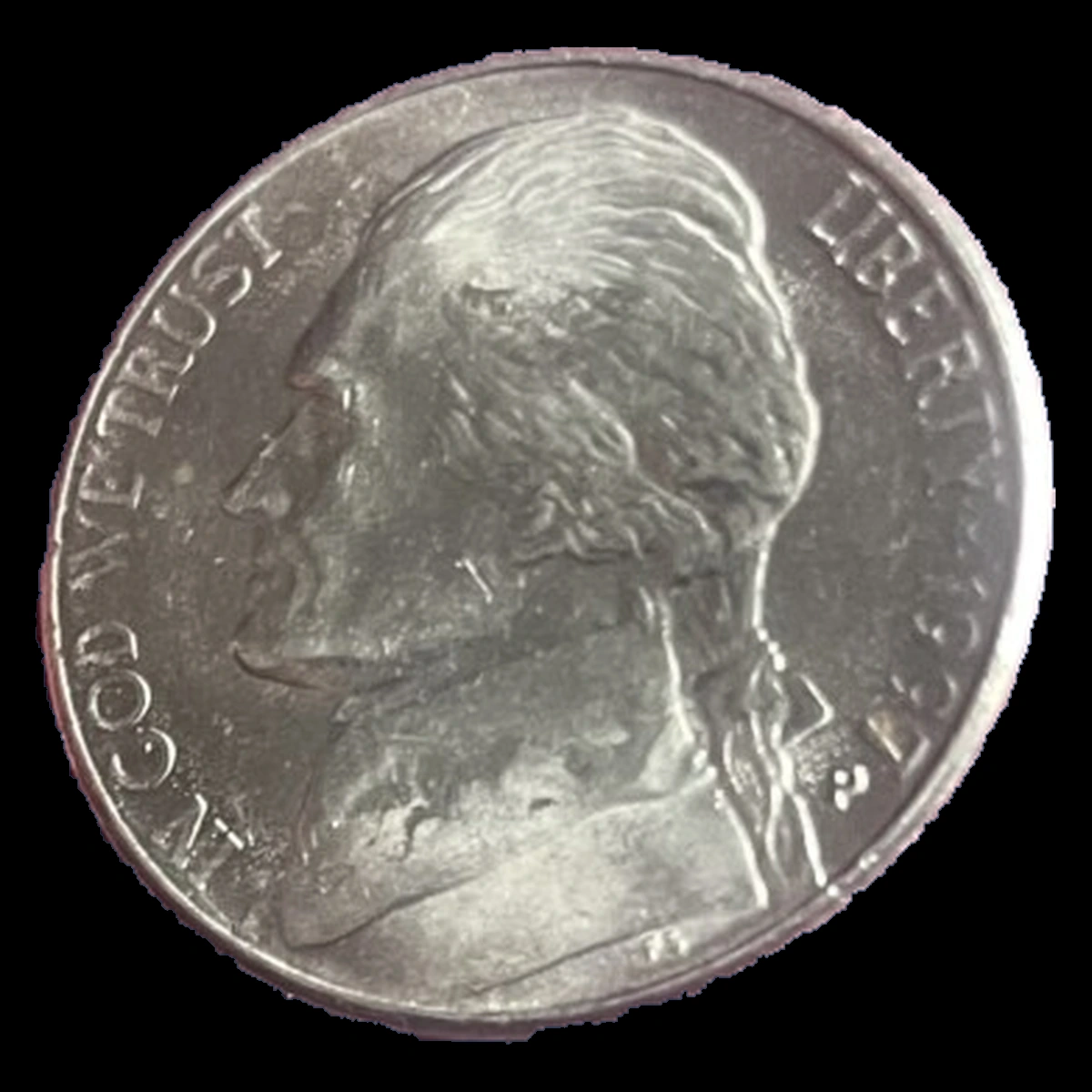
3. 1997 Nickel Local Detail Fades beside Sharp Design: Grease Strike-Through Error
Grease and debris in die recesses can block portions of the image. The 1997 reports do not establish a particular affected location on one identified coin.
How to Identify
Use a sharp nearby letter as a reference while examining the weak area. Local interruption differs from similar wear across the portrait and building.
Inspect the boundary for polishing lines or chemical roughness. A shallow depression alone neither proves nor rules out a grease-related interruption.
What It’s Worth
Estimated values are $5–$100 for recognizable blockage. A broad convincing patch on an otherwise sharp coin provides a stronger comparison than minor worn detail.
No directly matched 1997 sale accompanies the report. A word removed by polishing does not qualify for the estimate.
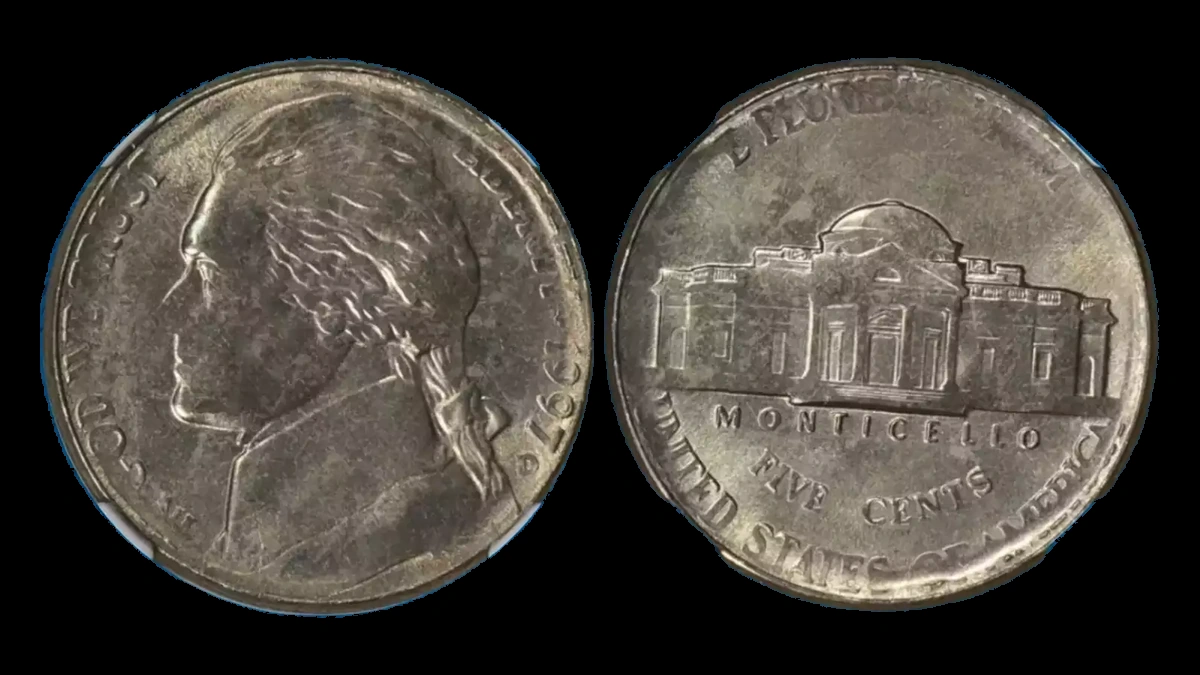
4. 1997 Nickel Both Faces Look Unusually Shallow: Weak Strike Error
A Denver report uses the older term die-adjustment strike for broad shallow design. The appearance does not prove that a Mint operator deliberately made a test piece.
How to Identify
Compare Jefferson, Monticello, lettering, and rim formation with a normal coin. Broad shallow detail with original surface differs from one locally blocked word.
Wear rubs high points, while chemical treatment can reduce metal and roughen surfaces. Neither should be accepted as a low-pressure strike from faintness alone.
What It’s Worth
A genuine substantial weak strike has an estimated value of $50–$350. Broad weakness and intact original surfaces support the identification.
The Denver report provides no matched original auction used here. The range does not assume a special testing history.
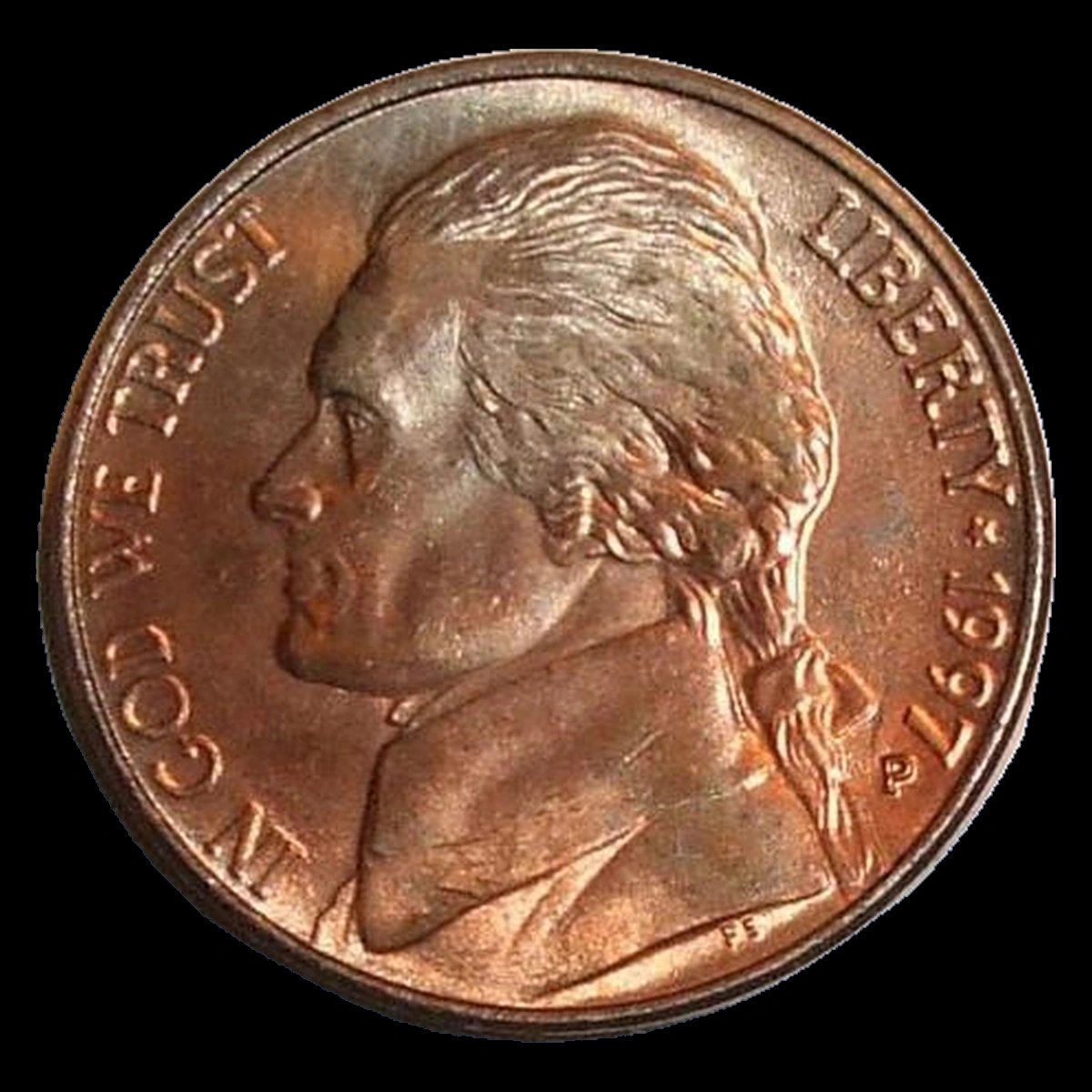
5. 1997 Nickel Coppery Color on Normal Nickel Metal: Improper Annealing Error
A Philadelphia example graded NGC MS62 is recorded as improperly annealed. Abnormal blank heating can change the surface without changing the normal underlying alloy.
How to Identify
Inspect both faces and the edge under neutral light for original texture. Later plating, chemicals, burial, and heating can also create a reddish or bronze appearance.
A peeling copper-colored skin needs particular scrutiny because a nickel is one alloy. A smaller, lighter copper-colored disc calls for a wrong-blank assessment instead.
What It’s Worth
Estimated values are $25–$200 for identified annealing errors. Color alone is insufficient.
The Philadelphia NGC MS62 example appears in auction records at about $41 in March 2023. Its marked unworn surfaces should be compared with similar preservation.
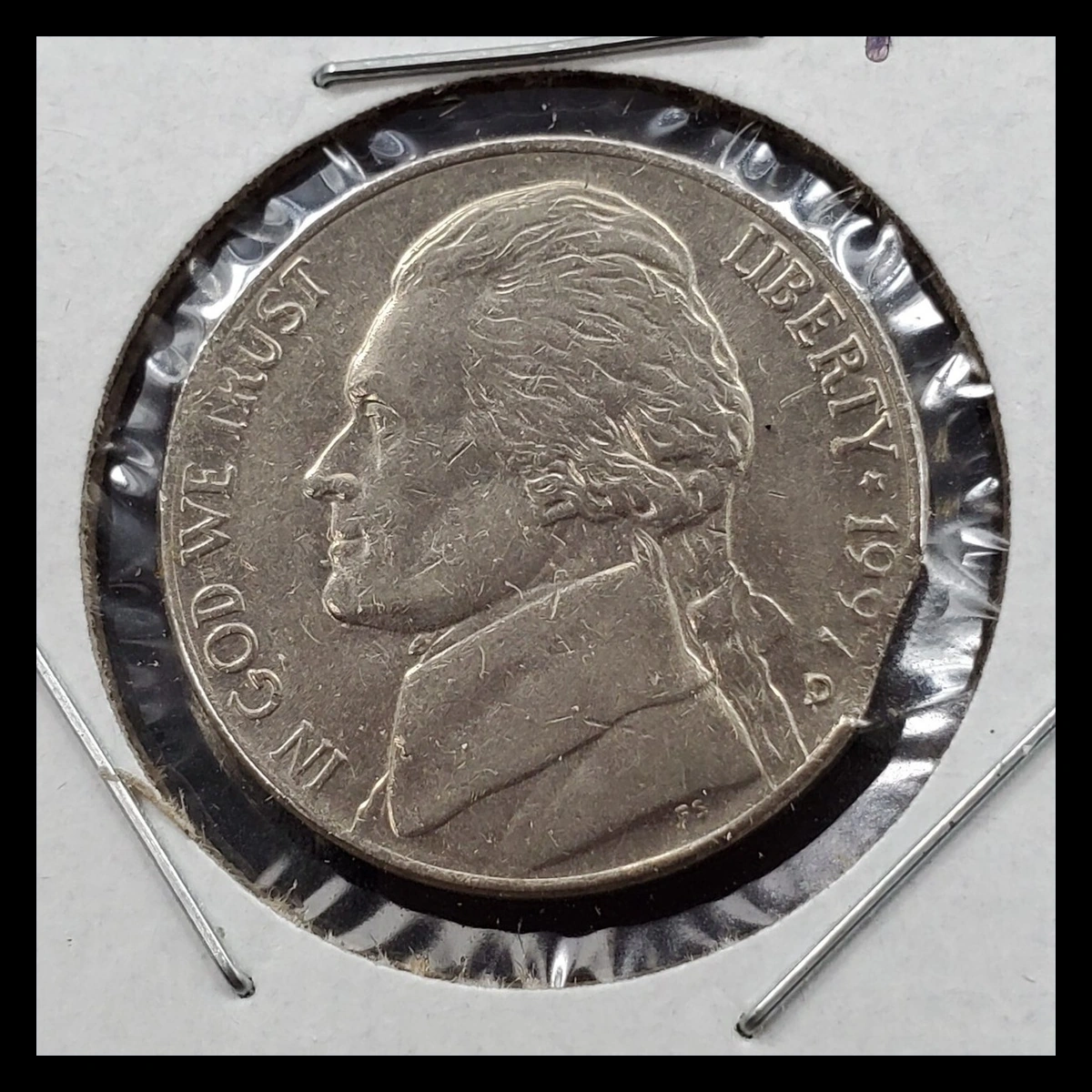
6. 1997 Nickel One or More Gaps in the Edge: Clipped Planchet Error
Philadelphia examples include a 20% curved clip, a small triple clip, and a coin with curved and straight missing sections. Each shape concerns metal absent before striking.
How to Identify
Examine every gap’s boundary and the way nearby design reaches it. File marks through finished letters suggest later removal.
Weakness opposite a clip, often called the Blakesley effect, may support the identification but is not required on every specimen. One genuine gap does not authenticate another suspicious opening.
What It’s Worth
Estimated values are $30–$250 for clear genuine clips. The amount missing and condition matter more than the number of openings alone.
March 2025 records list about $124 for the 20% curved clip graded PCGS MS62 and $79 for a 4% triple clip graded MS63. These are separate Philadelphia coins.
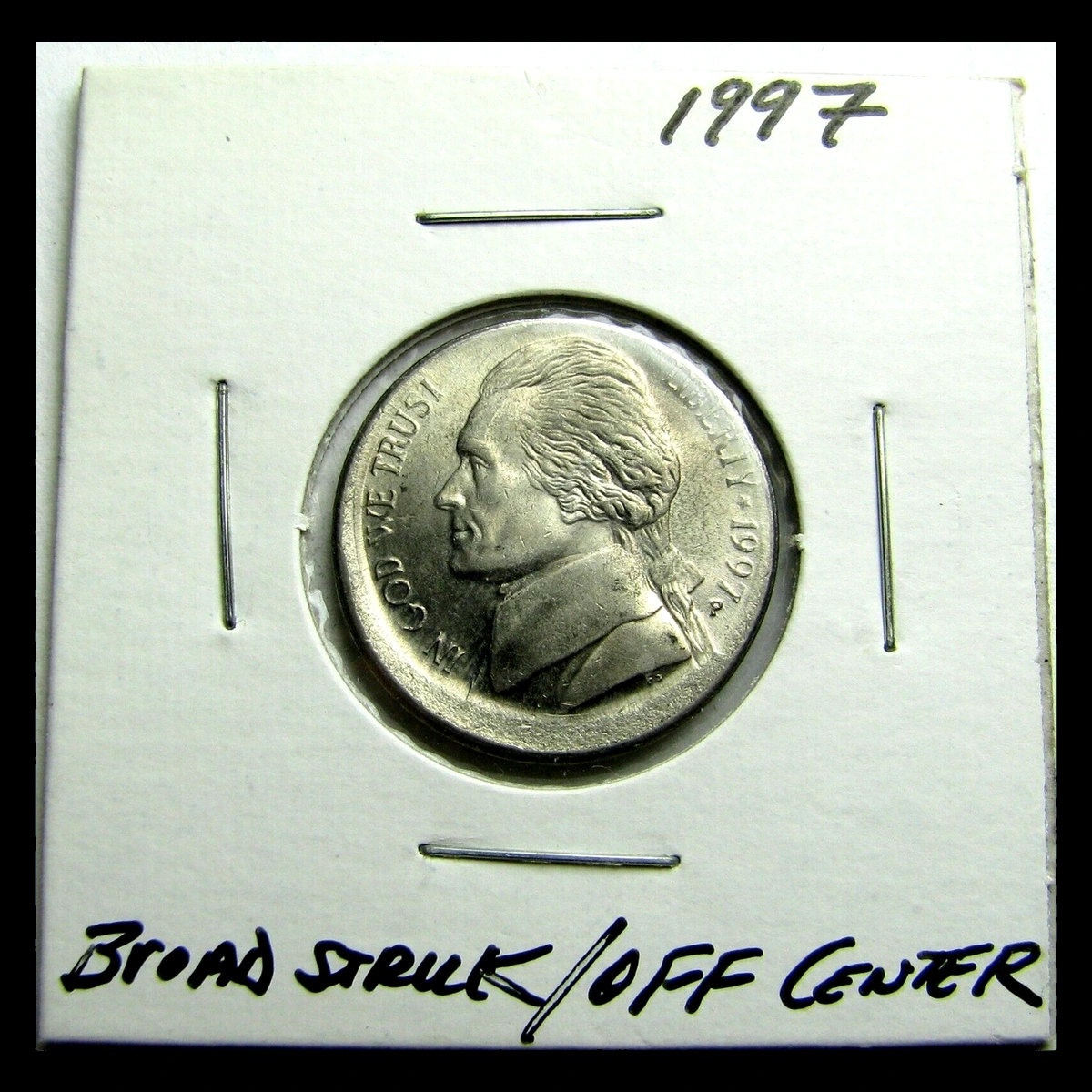
7. 1997 Nickel Full Design within an Expanded Border: Broadstrike Error
A broadstrike results when the collar fails to restrain outward metal flow. A recorded Philadelphia example was graded PCGS MS66.
How to Identify
Trace all outer lettering on both faces and check that the main design remains. The border can expand unevenly without losing design beyond the blank.
Exclude later flattening through examination of crushed details and impact marks. A separate broadstrike-plus-indent example should not make an indent a requirement for every broadstrike.
What It’s Worth
Estimated values are $30–$200 for many clear broadstrikes. Attractive surfaces and obvious expansion support the upper range.
The Philadelphia PCGS MS66 is listed at $64 in a December 2024 Heritage sale. An additional major indent requires a separate whole-coin comparison.
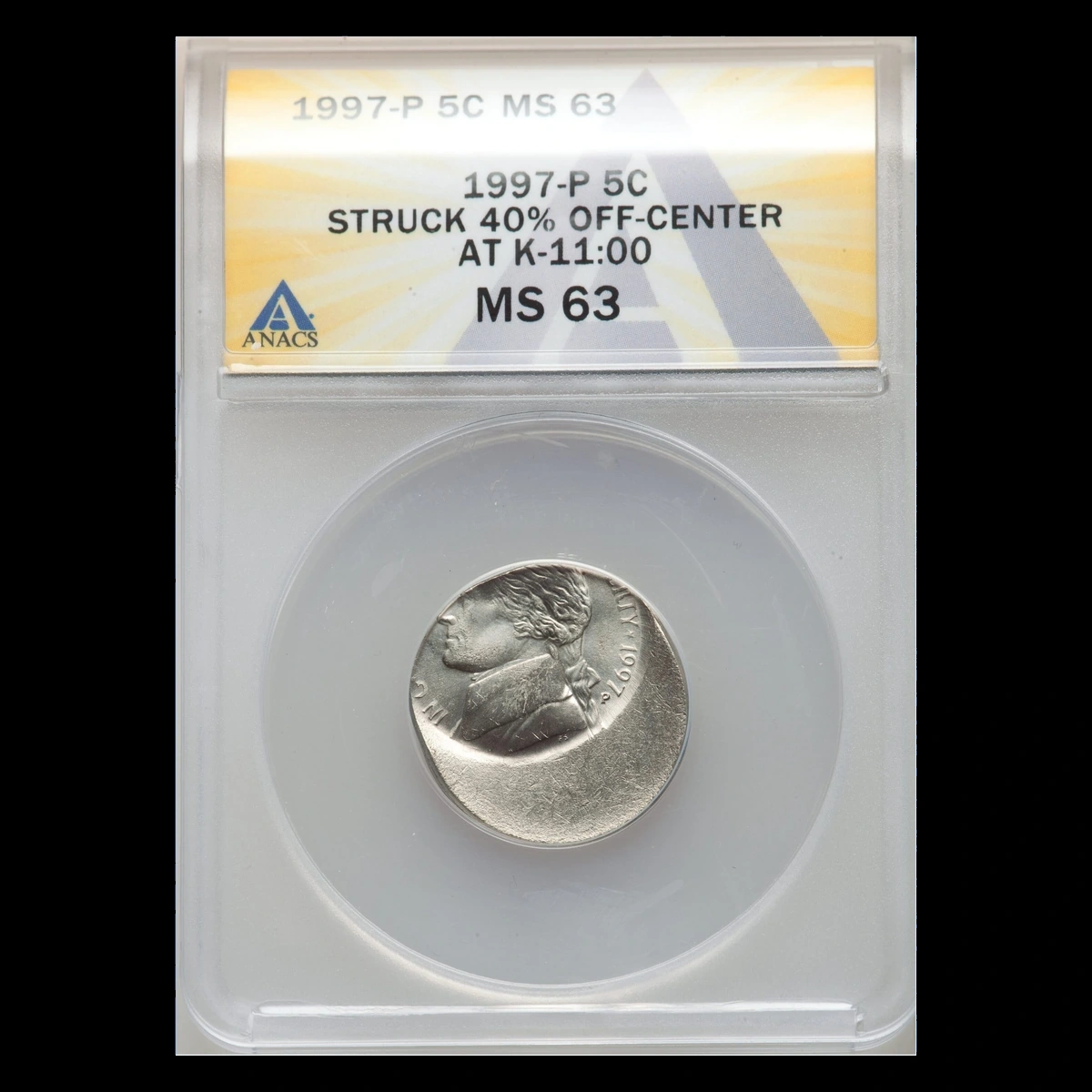
8. 1997 Nickel Bare Metal beside Lost Outer Detail: Off-Center Strike Error
GreatCollections records a Philadelphia off-center nickel graded ANACS MS66. The available description does not establish a direction or percentage.
How to Identify
Compare both designs with the entire blank crescent and outline. One misplaced blank should explain the design loss on both faces.
Grinding can create an apparently bare patch but often leaves scratches or altered texture. A wide border on just one face may instead involve die alignment.
What It’s Worth
Estimated values are $30–$400 for many readable-date examples. Displacement, preservation, and surviving identity guide the comparison.
The MS66 listing supplies an example without a usable public price in the available record. It should not receive an invented auction result.
9. 1997 Nickel A Second Front Impression with a Blocked Back: Double Strike Error
A recorded Philadelphia ANACS MS63 received its second strike 70% off-center toward six o’clock. The back was blocked during that blow and did not receive the usual corresponding design.
How to Identify
Trace the first portrait and then the lower second impression as separate design positions. A narrow shelf beside one letter is not equivalent evidence.
The specialist catalog describes the second reverse area as uniface. Do not demand a second Monticello there when evaluating this specific sequence.
What It’s Worth
A comparable double strike has an estimated whole-coin value of $100–$500. Clear separation and the blocked reverse must be demonstrated.
No completed sale is supplied for the cataloged coin. A 2001-D double strike with a 65% off-center second blow sold for $307.44 in June 2026, a different-year comparison.
10. 1997 Nickel A Deep Blank-Shaped Impression Replaces Monticello: Indent Error
A cent blank lay between the nickel blank and die on the recorded Philadelphia example. The resulting depression covers about 90% of the reverse.
The overlapping blank had no finished cent design to transfer. Another reported nickel combines a large indent with broadstriking.
How to Identify
Examine how surviving reverse details meet the depression’s boundary. The strike should explain the overlap without later cutting or hammering.
No Lincoln portrait is required inside a blank-made indent. Recognizable cent design would suggest contact with an already struck coin and a different sequence.
What It’s Worth
Estimated values are $150–$1,000 for substantial genuine indents. A small post-mint dent is not a comparable feature.
Greysheet’s auction record lists $780 in March 2025 for the PCGS MS62 Philadelphia 90% reverse indent. That result does not price the separate broadstrike-and-indent coin.
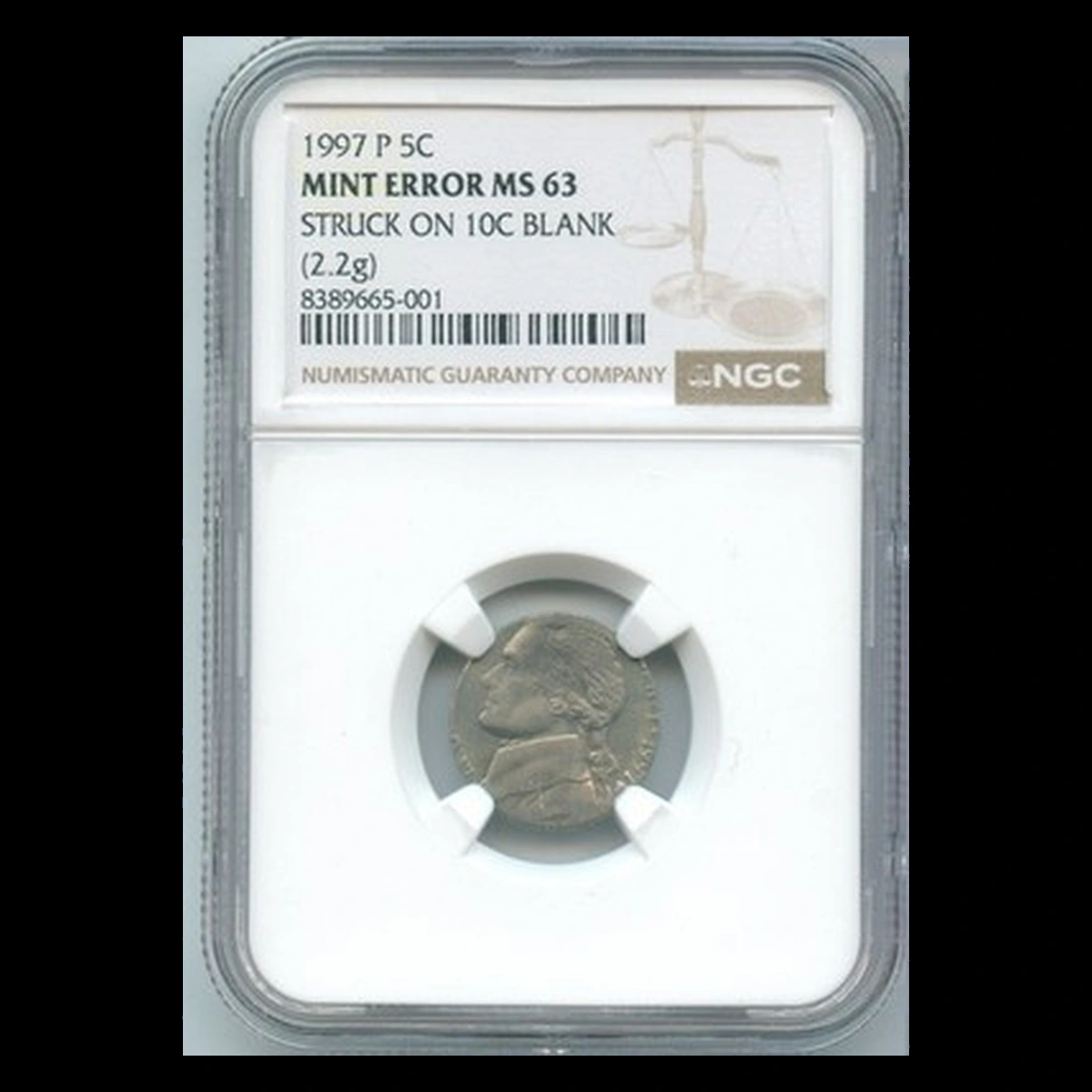
11. 1997 Nickel Nickel Images on a Small Layered Disc: Dime Planchet Error
A Philadelphia PCGS MS62 coin was struck on an unused clad dime blank. Its smaller disc could not accommodate all the outer nickel design.
How to Identify
A clad dime blank begins near 2.268 g and 17.91 mm, with a copper core between lighter outer layers. Striking can expand its final width.
Check that the surviving images are Jefferson and Monticello without earlier Roosevelt design beneath them. Layered metal, weight, and naturally cropped detail must agree.
What It’s Worth
An identified 1997 nickel on a dime blank has an estimated value of $400–$1,200. Readable date and mintmark plus good surfaces support the comparison.
The 1997-P MS62 is listed at about $748 in an April 2006 Heritage result. A separate lot containing 1997-P and 1998-P dime-blank nickels sold for $630 in August 2023; that total cannot be assigned to either coin alone.
Conclusion
Weak detail can arise from localized blockage, broad low pressure, or later wear, so compare several areas before assigning a cause. Edge gaps, expanded borders, and deep indents each require a different physical explanation.
Keep the recorded percentages and grades with their individual specimens. For a dime-blank candidate, the strongest evidence combines nickel designs with the lighter layered metal, rather than size or color by itself.