Rare 1930 Nickel Errors (List & Pictures)
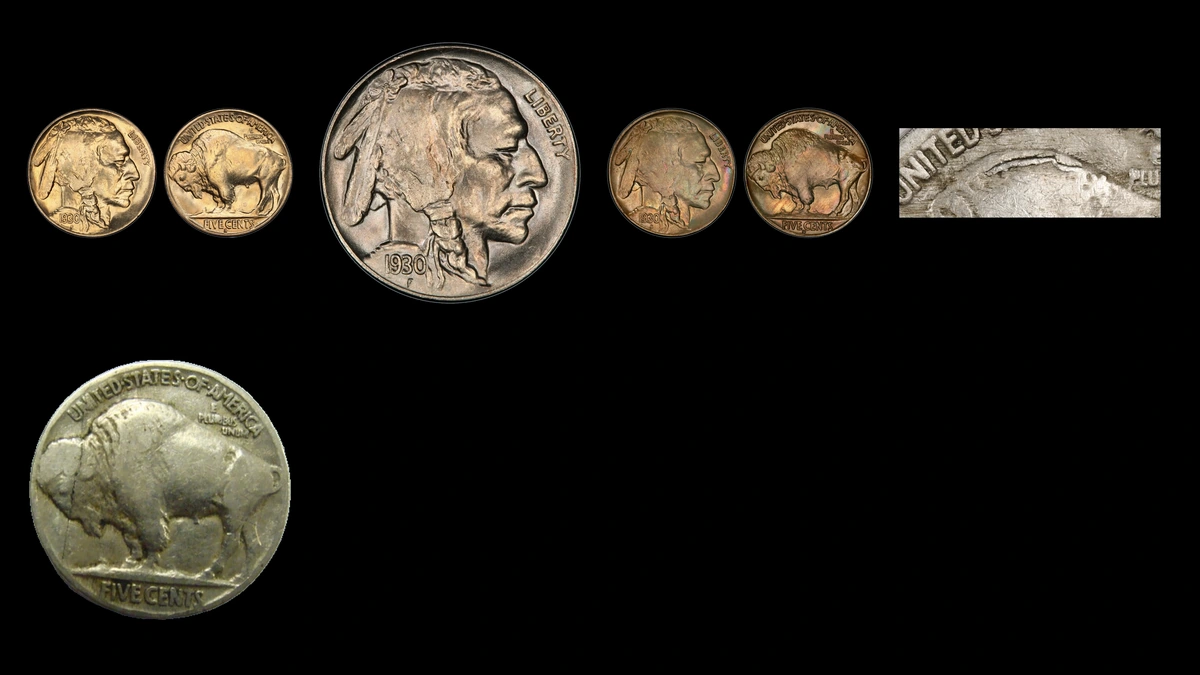
The small missing feather on a 1930-S nickel and repeated outlines on another coin come from different changes to the dies. These 1930 Buffalo nickel errors span estimated values of $5–$5,000.
A high-grade doubled-reverse example sold for $3,290 in October 2014. Begin with the date and mint, then compare the exact extra or missing detail before moving to the edge and any flaws in the metal.
1. 1930 Nickel The Small Feather Is Missing: Two Feathers Variety Error
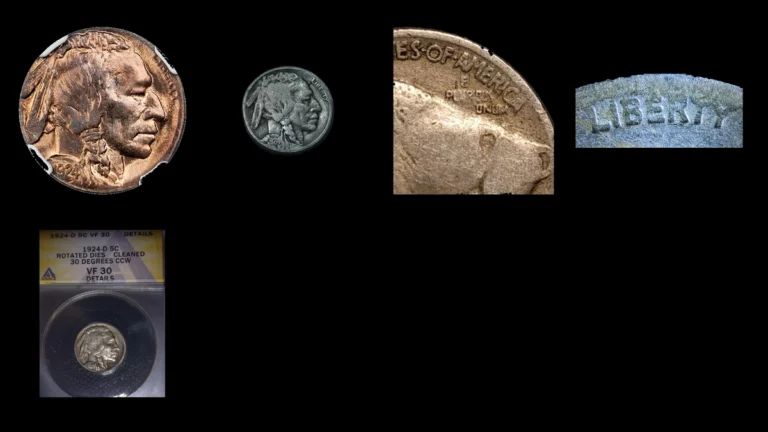
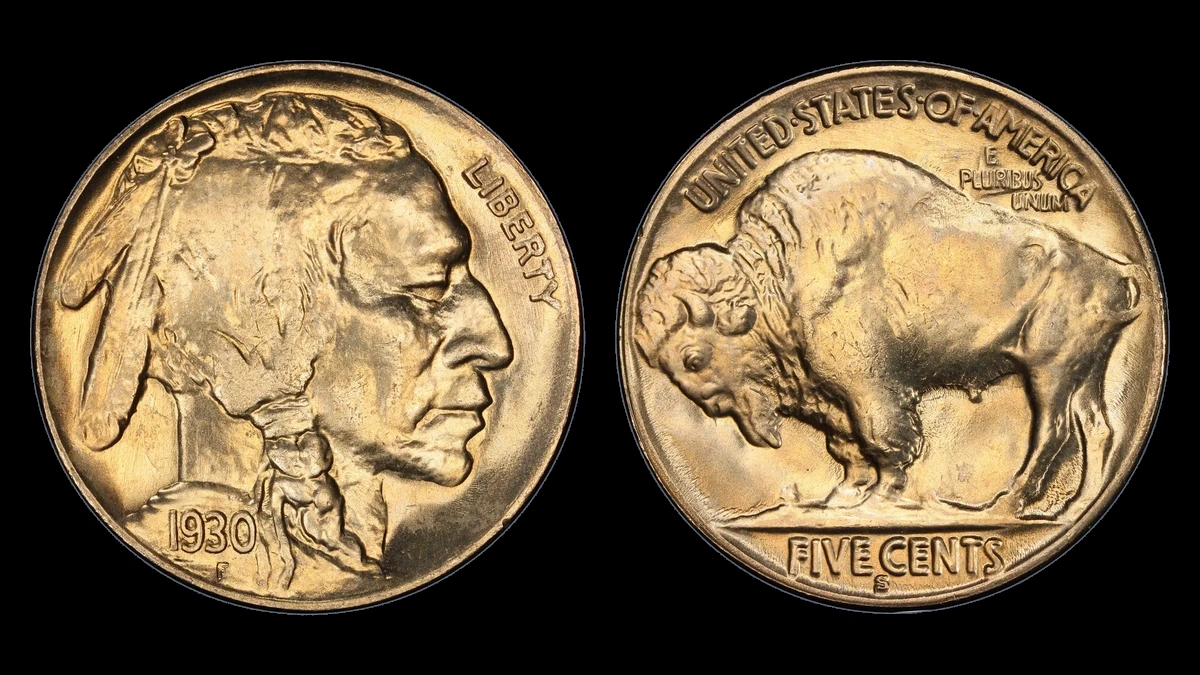
The 1930-S Two Feathers variety, FS-401, lacks the small feather between the portrait’s neck and its two long feathers. Excessive polishing of the die removed the shallow detail before later coins were struck.
That is a different event from wear or scraping on a finished coin. Simply counting two visible feathers does not establish the variety.
How to Identify
Compare a normal Buffalo nickel first so that the small feather’s expected position is clear. Confirm the 1930 date and S below FIVE CENTS, then examine the empty area and surrounding portrait for wear or tool marks.
A deliberately rubbed patch may disturb nearby detail, while an authentic variety needs a matching original design. For general reference, a normal nickel weighs 5 grams, measures about 21.2 millimeters, and has a plain edge.
What It’s Worth
$40–$250 for identified worn examples, $250–$1,500 for attractive lightly worn or unworn pieces, and $1,500–$5,000 for exceptional high grades are the estimates. The whole coin’s preservation is central to those differences.
PCGS lists an MS66 eBay marketplace result around $4,227 in February 2023. That marketplace record is separate from the doubled-reverse auction result, and its grade should not be transferred to a scraped or heavily worn feather area.
2. 1930 Nickel Portrait or Reverse Details Repeat: Doubled Die Error
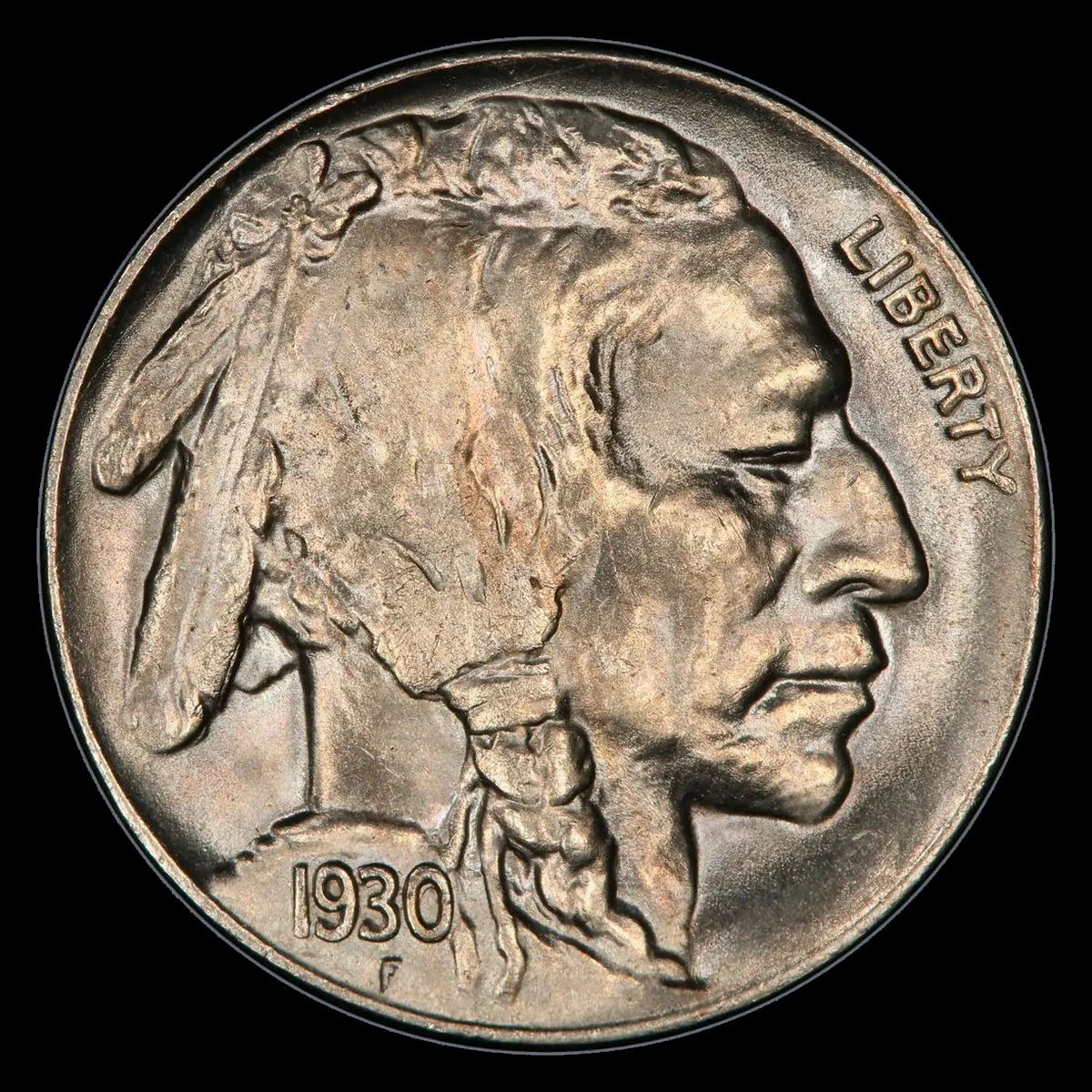
The Philadelphia front FS-101 has extra outlines at the eyelid, nostril, two large feathers, and LIBERTY. San Francisco has a separate FS-101 front variety with unusually thick lettering and date details.
The shared catalog number does not make these the same pattern. The repeated design originated in the die, which then passed it to coins during striking.
How to Identify
Identify Philadelphia by the absence of a mintmark or San Francisco by S below FIVE CENTS before matching details. No 1930 nickels were made as Proof collector coins.
Check several features belonging to the same variety rather than one thick letter. Philadelphia reverse FS-801 is separate from FS-802 and FS-803, so an apparent extra buffalo leg cannot identify all of them interchangeably.
Keep surrounding design in photographs to preserve the position of an extra outline. Normal weight and size cannot establish which doubled die produced a coin.
What It’s Worth
$25–$200 for modest identified varieties, $200–$1,500 for attractive stronger examples, and $1,500–$4,000 for especially well-preserved scarce varieties are the supplied estimates. The comparison must match mint and pattern as well as grade.
A Philadelphia reverse FS-801 graded MS66 brought $3,290 in October 2014. A separate San Francisco front FS-101 graded MS66 sold for $1,680 in January 2018.
3. 1930 Nickel Another S Appears to the Right: Repunched Mintmark Error
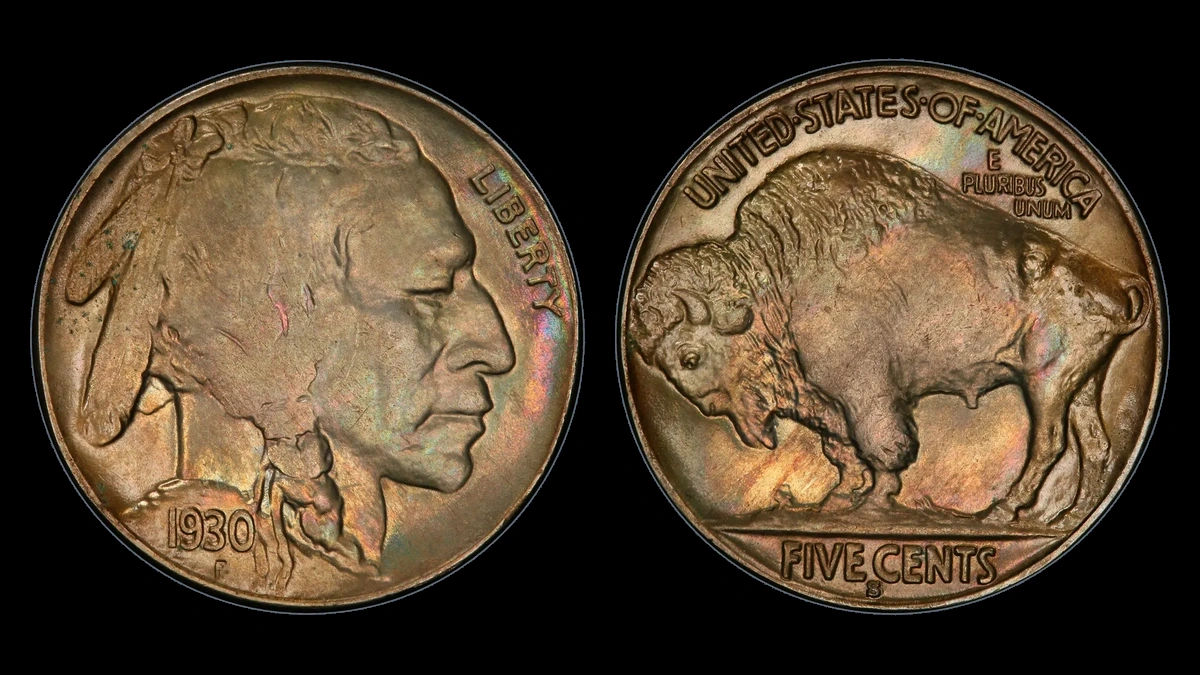
The 1930-S FS-501 has a second outline to the right of the main S beneath FIVE CENTS. A shifted application of the mintmark punch left overlapping impressions in the die.
Variety descriptions may call the extra impression east, meaning rightward with the reverse upright. This describes die preparation rather than a second blow delivered to the coin.
How to Identify
Read the date and trace the right-hand extra curve against an authenticated FS-501 photograph. A shadow, swollen letter, or impact beside the mintmark may lack an actual second S-shaped stroke.
Philadelphia coins have no mintmark, and Denver made no nickels dated 1930. Keep those basic identity checks separate from the close examination of the extra curve.
What It’s Worth
$25–$150 for worn identifiable examples and $150–$500 for attractive unworn coins are the estimates. PCGS records a Heritage result around $431 in October 2011 for an MS62 example.
That unworn coin had noticeable marks, and its price is not a value for every 1930-S. Wear, cleaning, or scratches around the small letter can make the attribution less clear.
4. 1930 Nickel Complete Designs Remain Within a Wide Outline: Broadstrike Error
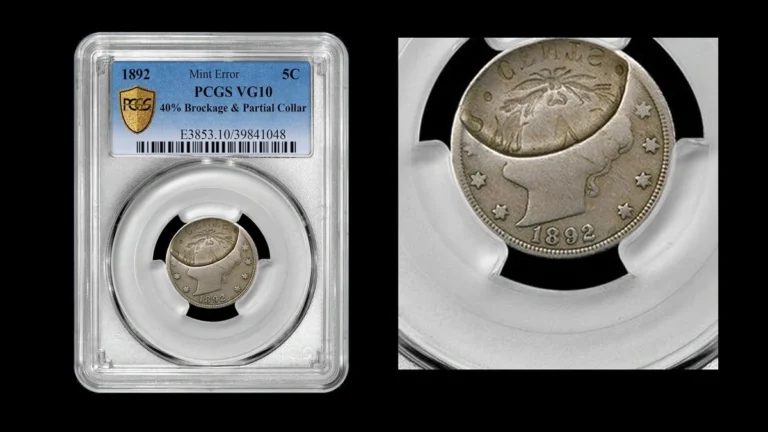
A broadstrike expands because the collar fails to restrain the blank normally. Both intended designs remain on the available metal, even when the border becomes uneven.
The supplied 1930 report includes no measured specimen or stated mint. A finished nickel flattened later must be distinguished from original spreading during striking.
How to Identify
Measure several widths and follow the outer lettering on both faces. A complete naturally struck design is more informative than width alone.
Inspect the plain edge and raised portrait for hammer marks or crushing. Spreading changes the outline without automatically removing metal, while an off-center strike loses part of the intended design beyond the blank.
What It’s Worth
$75–$250 for modest or worn broadstrikes and $250–$800 for attractive examples with strong spreading are the estimates. No individual 1930 sale is supplied.
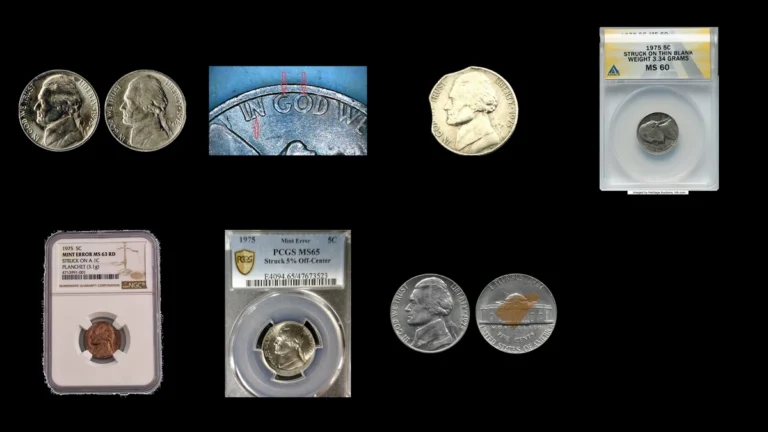
A 1999-P Jefferson broadstrike sold for $89 in March 2025. Its later date and different design provide only general context for an older Buffalo example.
5. 1930 Nickel An Unstruck Crescent Adjoins a Cut-Off Design: Off-Center Strike Error
An off-center strike occurs when the blank is misplaced between the dies. A solid unused area remains beside a partial design, with intended details missing beyond the opposite boundary.
The 1930 report establishes no exact mint, percentage, or direction. A partial Buffalo design without a readable year cannot automatically be assigned to this date.
How to Identify
Read the surviving date with the full outline visible, then compare how the design meets blank metal on both faces. A shift confined to one face may instead involve a misaligned die.
Look for untouched unstruck surface rather than scraping or erased lettering. An actual gap in the outline suggests missing metal, which is different from a solid crescent that missed the dies.
What It’s Worth
$75–$300 for modest examples and $300–$1,200 for stronger attractive dated strikes are the estimates. Original surfaces and readable identification support the upper comparison.
A 1939 Jefferson nickel struck 10% off center sold for $252 in March 2021. That later-design result does not establish the displacement or price of an unspecified 1930 Buffalo coin.
6. 1930 Nickel A Raised Line or Rim Blob Replaces Detail: Die Crack or Cud Error
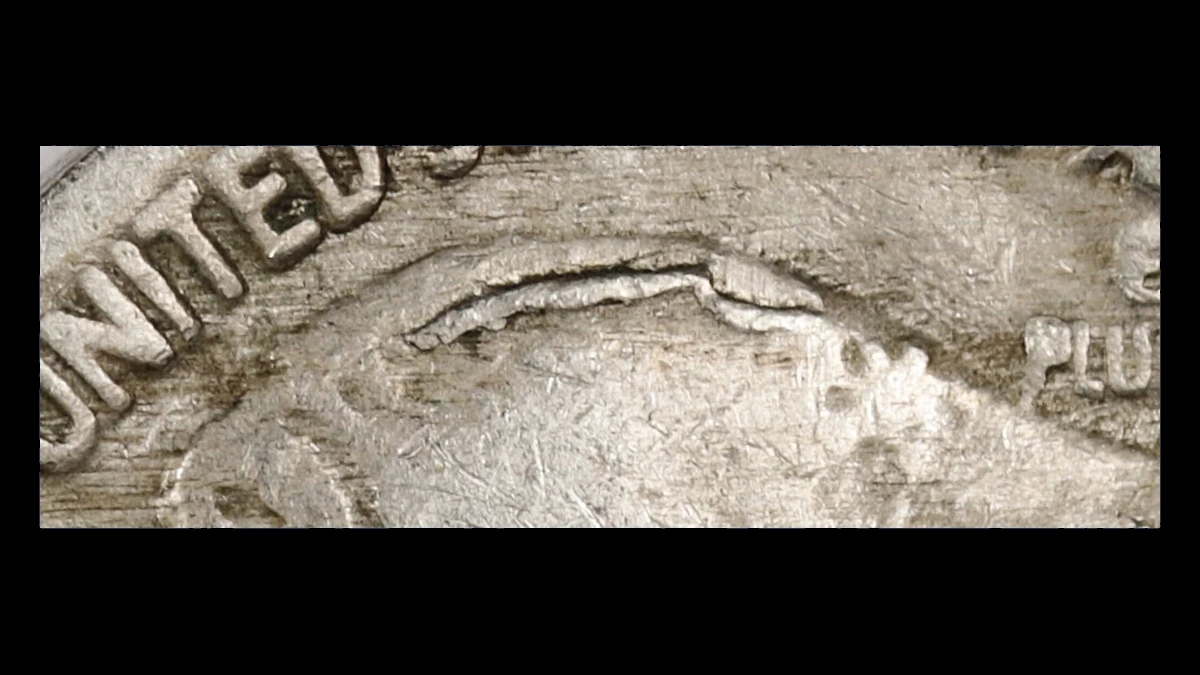
Metal entering a narrow crack in a die leaves a ridge on the finished coin. A larger missing section at the die’s edge can produce a raised patch connected to the rim, called a cud.
Both types are reported for 1930 without one established location or mint. Their form must be evaluated on the individual coin.
How to Identify
For a suspected cud, verify the rim connection and check the nearby edge and opposite face for evidence of an impact. An isolated central lump is not this type of die-edge break.
For a narrow line, check whether the line itself rises above the surface rather than forming a groove with raised lips. A seam, different texture, or tool marks may indicate later work or added material.
What It’s Worth
$5–$40 for small raised cracks and $50–$600 for substantial original cuds are the estimates. Their visibility and the rest of the coin’s condition influence appeal.
A 1959-D Jefferson nickel with a cud sold for $504 in May 2021. The different date and design make it a general comparison, not a transaction for a 1930 Buffalo break.
7. 1930 Nickel A Thin Layer Lifts From the Metal: Lamination Error
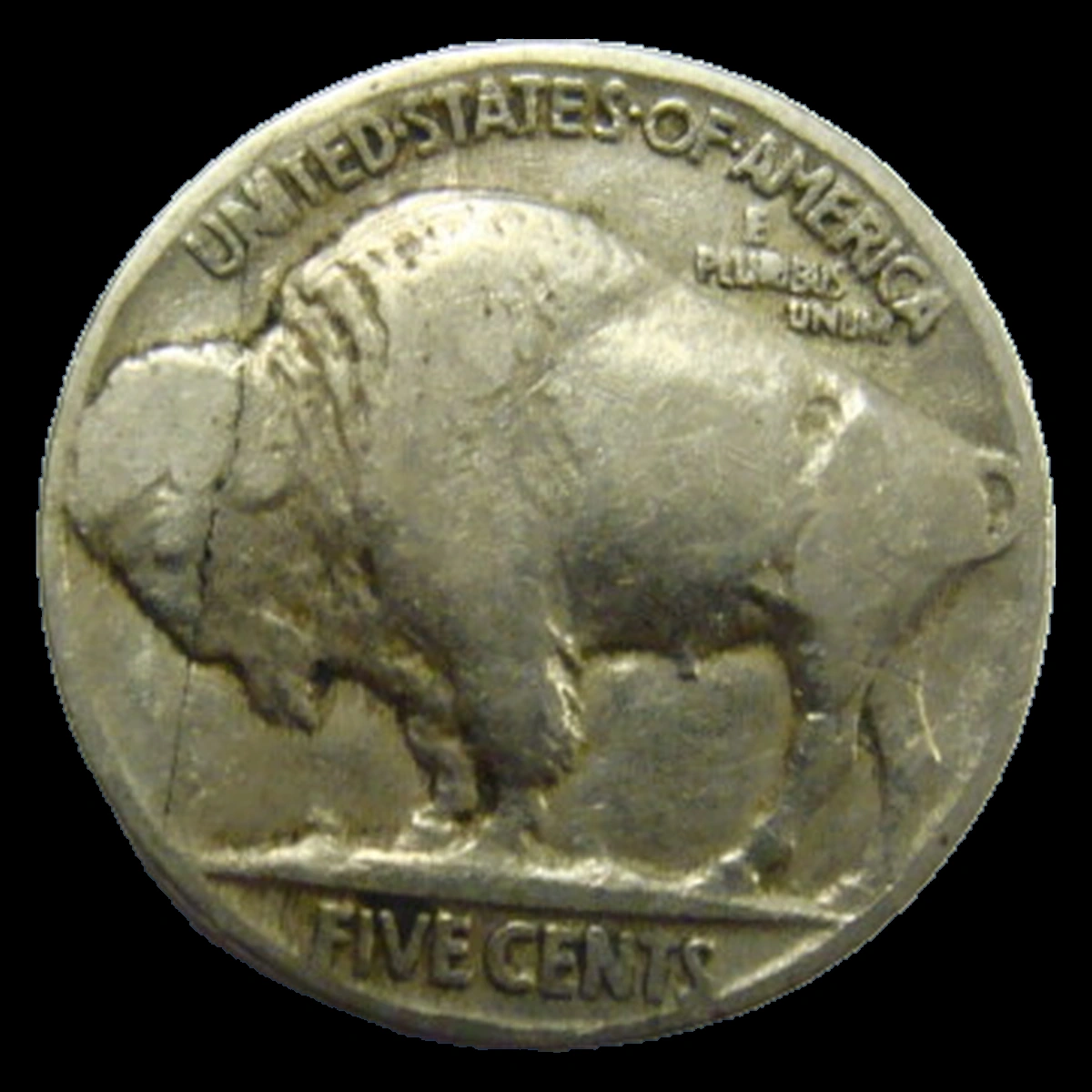
The reported lamination category concerns a weakness inside the original copper-nickel alloy. Separation may leave an attached flap or a shallow opening after a layer falls away.
No fixed portrait or reverse location is established for the 1930 report. A local flake should not be interpreted as the whole coin splitting into two matching halves.
How to Identify
Use side lighting to follow the opening into the coin’s own metal. Compare any design on a loose layer with neighboring detail to distinguish internal separation from a coating peeling above the finished surface.
Do not lift the flap to test it. Lost metal may reduce weight, but an attached layer can leave the reading nearly normal; roughness or color alone does not establish lamination.
What It’s Worth
$5–$40 for small visible flaws and $40–$200 for larger attractive examples are whole-coin estimates. No confirmed individual sale accompanies the 1930 report.
A clearly original layer provides stronger evidence than an unexplained rough worn patch. Enlarging the separation would create damage rather than additional collector value.
Conclusion
A useful 1930 Buffalo nickel identification ties the feature to the correct mint and pattern. The Two Feathers gap, rightward S/S, and several doubled-die varieties each require a different match.
For changes in shape or metal, inspect the complete outline and original boundaries before choosing an error name. Preserve the surfaces and attached layers, and keep marketplace records, auction sales, and estimates with their stated condition and variety.