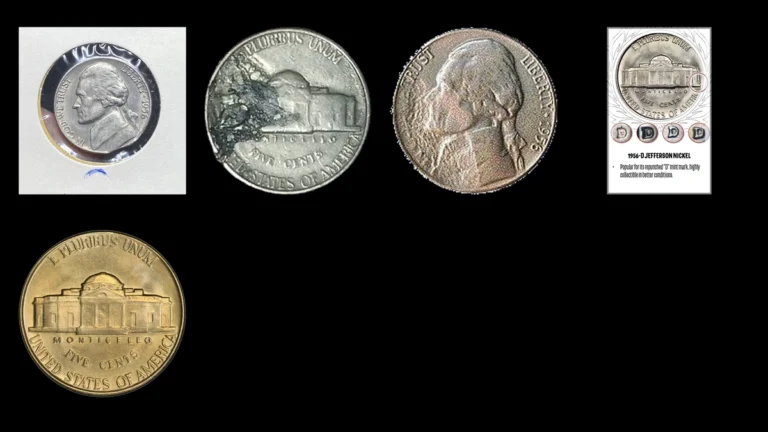
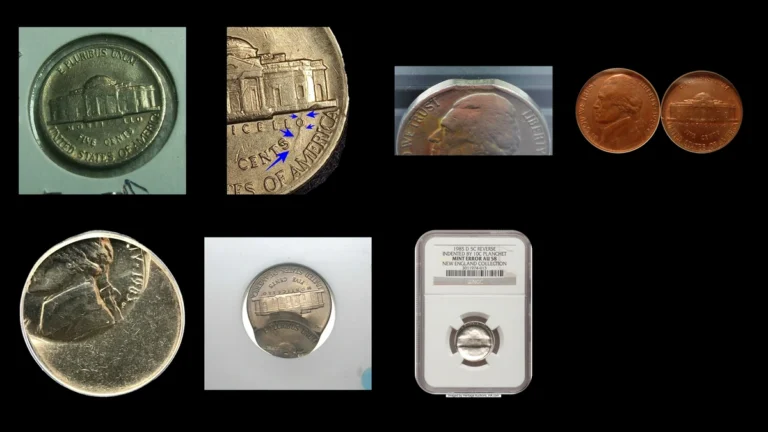
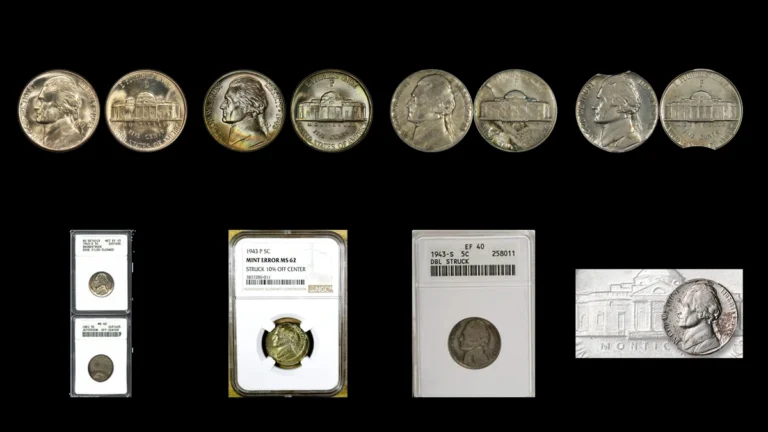
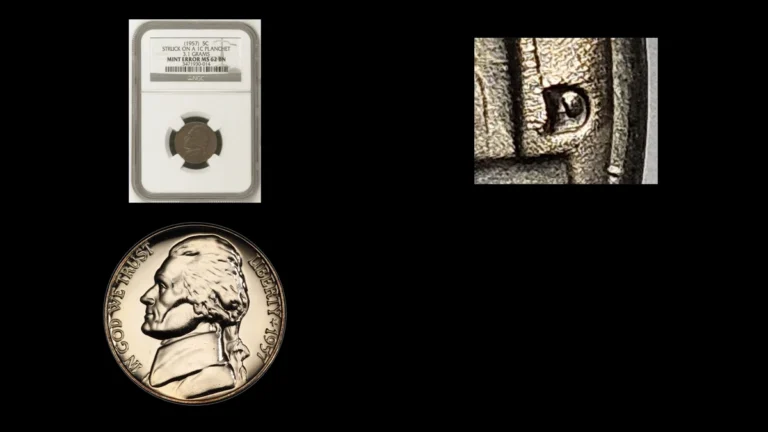
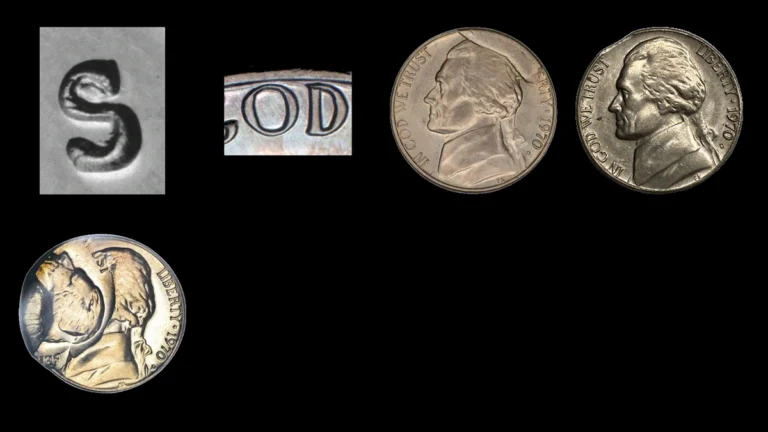
Rare 1941 Nickel Errors (List & Pictures)
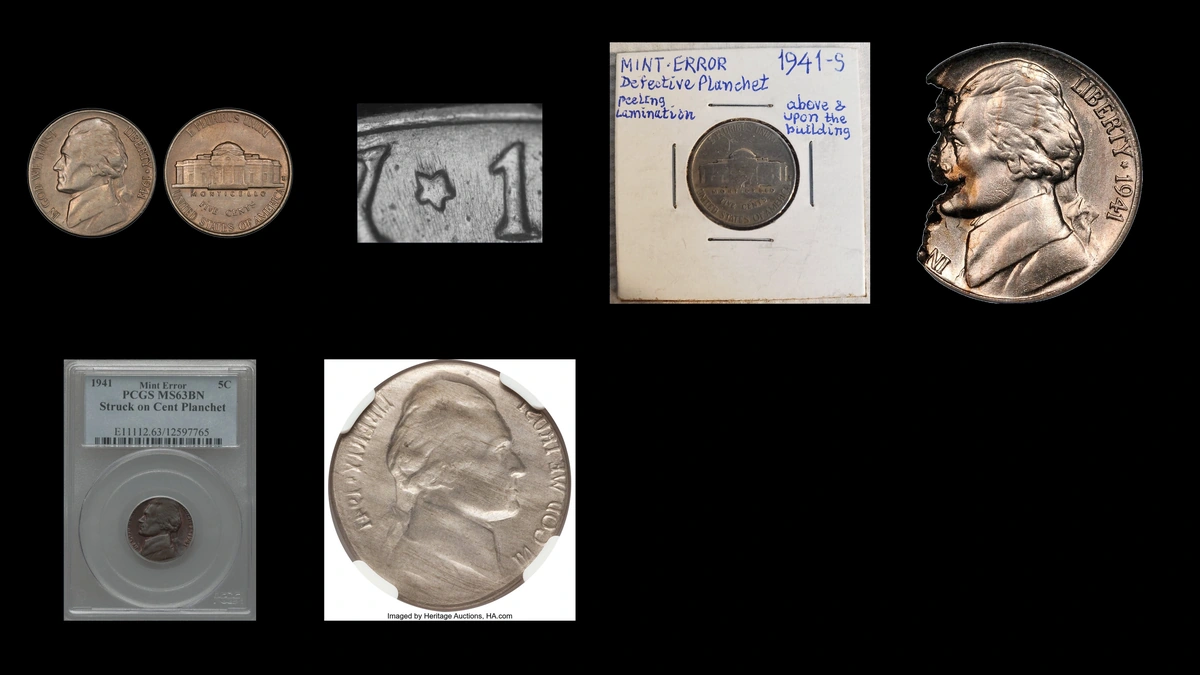
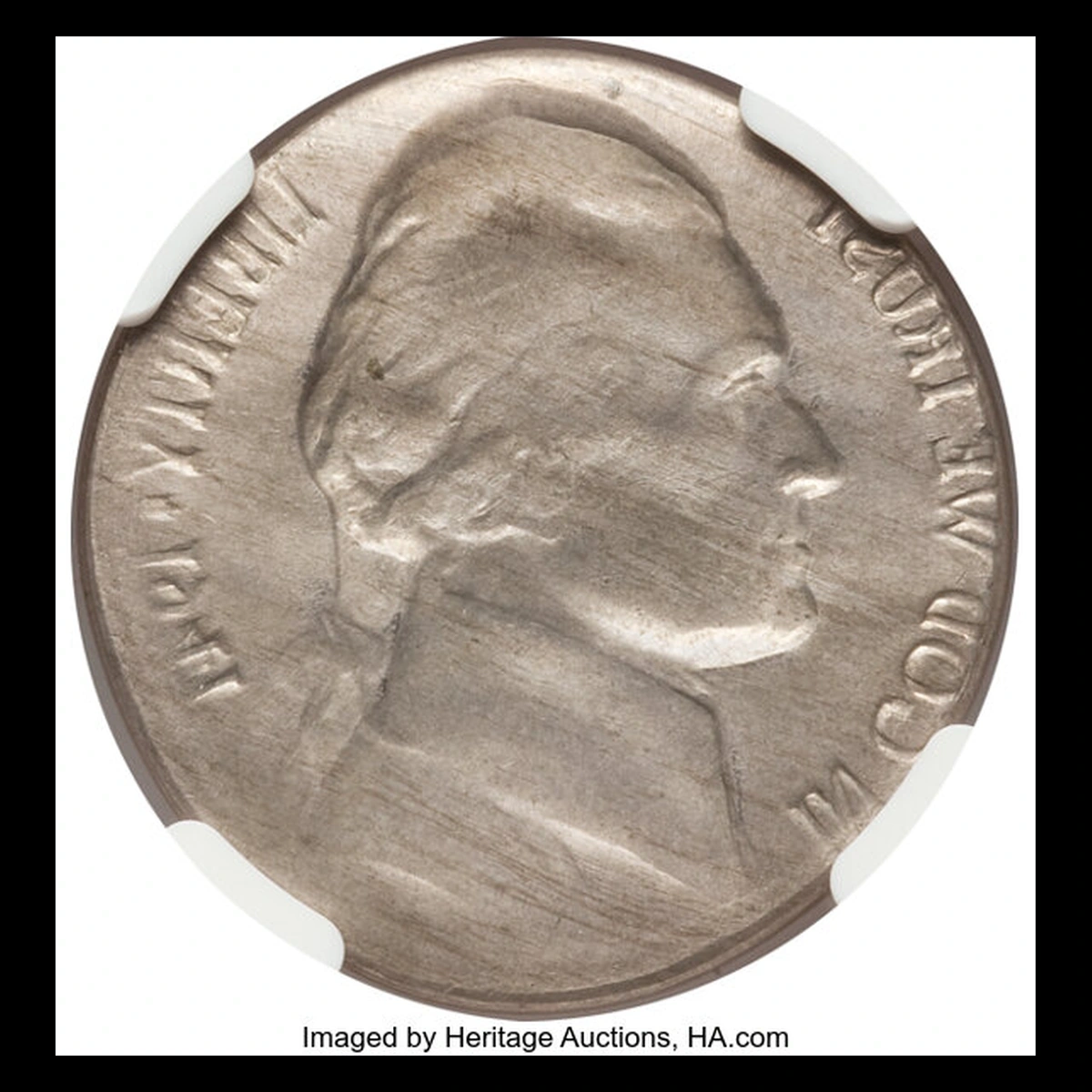
Two nickels can preserve opposite sides of one press accident. A matched 1941 pair, including a backward portrait impressed by one coin into the other, sold for $2,760.
Estimated values for 1941 nickel errors range from $5 to $3,500, including complete pairs. Examine the mint mark and lettering, then move through raised lines, separating metal, missing edges, displaced designs, and unusual blanks.
| Evidence to inspect | Category | Estimated range |
|---|---|---|
| Secondary D or S strokes | Repunched mint mark | $5–$200 |
| Repeated letters | Doubled die | $10–$150 |
| Raised ridge | Die crack | $5–$40 |
| Separating layer | Lamination | $10–$100 |
| Rough missing edge | Ragged clip | $75–$250 |
| Blank area beside incomplete design | Off-center strike | $100–$600 |
| Design on a lighter blank | Wrong planchet | $400–$3,000 |
| Two matching coins with reversed image | Mated brockage pair | $2,000–$3,500 for the pair |
1. 1941 Nickel Another D or S Appears beside the Mint Letter: Repunched Mint Mark Error
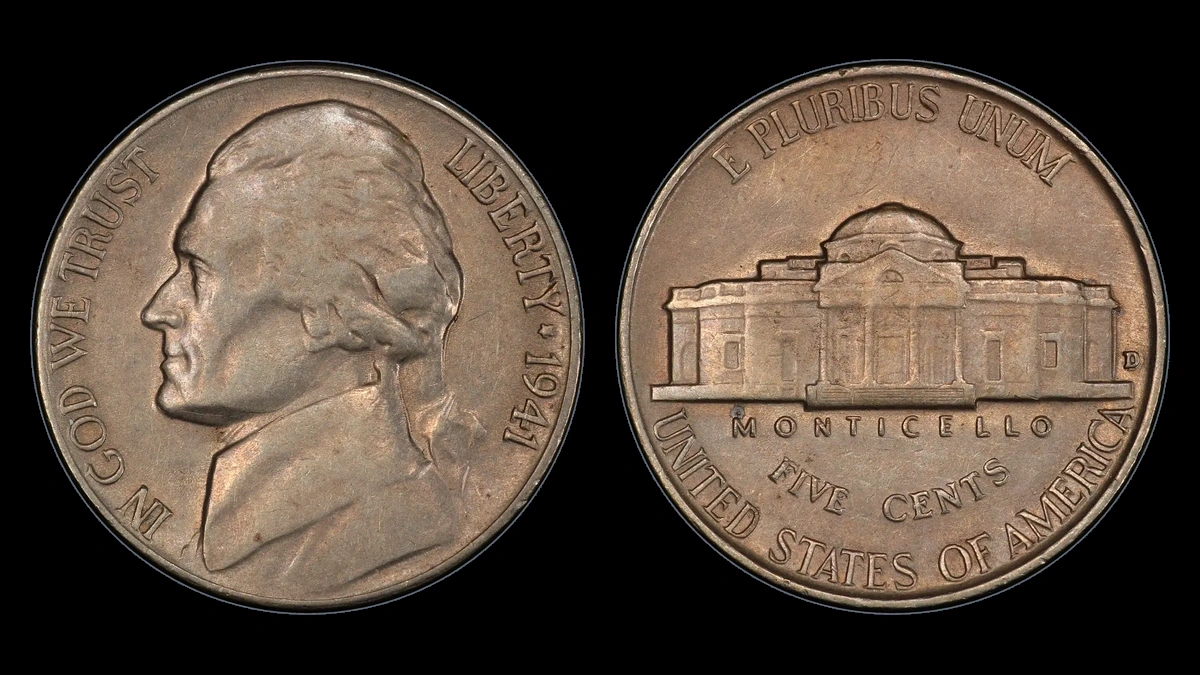
A 1941 Denver or San Francisco nickel has a small mint letter to the right of Monticello. Hand punching that letter into a die more than once could leave fragments from a misplaced impression.
How to Identify
Examine the entire letter for secondary curves or stems that fit a known pattern. FS-502 has a lower S impression, while other forms leave traces above or to the side.
An inverted-S attribution requires the curves and ends of an upside-down impression to match, rather than merely a large or misshapen S. Confirm that attribution separately if it is not stated on the grading label.
What It’s Worth
$5–$200 is an estimated range across the supplied repunched mint marks. A worn Denver variety was offered at $4.95 and an MS64 inverted-S example at $149.95, both dealer asking prices rather than completed sales.
The exact pattern and the condition of the whole coin determine which comparison is useful. A bright extra edge by itself does not establish a premium.
2. 1941 Nickel Several Letters Share Extra Outlines: Doubled Die Error
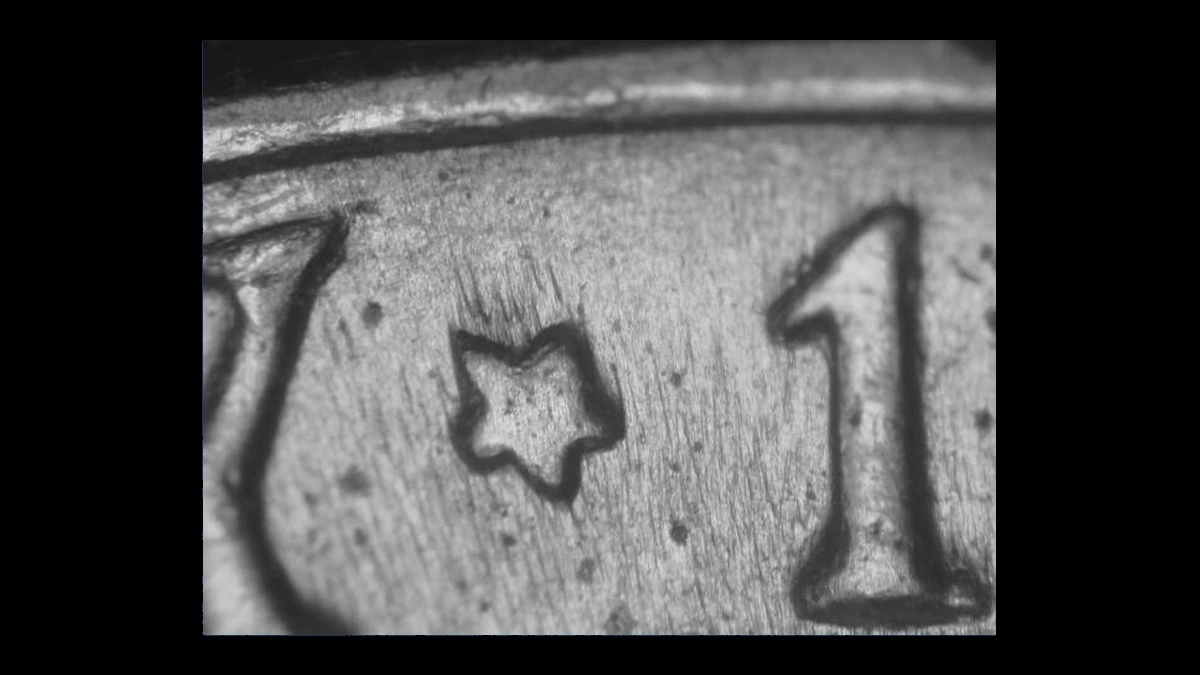
The 1941 varieties include reverse doubling from several mints and slight clockwise obverse doubling at Philadelphia. Their repeated details originated during die preparation, rather than from counting multiple blows delivered to one coin.
How to Identify
On one Denver reverse variety, E PLURIBUS UNUM becomes more clearly spread toward the right, while portions of CENTS and AMERICA have three outlines. A San Francisco example is strongest on UNITED STATES, and other varieties have closer separation.
Compare the correct mint and face with Brian’s 1941 catalog photographs. Flat shelves from movement during striking and generally thick letters do not reproduce the complete raised pattern.
What It’s Worth
$10–$150 is an estimate for the subtle doubled dies covered by the supplied material. No single auction result prices all of these patterns, and ordinary issues should be kept separate from specially made Proofs when comparing condition and value.
3. 1941 Nickel A Thin Ridge Crosses the Surface: Die Crack Error
A fracture in the die can fill with coin metal during striking, creating a narrow raised ridge. Its route depends on the damaged tool, with no universal path established by the 1941 reports.
How to Identify
Follow the line across both open background and any intersecting letters. A scratch may push up its edges, so inspect the center for a cut rather than assuming the brightest part is a die-crack ridge.
Low lighting from opposite directions helps reveal relief. A small die crack redistributes existing metal and should not cause a major change in weight.
What It’s Worth
$5–$40 is a working estimate for minor genuine cracks on ordinary 1941 nickels. There is no supplied sale for a named example, and an exceptional coin’s full value should not be credited to a faint ridge alone.
4. 1941 Nickel A Thin Layer Lifts from the Coin: Lamination Error
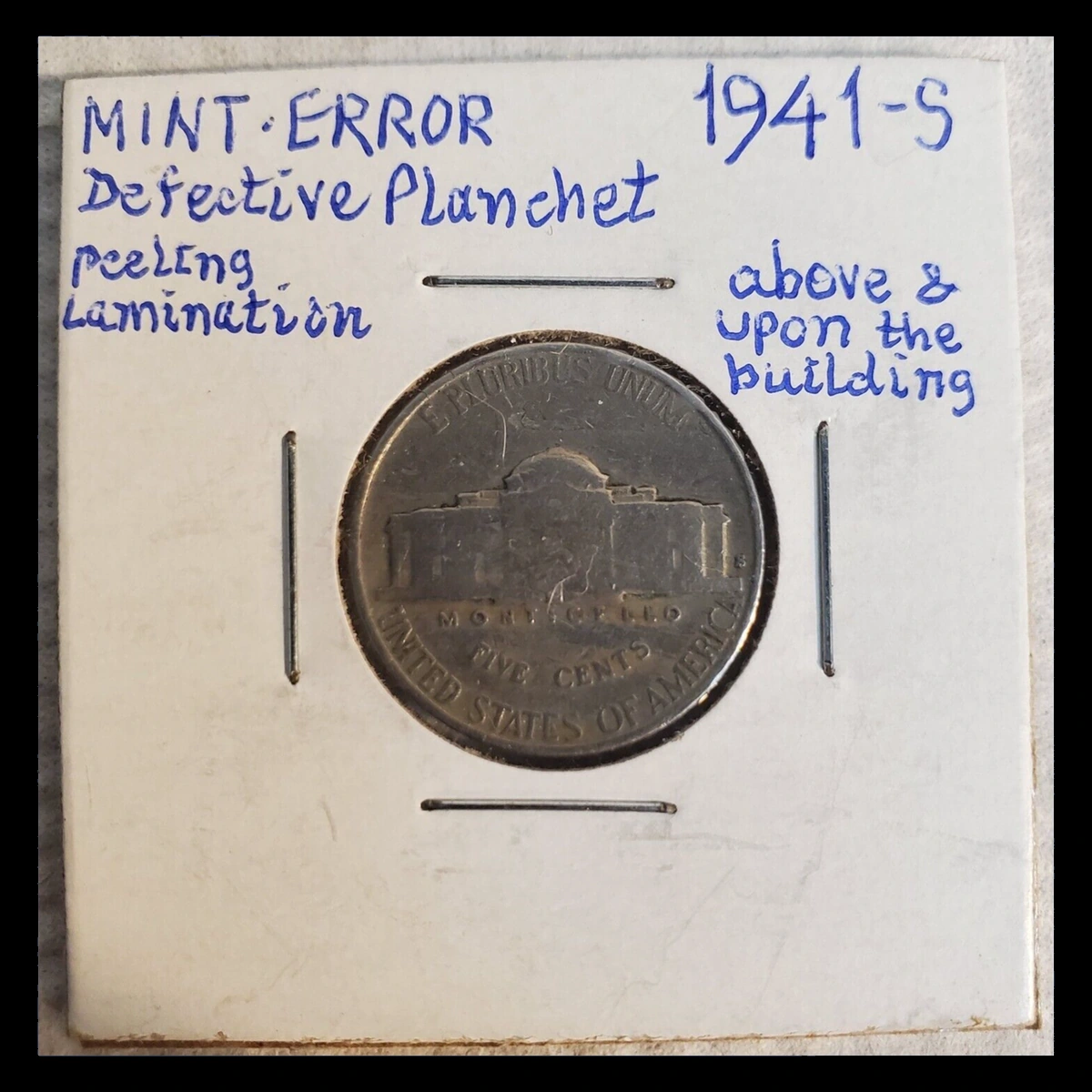
Imperfect metal can separate into a flap or leave a rough patch where a layer has fallen away. A normal 1941 nickel is 75% copper and 25% nickel, so this is not a silver coating peeling from a wartime issue.
How to Identify
Inspect the thin boundary and any design carried on the separating metal without lifting it. Scattered pits, eaten edges, or an attached lump suggest a different process.
A loose normal coin weighs about 5 grams and measures 21.21 millimeters. These references help assess the following blank errors too, although a tiny lamination can leave the weight almost unchanged.
What It’s Worth
$10–$100 is an estimated range for small to fairly clear laminations on typical 1941 nickels. The supplied reports provide no exact location or completed sale, so judge the actual size, attached metal, and surviving design.
5. 1941 Nickel A Rough Gap Interrupts the Edge: Ragged Clipped Planchet Error
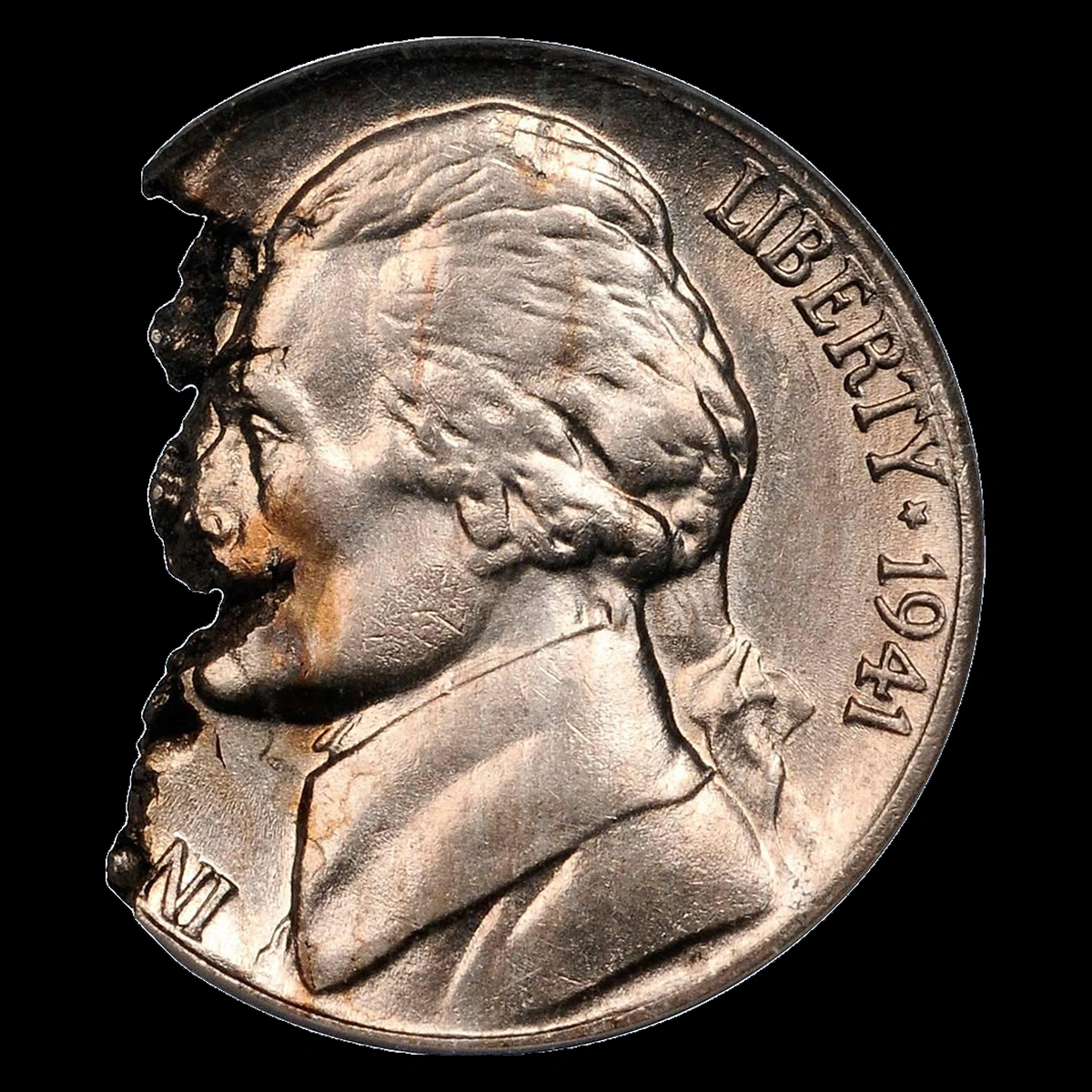
The documented NGC MS64 example has a 20% ragged clip. Its blank lacked that section before striking, leaving an irregular boundary rather than the smooth crescent associated with a curved clip.
How to Identify
Concentrate on where the struck design reaches the gap and how the rim formed beside it. Parallel saw marks or a sharp cut through finished lettering would suggest later metal removal.
A substantial clip should lower weight, but low weight and a rough edge alone do not establish when the metal disappeared. Check the remaining intact spans and both ends of the missing section.
What It’s Worth
$75–$250 is an estimate for a confirmed ragged clip of similar size and identity. The MS64 coin appeared in a five-coin group that sold for $460 in August 2010.
That total cannot be assigned to the 1941 nickel or divided evenly into an individual sale price. The other coins also had different dates and clip shapes.
6. 1941 Nickel Both Designs Shift toward One Side: Off-Center Strike Error
The recorded 1941 example is struck 15% off-center and graded NGC MS65 Full Steps. Part of the blank remained outside the striking area, producing unused metal opposite missing design.
How to Identify
Read the surviving date and compare the displacement on both faces. A shift confined to one face calls for a die-misalignment explanation rather than the entire blank being misplaced.
Look for original unstruck surface instead of filing or polishing that removed detail. Full Steps describes sharp Monticello stair lines and is a quality designation separate from the offset.
What It’s Worth
$100–$600 is an estimated range for clear, dated 1941 off-center strikes. The 15% MS65 Full Steps example brought $373.75 in September 2010.
The strong grade and stair detail contributed to that result. A larger offset does not necessarily improve the price if it removes the date or leaves little recognizable design.
7. 1941 Nickel A Smaller Blank Carries the Nickel Design: Wrong Planchet Error
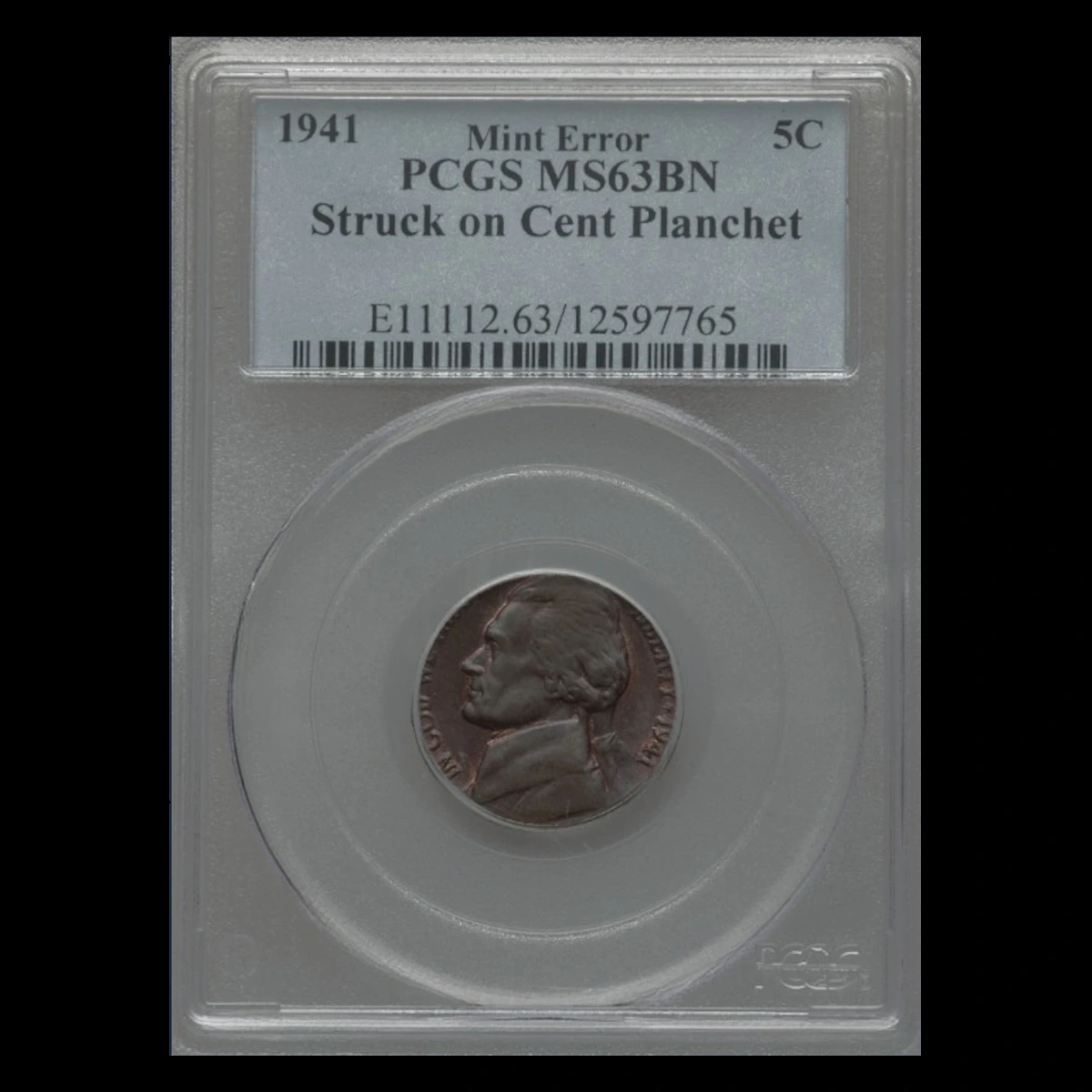
The supplied Philadelphia cent-planchet example weighs 3.2 grams and is graded NGC MS66 Red and Brown. A separate 1941-S coin was struck on a silver dime blank.
How to Identify
Combine the measured weight and metal with the way the nickel design meets the smaller outline. A coating or later grinding can change color, dimensions, or weight without reproducing a genuine wrong-planchet strike.
Period cent and silver dime blanks normally weighed about 3.11 and 2.50 grams respectively. Those are standards; the 3.2-gram recorded measurement belongs specifically to the Philadelphia copper example.
The ordinary 1941 issue contained copper and nickel, not the later wartime silver alloy. Retain the date, mint, and composition evidence together when seeking professional identification.
What It’s Worth
$400–$3,000 is an estimated range across these wrong-planchet types. The cent-planchet MS66 coin sold for $2,400 in July 2021, while the separate 1941-S silver-dime-planchet example brought $396 in June 1995.
The latter is a much older result for a different metal and specimen. Neither comparison applies to an ordinary nickel simply because its surface is discolored.
8. 1941 Nickel Two Coins Match a Backward Portrait and an Indent: Mated Brockage Pair Error
In the documented accident, a struck nickel remained in the press and a new blank landed above it. The next blow pushed the lower coin’s portrait into the upper blank, creating a sunken reversed impression called a brockage.
The lower coin received another strike and an obverse indent, while both coins spread outward. Their complementary features preserve the connection between the two pieces.
How to Identify
The upper coin has a normal obverse and a sunken mirror image of Jefferson on its reverse. Compare that impression with the lower coin’s portrait, additional strike, and front indent using photographs.
Do not press the coins together to test the match. A complete pair requires corresponding contact evidence, not simply two nickels with unrelated marks.
What It’s Worth
$2,000–$3,500 is an estimated range for a comparable complete matched pair. The documented pair sold for $2,760 in August 2010.
Both coins were graded MS65, with Six Full Steps also noted on the lower coin. The sale covers both together and should not be quoted as the individual value of either nickel.
Conclusion
A 1941 nickel’s unusual feature becomes easier to evaluate when it is connected to the surrounding design. Earlier mint-letter strokes, peeling alloy, an incomplete blank, and a second coin’s reversed portrait each leave their own evidence.
Keep fragile surfaces untouched and match the correct mint when using variety photographs. When a record covers a group or a mated pair, preserve that context instead of converting it into an unsupported single-coin price.