Rare 1966 Nickel Errors (List & Pictures)
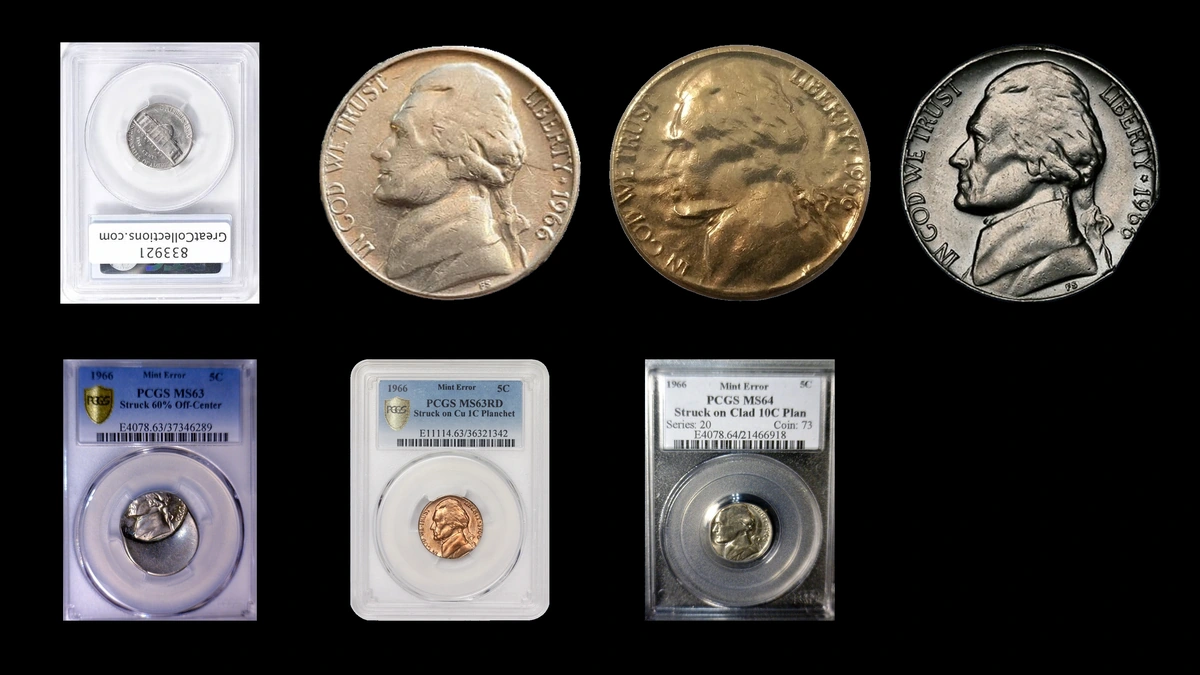
No mint mark is normal on a 1966 nickel, so that absence is not an error or proof of a particular mint. More useful clues include an incomplete blanking cut, a distorted portrait, or the wrong metal beneath the design.
Estimated values for 1966 nickel errors span $10–$1,800; the highest supplied individual sale is $862.50 for a clad-dime-planchet strike. Compare the two faces, then examine the lettering, outline, layers, and repeated impressions.
| What looks unusual | Category | Estimated range |
|---|---|---|
| Reverse stays tilted after a controlled flip | Rotated dies | $20–$200 |
| Raised repeated design | Doubled die | $10–$250 |
| Wavy portrait, normal reverse | Thin capped-die strike | $50–$600 |
| Partial cut or missing edge | Clipped planchet | $10–$300 |
| Extra width around complete design | Broadstrike | $30–$400 |
| Incomplete design and blank crescent | Off-center strike | $25–$700 |
| Peeling or separated pieces | Lamination or split | $10–$500 |
| Small copper-rich disk | Cent planchet | $200–$1,000 |
| Small layered disk | Clad dime planchet | $300–$1,500 |
| Small second impression near edge | Double strike | $200–$1,800 |
1. 1966 Nickel Monticello Has a Repeatable Tilt: Rotated Dies Error
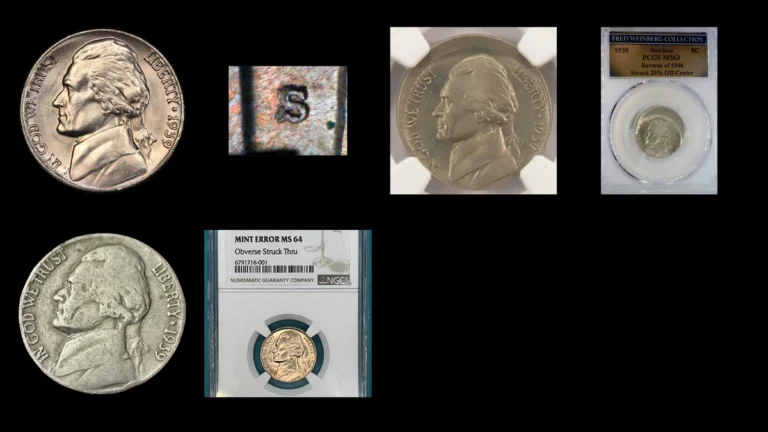
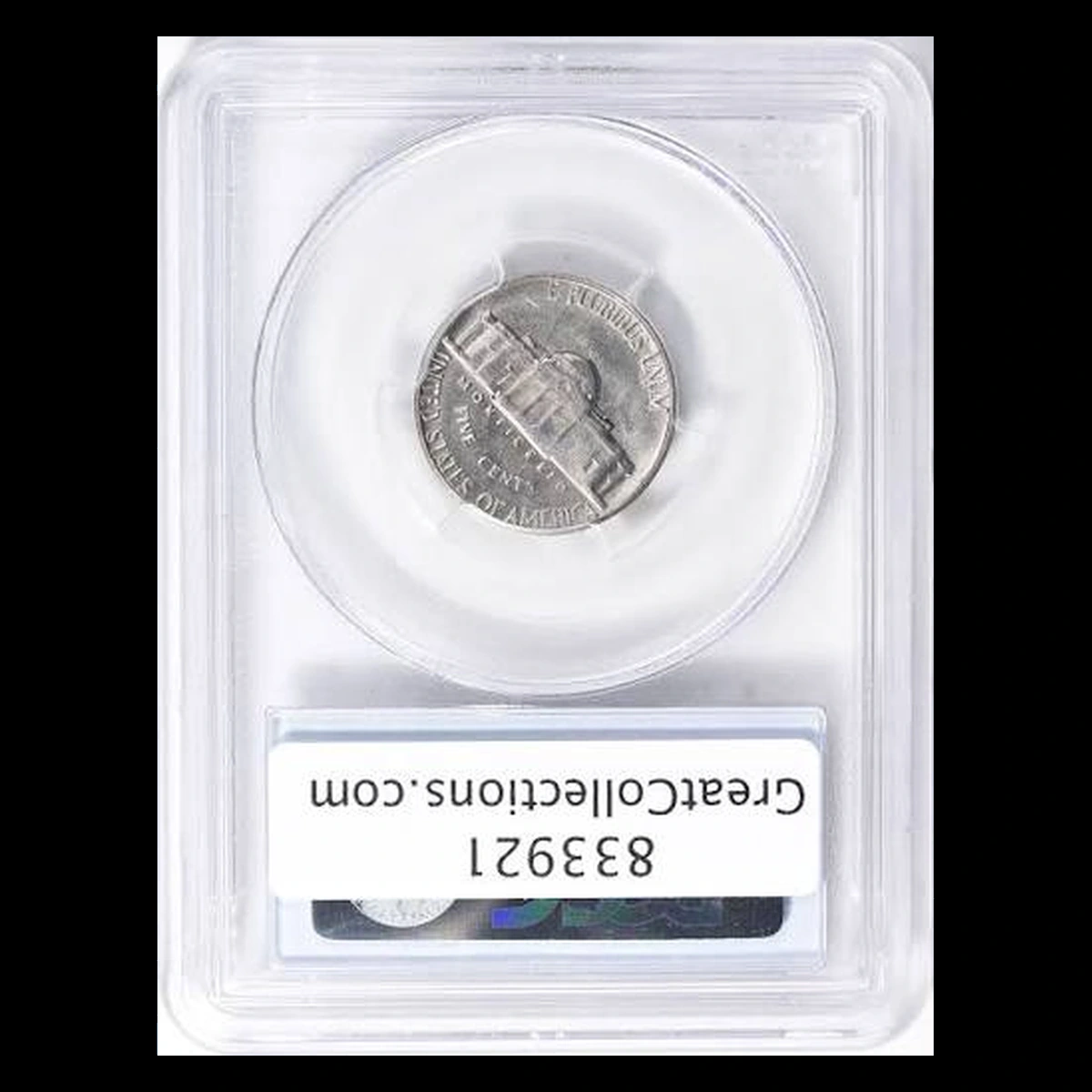
A die that turns out of its intended position changes the relationship between the two faces. The recorded 1966 NGC MS65 coin demonstrates the category, but its catalog supplies no exact rotation angle.
How to Identify
Hold Jefferson upright and flip top to bottom without twisting sideways. Repeat using a support that prevents slipping, checking whether the reverse returns to the same tilt.
Separately turned photographs do not prove rotation, and an auction companion cannot supply the missing angle. On loose coins, inspect the plain edge for joining seams and record the normal references of about 5 grams and 21.21 millimeters.
What It’s Worth
$20–$200 is an estimate for genuine collectible rotations. The MS65 coin sold with a rotated 2001-P nickel for a combined $118.45 in August 2010.
That is not an individual 1966 price. The 2001-P companion’s Full Steps designation also must not be transferred to the older coin.
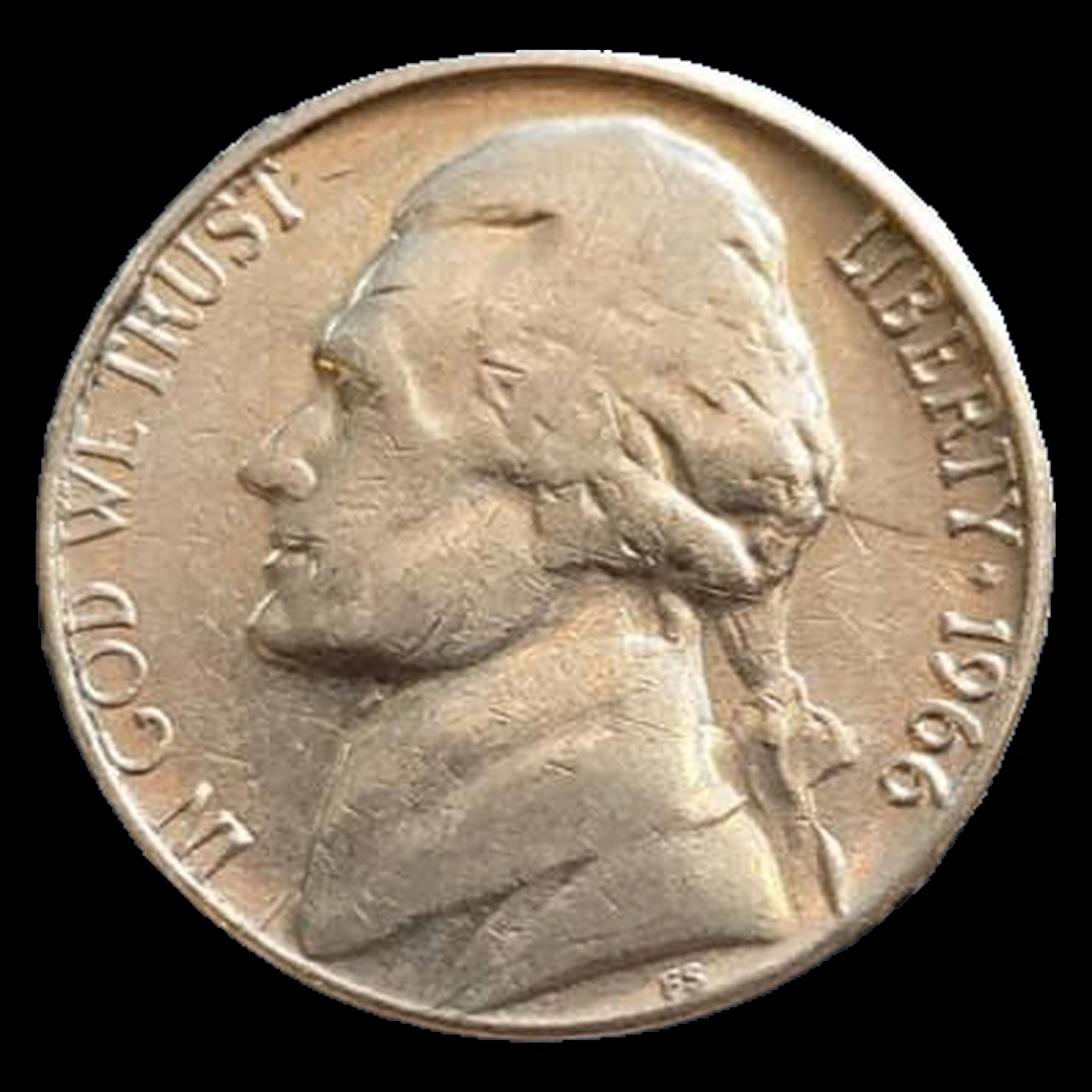
2. 1966 Nickel Letters and Building Details Repeat in Relief: Doubled Die Error
The reported reverse pattern affects UNITED STATES OF AMERICA, UNUM, and the right side of Monticello. Its extra outlines are described as becoming more separated toward the right.
How to Identify
Compare multiple features under consistent lighting, especially AMERICA and the building’s right side. A rounded repeated contour differs from a low flat shelf that narrows the original stroke.
Obverse doubling is also reported without a fixed attribution pattern or variety number. A reverse match cannot establish obverse doubling, and one thick date digit cannot fill the missing evidence.
What It’s Worth
$10–$250 is an estimated range for identified doubled dies. No certified sale is supplied for the obverse report, and flat movement doubling should not receive a recognized die variety’s premium.
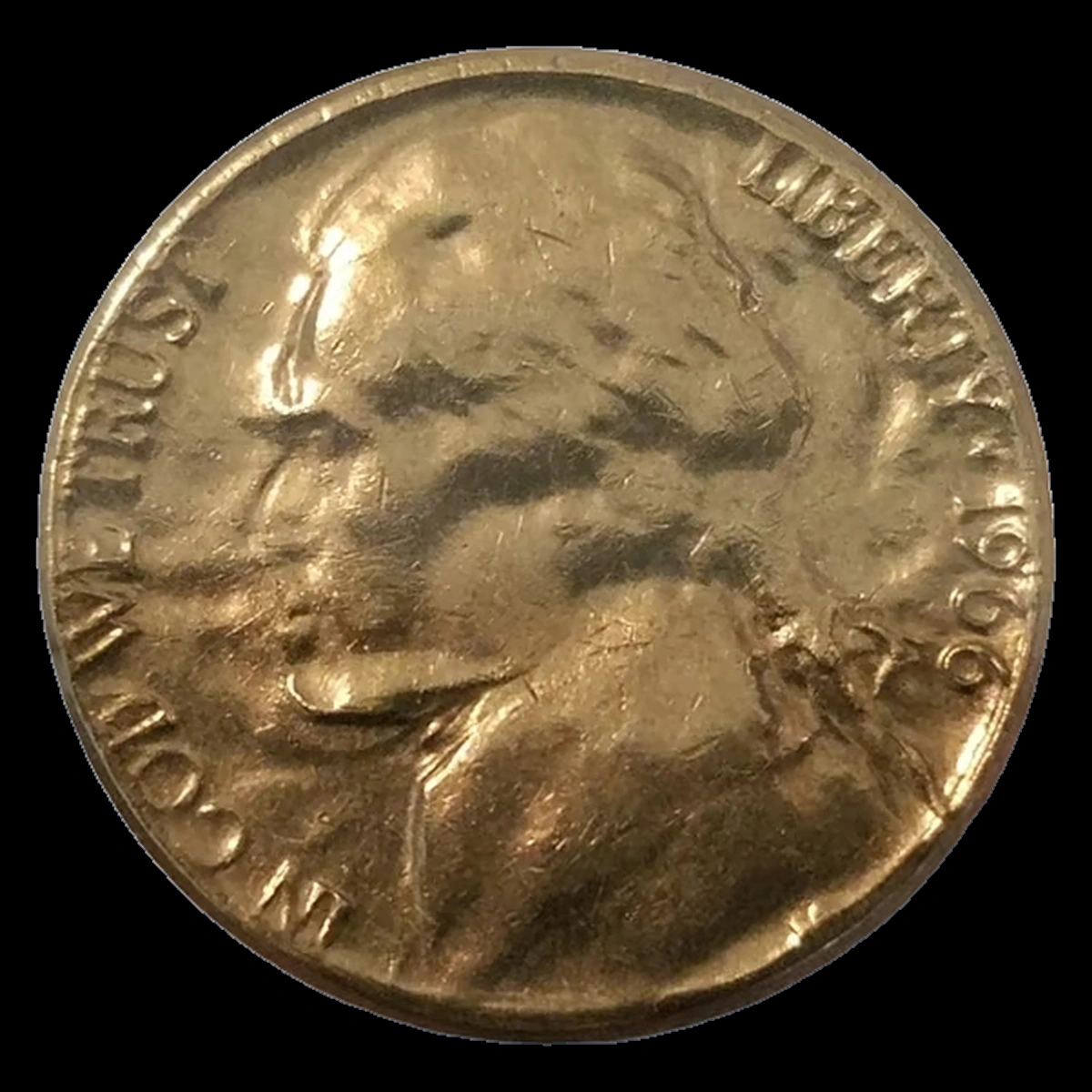
3. 1966 Nickel Jefferson Looks Stretched across Waves: Strike through a Thin Die Cap Error
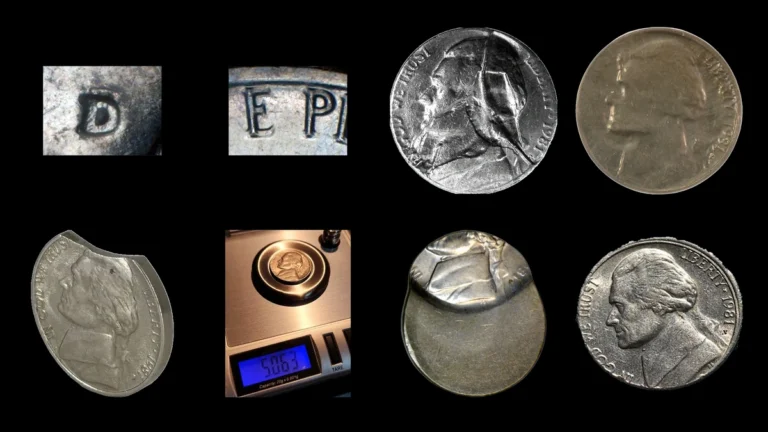
The illustrated collector coin has a wavy, distorted obverse opposite a normal reverse. Error specialist Fred Weinberg explained it as a late-stage capped-die strike involving a thin covering that shifted over the die.
A die cap is a coin stuck to the die, gradually thinned by further blows. The illustrated 1966 nickel received the altered impression through that covering; it was not itself the cap.
How to Identify
Compare both faces at the same scale and follow the waves under side lighting. Look for original strike texture rather than crushing, heat damage, or heavy cleaning.
The combination of portrait distortion and an unaffected reverse is more informative than a single weak letter. Match it to the illustrated collector discussion and specialist explanation.
What It’s Worth
$50–$600 is an estimate for a genuine 1966 thin capped-die strike. The illustrated coin was acquired in a five-coin lot without an individual price supplied, so it provides no separate sale result.
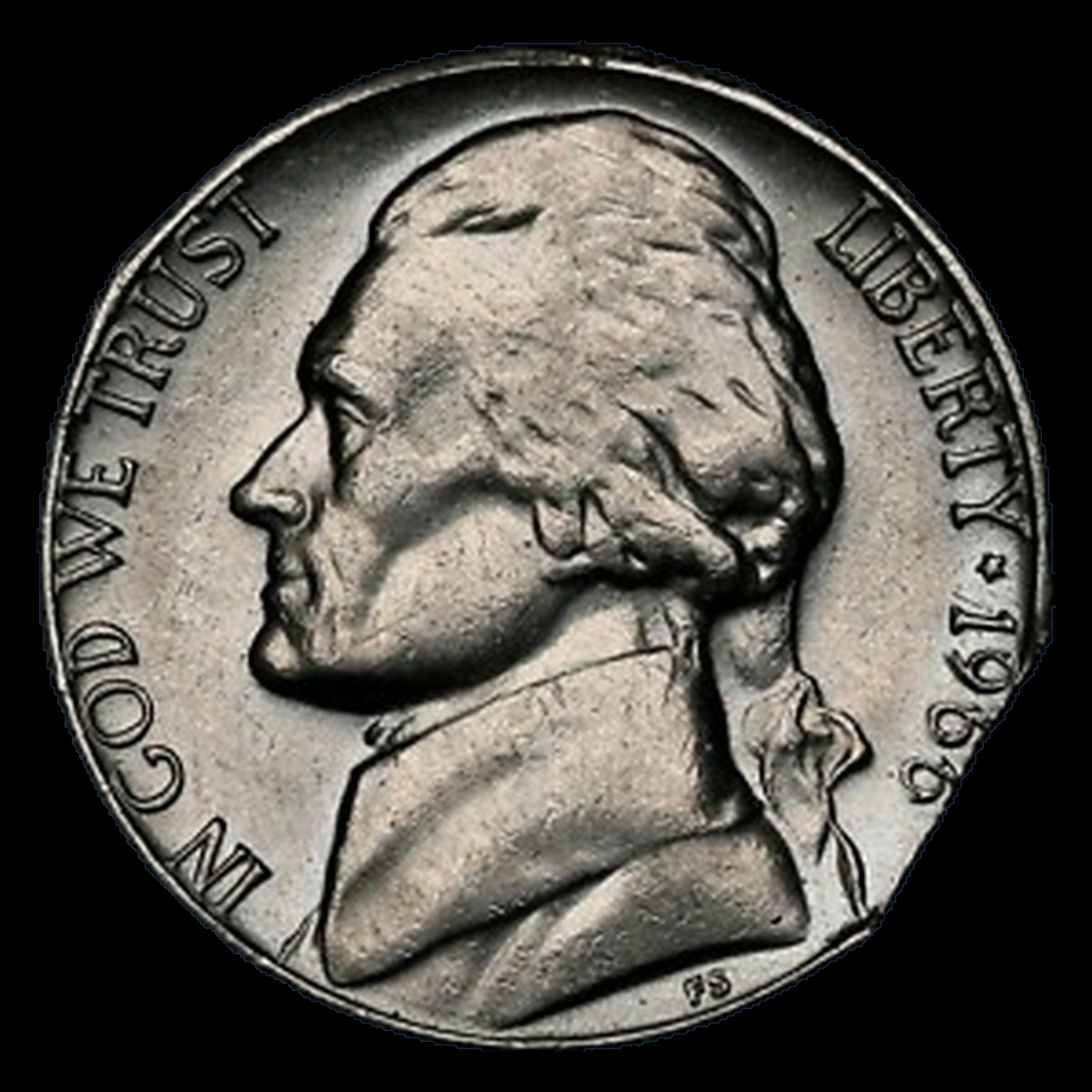
4. 1966 Nickel A Blanking Cut May Leave Metal Attached: Clipped Planchet Error
The recorded NGC MS62 specimen is an incomplete clipped planchet. Its blanking cut did not fully separate the affected metal, unlike a completed clip with an open gap.
How to Identify
Inspect the cut and its relationship to the struck design on both faces without moving the attached portion. The supplied catalog establishes no particular size, shape, or direction.
An incomplete cut can leave weight close to normal. For a separate complete clip, inspect the gap’s rim junctions and any opposite-rim weakness, while excluding saw and file marks.
What It’s Worth
$10–$300 is an estimate across genuine 1966 clips. The MS62 incomplete clip appeared in a five-coin lot sold for $460 in August 2010, which cannot be quoted as its individual price.
The other four coins do not establish this specimen’s missing descriptive details. A retained section can be collectible without being broken off.
5. 1966 Nickel The Full Design Fits inside a Larger Outline: Broadstrike Error
A blank can spread more widely when the collar fails to contain it during striking. A broadstrike keeps the intended portrait, building, and peripheral design on the resulting metal.
How to Identify
Follow the outer details on both faces and inspect the expanded area for hammer marks or crushed relief. Later flattening can increase diameter without creating an original broadstrike.
The 1966 report establishes no exact width, grade, or Special Mint Set finish. A smooth edge proves nothing by itself because ordinary nickels already have plain edges.
What It’s Worth
$30–$400 is an estimate for genuine examples with complete design and original surfaces. A 1974 MS64 broadstrike sold for $24 in August 2021, a different-year comparison showing that an unworn grade need not imply a high error price.
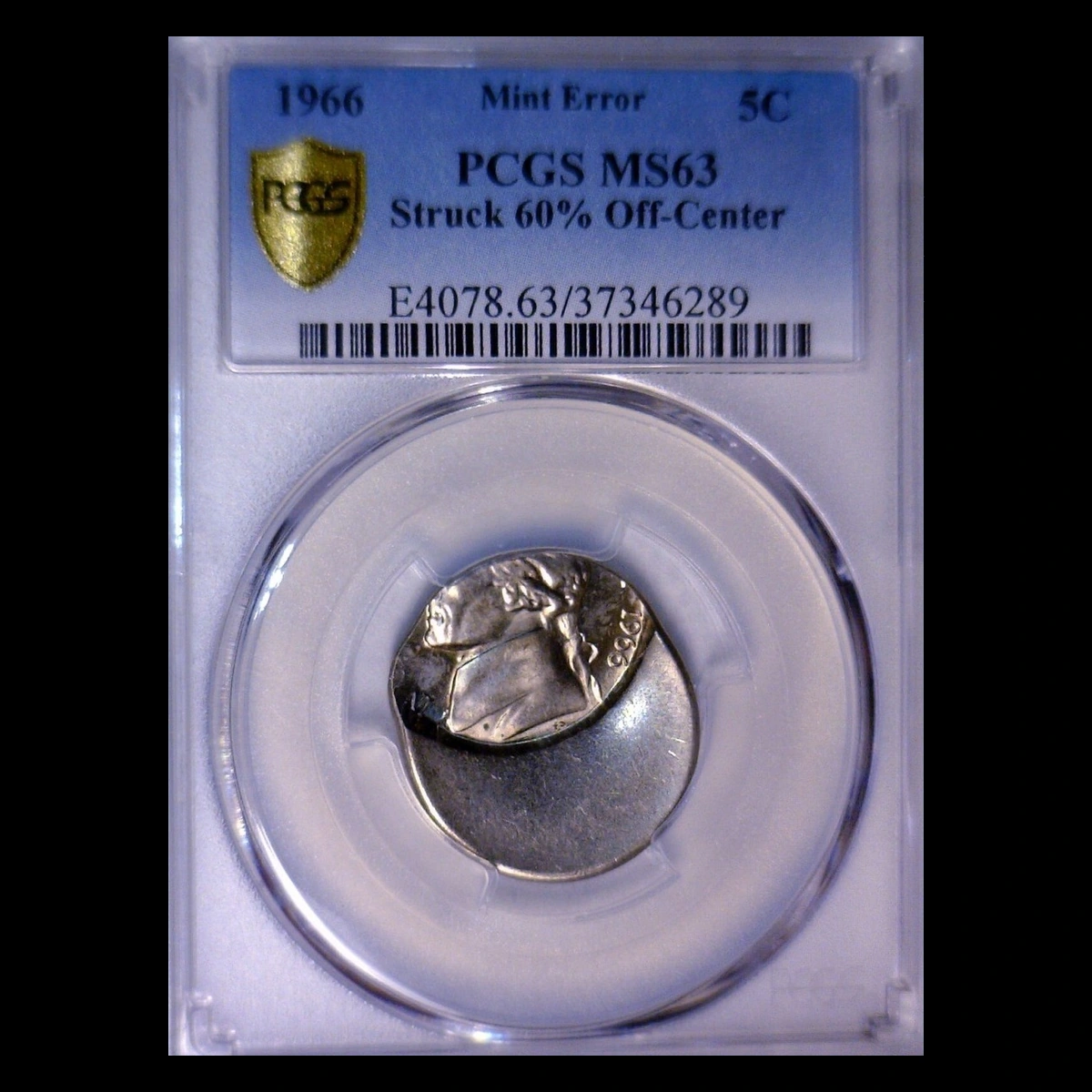
6. 1966 Nickel Bare Metal Opposes Design That Missed the Disk: Off-Center Strike Error
An off-center blank leaves part of the intended design beyond its outline and part of its metal untouched. The supplied 1966 category has no fixed percentage or direction.
How to Identify
Read the date and compare the displaced strike on both faces. A wide border containing complete design fits a different comparison, while a shift limited to one face may indicate die misalignment.
Inspect the apparently blank area for grinding and keep the whole outline visible in photographs. No mint mark is expected, and an undated fragment cannot be assigned to 1966 from Jefferson’s appearance alone.
What It’s Worth
$25–$700 is an estimate for genuine dated examples. A 1999-D nickel struck 65% off-center sold for $75 in September 2024; that later-year result illustrates why a dramatic offset does not automatically bring a four-figure price.
7. 1966 Nickel Thin Layers or Matching Fragments Separate: Lamination and Split Metal Error
One 1966 NGC MS65 nickel survives in three matching pieces housed together. A different AU58 specimen is represented by a very thin obverse fragment weighing 0.5 gram.
How to Identify
Compare the original struck face with the rough inner separation surface, excluding regular saw marks or machining. Keep loose pieces from rubbing together and leave any remaining attachment undisturbed.
Splits need not produce equal halves, as the 0.5-gram fragment demonstrates. These nickels are copper-nickel alloy throughout, not coins with a silver coating to peel away.
What It’s Worth
$10–$500 is an estimate spanning small laminations through more dramatic split pieces. The complete three-piece MS65 example brought $109.25 in August 2010, while the separate 0.5-gram obverse fragment sold for $159 in October 2022.
The first result covers the remains of one coin together. Fragment count is not a reason to multiply a whole-coin price.
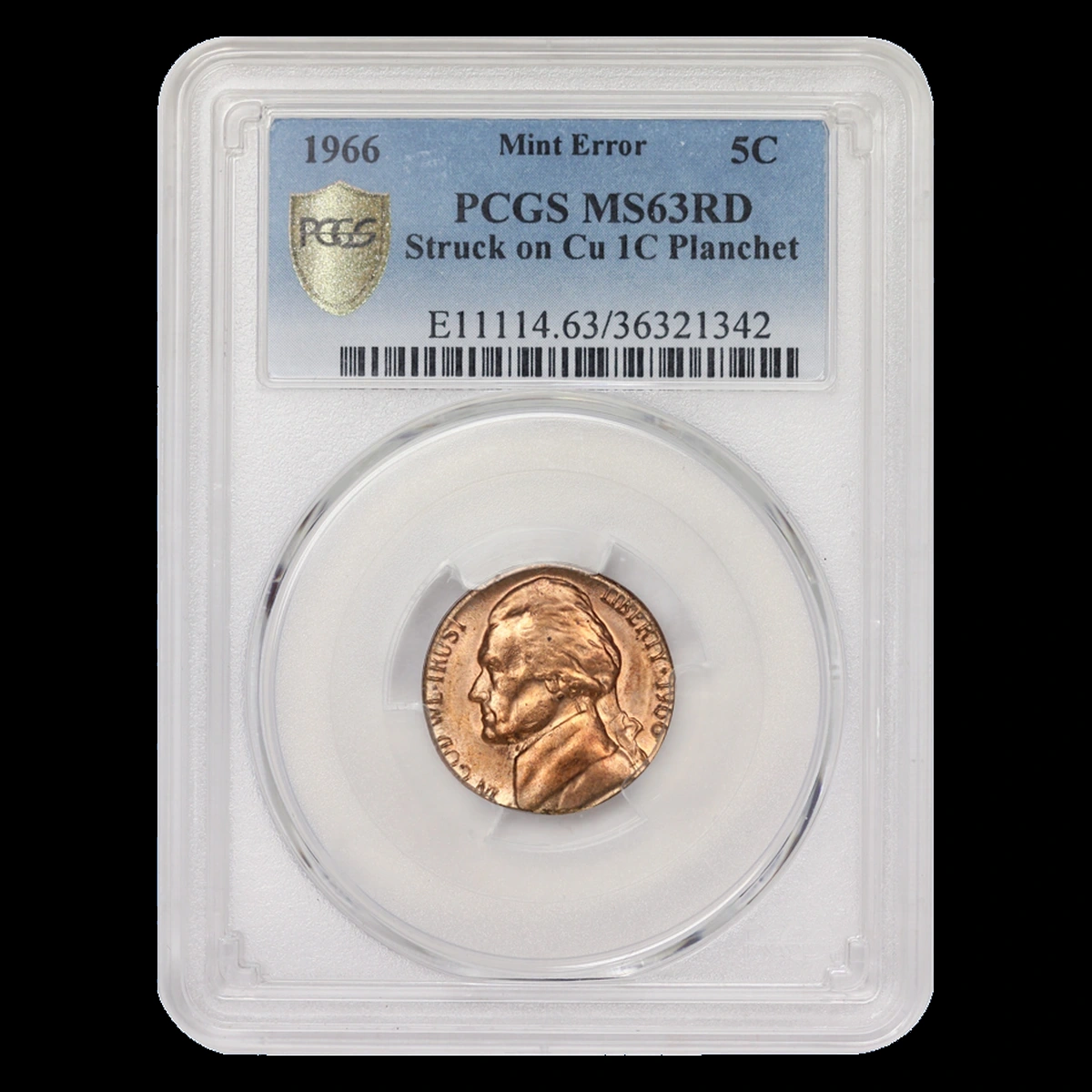
8. 1966 Nickel Copper-Rich Metal Carries the Larger Nickel Design: Cent-Planchet Strike Error
The documented NGC MS63 Red and Brown example weighs 3.1 grams. Its blank was intended for a cent, leaving less room than a nickel blank for the peripheral design.
How to Identify
Combine the small outline, weight, and original design relationship rather than relying on copper color. A contemporary cent blank normally began near 3.11 grams and 19.05 millimeters, with some spreading possible under the dies.
Inspect for plating or trimming and retain the visible 1966 date in photographs. Actual underlying Lincoln details would indicate a previously struck cent and require a different description from an unused blank.
What It’s Worth
$200–$1,000 is an estimate for genuine 1966 cent-planchet strikes. The 3.1-gram MS63 Red and Brown example sold for $552 in December 2025.
Readable identity and original copper surfaces support the comparison. A later copper coating on a normal-weight nickel does not qualify.
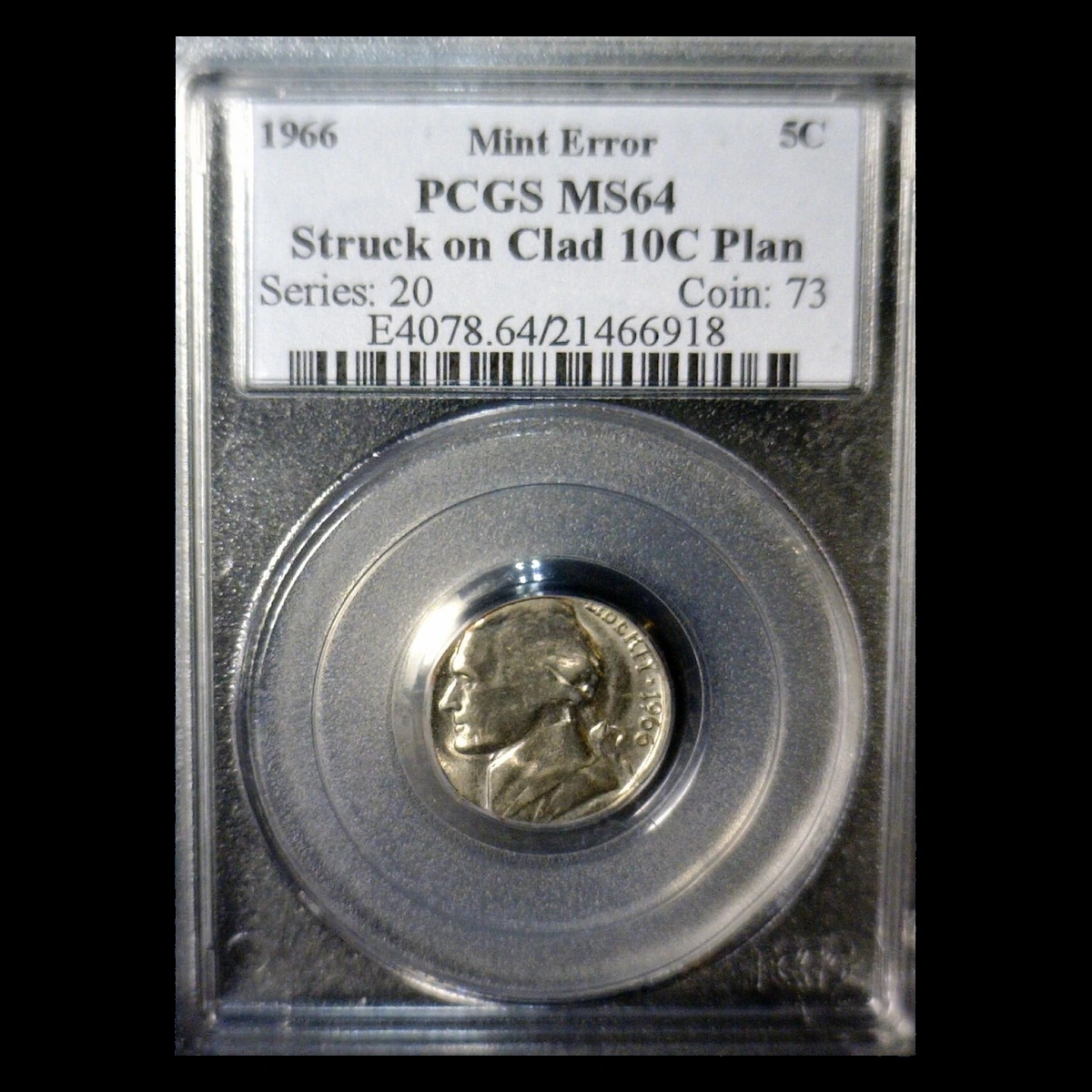
9. 1966 Nickel A Layered Dime Blank Loses Most Outer Lettering: Clad Dime-Planchet Strike Error
The recorded PCGS MS63 specimen retains most of its date but only fragments of the reverse’s outer wording. A smaller clad dime blank could not fill the nickel dies normally.
How to Identify
Look for a copper center between silver-colored outer layers and compare the naturally incomplete design. This construction differs from both a silver dime blank and a nickel’s uniform alloy.
A clad dime blank normally starts near 2.268 grams and 17.91 millimeters. The auction record supplies no measured specimen weight, so those standards must not be quoted as its actual measurement.
Check the edge for cutting and allow for spreading of the smaller disk during striking. Smoothness alone does not establish the material.
What It’s Worth
$300–$1,500 is an estimate for authenticated clad-dime-planchet examples. The PCGS MS63 coin sold for $862.50 in August 2006.
Its surviving date and unworn surfaces make it a useful identified comparison. A silver-planchet error would need its own composition and price assessment.
10. 1966 Nickel A Small Additional Design Sits near the Edge: Double Strike Error
The recorded PCGS MS65 nickel received another blow about 90% off-center. Its first design is nearly complete, while only a small portion of the second impression reaches the coin.
How to Identify
Identify actual lettering or design within the small second impression and inspect its relationship to the first strike on both faces. A dent in the same position cannot establish another blow.
The 90% figure describes second-strike displacement, not lost metal. The specimen’s auction companions were separate wrong-planchet errors and do not make this nickel a wrong-planchet coin.
What It’s Worth
$200–$1,800 is an estimate for genuine 1966 double strikes with identifiable impressions. The MS65 example appeared in a three-coin lot that sold for $1,200 in August 2022.
The other coins were a 1979 nickel on a cent blank and a 1966 quarter on a nickel blank. The lot total cannot be assigned wholly to the double strike or divided into unsupported equal individual prices.
Conclusion
A reliable 1966 nickel identification connects the unusual feature with the whole coin: the controlled flip, intact cut, matching fragments, or design that ran out of blank. No mint mark needs no special explanation for this year.
Preserve attached layers and recorded measurements, and compare the correct blank construction. Multi-coin lot totals and normal blank specifications should remain separate from individual sale prices and measured specimen weights.