Rare 1867 Nickel Errors (List & Pictures)
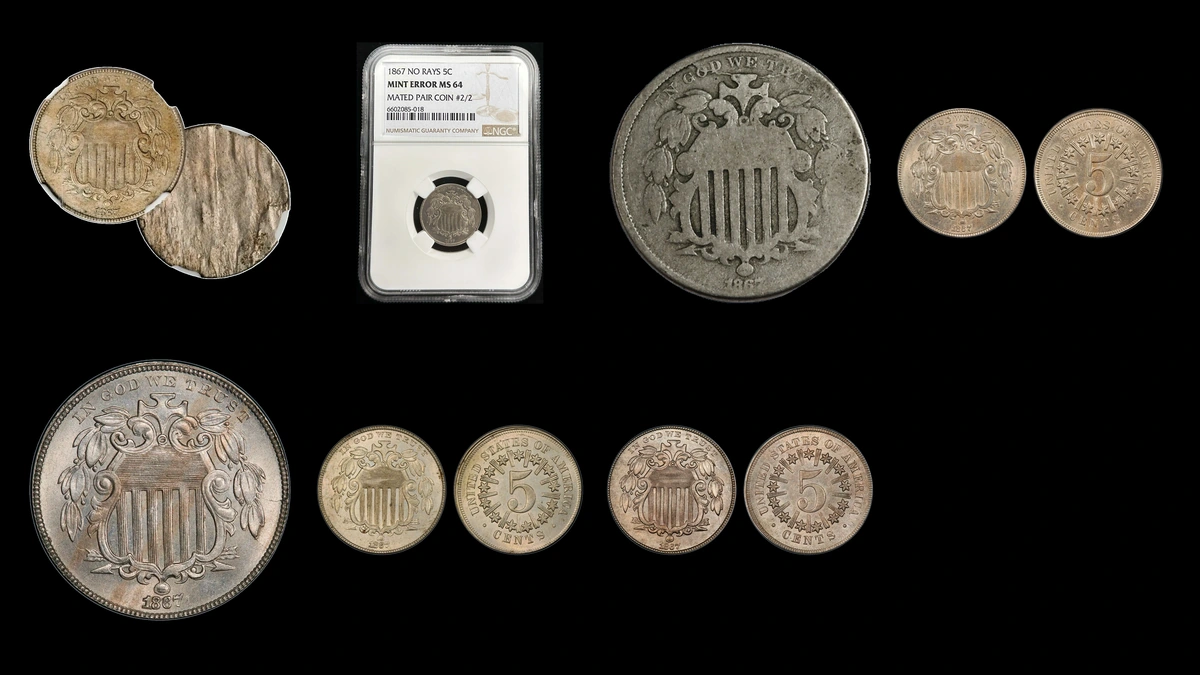
A matched pair of 1867 nickels sold for $10,800 in December 2022. Estimated values for 1867 Shield nickel errors span $15–$35,000, with pair estimates covering both pieces together.
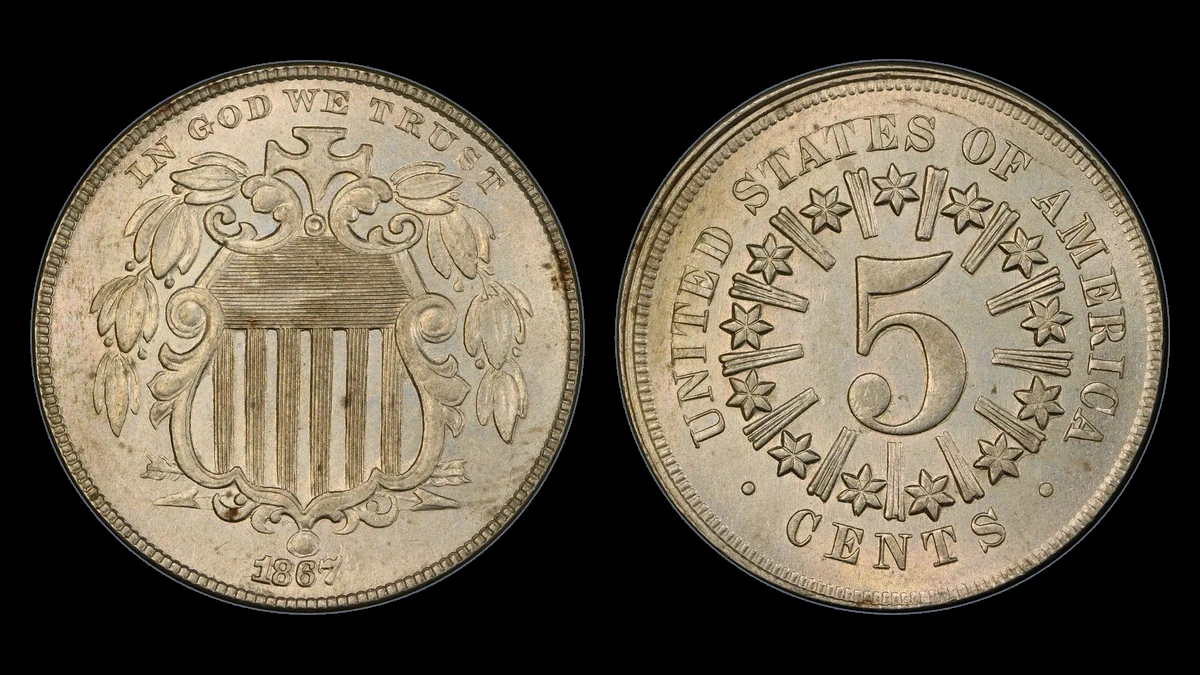
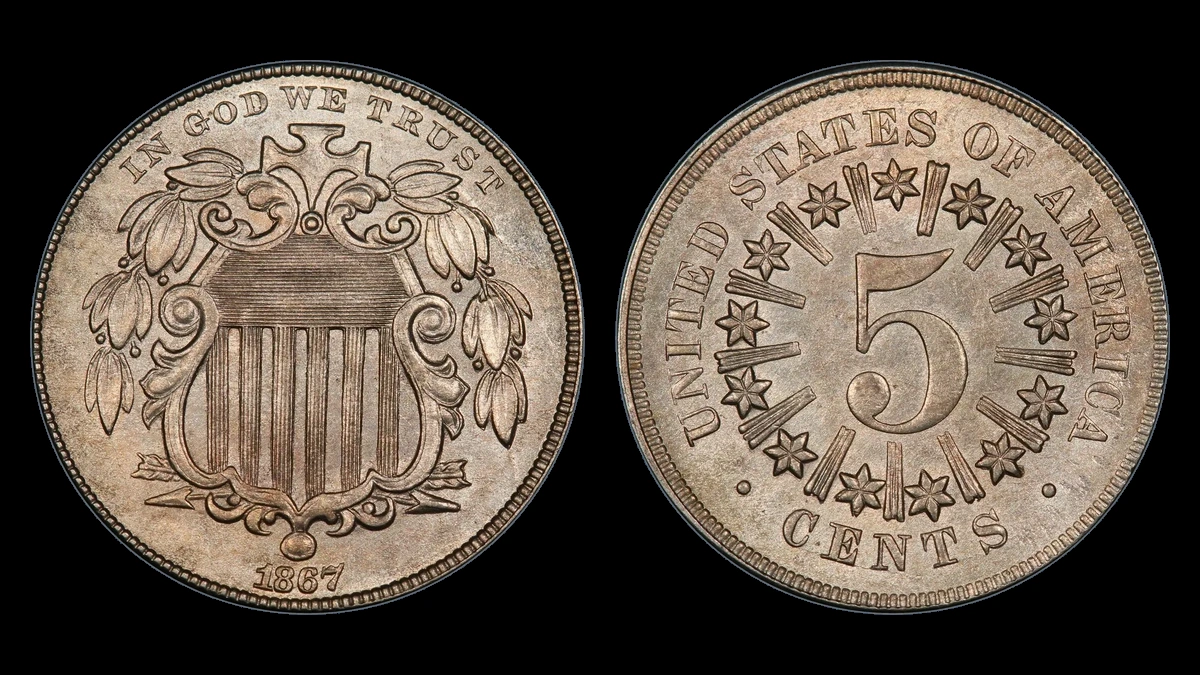
First identify the normal With Rays or No Rays reverse, then compare the outline, repeated impressions, fine die details and any matching companion.
| What changes? | Possible error or variety | Estimated range |
|---|---|---|
| Design displaced beside unused metal | Off-center strike | $500–$4,000 |
| A second impression crosses the first | Double strike | $1,500–$7,500 |
| Small bronze disk | Cent-blank strike | $5,000–$25,000 |
| Two thin layers of one coin | Post-strike split | $1,000–$6,000 per pair |
| Two coins with matching contact | Mated error pair | $10,000–$35,000 per pair |
| Raised lines or an edge patch | Die cracks or cud | $15–$600 |
| Opposite-face traces | Die clash | $20–$400 |
| Repeated design or date strokes | Doubled die or repunched date | $40–$2,500 |
| Numeral remnant near the shield | Misplaced date | $100–$3,000 |
| Reverse consistently turned | Rotated dies | $50–$750 |
A normal Shield nickel weighs about 5 grams and measures 20.5 millimeters across its plain edge. Both rays between the reverse stars and their absence are normal 1867 designs, so choose a reference with the same reverse before attributing a variety.
1. 1867 Nickel Unused Metal Beside Missing Design: Off-Center Strike Error
One misplaced blank can leave a crescent untouched while part of the design misses its opposite edge. A With Rays VF35 example is described as 10% off center.
A separate No Rays AU55 coin is 15% off center with a crack through its metal. That opening is different from a raised line copied from a cracked die.
How to Identify
Compare both faces for the same displaced-blank relationship. Check the edge for cuts that could have removed a normally struck design later.
On the cracked No Rays piece, inspect the opening from the face and side without flexing it. A wide rim alone does not establish an off-center strike.
What It’s Worth
The reported 10%–15% types have estimated whole-coin values of $500–$4,000. The No Rays metal crack is part of the same object’s valuation.
The 2020 Stack’s Bowers catalog identifies the With Rays VF35 example without a sale amount used here. The separate $4,025 double-strike result below should not directly price a single offset.
2. 1867 Nickel A Second Design at the Lower Left: Double Strike Error
The recorded With Rays coin first received a normal centered strike. Its second strike landed about 85% off center toward the lower left of that original design.
PCGS graded it XF40, indicating visible wear with substantial remaining detail. Two separate impressions explain its appearance better than doubled lettering does.
How to Identify
Locate the first design and readable date before tracing the second impression. Compare how the later blow crosses and flattens earlier detail on both faces.
Inspect the edge for a seam, solder or joining marks. A genuine second design should cross the same original metal, not an added piece.
What It’s Worth
Comparable double strikes are estimated at $1,500–$7,500. Remaining identification, clear overlap and surface condition guide the comparison.
The XF40 specimen sold for $4,025 on May 11, 2007, at Heritage. That historical result is not a current offer for every similar-looking coin.
3. 1867 Nickel A Bronze Disk Too Small for the Design: Cent-Blank Strike Error
Separate With Rays and No Rays nickels are reported on cent blanks. The smaller bronze disk leaves less room for the nickel’s outer details.
These errors require distinction from intentionally made copper trial coins. Copper color on an otherwise normal nickel cannot settle that question.
How to Identify
An 1867 bronze cent blank normally starts near 3.11 grams and 19 millimeters. Those standards are not recorded measurements of every reported example.
Inspect naturally cropped design, actual metal and the edge for plating or trimming. Striking may enlarge the blank, and a specialist should distinguish an accidental wrong blank from a trial piece.
What It’s Worth
Authenticated 1867 cent-blank nickels are estimated at $5,000–$25,000. No auction result is assigned to the separate reported With Rays and No Rays pieces here.
A 1906 Liberty nickel on a cent blank in MS63 Brown sold for $4,080 in September 2020. Its later design makes it a limited comparison for early Shield errors.
4. 1867 Nickel One Coin Separated into Thin Layers: Split After Striking Error
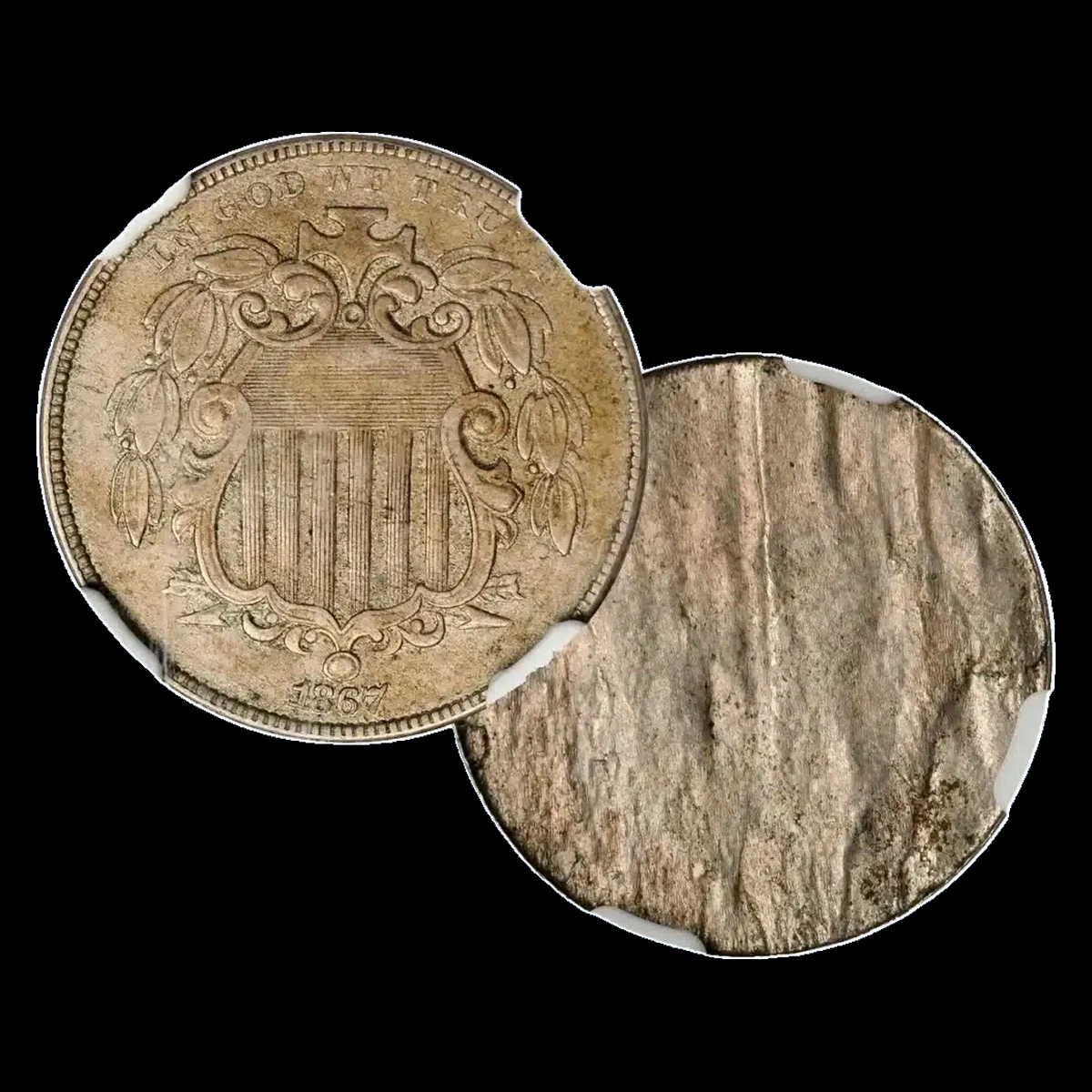
The reported 1867 split coin survives as both layers, graded NGC AU55. Each keeps one original struck face outside and exposes rough interior metal on the other side.
The separation developed through the thickness after the design was struck. Together the layers represent one original nickel.
How to Identify
Inspect the inward faces for rough natural separation rather than parallel saw cuts or polished flat surfaces. Compare their outlines without forcing the layers together.
Record each piece’s weight and use their combined total as a reference against a normal nickel. Support fragile edges and keep the original struck faces protected.
What It’s Worth
A complete authenticated matching split pair is estimated at $1,000–$6,000. Both pieces preserve evidence that one thin fragment cannot show alone.
No verified sale is used for the 1867 AU55 pair. A different-design 1917 Buffalo split pair, both pieces MS64, sold for $1,260 in June 2023.
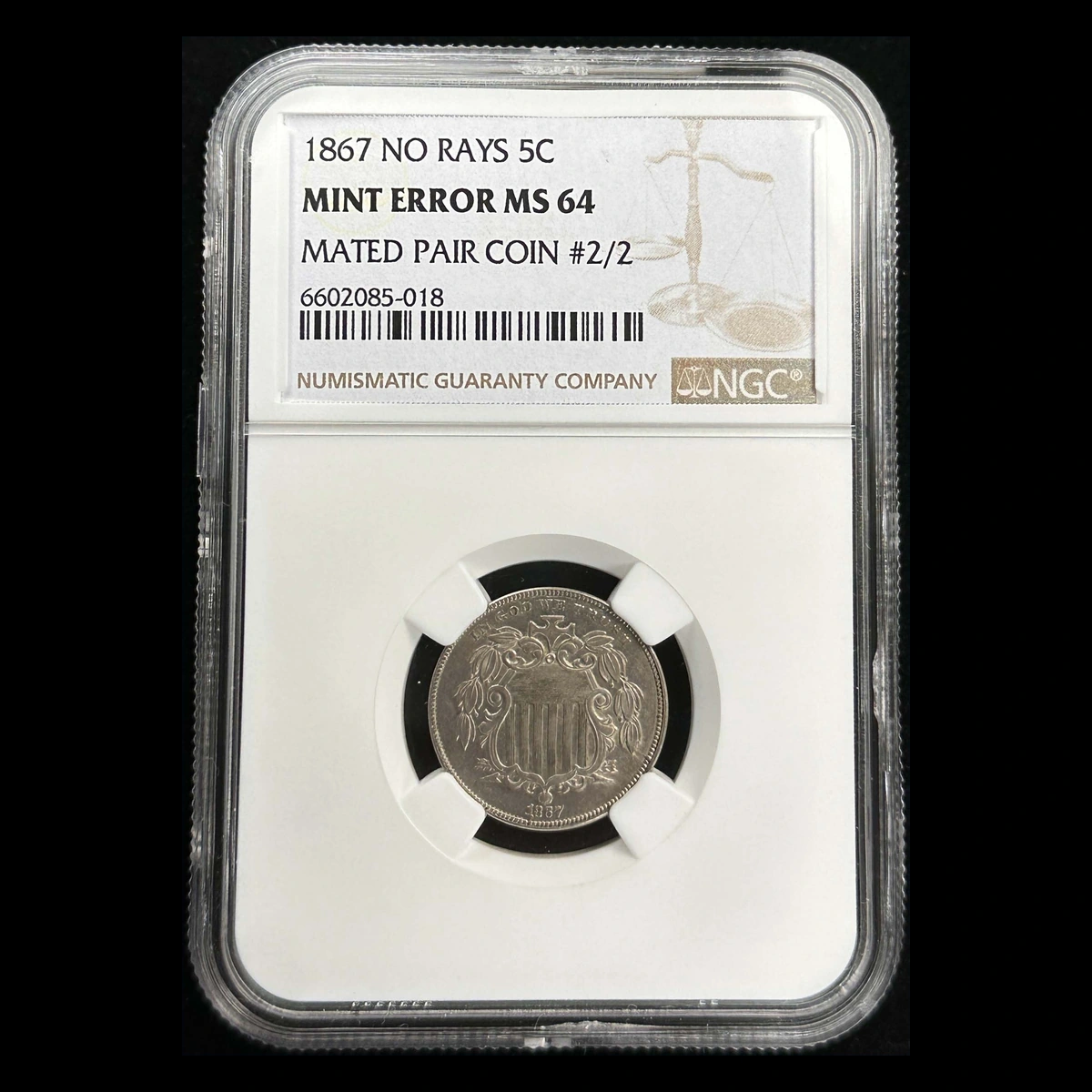
5. 1867 Nickel A Smaller Coin Matching Its Companion: Mated Error Pair Error
The smaller No Rays piece began on a blank intended for a three-cent nickel but first received a five-cent design. It was then struck again together with a normal nickel blank.
Its earlier design pressed a sunken backward image, called brockage, into the larger companion. Both coins were graded NGC MS64.
How to Identify
Compare the smaller coin’s outline and earlier nickel design with the depression in its companion. Do not press the pieces together to demonstrate the fit.
A three-cent nickel blank normally starts near 1.94 grams and 17.9 millimeters. These are type standards rather than actual recorded measurements for this expanded pair.
The three-cent connection identifies the blank, not an older three-cent design. Matching contact and backward detail must explain the two pieces’ shared event.
What It’s Worth
The complete pair has an estimated range of $10,000–$35,000. The upper figure is an estimate, not a documented later sale.
The pair sold for $10,800 including buyer’s fee on December 21, 2022. The smaller blank’s identity was established afterward.
Do not divide the total into two assumed equal values. Keeping both coins together preserves the matching evidence behind the combination.
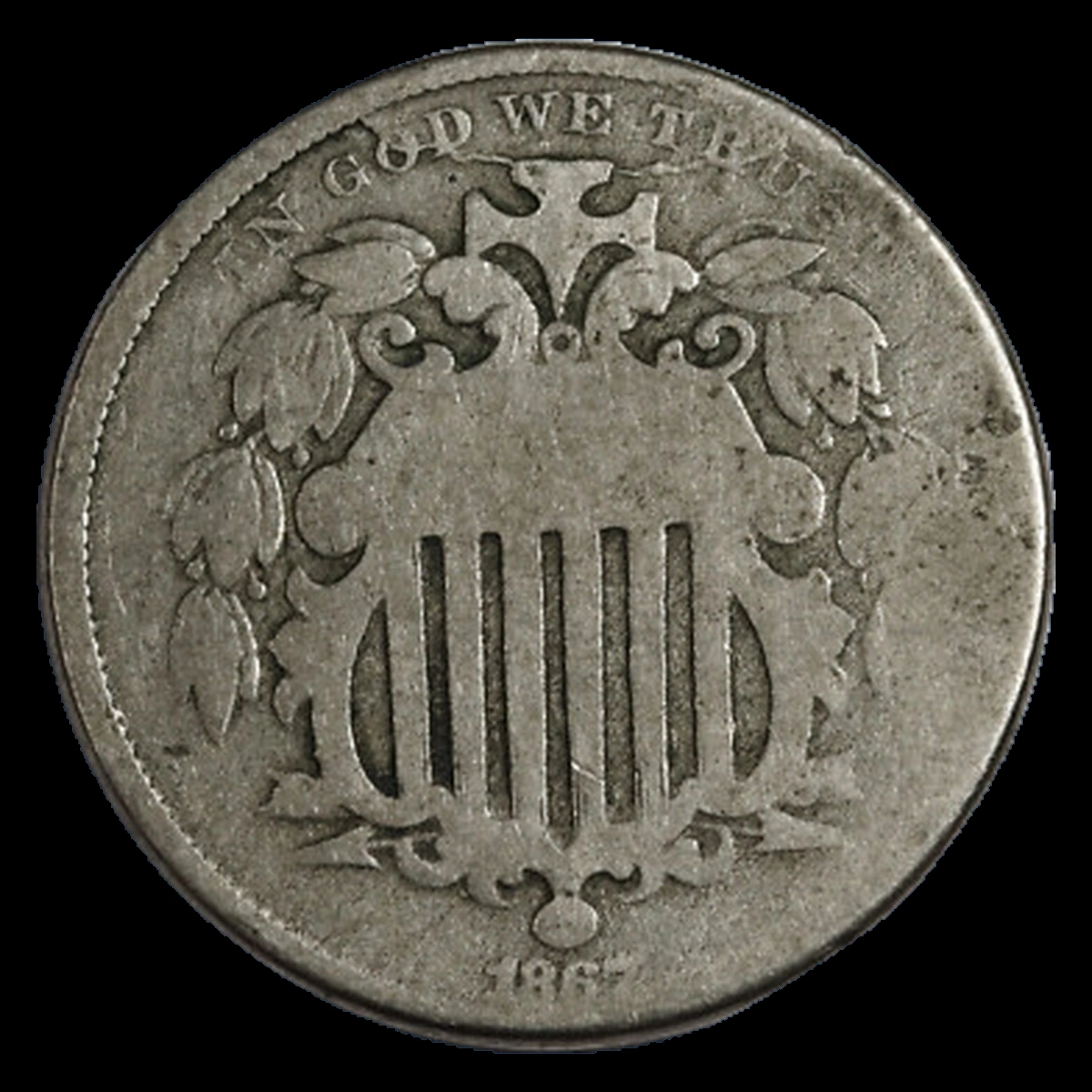
6. 1867 Nickel Raised Shield Lines or a Rim Patch: Die Cracks and Breaks Error
Metal entering a cracked die can form a narrow ridge on the coin. Reported paths include the ball below the shield, the lower left, and the area from OD in GOD toward the cross.
These are separate patterns. A No Rays example also has a rim-connected raised break above ED in UNITED, known as a cud.
How to Identify
For the No Rays cud, follow the patch to the rim above ED. Check for an adjacent impact or added material that could imitate extra original metal.
For a narrow line, inspect whether its center rises above the surface. A scratch may have raised sides while remaining cut into the middle.
What It’s Worth
Minor cracks on worn coins are estimated at $15–$150, and genuine No Rays rim-connected breaks at $75–$600. These are whole-coin estimates.
No specific 1867 cud sale is claimed. A fine line should not receive the value of a substantial missing-die section.
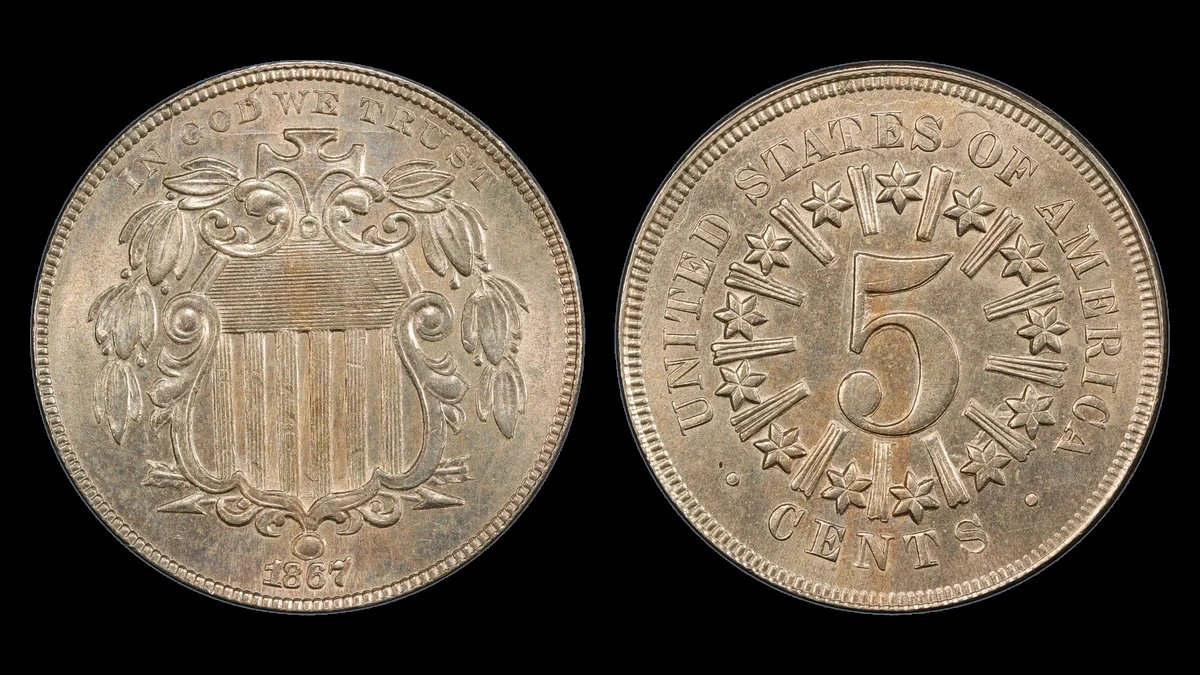
7. 1867 Nickel Shield-Like Traces Beside the 5: Die Clash Error
Extra bars near the reverse 5 may reflect shield detail from the opposite die. Other reported traces follow the lower shield, its ball-shaped base or the date.
The dies can strike each other without a blank between them, then transfer the resulting damage to later coins. Both normal 1867 reverse designs have reported clashes, sometimes with displaced traces.
How to Identify
Compare the extra shapes with the opposite design and inspect both faces. Recognizable shield fragments provide stronger evidence than a single random line.
Parallel polishing streaks and scratches do not necessarily follow another design. A deeply impressed backward image or a second complete strike calls for a different explanation.
What It’s Worth
Recognizable clashes are estimated at $20–$400 across ordinary collectible examples. The range includes the underlying coin and its condition.
It is not a sale assigned to a specific 1867 specimen. Clear traces help, while preservation and the With Rays or No Rays type remain important.
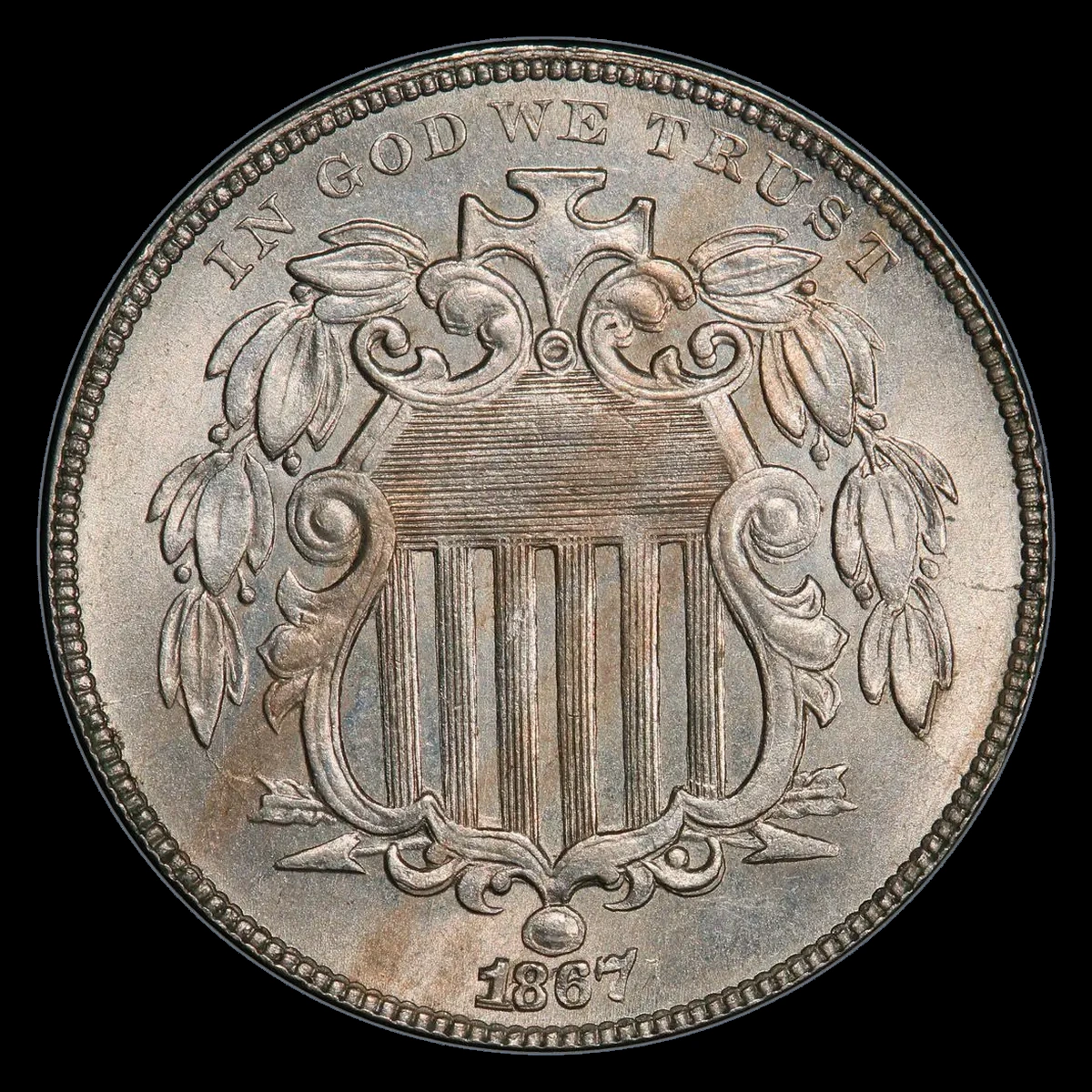
8. 1867 Nickel Repeated Motto and Shield Detail: Doubled Obverse Error
Reported With Rays varieties have rounded separation in the motto and small loop above the shield, spreading toward the lower right. No Rays varieties have their own patterns, including split motto-letter ends.
A doubled die already carries the repeated design. One normal coin strike can therefore reproduce both outlines.
How to Identify
Select a reference for the same reverse type before matching the obverse. Compare several affected motto letters and shield details rather than one thick stroke.
Flat shelves from movement during striking differ from rounded separation. Doubling confined to the date may instead involve repeated date punching.
What It’s Worth
Identified doubled-obverse varieties are estimated at $40–$2,000. Strength of separation, correct attribution and preservation guide the comparison.
An 1875 FS-101 in MS63 sold for $780 in August 2021. This is a different-year Shield comparison, not a sale of an 1867 variety.
9. 1867 Nickel Earlier Strokes Beside the Date: Repunched Date Error
Extra remnants near the upper left of 18 or left of 67 can record repeated date punching into the die. Different arrangements need separate comparisons.
A specialist identifies one wide-spaced With Rays variety as smaller nickel numerals over an earlier larger Seated-dime date punch. That explanation concerns the tool used for the date, not a dime metal blank.
How to Identify
Inspect all four digits and trace the earlier strokes into plausible numeral shapes. For the large-and-small overlap, compare size and spacing with the specialist’s photograph.
Neither color nor a stray line establishes a dime-related blank. These date-punch features belong on otherwise normal nickel metal.
What It’s Worth
Clearly identified repeated-date examples are estimated at $40–$2,500. Faint worn remnants and sharply preserved unworn varieties need different comparisons.
An 1871 repunched-date MS66 sold for $4,148 in July 2026. That different-year, high-grade result does not establish a price for the 1867 large-and-small date overlap.
10. 1867 Nickel A Numeral Away from the Date: Misplaced Date Error
A punch applied to the wrong part of a die can leave a small digit fragment near the shield. One report places the foot of a 1 at the ball’s lower-left side.
Another describes a misplaced 1 near the lower shield and upper ball. Those are separate arrangements, and the normal date can remain in its usual position.
How to Identify
Compare the ball and shield with a normal With Rays coin under the same light. Distinguish their intended contours from any extra straight foot or numeral-shaped stroke.
Keep the normal date visible in a wider image. A wandering raised crack or isolated bump cannot replace a matching misplaced-numeral photograph.
What It’s Worth
Identified misplaced-date With Rays examples are estimated at $100–$3,000. The upper end assumes excellent preservation and convincing visible evidence.
No sale is assigned to the reported misplaced 1. The related 1871 repunched-date market involves both a different mechanism and a different year.
11. 1867 Nickel A Reverse That Remains Turned: Rotated Dies Error
A die that turns from its normal position can change the relationship between otherwise complete designs. A With Rays 1867 example is reported without a measured angle.
The useful evidence is a controlled flip of the same coin. Independently turned photographs cannot establish its rotation.
How to Identify
Hold the shield upright against a reference and flip the coin top to bottom without twisting sideways. The 5 should normally finish upright.
Repeat and measure a consistent deviation, checking the edge for a seam from joined halves. Keep the reference visible through both positions.
What It’s Worth
A substantial confirmed rotation on a genuine With Rays coin is estimated at $50–$750. Small shifts may add little beyond the normal coin’s value.
A 2015-D Jefferson nickel with a 90-degree rotation sold for $79 in October 2021. That modern result illustrates an obvious turn, not the price or angle of the early Shield example.
Conclusion
The reverse type comes first on an 1867 Shield nickel because With Rays and No Rays are both normal designs. Then follow the evidence from original metal and strike placement to smaller date or die features.
A split pair and two coins from one accident tell different stories, but both benefit from staying together. Preserve their matching surfaces and use one complete-pair valuation rather than assigning the total to each member.