Rare 1899 Nickel Errors (List & Pictures)
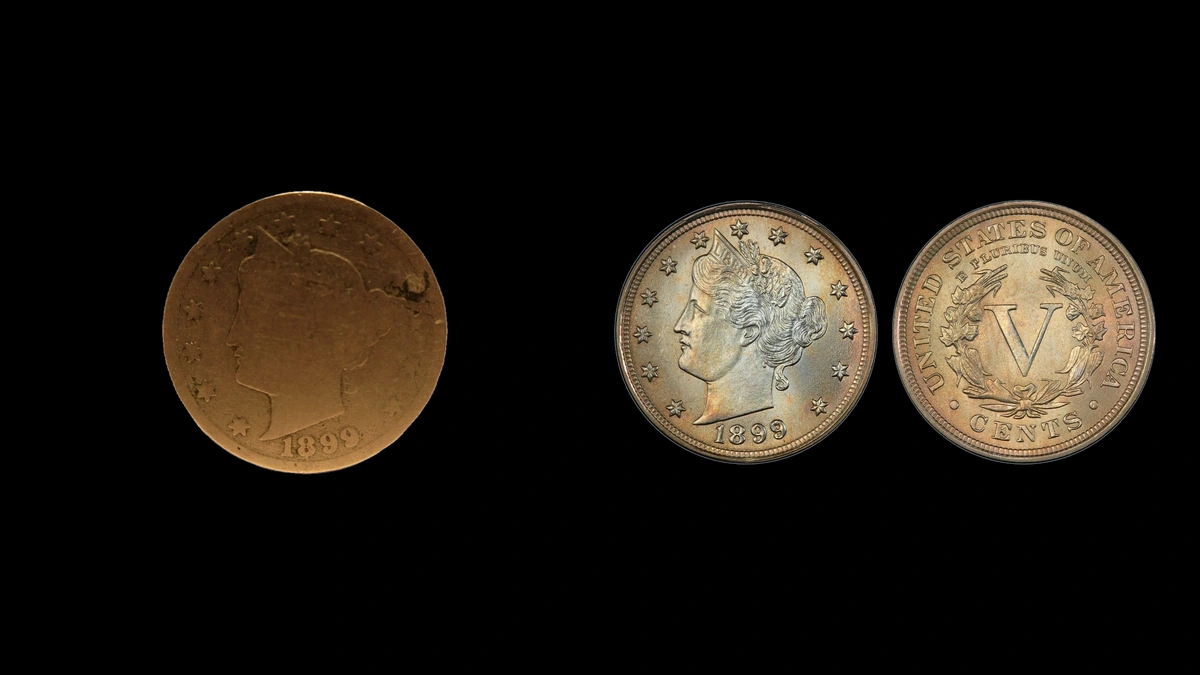
A 1907 Liberty nickel on a cent blank sold for $5,280, providing a different-year comparison for a known 1899 example. Estimated values for 1899 Liberty nickel errors range from $5–$8,000.
Inspect the edge and exposed metal before comparing displaced designs or the small extra strokes of a repunched date.
| Clue | Possible error or variety | Estimated range |
|---|---|---|
| Local peel or thin front half | Lamination or post-strike split | $10–$400 |
| Gap in the outline | Clipped blank | $25–$600 |
| Unused solid crescent | Off-center strike | $100–$2,000 |
| Small copper disk with nickel designs | Cent-blank strike | $2,000–$8,000 |
| Raised line or rim patch | Die crack or cud | $5–$500 |
| Extra outline on the last 9 | Repunched date | $20–$300 for intact examples |
The normal 1899 nickel weighs 5 grams and measures about 21.2 millimeters, with a plain edge. Its copper and nickel form one alloy throughout, so a natural split is not the loss of a normal plated coating.
1. 1899 Nickel A Peel or a Coin with No Normal Reverse: Lamination and Split Error
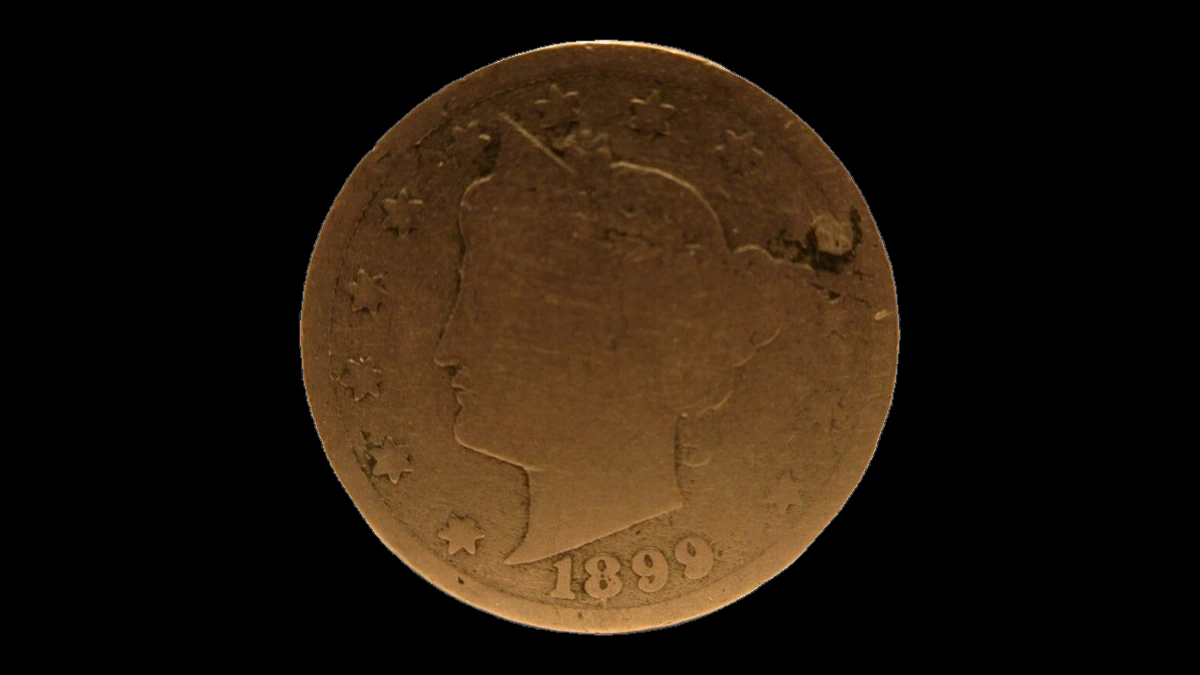
The documented split specimen retains Liberty and the date but has an exposed interior where the wreath and V should be. It is the front half of a coin that separated after striking.
NGC graded the 2.6-gram piece VF25, and its date also matches FS-301. Smaller surface peels, called laminations, arise from similar internal weakness without necessarily dividing the whole coin.
How to Identify
Examine the exposed face for irregular natural separation rather than smooth grinding or evenly spaced saw lines. A thin split piece may retain nearly the original diameter despite substantial weight loss.
For a local peel, trace the boundary without pulling the flap. Light weight supports missing material but cannot establish how it separated.
What It’s Worth
Small original peels are estimated at $10–$150, while comparable circulated detached halves are estimated at $75–$400. Remaining design and freedom from later damage matter.
The 2.6-gram VF25 front half sold for $109 on January 2, 2023. It was one piece with a repunched date, not a matching two-piece set.
2. 1899 Nickel A Missing Section of the Outline: Clipped Blank Error
A blank can begin incomplete when its cutting punch overlaps an earlier hole, the strip edge or damaged metal. The design then forms around that shortage.
A curved opening is only one possible outline. A later cut can imitate the shape without having the same relationship to the original strike.
How to Identify
Photograph the opening from above and from the side. Look for softened rim or lettering beside it rather than fresh cutting through completed detail.
Weakness opposite a clip is a supporting clue sometimes called the Blakesley effect. It may be faint, so inspect the opening itself for filing or saw marks too.
What It’s Worth
Verified 1899 clips are estimated at $25–$600. A small worn example and a larger well-preserved piece need different comparisons.
A cleaned 1911 Liberty nickel with two curved clips was offered at $195. That was a dealer asking price for another year, not a completed 1899 result.
3. 1899 Nickel Design Beside Unused Metal: Off-Center Strike Error
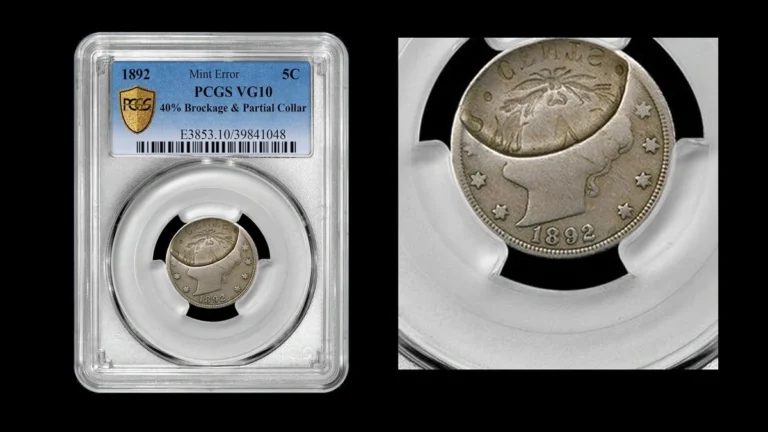
The documented ANACS VF20 example is about 40% off center. Its blank sat away from the dies’ intended center, leaving part of each design outside the metal.
The remaining light-gray surfaces showed even wear. The smooth crescent is still present metal, unlike an opening created by a clip.
How to Identify
Compare both faces and locate the boundaries between struck detail and unused metal. A shift on only the front with a centered reverse can indicate a misaligned die instead.
Check for edge trimming and ground-away detail. Read enough of the actual date to establish 1899 rather than letting a seller’s label complete missing digits.
What It’s Worth
Ordinary comparable offsets are estimated at $100–$2,000. Condition, displacement and a readable date all affect the result.
The approximately 40% ANACS VF20 coin sold for $575 in September 2002. A different-year 1903 nickel with a 65% shift in MS64 brought $2,875, reflecting both stronger displacement and unworn preservation.
4. 1899 Nickel Liberty and the V on Copper: Cent-Blank Strike Error
A blank intended for a copper cent is too small to hold the full nickel design. An 1899 Liberty nickel of this type is known in PCGS AU58.
Mint Error News featured that slightly worn piece in an April 2020 auction preview. Its appearance establishes a documented example, but no completed price is supplied here for it.
How to Identify
A period cent blank starts around 3.11 grams and 19 millimeters. These are comparison standards rather than measured figures for the illustrated AU58 specimen.
Inspect the edge and naturally cropped outer design alongside the candidate’s own metal and measurements. Copper coatings or a ground-down perimeter can imitate some clues.
The featured AU58 coin should be compared as a genuine smaller blank struck by nickel dies. Brown color alone does not establish that sequence.
What It’s Worth
Authenticated cent-blank examples are estimated at $2,000–$8,000. Readable identity, preserved surfaces and confirmed wrong metal are central to the range.
A 1907 Liberty nickel on a cent blank sold for $5,280 in April 2020. Its different year prevents that result from serving as the recorded 1899 coin’s own sale.
5. 1899 Nickel Raised Lines or a Rim-Connected Lump: Die Cracks and Cuds Error
A narrow opening in a die can fill with metal and leave a raised crack line. A larger missing section at the edge can leave a smooth patch called a cud.
The coin gains raised metal at the affected area rather than losing a bite from its outline. No single location is established for all 1899 examples.
How to Identify
Determine whether the mark rises above the original surface. A scratch typically has a cut center, even if displaced metal stands beside it.
For a cud, follow the patch all the way to the rim and inspect for solder, deposits or a crushed edge. Reduced detail opposite a large patch may help, but does not replace the rim and surface evidence.
What It’s Worth
A worn coin with a modest original crack is estimated at $5–$50. A verified prominent cud has a separate estimated range of $50–$500.
The lower range may mostly reflect the nickel’s ordinary value. A fine line, corrosion bump or added metal should not inherit the premium for a major original break.
6. 1899 Nickel Extra Curves on the Last 9: Repunched Date Error
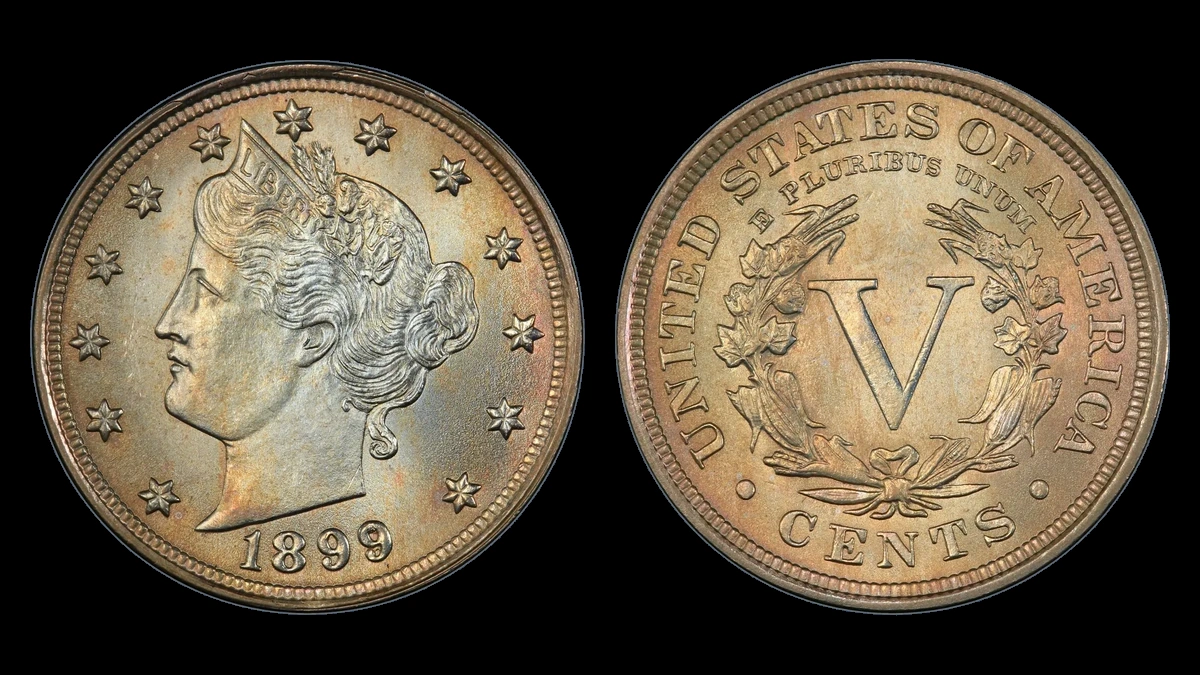
FS-301 preserves traces from an earlier placement of the date punch. The final 9 can carry small extra contours left when the later impression did not erase the first completely.
The name 1899/9 describes repunching, not a change between two years. Every coin made from the affected die could repeat that date feature.
How to Identify
Compare the last 9 with a pictured FS-301 example. The raised contours should agree in shape and spacing rather than merely show a bright edge.
Distinguish those curves from cuts and flat shelves caused during striking. A very light coin also needs a separate physical explanation, even if its date pattern matches.
What It’s Worth
Intact repunched-date coins are estimated at $20–$300 across worn through moderately marked unworn examples. Their ordinary condition value is included.
The split FS-301 front half discussed earlier sold for $109. That is the same combined-feature specimen, not a separate $109 date-variety payment to add to it.
Conclusion
An 1899 nickel’s unusual appearance may begin with the date punch, the blank or the position of the strike. The surviving design and original metal boundary provide better guidance than color or a seller’s label alone.
The known split front half also shows why combined features need one valuation. Preserve attached flakes, photograph both faces and the edge, and keep a different-year comparison or dealer asking price attached to its actual context.