Rare 1968 Dime Errors (List & Pictures)
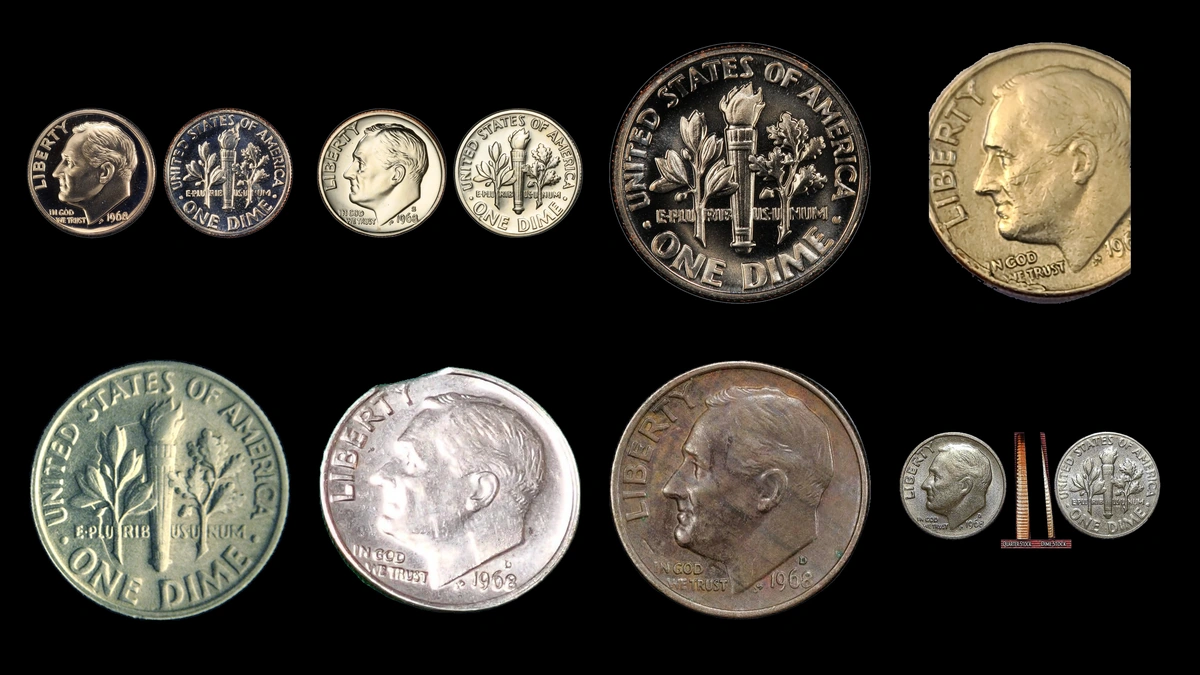
An ordinary Philadelphia 1968 dime normally has no mint mark. The valuable No S error is a Proof, whose San Francisco mint letter should have been present.
Estimated values for 1968 dime errors span $5–$50,000, with the No S Proof reaching $48,875 at auction. Establish finish and mint identity first, then compare repeated details, raised marks, missing or separated metal, and unusual blank composition.
| Clue | Category | Estimated range |
|---|---|---|
| Authentic Proof with untouched empty S position | No S Proof | $15,000–$50,000 |
| Extra mint-letter or design outlines | Repunched mint mark or doubled die | $10–$500 |
| Raised line, rim lump, or opposing-design trace | Crack, cud, or clash | $5–$150 |
| Original gap in the outline | Clipped planchet | $20–$150 |
| Blank crescent beside lost design | Off-center strike | $40–$500 |
| Thin detached face or hinged layer | Split after striking or clamshell | $50–$300 |
| Copper face with an absent outer layer | Missing clad layer | $50–$500 |
| Partial design on irregular metal | Struck fragment | $100–$600 |
| Thick, heavy dime-size body | Quarter-stock error | $300–$1,000 |
| Incorrect foreign alloy | Foreign planchet | $1,500–$5,000 |
| 2.5-gram body in 90% silver | Old silver planchet | $3,000–$10,000 |
1. 1968 Dime A Genuine Proof Has No S above the Date: Missing Mint Mark Error
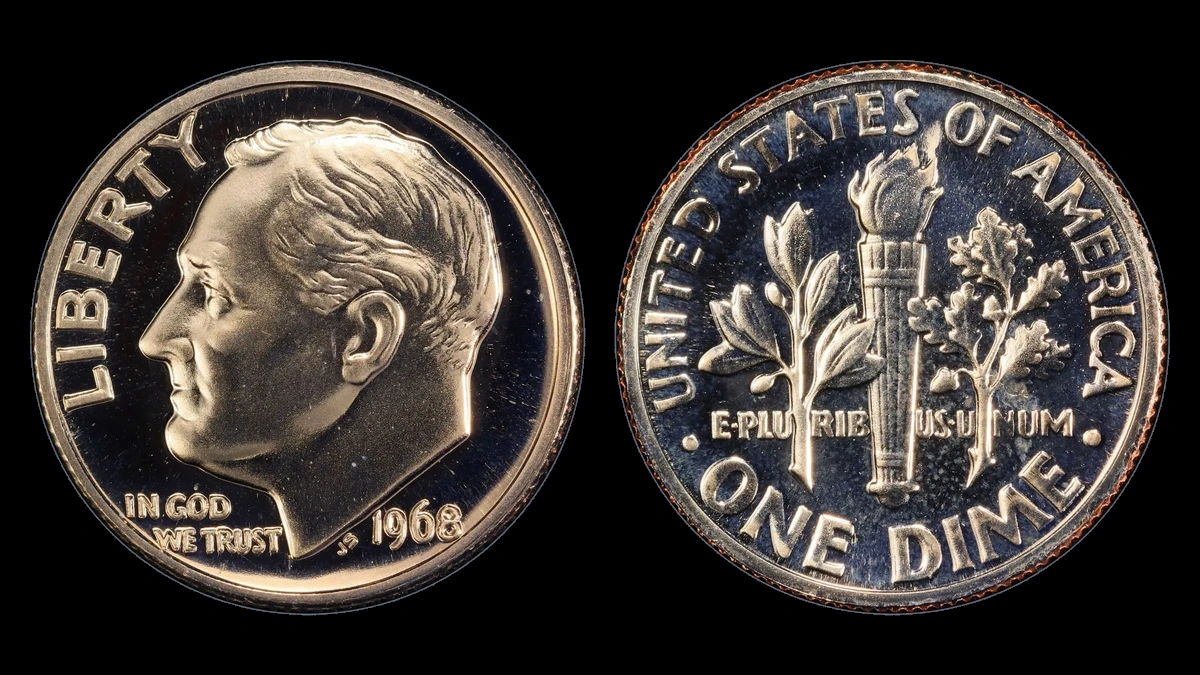
The rare 1968 No S Proof was struck from a die that lacked San Francisco’s required letter. The same empty space is normal on an ordinary Philadelphia circulation dime.
How to Identify
Establish Proof manufacture before considering the mint-mark absence. Original collector surfaces and sharp detail matter, while polishing can make a regular coin reflective without turning it into a Proof.
Then inspect the empty position above the date for scratches, hollowing, or disturbed texture from removal of an S. Keep an original set or graded holder intact for examination.
What It’s Worth
$15,000–$50,000 is an estimated range for certified No S Proofs. PCGS auction records include $48,875 in September 2006 and an NGC PR68 result of $19,520 in July 2026.
Those values depend on the rare Proof identity and preservation. They do not apply to normal no-mint-mark Philadelphia dimes.
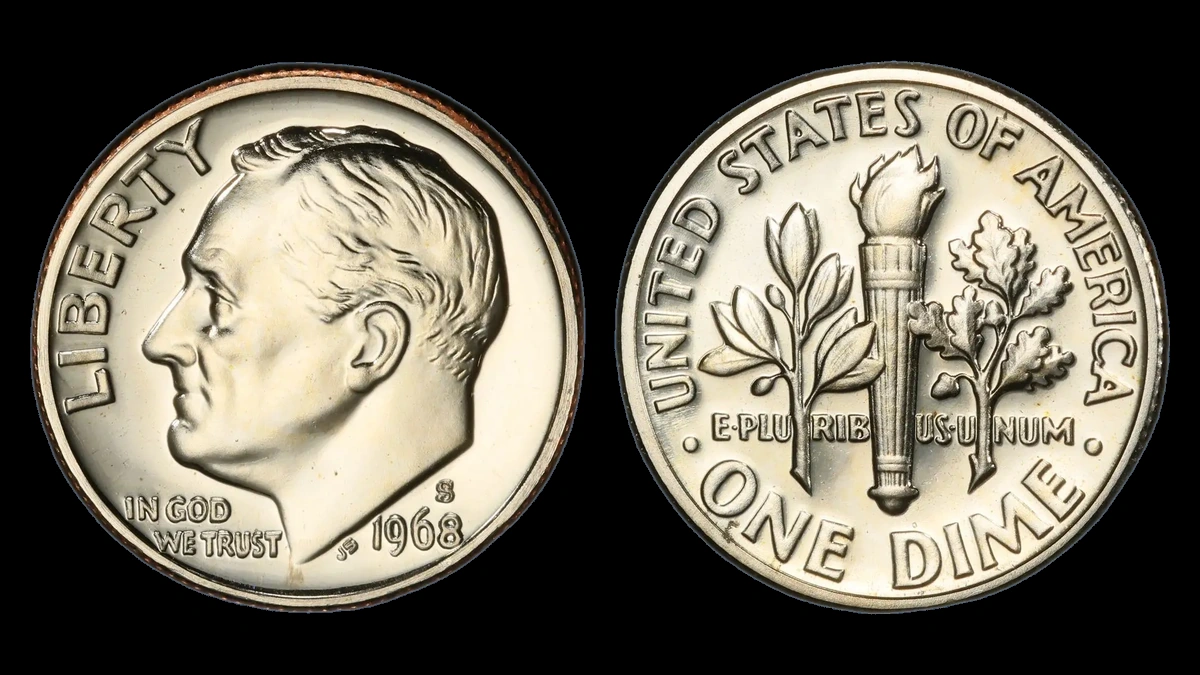
2. 1968 Dime A Second D or S Curve Appears beside the Letter: Repunched Mint Mark Error
Denver RPM-001 has an earlier D impression toward the left. The Proof S/S FS-502 also has a leftward remnant, together with related obverse design doubling.
How to Identify
Find the letter above the date and use the correct mint and finish for comparison. FS-502 also shows a split at the lower end of 9 and related obverse thickening.
Other reported D/D and S/S varieties need their own direction and shape matches. A flat shelf from movement during striking does not establish a second rounded mint-letter impression.
What It’s Worth
$10–$250 is an estimate across identified repunched marks, with clear Proof examples toward the stronger end. FS-502’s repunching and obverse doubling belong to one coin, so their complete values should not be added separately.
3. 1968 Dime Several Letters Carry Repeated Raised Detail: Doubled Die Error
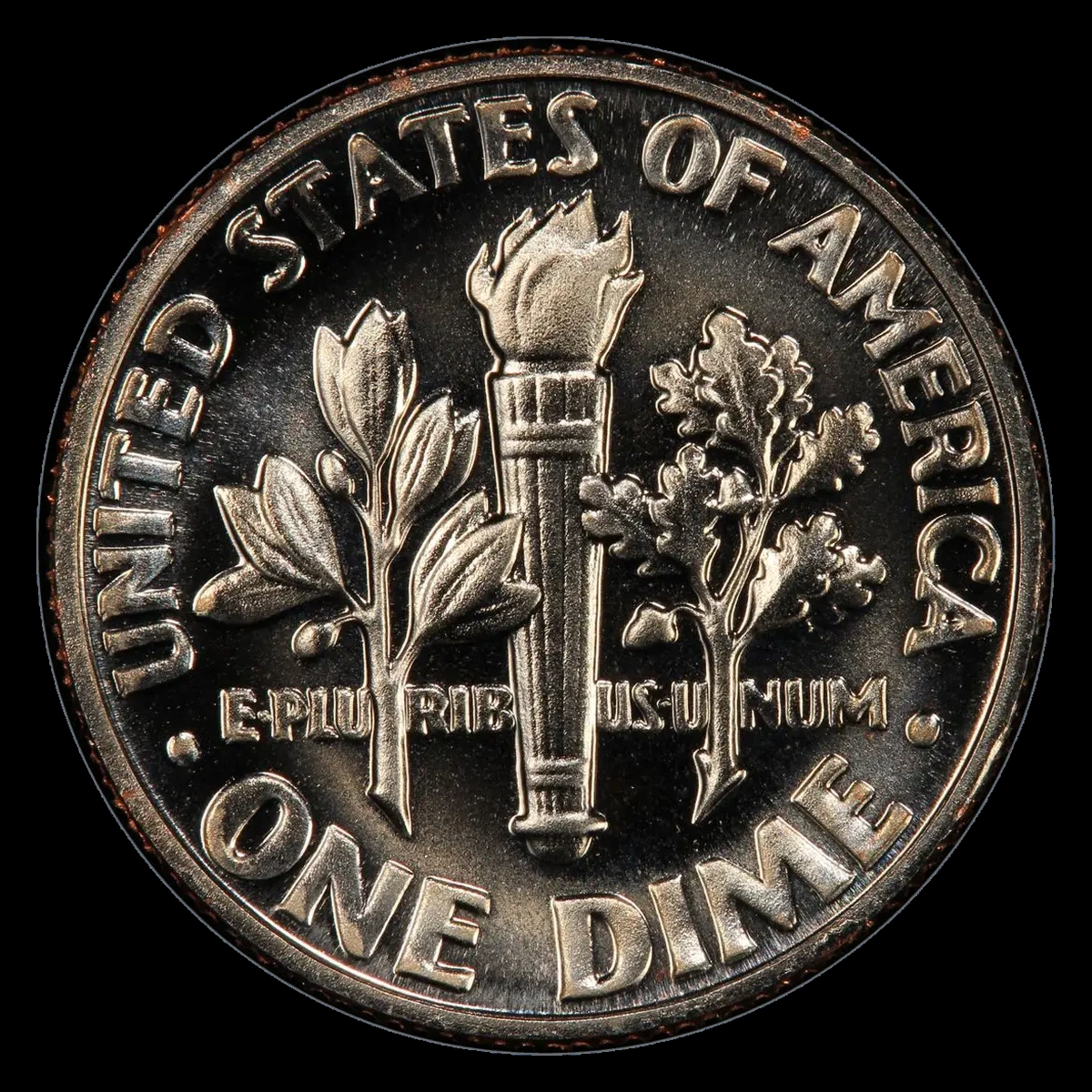
Philadelphia DDO-001 affects LIBERTY, IN GOD WE TRUST, JS, and the date. Proof varieties include obverse FS-101 and reverse FS-801, with the latter paired with slight LIBERTY thickening on the obverse.
How to Identify
Choose one variety and compare several specific raised contours or split ends. JS names the designer, not a mint, and Denver reports cannot borrow Philadelphia’s pattern.
Among Proof reverse listings, DDR-003 involves UNITED and a split left stem; DDR-005 has thickening and small die marks below AMERICA’s C. DDR-002 has lighter outward doubling, so these details should not be combined into one imaginary reverse.
What It’s Worth
$15–$100 is an estimate for minor confirmed varieties, rising to roughly $100–$500 for stronger well-preserved Proofs. The supplied PCGS record lists an FS-801 PR69 at $429 through eBay in May 2018.
That marketplace record concerns a specific variety and finish. Flat movement doubling is a different effect and generally does not receive the same premium.
4. 1968 Dime A Ridge or Rim-Connected Lump Stands above the Surface: Die Crack or Cud Error
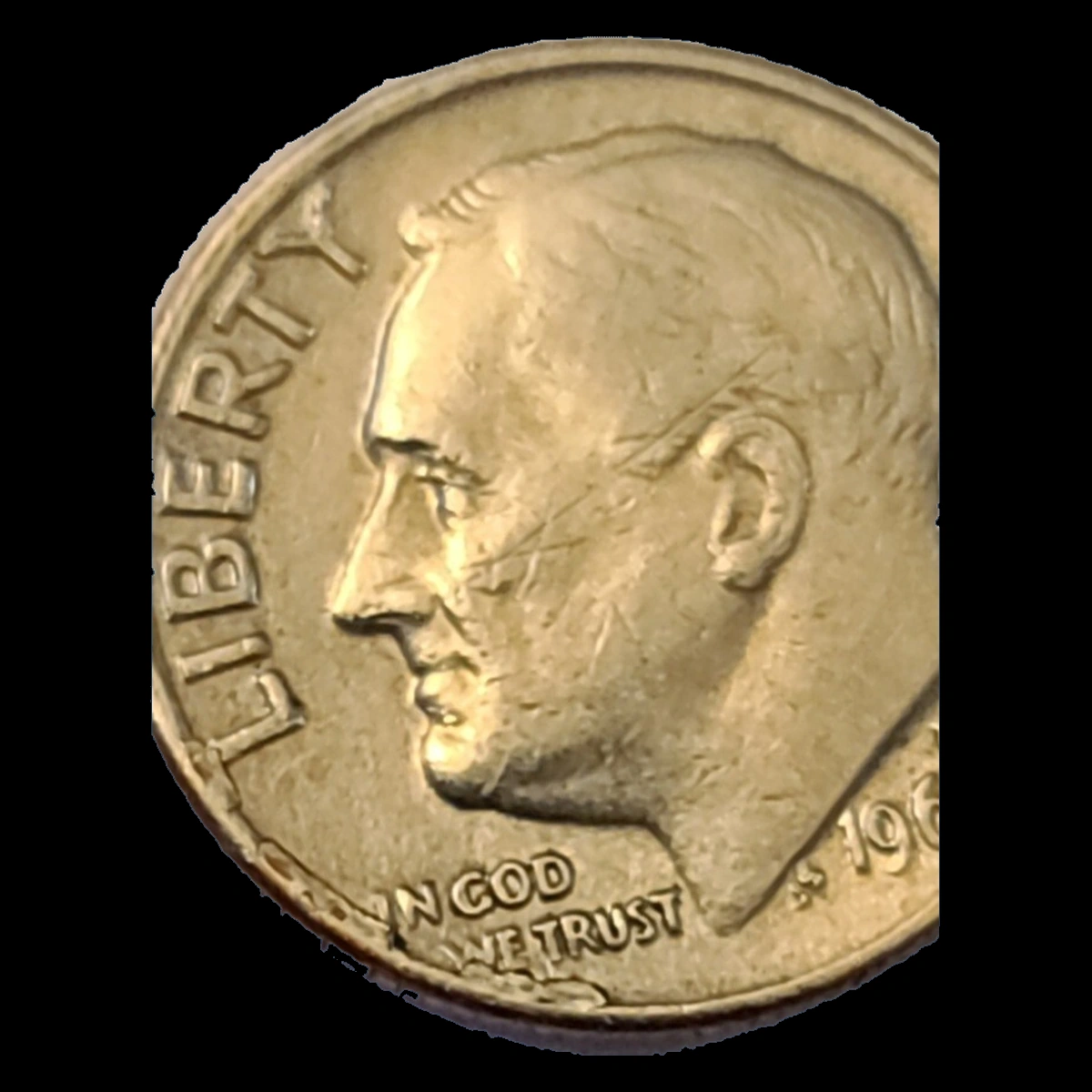
Metal filling a crack in the die leaves a raised line on the coin. A larger missing die-edge section can produce a rim-connected patch called a cud.
How to Identify
Inspect the center of a line under side lighting to distinguish raised metal from a scratch with pushed-up margins. For a cud, trace the actual connection to the rim.
The reported Denver break is cataloged CU-10c-1968D-01 and needs a location match to that specimen. A random battered edge is not the same variety.
What It’s Worth
$5–$30 is an estimate for small genuine cracks, and $30–$150 for clearer rim breaks. A 1970-D nickel with two cuds sold for $63 in October 2022, a different denomination and year that offers only limited context.
5. 1968 Dime Faint Opposite-Side Shapes Appear behind the Design: Die Clash Error
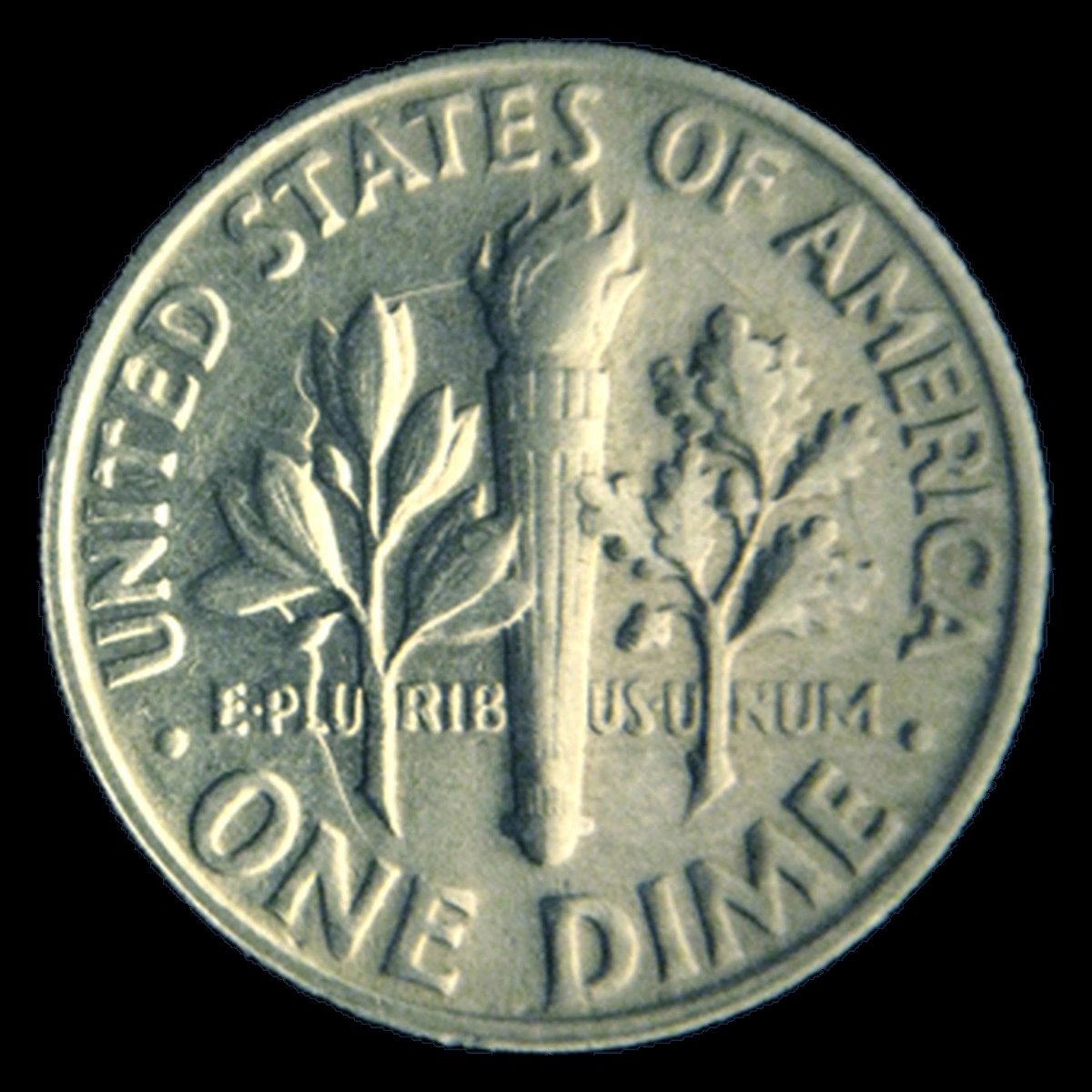
When dies meet without a blank between them, contact can leave traces that transfer to later coins. A genuine clash should relate to recognizable elements of the opposing design.
How to Identify
Study a normal dime’s two designs, then compare the unexplained contours under several lighting angles. The supplied 1968 reports establish no one required mint or location.
Inspect for random scratches and edge crushing from finished coins pressed together later. A faint line becomes useful only when its shape and position fit the design relationship.
What It’s Worth
$10–$150 is an estimate for genuine clashes on ordinary circulation issues. A 2001-P dime combining a clash with a mirror-image striking error sold for $79 in November 2014, not a direct sale of a 1968 clash alone.
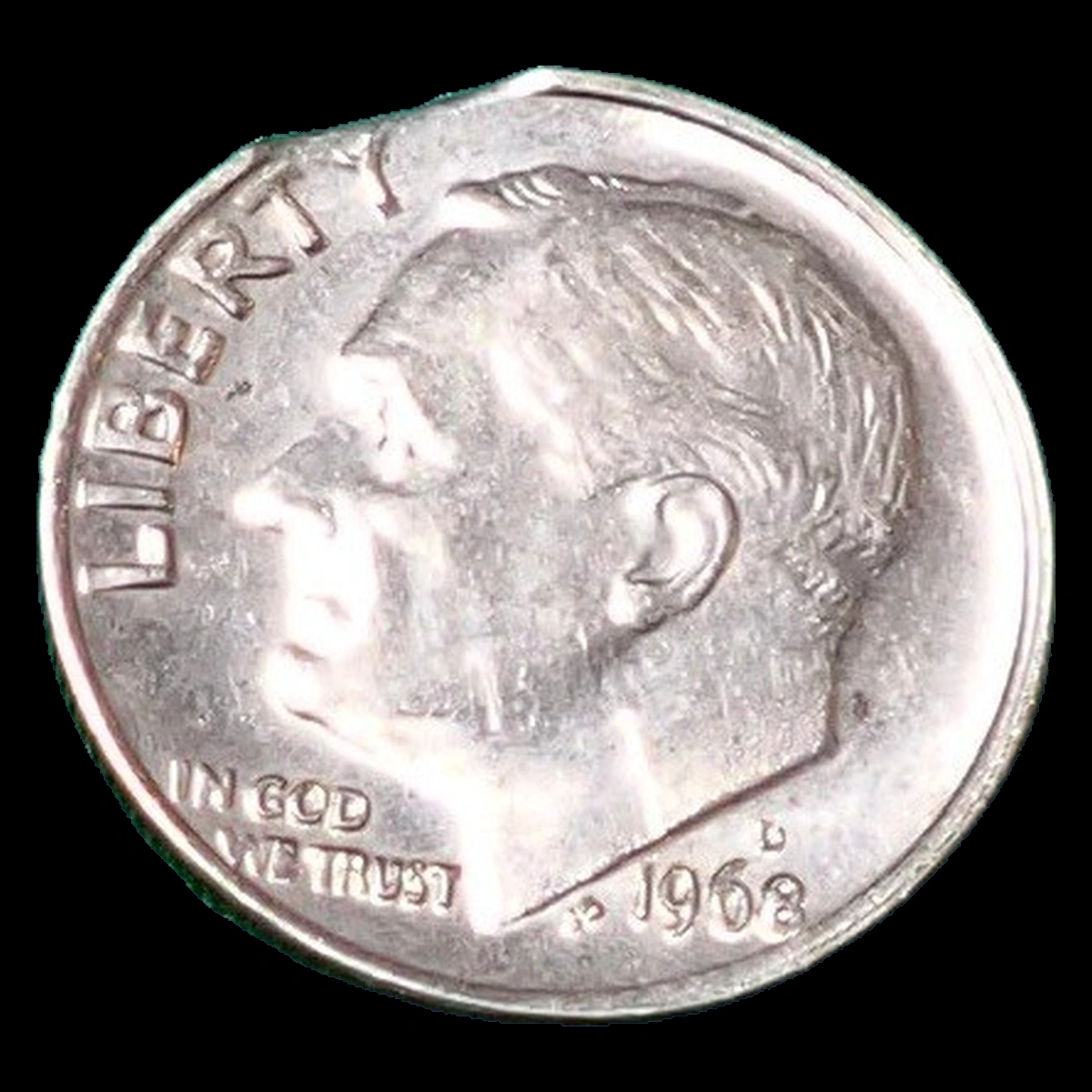
6. 1968 Dime A Curved or Straight Gap Removes Original Blank Metal: Clipped Planchet Error
A blanking punch can overlap an earlier hole to create a curved shortage, or involve the strip’s edge to leave a straight one. Both clip shapes appear in the supplied 1968 reports without a fixed mint or percentage.
How to Identify
Examine how the rim formed at the two ends of the opening, checking for sharp cuts and fresh tool marks. Opposite-rim weakness can provide additional support.
A normal clad dime weighs about 2.268 grams, measures 17.91 millimeters, and has a reeded edge. Use those references for loose-coin measurements here and below, while remembering that later cutting can also lower weight.
What It’s Worth
$20–$150 is an estimate for genuine clips with readable identity. The supplied $124 comparison from March 2025 concerns a 1997-P nickel with a 20% clip, not a 1968 dime or a measurement of its missing area.
7. 1968 Dime An Untouched Crescent Sits beside Displaced Design: Off-Center Strike Error
An off-center blank receives only the design that lands over its metal. The unused crescent and missing peripheral details should support the same shifted strike on both faces.
How to Identify
Read 1968 directly and inspect where the struck relief ends. A ground-smooth patch, a wide border with complete design, or a shift confined to one face calls for a different explanation.
The supplied reports establish no universal mint, direction, or percentage. Nearly normal weight is compatible with displacement because no metal needs to disappear.
What It’s Worth
$40–$500 is an estimate for genuine dated examples. A 1977 dime struck 10% off-center sold for $109 in June 2026, providing a modest-offset comparison without supplying missing details for a 1968 coin.
8. 1968 Dime A Finished Face Has a Rough Unstruck Back: Split after Striking Error
The recorded 1968-D ANACS MS60 piece separated through its thickness after receiving its design. One side preserves struck detail, while the other exposes the interior separation surface.
How to Identify
Inspect the rough face for the absence of a fresh normal strike, then identify the surviving date and D on the finished face where visible. A fragment struck after separation would tell a different sequence.
Record its own weight and remaining width without assuming it is half of a normal dime or that a matching partner survives. Check for regular saw grooves or machining that would indicate later alteration.
What It’s Worth
$50–$250 is an estimate for an identified surviving piece. The $141 sale of a one-gram 1968-D fragment in November 2013 concerns metal that entered the press as a fragment, a different mechanism described below.
9. 1968 Dime The Front Layer Opens but Stays Hinged: Clamshell Separation Error
The documented 1968-D PCGS AU50 example has about 90% of its obverse clad layer separated while part remains connected. A failed bond allowed the outer layer to open like a shell.
How to Identify
Inspect the natural metal hinge and gap from the side without inserting a tool or forcing it wider. Glue, saw marks, or a forcibly bent surface flap require a different explanation.
The 90% describes the extent of separation, not silver content. This ordinary clad issue has copper-nickel outer layers over a copper center, and no normal silver layer to peel away.
What It’s Worth
$50–$300 is an estimate for an intact identified clamshell. The AU50 example appeared in Heritage’s March 31, 2025 auction, but the supplied record provides no realized price used here.
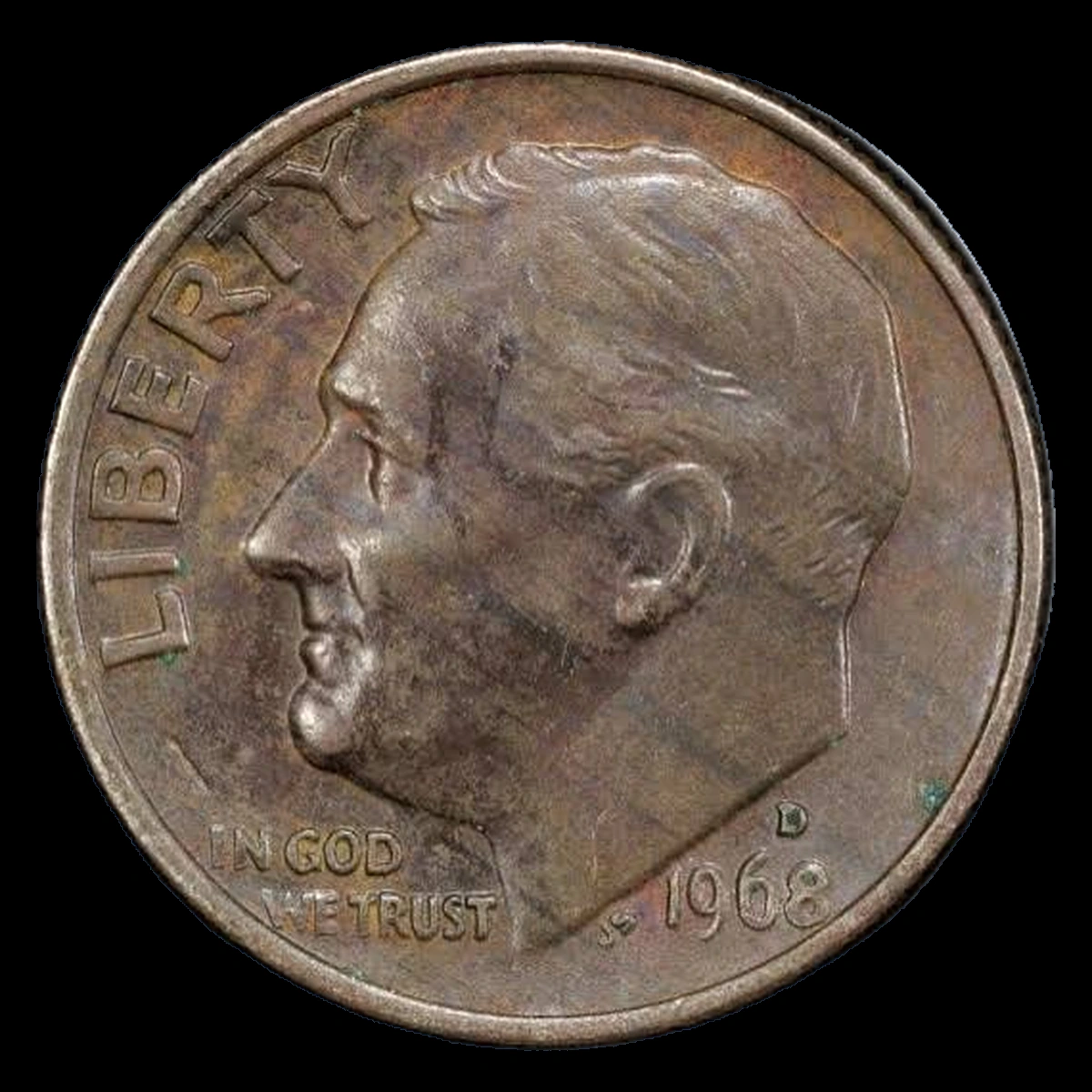
10. 1968 Dime One Face Exposes Copper after Losing Its Outer Layer: Missing Clad Layer Error
A 1968-D ANACS MS62 example has a red obverse and bright reverse, with a somewhat weak border from its thinner blank. Another Denver NGC MS63 coin is missing the reverse layer and weighs 1.8 grams.
How to Identify
Compare the exposed face, reduced thickness, and remaining layers at the edge. Staining or added copper-colored plating can mimic a color change without removing the original layer.
The 1.8-gram measurement belongs to the reverse-layer MS63 coin, not the obverse-layer MS62. Inspect for grinding and corrosion before accepting apparent layer loss.
What It’s Worth
$50–$500 is an estimate for genuine missing-layer 1968-D dimes. The obverse-layer MS62 specimen sold for $58.65 in August 2003.
A 2018-P dime missing its obverse layer brought $384 in July 2021. That later comparison does not replace the specific condition and attribution of either Denver coin.
11. 1968 Dime Struck Design Ends at an Irregular Piece: Metal-Fragment Strike Error
The documented 1968-D PCGS AU58 fragment weighs one gram. The design formed on the already irregular piece, rather than a complete dime being cut to that shape afterward.
How to Identify
Trace natural design flow toward the original boundary and match the surviving date and D with the recorded coin. Fresh cuts sharply crossing completed letters can reveal later trimming.
An irregular fragment need not retain a full circle or complete reeding. Its outline also does not identify which machine or material source supplied it without additional evidence.
What It’s Worth
$100–$600 is an estimate for comparable genuine fragments. The one-gram AU58 piece sold for $141 at Heritage on November 3, 2013, with readable struck identity more important than its small metal content.
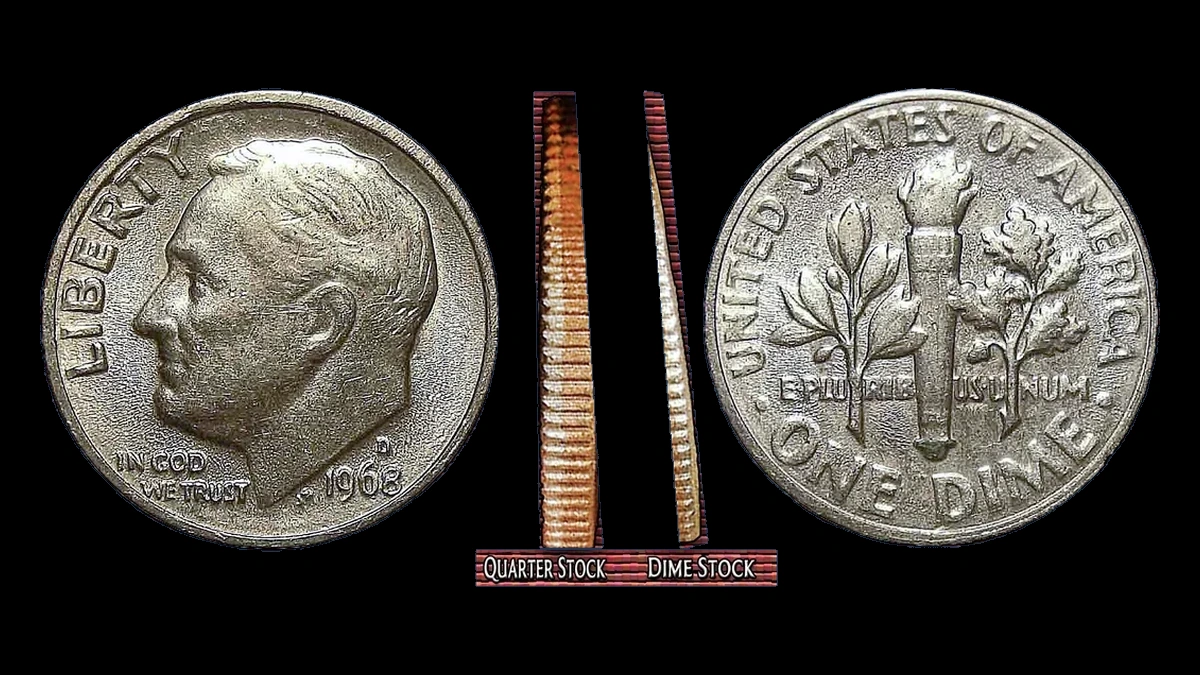
12. 1968 Dime A Dime-Size Disk Is Unusually Thick and Heavy: Quarter-Stock Error
The recorded 1968-D PCGS AU58 example weighs three grams because its dime-size disk was cut from thicker quarter stock. It was not struck on a complete quarter blank.
How to Identify
Combine excess thickness and weight with a diameter near the dime standard. A full quarter blank is much wider, around 24.26 millimeters, and would be a different claim.
Rule out added plating or attached objects and inspect the bonded layers and original edge formation. Normal-looking color alone cannot establish which thickness of stock supplied the disk.
What It’s Worth
$300–$1,000 is an estimate for a confirmed quarter-stock dime. A separate three-gram NGC AU55 example was recorded at $504 in October 2021, not a sale of the PCGS AU58 specimen.
13. 1968 Dime The Design Appears on Philippine Coin Metal: Foreign-Planchet Strike Error
The supplied reports describe two different Philippine blanks: a Philadelphia dime on ten-sentimo alloy and a Denver NGC MS63 dime on an aluminum one-sentimo blank. Their composition and attribution must remain separate.
How to Identify
The reported ten-sentimo alloy contains 70% copper, 18% zinc, and 12% nickel. Aluminum should be distinctly light, but color or low weight alone does not identify either denomination.
Record the actual specimen’s dimensions and surviving design, then compare with the specific foreign blank and obtain nondestructive composition testing. A foreign blank may not show the normal clad dime’s copper-centered edge.
What It’s Worth
$1,500–$5,000 is an estimated range for confirmed foreign-planchet examples. Neither Philippine report has a recorded 1968 completed sale supplied here, so the exact alloy, surviving identity, and certification carry particular weight.
14. 1968 Dime The Dime Has the Older Silver Composition: Silver-Planchet Strike Error
The recorded 1968-D NGC AU55 coin weighs 2.5 grams and was struck on a 90%-silver dime blank. Its date belongs to the clad-production era, making the combination of design and old metal the error.
How to Identify
Inspect the edge for the absence of a normal reddish copper center, then confirm weight and composition together. Plating can hide the copper strip, so a pale edge by itself is not conclusive.
Read the American Roosevelt design, 1968 date, and D carefully; a Canadian silver dime of the same year is unrelated. Do not scrape the edge to test the metal.
What It’s Worth
$3,000–$10,000 is an estimate for an authenticated 1968-D silver-planchet error. Heritage documented the AU55 specimen in May 2009, but the supplied record does not provide a realized amount used here.
The premium concerns the wrong composition with the correct date, not merely the silver content. Surface condition and sound material identification remain essential to the comparison.
Conclusion
Begin a 1968 dime assessment by separating ordinary no-mint-mark Philadelphia coins from authentic No S Proofs. For other candidates, match specific design patterns and let the edge, weight, and composition explain unusual metal.
Keep detached fragments, hinged layers, missing outer faces, and thick-stock coins distinct. Each represents a different physical history, and measurements or prices from one documented specimen should not migrate to a superficially similar coin.