Rare 1878 Nickel Errors (List & Pictures)
Every genuine 1878 Shield nickel began as a Proof, even if later handling left it worn or damaged. Estimated whole-coin values for the 1878 nickel errors here range from $600–$3,500.
A dealer’s $1,495 offer for one small-flaw Proof was an asking price, not a confirmed sale. Read the full date first, then examine the final 8 and the separate flaw beside the shield.
A normal coin weighs 5 grams, measures 20.5 millimeters, and has a plain edge. Preserve reflective surfaces and leave graded examples sealed while inspecting them.
1878 Nickel An Extra Trace inside the Final 8: Repunched Date Error
The lower loop of the final 8 can contain a remnant of an earlier date-punch impression. Entering the punch again in a shifted position altered the die before it struck any coins.
The supplied Shield Nickel Varieties description calls the 8 repunched toward the south. The relevant trace therefore lies lower when the date is held upright.
This is a date-punch variety on a Proof coin. It does not establish a displaced second strike on the finished nickel or an underlying 7 beneath the 8.
How to Identify
Photograph the entire date before magnifying its last digit. An unclear 1873 can be misleading, so the final numeral must first support the 1878 identification.
Compare the lower-loop trace with the Shield Nickel Varieties description. Keep the coin upright so the stated direction remains meaningful.
Change the light to separate a real contour in the raised digit from a reflection or scratch. A short bright line is not sufficient without a matching shape and location.
What It’s Worth
A matched repunched-date Proof has an estimated whole-coin range of $600–$3,500. That includes worn or impaired pieces as well as attractive examples.
Preservation can influence the price far more than the tiny stroke’s size. Cleaning, scratches, or wear may reduce appeal even when enough of the pattern survives for identification.
No transaction for this date variety is supplied. The separate $1,495 front-flaw listing should not be presented as its realized value.
1878 Nickel A Small Interruption Left of the Shield: Planchet Flaw Error
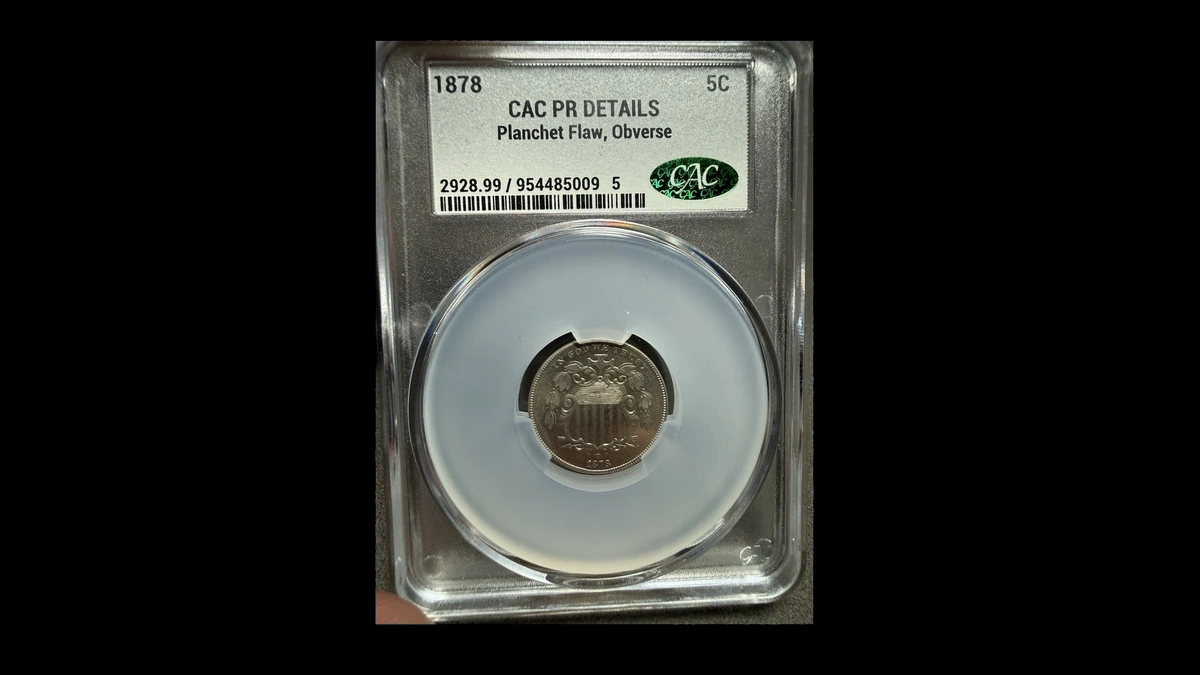
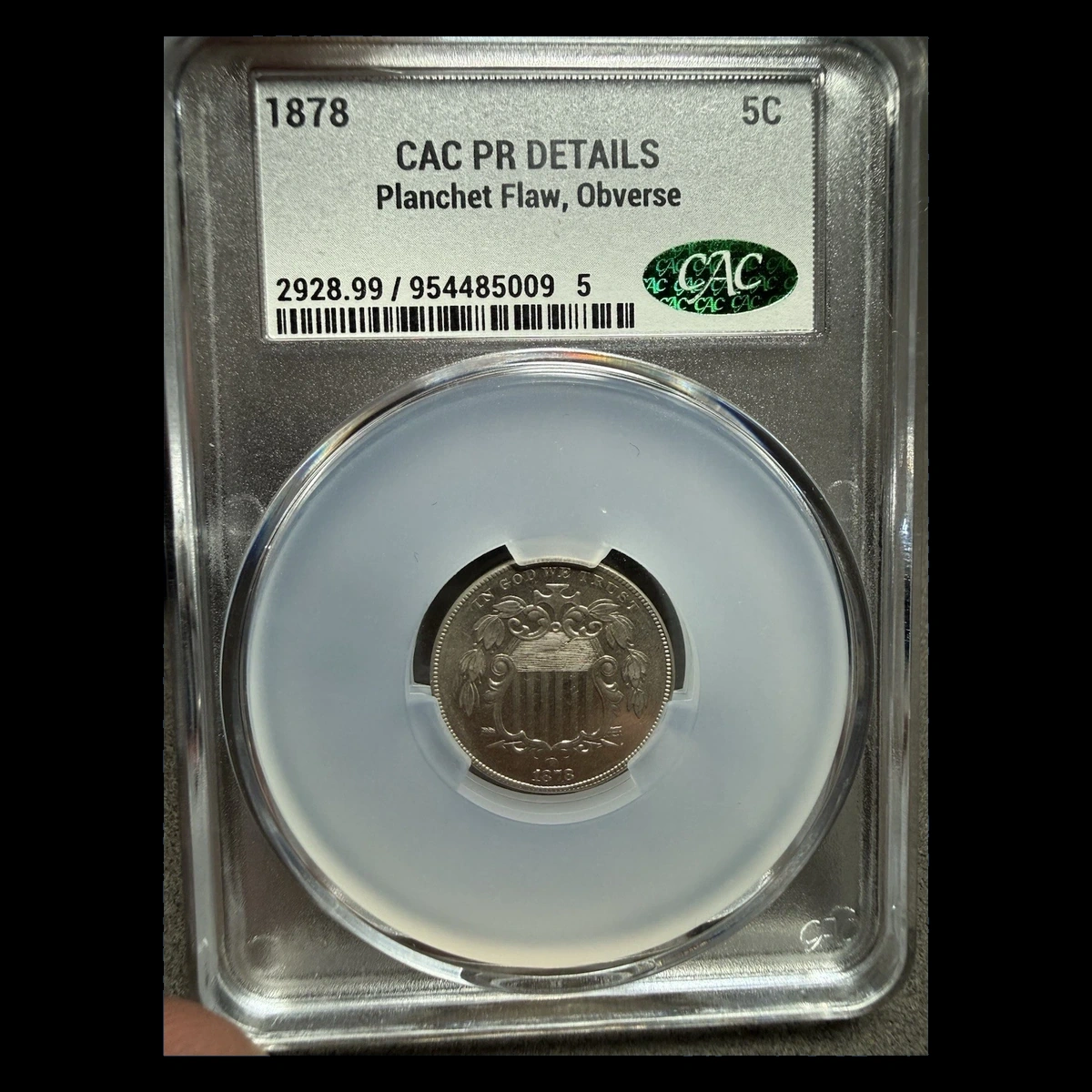
A dealer described a PCGS PR64 nickel with a small blank defect immediately left of the shield. A blank, also called a planchet, is the metal disk prepared for striking.
The description establishes the location more clearly than the exact mechanism. It does not identify a peeled layer or another specific form of metal failure.
PR64 describes a Proof with some visible imperfections. The example’s golden color is separate from the small reported defect.
How to Identify
Find the interruption beside the shield while keeping the surrounding design visible. Low side lighting can reveal how the original struck detail meets the flaw.
Look for scraped letters, fresh grooves, or displaced metal that could indicate later damage. A rough or discolored patch alone does not establish an original blank problem.
Leave any loose boundary untouched rather than probing it. A tiny local flaw may produce no measurable weight change, so a normal reading would not settle its cause.
What It’s Worth
A comparable well-preserved Proof with a modest original flaw suggests $1,000–$3,000 for the whole nickel.
The dealer asked $1,495 for the PR64 example. An out-of-stock notice does not confirm whether it sold or the final amount accepted.
Much of the estimate reflects the scarce collector issue and its preservation. The flaw can add interest without producing a large independent error premium.
Conclusion
The repunched final 8 and the flaw left of the shield require different evidence: a matched numeral remnant for one, an original metal boundary for the other. Neither should be identified from a bright spot alone.
Keep the Proof origin and whole-coin condition central to any valuation. Preserve the full date in photographs, leave the surface intact, and avoid converting a dealer’s asking price into an auction result.