Rare 1945 Dime Errors (List & Pictures)
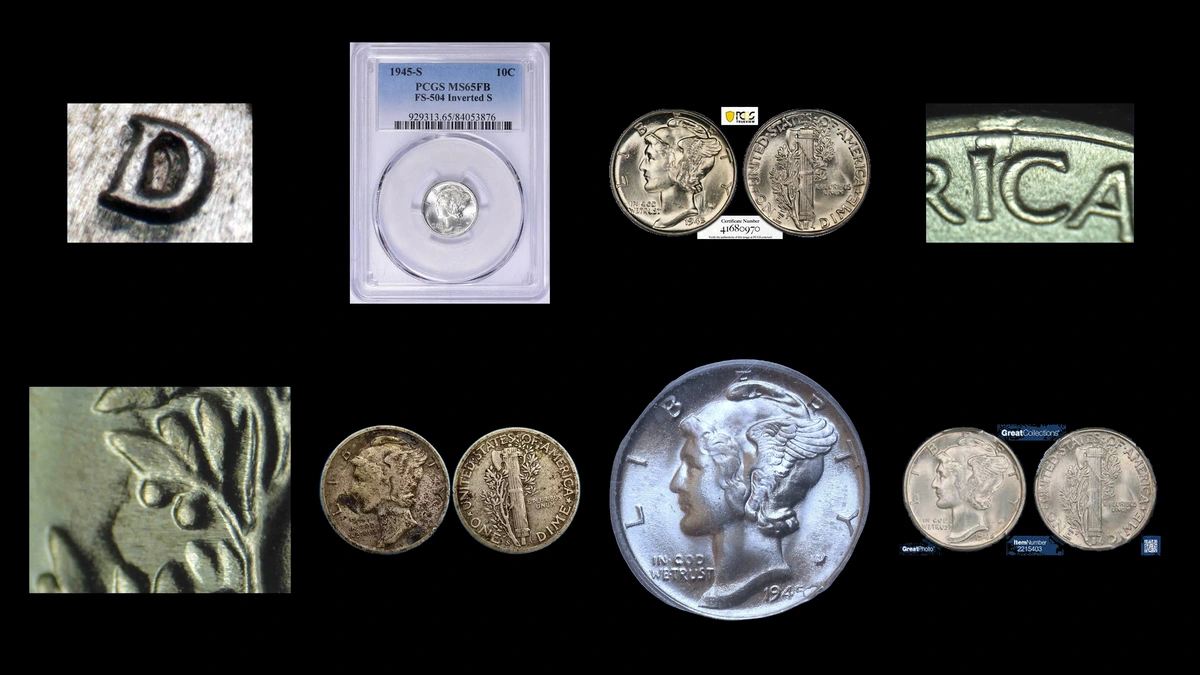
A Mercury dime struck on a Venezuelan quarter-bolívar blank brought $6,600 in August 2022. Most 1945 dime errors need much smaller clues, such as an extra mintmark stroke or a stepped edge, within an overall estimated range of $10–$10,000.
Work from the mintmark and design to the surface metal, edge, and strike, keeping each specimen’s measurements and condition together.
| Main clue | Possible identification | Estimated value |
|---|---|---|
| Additional D or S strokes | Repunched mintmark | $30–$1,500 |
| S ends in reversed positions | Inverted mintmark | $20–$400 |
| Repeated date or reverse details | Doubled die | $25–$600 |
| A matching small raised dot | Die-dot variety | $10–$100 |
| A raised ridge | Die crack | $10–$125 |
| Faint opposite-design fragments | Die clash | $20–$175 |
| A weak digit or impression | Blocked strike | $15–$250 |
| Shallow reverse separation | Lamination | $20–$200 |
| An opening through the blank | Planchet crack | $40–$275 |
| Broad separation with an intact connection | Clamshell | $75–$650 |
| Gradual thinning | Tapered blank | $40–$300 |
| Original metal defect and low mass | Defective or underweight blank | $60–$750 |
| Curved or straight shortage | Clip | $30–$400 |
| Stepped edge | Partial or tilted collar | $60–$400 |
| Expanded outline, complete design | Broadstrike | $40–$500 |
| Blank crescent, cropped design | Off-center strike | $75–$1,200 |
| Both designs overlap on each face | Flipover double strike | $500–$3,500 |
| Metal and dimensions fit a foreign blank | Wrong planchet | $2,000–$10,000 |
1. 1945 Dime Extra D or S Strokes Surround the Main Letter: Repunched Mintmark Error
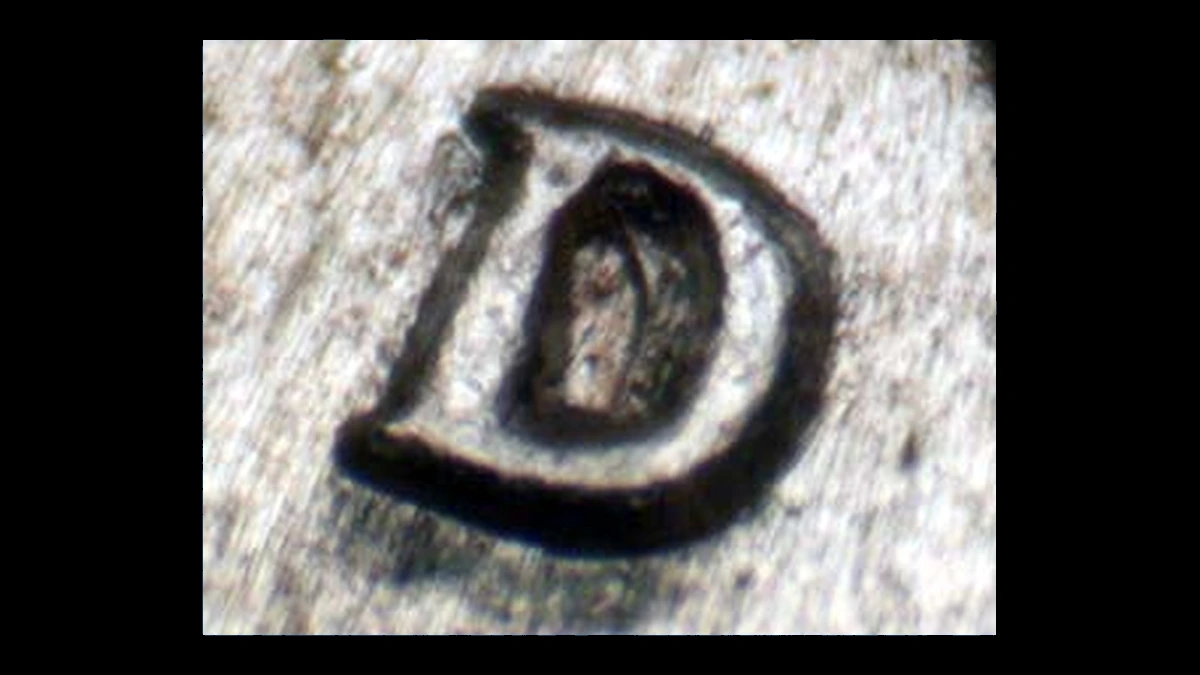
Denver varieties include a sideways earlier D with repeated end strokes. San Francisco examples combine normal, inverted, or sideways S impressions, and one Micro S variety also shows repunching.
The extra strokes arose when a mintmark punch was applied more than once to a working die. Companion doubled dates or reverse details can occur on the same coin.
How to Identify
Locate the main letter near the lower left of the reverse bundle, above ONE, and trace the smaller strokes as parts of another letter. A coherent sideways shape is stronger evidence than an isolated notch.
Match the complete pattern rather than relying on catalog wording about rotation or punch order. A small normal S, a high mintmark position, or general thickening is not repunching by itself.
What It’s Worth
$30–$1,500 is the estimate for identified repunched mintmarks of differing strength and grade. No completed sale was supplied for a particular pattern.
Wear and the readability of the earlier impression influence the comparison. Associated doubled detail belongs to the same whole-coin valuation.
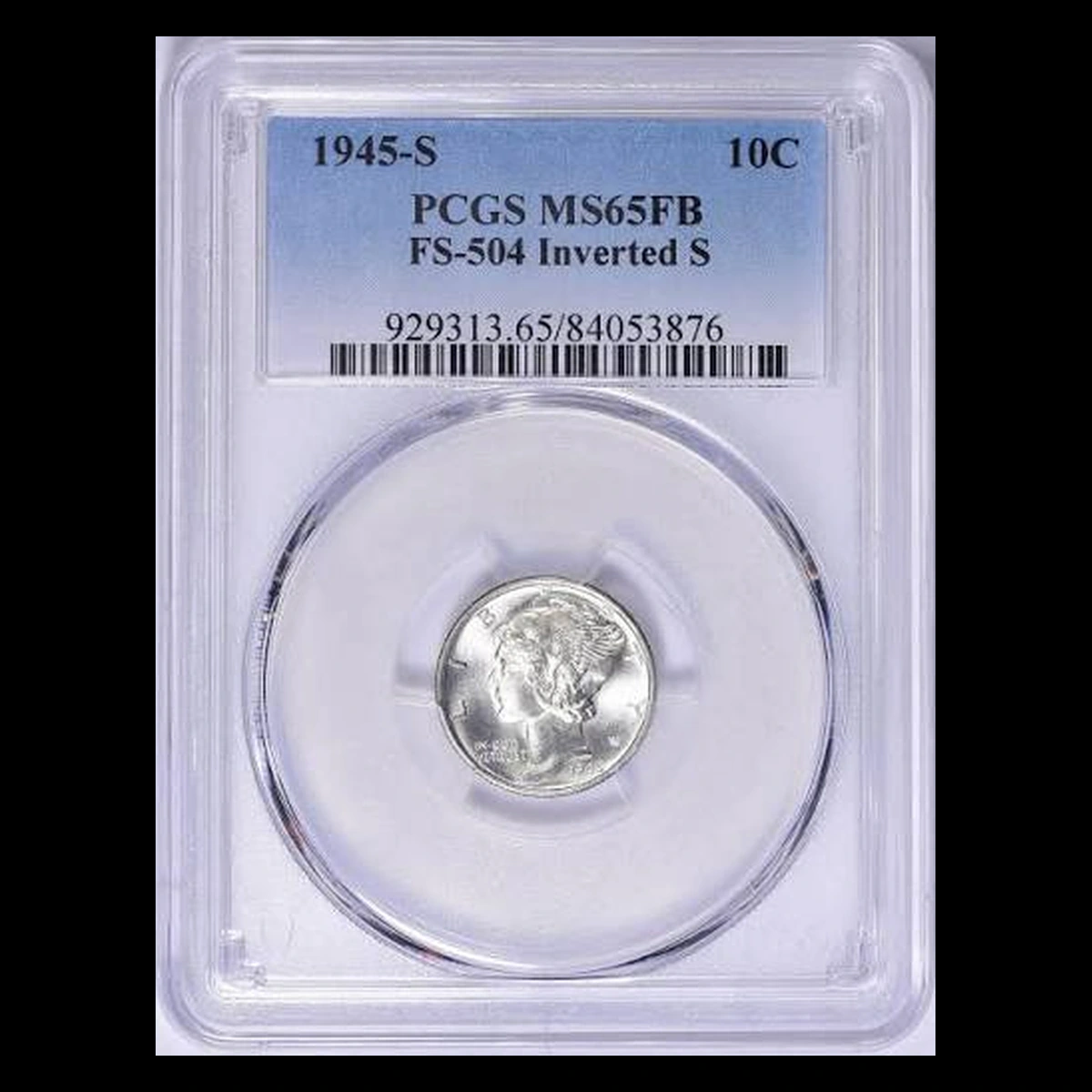
2. 1945 Dime The S Terminals Appear Upside Down: Inverted Mintmark Error
An inverted S results from applying the punch upside down to the die. The positions of its rounded ends differ from those of the same punch used upright.
More than one working die belongs to this category, and some also show repunching. The smaller normal Micro S is not inverted merely because of its size.
How to Identify
Compare the top and bottom terminals with an upright example of the same S punch style. Rotating the reference half a turn can help test whether the shapes agree.
Check any extra strokes separately for repunching. Neither a worn small letter nor the inverted designation establishes every companion feature of one specific die.
What It’s Worth
$20–$400 is the estimate for identified inverted-S examples. Sharp terminals, condition, and the exact variety govern the comparison.
An inverted and repunched S still belongs to one coin. The number of terms describing the mintmark does not multiply its value.
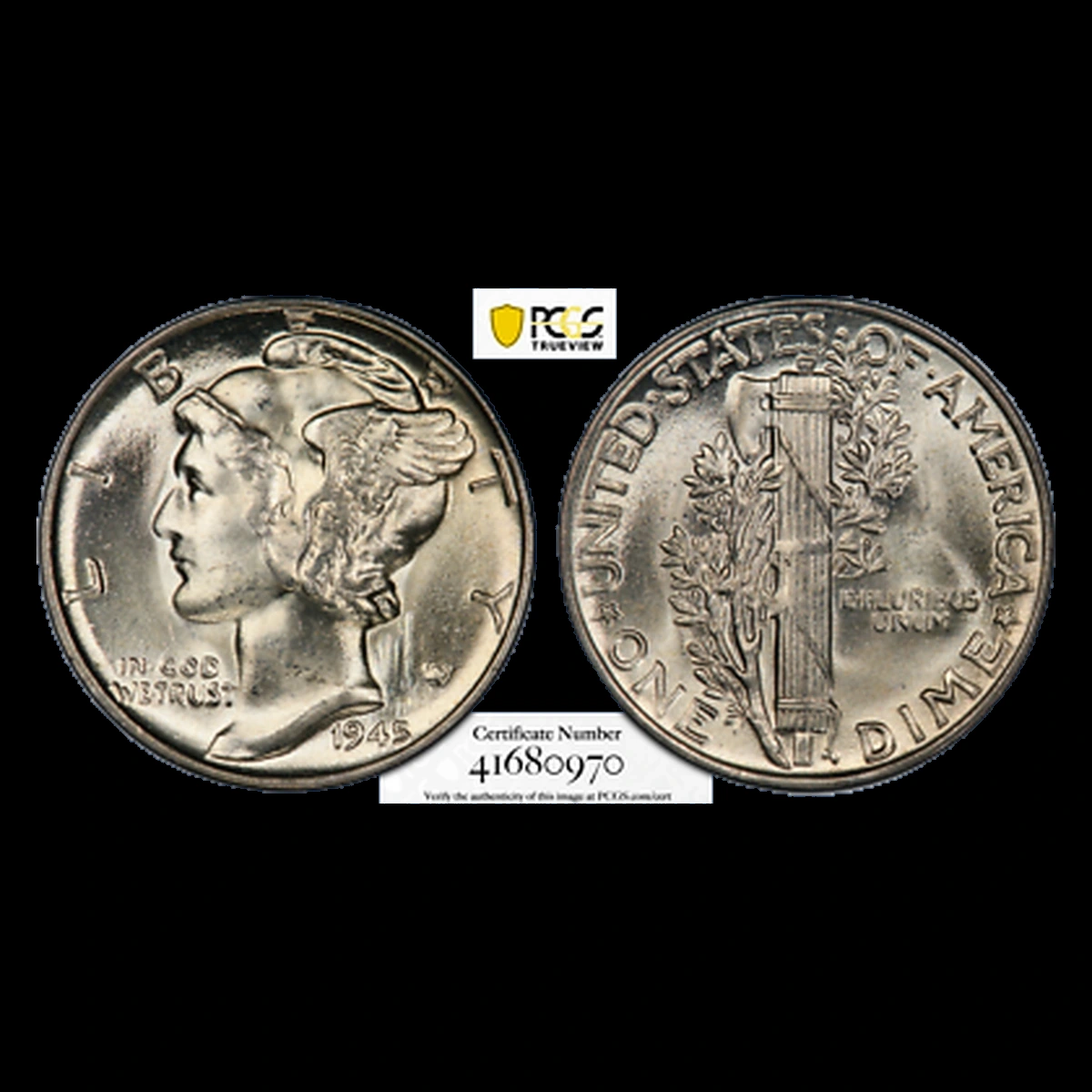
3. 1945 Dime Date Digits or Reverse Elements Repeat: Doubled Die Error
Philadelphia patterns include doubled dates and a reverse with strong tripling near the left star. Denver examples can affect the date or feather tips, while San Francisco reverse patterns involve lettering and stars.
The design repetition existed in the dies before striking. A Philadelphia date variety formerly called FS-101 remains visibly described in other catalogs despite removal from a later guide.
How to Identify
Choose the mint and exact pattern before using the 1945 Mercury dime catalog photographs. A date pattern and the tripled left-star reverse are separate comparisons.
Match several rounded contours or split points, accounting for differences among catalog numbering systems. Flat mechanical shelves and isolated thick letters cannot replace a matching pattern.
What It’s Worth
$25–$600 is the estimate for identified minor doubled designs. No completed result was supplied for the individual varieties.
A high price for an ordinary 1945 Full Bands dime is not a doubled-die sale. Full Bands concerns sharp horizontal band separation and needs to remain distinct from the extra design.
4. 1945 Dime A Small Raised Spot Repeats at a Fixed Location: Reported Die Dot Error
Heritage discusses Die Dot varieties among 1945 Mercury dimes, but the reference does not establish one location for every dot. An ordinary Full Bands coin pictured beside that discussion is not automatically a dot example.
How to Identify
Photograph the bump with nearby letters or portrait landmarks so its exact location can be compared. A genuine reference must itself show the die-dot variety.
Inspect the spot’s base for original metal rather than glue, corrosion, or a particle. A nearby impact hollow can explain metal pushed upward after striking.
What It’s Worth
$10–$100 is the estimate for an identified minor die-dot variety. It does not borrow a rare ordinary Full Bands coin’s value.
Clear repeatable detail on an original surface is useful evidence. An unexplained bump has no established variety premium.
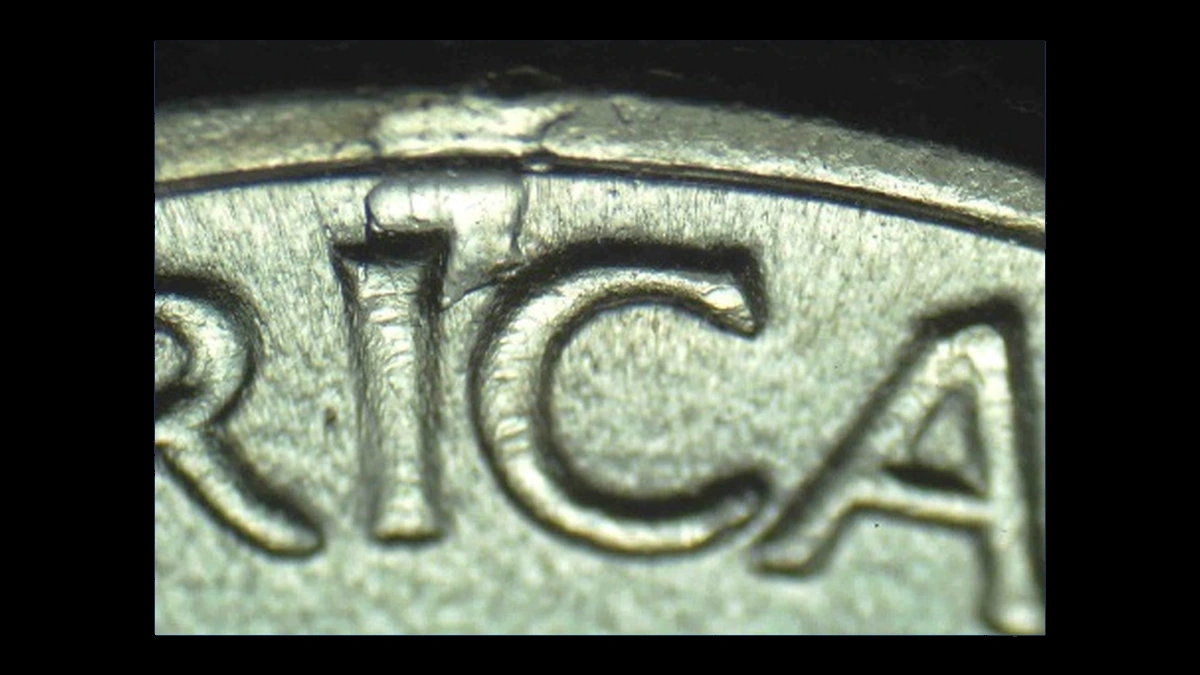
5. 1945 Dime A Raised Line Connects Letters or Portrait Areas: Die Crack Error
One Philadelphia reverse crack crosses the tops of I and C in AMERICA and extends toward the rim. A separate Denver front crack runs northeast from around six o’clock below the portrait.
Coin metal filled openings in the dies during striking. The Philadelphia path accompanies a doubled-date variety, while the Denver path occurs with a repunched mintmark.
How to Identify
Match the whole path for the correct mint and face. A raised ridge differs from a scratch cut down into the surface, even when a scratch has a raised lip beside it.
Use the companion variety details only after the crack agrees. The two specified paths are separate examples rather than one network.
What It’s Worth
$10–$125 is the estimate for modest original cracks. No completed sale was supplied for either specified path.
A clear connection to letters or the rim makes the feature easier to document. Companion doubling or repunching affects the whole coin rather than adding another full standalone price.
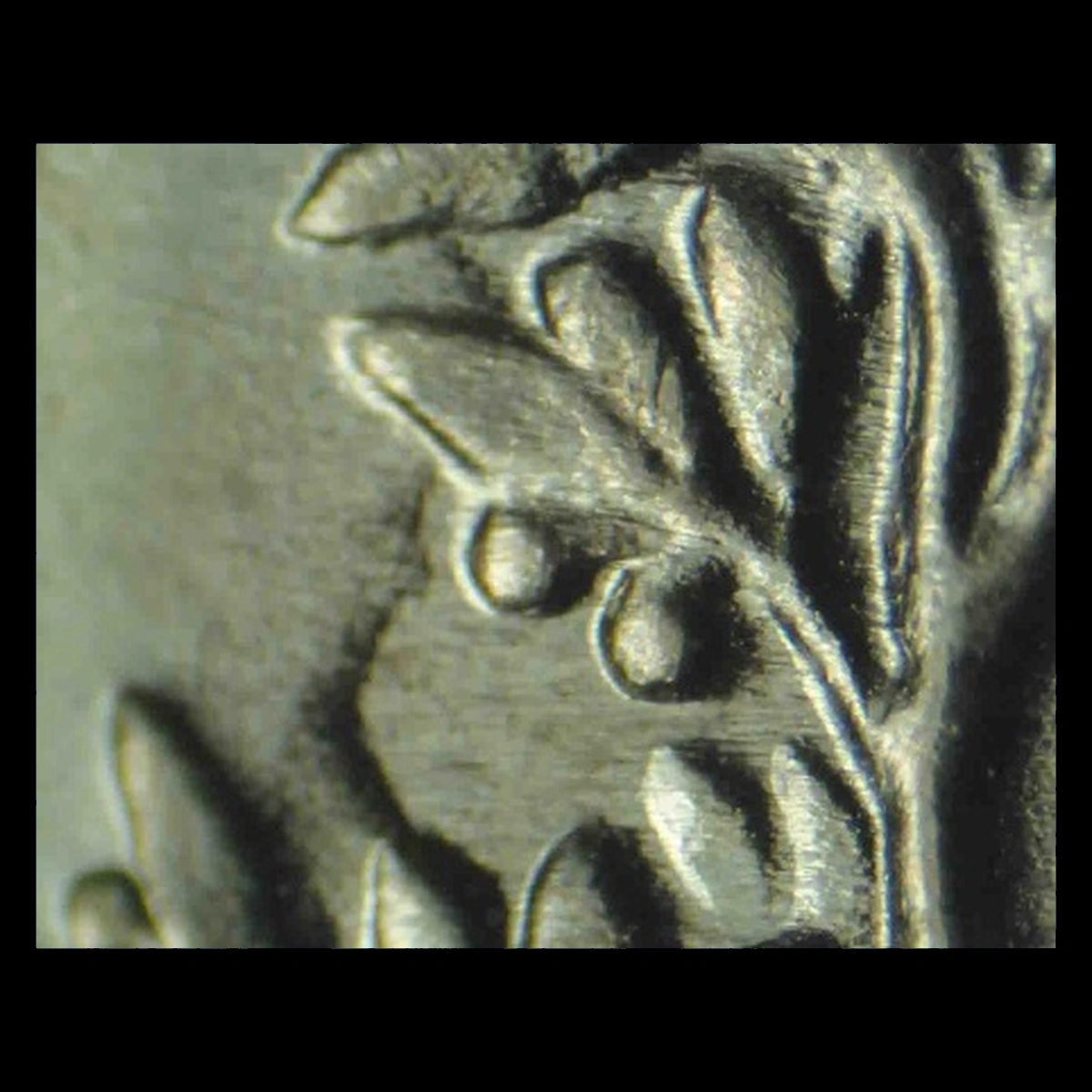
6. 1945 Dime Faint Shapes Echo the Other Face: Die Clash Error
Philadelphia doubled-die records describe transferred marks beside the portrait and among reverse branches. A Denver repunched-mintmark example has a clash in front of the forehead.
These marks originate when bare dies collide and then pass altered details to later coins. Maintenance polishing lines are a separate type of mark.
How to Identify
Compare each suspected shape and its orientation with the opposite design. The Mercury reverse contains bundled rods, an axe, and branches rather than a Roosevelt dime’s torch.
Keep the Philadelphia and Denver locations tied to their own die pairings. Straight bright lines or an imaginative resemblance do not establish transferred design.
What It’s Worth
$20–$175 is the estimate for recognizable minor clashes. No specimen-specific sale was supplied.
Original surfaces help preserve the faint evidence. Price a clash with companion doubling or repunching as one combined coin.
7. 1945 Dime A Date Digit or Local Area Is Incomplete: Blocked Strike Error
A weak or partly absent 4 is reported with grease-filled detail as one possible explanation. A separate 1945-S PCGS MS66 is cataloged with a front struck-through impression.
The San Francisco title supplies neither the obstruction’s identity nor an exact position. It does not identify the missing-4 report as the same coin.
How to Identify
Compare the weak digit with adjacent numerals and the surrounding field. General wear affects other high details, while scraping can disturb the background with directional marks.
For the MS66 impression, inspect the boundary into normal detail and rule out a later impact lip. Neither a grade nor an absent digit identifies the trapped material.
What It’s Worth
$15–$75 is the estimate for genuine localized filled-date effects, while clear struck-through impressions fit roughly $35–$250. No completed sale was supplied for the MS66.
The two appearances require separate comparisons. Original detail around the interruption is more persuasive than a missing stroke in a scratched area.
8. 1945 Dime A Shallow Layer Separates beside the Reverse Bundle: Lamination Error
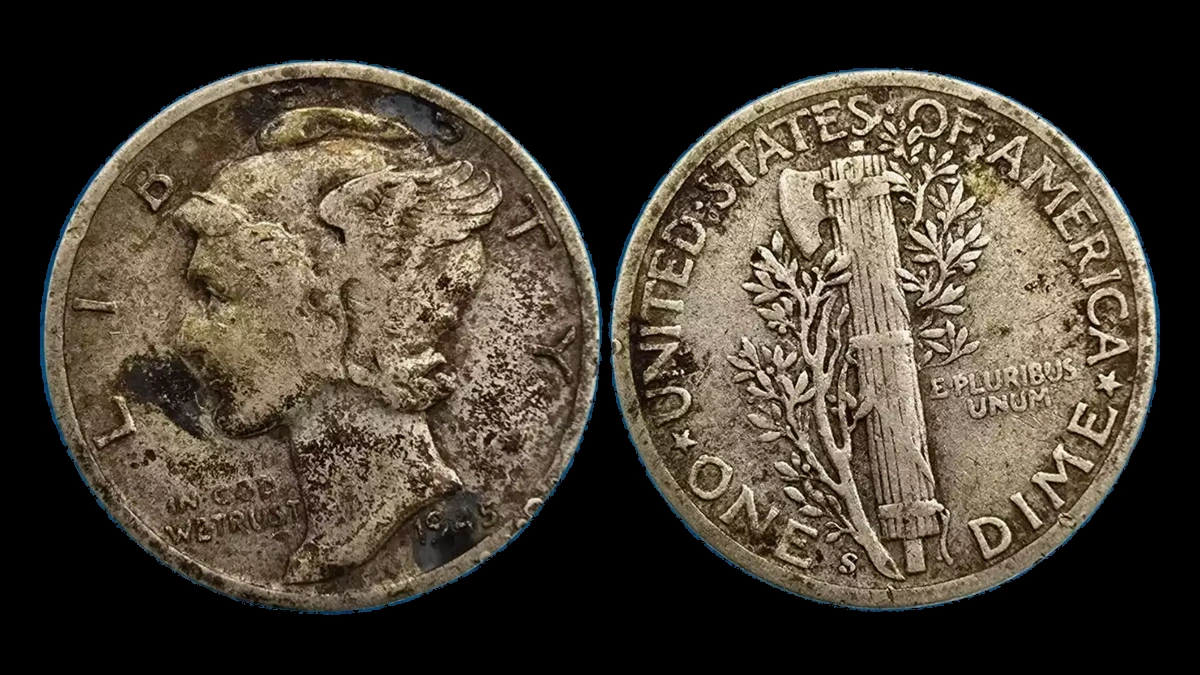
The reported reverse flaw lies toward the middle-right of the central bundle, with no established mint. A weak layer within the alloy can leave a flap or a shallow missing patch.
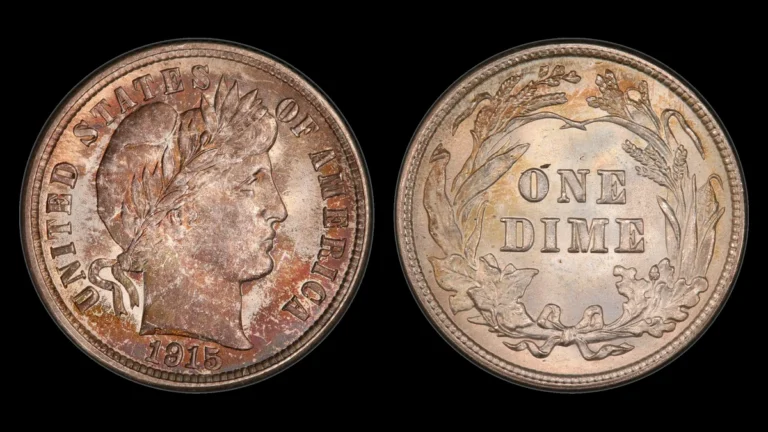
A normal Mercury dime is 90% silver and 10% copper throughout its alloy. This is not the loss of modern copper-nickel cladding.
How to Identify
Follow the natural boundary and any original detail continuing onto a flap, without lifting the metal. Fresh scratches or a gouge through finished design need a different explanation.
The normal references are 2.50 grams and 17.91 mm with a reeded edge. A lost flake can reduce mass, but its original weight cannot be reconstructed from a photograph alone.
What It’s Worth
$20–$200 is the estimate for modest genuine laminations. A 1961 Roosevelt dime with front lamination and slight wear sold for $32 in January 2016.
That different-series result is a small-flaw comparison only. The 1945 reverse location and remaining design need their own assessment.
9. 1945 Dime An Opening Runs through the Coin: Cracked Planchet Error
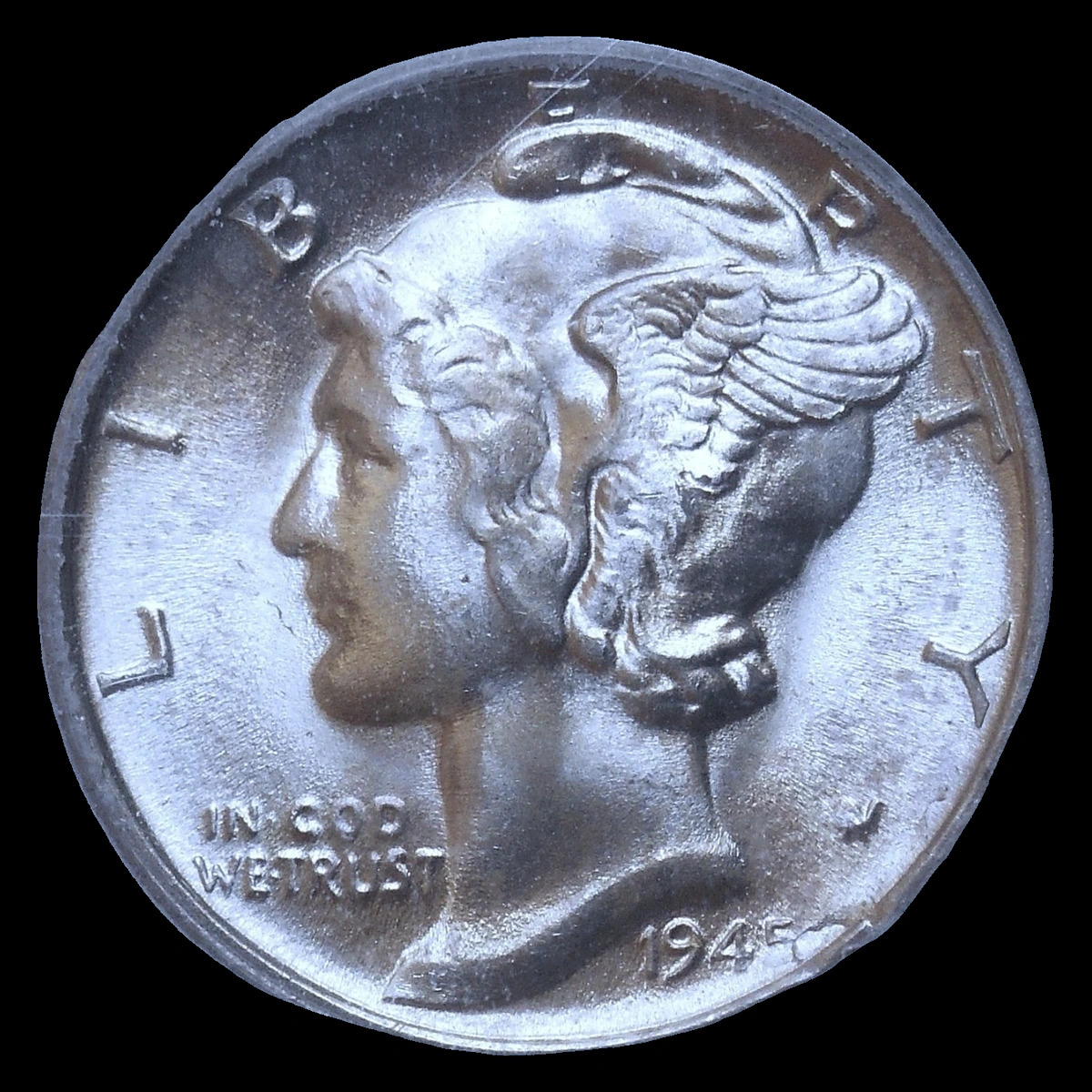
A Denver PCGS AU50 is recorded with a planchet crack, meaning a fracture in the prepared blank. It differs from a raised line copied from a cracked die.
The record gives no exact clock position. Later bending, cutting, or impacts can also fracture a silver dime.
How to Identify
Support the coin and photograph the opening from both faces and the edge without flexing it. Inspect how the nearby struck design relates to the fracture.
Fresh cuts, filing, or strained design may expose later damage. A raised ridge on a solid surface is not a crack through the blank.
What It’s Worth
$40–$275 is the estimate for comparable identified cracked-planchet examples. Greysheet records $77 in September 2024 for the Denver AU50.
Its light circulation wear belongs in the comparison. Natural fracture evidence and structural stability matter more than the width of a damaged opening.
10. 1945 Dime Two Layers Open but Remain Connected: Clamshell Separation Error
A San Francisco NGC AU53 is cataloged with clamshell lamination. A deep weakness within the alloy allowed broad separation while part of the edge stayed joined.
This exceeds a small surface peel but is not a modern clad layer coming away. AU53 indicates light circulation wear.
How to Identify
Photograph the interior boundary and surviving connection while leaving the layers in their existing positions. Do not slide a probe or fingernail into the gap.
Fresh pry marks or strained outer detail can reveal forced opening. A naturally continuous split ending at an intact connection provides better evidence than dramatic width alone.
What It’s Worth
$75–$650 is the estimate for genuine connected clamshells. No completed sale was supplied for the AU53 specimen.
Condition, opening, and remaining strength affect the result. Widening the separation can damage the connection and diminish the original evidence.
11. 1945 Dime The Metal Gradually Thins toward One Side: Tapered Planchet Error
A Denver ANACS MS64 is recorded on a tapered blank. Its thinner area may have provided too little metal to fill the dies as strongly as the thicker portion.
The description supplies neither the thin-side direction nor measured thickness. A worn low spot is not automatically a blank-wide taper.
How to Identify
Compare thickness at safe corresponding points, avoiding raised letters and excessive pressure. A gradual change should relate to localized weakness in the strike.
Inspect for grinding or squeezed metal that could create an artificial thin edge. Weight alone cannot reveal the direction or cause of the taper.
What It’s Worth
$40–$300 is the estimate for identified tapered blanks. The recorded ANACS MS64 brought $45 in September 2006.
A visible gradient with original surfaces gives a stronger explanation than barely measurable variation. The historical result does not imply a supplied thickness measurement.
12. 1945 Dime A Blank Defect Accompanies Low Weight: Defective or Underweight Planchet Error
A Denver NGC MS63 described as struck on a defective blank weighs 1.8 grams. A separate Denver NGC MS65 with a star designation weighs 2.1 grams and is described as underweight.
The star recognizes eye appeal rather than a specific error mechanism. Neither low reading proves a foreign blank.
How to Identify
Connect the actual mass with the outline, thickness, and visible original flaw. Check for grinding, corrosion, or a detached layer that might otherwise explain missing weight.
Keep the 1.8- and 2.1-gram records separate. More specific claims about another denomination or country require compatible alloy and dimensional evidence.
What It’s Worth
$60–$750 is the estimate for identified defective or underweight silver-dime blanks. Greysheet records $204 in July 2021 for the 1.8-gram MS63.
The separate 2.1-gram MS65 star coin needs its own assessment. Attractive appearance and low mass are useful only when the original cause is established.
13. 1945 Dime A Curved or Straight Section Is Missing: Clipped Planchet Error
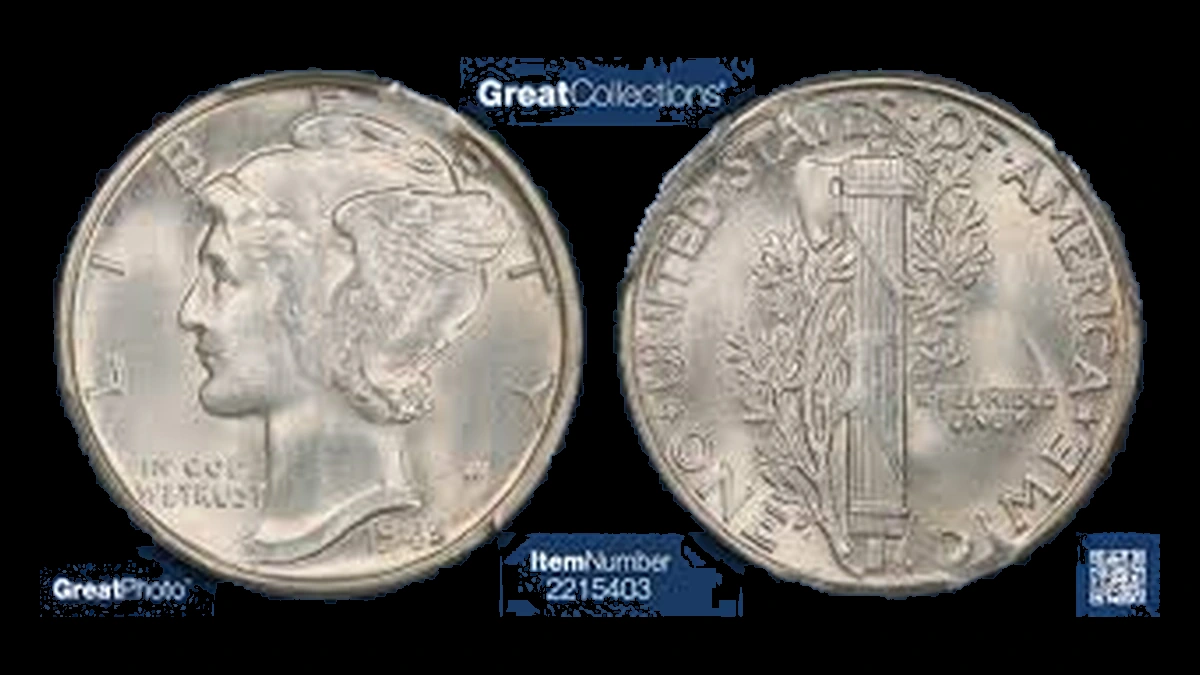
Philadelphia examples include a curved clip at one o’clock and a separate straight clip weighing 2.2 grams. Denver records include a 5% curved clip from about six to eight o’clock and a different NGC MS66 curved clip at three o’clock.
How to Identify
Examine each gap’s endpoints for natural rim formation and metal flow. Saw grooves or crushed finished details can indicate later removal.
Keep each position and the 2.2-gram measurement attached to its actual specimen. Opposite-rim weakness can support a clip when present but does not authenticate an otherwise unexplained cut.
What It’s Worth
$30–$400 is the estimate for genuine Mercury dime clips. A dealer asked $165 for the Denver NGC MS66 clipped at three o’clock.
That is an asking price rather than a confirmed transaction. Clear identity, original boundaries, and remaining condition govern the comparison.
14. 1945 Dime Edge Levels Change around the Coin: Partial or Tilted Collar Error
A Philadelphia NGC MS65 is recorded with partial collar contact. A separate ANACS MS60 has a tilted partial collar, which can make the boundary change height around the circumference.
The collar is the ring that limits outward spread and forms the edge reeding. Incomplete contact lets one portion expand more freely.
How to Identify
Use an edge view to follow the junction between contained and expanded metal, noting how grooves change. A line visible only on the face does not demonstrate the two-level structure.
For a tilted example, track the changing boundary height rather than assuming a level ring. Leave certified coins sealed and exclude later rim crushing or mounting damage.
What It’s Worth
$60–$400 is the estimate for identified partial-collar Mercury dimes. The recorded tilted-collar example brought $312 in December 2020.
The MS60 and MS65 grades do not specify step size. A clearly visible original boundary makes the error easier to compare and display.
15. 1945 Dime Expanded Metal Still Contains the Complete Design: Broadstrike Error
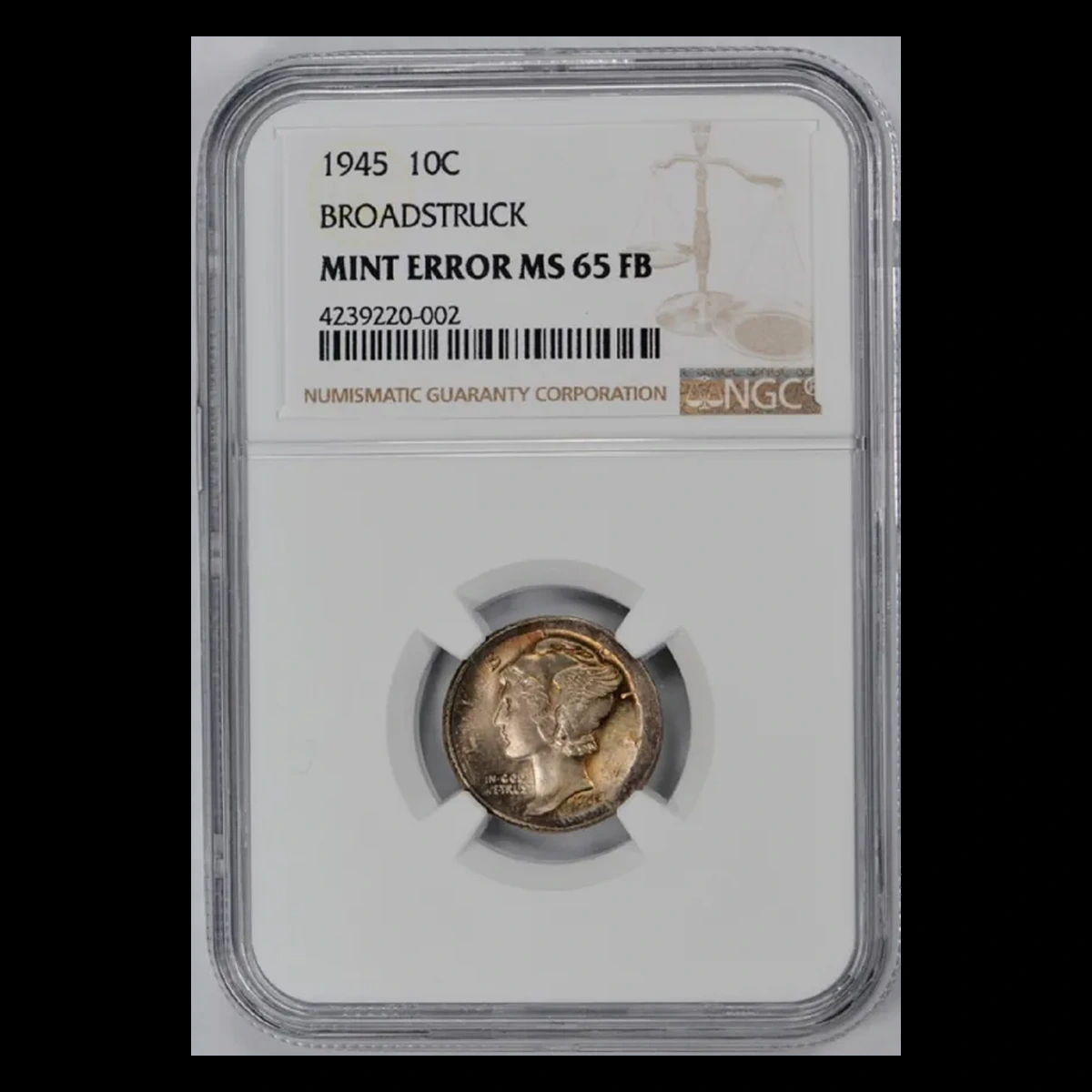
Philadelphia records include an NGC MS66 and an AU58 described as broadstruck on a blank without its usual prepared raised rim. Both concern metal spreading beyond normal collar restraint.
A Denver ANACS MS64 title says broadstruck, while its text describes an off-center strike toward three o’clock. The actual design boundary must resolve that difference.
How to Identify
Trace outer lettering on both faces to determine whether the intended design remains on the metal. An uncentered but complete design can still be a broadstrike.
Examine original edge formation and exclude later hammering. The unprepared-blank attribution is a separate production detail, while the Denver wording cannot establish two additive errors.
What It’s Worth
$40–$500 is the estimate across genuine broadstrikes. Greysheet records $300 in June 2023 for the Philadelphia AU58 broadstrike on a blank.
A separate Philadelphia specimen was designated improperly cleaned. Its genuine expansion must be valued together with that surface problem.
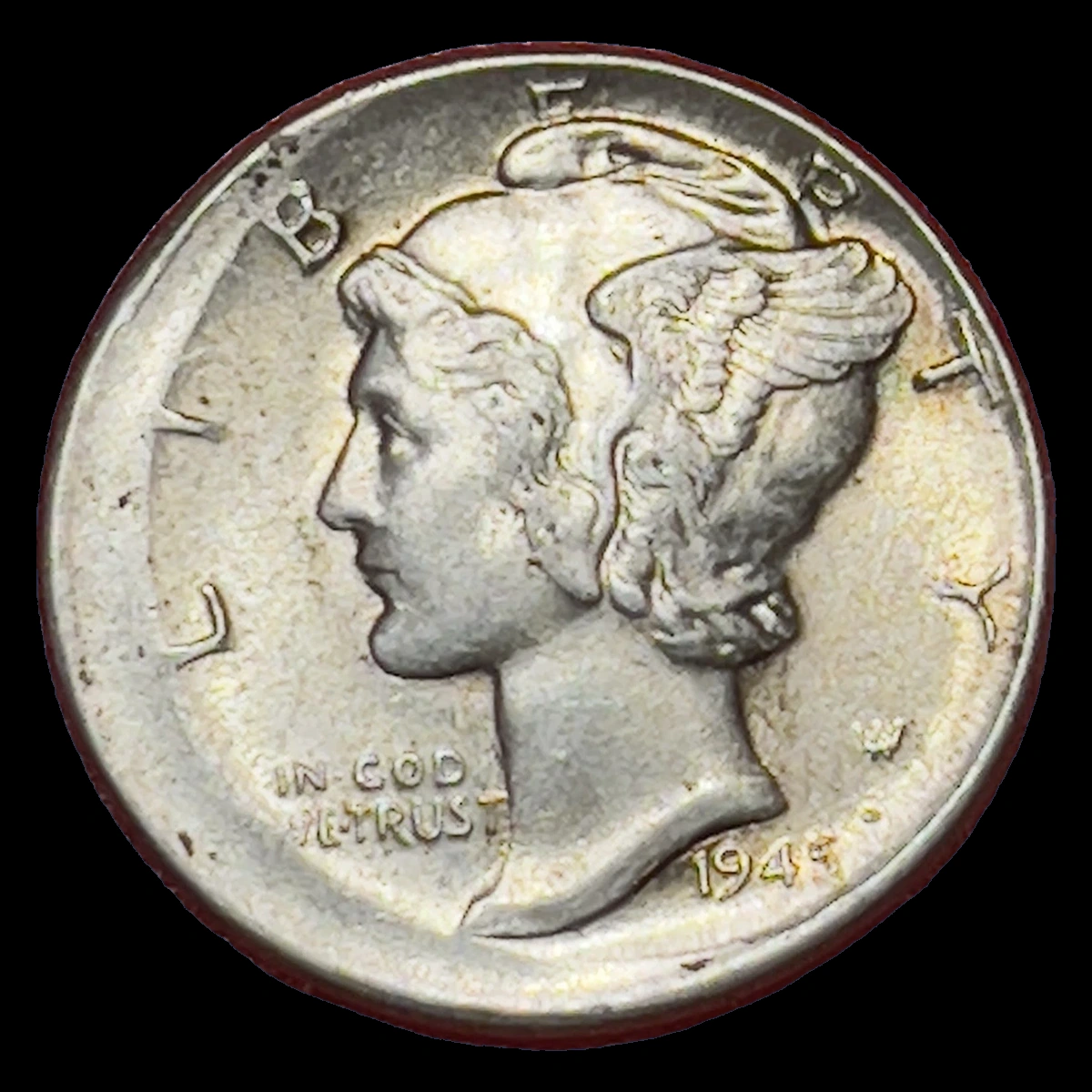
16. 1945 Dime A Blank Crescent Adjoins Missing Design: Off-Center Strike Error
Philadelphia records include 5%, 10%, and 20% off-center pieces and a more worn 15% example. Denver and San Francisco reports include separate coins, among them a 12% San Francisco piece and another with the normal Micro S mintmark style.
How to Identify
Compare the untouched crescent and design cutoff on both faces. The Philadelphia 5% record places the shift toward one o’clock and notes affected tops of ERT, but other specimens do not inherit that position.
Read the date and any surviving mintmark and check the blank area for grinding. On the Micro S example, the small letter is a normal style while the displaced strike is the error.
What It’s Worth
$75–$1,200 is the estimate across genuine dated examples. A Philadelphia 10% MS62 brought $288 in July 2021.
A separate 15% XF40 sold for $252 in June 2024. Different preservation, mint identity, and surviving detail prevent percentage alone from setting the price.
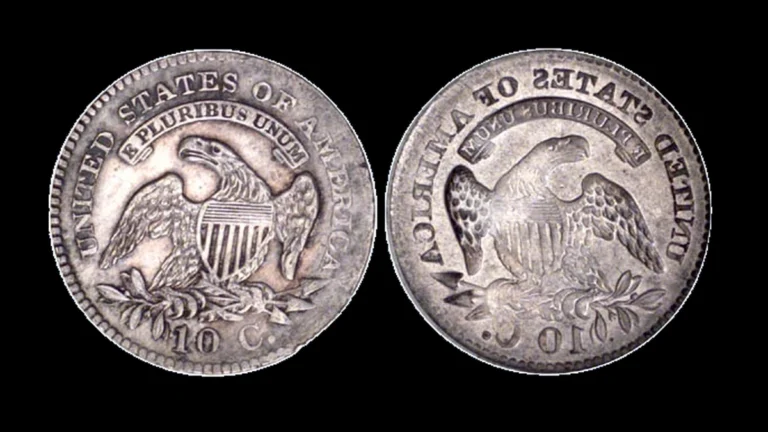
17. 1945 Dime Front and Reverse Designs Cross on Both Faces: Flipover Double Strike Error
A Philadelphia PCGS MS62 was struck twice within the collar after flipping vertically between blows. Its later strike is described as approximately 180 degrees from the first.
Surviving reverse detail can appear over the portrait, with portrait remnants beneath the later reverse. This crossed design relationship distinguishes a flipover from ordinary small doubled-die contours.
How to Identify
Map one recognizable first-strike fragment on each face and follow where the newer design flattens or interrupts it. Both sides should support the same flipover sequence.
The collar can preserve a relatively ordinary outline, so a large unstruck crescent is unnecessary. A later squeeze between finished coins typically creates a recessed mirror transfer instead.
What It’s Worth
$500–$3,500 is the estimate for clearly identified in-collar flipover Mercury dimes. No completed sale was supplied for the PCGS MS62.
Readable traces from both strikes make the sequence easier to establish. Later damage or weak remnants can reduce the coin’s appeal.
18. 1945 Dime The Dime Design Lands on a Foreign Blank: Wrong Planchet Error
A Philadelphia NGC MS64 is identified as struck on a Venezuelan quarter-bolívar blank. It used an unstruck foreign blank rather than an already completed Venezuelan coin.
A separate guide report concerns a Netherlands East Indies ten-cent blank without a matched specimen in the available record. It must not inherit the Venezuelan coin’s grade, mint, or sale.
How to Identify
Compare the candidate’s actual mass, diameter, thickness, and alloy with one plausible foreign blank. The normal Mercury dime’s 2.50 grams and 17.91 mm are reference standards, not measurements of the Venezuelan specimen.
Nondestructive testing should agree with original design fit and an unaltered edge. Low weight alone leaves several explanations and does not establish a foreign origin.
What It’s Worth
$3,000–$10,000 is the estimate for comparable identified foreign-blank examples. The Venezuelan quarter-bolívar-planchet NGC MS64 sold for $6,600 in August 2022.
The separately reported Netherlands East Indies category has a conditional $2,000–$8,000 estimate only after the blank is established. An ordinary underweight silver blank does not qualify automatically.
Conclusion
The best 1945 dime identification explains the whole specimen, including its mintmark, finish, metal, and edge. A small normal Micro S, an eye-appeal star, or Full Bands detail is not itself proof of a mint error.
Keep measured weights and auction results with the coins they describe. Preserve fragile cracks and separations, and require a matching blank composition before assigning the high values associated with foreign-planchet errors.