Rare 2016 Dime Errors (List & Pictures)
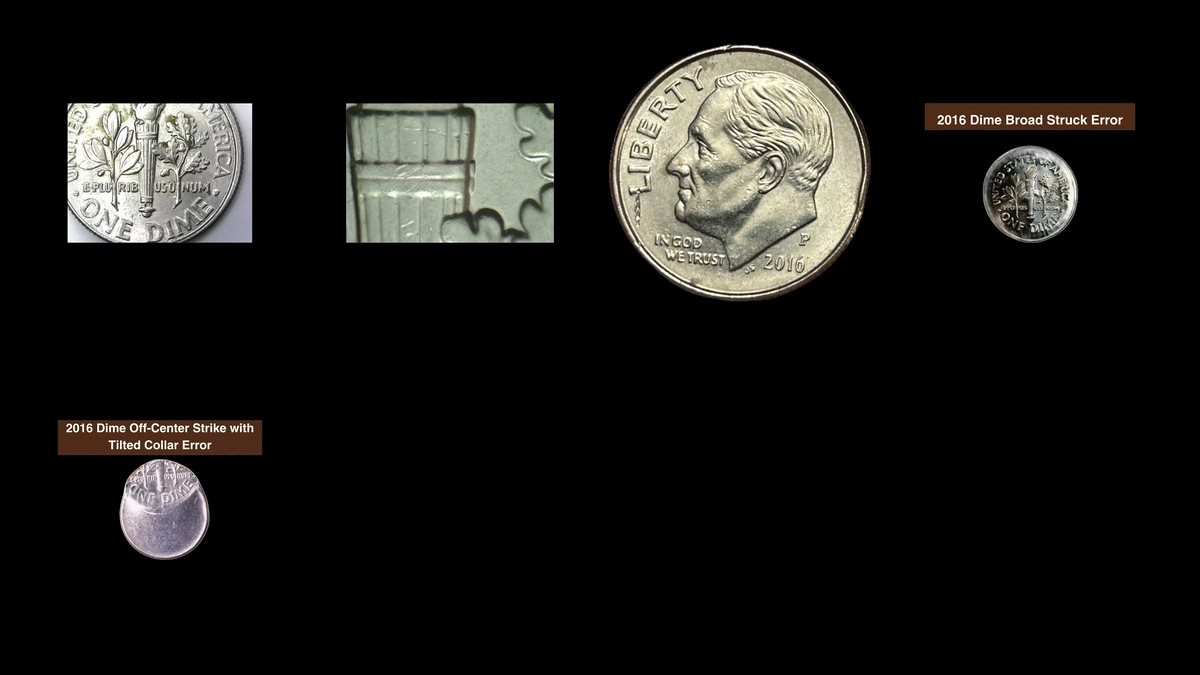
Before naming 2016 dime errors, decide whether the unusual feature rises above the surface, sinks into it, or changes the whole outline. Parallel lines across a portrait do not necessarily have the same cause as a raised chip.
Estimated values run from $2–$1,000, with reported examples requiring their own identification. Follow the surface checks first, then compare width, edge structure, and any missing or attached material.
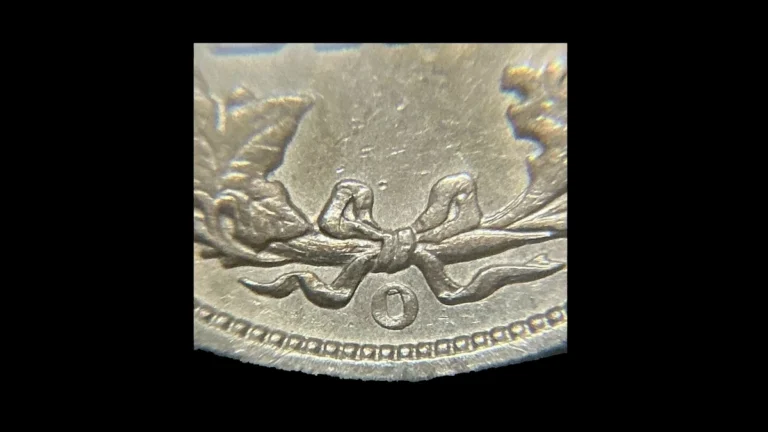
1. 2016 Dime Raised Bumps, a Torch Ridge, or a Rim Patch: Die Chips and Breaks Error
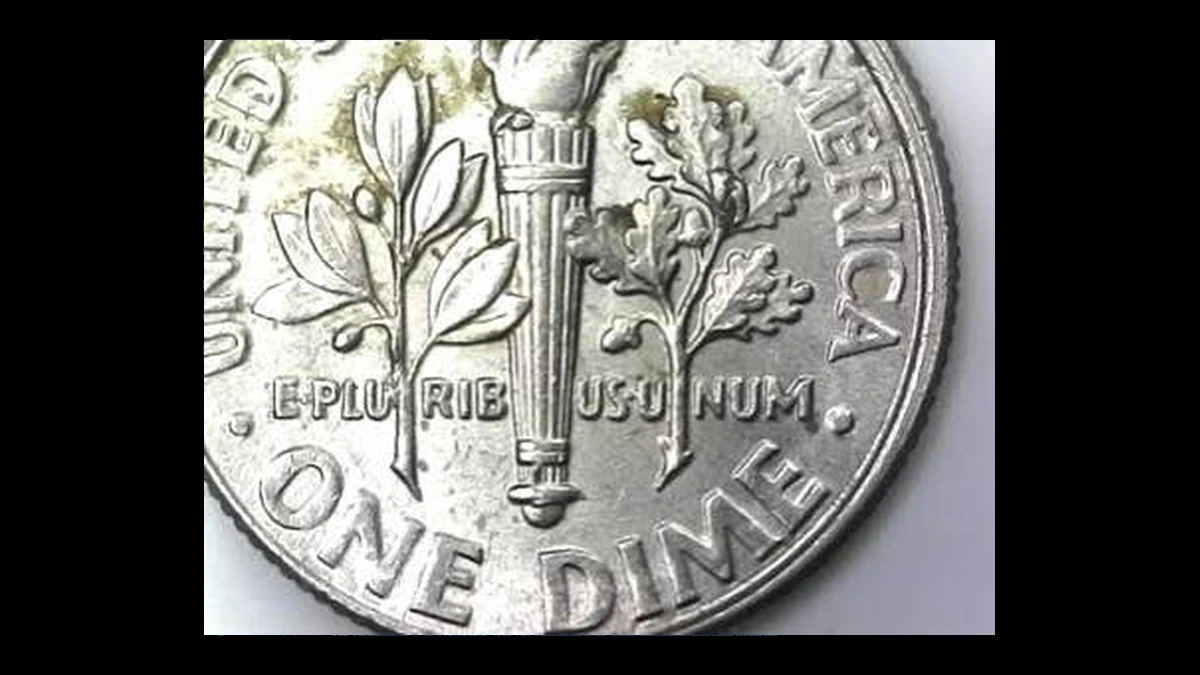
A broken area in a die, the steel stamping tool, fills with coin metal during striking. Small missing pieces leave chips, narrow cracks leave ridges, and larger edge breaks can leave rim-connected cuds.
An NGC MS65 Philadelphia example has chips on both faces. A torch-base crack and a larger rim break are separate reports.
How to Identify
Keep nearby letters and normal design visible while tracing the feature. The torch’s actual base helps distinguish the reported extra ridge from intended detail.
Inspect under side light for raised original metal rather than a central cut or dent with displaced edges. A cud must connect with the rim; an interior bump is a different shape.
The documented Philadelphia chip coin supplies its own matching features. It does not establish where every reported crack or cud must appear.
What It’s Worth
Small chips and cracks are estimated at $2–$40, with clearer rim breaks around $25–$150. No realized price is supplied here for the certified chip example.
Chips on both faces still belong to one whole-coin value. Their mere presence does not automatically place a coin at the upper estimate.
2. 2016 Dime Extra Date Edges or Torch-Band Detail: Doubled Dies Error
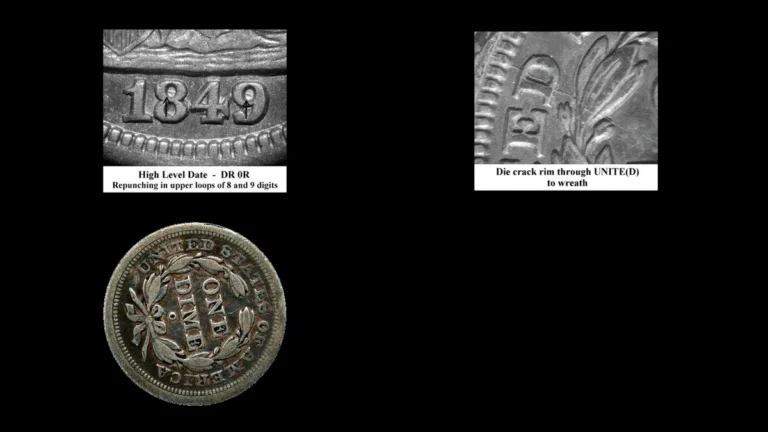
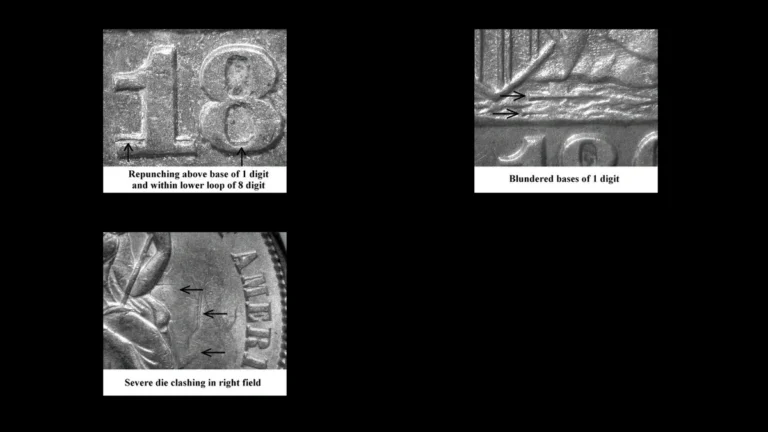
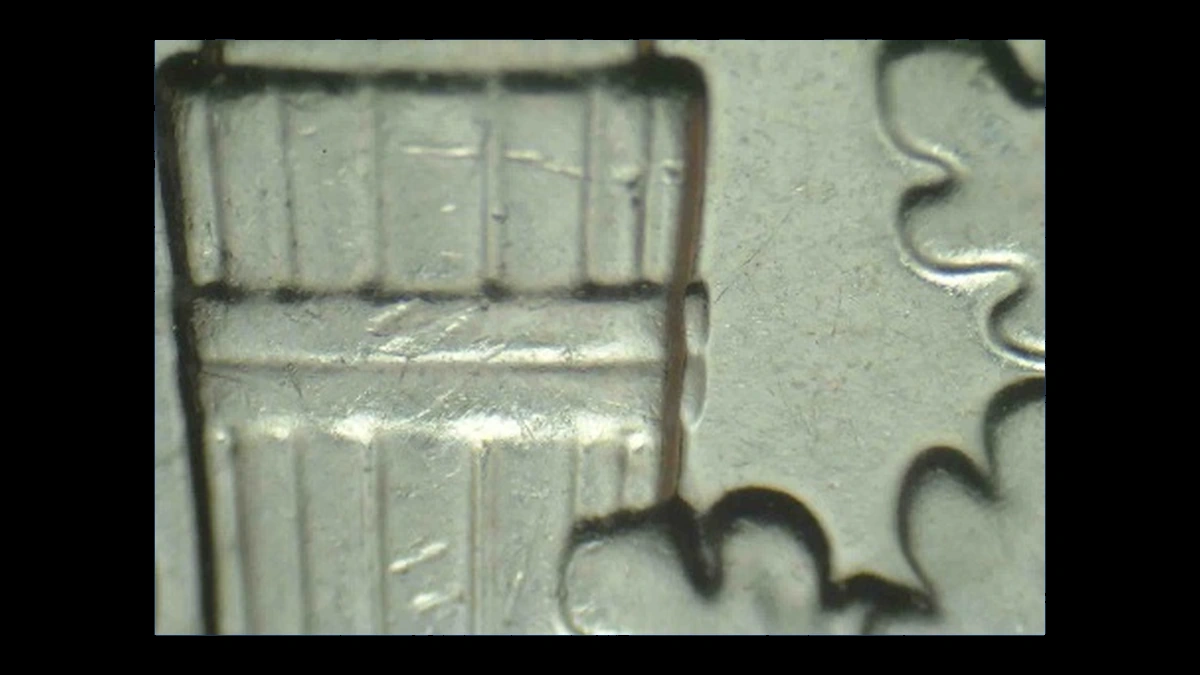
Denver reports include front doubling around 2016 and D, and a separate reverse pattern near the torch’s upper bands. A doubled die already carries its extra design before striking the coin.
How to Identify
Choose the face being examined and compare a recognizable repeated outline. Front date detail does not prove that the same coin also has the reported reverse pattern.
At the torch, inspect the upper bands and any added shape extending into the neighboring flat area. Move the light to separate rounded raised detail from a low flat shelf.
The modern D was part of the tool’s design rather than hand-punched separately into each working die. An extra-looking mint letter therefore does not establish an old-style repunched mintmark.
What It’s Worth
Identified minor doubled dies are estimated at $10–$150. Clear separation and sound surfaces support a more convincing match than an enlarged blurry edge.
Ordinary flat shelf doubling often adds little or nothing. General date thickness is insufficient for the variety range.
3. 2016 Dime Parallel Portrait Lines: Reported Feeding-Mechanism Marks Error
The Denver report links organized lines across Roosevelt to the mechanism that feeds blanks into the press. Their appearance still needs to establish whether a tool was marked or an object directly interrupted the strike.
How to Identify
Follow a line across the portrait and onto the surrounding flat surface. Determine whether it stands above the coin, cuts into it, or belongs to a broader depression.
Raised marks copied from tool damage should have a matching repeatable path and spacing on other examples. Sharp grooves with pushed-up lips may instead be parallel scratches added later.
A depressed area calls for an obstruction comparison without guessing its material. Parallel direction alone cannot identify the feeding mechanism or the exact process.
What It’s Worth
Clearly identified mint-made marks of the reported type are estimated at $10–$200. A visible pattern that agrees with the original strike provides better evidence than faint unexplained lines.
Later scratches are outside that range, and raised tool marks should not be priced as though a direct obstruction were established.
4. 2016 Dime Weak Portrait Detail or Two Hollows: Struck Through Material Error
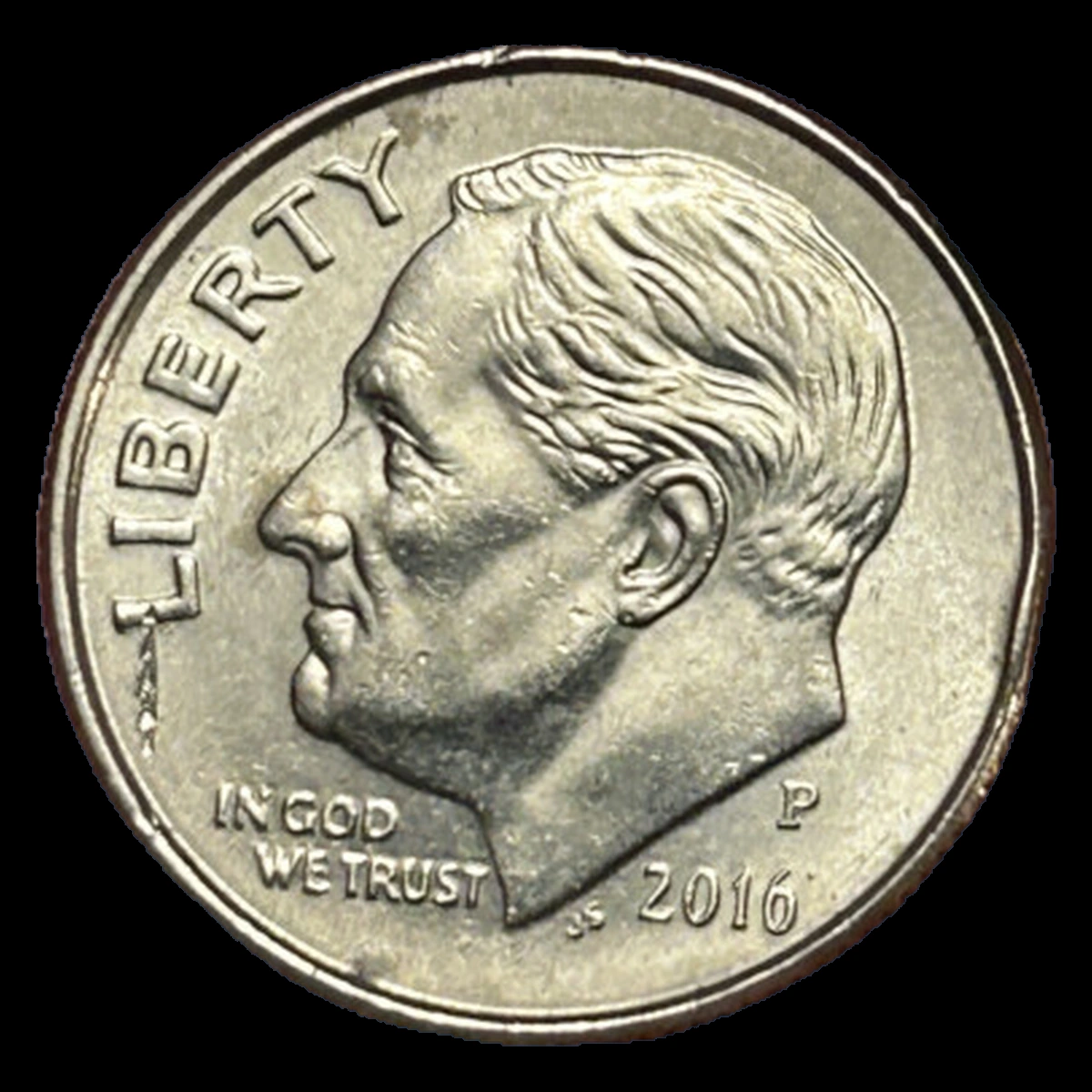
The Denver report describes broad portrait weakness, while a separate Philadelphia coin has depressions below the ear and near the bridge of the nose. Grease can weaken detail, and firmer material can leave a more defined impression.
How to Identify
Compare the Philadelphia hollows with the photographs discussed by specialists. Their opinion favored strike-throughs rather than peeling metal and applies to those particular marks.
Inspect each boundary for original interruption versus sharp impact lips or scraping through finished design. The locations help identify the example but do not reveal the blocking material.
For Denver’s weaker portrait, compare the affected area with nearby sharp detail. Wear across exposed high points provides a different explanation from localized blockage.
What It’s Worth
Minor confirmed grease weakness is estimated at $5–$40, and distinct original depressions at $20–$300. A 1986-P nickel struck through material sold for $204 in June 2023.
That different-denomination comparison does not price the Philadelphia dime’s hollows separately. Both are features of one coin.
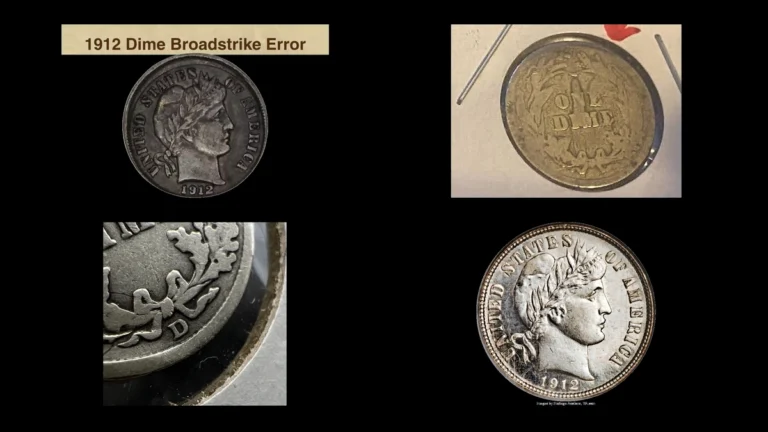
5. 2016 Dime A Complete Design within a Wider Outline: Broadstrike Error
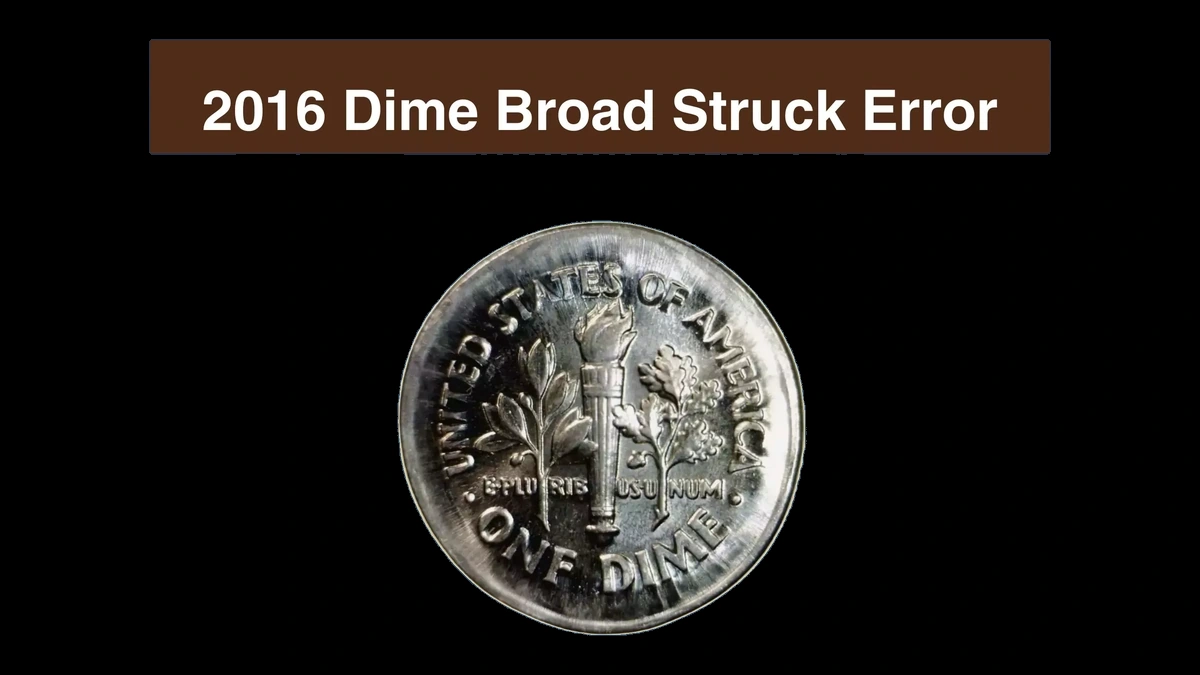
A reported Philadelphia example spread outward because the collar failed to restrain the blank. The collar is the ring that normally controls diameter and forms the grooved edge.
How to Identify
Trace the outer lettering on both faces to confirm that the intended design remains on the metal. Uneven border widths can still occur on a broadstrike.
A normal clad dime is 17.91 mm across and weighs 2.268 grams. Extra spread should agree with natural edge structure, not flattened high points or scraping from later crushing.
Keep the entire coin visible in photographs. A smooth edge alone may result from wear or grinding and cannot establish the wider struck shape.
What It’s Worth
Genuine Philadelphia broadstrikes are estimated at $30–$500. The stronger end requires clear expansion and attractive original detail.
A slight spread on a marked coin usually offers a weaker comparison than a bold, well-preserved example.
6. 2016 Dime Displaced Design with an Edge Step: Off-Center and Partial Collar Error
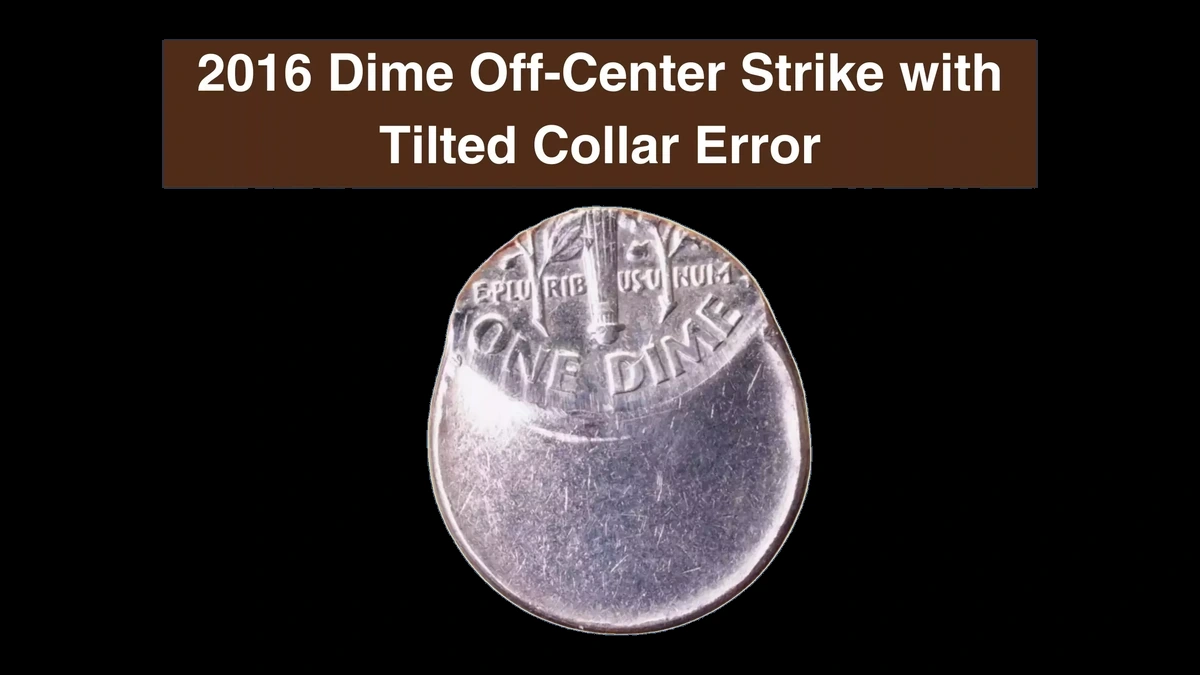
The Philadelphia report combines a misplaced blank with uneven collar restraint. One effect leaves design beyond the metal; the other changes the edge’s levels and groove pattern.
How to Identify
First compare both faces for matching untouched areas and cut-off design. A shift on just one side can instead indicate a misaligned tool.
Then view the side to follow a step between normally grooved metal and the portion that expanded farther. A later edge dent does not establish partial collar contact.
No precise displacement or direction is supplied. Photograph the full outline, date, and edge rather than deriving a percentage from a tight crop.
What It’s Worth
A genuine example showing both effects is estimated at $50–$600. Date visibility, displacement, edge clarity, and preservation influence the whole-coin assessment.
Do not add two complete price ranges for the same object. A simpler clean coin can be more appealing than a heavily damaged combination.
7. 2016 Dime Exposed Copper beside a Layer Boundary: Missing Clad Layer Error
The Denver missing-layer report does not establish which face is affected. Ordinary clad dimes place pale outer layers over a copper center, which can become visible when an outer layer is absent.
How to Identify
Examine an edge view before interpreting a brown face. The layer structure, measured loss, and original struck design should support the same explanation.
Scraping, chemicals, heat, and residue can alter color or weight later. A natural boundary differs from a worked or coated surface.
San Francisco also made 90% silver Proof dimes weighing 2.50 grams. Their normal lack of a clad copper stripe is not evidence of a missing outer layer.
What It’s Worth
Genuine partial or complete layer loss is estimated at $50–$600. A 1986-P quarter missing its front layer sold for $62 in September 2024.
That different-denomination comparison shows a separate loss on a separate coin. The Denver dime’s affected area and condition require their own assessment.
8. 2016 Dime A Piece Still Attached to the Surface: Retained-Material Strike-Through Error
The reported Denver category involves an obstruction that remained with the coin after striking. No particular substance or fixed location is established.
How to Identify
Leave the piece attached and photograph its boundary from above and from the side, with date and D also recorded. The original design should make sense around the obstruction.
Look for glue, deposits, or a later dent that could explain an attached object. A speck resting on a finished coin does not prove mint origin.
Do not scrape or probe the junction to reveal more detail. An intact contact area offers better evidence than a cleaned hollow and a loose fragment.
What It’s Worth
Identified retained-material strike-throughs are estimated at $100–$1,000. The clarity of the original connection, size of the effect, and preservation determine the useful comparison.
This conditional range does not authenticate every attached particle. Its material and origin should remain unspecified unless examination supports them.
Conclusion
A 2016 dime’s unusual surface should first be classified as raised, recessed, missing, or attached. Those distinctions help separate broken tools, interrupted strikes, layer problems, and deposits added later.
Keep Philadelphia and Denver reports separate, especially the two portrait hollows and the different doubled-design patterns. For a changed outline, photograph both faces and the edge; for attached material, preserve the original connection that makes the error identifiable.