Rare 2020 Quarter Errors (List & Pictures)
The same “extra branch” description can point to two different features on a 2020 quarter. Estimated values for 2020 quarter errors range from $2 to $7,500, with the upper figure based on a dealer’s asking price.
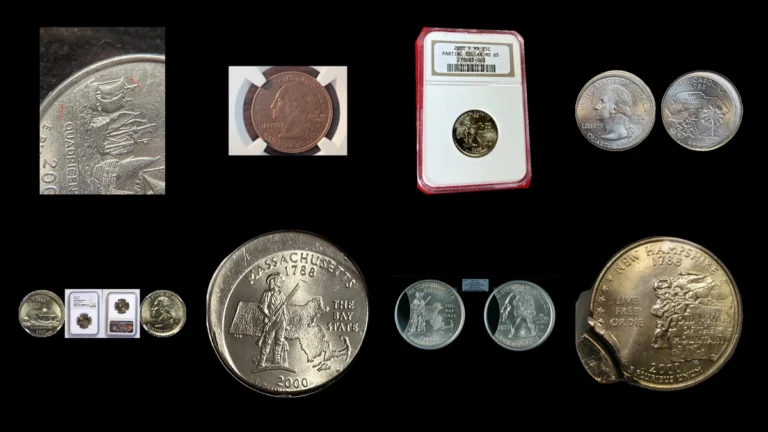
Among the supplied completed-sale comparisons, a different-year South Carolina quarter missing its reverse layer brought $336 in September 2024. Identify the park and mint first, then distinguish raised detail, sunken marks, and changes to the coin’s shape.
| Visible clue | Possible cause | Estimated value |
|---|---|---|
| Sunken Marsh-Billings-Rockefeller branch | Debris during tool making | P: $5–$50; W: $15–$100 |
| Raised repeated letters, roots, or branch | Doubled die | $5–$200 |
| Unexpected opposite-face outline | Die clash | $15–$150 |
| Lump or raised line | Die chip, crack, or cud | $2–$250 |
| Missing or interrupted detail | Struck through or filled die | $10–$500 |
| Copper-colored reverse with metal absent | Missing clad layer | $250–$2,500 |
| Incomplete metal disk | Clip, sometimes with an off-center strike | $100–$2,500 |
| Design falls beyond the blank | Off-center strike | $75–$1,000 |
| Earlier letters beneath a later design | Double strike | $1,500–$7,500 |
1. 2020 Quarter A Sunken Extra Branch: Tool-Making Debris Error
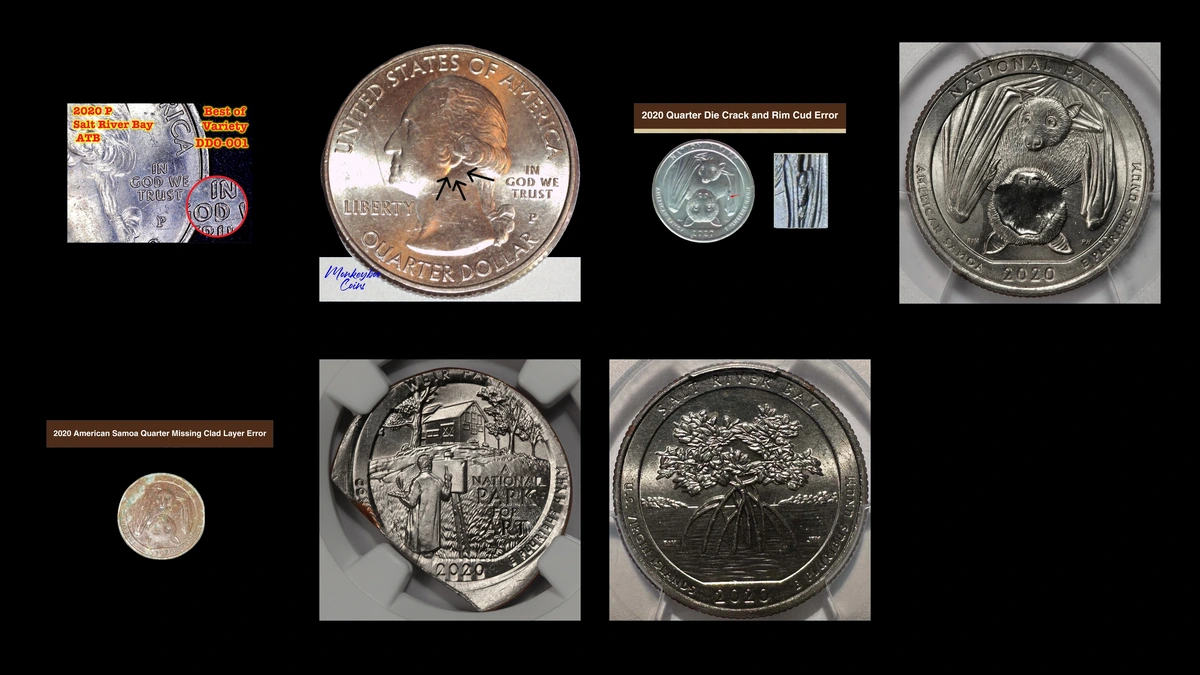
On listed Marsh-Billings-Rockefeller varieties, inspect the space between the large tree’s two lowest right-hand branches. An additional branch-like shape can lie below the surrounding surface.
The catalog explanation involves debris affecting a working hub, a tool used to make coin dies. Some earlier doubled-die labels were revised as these sunken features were studied.
How to Identify
Keep the trunk and both neighboring branches visible while changing the lighting direction. The key distinction is a recessed shape, unlike the raised extra branch in the doubled-die group below.
Philadelphia and West Point listings exist, so match the actual P or W issue and its specific details. An arbitrary scratch in the tree does not establish the copied tool flaw.
What It’s Worth
$5–$50 is the supplied Philadelphia estimate, while comparable West Point examples are estimated at $15–$100. The W range includes the normal collector value of that issue.
A clear catalog match and sharp surfaces make a small feature easier to appreciate. The estimate does not imply that every recessed line is a valuable new error.
2. 2020 Quarter Raised Extra Roots, Branches, or Letters: Doubled Die Error
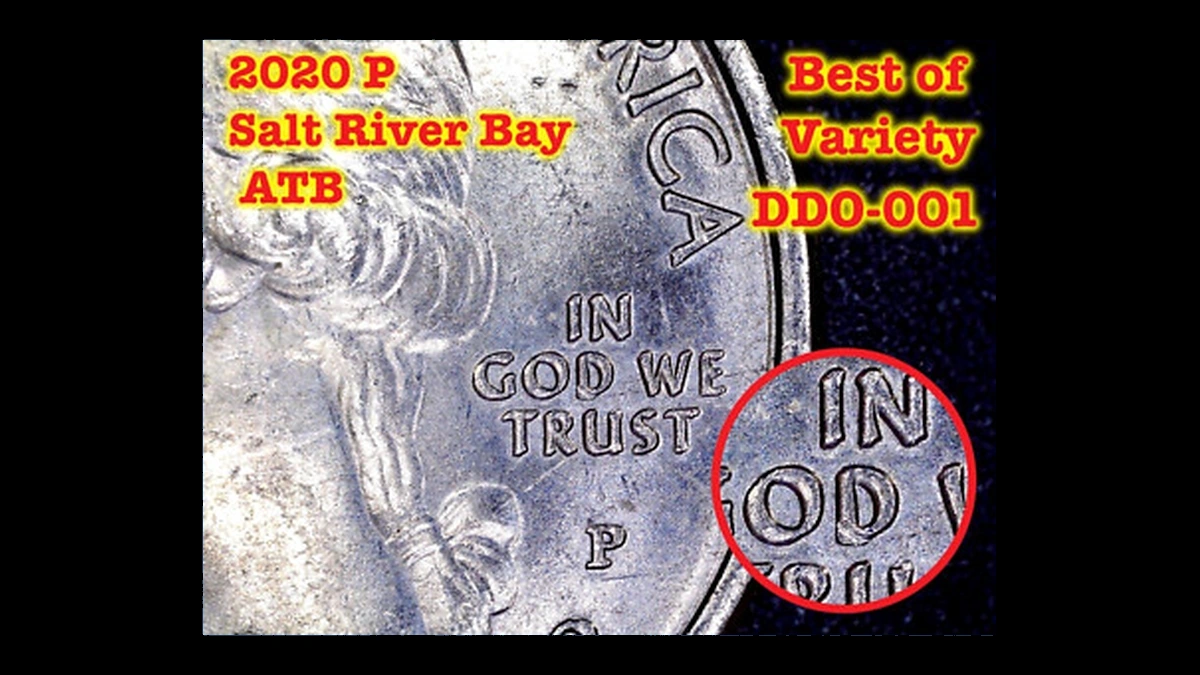
Salt River Bay and Marsh-Billings-Rockefeller have reported doubled-die details that rise from the coin’s surface. A repeated feature already present in the die can appear after a single strike.
Salt River Bay Philadelphia reports include a notched Y in LIBERTY and extra detail beside the upper knotted root. A Denver reverse report instead concerns thickening and separation in the JFM initials.
How to Identify
On the Philadelphia Salt River Bay front, compare the upper-left end of the Y and the motto; on the reverse, examine the left side of the upper knotted root. These are separate inspection targets rather than one guaranteed combination.
For Denver, match the JFM pattern with the listed Salt River Bay photographs. Do not expect its details to reproduce the Philadelphia root report.
The Philadelphia Marsh-Billings-Rockefeller doubled branch appears between the large tree’s lowest right branches and is raised. A sunken branch in a similar location requires the separate tool-making explanation above.
What It’s Worth
$5–$200 is the estimated range for matched minor doubled-die varieties. Clear separation and an undamaged surface are more persuasive than a nickname.
Flat shelves caused by strike movement and ordinary thick details do not receive the same attribution. Wear can also erase the small features needed for a reliable comparison.
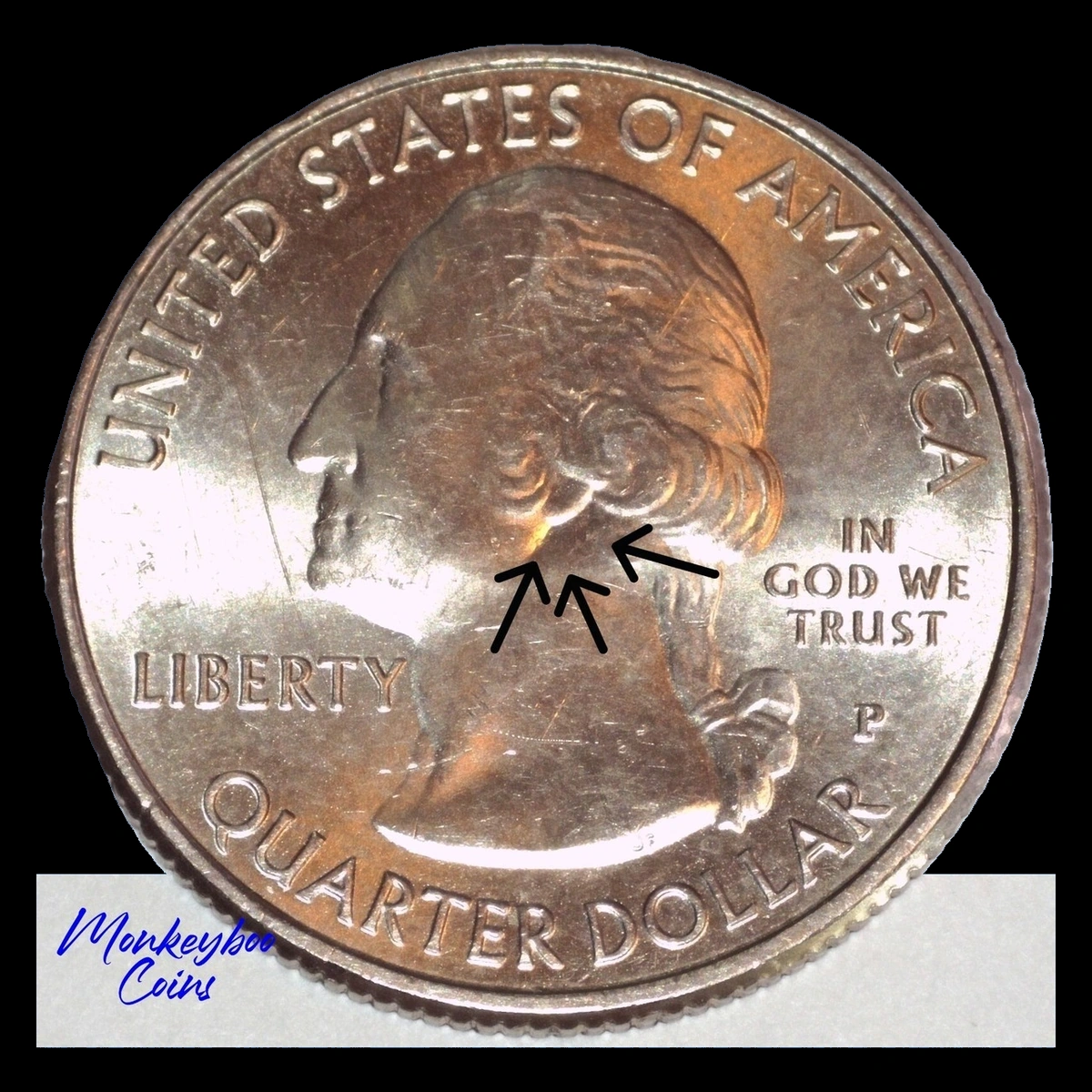
3. 2020 Quarter The Other Face Leaves a Faint Outline: Die Clash Error
A die clash occurs when the opposing dies meet without a blank between them. Damage transferred during that contact can leave recognizable traces of the opposite design on later coins.
CONECA’s 2020 publications report a Philadelphia Weir Farm clash and a separate American Samoa example. The Samoa report does not establish its mint.
How to Identify
Compare the suspicious outline with the actual design on the other face, using photographs of the whole coin. Connected matching shapes provide a stronger case than one unexplained line.
The painter scene and the bats produce different possible outlines. A bat-related shape cannot authenticate a Weir Farm clash, and scratches crossing completed detail need a separate explanation.
What It’s Worth
$15–$150 is the supplied estimate for recognizable minor clashes on ordinary 2020 quarters. Strong, traceable transfer is usually more appealing than faint lines that are hard to demonstrate.
The published reports provide identification context rather than a universal sale price. Cleaning or wear can obscure the evidence even when a genuine clash was originally present.
4. 2020 Quarter Bumps on Bats, Clothing, or Wings: Die Chips and Breaks Error
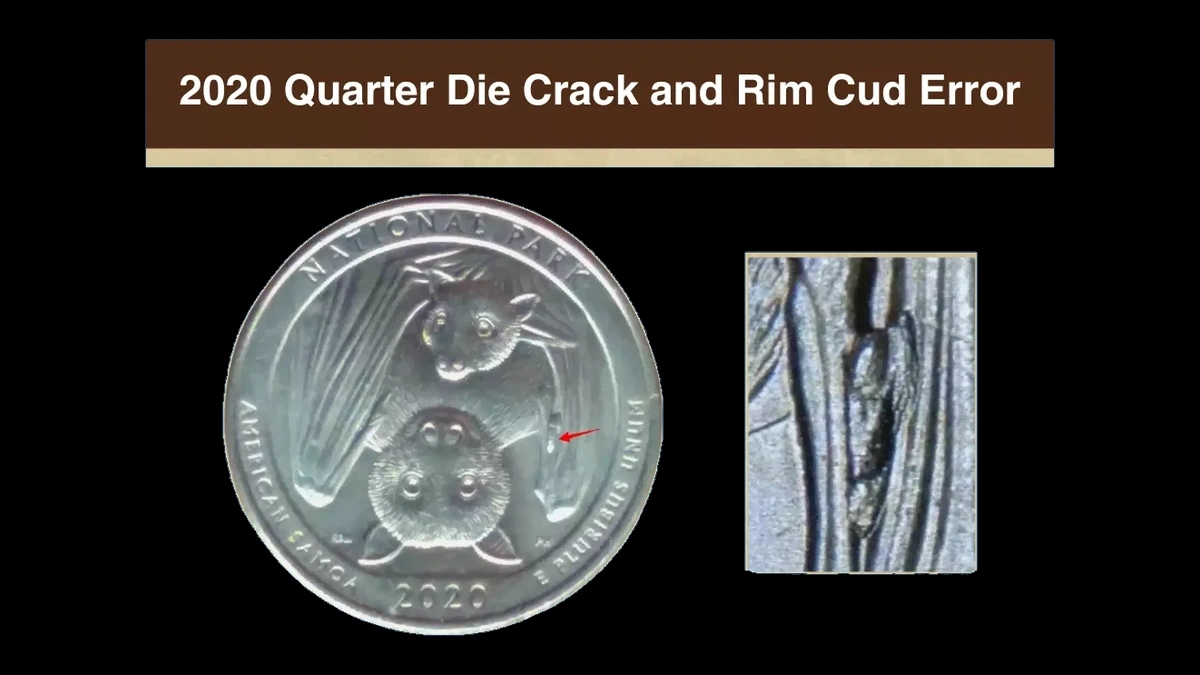
Small missing pieces of a die leave raised bumps on the coins it strikes. Narrow fractures leave ridges, while a larger broken area connected to the die’s edge can produce a rim-connected lump called a cud.
Reports include Philadelphia Samoa bat chips, Denver Weir Farm smock or easel bumps, and Tallgrass Prairie butterfly-wing chips. West Point reports include a Weir Farm crack and a rim break on an unspecified park design.
How to Identify
Compare the affected park scene with a normal example and use side lighting to establish that the feature is raised. A bat with interrupted detail may belong to the struck-through category instead.
Trace a suspected cud all the way to the rim; an internal lump is not enough. Both the W mint mark and V75 mark are normal features, so their presence does not identify a nearby bump as an error.
What It’s Worth
$2–$20 is the estimate for small P or D chips, while clearer cracks and substantial original rim breaks are estimated at $20–$250. Relevant W collector value is included in the whole-coin comparison.
A tiny butterfly-wing lump and a large cud should not share a price merely because both involve a broken die. Size, visibility, and original surfaces matter.
5. 2020 Quarter A Bat or Letter Loses Detail: Struck-Through or Filled-Die Error
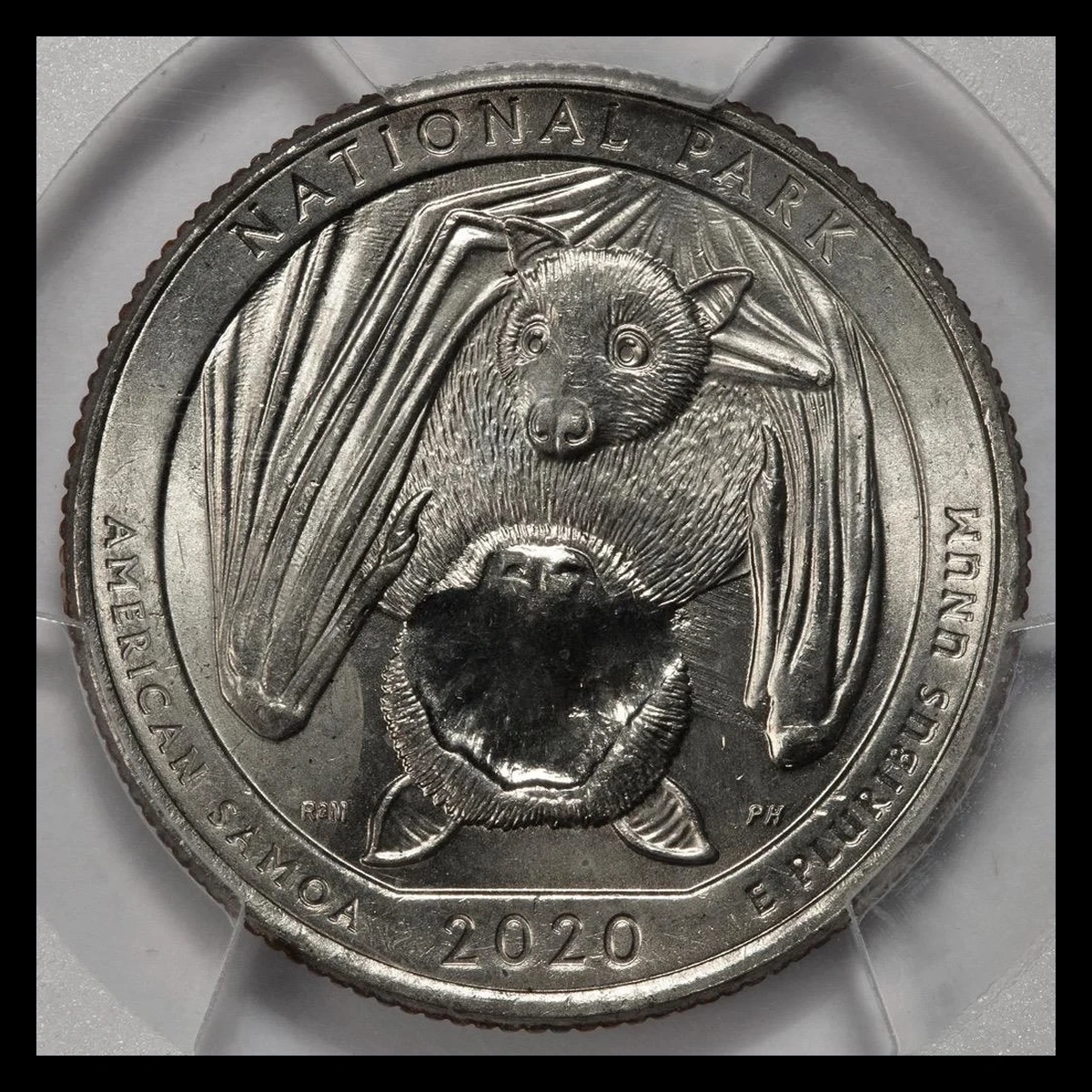
An obstruction during striking can leave a depression or prevent details from forming. Grease filling a die’s recesses can produce weak letters without leaving a sharply outlined object impression.
Two separate Samoa examples are supplied: a PCGS AU58 reverse struck-through coin and an illustrated PCGS MS64 coin with the bat affected. West Point reports concern Tallgrass Prairie’s front and the N in IN GOD WE TRUST on Weir Farm.
How to Identify
Inspect the transition from normal design to the affected patch, watching for scrape marks or displaced metal from later damage. On a weak N, compare neighboring letters and other high points to assess wear.
The Samoa auction title does not establish that the bat lost both eyes. Keep the actual mark, grade, park, and mint attached to the individual coin rather than combining descriptions.
What It’s Worth
$10–$100 is the supplied estimate for modest filled-detail effects, and $50–$500 covers larger clear impressions. Normal W collector value can influence the whole-coin result.
The Philadelphia Samoa reverse struck-through quarter graded AU58 sold for $104 on September 16, 2024. That lightly worn specimen’s result does not become the price of the separate MS64 bat example.
6. 2020 Quarter Copper Shows Across the Reverse: Missing Clad Layer Error
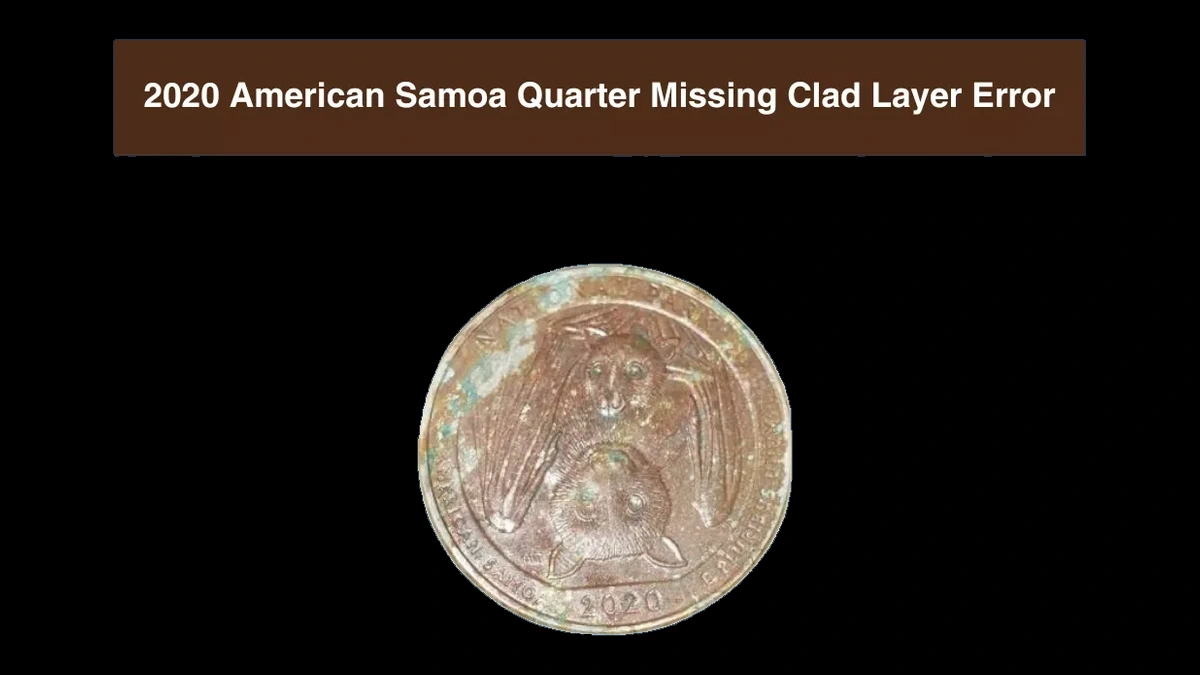
The copper core becomes exposed if a clad quarter loses an outer copper-nickel layer before striking. A secondary year guide reports a Denver Samoa coin with about 98% of its reverse layer missing and a PCGS MS64 grade.
How to Identify
Examine the edge and any surviving patch of outer metal alongside the bat design. The evidence should explain original striking on exposed copper, rather than staining, chemical stripping, or grinding.
A normal clad quarter weighs 5.67 grams, but no single low weight proves a missing layer. The .999 silver Proof has no clad layer to lose, so confirm the coin’s composition first.
What It’s Worth
$250–$2,500 is the estimated range for a confirmed broad missing-layer error on a 2020 clad quarter. The extent of metal loss and preservation influence the comparison.
A 2000-P South Carolina quarter missing its reverse layer, graded PCGS AU58 and recorded at 4.64 grams, sold for $336 in September 2024. That weight and sale belong to the South Carolina coin, not the reported 2020-D Samoa example.
7. 2020 Quarter Metal Is Missing from the Outline: Clipped Planchet Error
The supplied clipped-blank examples have three distinct shapes. Samoa has a 15% curved clip and NGC MS61 grade, while Salt River Bay has an elliptical outline and a recorded weight of 4.3 grams.
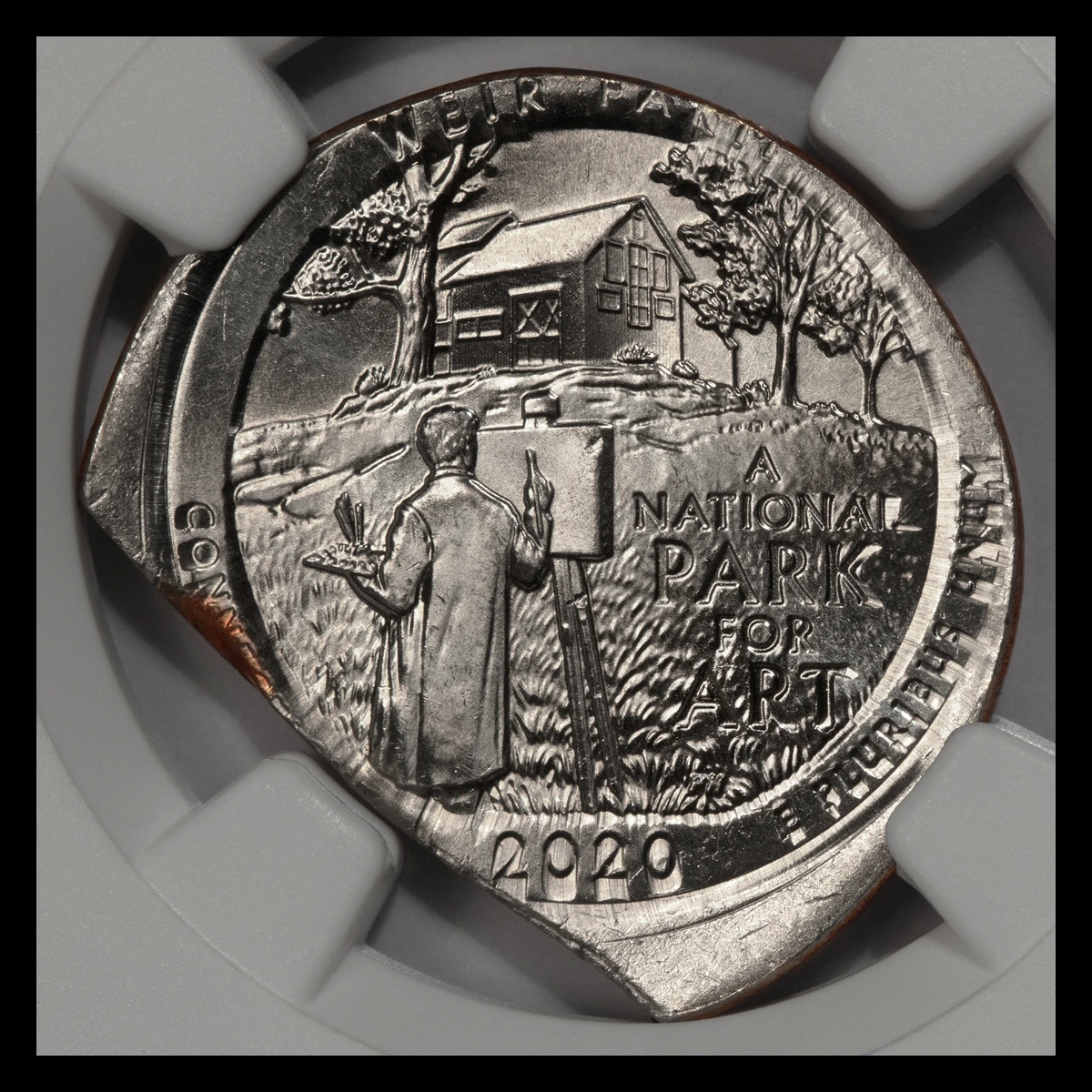
The NGC MS63 Weir Farm coin combines a 20% straight clip with an off-center strike. Its 20% figure describes the missing blank portion, not the striking displacement.
How to Identify
Use the illustrated park-quarter errors to compare the actual outlines. Follow each clip boundary for original struck metal meeting an incomplete blank, rather than a later cut.
On Weir Farm, distinguish the absent straight segment from the unstruck metal left by the off-center blow. On Salt River Bay, retain the documented 4.3-gram measurement without transferring it to the other two coins.
What It’s Worth
$100–$2,500 is the supplied range across these recognizable clips and combinations. The Weir Farm coin requires one whole-coin valuation, not two added full prices for its separate errors.
A 2000-P New Hampshire elliptical-blank quarter graded PCGS MS66 sold for $288 in September 2024. It offers a different-year shape comparison and does not establish the value of each 2020 specimen.
8. 2020 Quarter Part of the Picture Misses the Metal: Off-Center Strike Error
A misplaced blank can leave an unstruck crescent opposite a design that runs beyond the edge. A year guide describes a West Point Salt River Bay example as approximately 16% off center and MS66.
A separate Marsh-Billings-Rockefeller report concerns ROCKEFELLER near the rim. That lettering position alone cannot distinguish an off-center blank from a misaligned die.
How to Identify
Compare both faces to see whether their missing design fits the same displaced blank. If one face remains centered, investigate die alignment before accepting an off-center label.
Check the surviving date and mint mark on the actual coin. The reported W, MS66 grade, and 16% displacement belong together only when the pictured specimen matches that description.
What It’s Worth
$75–$1,000 is the supplied estimate for genuine dated 2020 off-center quarters. A W issue can include a normal collector premium in addition to interest in the error.
A 2000-P Virginia quarter struck 20% off center and graded NGC MS64 sold for $154 in September 2024. It is a completed-sale comparison, not a reported sale of the Salt River Bay W coin.
9. 2020 Quarter Earlier Letters Survive Beneath the Main Design: Double Strike Error
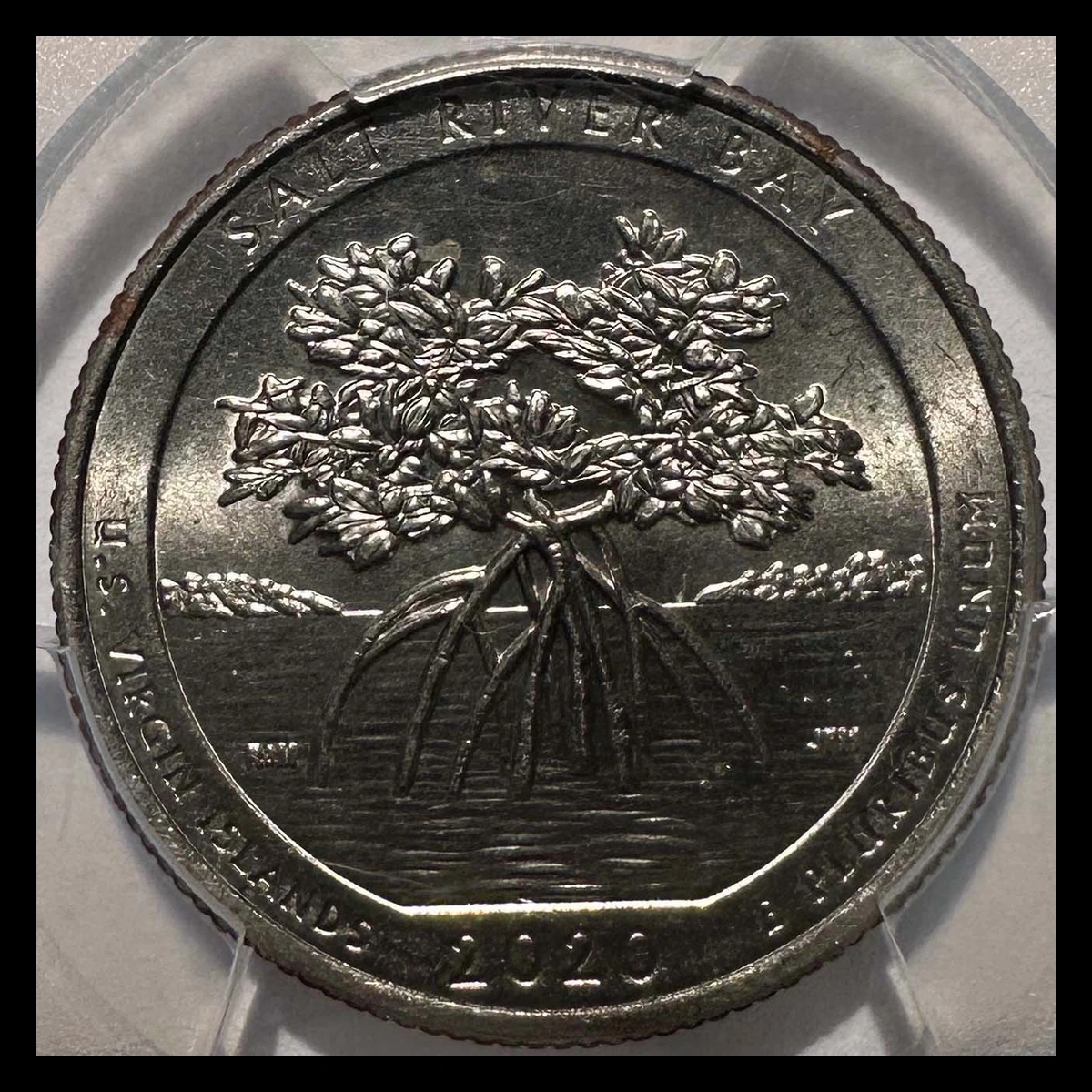
On the PCGS MS64 Philadelphia Salt River Bay double strike, remnants of BAY and E PLURIBUS UNUM reveal an earlier impression. The first blow was slightly off center and outside the collar.
The coin then received a properly positioned second blow that covered most of the first design. The remaining letters preserve evidence of that sequence.
How to Identify
Separate the main centered lettering from the surviving shifted letters and compare their positions across the reverse. The remnants should fit an earlier complete design, much of which was overwritten.
A small extra root from a doubled die does not demonstrate two strikes. Keep the full coin, date, and P mint mark visible when comparing it with the documented MS64 example.
What It’s Worth
$1,500–$7,500 is the supplied estimate for this distinctive kind of 2020 double strike. The PCGS MS64 Salt River Bay specimen is offered at $7,500, which is a dealer asking price rather than a completed sale.
Earlier modern-quarter double strikes can cost much less. The upper figure depends on this particular coin’s appeal and cannot be justified by one vaguely doubled-looking root.
Conclusion
Identify the park design before pursuing a 2020 quarter error, because each scene supplies different landmarks. A raised branch, recessed branch, bat chip, and missing bat detail can have entirely different origins despite similar collector descriptions.
For shape and layer errors, include both faces and the edge in the comparison. Keep reported specimens, completed sales, and asking prices separate so the evidence supports the value being discussed.