Rare 1992 Dime Errors (List & Pictures)
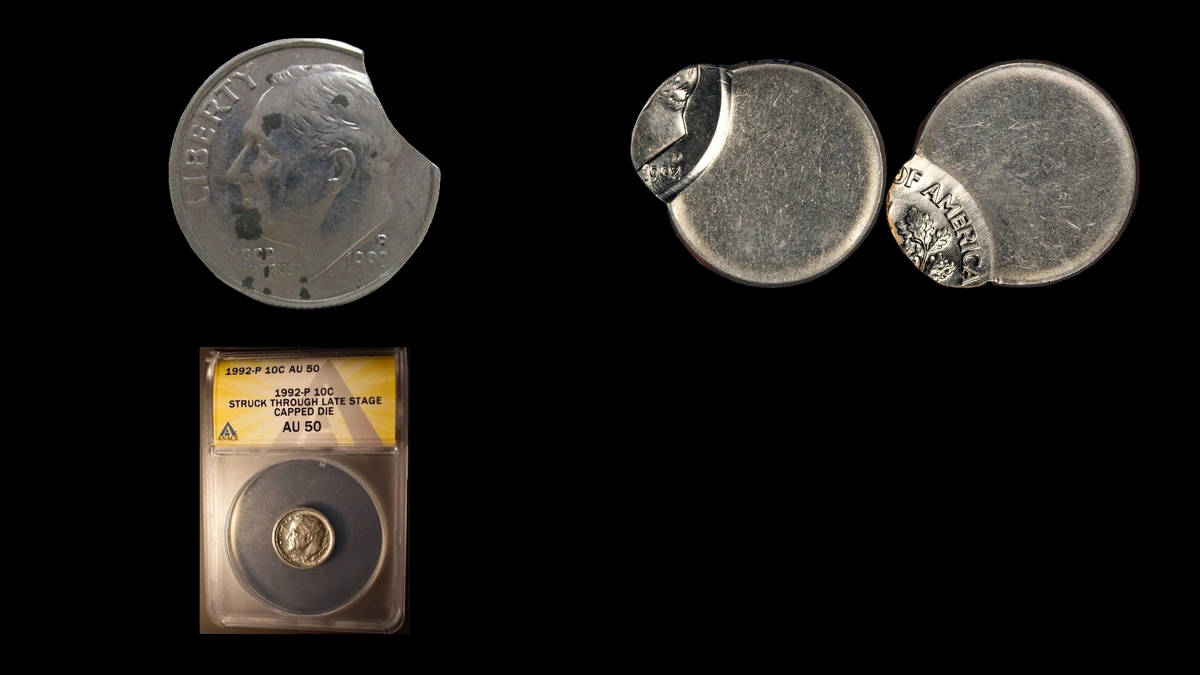
A dime can look odd because its design moved, its metal changed, or part of the strike never formed. These 1992 dime errors have estimated values of $2–$3,000.
A Denver dime with three strikes sold for $129 in June 2023. Start with the lettering and border, then use the edge and weight to investigate unusual metal.
1. 1992 Dime The Design Looks Shallow: Weak Strike Error
A weak strike leaves parts of Roosevelt or the torch incompletely formed. This category is reported for 1992 without one established mint or fixed pattern.
Wear makes a coin smooth by removing detail later. A weak strike begins with less detail from the press.
How to Identify
Compare exposed high points with protected spaces inside letters. Original surface texture in a faint area can help show that the design never fully formed.
Examine both faces under changing light. A few missing letters beside sharp details may suggest a local blockage instead of broad strike weakness.
What It’s Worth
$2–$75 is the estimated range for noticeable original weakness. Slight softness often has little premium.
An otherwise fresh coin makes the weak strike easier to demonstrate than a heavily worn one.
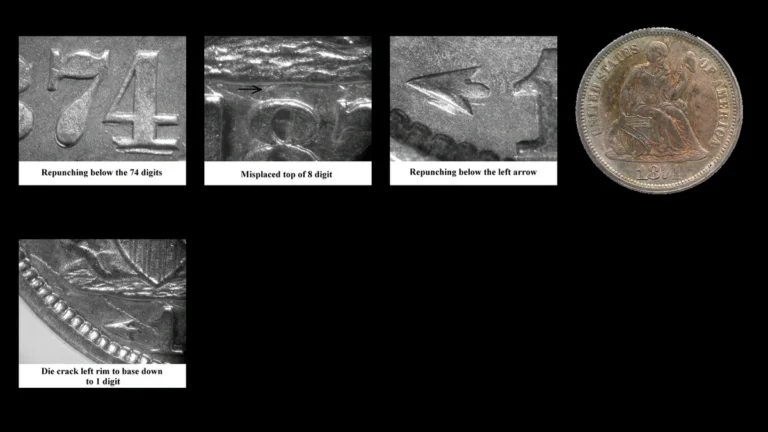
2. 1992 Dime A Line or Lump Rises from the Surface: Die Crack or Chip Error
A crack in a stamping tool, called a die, can leave a raised line on the coin. A small missing piece of the tool can leave a lump.
These effects are reported without a fixed location or mint. Their actual boundaries matter more than the name used by a seller.
How to Identify
Light the feature from the side to check that it stands above the surface. A scratch usually cuts downward, while a dent may push up a lip beside it.
A larger break called a cud connects to the outer rim. An isolated inside bump is not a cud merely because it is raised.
What It’s Worth
$2–$100 is the estimated range for modest genuine cracks and chips. Clear, easily seen features are generally more appealing than tiny bumps.
Several small chips do not each earn a separate full premium.
3. 1992 Dime A Patch of Detail Is Missing: Struck Through Error
Material caught between the blank and the tool can stop part of the picture from forming. Grease may leave weak letters, while a harder object can leave a depression.
No particular object, mint, or location is established for the general 1992 report.
How to Identify
Follow a letter or portrait line toward the affected patch. Note whether it fades at a natural boundary or is cut through by later damage.
A battered lip may point to a dent. A narrow hollow alone does not prove wire, and rough texture alone does not prove cloth.
What It’s Worth
$10–$75 covers estimated modest blocked-detail effects. Larger original impressions may fall around $75–$500.
A struck-through 1986-P nickel sold for $204 in June 2023. That is a different-year, different-denomination comparison, not a sale of this dime category.
4. 1992 Dime Two Border Lines Appear: Reported Double Rim Error
A doubled-looking rim can result from tool alignment, an edge-forming problem, or later damage. The 1992 report does not establish which cause fits.
It also does not specify one mint or affected face. The extra line is a starting observation, not proof of two strikes.
How to Identify
View the edge from the side. A step through its thickness differs from two lines visible only on the face.
Compare the centering of both designs and check for folded metal or dents. To support a second strike, look for a second connected position of letters or portrait details.
What It’s Worth
$5–$150 is an estimated range for a confirmed modest alignment or collar error behind this appearance. The collar is the ring that shapes the edge during striking.
A later damaged rim does not qualify for that premium.
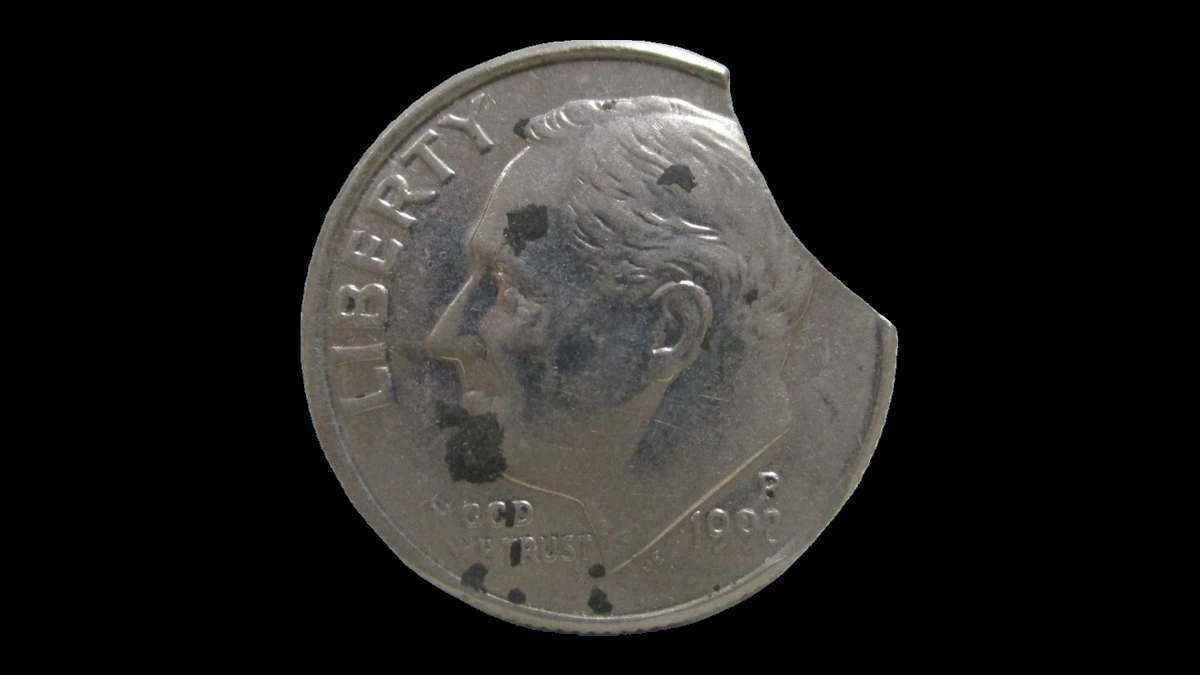
5. 1992 Dime A Section of Metal Is Gone: Clipped Blank Error
A clip means the blank was incomplete before the design was struck. A curved gap can form when the cutting punch overlaps a hole already in the strip.
The 1992 reports do not give a fixed shape, percentage, or mint.
How to Identify
Inspect the exposed edge of the gap for filing or saw marks. Then follow the rim and nearby letters toward both ends.
Natural stretching or weakness near the opening can support a gap present during striking. Weakness opposite a clip is helpful when visible, but its absence is not decisive.
What It’s Worth
$20–$300 is the estimated range for genuine clipped dimes. A clear gap, readable year, and attractive surfaces help.
Later cutting also removes metal and weight, so a low measurement alone cannot justify this value.
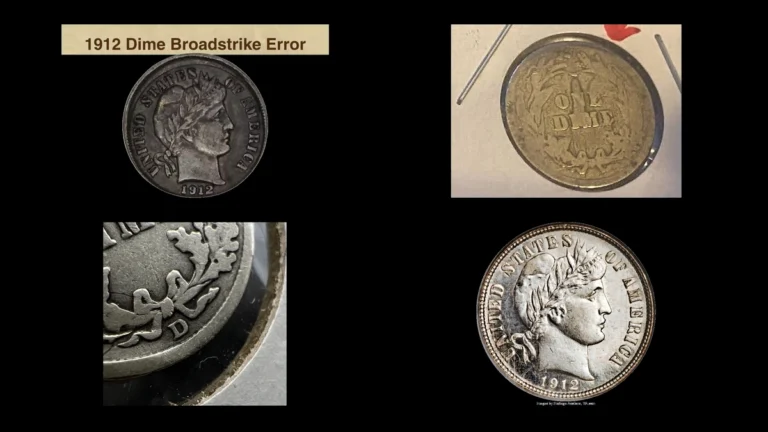
6. 1992 Dime Extra Metal Surrounds the Picture: Broadstrike Error
Without full restraint from the collar, a blank can spread outward during the strike. The main design can remain complete inside a wider outline.
This is a broadstrike. No measured diameter or fixed mint is supplied for the reported 1992 category.
How to Identify
Trace the outer lettering on both faces. A broadstrike expands the border rather than leaving a large part of the picture beyond the blank.
A normal dime is 17.91 millimeters wide. Compare several widths of a loose candidate and check for crushed details that could reveal later hammering.
What It’s Worth
$25–$300 is the estimated range for simple genuine broadstrikes. Visible spread around a preserved design is more appealing than a barely uneven rim.
Width alone does not establish the error or the upper end of the range.
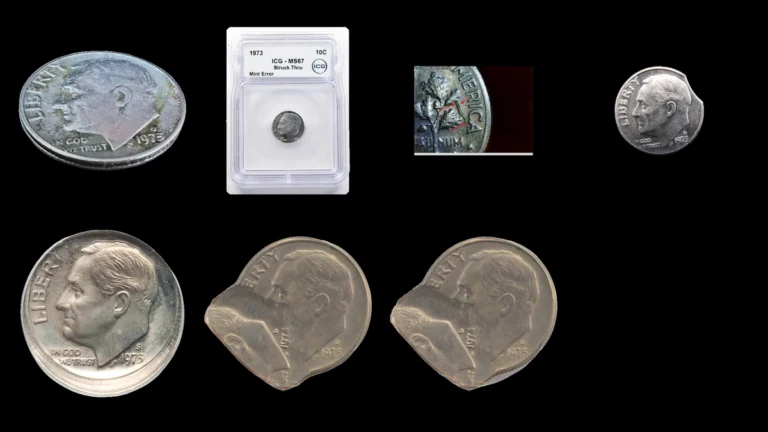
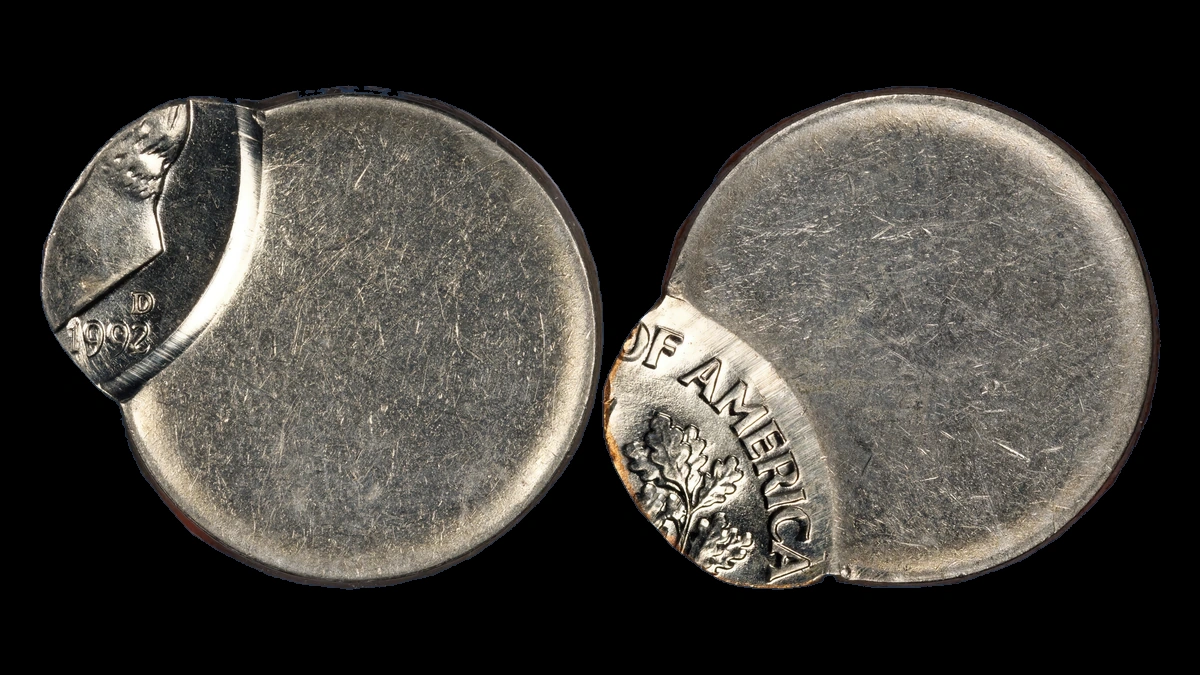
7. 1992 Dime A Blank Crescent Sits beside the Design: Off-Center Strike Error
The documented 1992-P coin has its design displaced toward the upper right. It was described as 35% off center toward 1 o’clock.
ANACS graded it MS63, meaning unworn with visible marks. It appeared in a lot with separate 1988 and 1993 dimes.
How to Identify
Read the date and mintmark, then check the boundary between the design and plain metal. Both faces should fit the same blank sitting partly beyond the tools.
The 35% figure and 1 o’clock direction belong to the 1992 coin. The other lot members’ shifts must stay separate.
What It’s Worth
$30–$750 is the estimated range for an individual dated 1992 off-center dime. Readable identity and original surfaces support stronger interest.
The three-dime lot sold for $75 in January 2022. That total is not an individual sale price for the 1992 member.
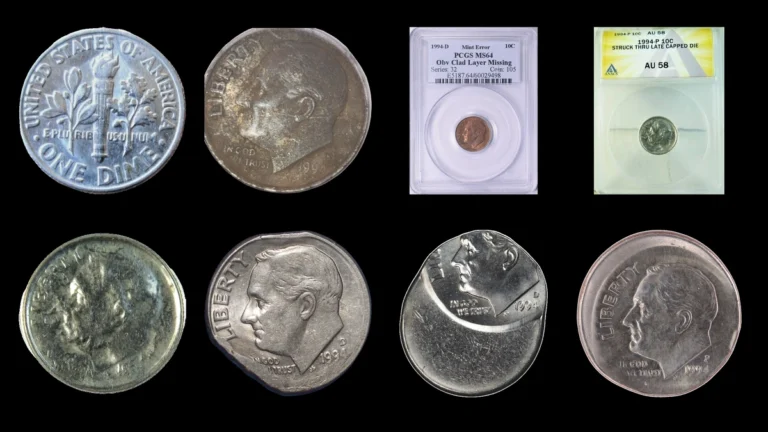
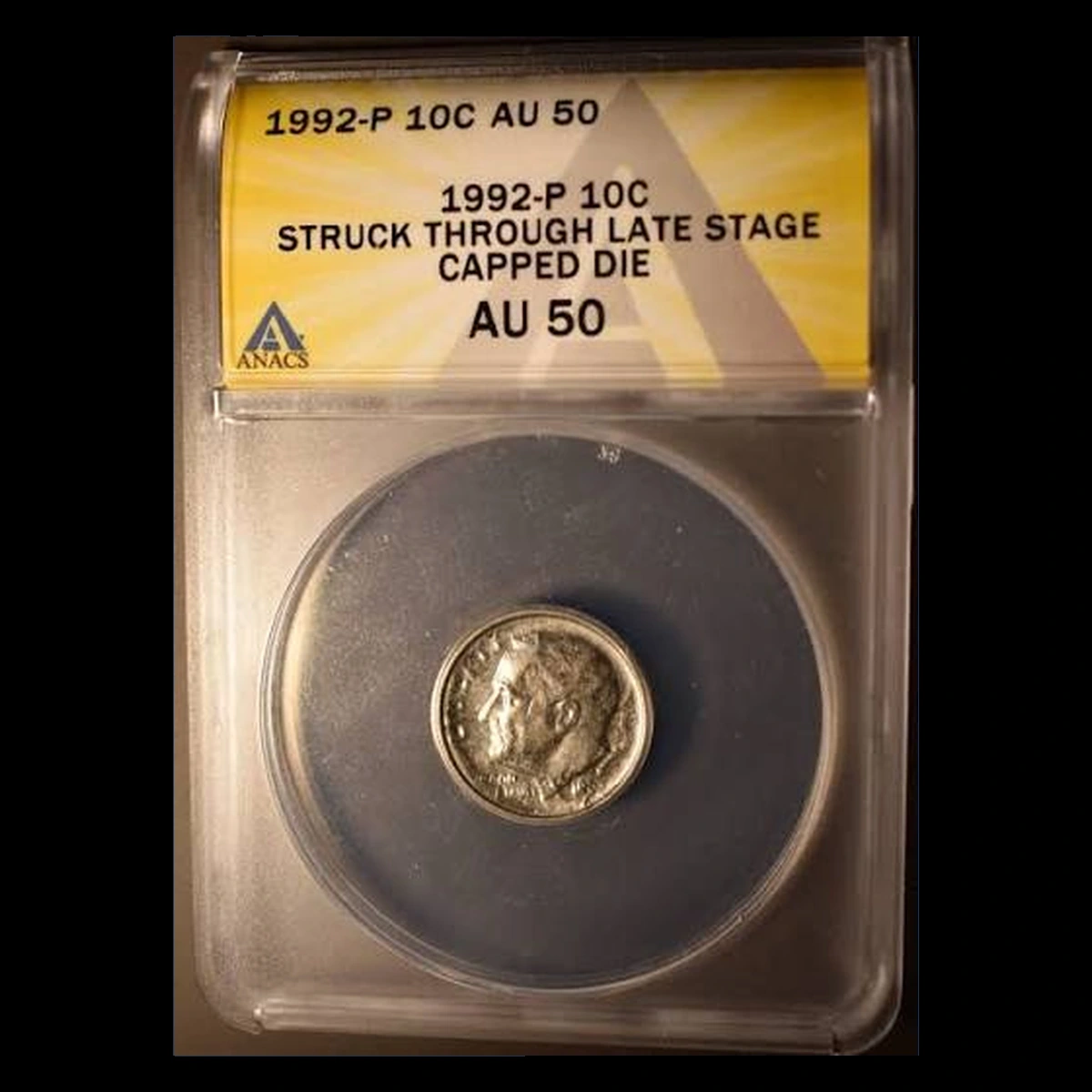
8. 1992 Dime One Face Was Struck through a Covering Coin: Die-Cap Strike Error
A coin can stick to a tool and cover it like a cap. The next blank then receives a strike through that trapped coin.
A 1992-D recipient coin was cataloged as struck through a late-stage cap and graded PCGS MS64. It is separate from the cap itself.
How to Identify
Compare both faces to locate the affected side. As a cap becomes thinner, parts of the tool’s design may show through its surface.
Match that distortion with photographs of the cataloged coin. General weakness, polishing, or wear alone does not establish a covering cap.
What It’s Worth
$100–$1,000 is the estimated range for comparable genuine cap-blocked dimes. Distinctive distortion with readable details is easier to explain and display.
Heavy abrasion or wear can hide those clues and reduce appeal.
9. 1992 Dime The Same Picture Appears More Than Once: Multiple Strikes Error
The Denver example received three strikes and was graded NGC MS66. A separate Philadelphia dime received two, with its second strike off center.
The Philadelphia coin has a back wheel mark and an Uncirculated Details grade. That means unworn design with a condition problem.
How to Identify
Follow a group of connected letters or portrait features, then find the same group in another position. Counting isolated thick lines is not enough.
On the Philadelphia coin, separate the overlapping strike from the later wheel damage. Do not borrow directions or angles that the Denver description never supplies.
What It’s Worth
$100–$1,500 is the estimated range for comparable repeated-strike dimes. The Denver triple strike sold for $129 in June 2023.
Clear image separation and condition matter more than assuming that an extra strike guarantees a huge price.
10. 1992 Dime Unusual Color with Layers Intact: Annealing Error
Heating a blank before striking is called annealing. Problems during that treatment can affect the surface color.
The 1992 report does not identify a required shade or mint. Chemicals, soil, and heat applied later can also darken a dime.
How to Identify
View the coin under neutral light and inspect protected areas inside letters. Pits, crust, or burned patches may point to later treatment.
Check that the outer layers remain in place. Exposed copper from a missing layer has a different cause, and normal weight cannot date a color change.
What It’s Worth
$20–$150 is the estimated range for identified annealing errors. A 2000-D MS63 example sold for $51 in October 2022.
That different-year sale gives price context but does not authenticate a dark 1992 dime.
11. 1992 Dime Copper Replaces a Pale Face: Missing Clad Layer Error
A clad dime has a copper center between pale outer sheets. If a sheet is absent, the exposed copper can carry the design.
No fixed face or mint is given for the reported 1992 category. The ordinary copper stripe along a clad dime’s edge is normal.
How to Identify
Inspect the edge next to the copper-colored face for actual layer loss. Staining changes color without removing a sheet.
A normal clad dime weighs 2.268 grams; a silver Proof weighs 2.50 grams and has no copper center. Both clad and silver Proofs were made with S mintmarks, so the letter alone does not identify the metal.
On exposed copper, look for original struck detail rather than scraping or chemical pits.
What It’s Worth
$50–$600 is the estimated range for authenticated comparable missing-layer dimes. Separate 2000-D examples sold for $132 in November 2020 and $104 in December 2022.
Those sales concern a back-layer and a front-layer coin respectively. Their measurements and prices do not describe a specific 1992 candidate.
12. 1992 Dime The Whole Coin Has a Different Alloy: Solid Copper-Nickel Strike Error
The studied Denver coin weighs 2.51 grams while retaining the full dime diameter. Its metal is solid copper-nickel rather than layers around a copper center.
The blank’s original purpose remains unidentified. A nickel also uses solid copper-nickel, but shared metal alone does not make this a nickel blank.
How to Identify
The published examination records the unusually high weight. Compare weight and diameter before assigning a possible blank.
A pale edge can result from plating, so the missing copper stripe is not enough. A specialist can test the composition without cutting the coin.
The extra weight does not fit a simple claim that the copper core is missing.
What It’s Worth
$500–$3,000 is the estimated range for an authenticated unusual solid-alloy dime of this kind. No sale of the studied piece is supplied.
A reliable metal examination and readable identity matter more than an unsupported story about an experimental or foreign blank.
Conclusion
Use the whole coin to test the first clue you notice. A double-looking rim needs an edge view, a second strike needs connected repeated details, and unusual color needs a check of the metal underneath.
Preserve original surfaces and keep measurements with the specimen they describe. A mixed-lot total or another year’s result is helpful context, but it is not an individual sale of your dime.