Rare 1984 Quarter Errors (List & Pictures)
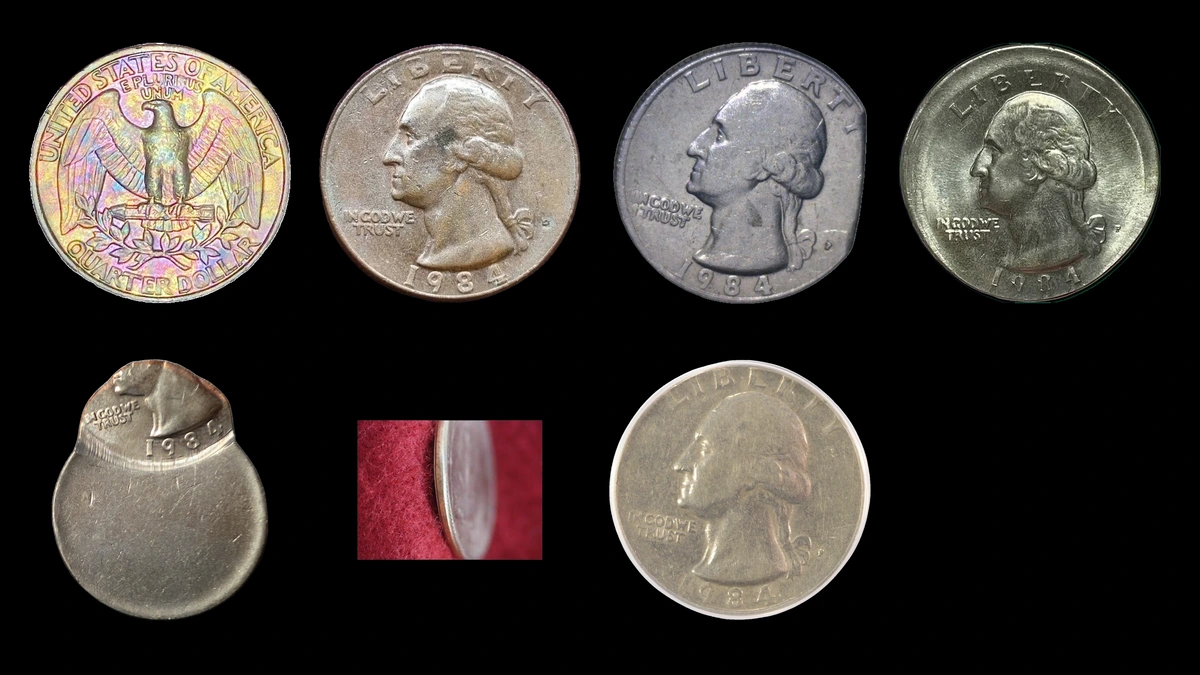
With 1984 quarter errors, a nickname can be less reliable than the actual metal and design. The reported beak line, missing letters, and larger striking accidents below have estimated values of $10–$1,200.
A documented Philadelphia broadstrike sold for $169 in December 2025, while a published table separately reports $350 for a double strike. Begin with the lettering and eagle, then examine the layers, outline, and relationships between repeated images.
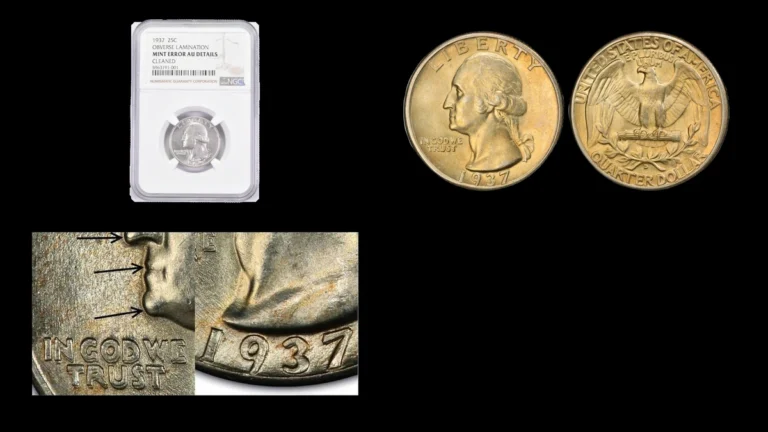
1. 1984 Quarter A Line near the Beak: Reported Spitting Eagle Feature Error
The Spitting Eagle nickname has been applied to 1984 quarters, but reports disagree about the mint and cause. A crack, another mark in the die, and a transferred clash line require different explanations.
The familiar 1983-P Spitting Eagle is a separate dated variety. Its label or photograph cannot authenticate a line on a 1984 coin.
How to Identify
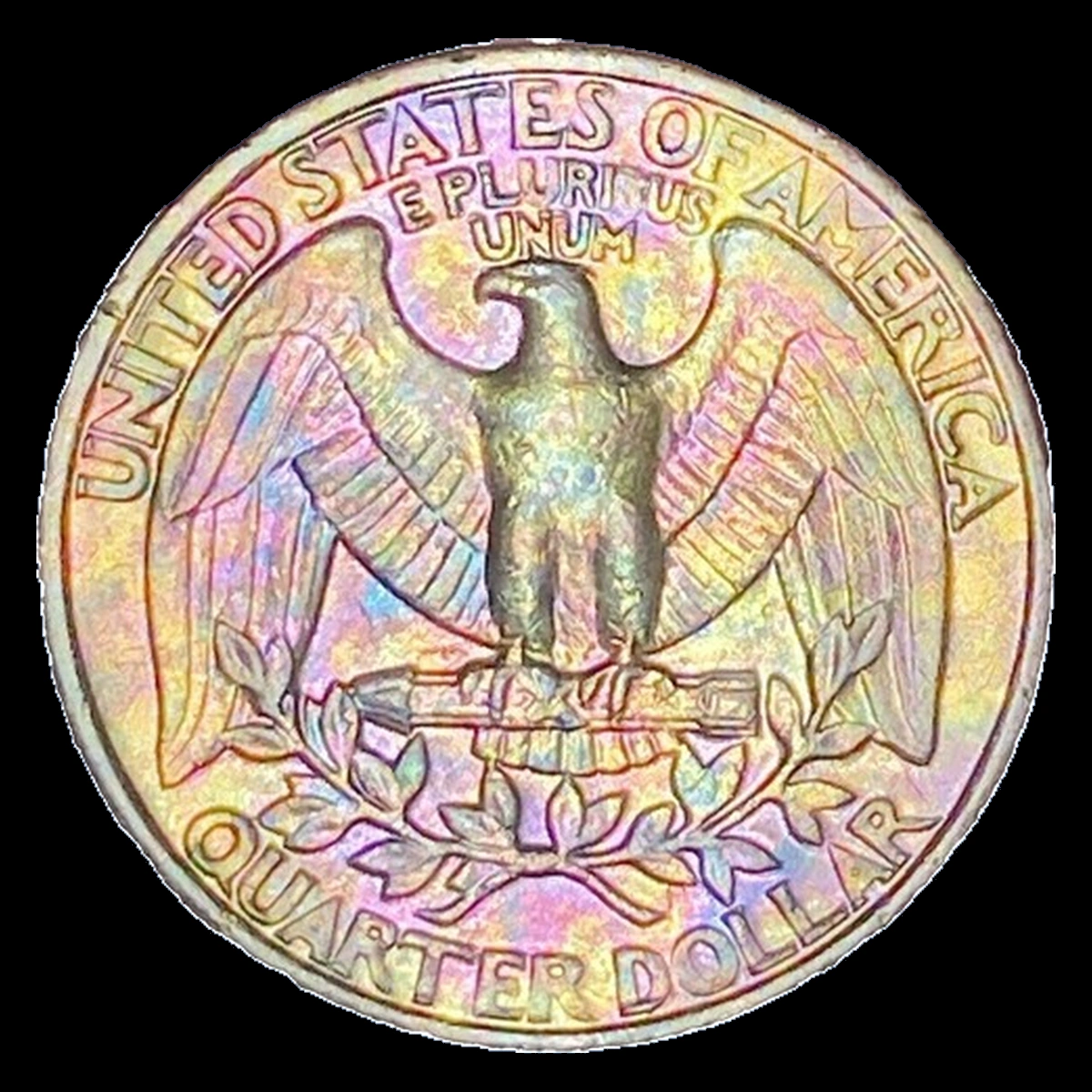
Record the front date and mintmark before examining the eagle’s mouth. Follow the full line under side lighting to establish whether it is a raised ridge or a scratch with a misleading highlight.
The complete shape and its relationship to other design details may help determine the cause. Leave the mechanism unresolved if the evidence supports only a reported beak line.
What It’s Worth
$10–$100 is a conditional estimate for a clear mint-made 1984 feature. A 1983-P variety price should not be transferred simply because the nickname is the same.
2. 1984 Quarter Missing Letters beside Sharp Detail: Grease Strike-Through Error
Philadelphia reports describe local weakness in LIBERTY, the motto, or the date. Grease and debris filling recesses in the die can prevent those details from forming, without making the whole coin equally weak.
How to Identify
Compare the shallow area with nearby strong letters and Washington’s hair and cheek. General wear or a light strike can explain broader weakness, while scraping may leave parallel marks across the missing detail.
A weak or absent P needs its own examination to the right of the hair ribbon. Absence alone neither proves grease obstruction nor reliably assigns the mint.
What It’s Worth
$10–$150 is an estimate for an identified grease-filled area. A localized missing letter on preserved surfaces is easier to assess than a faint date surrounded by heavy wear.
3. 1984 Quarter Extra Metal in LIBERTY: BIE and Retained Die Breaks Error
The BIE name describes an I-like raised stroke between B and E in LIBERTY. A separate Philadelphia report concerns a possible retained break near Y, where a damaged piece of the die may have remained in place.
On that Philadelphia coin, a mark on the date’s 4 was instead judged to be circulation damage. It should not be counted as another mint error.
How to Identify
Locate the B-E space precisely before accepting the BIE description, and inspect whether the added stroke is part of the struck metal. A deposit or a squeezed letter edge can create a similar shape.
For the Y-area report, follow the outlined region toward the rim and note any normal detail retained within it. Keep its provisional status and do not substitute a cited 1985 image or catalog identity.
What It’s Worth
$10–$75 is estimated for small recognizable letter-area breaks, with an identified retained rim break around $50–$200. A preliminary opinion and unrelated damage to the 4 do not establish those premiums.
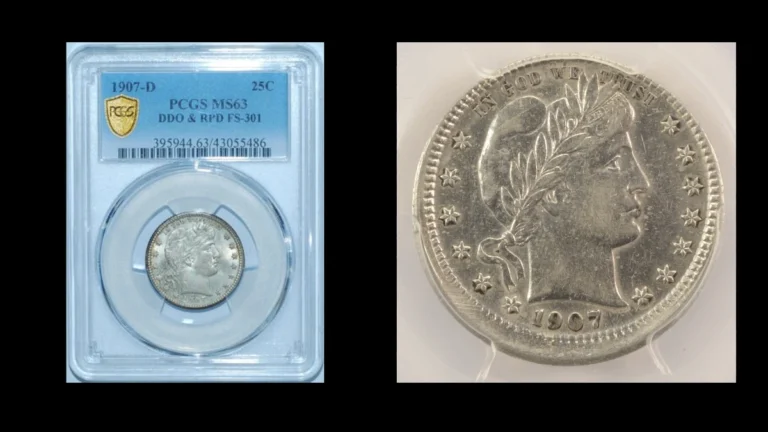
4. 1984 Quarter A Second Curve beside D: Repunched Mintmark Error
A reported Denver D/D would preserve remnants from more than one placement of the mint-letter punch into the die. Its exact direction and catalog identity need matching to the individual quarter.
A separate D-over-P claim describes a different proposed letter pairing. It does not establish the D/D report.
How to Identify
Trace raised portions that could form another D, including a coherent curve or upright. One unrelated bump, a flat strike-doubling shelf, or a scratch beside the letter is insufficient.
Keep the full quarter design and 1984 date in the reference photographs. A repunched mintmark number from a same-year cent cannot identify this quarter.
What It’s Worth
$20–$200 is an estimate for a correctly attributed D-over-D example. Clear letter remnants and preservation matter more than the use of RPM, an abbreviation for repunched mintmark, in a listing.
5. 1984 Quarter Related Extra Outlines on the Front: Doubled Die Error
The reported front doubling directs attention to LIBERTY, the motto, and date. A genuine doubled die carries the repeated design in the tool before striking, rather than creating a second whole image on one coin.
How to Identify
Compare several neighboring letters or digits for related separation and divided corners. The supplied reports provide no catalog number or single established mint for all candidates.
Use changing light to separate raised repeated outlines from low flat shelves and reflected edges. Contact marks on the date need to remain separate from the pattern being tested.
What It’s Worth
$20–$250 is a working estimate for identified front doubled dies. A clear matching pattern is a stronger basis for value than an extreme enlargement of one ambiguous letter.
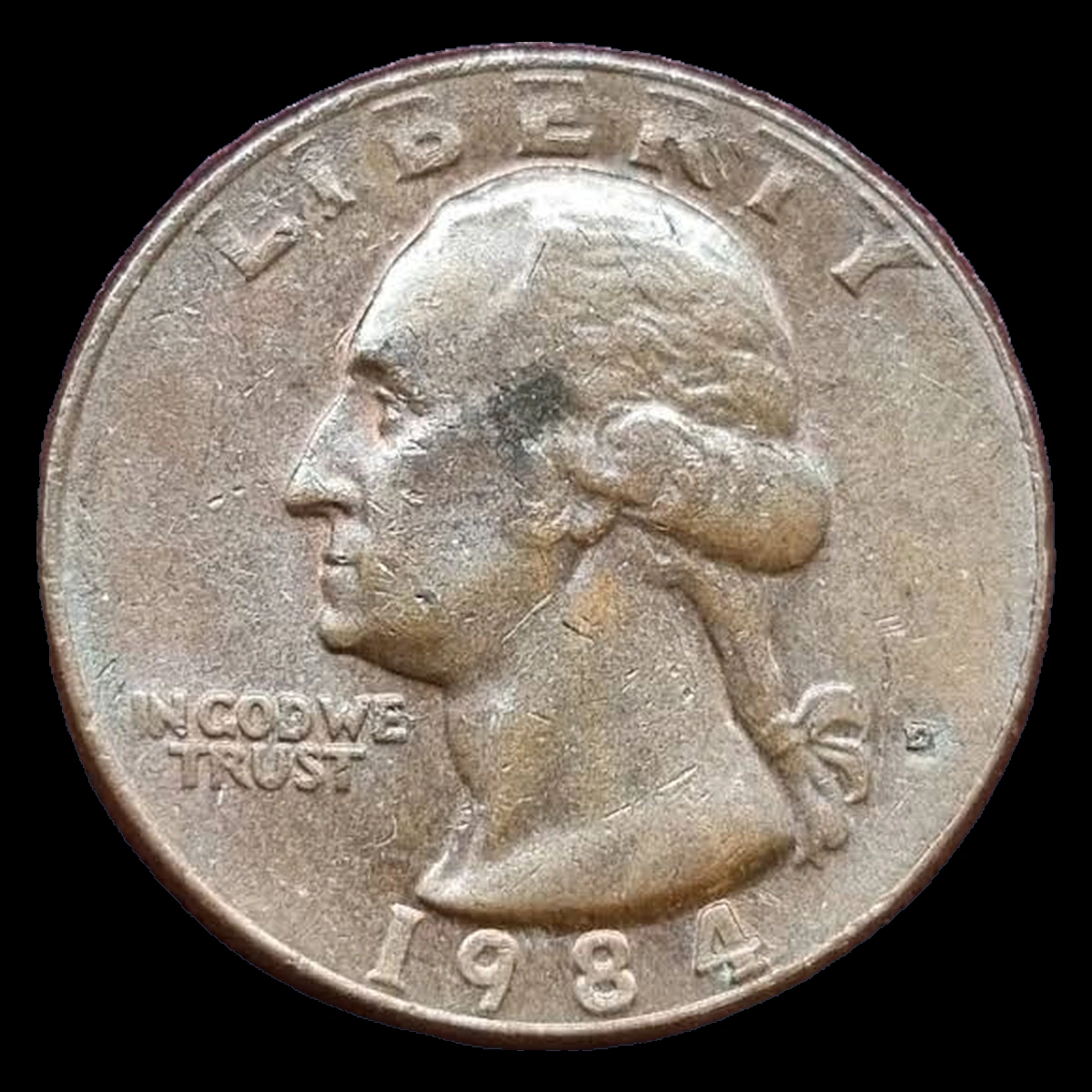
6. 1984 Quarter A Copper Face or Attached Flap: Missing or Separating Cladding Error
Philadelphia and Denver reports include missing outer layers, while other examples have local separation with metal still attached. These descriptions do not establish every feature on one coin.
All regular 1984 quarters, including S Proofs, are clad with pale copper-nickel layers around a copper center. The standard weight is 5.67 grams and diameter about 24.3 millimeters.
How to Identify
For a flap, inspect its attachment and the way the design meets the split without lifting it. For a missing face, follow the exposed copper into the edge and compare the surviving layers.
Record the weight of a loose coin independently instead of borrowing another specimen’s measurement. Staining changes color without proving layer loss, while chemicals or scraping can also remove metal.
What It’s Worth
$30–$200 is estimated for local separation, with a clear missing-layer face around $75–$500. Original boundaries and preserved surfaces are more useful than brown color alone.
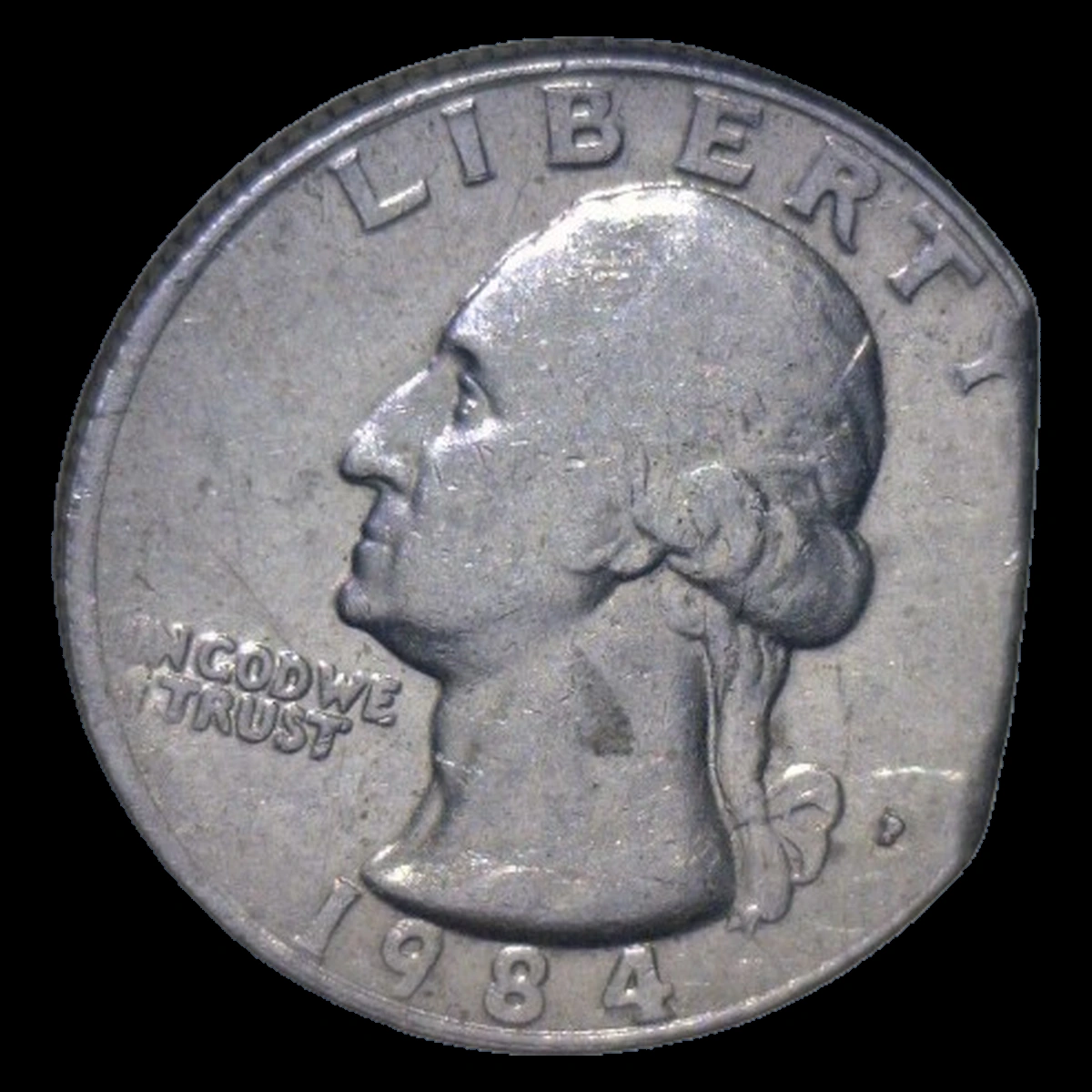
7. 1984 Quarter Curved or Straight Missing Sections: Clipped Planchet Error
A blank can be incomplete before striking with either a curved gap or a straight boundary. The reported straight-edge example appeared in a collector discussion that also noted weakness on the opposite rim.
How to Identify
Inspect both endpoints and the exposed edge for how the rim and letters formed beside the missing metal. Saw lines, filed surfaces, or bent completed lettering suggest later removal.
Opposite-rim weakness can support an original clip but varies between examples. Keep the complete coin visible so its date and eagle remain linked to the photographed gap.
What It’s Worth
$20–$350 is an estimate for genuine 1984 clips. A favorable collector-discussion opinion is not a professional grade, and shape alone does not establish authenticity or a high price.
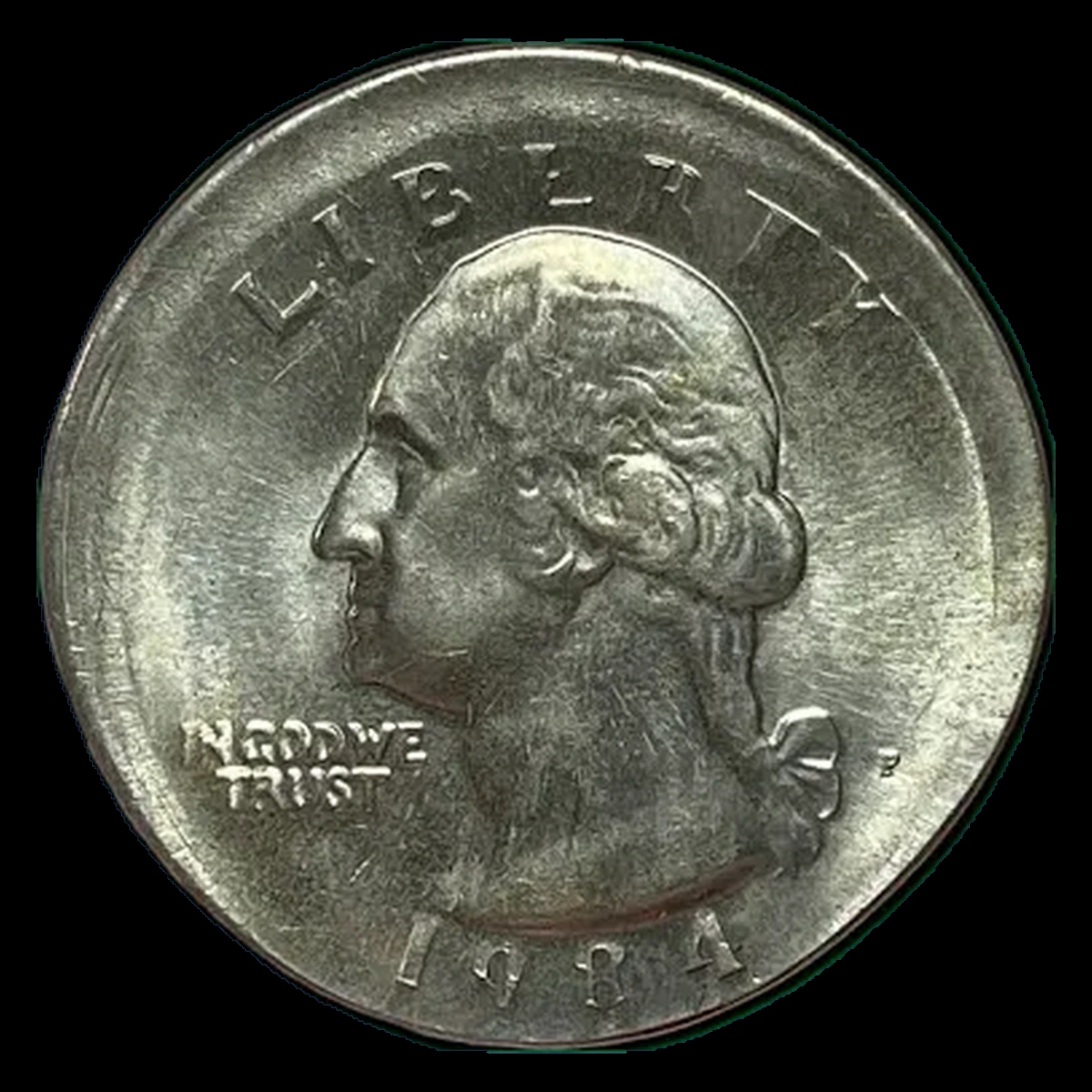
8. 1984 Quarter Extra Border around the Full Design: Broadstrike Error
A broadstrike spreads beyond the normal outline when the collar fails to contain the blank. The collar is the ring that controls diameter and forms the edge grooves.
Philadelphia examples include a PCGS MS65 and a separate NGC MS66 sold together with a 1979 quarter. Their grades and sales contexts belong to different specimens.
How to Identify
Follow the complete lettering and design on both faces before assessing the expanded width. A missing section of design opposite unstruck metal suggests an off-center strike instead.
Inspect the edge and high points for natural spreading rather than grinding or hammering. An uneven expanded border is possible, but later flattening can also enlarge an ordinary coin.
What It’s Worth
$20–$250 is the estimated range for comparable broadstrikes. The 1984-P PCGS MS65 sold for $169 in December 2025.
The separate NGC MS66 and a 1979 coin sold for $149 total in March 2024. That lot price is not a $149 individual sale for each quarter.
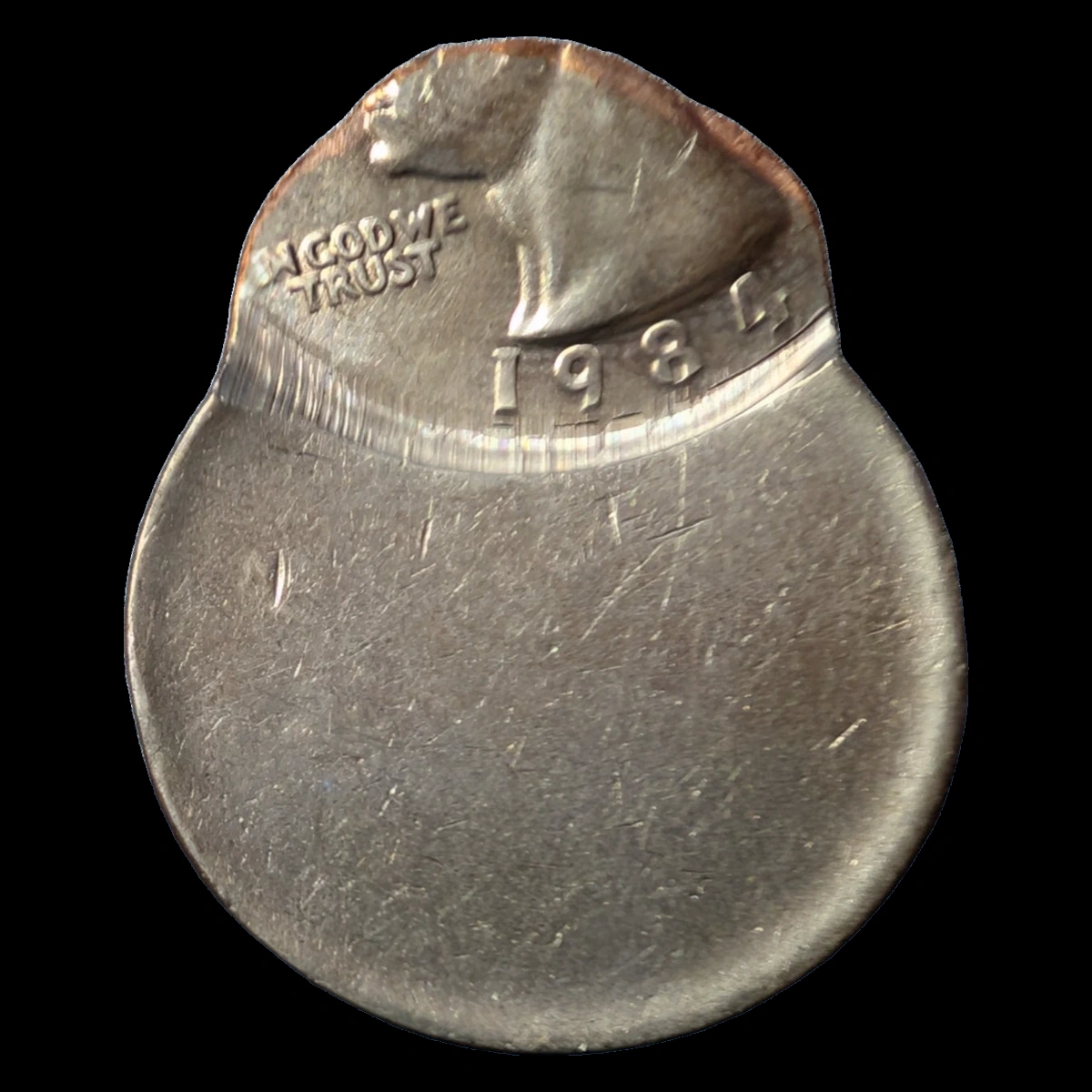
9. 1984 Quarter An Incomplete Design and Bare Crescent: Off-Center Strike Error
A documented Philadelphia quarter in PCGS MS64 is 10% off center. Separate Denver reports describe 65% and 80% examples without establishing a common direction for them.
How to Identify
Locate the date and mintmark within the surviving design, then compare the displacement on both faces. An uneven rim without genuinely missing design is insufficient.
Inspect untouched-looking areas for abrasive lines or erased letters. A misplaced strike does not itself remove metal, so normal weight can be consistent with an off-center error.
What It’s Worth
$40–$600 is a working estimate across the smaller Philadelphia shift and larger reported Denver errors. The 80% description does not guarantee a higher price than a clearer or better-preserved 65% or 10% coin.
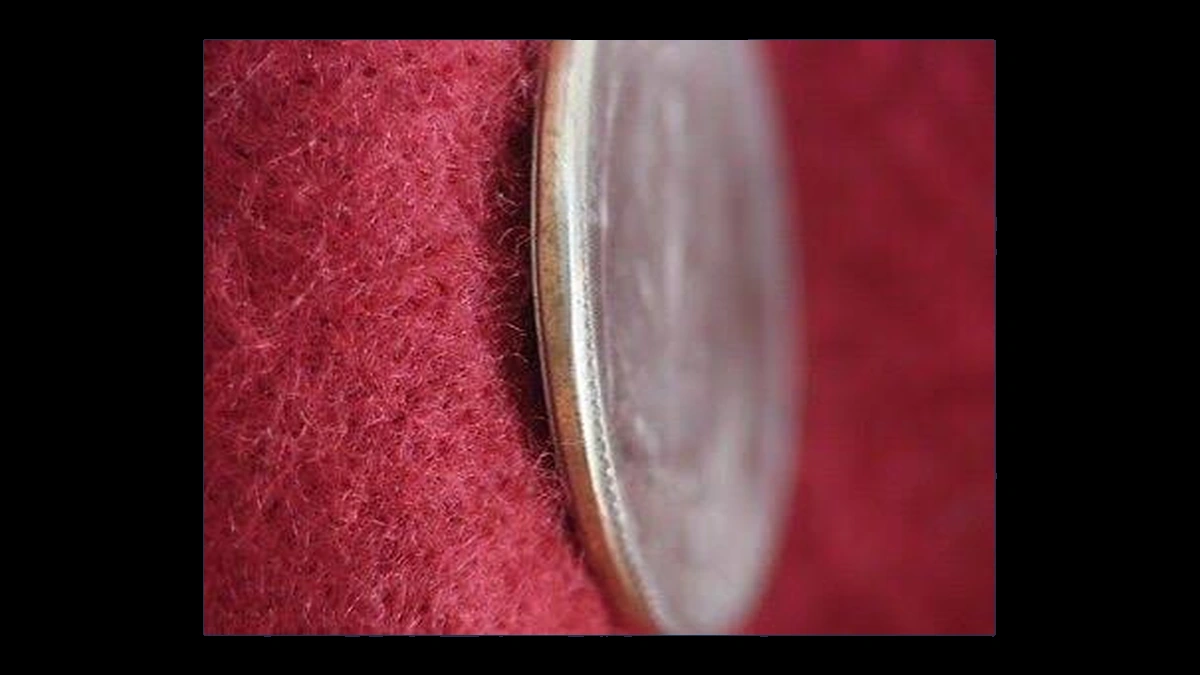
10. 1984 Quarter A Broad Hollow and Stepped Edge: Indent with Partial Collar Error
A Philadelphia example is described with an 80% indent near 9 o’clock and a partial collar strike. An overlapping blank blocked much of the design while the edge was only partly restrained.
The percentage and clock position do not identify which face holds the hollow. The partial collar refers to a separate physical clue on the same coin: a step between differently constrained edge areas.
How to Identify
Examine the hollow’s boundary for a shape consistent with another blank blocking the strike. Recessed mirrored lettering would point to a brockage, whereas a plain indent does not require copied design.
Use a side view to show the actual edge step. A normal copper stripe cannot demonstrate the partial collar, and a later dent needs a different explanation from original obstruction.
What It’s Worth
$150–$1,000 is an estimate for a clearly authenticated combination. Its cataloged $160 minimum bid was an opening requirement, not a confirmed selling price, and both features belong to one coin.
11. 1984 Quarter Crossed or Repeated Designs: Double Strikes Error
Philadelphia reports include an off-center second strike, a 65% flipover, and a broadstruck coin with its second front impression blocked. Other pieces have 70% or 90% off-center second strikes described as uniface, meaning one side was blocked during that blow.
The specific front blockage belongs to the broadstruck example. The affected sides of the separate 70% and 90% coins are not supplied by those percentages.
How to Identify
Separate connected portrait and letter groups to establish the positions of successive impressions. A flipover needs front and reverse features together on a face, not simply two shifted Washington portraits.
For the broadstruck example, assess its expansion and blocked second front together. Keep the 90% coin’s Details designation as a condition qualification without inventing the unspecified problem behind it.
What It’s Worth
$150–$900 is estimated for comparable double-strike combinations. A published sales table reports $350 for the 70% second-strike example with two full dates and mintmarks.
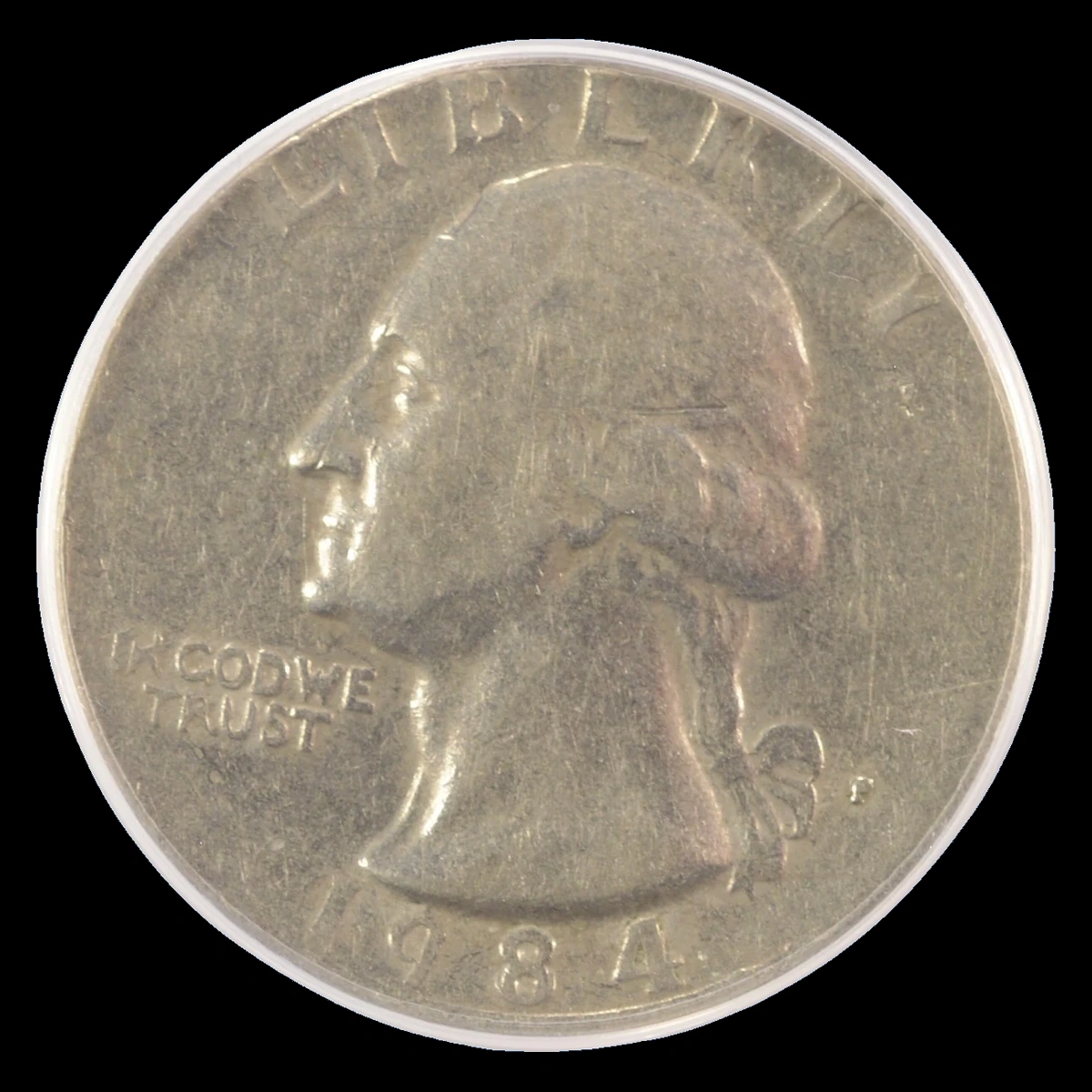
12. 1984 Quarter Quarter Details on Smaller Solid Alloy: Nickel Planchet Error
A specialist offered a Philadelphia nickel-planchet quarter in ANACS VF35 with an actual weight of 5 grams. A separate published sales example was graded ANACS AU55 and had lighter wear.
The nickel blank has solid copper-nickel alloy rather than the quarter’s layered copper core. Its smaller starting diameter leaves less room for the quarter design.
How to Identify
Inspect the exposed edge for the appropriate solid alloy, then follow remaining date and denomination detail to the boundary. Filing a quarter down can reduce its diameter without producing the correct metal construction.
A normal nickel blank starts near 5 grams and 21.21 millimeters, although striking can expand it. Only the VF35 listing supplies that actual measured weight here; the AU55 should not inherit it.
What It’s Worth
$150–$1,200 is an estimate for identified nickel-planchet quarters of differing quality. The VF35 carried a $190 dealer ask, while the separate AU55 has a published sale report of $153.61.
Conclusion
A 1984 quarter needs a description grounded in its own date, mintmark, and visible feature. The familiar Spitting Eagle name and a same-year cent’s variety number cannot identify it by association.
For larger errors, compare the original edge, metal, and design relationships. Keep a two-coin lot total, minimum bid, dealer ask, and reported sale distinct so that an attractive unusual coin is evaluated against the right evidence.