Rare 1938 Quarter Errors (List & Pictures)
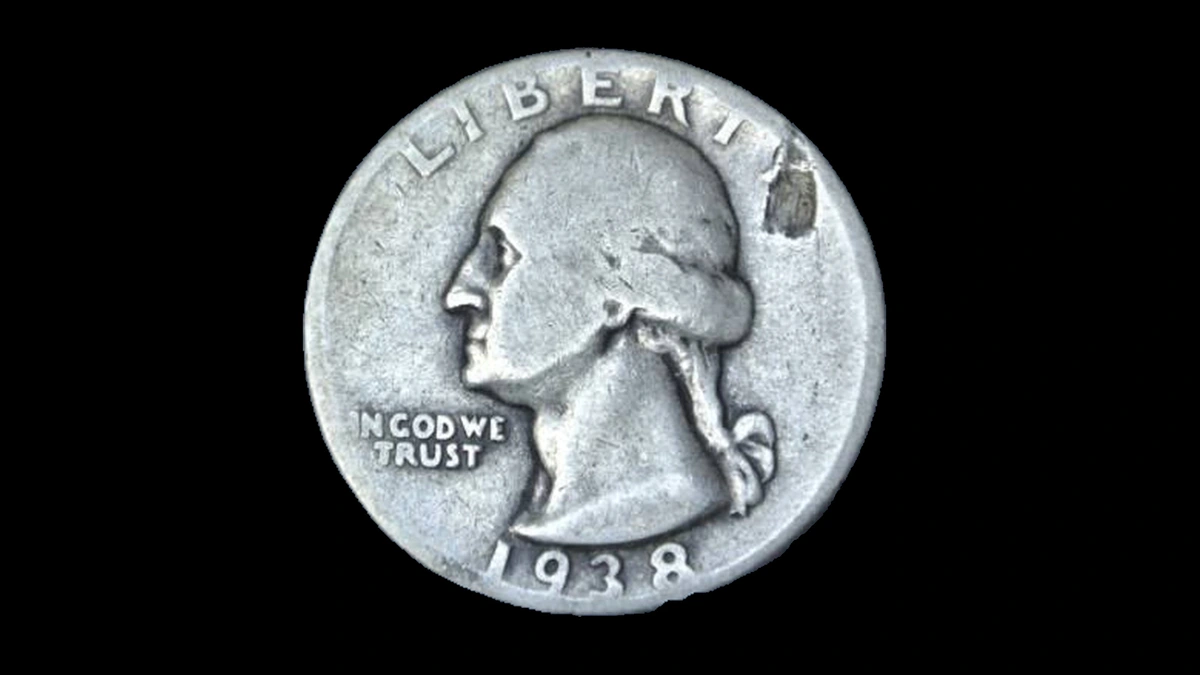
A string impression, a tiny extra S curve, and a displaced design lead to different checks on 1938 quarter errors. Their estimated values span $20–$3,500.
A 1938-S string-impression coin sold for $312 in June 2025. For larger-error context, a different-year 1943-S off-center quarter brought $2,640 in July 2022; begin with the small details before comparing the outline.
1. 1938 Quarter Split Motto Letters: Doubled Die Error
IN GOD WE TRUST is the main place to inspect the known Philadelphia front-doubled variety. Extra raised edges can split or widen the letters.
The repetition was present on the die, the tool that stamps the design. A single blow could transfer those doubled shapes.
How to Identify
Compare several neighboring motto letters with a photograph of an identified 1938 variety. Look at their corners and ends under more than one light angle.
A flat shelf beside a letter can result from movement during striking. It differs from a fuller repeated outline.
NGC also notes lighter back doubling, which needs its own identification. Matching the front does not establish a doubled eagle or any particular back marker.
What It’s Worth
$50–$2,000 is the estimated range for identified doubled-die quarters. Strong doubling and excellent condition support the upper end.
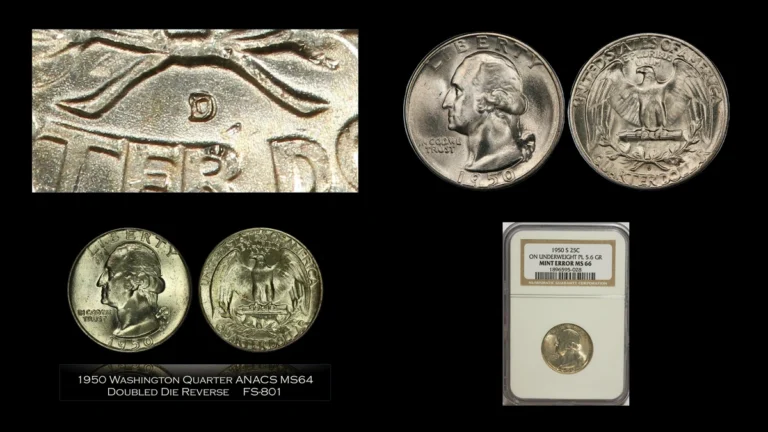
A 1942 Philadelphia back-doubled quarter graded MS64 sold for $517.50 in February 2009. That is a different-date comparison, not a sale of the 1938 motto variety.
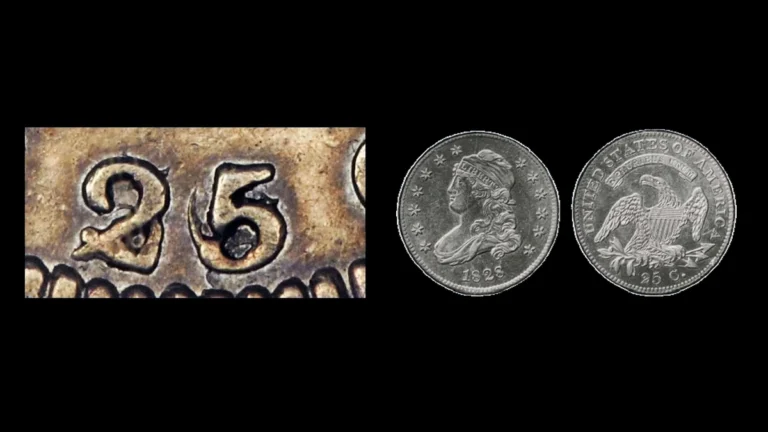
2. 1938 Quarter Another S Outline below the Wreath: Repunched Mintmark Error
Year lists report S-over-S quarters for 1938. An earlier punch could leave part of the S visible when a second impression was placed slightly differently on the tool.
The final S below the wreath identifies San Francisco. A thick or irregular letter alone does not prove repunching.
How to Identify
Trace the normal upper and lower curves of the S first. Then see whether the extra raised parts connect into another recognizable S.
Move the light and take another photograph. Shadows can disappear, while an actual punch remnant keeps the same position.
Use a matched 1938 Washington quarter reference. An S/S on another denomination is not evidence for this coin’s pattern.
What It’s Worth
$30–$600 is the estimated range for a genuine identified repunched S. Clear fragments on a well-preserved coin have more appeal than vague thickness on a worn letter.
The range requires a matching repeated-letter pattern, not merely an unusual-looking mintmark.
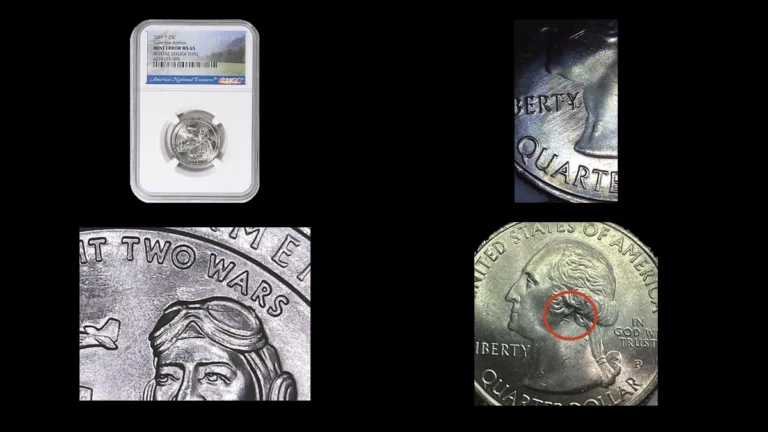
3. 1938 Quarter A Narrow Impression or Weak Patch: Struck Through Material Error
The documented 1938-S example was identified as struck through string. Material between the tool and blank interrupted part of the normal design.
Separate reports describe softer missing detail attributed to grease or debris filling the tool. Those weak patches do not inherit the string identification.
How to Identify
Decide whether the feature has a distinct recessed path or simply weak lettering. For a string claim, compare the full path with the identified specimen.
For weak letters, check similarly high details nearby. A localized blocked area can sit beside sharp design, while wear often affects exposed parts more broadly.
Scraping leaves disturbed metal or scratches through the affected area. Leave any remaining material or delicate surface untouched.
What It’s Worth
$20–$800 is the estimated range for this group. Minor soft detail belongs below a clear original impression on a high-grade coin.
The PCGS MS66 string-impression quarter sold for $312 on June 23, 2025. MS66 means unworn with very few marks, which contributes to that comparison.
4. 1938 Quarter Silver Lifts or Peels Away: Lamination Error
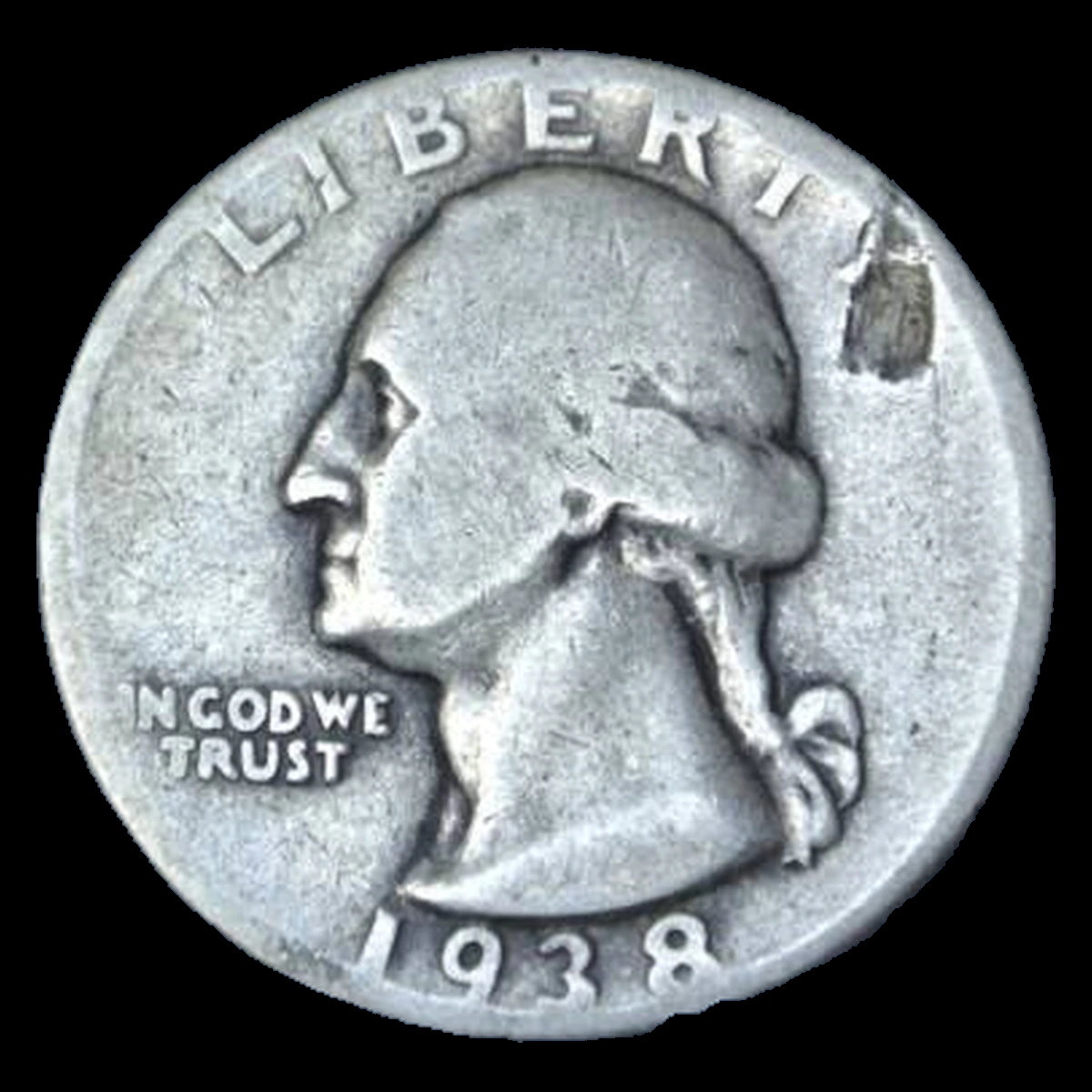
A weak area inside the alloy can open into a flake. Collectors call this a lamination, and the flake may remain attached or leave a recess.
A marketplace listing reports a 1938 example without a settled mint or split location. Those details must come from the actual coin.
How to Identify
Examine the attachment before touching the coin. Original design may continue onto a flap if the metal was present during striking.
For a missing patch, look for a peeling boundary rather than scattered corrosion pits. A split that opened before striking may show a different relationship to the design.
An attached flap has not necessarily removed weight. The regular 6.25-gram standard cannot by itself confirm or reject a lamination.
What It’s Worth
$20–$300 is the estimated range for authentic laminations. An obvious original separation can be more attractive than a small rough patch.
Cleaning, scratches, and wear still affect the whole coin’s value.
5. 1938 Quarter A Gap near the Motto: Clipped Blank Error
The reported clipped quarter has missing metal above and left of IN GOD WE TRUST. No precise missing percentage is established.
The incomplete blank can form when a cutting punch overlaps an earlier hole or the strip’s edge. The design is then struck on the metal that remains.
How to Identify
Find the gap in a full front photograph, then inspect its back and exposed edge. The two ends are useful places to check how the rim formed.
A later cut may slice through finished details or leave tool marks. Natural softness near the gap can support metal already missing during striking.
Weakness opposite the gap is possible but is not required. A low weight alone cannot distinguish a clip from a later cut.
What It’s Worth
$25–$350 is the estimated range for ordinary genuine examples. A readable date and clear gap help display the error.
A 1966 straight-clipped quarter sold for $124 in June 2024. Its different date, shape, and clad metal make it a broad comparison rather than the same type of 1938 specimen.
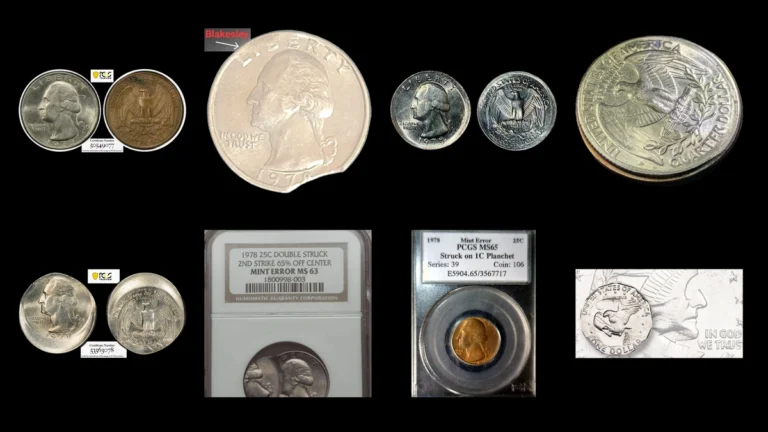
6. 1938 Quarter Plain Metal beside a Missing Picture: Off-Center Strike Error
Part of a quarter design can miss the blank when the disk sits too far to one side. A plain crescent remains opposite the lost design.
Reports include Philadelphia and San Francisco coins, without one required amount of displacement. Each needs its own visible identity.
How to Identify
Check both faces for corresponding struck boundaries. A wide rim around a complete picture is a different comparison from design missing beyond the edge.
Confirm that the plain area still contains metal. An empty gap belongs to the clipped-blank check.
Read the date and any S below the wreath. If that area was never struck, an absent mint letter cannot settle the mint.
What It’s Worth
$150–$3,500 is the estimated range for genuine dated off-center quarters. Dramatic displacement with readable identity and clean surfaces supports stronger interest.
A 1943-S silver quarter struck 35% off center sold for $2,640 in July 2022. A small shift on a worn 1938 coin would need a much lower comparison.
Conclusion
Match the feature before matching the price: repeated motto letters, another S outline, and a string-shaped recess are different kinds of evidence. A rough patch or a thick letter alone is not enough.
Keep the date, mint area, and complete outline in the photographs. Protect loose silver and any trapped material so the details explaining the original event remain available for examination.