Rare 1924 Quarter Errors (List & Pictures)
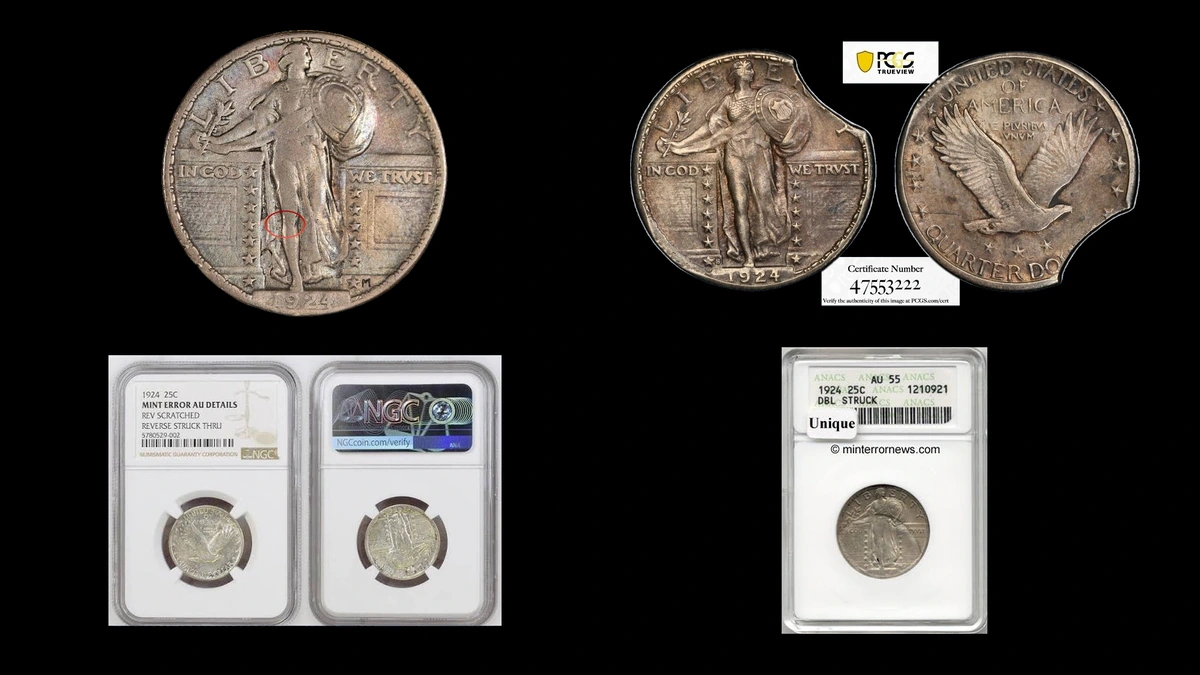
A double-struck quarter with two overlapping eagles reportedly sold for $13,800 in November 2010. Estimated values for 1924 quarter errors span $30–$60,000, with the upper reference for that unusual coin coming from a later appraisal.
This guide explains the visible evidence and keeps distinct specimens, asking prices, sales, and assigned dates separate.
| Category | Estimated value | Key distinction |
|---|---|---|
| Lamination | $30–$500 | Natural alloy separation |
| Clashed dies | $50–$600 | Match the correct mint’s pattern |
| Clipped blank | $100–$1,200 | Original incomplete edge |
| Struck-through material | $150–$2,000 | Object and face remain unspecified |
| Documented off-center strikes | $3,500–$15,000 | Two separate San Francisco coins |
| Double strike with indent | $12,000–$60,000 | Sale and appraisal are different references |
1. 1924 Quarter Lamination Error
Denver and San Francisco quarters appear in reports of thin surface metal separating from the alloy. A flap may remain attached or leave a shallow exposed patch after coming away.
The timing can affect what remains visible. Design on a surviving flap differs from design formed in an exposed area where metal separated before striking.
How to Identify
Photograph the layer boundary and follow the original design across it without lifting loose metal. A thin separation needs to be distinguished from a deep impact, scraping, or scattered corrosion pits.
An attached layer need not reduce the coin’s weight. Keep the actual mint and complete face visible so a specialist can assess the separation in context.
What It’s Worth
Ordinary genuine laminations have estimated values of $30–$500. Clear attached metal crossing readable design can provide a more useful comparison than an uncertain rough patch.
A different 1919 example graded AU50 was offered by a dealer at $225. That asking price is not a recorded 1924 sale.
2. 1924 Quarter Clashed Dies and the Clashed E Error
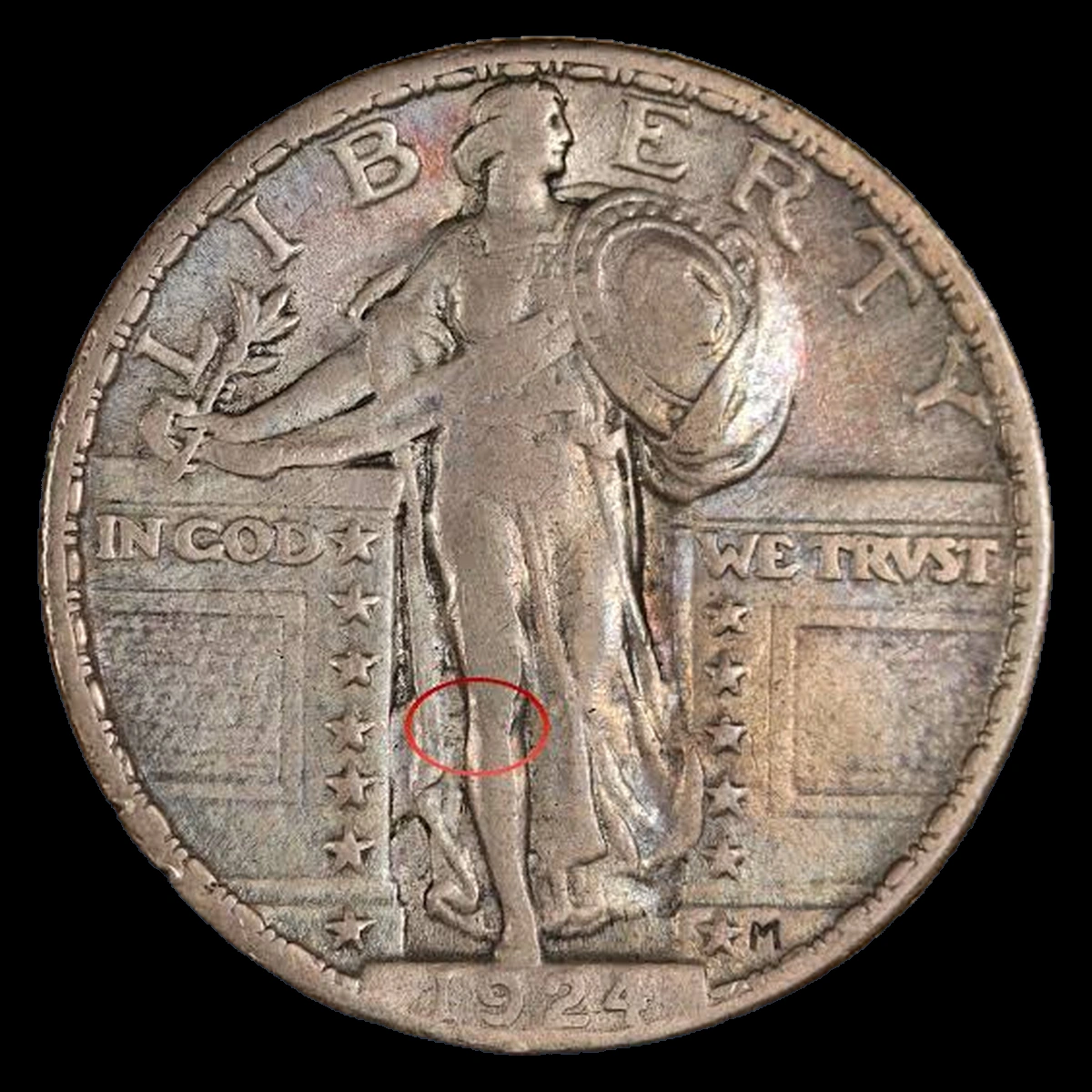
The documented San Francisco pattern includes eagle-tail traces emerging from the gown left of Liberty’s right elbow. Her gown and right-leg traces can also appear on the reverse.
These arise when the dies meet without a blank and transfer portions of their designs to each other. The Clashed E name refers to an added outline related to the opposite inscription.
How to Identify
Compare the 1924-S clash pattern with the appropriate gown area and matching reverse traces. Keep the normal relationship of the two faces fixed during comparison.
A separate Philadelphia report needs photographs of its own variety rather than the San Francisco pattern. Scratches with cut grooves or displaced edges cannot establish the same transfer merely by resembling one line.
What It’s Worth
Recognizable clashes on ordinary worn through modestly unworn coins have estimated values of $50–$600. A seller listed a 1924-S Clashed E described as Fine at $59.
That retail figure is not a verified auction payment. Preservation and the visible pattern should guide any comparison with the higher estimate.
3. 1924 Quarter Clipped Blank Error
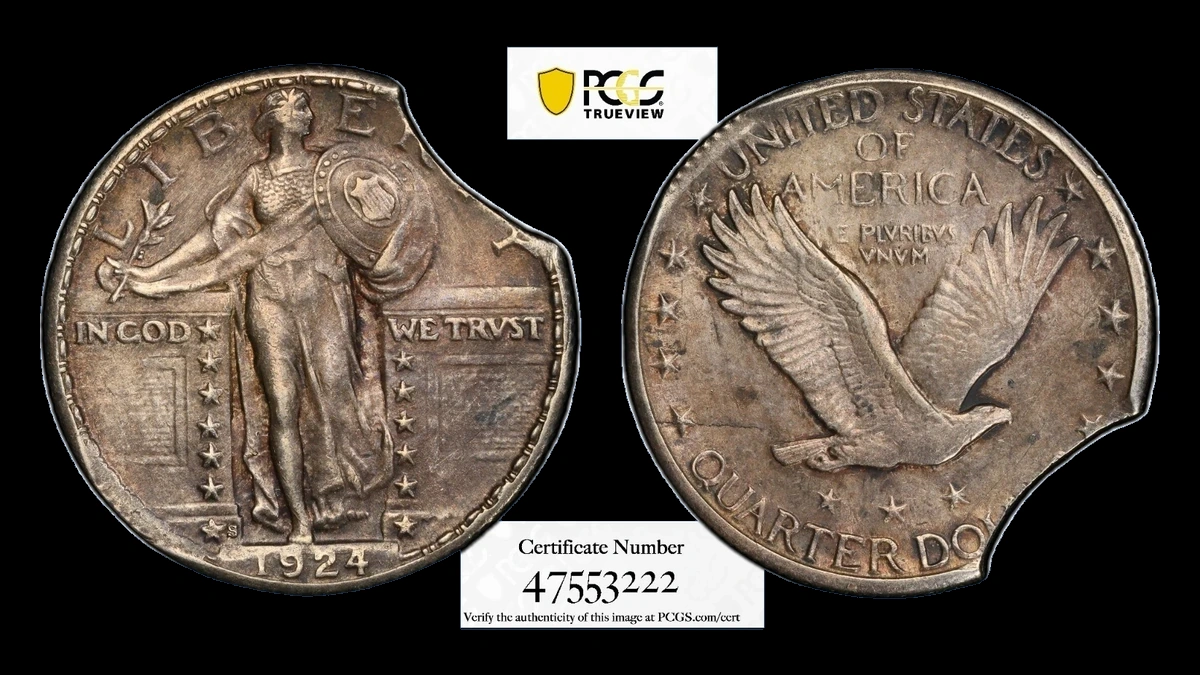
The reported Denver PCGS AU53 coin has a seven-percent clip. The missing amount is specified, but its clock position is not.
An incomplete blank can result when cutting overlaps a previous hole or the edge of the strip. Its missing metal changes the outline before the coin receives its design.
How to Identify
Keep the front D near the left side of the pedestal and the date visible with the gap. Examine both faces and the exposed edge for original formation rather than a later sharp cut.
A normal silver quarter weighs 6.25 grams. Reduced weight and possible rim weakness near or opposite the gap should agree with the surface evidence rather than serve as proof on their own.
What It’s Worth
Genuine clipped examples have an estimated range of $100–$1,200. The reported AU53 grade describes light wear, not an auction result.
Remaining identity, clear original boundaries, and preservation matter alongside the listed percentage. A damaged edge with uncertain origin needs a different comparison.
4. 1924 Quarter Struck-Through Material Error
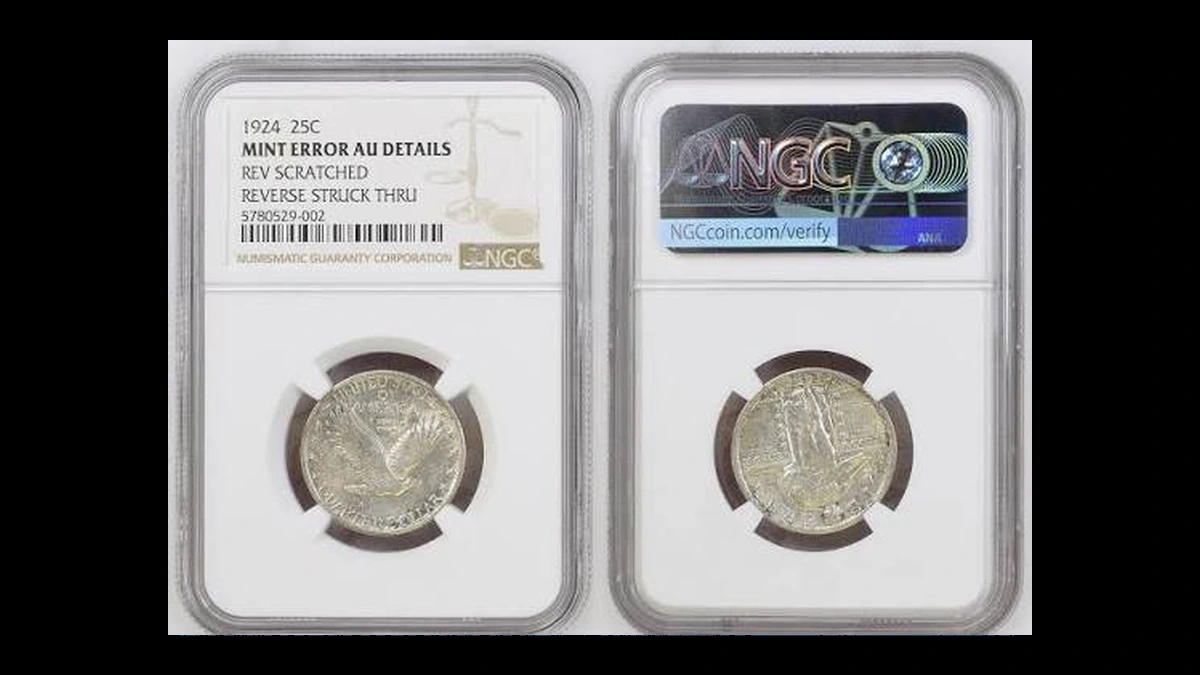
The CHS Basel November 2022 catalog lists an NGC-certified Standing Liberty quarter with a struck-through error. The supplied description does not establish the object, affected face, or numerical grade.
An obstruction can leave a depression or incomplete detail where the die failed to contact the blank normally. Its visible shape must supply any more specific explanation.
How to Identify
Describe the actual interruption before naming its material. A narrow recess, woven impression, and broad soft patch imply different possibilities.
Follow the boundary into original design and check for sharp scraping or pushed-up impact metal. Preserve any retained object and keep the full certification description with the photographs.
What It’s Worth
Authenticated examples have estimated values of $150–$2,000. Size, clarity, and condition influence how useful a comparison is.
A different 1938-S Washington quarter struck through string sold for $312 in June 2025. Neither its string identification nor its grade can be assigned to the 1924 catalog entry.
5. 1924 Quarter Off-Center Strikes Error
The ANACS XF45 San Francisco example is eight to ten percent off center toward six o’clock. Part of its date runs beyond the lower edge, while the head and shield rivets remain sharp.
A different coin is labeled (1924)-S, fifteen percent off center, NGC MS64+ Full Head. Its parenthesized year is an attribution, rather than a claim that every date digit is visible.
How to Identify
Compare the surviving date and design with the blank’s complete outline on both faces. On the XF45 example, the date loss fits the downward displacement rather than ordinary wear alone.
Do not assign that six-o’clock direction or date visibility to the fifteen-percent coin. Its own photographs and label must establish those details.
What It’s Worth
Coins resembling the documented examples have an estimated range of $3,500–$15,000. The eight-to-ten-percent XF45 specimen sold for $3,840 in January 2023.
The separate fifteen-percent MS64+ Full Head example brought $10,200 in the July 2022 Misfits Collection sale. Its unworn surfaces and sharp head detail differ from the XF45 coin’s condition.
6. 1924 Quarter Double Strike with a Front Indent Error
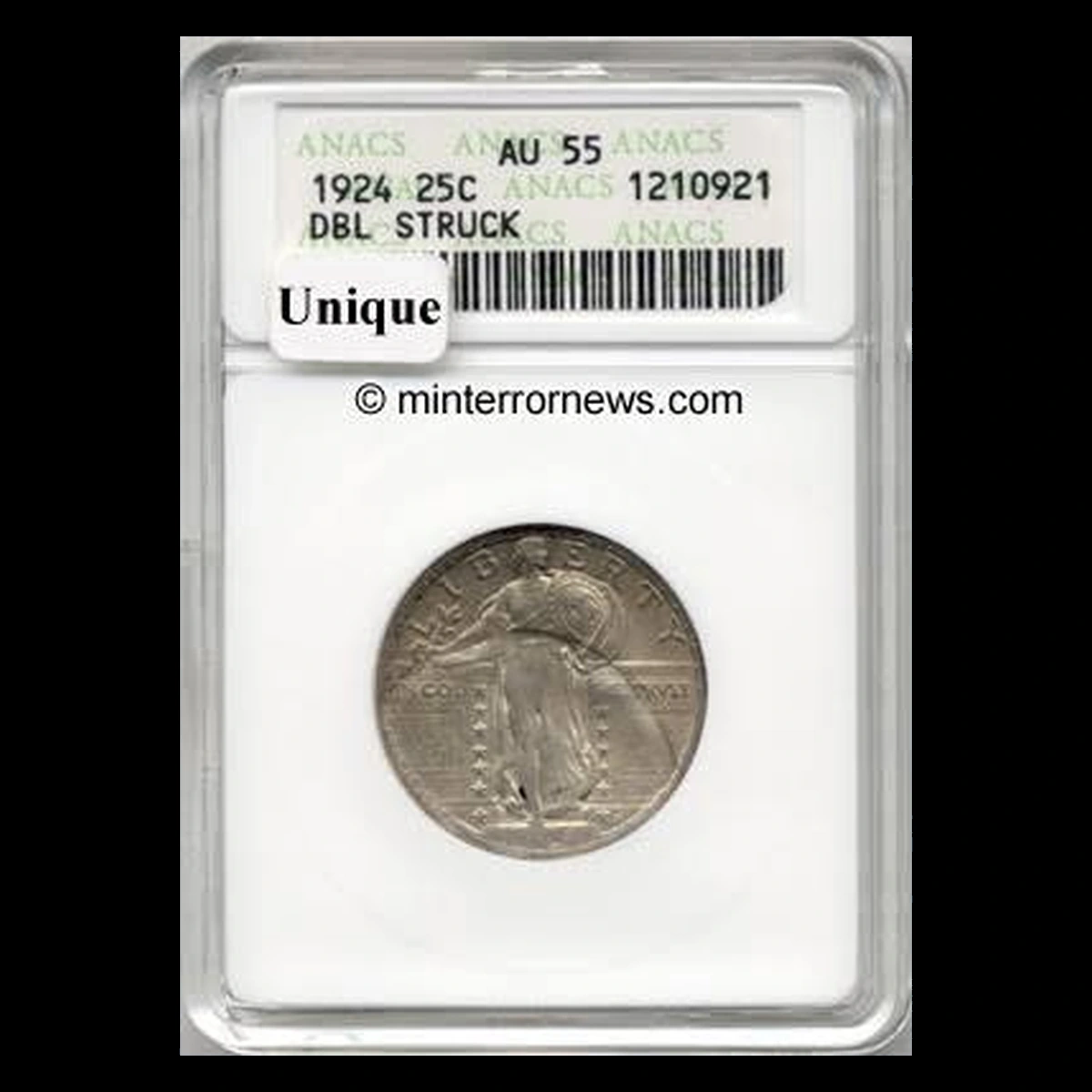
Two overlapping eagles explain the repeated strike on the documented ANACS AU55 quarter. Its second impression is about twenty percent off center toward eleven to twelve o’clock.
Another blank contacted the front during that second blow and pressed an indent into it. Major earlier front details remain visible inside the flattened and stretched area, so the face is not entirely blank.
How to Identify
Trace each eagle into associated reverse details to establish two connected images. A doubled die cannot move a whole eagle into this widely separate position.
Then inspect the front depression for the surviving earlier design. Sunken reversed lettering would point to contact with a struck coin, which differs from the plain-blank indent described here.
What It’s Worth
An estimated range of $12,000–$60,000 reflects the unusual combination and its different historical references. CONECA’s Errorscope reports a $13,800 Bowers & Merena sale in November 2010.
A later published description assigns a $60,000 value. That is an appraisal, not a second recorded sale.
Value the double strike and indent as one combined coin. The front depression does not add another independent coin’s price.
Conclusion
Some 1924 errors are subtle metal flaws, while others preserve an unusually clear sequence of events. Two eagles and an indented front explain a different accident from a simple clipped gap or a displaced single strike.
Use complete photographs and preserve each specimen’s mint, grade, and surviving date. Keep the assigned year in parentheses where appropriate, and distinguish the double-struck coin’s reported sale from its much higher later appraisal.