Rare 1963 Quarter Errors (List & Pictures)
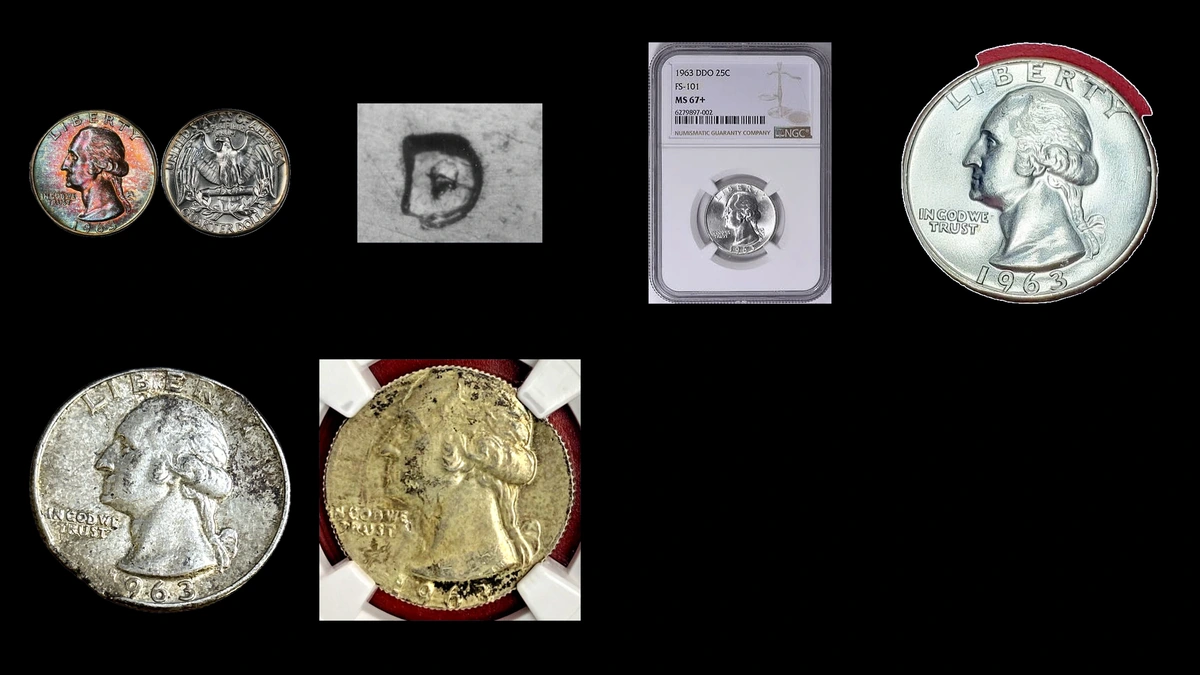
Roosevelt’s chin beneath Washington’s design helped identify a quarter struck over a finished dime. That 1963 piece sold for $2,115 in September 2014.
The 1963 quarter errors below have estimated values of $20–$4,000, from small raised details to different denominations on one coin. Normal quarters of this year are silver; begin with the back design and mintmark before investigating missing or unusual metal.
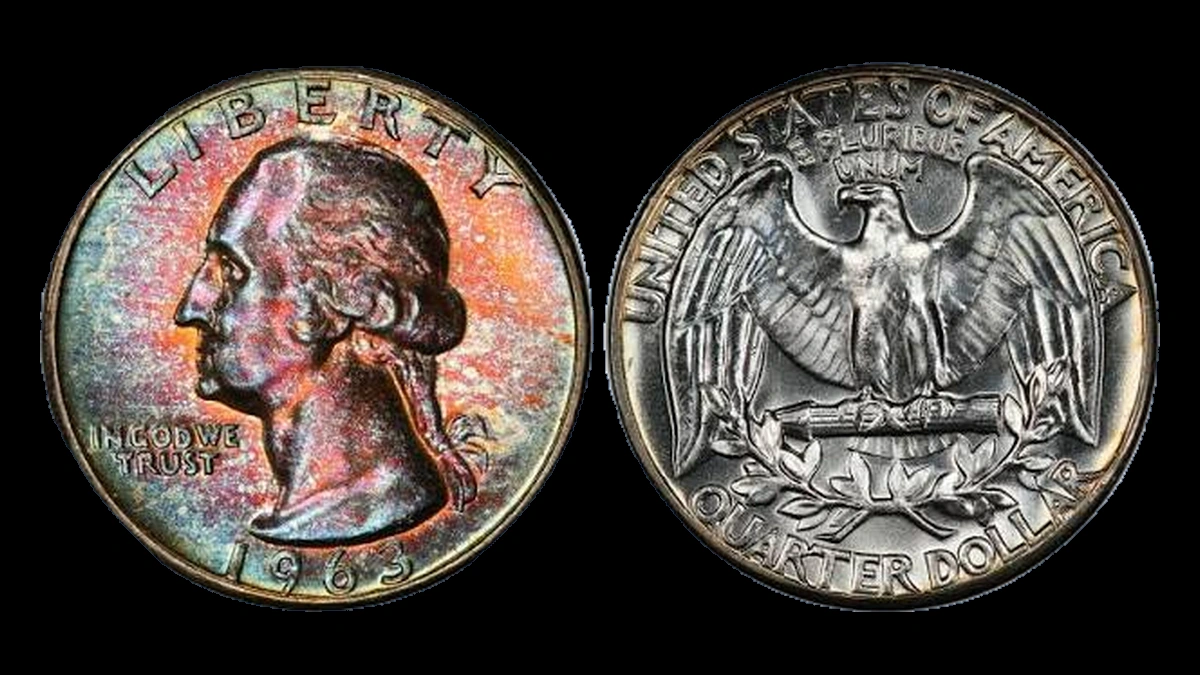
1. 1963 Quarter A Wide E-to-S Gap on an Ordinary Coin: Type B Reverse Error
Type B reverse details normally belong to Proof tools, used for specially made collector coins. Some of those tools made ordinary Philadelphia quarters in 1963.
That ordinary-strike combination is FS-901. Type B is expected on a normal Proof and does not create the same variety premium there.
How to Identify
Establish whether the coin is an ordinary strike or a Proof before comparing STATES. Reflective surfaces alone can mislead that choice.
Compare the space between E and S with a normal Type A reverse. Supporting feather and leaf shapes should also fit the design.
FS-901a needs an additional visible space between an arrow and its neighboring leaf. The general Type B letter spacing alone does not settle that smaller distinction.
What It’s Worth
$25–$1,500 is the estimated range for ordinary-strike Type B coins. PCGS records an NGC MS67 at $1,020 in July 2021.
A separate PCGS MS66 with CAC approval sold for $167.50 in January 2020. Exceptional preservation accounts for much of the higher whole-coin result.
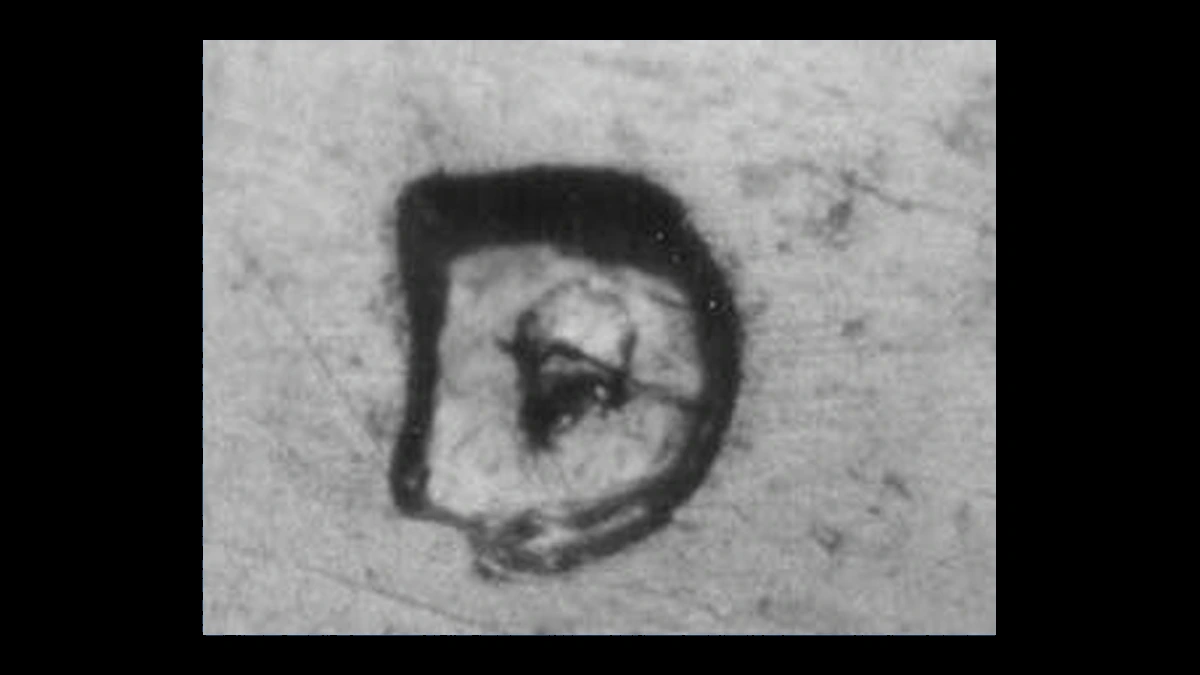
2. 1963 Quarter Extra D Fragments below the Wreath: Repunched Mintmark Error
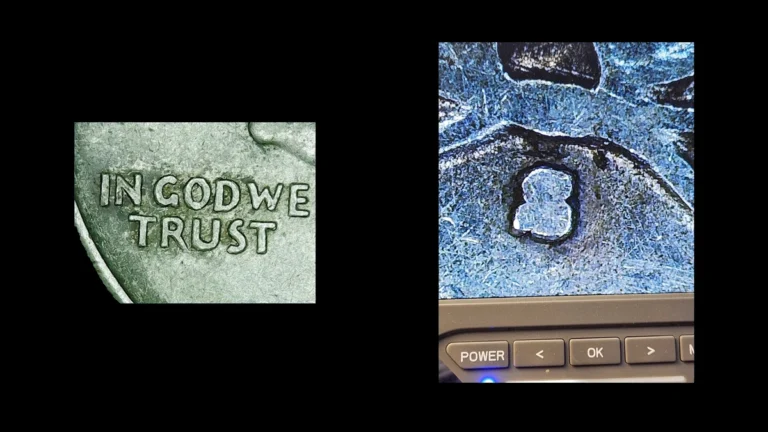
Repeated applications of the mint-letter punch could leave earlier D outlines beside the final letter. Denver WRPM-001 has a three-part pattern with eastward and tilted impressions.
Other listed Denver patterns are tilted or southeastward in different ways. A shared direction does not make two catalog entries identical.
How to Identify
With the back upright, trace the D’s curved back and straight stroke. Extra fragments should fit the specific reference letter pattern.
WRPM-002, WRPM-003, and the separate southeastward listings each need their own comparison. Use nearby small tool marks only after the letter matches.
A crushed edge or flat shelf can imitate extra metal without forming another punched D.
What It’s Worth
$25–$250 is the estimated range for clearly identified repunched mintmarks. Strong visible fragments and sharp reverse detail support greater interest.
The range values the complete silver quarter, not an extra charge for each apparent D outline.
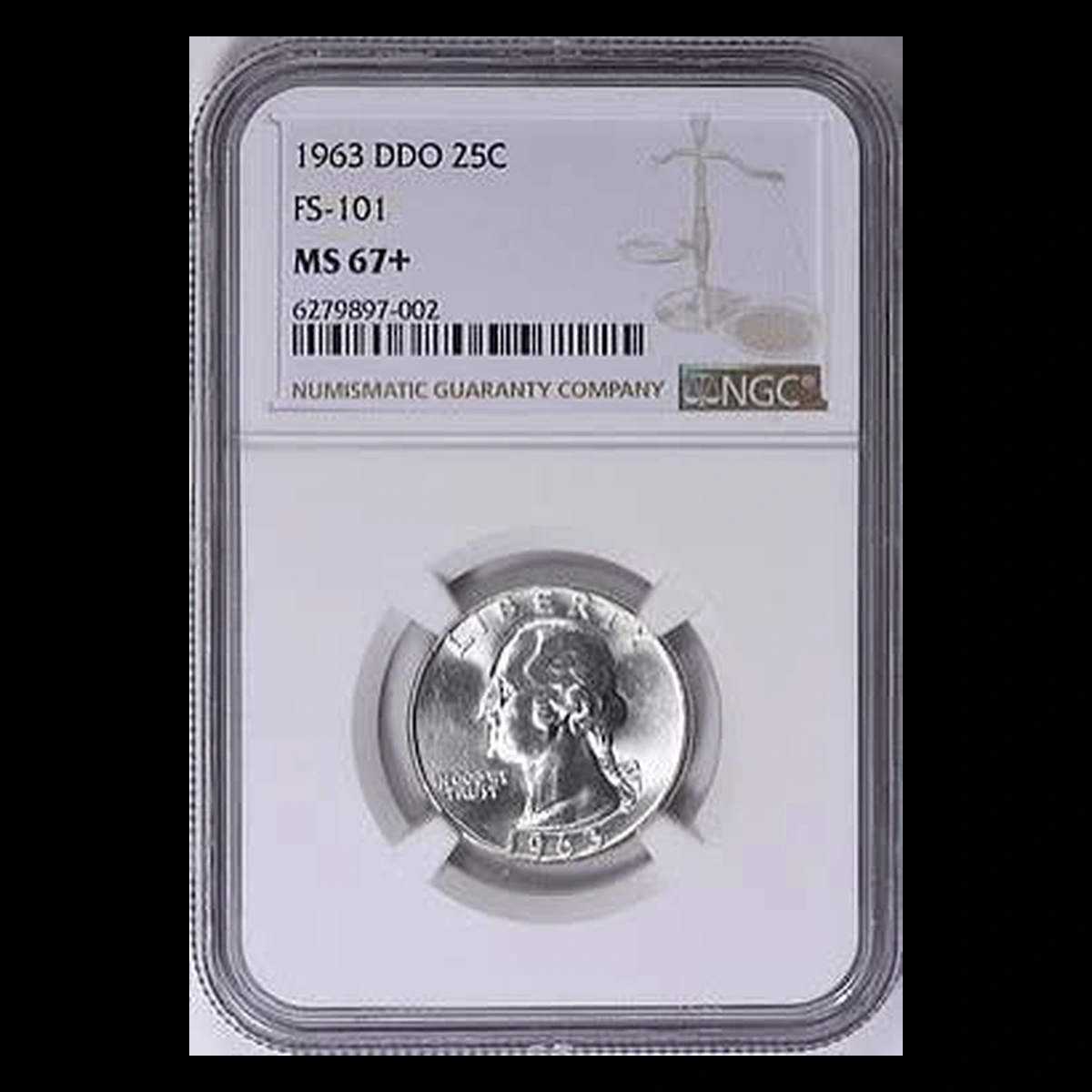
3. 1963 Quarter Repeated Letter and Date Details: Doubled Die Error
A doubled tool can transfer extra design edges in a single strike. The listings include Philadelphia, Denver, and separate Proof patterns.
Philadelphia FS-102 affects both faces. FS-103 includes the date’s 6 and the lower-right leg of LIBERTY’s R.
How to Identify
For FS-103, compare the 6 and R together rather than identifying it from one mark. For FS-102, check the front lettering and repeated back-word outlines.
Denver needs its own pattern with the correct D, while Proofs need Proof-specific references. Similar catalog numbers across finishes do not prove identical doubling.
Rounded repeated shapes at several matching points give better evidence than flat machine-doubling shelves.
What It’s Worth
$25–$3,000 is the estimated range across identified varieties. Exact pattern, mint, finish, and condition must be assessed together.
A Philadelphia FS-102 graded MS66 was recorded at $550 in August 2014. That is one price for the coin with both faces doubled.
4. 1963 Quarter Raised Lines or Edge Mounds: Die Cracks and Cuds Error
A cracked tool leaves a fine ridge as silver enters its opening. A missing rim section can leave a larger mound called a cud.
The general 1963 reports give no fixed paths or catalog numbers. Location needs to come from the actual specimen.
How to Identify
Light a suspected line from the side and check that it rises above the surface. A scratch’s main path cuts into the finished design.
A cud joins the rim and replaces normal detail. An impact notch, crushed letters, or bent edge may explain a later mound instead.
What It’s Worth
$20–$75 is the estimated range for modest cracks, while clearer cuds may bring about $50–$600. Visibility and condition influence the whole-coin value.
A roughly similar photograph cannot establish a particular die-break number.
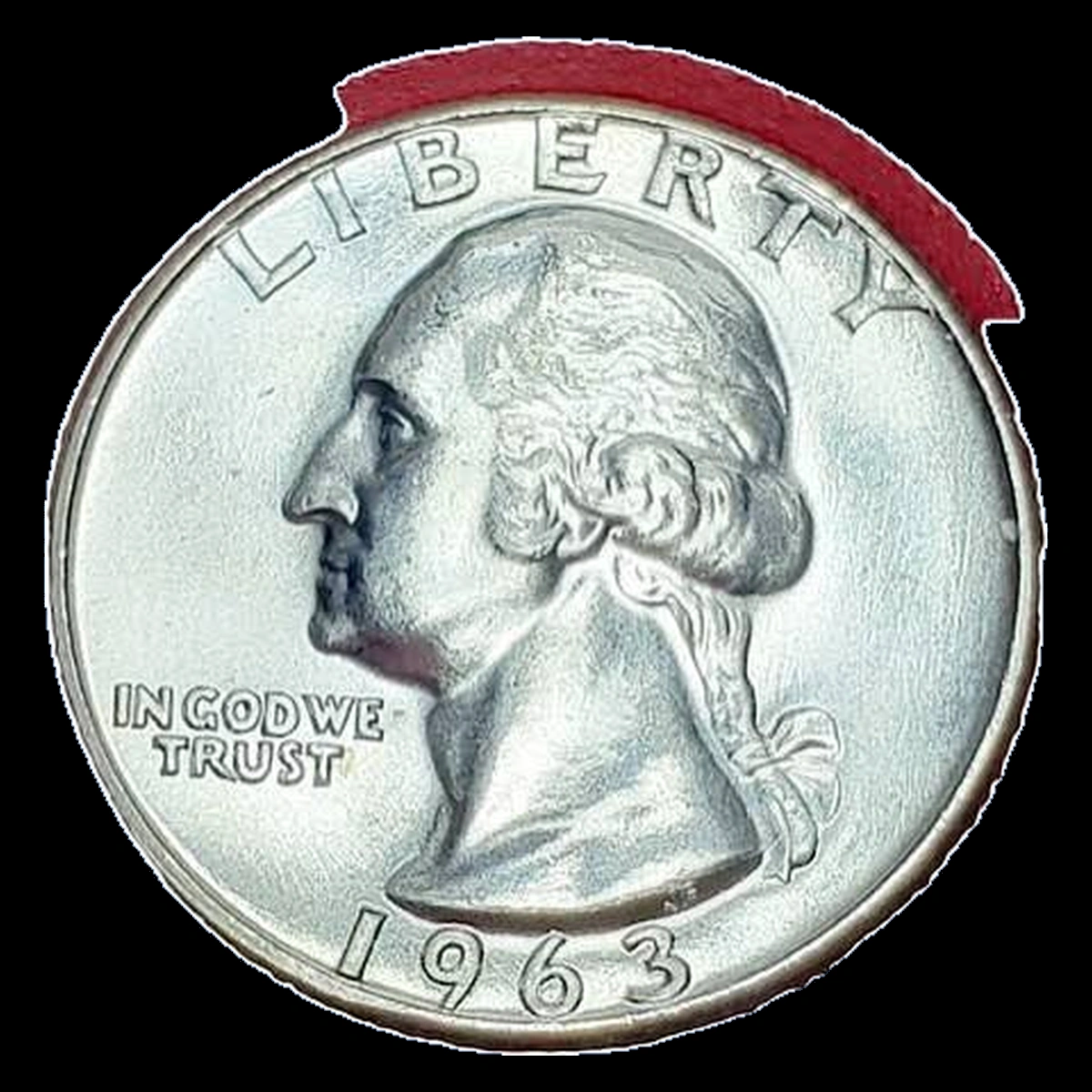
5. 1963 Quarter A Thin Silver Flap Remains Attached: Lamination Error
A reported lightly worn 1963-D has a retained flake of its own metal. The layer separated along a weak area within the alloy.
The flap’s exact location is not established. It must not inherit the position of another photographed coin.
How to Identify
Look across the lifted edge under angled light and find where it remains attached. Do not pry or clean beneath it.
Follow the natural split into nearby metal and inspect for tool cuts or a seam around an added piece. Confirm D below the reverse wreath.
This is a 90% silver quarter, not a modern clad coin with copper under a pale covering.
What It’s Worth
$20–$150 is the estimated range for a genuine retained lamination. An intact attachment and readable nearby design make the cause easier to show.
This is a type estimate, not a recorded sale of the reported flake specimen.
6. 1963 Quarter Embedded Copper or Locally Weak Letters: Struck Through Material Error
A documented ANACS MS64 quarter retains a copper fragment caught during striking. Its contact with the surrounding silver is central to the identification.
A separate Denver report concerns grease-related weak detail and a repunched-mintmark claim. Those are different features on another coin.
How to Identify
For the copper piece, photograph the perimeter without lifting it. Look for design pressed into or interrupted by the fragment, rather than adhesive over a finished surface.
For grease-related weakness, compare faint letters with sharp nearby detail. Test any repeated-D claim independently of the weak patch.
What It’s Worth
$400–$1,500 is the estimated range for firmly identified retained copper. The documented example sold for $720 in July 2021.
Genuine grease-related weakness is estimated at $20–$100. It should not inherit the retained object’s price merely because both blocked a strike.
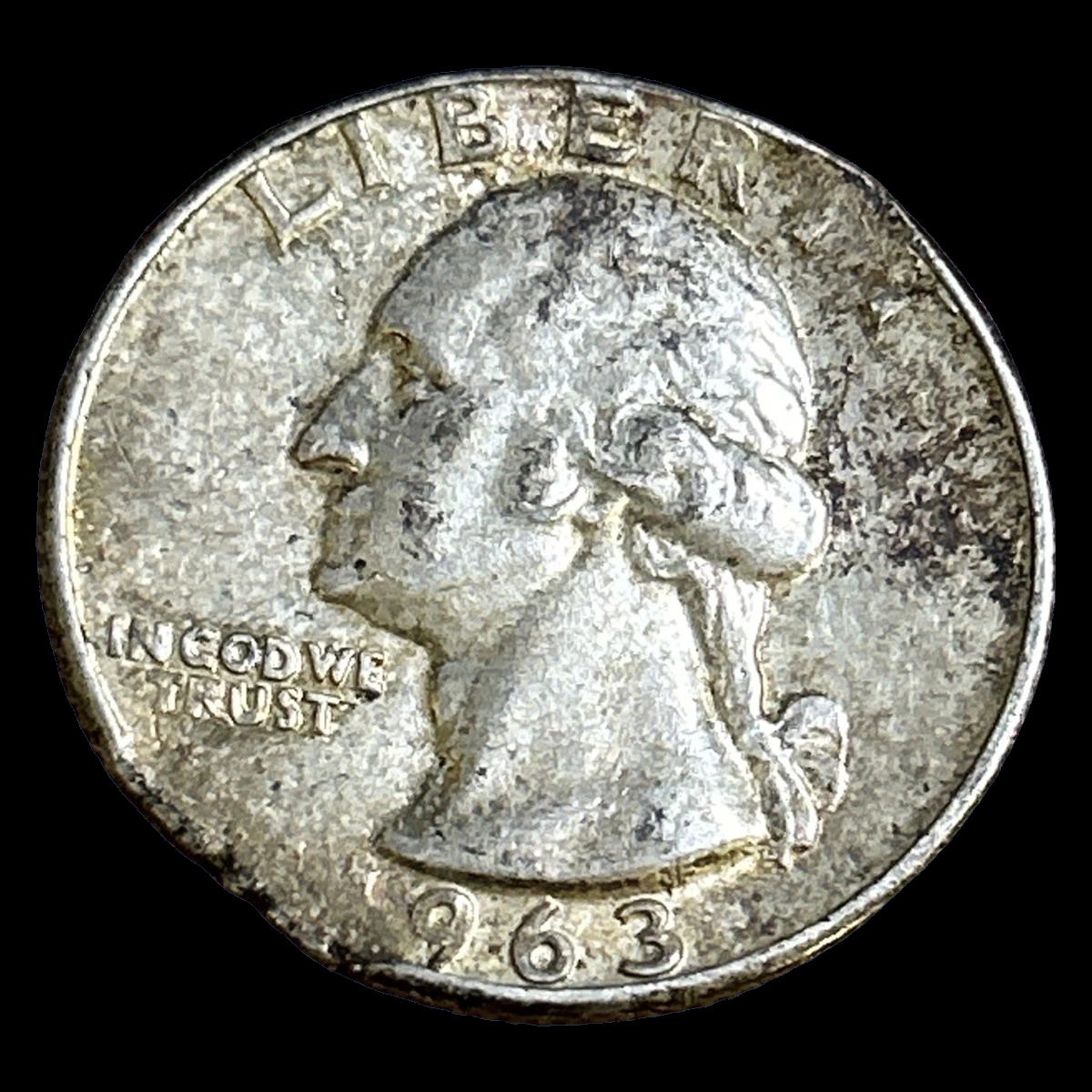
7. 1963 Quarter A Regular or Ragged Gap at the Edge: Clipped Blank Error
A blank cut from incomplete strip metal can have a gap before striking. One listing combines a clip with Type B reverse details, while another describes a ragged missing edge.
The Type B design does not prove the clip. Each physical gap needs its own examination.
How to Identify
Inspect the exposed boundary for saw marks, corrosion, or fresh fractures. Follow how the struck rim meets both ends of the missing section.
A reported NGC MS62 ragged example weighs 6.0 grams, compared with the normal silver-quarter standard of 6.25 grams. That is one specimen’s weight, not a required measurement for every clip.
What It’s Worth
$30–$600 is the estimated range for genuine clips or ragged blanks, including any correctly matched additional variety. Clear original edges display better than heavily damaged ones.
A 1980-P corner clip graded NGC MS65 sold for $204 in June 2023. Its later date, shape, and clad metal make it a broad comparison.
8. 1963 Quarter A Lopsided Wide Border with a Full Picture: Broadstrike Error
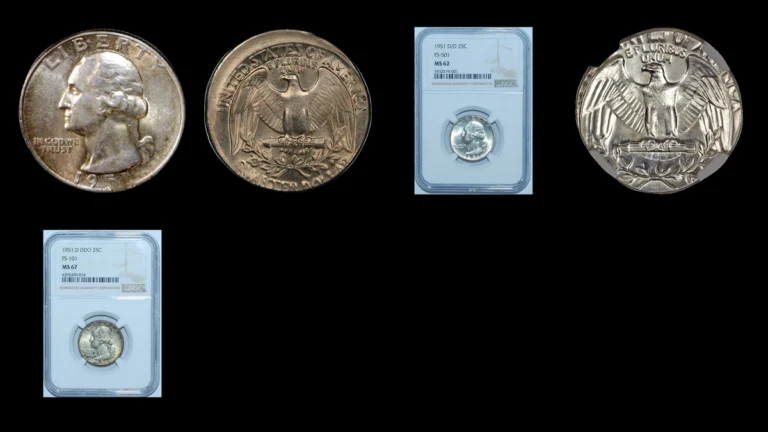
The reported Philadelphia MS63 coin is an uncentered broadstrike. Metal spread outside normal collar restraint, but the intended design remained on the coin.
Its uneven border should not be converted into an off-center percentage. A true off-center strike loses part of the picture beyond the blank.
How to Identify
Start at the tightest border and check that the outer letters still fit. Continue around both faces.
Measure a loose coin against the normal diameter of about 24.3 millimeters, then inspect for hammer marks or flattened detail. Extra width alone can result from later damage.
What It’s Worth
$40–$350 is the estimated range for identifiable original broadstrikes. A complete design and obvious natural spread help explain the error.
A 1984-P PCGS MS65 broadstrike brought $169 in December 2025. That later clad example is a mechanism comparison, not a 1963 silver sale.
9. 1963 Quarter Part of the Design Misses the Blank: Off-Center Strike Error
A displaced blank can leave an untouched crescent beside an incomplete Washington or eagle design. The 1963 reports do not supply one fixed mint or percentage.
A smaller wrong blank can also lose outer letters, so an unusual outline needs more than a quick size judgment.
How to Identify
Find plain metal that neither tool reached and compare the displacement on both faces. Read the actual surviving 1963 quarter date.
Inspect the boundary for sanding, filing, or erased details. A loose coin’s weight and width help distinguish a misplaced normal blank from a smaller substitute.
What It’s Worth
$50–$500 is the estimated range for genuine identifiable examples. Original blank texture, readable date, and condition affect appeal.
A 1988-P quarter struck 30% off center and graded ANACS MS63 sold for $109 in January 2022. That later coin’s metal and shift do not describe a 1963 specimen.
10. 1963 Quarter Quarter Details on Penny, Dime, or Nickel Metal: Wrong Blank Error
Documented penny-blank quarters include Philadelphia and Denver examples. Separate silver dime-blank coins are smaller and much lighter than a normal quarter.
A nickel-blank type is also reported, without an identified certified specimen in the supplied record. It needs independent authentication.
How to Identify
Identify quarter details meeting a natural small edge, then compare weight and width. Period penny blanks start near 3.11 grams and 19.05 millimeters; silver dime blanks near 2.50 grams and 17.91 millimeters.
The Denver penny example weighs 3.03 grams, while the cleaned Philadelphia coin is 3.09 grams. A documented Denver dime-blank coin weighs 2.5 grams.
A proposed nickel blank needs suitable solid copper-nickel alloy and a starting weight around five grams. Color alone does not settle the metal.
What It’s Worth
$300–$3,000 is the estimated range across identified wrong blanks. The nickel-blank portion is conditional on establishing that identity.
A Philadelphia penny-blank MS65 Brown sold for $1,116.25 in October 2016; the cleaned 3.09-gram Philadelphia example brought $900 in February 2026. A Philadelphia dime-blank PCGS AU55 sold for $675.63 in October 2016.
Keep each grade, weight, and surface condition with its own sale.
11. 1963 Quarter Roosevelt beneath Washington: Quarter over a Finished Dime Error
Roosevelt’s chin survives beneath the quarter design on the documented coin. The earlier dime date also appears at the crest of the eagle’s left wing as viewed.
Both designs are from 1963, but the bold quarter date establishes the later strike’s year. An unused dime blank would not carry those earlier pictures.
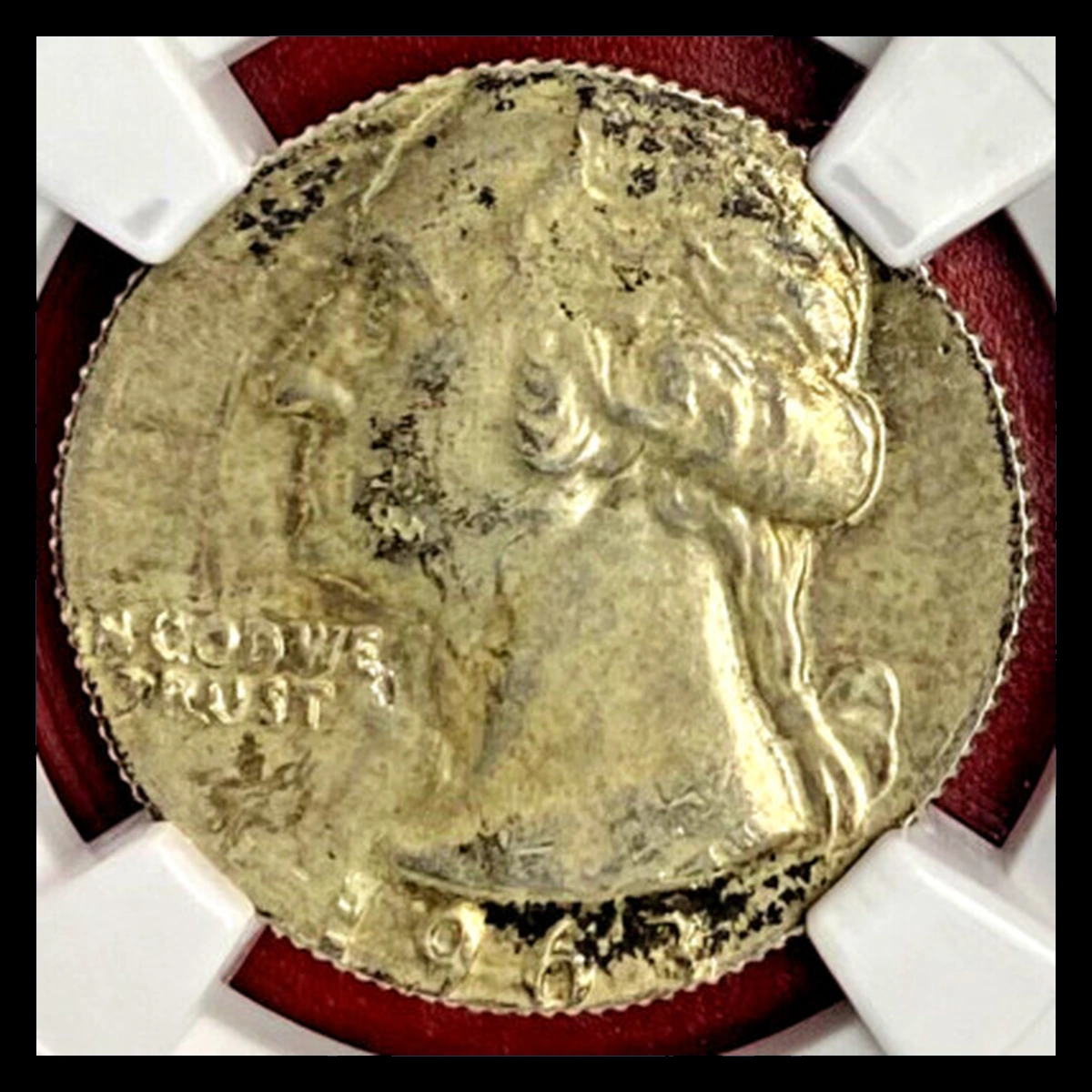
How to Identify
Read the quarter date first, then locate the older digits at the wing and the remnant of Roosevelt’s chin. Connect those fragments to a recognizable dime design.
Do not date an unreadable quarter strike solely from its earlier host coin. The surviving first design and the later impression need separate identities.
What It’s Worth
$1,200–$4,000 is the estimated range for similarly clear authenticated combinations. The NGC MS62 example sold for $2,115 on September 5, 2014.
Readable dates and preserved older design help explain the sequence, while cleaning or scratches can obscure it.
Conclusion
Check whether a Type B reverse is on an ordinary coin or a normal Proof before calling it unusual. For repunched letters and doubled dies, match the mint, face, and precise pattern.
For metal and shape errors, keep measurements with the actual specimen. Surviving Roosevelt detail is especially useful because it separates a finished dime struck again from a quarter made on a plain dime blank.