Rare 1919 Quarter Errors (List & Pictures)
A thin peel and two thick matching fragments represent different problems in a quarter’s metal. The supplied 1919 quarter errors span estimated whole-coin values of $30–$50,000.
An exceptional Philadelphia broadstrike graded NGC MS67 Full Head sold for $35,250 in June 2014. Examine small surface features first, then compare the edge and both designs before identifying a major shape error.
| Clue | Possible identification | Estimated value |
|---|---|---|
| E-like trace beside the leg | Reported die clash | $75–$500 |
| Raised line or rim-connected patch | Die crack or cud | $30–$2,000 |
| Shallow peeling layer | Lamination | $30–$750 ordinarily |
| Metal missing at the edge | Reported 1919-S clip | $100–$1,500 in ordinary circulated grades |
| Two matching full-thickness fragments | Broken-planchet pair | $15,000–$30,000 for the complete pair |
| Half the design misses the disk | Off-center strike | $20,000–$40,000 for a comparable dramatic dated piece |
| Complete design in an expanded outline | Broadstrike | $5,000–$50,000 |
1. 1919 Quarter An E-Like Shape Appears beside Liberty’s Leg: Reported Die Clash Error
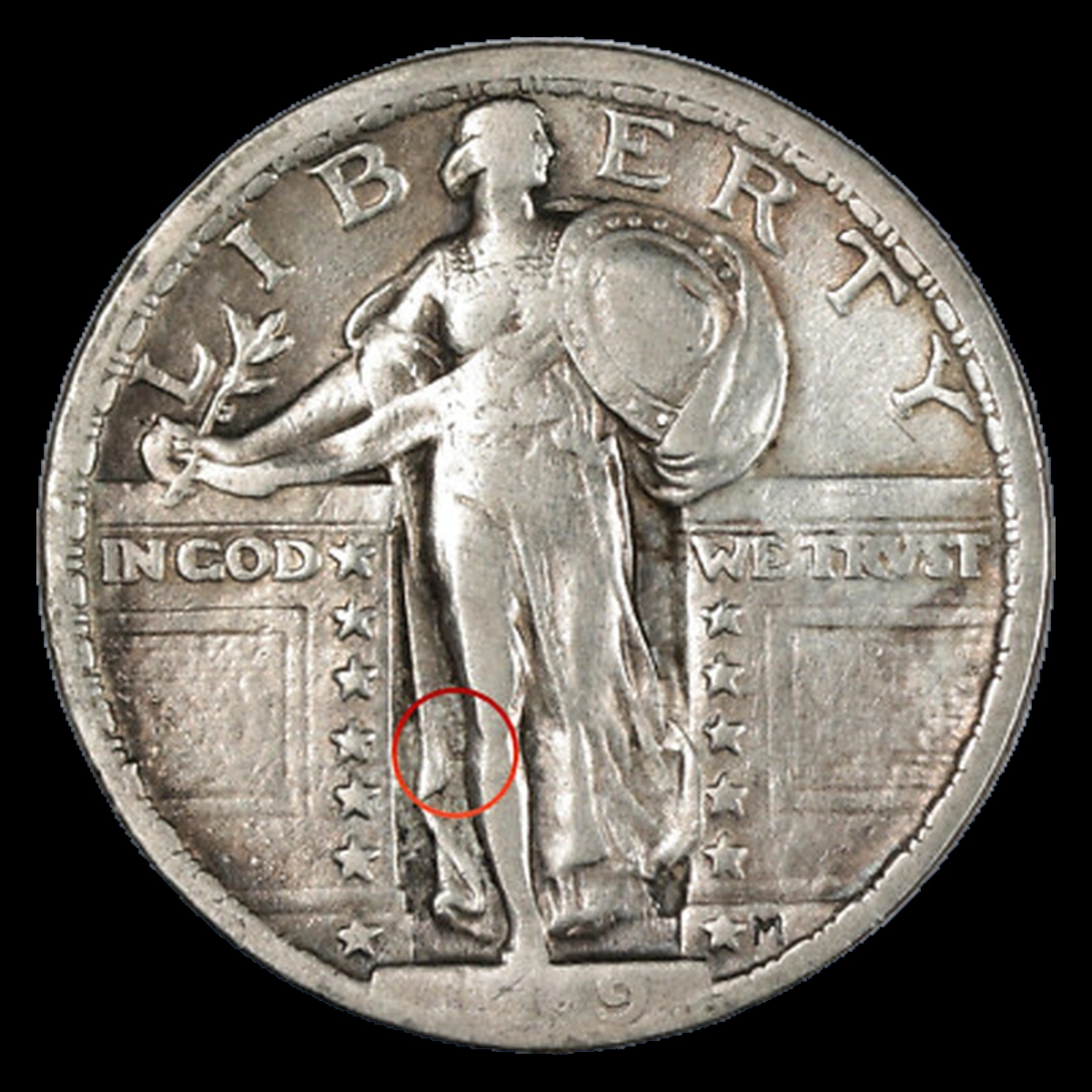
A Philadelphia report places an unexpected E-like trace near Liberty’s leg or knee. A possible explanation is contact between the dies without a blank, leaving transferred design marks on coins struck afterward.
How to Identify
Compare the area with normal clothing folds before seeking an opposite-design match. A tiny crop can make a regular fold look like a letter.
Related traces should fit one consistent back-to-front alignment. Do not select an E from an inscription merely because the reported nickname suggests that letter.
Use angled light to distinguish an original transferred feature from a cut into the finished surface. The complete relationship matters more than one short straight line.
What It’s Worth
$75–$500 is the estimate for ordinary worn through modestly unworn Philadelphia coins with a convincing clash. Clear traces on undisturbed surfaces support stronger comparisons.
The range already includes the underlying quarter. It should not be added as a second full amount to a normal-coin valuation.
2. 1919 Quarter A Ridge or Raised Rim Patch Replaces Detail: Die Crack or Cud Error
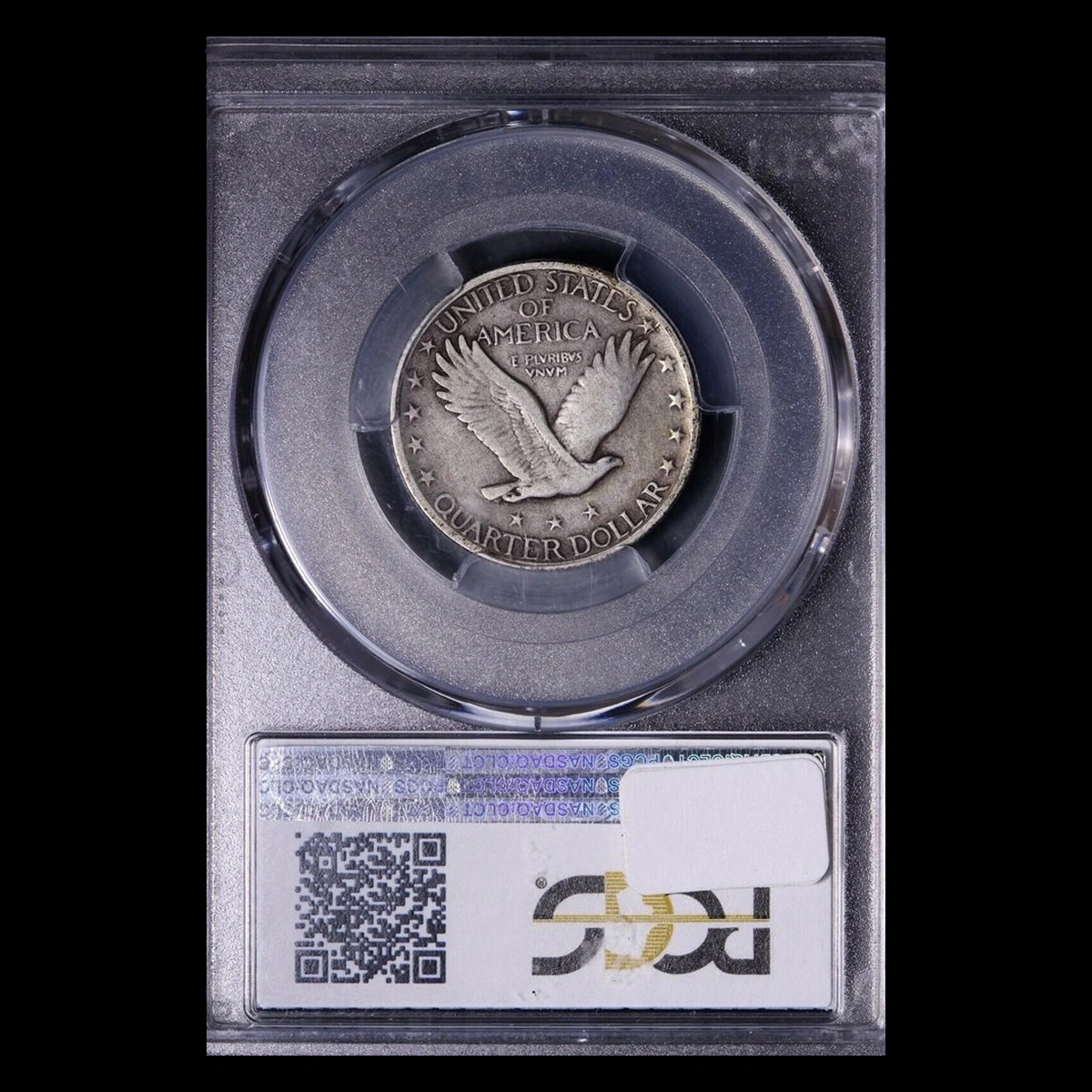
Reported Philadelphia cracks and cuds come from damage to the dies rather than splits through the silver coin. Metal entering a fracture creates a ridge; a larger rim-connected opening can leave a cud.
How to Identify
Follow a large patch to the rim before calling it a cud. An isolated interior lump does not establish that connection.
For a narrow line, inspect its center under side lighting to separate raised relief from a scratch channel. Around a larger patch, examine how normal letters or folds terminate rather than being covered by added material.
What It’s Worth
$30–$2,000 is the estimate from minor cracks through substantial original rim breaks on ordinary-grade Philadelphia quarters. The upper end requires a pronounced break, not a small deposit.
A 1954 Washington quarter with a head crack sold for $52 in July 2022. It is a different-design comparison for the modest end of the category.
3. 1919 Quarter A Thin Surface Flap Lifts Away: Lamination Error
Year reports describe laminations on Philadelphia, Denver, and San Francisco quarters, often on the reverse. A weakness in the alloy permits a thin surface layer to lift or detach.
This differs from the complete-thickness broken pair discussed below. A shallow peel does not divide the coin into two fragments that each carry both designs.
How to Identify
Inspect the depth with side lighting and follow any remaining design onto an attached flap. Do not lift or press the fragile metal.
Compare the exposed area with corrosion pits or sharp scraping. An attached flap may leave the total weight unchanged, while detached metal can reduce it.
What It’s Worth
$30–$750 is the estimate for ordinary circulated examples with genuine peeling. A dealer offered an ANACS AU50 1919 example at $225, an asking price rather than a confirmed sale.
Denver and San Francisco issues may have significant underlying collector value. Unworn or unusually sharp-head examples need condition comparisons beyond this ordinary-grade range.
4. 1919 Quarter A Gap Interrupts the Original Disk: Reported Clipped Blank Error
A collector reported a clipped 1919-S quarter without specifying the gap’s shape or direction. In a genuine clip, metal is already absent when the dies apply the design.
How to Identify
Confirm S on the obverse, left of the lower figure and above the date level. Then inspect the exposed edge through the gap and both junctions with the rim.
Original incomplete blanks can affect how nearby detail forms. Later cuts may pass sharply through finished design and leave filing or tool marks visible from the side.
A low weight cannot establish when the metal disappeared. Keep the whole outline and both faces together in the comparison.
What It’s Worth
$100–$1,500 is the estimate for genuine clipped 1919-S quarters in ordinary circulated grades. Date, mint, preservation, and the clarity of the clip all contribute.
The collector report does not establish an unworn grade or Full Head quality. Those stronger condition claims would need independent support.
5. 1919 Quarter Two Thick Fragments Reconstruct One Coin: Broken-Planchet Pair Error
The documented quarter separated along a front-side line running about eleven to five o’clock. Each nearly equal fragment retains parts of both Liberty and the eagle.
Stack’s Bowers described a planchet broken after striking, and PCGS graded the paired pieces AU58 in separate holders. These are full-thickness fragments, not an obverse sheet peeled from a reverse sheet.
How to Identify
Arrange photographs of the encapsulated pieces to compare their fracture boundaries, designs, and outer outline. Leave them in their holders rather than fitting the physical edges together.
Both faces should reconstruct one continuous coin. Fracture texture, labels, and paired history help distinguish the documented failure from cutting or a later forced break.
What It’s Worth
$15,000–$30,000 is the estimate for a comparable authenticated complete pair. The two-piece set sold for $19,800 at Stack’s Bowers in August 2019.
That result covers both pieces together, not each fragment. A lone piece or an ordinarily broken circulated quarter cannot automatically use the same range.
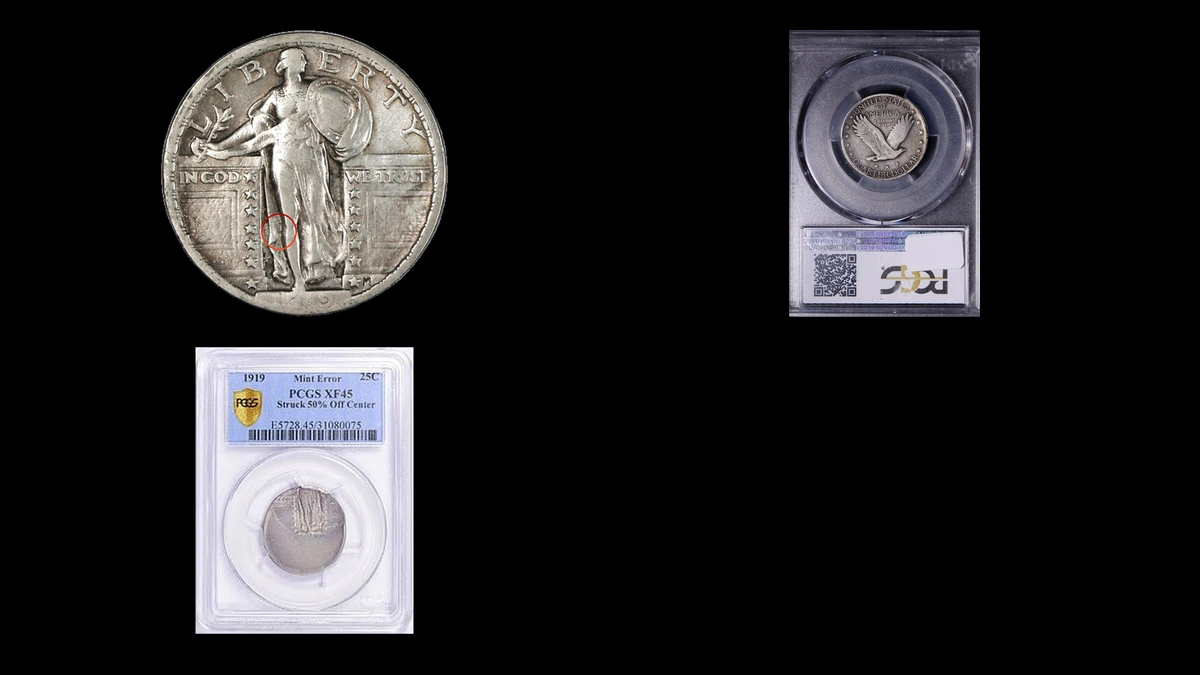
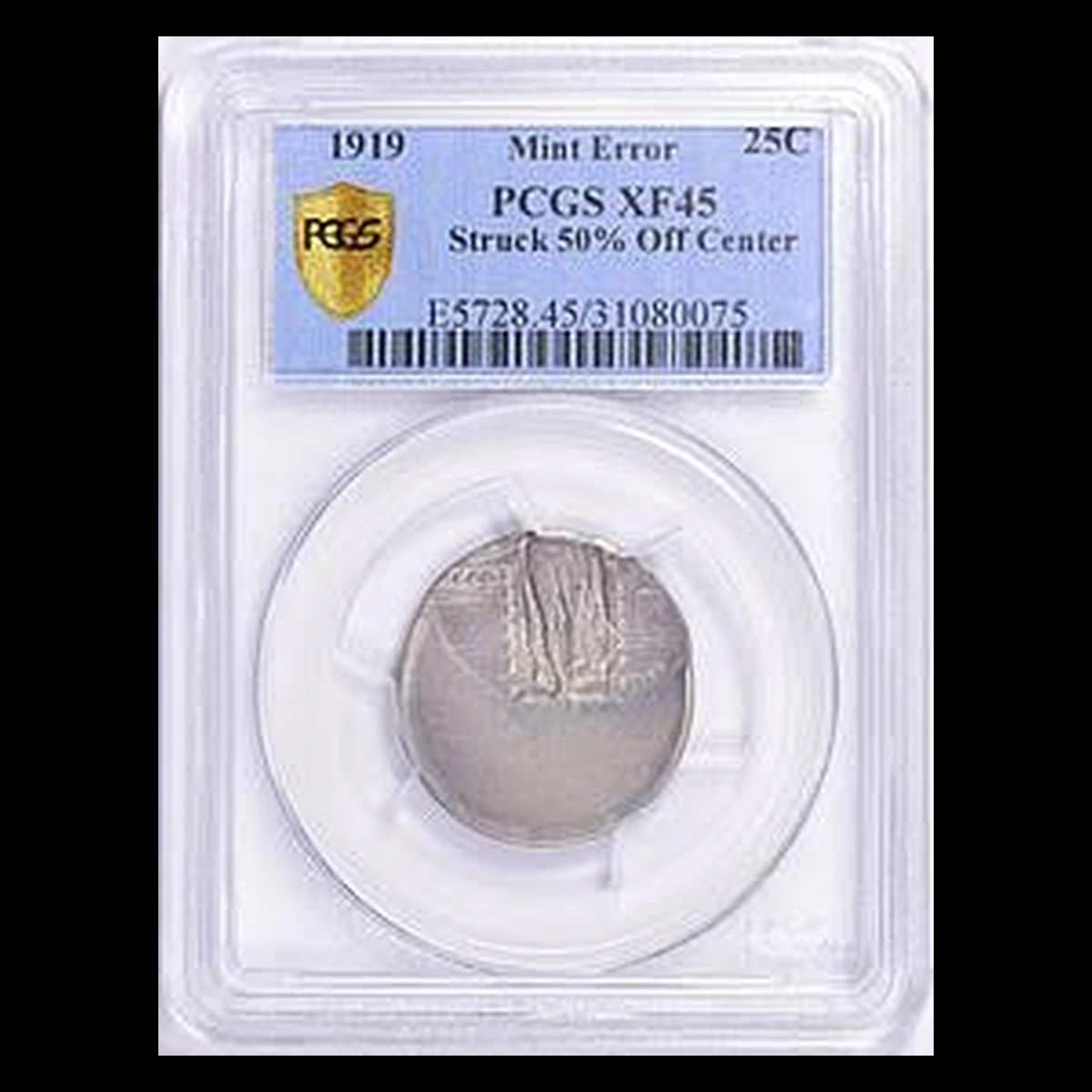
6. 1919 Quarter Half the Design Misses Upward: Off-Center Strike Error
The documented Philadelphia PCGS XF45 quarter is 50% off center toward twelve o’clock. Its complete date and struck mint-letter area survive, with no D or S present.
Those preserved details support Philadelphia identity on this particular specimen. They are stronger evidence than an absent mark where the design never reached the blank.
How to Identify
Read all four year digits, then locate the visible mint-letter area beside the lower figure. On another off-center coin, an unstruck version of that area could not establish the mint.
Compare the upward displacement and the struck-to-unstruck boundary on both faces. Inspect the bare metal for original texture rather than grinding that erased a completed design.
What It’s Worth
$20,000–$40,000 is the estimate for a comparable dramatic dated 1919 off-center quarter. The GreatCollections XF45 specimen sold in May 2023, but the visible page does not disclose the final amount.
An earlier published $18,500 figure was an ongoing bid, not the realized price. Smaller shifts, poorer surfaces, and missing identity need different comparisons.
7. 1919 Quarter The Full Design Spreads toward a Plain Edge: Broadstrike Error
The Philadelphia NGC MS67 Full Head broadstrike has an expanded outline and plain edge while retaining the full design. The upper portions of three date digits stretched as the silver spread.
The collar failed to restrain the metal and form its usual edge grooves. Full Head describes sharp head detail and is not an additional error.
How to Identify
Trace the whole date and outer artwork to confirm completeness, then inspect the expanded border and edge together. Original flow should connect the enlarged outline with the design formed during the blow.
Normal references are about 24.3 millimeters and 6.25 grams, but measurements alone cannot exclude later flattening. Check for crushed portrait or lettering and evaluate head detail separately from the error.
What It’s Worth
$5,000–$50,000 is the supplied estimate for genuine 1919 broadstrikes in substantially different conditions. The NGC MS67 Full Head specimen brought $35,250 in June 2014.
Exceptional preservation contributed heavily to that result. A worn broadstrike does not inherit the same value merely by having a wide border or smooth edge.
Conclusion
The most useful distinction among these 1919 quarters is how much metal is affected and how the design relates to it. A surface peel, an original clip, and two matching full-thickness fragments represent separate mechanisms.
For displaced or expanded strikes, preserve the complete date and both faces in photographs. Keep pair totals, asking prices, ongoing bids, and exceptional-grade results attached to their original records before using them as comparisons.