Rare 1947 Quarter Errors (List & Pictures)
A raised line at the eagle’s beak, an extra S curve, and doubled front lettering each need a different comparison. These 1947 quarter errors have estimated whole-coin values of $25–$1,500.
A Philadelphia doubled-front quarter graded MS66 sold for $1,020 in February 2025. Begin at the beak and mintmark, then turn to the front for the correct mint’s doubled-design pattern.
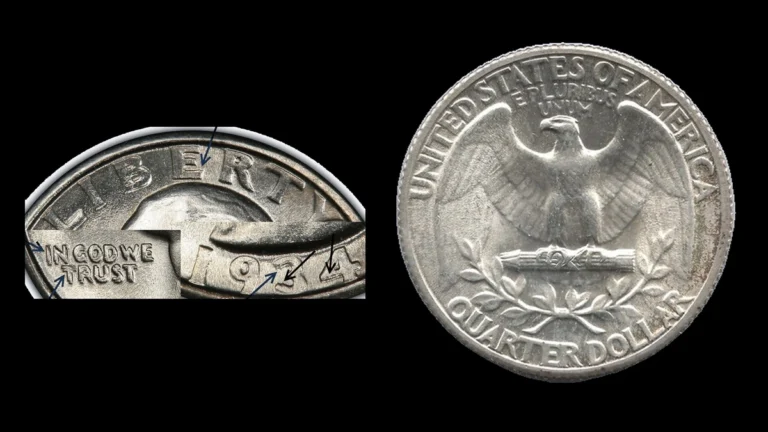
1. 1947 Quarter A Line Extends from the Beak: Spitting Eagle FS-901 Error
A small raised line in front of the eagle’s beak gives the Philadelphia variety its Spitting Eagle nickname. It belongs to the struck metal rather than being a loose object on the surface.
FS-901 identifies this particular feature. An unrelated line in the same general area does not establish the variety.
How to Identify
Focus on the full beak and the line extending from it. Keeping that landmark in the close-up makes its position easier to compare.
Sweep a light across the line from opposite sides. It should rise above the surrounding surface rather than have a central groove.
A scratch can push up lips along its edges, so inspect the middle as well as the bright sides. Compare the exact path with an identified FS-901 photograph.
Check below the wreath for the mintmark area. This variety’s Philadelphia identity should not be replaced with a D or S coin simply because it has a nearby line.
What It’s Worth
$25–$500 is the estimated range for correctly identified Spitting Eagle quarters. Wear, reverse condition, and the clarity of the line affect the comparison.
The supplied PCGS variety record gives no auction result for this feature. The upper estimate is not a claimed completed sale.
Scratches crossing the same area can hide the line and reduce collector interest.
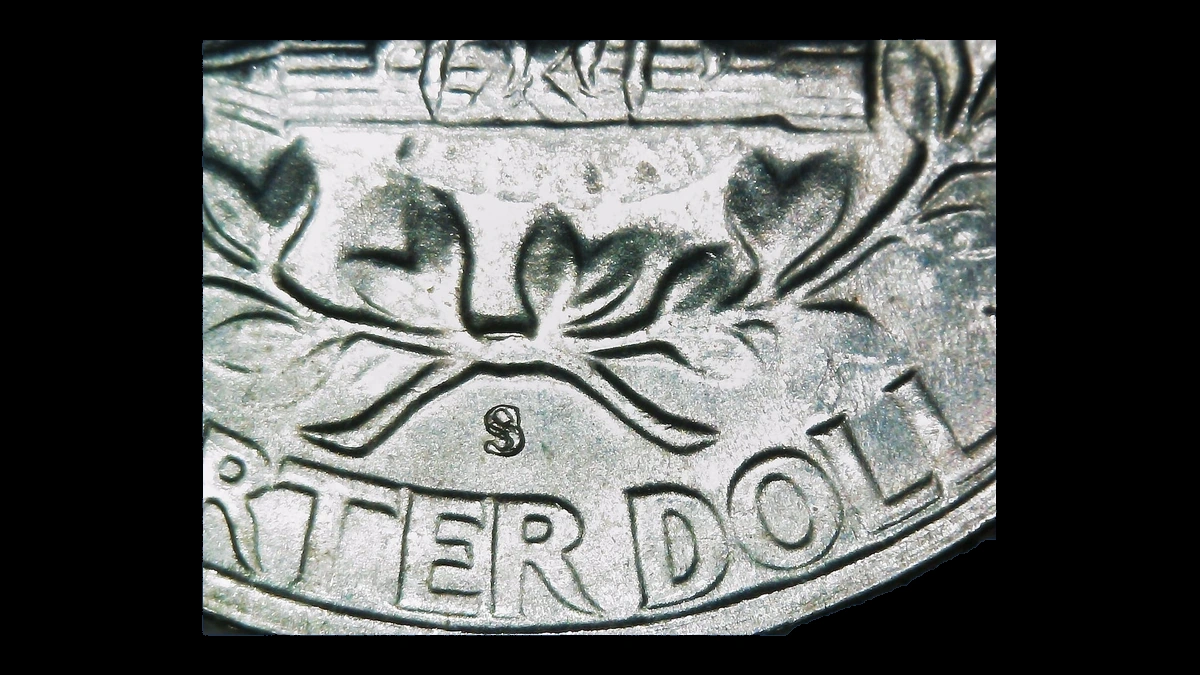
2. 1947 Quarter Earlier S Curves beside the Mintmark: Repunched S Error
Mint workers punched the S into the steel stamping tool separately. Another punch in a slightly different position could leave part of the earlier letter visible.
Ken Potter lists westward and southward patterns for 1947. With the back upright, west means left and south means below.
One westward pattern also occurs with front doubling. The S feature alone does not establish that second variety.
How to Identify
Locate S beneath the wreath and trace its normal upper and lower curves. Then inspect the extra raised parts to the left or below.
Use the appropriate pattern in Potter’s listings. Do not join fragments from two reference coins into an imagined larger S.
Change the lighting to check that the remnants stay fixed. An impact can flatten a curve or push metal sideways without forming a second recognizable letter.
What It’s Worth
$25–$300 is the estimated range for identified repunched S examples. Clean surfaces and visible earlier-letter parts improve appeal.
Potter’s old list offered unworn coins at prices in the teens. Those historical asking prices are neither completed sales nor present-day valuations.
A worn faint trace needs a lower comparison than a clear original overlap.
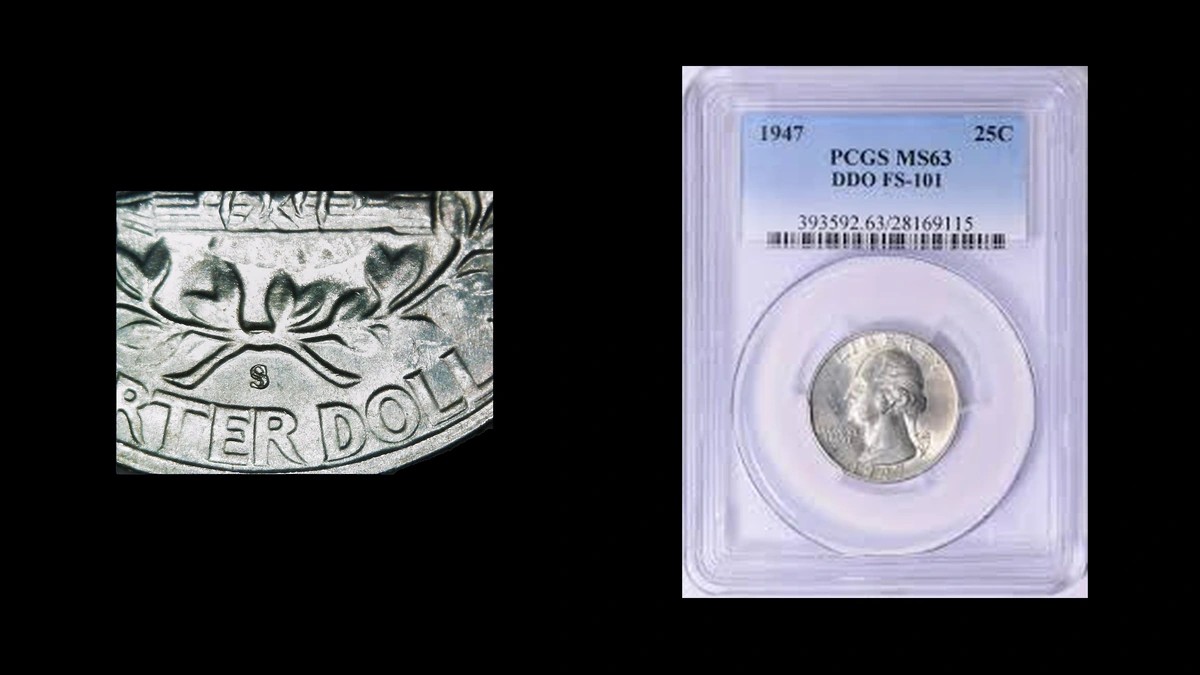
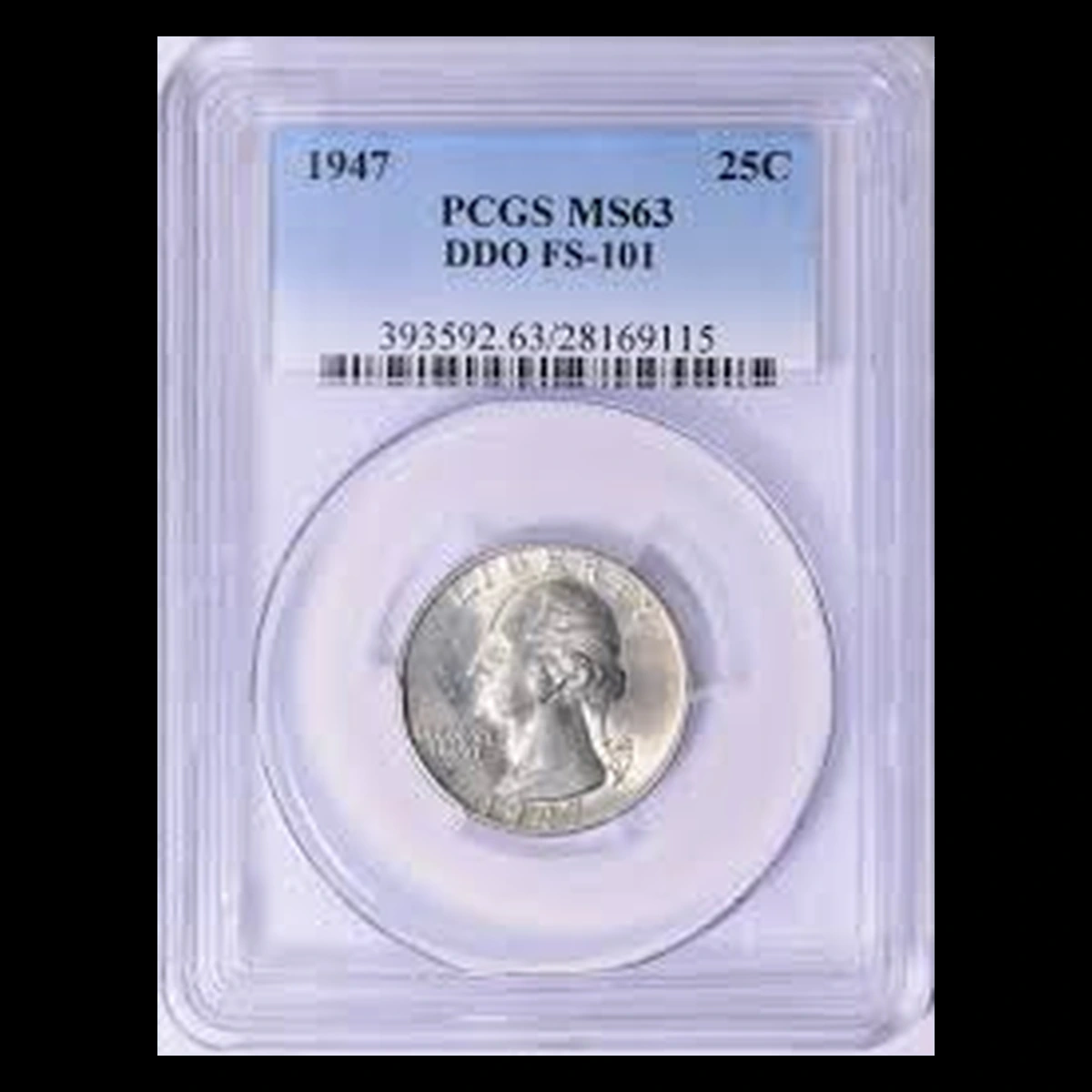
3. 1947 Quarter Extra Outlines in the Front Design: Doubled Die Error
A doubled die has repeated design on the tool before striking the coin. One blow can therefore leave added outlines in the front lettering or date.
The Philadelphia variety is FS-101. A separate San Francisco listing combines front doubling with a westward repunched S.
The San Francisco description does not specify its strongest front letters. It needs a matching image rather than borrowed Philadelphia diagnostics.
How to Identify
Read the back mintmark area first and select a same-mint reference. Photograph several front letters and date details together.
Look for rounded extra outlines or divided tips that match the reference at multiple points. Low flat shelves beside a reduced main letter may come from movement during striking instead.
On the San Francisco combination, verify the westward S separately. Neither feature automatically proves the other.
What It’s Worth
$40–$1,500 is the estimated range for matched Philadelphia FS-101 coins. The reported San Francisco combination is estimated at $25–$300.
PCGS records $1,020 in February 2025 for a Philadelphia MS66 at Stack’s Bowers. MS66 means unworn with relatively few marks.
The San Francisco coin’s two features form one whole-coin value. Their full estimates should not be added together.
Conclusion
Use the beak’s shape, the S’s extra curves, and repeated front details as separate checks. Their small size makes lighting and complete reference views especially useful.
Keep the mint and condition attached to the comparison. A high-grade Philadelphia doubled-front sale does not price a worn San Francisco mintmark variety, even when both show genuine raised extra detail.