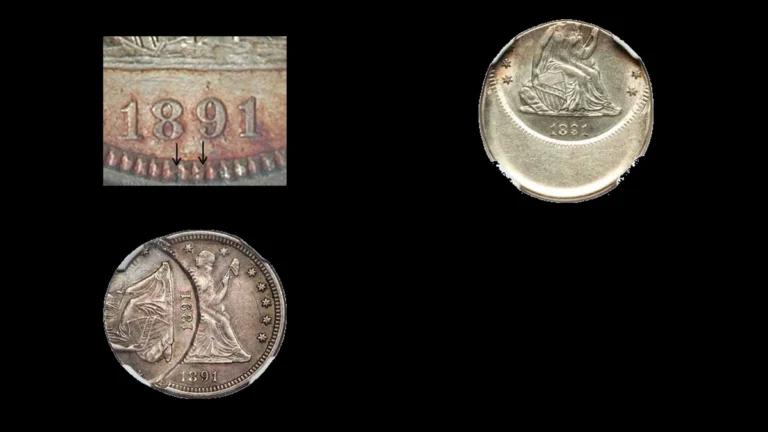
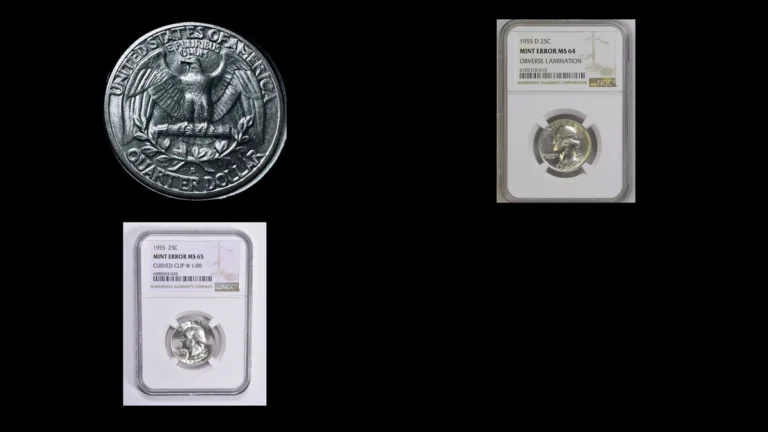
Rare 1929 Quarter Errors (List & Pictures)
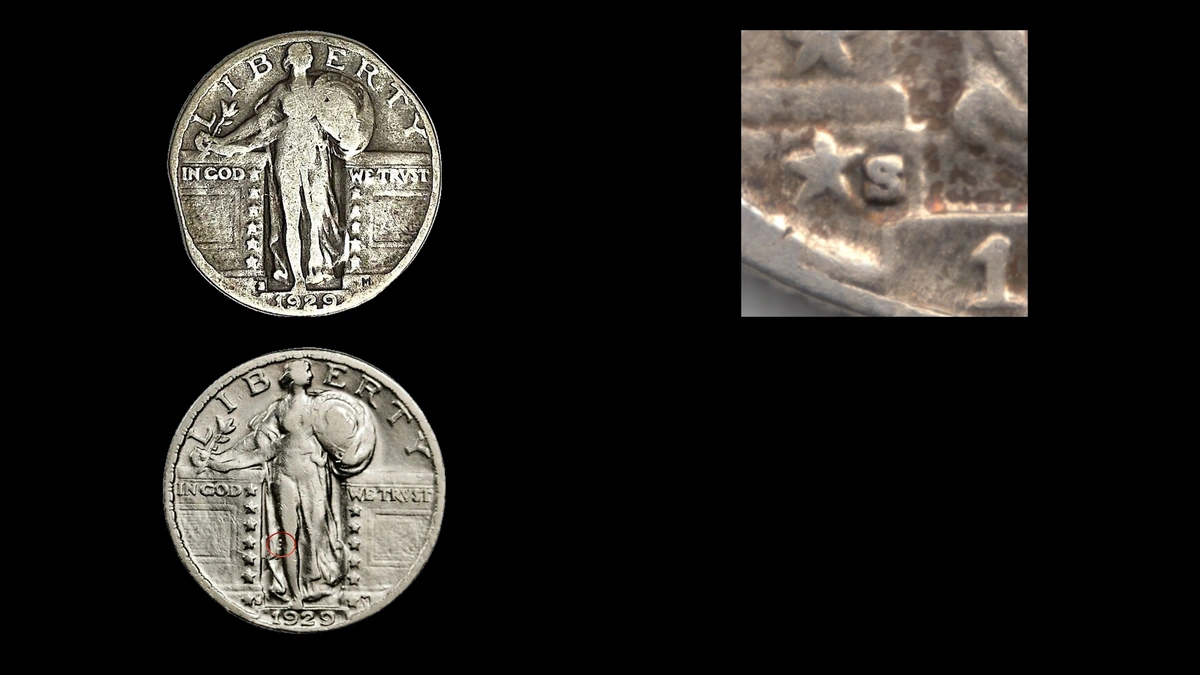
A stretched date can help reveal some of the most conspicuous 1929 quarter errors. A 1929-S broadstrike sold for $4,025 in August 2006, while a different example of the type brought $2,013 in January 2026.
Estimated whole-coin values range from $25–$5,000. Examine the outline and lower front first, then move to the mintmark, Liberty’s robe, and the small reverse details.
| Feature | Possible error | Estimated value |
|---|---|---|
| Widened outline and stretched date | Broadstrike | $1,200–$5,000 |
| Curved missing section | Clipped blank | $50–$700 |
| Upper-left S remnant | Repunched mintmark | $40–$400 |
| Letters or feathers beside Liberty | Die clash | $40–$3,000 |
| Repeated lower stars and words | Denver doubled reverse | $40–$500 |
| Localized missing detail | Reported grease-filled die | $25–$250 |
1. 1929 Quarter A Widened Coin with Stretched Digits: Broadstrike Error
On a documented 1929-S broadstrike, the spreading is particularly noticeable around the date below Liberty. Metal moved outward because the collar, the ring that normally controls the coin’s width, did not contain it during the strike.
A broadstrike retains the full design, although its outer details may stretch and its placement need not be perfectly centered. The colorful toning on the recorded PCGS MS62 coin is separate from the physical expansion that identifies the error.
How to Identify
Compare the lower outline with a normal Standing Liberty quarter and follow the distorted digits into the expanded surrounding metal. The date’s recessed position is normal for 1929; distortion of the struck metal is the relevant clue here.
Check the outer words and design on both faces. Missing design beyond the blank points toward an off-center strike, whereas a broadstrike keeps the complete design despite its expanded outline.
The normal diameter is about 24.3 millimeters, which provides a reference for a loose coin. Keep certified coins in their holders and use angled photographs to inspect the widened edge.
What It’s Worth
$1,200–$5,000 is the supplied estimate for comparable authenticated broadstrikes. Degree of expansion, readability of the date, and surface quality all affect the comparison.
The PCGS MS62 example sold in January 2026 for $2,013. A different MS62 broadstrike brought $4,025 in August 2006.
MS62 denotes an unworn coin with noticeable marks or other limitations. Matching grades do not make two coins identical in visual appeal, and these sales should remain separate records.
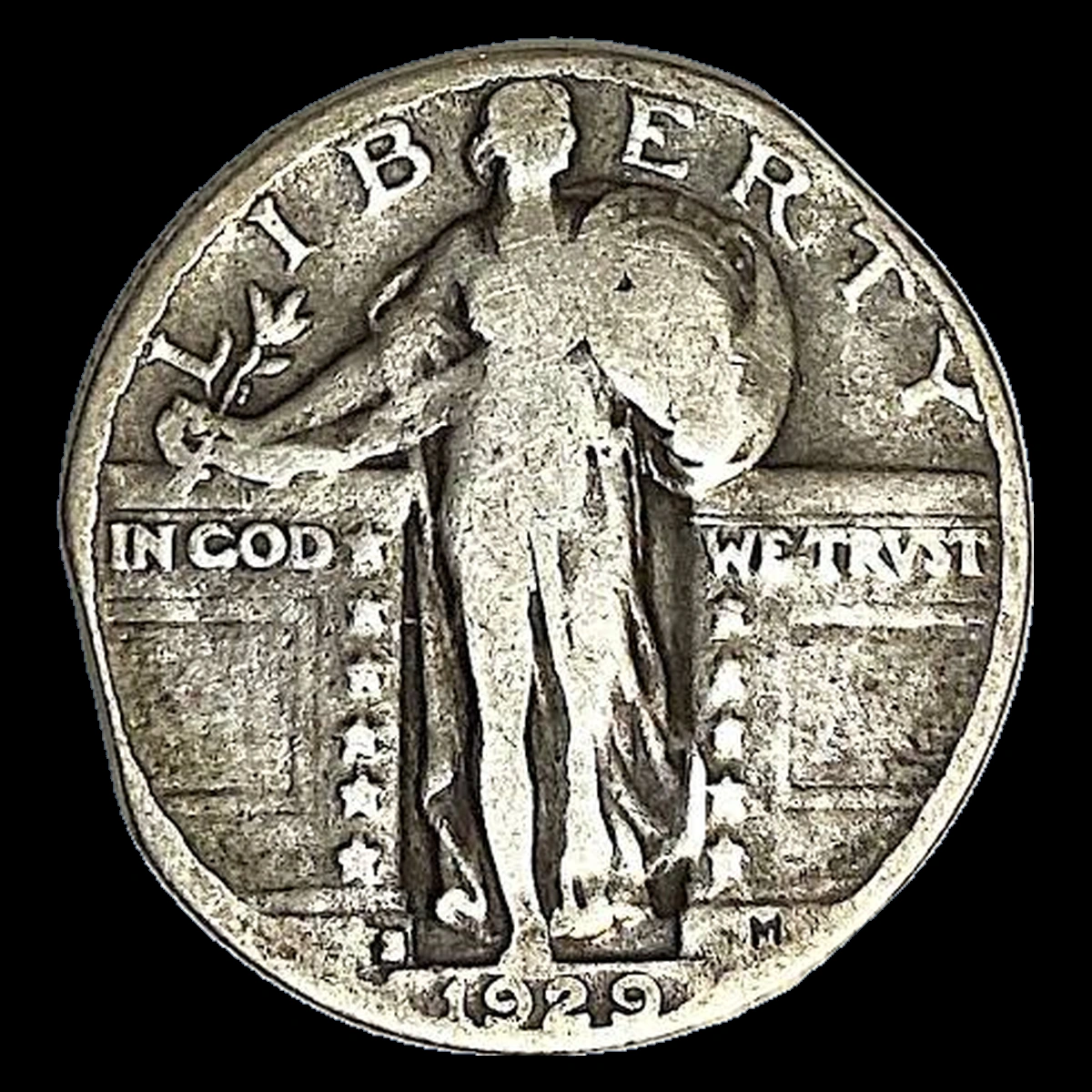
2. 1929 Quarter A Curved Gap Through the Outline: Clipped Blank Error
A blanking punch can overlap a hole left by a previous cut in the silver strip, producing a disc with an arc missing. If that incomplete disc is struck, the finished design forms around the gap.
Clips are reported for 1929 without a particular mint or gap position established in the supplied year report. The edge of each candidate therefore needs its own examination.
How to Identify
Study both places where the gap meets the normal outline. Nearby rim or lettering weakness can reflect metal flowing toward a section that was absent before striking.
A weakened rim directly opposite the gap can support the attribution, although it need not be clear on every genuine clip. It should be assessed together with the gap rather than used as an independent proof.
An intact silver quarter normally weighs 6.25 grams, so a substantial missing section reduces the weight. Cutting and corrosion also remove metal, making a low reading only one part of the evidence.
Look for saw lines, sharp burrs, or filed surfaces along the opening. A later cut through completed letters does not represent the original blanking mistake.
What It’s Worth
$50–$700 is the supplied estimate for an authenticated 1929 clip. A clear original gap with a surviving date and well-preserved surfaces offers a stronger comparison than an uncertain small edge loss.
No completed sale is supplied for this reported category. Opposite-rim weakness helps explain the same clip and is not a separate premium to add to the coin.
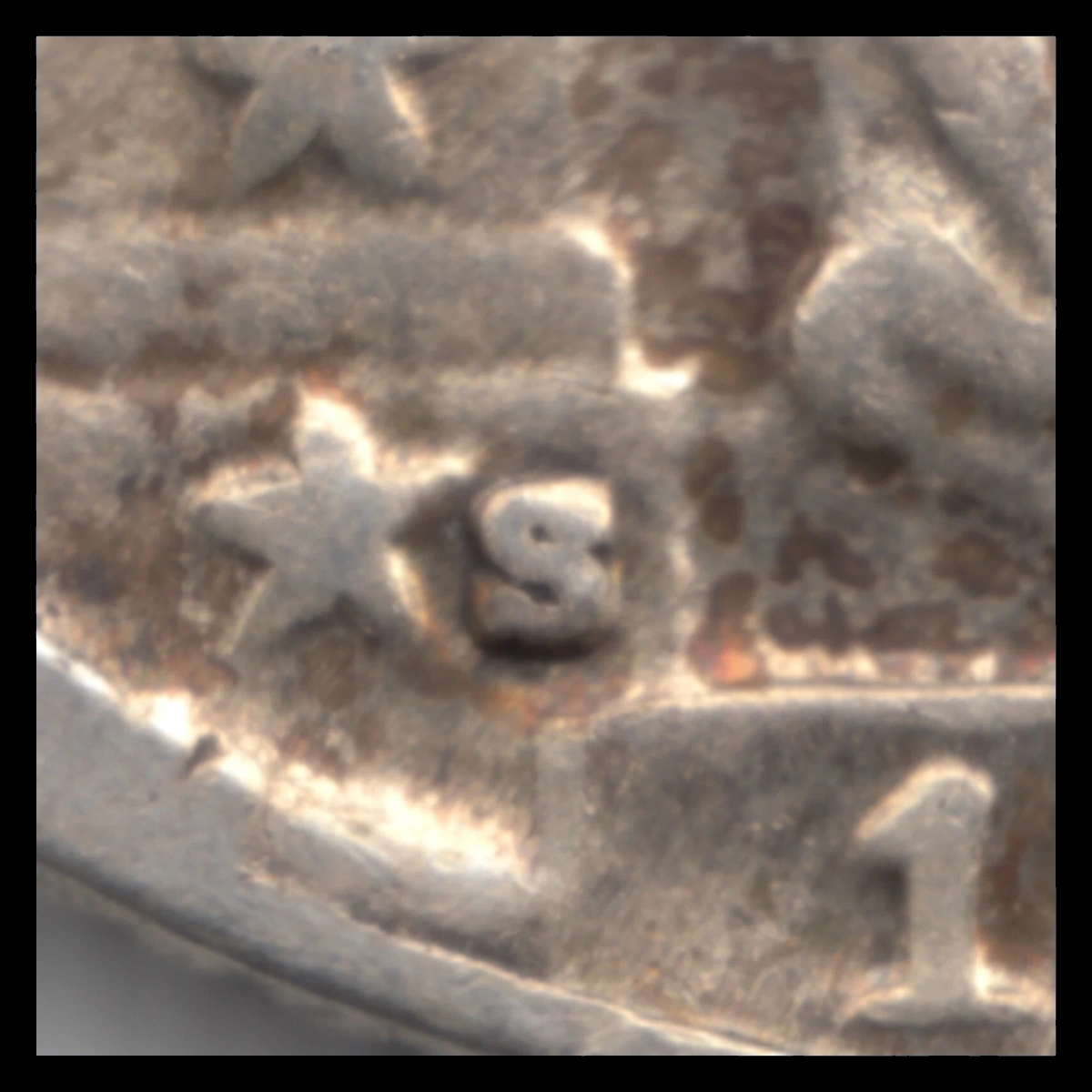
3. 1929 Quarter A Small Extra S Toward the Upper Left: Repunched Mintmark Error
The S sits on the front beside the lower part of Liberty’s figure, on the viewer’s left. The listed 1929-S pattern retains a second curved segment toward the upper left, described as S over S northwest.
Mintmarks were punched into the die by hand. An earlier impression could remain visible after a slightly displaced second punch, letting one normal coin strike reproduce both letter traces.
How to Identify
At about 10× magnification, follow the main S before studying its upper-left edge. The suspected remnant should have a letter-like curve that agrees with an identified example.
Change the angle of the light to distinguish raised detail from a reflection. A genuine remnant remains in the same location, while a scratch cuts into the surface and a nearby lump may have no S-shaped structure.
Keep surrounding design visible in the photograph to preserve the mintmark’s position. Do not treat every mark around the S as part of the repunching.
What It’s Worth
$40–$400 is the supplied estimate for identifiable examples from worn to attractive unworn condition. The tiny extra curve needs to remain clear enough to distinguish from damage.
No auction result is provided for this variety. Wear that merges the impressions, scratches near the letter, and cleaning can reduce the usefulness and appeal of the example.
4. 1929 Quarter Stray Letters and Feathers Beside Liberty: Die Clash Error
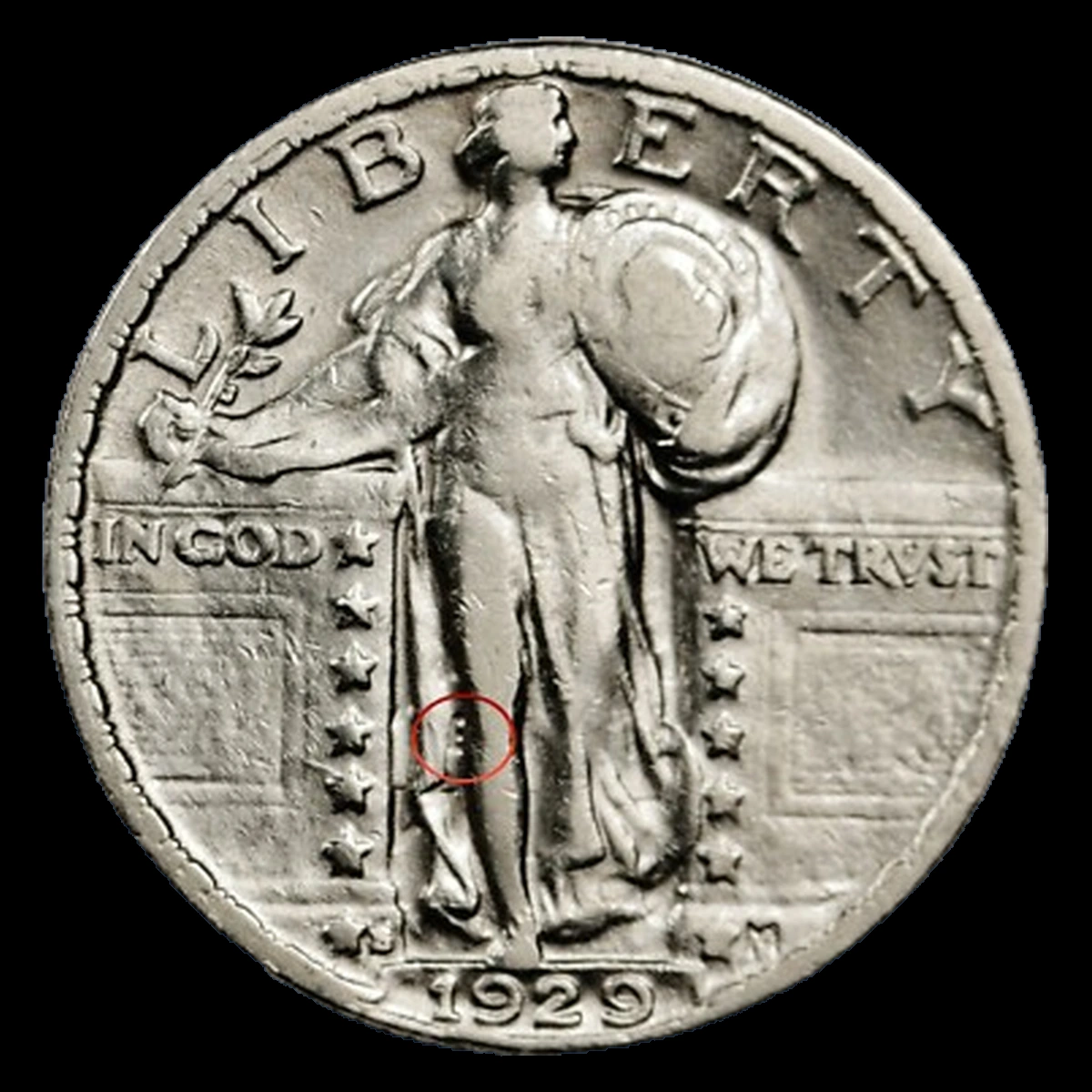
Fragments of reverse letters and eagle feathers can appear near Liberty when dies collide without a blank between them. The collision marks the dies, which then transfer those traces to later coins.
The documented San Francisco pattern includes letters below the robe, a star near Liberty’s right shoulder, and tail-feather traces beside her right elbow. Two slightly offset clash patterns are present on that example.
How to Identify
Use Liberty’s own right shoulder and elbow as landmarks, rather than the viewer’s right. Examine the fabric near the elbow for feather traces, then move downward to the E, M, and R fragments around the robe.
Mad Die Clashes illustrates the San Francisco pattern. Its pictured coin does not show matching clash marks on the reverse, so their absence there is not a reason to reject the illustrated front pattern.
A separate Philadelphia example shows robe-area letters and tail-feather traces. Compare each mint with its own pattern instead of assuming that every location and offset must occur together.
The transferred shapes should connect with recognizable elements of the opposite design. Random scratches that happen to resemble one letter are weaker evidence than a consistent group of letters, star, and feather detail.
What It’s Worth
$40–$3,000 is the supplied whole-coin estimate across worn through exceptionally preserved clash examples. Clarity of the traces matters alongside the quarter’s overall condition.
A 1929-S FS-401 graded PCGS MS66+ sold for $2,520 in January 2022. Its unworn surfaces and very few marks contribute to that price, which is not simply a charge for the clash lines.
5. 1929 Quarter Extra Inner Edges on Stars and Words: Doubled Die Reverse Error
The three stars below the eagle and the words QUARTER DOLLAR carry fine repeated edges on the documented Denver pattern. Their doubling points inward toward the center of the reverse.
The extra shapes were present in the die before it struck the coin. This is not a second complete eagle, nor does the described pattern establish a doubled date.
How to Identify
Confirm the D on the front before selecting the reverse comparison. The affected face and the mintmark’s location are different, but both are needed for this attribution.
Compare the inner edges of several lower stars and letters with Wexler’s Standing Liberty doubled-die listings. Look for the shared inward direction instead of relying on one thick star point.
Low-angle lighting helps distinguish rounded repeated contours from a flat shelf caused during striking. Wear can hide the slight separation, while an isolated nick cannot explain the matching pattern across multiple details.
What It’s Worth
$40–$500 is the supplied estimate for this identified Denver doubled reverse. Clear separation at the stars and lettering provides better evidence than general thickening on a worn coin.
The range is not a quoted auction result. Several doubled elements came from one die and should be evaluated as one variety on the complete quarter.
6. 1929 Quarter Localized Detail That Failed to Form: Reported Grease-Filled Die Error
A filled recess in a die may prevent metal from forming part of the intended design. Grease-related weakness is reported for 1929 quarters, but the supplied material establishes no specific mint or affected location.
A weak head or worn date alone cannot establish this error. In particular, the date’s normal recessed setting was part of the design and is not evidence of blocked striking.
How to Identify
Assess Liberty’s head, shield, and robe for general circulation wear before isolating the weak patch. A localized area of failed detail beside otherwise sharp design deserves a different assessment from broad rubbing across the high points.
Compare a normal 1929 quarter of similar condition under the same light. Inspect the actual date digits rather than interpreting the surrounding recess as unusual.
Side lighting can show how the weak area meets intact detail. Scratches or parallel polishing lines crossing the patch may instead explain why a finished design was removed later.
What It’s Worth
$25–$250 is the supplied estimate for a confirmed grease-filled error. Minor weakness on a worn coin belongs near the lower end and may add little beyond the silver quarter’s usual value.
An obvious localized loss of detail on an attractive original coin is easier to demonstrate. No particular 1929 sale is supplied, and routine weakness at Liberty’s head should not automatically receive an error premium.
Conclusion
A stretched date, a repeated S, and feather traces beside Liberty come from different production problems. Establish the mint and examine the full pattern before choosing a named variety or a price comparison.
Remember that the recessed date is normal for 1929, and that wear can imitate missing detail or hide small repeated contours. Preserve the coin’s surfaces and compare complete specimens of similar condition, rather than adding separate prices for every unusual mark.